
PageRank sculpting. The very term evokes memories of a bygone era in SEO, a time when we thought we could outsmart Google with clever link manipulation. We meticulously crafted our internal linking structures, strategically placing "nofollow" tags like digital gatekeepers, believing we could control the flow of PageRank and boost our chosen pages. But as Google's algorithms evolved, so did our understanding of SEO. This post will delve into the history of PageRank sculpting, explain why it's no longer a viable strategy, and guide you toward the modern SEO practices that will actually move the needle.
Key Takeaways
- Focus on creating valuable content: High-quality content that serves your audience is more effective than outdated PageRank manipulation.
- Prioritize user experience: A positive user experience is crucial for modern SEO. Ensure your website is easy to navigate, mobile-friendly, and loads quickly.
- Build genuine links: Earn backlinks naturally through content promotion and outreach. Avoid manipulative tactics that can harm your site's ranking.
What is PageRank Sculpting?
Definition and Purpose
PageRank sculpting was an SEO technique used to control the flow of PageRank through a website. It's like directing water through a series of canals, concentrating the "link juice" (the value passed between pages through links) on the most important pages—like product or landing pages—to improve their search rankings. Website owners essentially tried to tell Google which pages deserved the most attention. This involved using the "nofollow" tag on certain internal links to prevent PageRank from flowing to less important pages (like "Contact Us" or "About Us"), theoretically boosting the target pages.
Historical Context
PageRank itself originated at Stanford University in 1996 as a way to measure the importance of web pages, becoming a cornerstone of Google's early search algorithm. PageRank sculpting was a popular tactic among SEOs for a time. However, Google's changes around 2008–2009 to how PageRank is calculated and distributed significantly impacted sculpting's effectiveness. These changes, as noted by Rob Powell, aimed to prevent manipulation and prioritize true page value over link manipulation. The practice is now largely considered outdated.
How Does PageRank Sculpting Work?
Link Equity Flow
PageRank sculpting was an SEO technique used to control how PageRank flowed through a website. Think of it like directing water through a series of canals. The goal was to concentrate this "link juice" on the most important pages, like product pages or landing pages, to improve their search engine rankings. By preventing PageRank from flowing to less important pages, like "About Us" or "Contact," SEOs hoped to boost the ranking power of key pages. This involved strategically placing the nofollow attribute on certain internal links to consolidate PageRank on important money pages, giving them a stronger signal to search engines. This approach was particularly appealing for websites with numerous pages, offering a way to prioritize and maximize the impact of internal linking. For sites with high-quality landing pages and a strong user experience, PageRank sculpting was thought to be even more effective, as described in this Search Engine Watch article.
Using Nofollow
The nofollow attribute, introduced in 2005, played a central role in PageRank sculpting. Originally intended to combat spammy link schemes, nofollow signaled to search engines which links shouldn't pass PageRank. By adding nofollow to links pointing to less important pages, SEOs believed they could funnel that PageRank to their preferred pages. This article by Rob Powell explains how nofollow was initially used for PageRank sculpting. The idea was that by closing off certain pathways with nofollow, you could force PageRank to flow through the remaining links, effectively concentrating its power. This practice became fairly common, as SEOs sought to fine-tune their internal linking and maximize the impact of their link equity.
PageRank Sculpting's Rise and Fall
Past Popularity and Benefits
PageRank sculpting was once a go-to tactic for SEOs. The goal was to manage the flow of PageRank—Google's website ranking algorithm—within a website. By using the "nofollow" tag on certain links, SEOs aimed to consolidate and direct that "link juice" to their most important pages. This meant that instead of PageRank being distributed across all linked pages, it would be concentrated on the pages they wanted to rank higher in search results. This theoretically gave webmasters greater control over which pages Google viewed as most important, potentially improving their search engine rankings. It was all about optimizing the impact of a website's internal linking structure. For a time, this method was a key part of many SEO strategies.
Google's Algorithm Changes and Impact
The effectiveness of PageRank sculpting began to decline around 2008-2009 when Google updated its algorithm, changing how PageRank was calculated and distributed. The tactic became significantly less effective. Moreover, because it was so widely used (and often misused), Google began to see it as manipulation. Attempts to game the system could even lead to penalties, harming a site's ranking. The shift in Google's algorithm, along with its focus on a broader range of ranking factors, marked the end of PageRank sculpting as a viable SEO strategy.
Common PageRank Sculpting Misconceptions
Debunking Myths
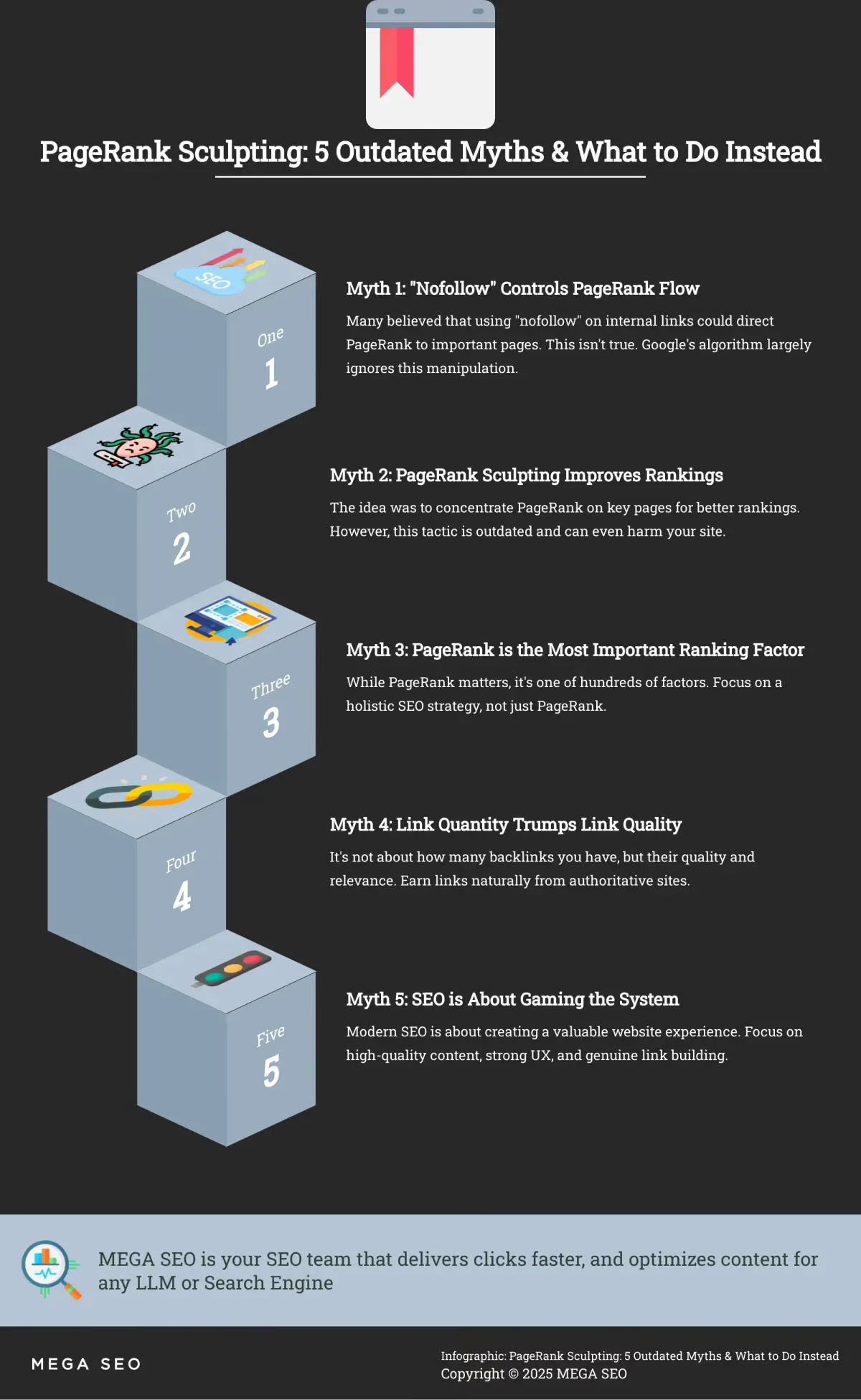
For years, SEOs tried to manipulate PageRank flow through a tactic called PageRank sculpting. The idea was to control how link equity—the value passed from one page to another through links—was distributed within a website. Many believed that by strategically using the "nofollow" attribute on certain internal links, they could concentrate PageRank on their most important pages, thus improving their search rankings. This led to a widespread misconception that "nofollow" acted like a valve, directly controlling PageRank flow. However, Google confirmed that this practice was largely ineffective. As early as 2009, Google's algorithm changes neutralized PageRank sculpting. Trying to game the system this way is outdated and won't produce the results you want. Focus instead on proven SEO strategies and avoid chasing outdated tactics. Manipulative practices can even lead to penalties, harming your site's performance.
Nofollow Links Today
While PageRank sculpting is no longer relevant, the "nofollow" attribute still has its uses in modern SEO. It primarily signals the relationship between your site and the linked page. For example, you might use "nofollow" on links in comment sections to prevent spam or on affiliate links to maintain transparency with Google. Although some SEOs believe that using "nofollow" might subtly influence how link equity is distributed, Google's algorithms largely ignore this manipulation. The original intent of the "nofollow" tag, introduced in 2005, was to combat link schemes, not to fine-tune PageRank. Using it for PageRank sculpting is now against Google's Webmaster Guidelines. Instead of manipulating PageRank with "nofollow," concentrate on building a strong site with high-quality content and earning natural links. Consider exploring MEGA SEO's automated tools to streamline your content creation and link-building efforts. A holistic approach to SEO will always deliver better long-term results.
Best Practices for Managing Link Equity
While the concept of PageRank sculpting might be outdated, the principles behind it—strategically distributing link equity—still hold value. Instead of trying to "trick" search engines, focus on proven methods to enhance your site's authority and visibility.
Create High-Quality Content
Search engines prioritize content that satisfies user intent. Instead of focusing on manipulating metrics, concentrate on crafting high-quality, original content that genuinely helps your target audience. Think about what your audience searches for and create resources that answer their questions, solve their problems, or entertain them. This approach naturally attracts links, as other websites will want to reference valuable resources. Positional emphasizes the importance of user-focused content in their discussion of Google's PageRank algorithm.
Build Natural Links
Earning high-quality backlinks is crucial for boosting your site's authority. Focus on building these links organically through content promotion and outreach. Connect with other website owners and influencers in your niche, and share your content with them. If your content is truly valuable, they'll be more likely to link to it. Avoid shortcuts like buying links or engaging in other black hat SEO tactics, as these can harm your site's ranking. Positional also highlights the benefits of building links naturally for long-term SEO success.
Effective Internal Linking
Think of internal links as the circulatory system of your website, distributing link equity to important pages. A well-planned internal linking strategy helps search engines understand the structure and hierarchy of your site, improving crawlability and discoverability. Prioritize linking to key landing pages with strong user experience and fast loading speeds. Use descriptive anchor text that accurately reflects the content of the linked page, making it easier for both users and search engines to understand the context. Search Engine Watch discusses the importance of high-quality landing pages in their article on PageRank sculpting.
SEO Beyond PageRank Sculpting
As search engine algorithms evolve, SEO has grown beyond simply trying to manipulate PageRank. It's less about gaming the system and more about creating a genuinely valuable website experience.
Modern Ranking Factors
While PageRank still plays a role, search engines now consider hundreds of factors, including:
- High-quality content: Content that is informative, engaging, and relevant to the user's search is crucial. Think comprehensive guides, insightful blog posts, and original research. Tools like MEGA SEO can help automate the content creation process, ensuring your site consistently publishes valuable material.
- User experience (UX): A positive UX encompasses factors like site speed, mobile-friendliness, easy navigation, and clear calls to action. A smooth, enjoyable experience encourages visitors to explore your website, signaling its value to search engines.
- Technical SEO: This involves optimizing the technical aspects of your website, such as site structure, schema markup, and core web vitals. A technically sound website ensures search engines can easily crawl and index your content. Explore MEGA SEO's resources for more information on technical SEO best practices.
- Backlink profile: Earning links from reputable and relevant websites remains a significant ranking factor. It's not just about the quantity of backlinks, but the quality and relevance. A natural backlink profile, built through genuine relationships and valuable content, is key.
Holistic SEO
Modern SEO requires a holistic approach. It's about integrating various strategies to create a website that excels in all areas. This includes:
- On-page optimization: Crafting compelling title tags, meta descriptions, and header tags, while ensuring your content is well-structured and keyword-optimized. MEGA SEO offers features for automated keyword research to help you target the right terms.
- Off-page optimization: Building relationships with other websites in your niche, earning high-quality backlinks, and promoting your content through social media and other channels.
- Content marketing: Creating valuable and engaging content that attracts and retains your target audience. This could include blog posts, infographics, videos, and other forms of media.
- Technical improvements: Regularly auditing and improving your website's technical aspects to ensure optimal performance and search engine visibility.
This holistic approach, combined with the power of automation provided by platforms like MEGA SEO, allows startups and businesses to establish a strong online presence, drive organic traffic, and achieve sustainable growth. If you're ready to transform your SEO strategy, contact us to learn more.
Measure and Optimize Link Equity
Now that we’ve covered the shift away from PageRank sculpting, let’s discuss how to effectively manage and measure link equity in today’s SEO landscape. It's less about manipulating PageRank and more about building a site that naturally attracts links.
Key Metrics and Indicators
While we can no longer directly measure PageRank, we can assess the impact of link equity through other key metrics. Look at metrics like referring domains, the overall authority of linking sites, and the relevance of those sites to your own. A strong backlink profile consists of links from authoritative and relevant websites. Also, consider the quality of your own content and its user experience. Even the best link equity strategies are more effective when combined with a strong website featuring high-quality landing pages and solid core web vitals.
Tools for Link Analysis
Several tools can help you analyze your backlink profile and understand your link equity. Ahrefs, SEMrush, and Moz are popular choices, each offering features to research backlinks, analyze competitors, and audit your website. These tools allow you to identify your most valuable backlinks, discover potential link-building opportunities, and spot any toxic links that might be harming your site. Learning from successful SEO campaigns can also provide valuable insights. SEO case studies offer real-world examples of how businesses have improved their organic search visibility through their link-building strategies.
Adapting to Future Changes
The SEO landscape is constantly evolving, so staying adaptable is key. Google’s algorithms are continuously updated. Focus on building a strong foundation for your website with valuable content, a positive user experience, and genuine relationships with other websites in your niche. Creating high-quality content and a natural backlink profile will serve you well regardless of future algorithm updates.
Alternative SEO Optimization Strategies
Now that we’ve covered PageRank sculpting and its limitations, let’s explore some alternative SEO optimization strategies that are far more effective in today’s search landscape. These strategies focus on creating a genuinely valuable website experience for users, which is precisely what search engines reward.
Content-Driven Approaches
Instead of trying to manipulate link equity flow, concentrate on crafting high-quality, informative content. As search algorithms evolve, they prioritize websites offering real value. This content-first approach is about building a strong website foundation, not gaming the system. Focus on understanding your target audience and creating
This shift towards user-centric content also naturally attracts backlinks. When you publish valuable resources, other websites are more likely to link to your content, boosting your site's authority in the eyes of search engines. This organic link building is far more sustainable and effective than outdated manipulation tactics.
User Experience and Technical SEO
User experience (UX) plays a crucial role in modern SEO. A website with excellent UX offers visitors a seamless and enjoyable browsing experience. This includes elements like intuitive site navigation, fast loading speeds, mobile responsiveness, and clear, concise information. Search engines recognize and reward sites that prioritize UX, as it directly correlates with user satisfaction. A technically sound website provides a solid foundation for your SEO efforts.
Technical SEO is equally important. This involves optimizing the backend of your website to ensure search engines can easily crawl and index your content. Key technical aspects include site structure, schema markup, XML sitemaps, and resolving any crawl errors.
Social Signals and Brand Authority
While social signals aren't a direct ranking factor, they contribute to your overall online presence and brand authority. Active engagement on social media platforms can increase brand visibility, drive traffic to your website, and foster a sense of community around your brand. This increased brand awareness can indirectly influence your SEO performance. Building brand authority involves establishing your website as a trusted and reputable source of information within your industry.
This can be achieved through consistently publishing high-quality content, earning high-quality backlinks, and engaging with your audience both on your website and on social media. A strong brand reputation can positively impact your search rankings and overall online success.