
You have more influence over how search engines perceive and interact with your website than you might realize. It’s not merely about publishing content and hoping for the best; it’s about actively guiding search engine bots to your most valuable assets. This is where a clear understanding of Page Authority—a score reflecting a page's potential to rank—and crawlability—how easily bots can access your content—becomes essential. By strategically managing how authority flows between your pages, you directly impact how efficiently search engines can explore your site. So, what are the benefits of page authority distribution for improved crawlability? This article will walk you through how this proactive approach helps ensure your entire site is visible, your key content is prioritized, and your SEO efforts translate into tangible results.
Key Takeaways
- Understand Page Authority and Crawlability Together: Recognize that a page's authority score directly impacts how easily search engines can find and index its content, making both crucial for visibility.
- Direct Search Bots with Smart Internal Linking: Thoughtfully connect your pages with internal links to spread Page Authority, helping search engines efficiently discover and prioritize your key content.
- Maintain Healthy Authority Distribution Through Ongoing Care: Regularly audit your site, update content, and adjust internal links to ensure Page Authority flows effectively, supporting better site-wide indexing and search performance.
What is Page Authority and How Does It Affect SEO?
Understanding Page Authority can feel a bit like trying to get a peek behind the curtain of search engine rankings. While it's not a direct ranking factor used by Google, it’s a really helpful metric that gives you a good idea of how likely a specific page on your website is to perform in search results. Think of it as a health check for individual pages. Knowing what it is and how it works can guide your SEO strategy, helping you focus your efforts where they’ll make the most impact. Let's explore what Page Authority means and why it’s a valuable piece of your SEO puzzle.
Defining Page Authority
Page Authority, often shortened to PA, is a score developed by Moz. It essentially predicts how well a particular page on your website might rank on search engine result pages (SERPs). These scores range from one to 100; the higher the score, the stronger that page's ability to rank. So, what contributes to this score? PA considers quite a few elements, such as the number and quality of other websites linking to your page (your backlinks). It also looks at the types of these links, the specific words used in them (known as anchor text), the age of these links, and the overall strength of your entire website, which is measured by Domain Authority.
How It Impacts Your Search Rankings
A higher Page Authority score is certainly a goal worth pursuing for your key pages. Generally, a page with a solid PA tends to attract more visitors to your website and can contribute to better brand recognition. One very effective way to positively influence your Page Authority is through thoughtful internal linking. When you strategically connect relevant pages within your own site, you can often see tangible improvements in your overall SEO performance and search rankings. Additionally, using clear, descriptive URLs and consistently publishing rich, relevant content also helps, as these practices make it easier for search engines to understand and value your page's content.
What is Crawlability and Why Does It Matter?
Think of crawlability as how easily search engine robots, often called spiders or bots like Googlebot, can navigate and understand the content on your website. It’s their ability to access your pages, read the information, and follow the links to discover other pages. If these bots encounter roadblocks, like broken links or confusing site structures, they might not be able to see everything you offer. This is crucial because what they can't crawl, they can't index. And if your pages aren't in a search engine's index, they simply won't show up when someone searches for relevant terms. Essentially, crawlability is the gateway for your website to enter the vast library of the internet that search engines maintain.
Good crawlability is the bedrock of any successful SEO strategy. It ensures that all your valuable content – your blog posts, product pages, and service descriptions – has the chance to be seen by search engines and, consequently, by your potential customers. It’s about making your website an open book for these bots, allowing them to efficiently gather the information they need to understand what your site is about and how it might be relevant to a user's query. Without this fundamental step, even the most amazing content can remain hidden in the digital shadows, unable to attract organic traffic or contribute to your business goals. Making your site easy to crawl is like ensuring the doors to your shop are wide open and clearly marked for visitors.
Crawlability's Role in Getting Your Content Found
So, why is this "crawlability" so important for your content? It's pretty straightforward: if search engines can't effectively crawl your website, they can't add your pages to their index. Think of the index as a massive digital library; if your book isn't in it, no one can find it on the shelves. This means your content won't appear in search results when people are actively looking for the products, services, or information you provide. Good crawlability ensures that search engines can discover and process your content efficiently, keeping it current in their index. This, in turn, helps your site rank higher and attract more of that valuable organic traffic.
Factors That Impact Website Crawlability
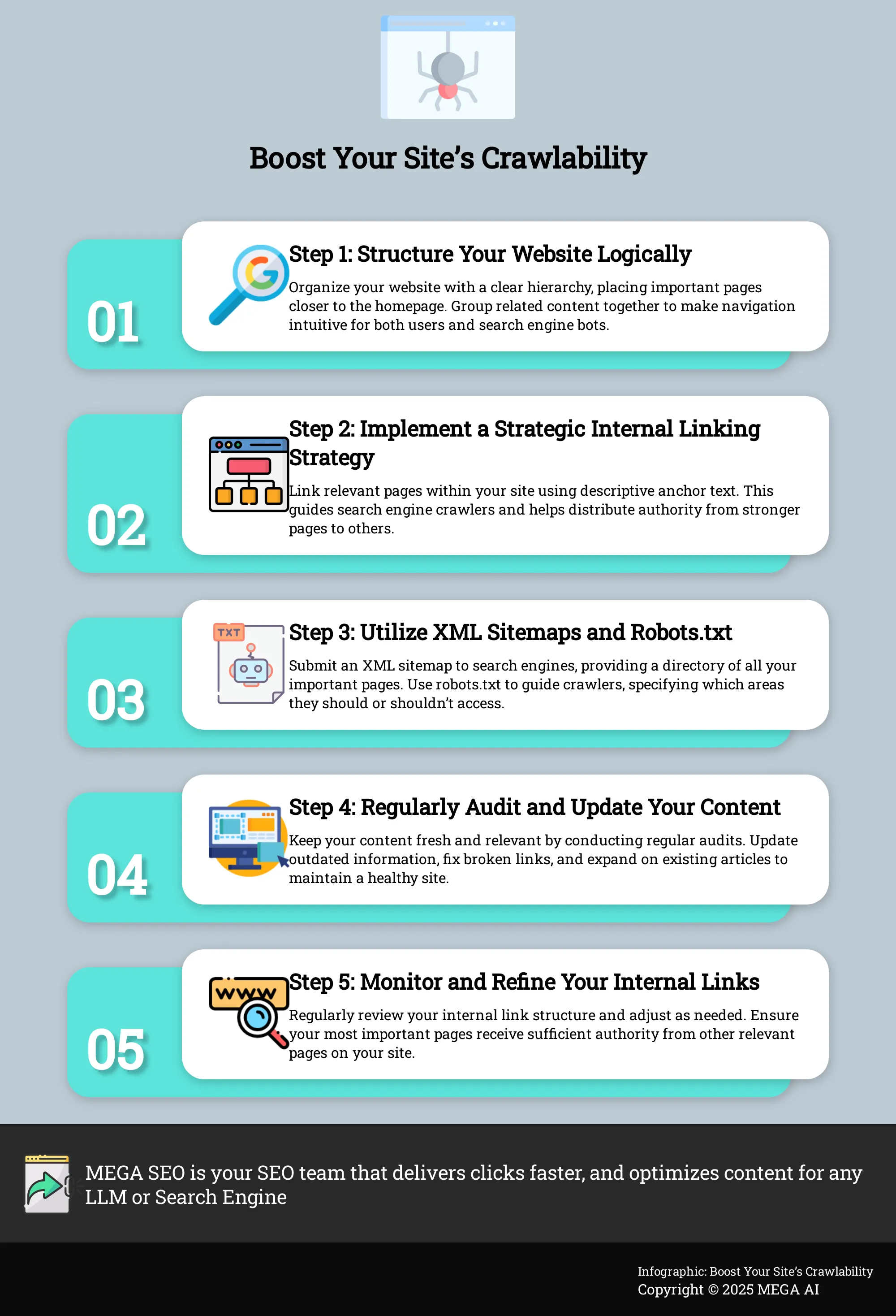
Several elements influence how easily search engine bots can explore your site. A clear website structure with logical navigation is fundamental; it’s like providing a well-organized map for the bots. Effective internal linking—connecting pages within your own site—also plays a significant role, guiding bots to all your content and helping them understand the relationships between pages. Other key factors include using a robots.txt file to tell crawlers which parts of your site they can or cannot access, and submitting an XML sitemap, which is essentially a list of all your website pages. Regularly finding and fixing broken links is also vital, as these act like dead ends for search engine bots, preventing them from fully exploring your site.
Page Authority and Crawlability: A Powerful Connection
Understanding how page authority and crawlability work together is quite important if you're looking to improve your site's performance in search results. Think of page authority as a signal of a page's importance, and crawlability as how easily search engine bots can find and understand your content. When these two elements are well-aligned, your SEO efforts tend to see better results. A smart distribution of page authority essentially helps search engine crawlers find your most valuable content, ensuring your site gets the attention it deserves. This synergy not only helps search engines efficiently process your website but also signals the quality and relevance of your pages. When search engines can easily understand your site structure and identify high-authority pages, they are more likely to index your content comprehensively and rank it appropriately. This connection is fundamental to building a strong online presence and driving organic traffic.
Effectively managing this relationship means you're actively telling search engines which parts of your website matter most. By strategically guiding authority to key pages, you're also making it simpler for search bots to discover and index those pages. This isn't just about getting individual pages ranked; it's about ensuring your entire website is perceived as a valuable and well-organized resource. The more efficiently search engines can crawl and understand your site, the better your chances of achieving higher visibility for a wider range of relevant queries. This interconnectedness highlights why a holistic approach to SEO, considering both authority and accessibility, is crucial for sustained success.
How Page Authority Distribution Guides Crawl Budget
Search engines, like Google, don't have unlimited resources to constantly crawl every single page on the internet. They operate on what's known as a "crawl budget"—essentially, the amount of time and resources they decide to allocate to crawling your website. How you distribute page authority, primarily through your internal linking, directly influences this budget. Pages that accumulate higher authority, often because they have many quality internal links pointing to them, are perceived as more important. As a result, search engines are likely to crawl these pages more frequently and thoroughly. Real-world examples show that effective internal linking significantly impacts page authority, leading to tangible improvements in SEO scores and Google rankings. So, by effectively channeling authority, you're helping ensure your most critical content is regularly visited and considered by search engines.
Influencing Search Bots for Efficient Indexing
Your internal linking strategy does more than just signal which pages are important; it also makes the job of finding and indexing your content much easier for search bots. When you strategically link between related pages, you create clear pathways that these bots can follow. This efficient site navigation helps them discover new content and understand the topical relationships across your site. As Design Me Marketing aptly puts it, "Our linking strategy affects how users find and interact with content, which in turn influences how search bots crawl and index pages." By thoughtfully connecting your content, you guide these bots, ensuring more of your pages are indexed and understood correctly. This is fundamental for your content to appear in relevant search results and reach your target audience.
Key Benefits: Better Crawlability Through Page Authority Distribution
When we talk about making your website more visible to search engines, distributing page authority effectively is a significant factor. Think of page authority as a measure of a specific page's influence in the eyes of search engines. When this authority is thoughtfully spread across your site, it greatly helps search engine bots crawl your content more efficiently. This isn't just about making one or two pages exceptionally strong; it's about creating a well-connected web where every important piece of content receives the attention it deserves.
A smart approach to page authority distribution means search engines can better understand the structure of your site and the relative importance of your pages. This, in turn, helps them use their crawl budget wisely, ensuring they spend time on the pages that matter most. When authority flows logically from your high-authority pages (like your homepage or key pillar content) to other relevant pages through internal links, it’s like giving search bots a clear roadmap. This process ensures that even pages buried deeper in your site architecture are discovered and indexed. Ultimately, this leads to a healthier, more visible website that performs better in search results. For businesses looking to enhance their online presence, understanding and implementing strategies for page authority distribution is a fundamental step, and tools that assist with SEO optimization can simplify this complex task.
Achieve Broader Indexation and Site Coverage
One of the primary advantages of good page authority distribution is achieving broader indexation and more comprehensive site coverage. When authority is passed effectively through your website, it signals to search engines that all connected pages have value. As the experts at WDD explain, "By monitoring changes in page authority distribution patterns, website owners can ensure that all pages, especially those deeper in the site structure, are indexed effectively, leading to broader site coverage." This means that even your niche content or product pages further from the homepage are more likely to be found and included in the search engine's index, making your entire site's content accessible to potential visitors.
Improve Search Rankings and Visibility
Properly distributing page authority directly contributes to improved search rankings and overall online visibility. When search engines can easily understand your site's structure and the importance of each page, they can rank your content more accurately. According to Design Me Marketing, elements that improve search engine understanding, like clear URL structures, contribute to increased page authority and crawlability, which "ultimately enhancing search rankings and visibility." By strategically linking authoritative pages to other relevant content, you pass on some of that ranking power, giving those linked pages a better chance to appear higher in search results for their specific keywords. This holistic improvement can significantly widen your reach.
Increase Organic Traffic and Engagement
Effective page authority distribution doesn't just please search engines; it also leads to more organic traffic and better user engagement. When your pages rank higher, more users will naturally find your site through search. Furthermore, a logical internal linking strategy, which is crucial for distributing page authority, also improves the user experience. As SearchPilot highlights, "Strategically cross-linking related content not only boosts page authority but also enhances user experience, leading to increased organic traffic and engagement." Users can more easily discover related articles or products, encouraging them to spend more time on your site and interact with more of your content.
How to Distribute Page Authority for Better Crawlability
Getting your website's pages noticed by search engines is a crucial part of any online strategy. It’s a bit like making sure all the important attractions in a city are clearly marked and easy for tourists to find. In the world of SEO, this involves effectively distributing 'page authority.' You can think of page authority as the 'importance score' or credibility of each individual page on your website. When you strategically spread this authority from your stronger pages to others, you're essentially giving search engines a well-lit map and highlighting your most valuable content. This guidance helps them crawl your site much more efficiently, understand the hierarchy of your information, and discover everything you have to offer. This process isn’t just about optimizing for search algorithms; a logical flow of authority also creates a smoother, more intuitive experience for your human visitors, guiding them seamlessly to relevant information. By consciously directing how authority moves between your pages, you can significantly improve how thoroughly and frequently your site gets crawled. This often translates to more of your pages being indexed, better rankings in search results, and ultimately, ensuring your valuable content reaches the audience it’s intended for, instead of getting lost in the vastness of the internet.
Build an Efficient Site Structure
Think of your website's structure as its blueprint. A clear and logical blueprint makes it easy for both visitors and search engine crawlers to find their way around. When people can easily locate what they need, they're likely to stick around longer, which search engines see as a good sign. This positive user experience also helps spread page authority naturally. How you link your pages together is key; it guides how everyone, including search engine bots, explores your content. Aim for a sensible hierarchy where important pages are easy to reach and related topics are grouped. This helps authority flow from your main pages to others, making sure even deeper content gets noticed and crawled.
Implement Effective Internal Linking
Internal links are like the connecting roads within your website's city. They're essential for spreading page authority and making your site easier to crawl. When you link related pages together, you create clear paths for authority to travel. This also helps search engines grasp what your content is about and which pages are significant. For example, a link from a popular blog post to a relevant service page can share some of its authority, highlighting the service page's importance. Studies show that smart internal linking can really improve your site's SEO performance and search visibility. By thoughtfully connecting your content, you help users find more useful information and guide search bots efficiently through your site, ensuring your key pages get the attention they need.
Use XML Sitemaps and Technical Tools
An XML sitemap is essentially a directory you provide to search engines, listing all the pages on your site you want them to find and crawl. It’s especially helpful for ensuring new content or pages on larger, more complex sites get noticed. While internal links create pathways within your site, a sitemap offers a complete overview. Beyond sitemaps, technical tools are invaluable for fine-tuning how page authority is distributed. They can help you spot issues like orphan pages (pages with no incoming internal links) and understand your site's link structure. Many platforms, including those that offer automated SEO services, can simplify these technical checks, helping you maintain a site that’s easy for search engines to crawl and understand.
Tackle Common Page Authority Distribution Hurdles
Distributing page authority effectively is a cornerstone of a strong SEO strategy, directly impacting how easily search engines can crawl and understand your site. However, it's not always a straightforward process. Many businesses, especially as their websites grow, encounter common hurdles that can hinder their efforts to spread link equity efficiently. You might find yourself struggling with pages that seem invisible to search engines, or perhaps you're unsure how to give your new content the authority it needs without diminishing the value of your established, high-performing pages. Managing this distribution on a large scale, with hundreds or even thousands of pages, can feel particularly daunting and complex.
The good news is that these challenges are well-understood, and there are practical, actionable steps you can take to address them. By proactively identifying and resolving these issues, you ensure that valuable link equity flows smoothly throughout your entire site. This, in turn, helps more of your pages get discovered, indexed, and ultimately rank higher in search results. Remember, this isn't just about optimizing for search algorithms; it's fundamentally about making your valuable content more discoverable and accessible for your target audience. Let's explore some of these common hurdles in more detail and discuss how you can work through them to maintain a healthy, authoritative, and easily crawlable website. Our SEO solutions are also designed to help automate and simplify many of these processes, taking some of the heavy lifting off your shoulders.
Identify and Address Orphan Pages
Orphan pages are essentially hidden sections of your website; because no other pages link to them, they're difficult for search engines to discover. If search engines can't find a page, they can't crawl or index it, which means it simply won't appear in search results. These isolated pages also miss out on receiving any authority passed through internal links, making them less likely to rank well. To resolve this, it's a good practice to regularly audit your site to uncover these lost pages. Once identified, the fix is usually straightforward: integrate them into your site’s linking structure by adding relevant internal links from other, discoverable pages. This helps with both discovery and the distribution of valuable page authority.
Balance Authority for New and Existing Content
When you publish fresh content, you naturally want it to gain traction and visibility as quickly as possible. At the same time, it's important that your older, high-performing pages don't lose their established authority. Achieving this balance is where thoughtful page authority distribution comes into play. A smart internal linking strategy is crucial here. You can channel authority to your new articles or product pages by linking to them from your established, high-authority content—think of it as giving your new content a strong introduction. Conversely, ensure your new content also links back to relevant existing pages, reinforcing their importance and keeping your site's authority flowing smoothly. This approach to strategic linking helps both new and existing content perform better.
Manage Page Authority on Large Websites
If you're overseeing a large website with hundreds or even thousands of pages, distributing page authority effectively can seem like a complex puzzle. It's quite common for some pages to become buried deep within the site architecture, receiving minimal authority and visibility. To manage this, concentrate on establishing a clear site hierarchy and strategically cross-linking related content. For example, organizing similar content into topic clusters or content hubs can help distribute authority more evenly to supporting pages. This not only assists search engines in understanding your site's structure and the relative importance of various pages but also significantly improves user navigation by making it easier for visitors to find relevant information and stay engaged with your site.
Essential Tools to Monitor Page Authority Distribution
To effectively manage how page authority flows through your website and ensure search engines can easily crawl your content, you need the right tools in your arsenal. Simply building links or creating content isn't enough; you have to understand where that authority is going and how it's impacting your site's overall SEO health. Think of these tools as your guides, helping you see the invisible pathways of authority and how they influence crawlability. They provide a clear picture of your site’s link equity distribution, highlighting which pages are accumulating authority and which might be getting overlooked.
Without proper monitoring, you might be inadvertently sending authority to less important pages, creating orphan pages that crawlers can't find, or, worse, establishing dead ends that trap crawl bots and waste your crawl budget. The right software can illuminate these issues, allowing you to make strategic adjustments. These tools offer critical insights into how your internal linking strategy is performing, whether your most important pages are receiving the authority they deserve, and how search engines perceive your site's structure. By regularly using these tools, you can proactively manage your page authority distribution, leading to better crawl efficiency, more comprehensive indexing, and ultimately, improved search visibility for your key content. Platforms like MEGA AI are designed to simplify this complex process, offering automated insights and recommendations to keep your site optimized and ensure your authority is working for you, not against you.
SEO Software for Page Authority Analysis
Dedicated SEO software is invaluable for digging into the specifics of your page authority. These platforms often come packed with features that allow you to see how individual pages are performing and how your internal linking efforts contribute to their authority. You can track metrics like page-specific authority scores, see which pages are linking to others, and understand the strength of those links. This kind of analysis is crucial because, as studies show, effective internal linking strategies can lead to tangible improvements in SEO scores and Google rankings.
By using SEO software, you can identify which pages are authority hubs and which ones might be under-supported. This information empowers you to refine your internal linking, ensuring that authority flows logically to your most important content. For instance, you can discover if a high-authority page isn't linking out to relevant newer content that could benefit from a share of that authority. Regularly analyzing this data helps you maintain a healthy distribution that supports your overall SEO goals.
Crawl Simulation and Link Analysis Tools
Crawl simulation and link analysis tools take things a step further by mimicking how search engine spiders navigate your website. These tools help you visualize your site's link architecture and understand how link equity, or "link juice," is distributed from one page to another. This is particularly useful for identifying potential issues like broken internal links, redirect chains, or pages that are difficult for crawlers to reach. Understanding the impact of internal linking is key, as strategic cross-linking can significantly influence which pages gain authority.
These tools can show you if your internal links are effectively passing authority to the intended recipient pages or if some links are inadvertently diluting authority. For example, you might find that while you've added many links to a new product page, the source pages themselves don't have much authority to pass, or the links are structured in a way that doesn't optimally transfer value. By simulating crawls, you can spot these inefficiencies and make data-driven decisions to improve how authority flows, ensuring your important pages are well-supported and easily discoverable by search engines.
Maintain Optimal Page Authority Flow: Best Practices
Keeping your page authority flowing smoothly to the right places isn't a one-time task. It's an ongoing effort that pays off with better crawlability and, ultimately, improved SEO performance. Think of it like tending a garden; regular care ensures everything thrives and your site reaps the benefits. Here are some practical steps to help you maintain that optimal flow.
Conduct Regular Content Audits and Updates
One of the most effective ways to keep your site healthy and your page authority well-distributed is by regularly reviewing and refreshing your content. Search engines, like Google, tend to favor websites that are actively maintained and provide up-to-date information. As ProfileTree notes, "Regularly updating content keeps your site relevant and signals to search engines that it's actively maintained." This practice doesn't just please search bots; it also significantly enhances user experience and improves your site's crawlability because fresh content gets noticed.
Set a schedule for content audits—perhaps quarterly or bi-annually, depending on your site's size. During these audits, look for outdated statistics, broken links, or information that's no longer accurate. You might also find opportunities to expand on existing articles. Tools like MEGA AI's Maintenance Agent can be incredibly helpful here, as they can identify content that needs an update or suggest new sections to add, ensuring your articles remain comprehensive.
Monitor and Adjust Your Internal Link Structure
Your internal linking strategy is the primary way you direct page authority throughout your site. However, it's not something you can set up once and forget. As your site evolves—new content is added, old content is removed or updated—your internal linking structure will need adjustments to remain effective. Consistently monitor your internal links to ensure that your most important pages are receiving adequate authority from other relevant pages on your site.
According to WDD, "By strategically linking to important pages, you can distribute page authority effectively throughout your site." This means regularly checking if your key service pages or cornerstone content pieces have a strong network of internal links pointing to them. If you find that some high-value pages are underlinked, or if you've recently published significant new content, take the time to weave in new internal links from other relevant posts. This ensures that authority is continuously and strategically channeled.
Align Distribution with Your Overall SEO Strategy
Distributing page authority effectively isn't just about linking pages together; it's about ensuring these efforts directly support your broader SEO objectives. Every internal link should have a purpose that ties back to your overall strategy, whether that's ranking for specific keywords or guiding users through a sales funnel. As SearchPilot highlights, "By monitoring changes in page authority distribution patterns, website owners can ensure that their internal linking strategy aligns with their overall SEO goals."
This alignment means considering how your internal links help search engines discover and prioritize your most critical content. For instance, if a key goal is to rank for "AI-powered SEO tools," ensure that your content related to this topic is well-interlinked. Strategically cross-linking related content not only directs page authority but also makes it easier for search engines to crawl and understand the thematic connections within your site. Platforms like MEGA AI, which offer end-to-end SEO solutions, can help ensure all aspects of your SEO, including page authority distribution, work cohesively.
What's Next for Page Authority and Crawlability?
The digital landscape is always shifting, and how search engines find and rank your content is no exception. Staying informed about upcoming changes in page authority and crawlability helps you keep your website performing well. It’s about understanding where things are headed so you can prepare your SEO strategy effectively. Let's look at what the future might hold.
Emerging Trends in Search Algorithms
Search algorithms are getting smarter, focusing more on understanding the actual meaning and context of your content. One trend is the growing importance of descriptive URL structures. Clear, keyword-rich URLs help search engines quickly grasp what a page is about, which can positively influence both its authority and how easily it gets crawled.
Beyond URLs, the emphasis on rich, relevant content continues to intensify. Search engines favor pages that provide comprehensive and valuable information to users. This means creating in-depth content that thoroughly covers a topic is becoming even more crucial for building page authority and ensuring your important pages are found and indexed efficiently.
Adapt to Evolving SEO and User Behavior
As search engines evolve, so does user behavior. People expect to find information quickly and easily. This makes adaptive SEO strategies essential. For instance, effective internal linking is key not just for distributing page authority but also for guiding users and search bots through your site logically. Regularly reviewing and refining your internal links helps ensure authority flows to your most important pages.
Continuous optimization is also vital. This involves more than just occasional tweaks; it means regularly conducting technical audits, refining on-page elements, and even reassessing your site structure as your content library grows. Learning from SEO case studies can provide valuable insights into how other websites successfully adapt their strategies over time to maintain and improve their search performance. This proactive approach helps you stay aligned with both search engine updates and user expectations.
Related Articles
- Enhancing the Authoritativeness of Your Site Through Effective SEO Practices - MEGA SEO | Blog
- Boost Your SEO Strategy: Mastering Crawlability Tips
- Effective Internal Linking: Boost SEO for Category Pages
- PageRank Sculpting: Boost Key Pages With Smart Linking
- Domain Authority: The Ultimate Guide (2023)
Frequently Asked Questions
What's the main difference between Page Authority and general website authority? Page Authority gives you a score for a single, specific page on your website, predicting how well that individual page might rank. General website authority, often referred to as Domain Authority, looks at the overall strength and ranking potential of your entire website, not just one page.
If my website is small, do I still need to worry much about crawlability? Yes, absolutely. Even for smaller websites, ensuring search engines can easily crawl your pages is fundamental. Good crawlability means search engines can find and index all your content, which is essential for those pages to appear in search results, regardless of your site's size.
How exactly does linking my own pages together help search engines find them better? When you link pages within your own website, you create clear pathways for search engine bots. As these bots explore one page, the internal links guide them to other related pages. This helps them discover more of your content efficiently and understand how different pieces of information on your site connect.
What's a practical first step I can take to improve how authority flows on my site? A great starting point is to review your most important pages—perhaps your key service pages or cornerstone blog posts. Then, ensure these pages receive internal links from other relevant content on your site, especially from pages that already have some authority or traffic. This helps to channel some of that existing strength.
Is improving Page Authority a one-time fix, or is it an ongoing process? Improving and maintaining Page Authority is definitely an ongoing effort. Your website changes over time as you add new content or update existing material. Because of this, you'll want to regularly review how authority is distributed and adjust your internal linking to ensure your site remains well-optimized.