Think of your website as having an internal power grid. Some pages naturally generate more "ranking electricity" or Page Authority than others. The real question is, how effectively is this power being distributed to illuminate all the important sections of your site? This is where Page Authority distribution comes into play. It’s not just about individual page scores; it’s about the strategic flow of link equity that supports your entire content ecosystem. Understanding the benefits of page authority distribution for increased organic traffic? is crucial for any business aiming to maximize its online reach. We'll explore how you can optimize this distribution to ensure your most valuable content shines brightly in search results.
Key Takeaways
- Understand Page Authority for targeted SEO: Recognize PA as a Moz-developed score that indicates a single page's potential to rank, helping you focus your optimization efforts where they're most needed.
- Actively manage your Page Authority flow: Strategically use internal links and pursue high-quality backlinks to direct authority towards your most important content, which can lead to better search visibility for those pages.
- Make Page Authority improvement a continuous effort: Consistently produce valuable, link-worthy content, optimize your on-page elements, and track your PA to adapt your approach and sustain your site's organic performance.
What is Page Authority & How Is It Measured?
Understanding how search engines perceive your individual web pages is a big step in refining your SEO strategy. One key metric that helps with this is Page Authority. It gives you a snapshot of a specific page's strength. Let's break down what it is, how it's calculated, and what that number really means for your website.
Defining Page Authority
Page Authority, often abbreviated as PA, is a score developed by the SEO software company Moz. Think of it as a predictor of how well a particular page on your website is likely to rank in search engine results pages (SERPs). The score ranges from one to 100; higher scores suggest greater potential. It’s important to remember PA focuses on a single page's authority, not your entire website (that’s Domain Authority). So, different pages on your site usually have different Page Authority scores. This distinction helps you pinpoint specific pages needing more SEO attention.
Key Factors Influencing Page Authority
A page’s authority score isn't arbitrary; several elements contribute. A major factor is the backlink profile of that specific page. This includes the number of external links and, crucially, the quality of those linking sites. A link from a respected, relevant website carries more weight than many links from low-quality sites. The actual content on your page also plays a significant role. High-quality, original, valuable content that satisfies user intent is fundamental. Furthermore, strong on-page SEO—optimized title tags, meta descriptions, headers, and image alt text—helps search engines understand your page, positively influencing its PA.
Understanding the Page Authority Scale
The Page Authority scale, from 1 to 100, is logarithmic. This means growing PA from 20 to 30 is easier than from 70 to 80. A higher PA score generally indicates a stronger ability for that page to rank. While Moz developed this metric, it reflects how search engines like Google might view your page's authority. Pages with higher authority are often seen as more credible, potentially leading to better search engine rankings and more organic traffic. Use it as a comparative metric—to assess your page against competitors or track improvement—rather than an absolute success measure.
What is Page Authority Distribution?
Grasping Page Authority (PA) and its distribution across your site is key for effective SEO. PA helps identify your website's strongest pages and see how that strength is shared. Understanding this distribution helps you make informed choices to improve your overall SEO performance and draw in more organic traffic. It’s about pinpointing strengths and areas needing support for better teamwork among your pages.
Defining Page Authority Distribution
Page Authority, a score from Moz, predicts a specific page's ranking potential on search engine results pages (SERPs). Scores range from one to 100; higher scores mean a greater ability to rank. Page Authority distribution refers to how these scores are spread across your website's pages. Are high-authority pages grouped together, or is ranking potential shared more evenly? Knowing this distribution reveals if your site's 'strength' is concentrated or if many pages can effectively attract search traffic.
Why Page Authority Distribution Matters
A good Page Authority distribution matters because it often links to better search rankings. Pages with higher authority generally perform better in search, leading to more clicks and increased organic traffic. Analyzing your PA distribution lets you compare your pages with competitors, spot your strongest content, and monitor SEO progress. This insight helps you focus optimization efforts for the best ranking improvements site-wide.
Clearing Up Page Authority Distribution Myths
Let's clear up some common misconceptions about Page Authority. A frequent myth is that PA is a direct Google ranking factor. While Google doesn't use PA directly, this metric reflects elements Google does value, such as incoming link quality and quantity. Another point is that improving PA isn't about a single fix. A strong link profile is crucial, but it's one piece of a larger puzzle involving quality content and effective on-page SEO. For backlinks, always prioritize quality over sheer numbers.
How Page Authority Distribution Affects Organic Traffic
Understanding how Page Authority (PA) is spread across your website is fundamental to seeing real growth in your organic traffic. It’s not just about a few individual pages having high scores; it’s more about how that authority flows and supports your entire site structure. When you strategically manage your Page Authority distribution, you're essentially guiding search engines to understand which of your pages are most important and trustworthy. This, in turn, has a direct and significant effect on how much traffic finds its way to your digital doorstep, organically. A thoughtful approach to distributing Page Authority can make a substantial difference in your site's overall performance in search results, helping more of your valuable content reach the right audience. Let's explore the specific ways this distribution influences your site's ability to attract and retain visitors.
Page Authority's Tie to Search Rankings
Page Authority is a score that predicts how well a specific page is likely to perform on search engine result pages (SERPs). As Moz, the developer of this metric, explains, "A higher PA suggests the page is more likely to rank well on Google or other search engines." Think of it this way: pages with higher authority are viewed by search engines as more credible and valuable sources of information. Consequently, these pages are often given more weight and are more likely to appear higher up in search results for relevant queries. A well-distributed Page Authority ensures that more of your important pages have a better opportunity to achieve these coveted higher rankings, making your content more visible to your ideal customers.
Its Impact on Click-Through Rates (CTRs)
When your pages rank higher in search results, often due to strong Page Authority, they naturally attract more attention and, crucially, more clicks. This increased visibility directly translates to higher click-through rates (CTRs). As noted by Upheave, "Higher PA usually means better search rankings. This leads to more clicks from search results and increased organic (free) website traffic." Essentially, the more people who see your link prominently displayed on the first page of search results, the higher the likelihood they will click on it. A healthy CTR not only brings more visitors to your site but can also be a positive signal to search engines, potentially further solidifying your rankings over time.
Long-Term Effects on Website Visibility
Optimizing Page Authority distribution isn't a quick fix; it's an ongoing strategy that yields significant long-term benefits for your website's overall visibility. Building a strong link profile is fundamental, as "Quality always trumps quantity when it comes to backlinks," which contributes to both Page Authority and Domain Authority. Over time, a consistent focus on distributing authority effectively helps establish your website as a reputable source in your niche. This sustained effort makes it easier for new content to rank, helps older content maintain its position, and allows you to effectively track your progress against competitors, ensuring your site remains visible and competitive in the evolving search landscape. A commitment to quality content and strategic linking will support your site's authority for years to come.
Why Optimize Page Authority Distribution? Key Benefits
Optimizing how Page Authority is distributed across your website isn't just a technical SEO chore; it's a fundamental strategic move that can bring significant, lasting advantages to your online presence. When you thoughtfully manage and spread link equity—the value passed from one page to another through links—you're essentially providing a clear roadmap for search engines, highlighting which of your pages are most important and therefore deserve to rank. This careful orchestration can lead to better visibility for your key content, a much smoother and more intuitive experience for your visitors, and ultimately, a stronger, more authoritative online brand. Think of it as ensuring your website's internal power lines are all connected efficiently, channeling energy to power up the pages that matter most to your business goals and your audience's needs.
For businesses, especially startups and small enterprises aiming to make their mark in crowded digital spaces, understanding these benefits is the crucial first step toward a more effective and efficient SEO strategy. It’s about working smarter, not just harder, to ensure your valuable content consistently reaches the right audience. Properly distributing Page Authority can be a genuine game-changer, helping you compete effectively in search results even when up against larger competitors or operating with limited resources. By ensuring that your most valuable pages receive the authority they need, you can maximize the impact of every piece of content you create and every link you build, leading to more tangible returns on your SEO investment. Let's look at some of the core advantages this approach offers.
Improve Search Engine Rankings
One of the primary reasons to focus on Page Authority distribution is its direct impact on your search engine rankings. Page Authority, as a metric, predicts how well a specific page is likely to perform on search engine result pages (SERPs). Moz explains that a "higher Page Authority score" suggests a page has a greater potential to rank well. By strategically channeling authority to your most important pages through internal linking and by acquiring quality backlinks, you signal their value to search engines like Google. This can help these key pages climb higher in search results, making them more visible to users actively searching for the topics you cover.
Increase Your Organic Traffic
Higher search engine rankings naturally lead to increased organic traffic. When your pages appear closer to the top of the SERPs, they are more likely to be clicked. As Upheave points out, "Higher PA usually means better search rankings. This leads to more clicks from search results and increased organic (free) website traffic." Optimizing your Page Authority distribution helps ensure that the pages you want users to find are the ones gaining ranking traction. This means more potential customers discovering your content, products, or services without you having to pay directly for each click, offering a sustainable way to grow your audience.
Enhance User Experience & Site Structure
Effective Page Authority distribution often involves a well-thought-out internal linking strategy. This not only helps search engines understand your site's structure but also significantly improves the user experience. When you add internal links to relevant, authoritative pages, you guide visitors to other useful content on your site. This keeps them engaged longer and helps them find the information they need more easily. A clear site structure, supported by logical internal linking, makes your website more intuitive for users and helps search engines crawl and index your content more efficiently. Tools like MEGA AI can assist in identifying opportunities for better internal linking and overall SEO optimization.
Build Website Credibility & Trust
A website with a strong Page Authority profile, built through consistent quality content and authoritative backlinks, naturally appears more credible and trustworthy to both users and search engines. When other reputable sites link to your content, it acts as a vote of confidence. Upheave notes that "high-quality backlinks from reputable websites are crucial." Focusing on distributing authority effectively means you're also likely focusing on creating valuable content that earns these links. This, in turn, helps establish your website as a reliable source of information in your niche, fostering trust with your audience over time.
Actionable Strategies to Improve Page Authority Distribution
Improving how page authority flows through your website is a smart way to guide both search engines and your visitors to your most valuable content. When you strategically direct this authority, you can see a real difference in your organic traffic and how your site performs overall. It’s about making conscious choices to highlight what’s important. Let's walk through some practical, actionable steps you can implement to enhance your page authority distribution and give your key pages the visibility they deserve. These methods focus on content, linking, and on-page fundamentals.
Create Compelling, Linkable Content
The heart of a strong page authority strategy lies in creating truly exceptional content. If your content doesn't offer real value, there's little reason for others to link to it or for visitors to spend time engaging with it. As the team at DashClicks aptly puts it, "Creating valuable, in-depth, and unique content is key. Regularly updating content keeps it fresh and relevant." This means moving beyond basic information to provide genuine insights, solve specific problems for your audience, or share unique perspectives they can't find elsewhere.
When your content is genuinely helpful, it naturally becomes a magnet for backlinks and encourages visitors to explore more of your site. This signals to search engines that your pages are authoritative. For businesses aiming to produce quality content consistently, tools like MEGA AI can help generate well-researched articles and even keep existing content updated, ensuring you always have fresh, link-worthy material.
Master Internal Linking
Think of internal links as the road map for your website. They guide users and search engine crawlers, distributing authority as they go. A well-planned internal linking structure is vital. According to Diggity Marketing, "Adding internal links to relevant pages on your website is a great way of guiding users towards important pages on your site and gives Google a better understanding of how your website is structured." When you link from a page on your site that already has some authority to another relevant page, you're essentially sharing some of that strength.
This practice not only aids your SEO efforts but also significantly improves the user experience by making it simpler for visitors to find related information. Strategically placed internal links can channel authority to your most important product pages or give a visibility assist to new content. MEGA AI’s SEO features can help identify these internal linking opportunities, making sure your site’s authority is spread effectively.
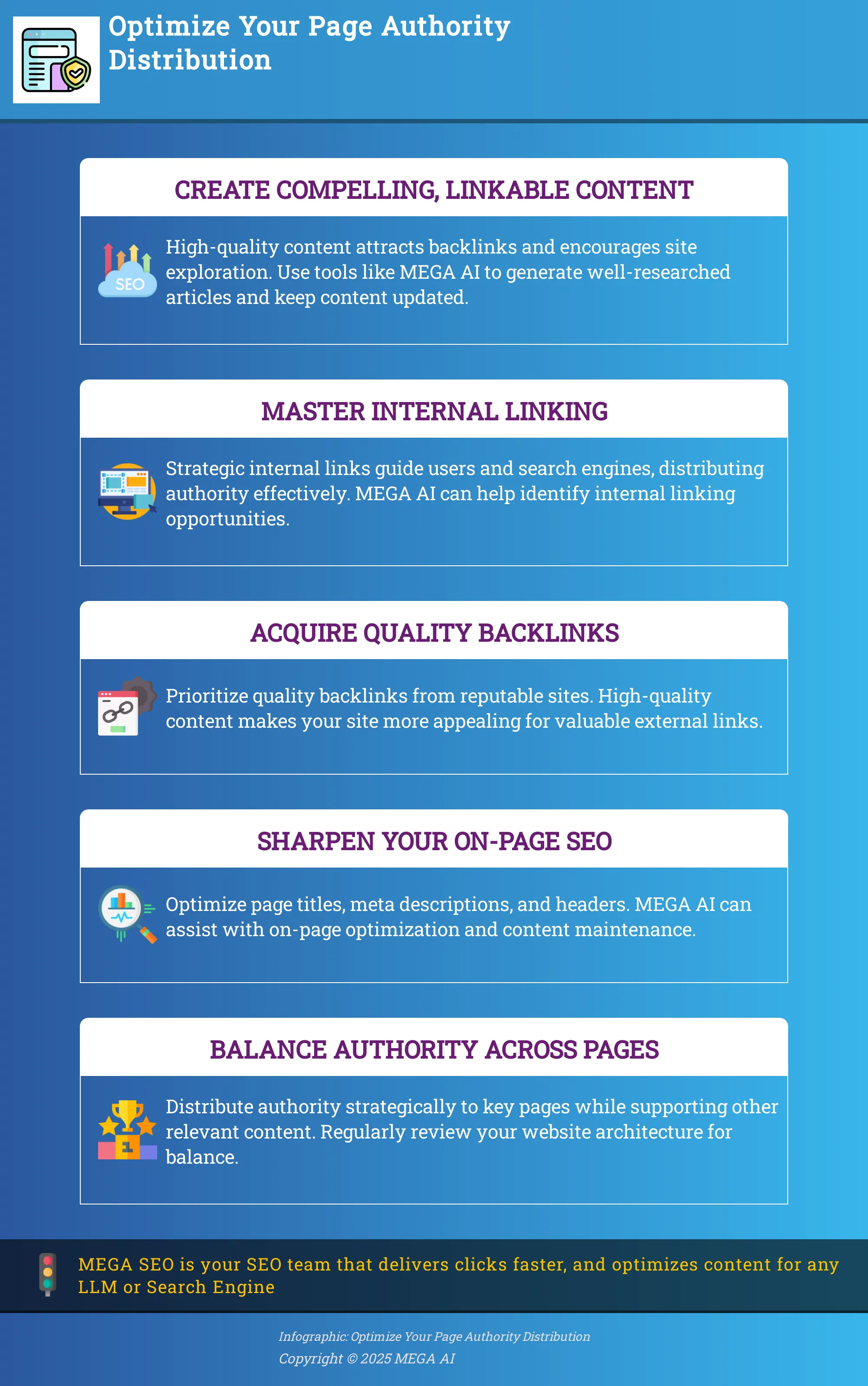
Acquire Quality Backlinks
While your internal links help distribute the authority your site already possesses, backlinks from other websites bring new authority to your domain. It's essential here to prioritize quality over sheer numbers. As Web Hopers correctly points out, "High-quality backlinks from reputable websites are crucial. Not all backlinks are equal; links from relevant, trustworthy sites are far more valuable." A single, strong link from a respected site in your industry can carry more weight than many links from low-quality or unrelated sources.
These quality backlinks act as endorsements from established voices in your field. You can earn them by creating the kind of compelling content discussed earlier, contributing guest posts to authoritative sites, or building genuine relationships with industry influencers. While MEGA AI focuses on optimizing your own site, its ability to help you develop superior content makes your website a much more appealing candidate for earning those valuable external links.
Sharpen Your On-Page SEO
On-page SEO involves fine-tuning the elements directly on your web pages so search engines can clearly understand their content and purpose. This ensures that when authority is directed to a page, search engines can easily grasp its topic and relevance to user searches. DashClicks emphasizes this: "Optimizing page titles, meta descriptions, headers, and images with relevant keywords improves how search engines understand your content."
This includes thoughtfully incorporating your target keywords into page titles, headings (like H1s and H2s), the main body text, and image alt descriptions. Well-organized content with clear headings also makes your pages more user-friendly. MEGA AI's SEO tools can assist in optimizing these on-page factors, and its Maintenance Agent can even help re-optimize content after search algorithm updates, keeping your pages well-positioned to benefit from distributed authority.
Balance Authority Across Pages
Effectively distributing page authority means ensuring your most critical pages receive a healthy share of link equity, while also supporting other relevant content across your site. It’s about fostering a balanced digital ecosystem. As Outranking notes, "Internal links not only help search engines understand the structure of your website but also guide users to related content, improving engagement." This improved engagement sends further positive signals to search engines.
Use internal links from your high-authority pages—like your homepage or popular blog posts—to strategically channel authority towards key conversion pages or newer content that could use an initial boost. This doesn't mean ignoring less central pages, but rather creating a logical flow of authority that reflects your site's priorities and helps users discover valuable information throughout their visit. Regularly reviewing your website's architecture can help you identify opportunities to better balance this authority flow.
Navigating Common Page Authority Distribution Challenges
Working to improve how Page Authority flows through your website is a smart move for your SEO. When authority is distributed effectively, your most important pages get the recognition they deserve from search engines, which can significantly influence your rankings and attract more organic traffic. However, the path to optimal Page Authority distribution isn't always a straight line. Many website owners, from startups to established small businesses, find themselves facing similar roadblocks. These aren't signs that you're doing something wrong; rather, they're common aspects of managing a dynamic online presence. For example, you might have a wealth of older content that isn't contributing as it should, or unexpected search engine algorithm updates can suddenly change the rules of the game. If you manage a larger website, the sheer volume of pages can make it tricky to ensure authority is channeled correctly. Ignoring these issues can lead to stagnating rankings or even a drop in visibility. Recognizing these common challenges is the first step toward overcoming them. By understanding what they are and having a proactive plan to address them, you can build a more resilient and effective strategy for your site’s authority flow. This approach will not only help you maintain your current SEO standing but also pave the way for sustained organic traffic growth. Let's explore some of these frequent obstacles in more detail and discuss practical ways to work through them.
Effectively Handle Legacy Content
Over time, websites accumulate older content. Some of this legacy content might not meet your current quality standards or align with modern SEO best practices. These outdated pages can sometimes dilute your Page Authority or send mixed signals to search engines. It's wise to "regularly audit your website for technical glitches and fix them promptly to maintain a healthy Page Authority distribution. This includes addressing issues with legacy content that may not align with current SEO best practices." Consider if old posts need updating with fresh information, consolidation with other similar content, or even a strategic redirect if they no longer serve a purpose. Tools that help identify underperforming content can be particularly useful here, simplifying the audit process.
Adapt to Search Algorithm Changes
Search engines are constantly refining their algorithms to provide better results for users. These updates, while ultimately beneficial, can sometimes cause shifts in how Page Authority is perceived and distributed. What worked yesterday might not be as effective tomorrow. "By understanding common SEO mistakes, monitoring website performance, and implementing proactive prevention and recovery strategies, website owners can optimize their online presence and adapt to changes in search algorithms." Staying informed about major algorithm updates and being prepared to adjust your content and linking strategies is key. This might involve re-optimizing existing articles or tweaking your internal linking to better align with new ranking factors, ensuring your efforts continue to yield results.
Manage Page Authority on Large Sites
If you're working with a large website—think hundreds or thousands of pages—distributing Page Authority effectively becomes a more complex task. With so much content, ensuring that important pages receive adequate authority requires careful planning. "Internal links, alongside backlinks, not only help search engines understand the structure of your website but also guide users to related content, improving engagement. This is particularly important for large sites where managing Page Authority distribution can be complex." A clear site architecture and a thoughtful internal linking strategy are crucial. Prioritize linking to your most valuable pages from other relevant, authoritative pages within your site to guide both users and search engine crawlers effectively.
Essential Tools & Metrics for Tracking Page Authority
Understanding your Page Authority (PA) is one thing, but knowing how to track it and what the numbers mean is where the real strategy begins. Let's look at some reliable tools and the key metrics that will help you monitor your PA effectively. This knowledge will empower you to make informed decisions for your SEO efforts.
Top Tools for Measuring Page Authority
Several tools can help you measure Page Authority. Moz, the originator of the PA metric, offers free options like its Link Explorer and the MozBar browser extension, which are excellent starting points. Many other comprehensive SEO software platforms also incorporate Moz's data to report PA scores, giving you a consistent view.
Beyond directly measuring PA, it's useful to employ tools that help identify and fix issues impacting your site's overall health, which indirectly influences PA. For instance, Google Search Console is invaluable for monitoring your site's performance in Google search results and identifying crawl errors. Tools like Screaming Frog or Semrush can help you conduct site audits to find broken links, assess page speed, and check mobile usability—all of which contribute to a stronger site and, consequently, better Page Authority.
Key Metrics to Monitor
When you're looking at Page Authority, the score itself is important, but understanding what influences it is crucial. A primary factor is the quantity and quality of websites linking to your page. Think of it this way: a link from a highly respected, authoritative website in your niche generally carries more weight than numerous links from lesser-known sites. Moz's Page Authority calculation heavily considers these inbound link characteristics.
A higher PA score often correlates with better search engine rankings. When your page ranks higher, it naturally becomes more visible to users searching for relevant terms. This increased visibility typically leads to more clicks from search results, which means more organic traffic to your website. So, monitoring your PA can give you a good indication of your page's potential to attract visitors and how effectively your content resonates.
Making Sense of Page Authority Data
Interpreting Page Authority data involves looking beyond just the number. Understand that PA and organic traffic can have a reciprocal relationship. As your PA improves and your page ranks higher, you'll likely see an increase in traffic. This increased engagement and visibility can, over time, further signal to search engines that your page is valuable, potentially reinforcing its authority.
Improving PA isn't about a single fix; it requires a well-rounded approach. A strong and healthy link profile is fundamental. This means consistently earning quality backlinks and ensuring your internal linking structure effectively distributes authority across your site. By regularly checking your PA scores and the associated linking data, you can identify which pages are performing well and which might need more attention in your content creation and link-building strategies.
Integrating Page Authority Distribution into Your SEO Plan
Once you have a solid grasp of Page Authority distribution and its significance, the practical next step involves weaving this understanding into your current SEO framework. This isn't about piling on entirely new tasks, but rather about refining your existing efforts with a keen eye on how authority flows through your site. It’s about becoming more deliberate in how you build and spread Page Authority to the pages that matter most for your business. By making Page Authority distribution a conscious part of your strategy, you can more effectively guide search engines and users to your valuable content.
Set Realistic Page Authority Goals
It’s natural to want top Page Authority (PA) scores for your key pages immediately, but a more effective approach involves setting achievable, incremental targets. A higher PA generally correlates with better search rankings, which often leads to more organic traffic. However, it's important to remember that PA is a comparative metric, heavily influenced by the quality and quantity of inbound links, rather than just on-page factors like keywords. As the experts at Moz suggest, when working on PA, you should "focus on getting high-quality links and optimizing your content." So, instead of getting fixated on hitting a specific number, concentrate on consistently improving the authority of your important pages by building a strong, relevant link profile and ensuring your content is truly valuable and link-worthy.
Develop a Long-Term Distribution Strategy
Enhancing your Page Authority distribution is not a one-and-done task; it’s an ongoing commitment. Think of it as a continuous cycle of improvement. As your pages gain authority and visibility, they are likely to attract more traffic. This increased engagement can, in turn, help to further strengthen their Page Authority over time, creating a positive feedback loop. The best approach is to "start early" by incorporating PA considerations from the outset of your website’s development or when launching new content initiatives. Regularly monitor how authority is distributed across your site, analyze the flow, and be ready to adjust your internal linking and content strategies as needed. This sustained effort is key to building and maintaining a healthy spread of authority.
Align with Your Overall SEO Objectives
Your efforts to optimize Page Authority distribution should fit seamlessly within your broader SEO objectives. Improving PA isn't an isolated activity; it’s an integral part of a comprehensive approach to search engine optimization. A strong link profile, for instance, is fundamental for both Page Authority and Domain Authority, forming a cornerstone of SEO success. Activities such as creating high-quality, engaging content, strategic keyword targeting, acquiring valuable backlinks, and maintaining excellent technical SEO (like fast load times and mobile-friendliness) all contribute to better PA and overall search performance. By ensuring these efforts are aligned, your work on Page Authority will also directly support your primary goals for rankings, traffic, and user experience. Tools like MEGA AI can help streamline these processes by automating aspects of your SEO, such as content optimization and internal linking.
How to Measure Success & Stay Ahead of Trends
Understanding how to measure your progress and adapt to the always-changing world of search is so important for growing your organic traffic over time. It’s not just about putting strategies into action; it’s about knowing what’s effective, what isn’t, and how to adjust when things shift. Keeping an eye on your performance and what’s new in the industry will help you stay competitive.
Think of it like caring for a houseplant. You pot it (that’s your content and SEO work), but you also need to water it regularly, check for any pests, and maybe move it if the sunlight changes. In SEO, it’s pretty similar: consistent monitoring and making adjustments are key to a healthy online presence. This means regularly checking your key performance indicators (KPIs), understanding how search algorithms evolve, and always looking for ways to refine what you’re doing. With the right approach and a proactive mindset, you can make sure your efforts to distribute Page Authority effectively really pay off. Platforms like MEGA AI can also help automate some of these ongoing optimization tasks, allowing you to focus on strategy.
KPIs for Tracking Your Progress
To really see how you're doing, you need to focus on the right Key Performance Indicators (KPIs). A very important metric here is Page Authority (PA). Generally, a higher Page Authority tells search engines that your page is a valuable and trustworthy source, which often leads to better search rankings. When your pages rank higher, they’re more visible, which means more clicks from search results and, as a result, more organic website traffic.
You can keep an eye on your PA using different SEO tools. Moz, for example, offers free tools like Link Explorer and MozBar that let you check PA. Many other SEO software platforms also use Moz's data to provide this metric. By consistently tracking your PA, along with other important numbers like organic traffic, click-through rates, and keyword rankings, you’ll get a clear view of how well your Page Authority distribution strategy is working.
The Ever-Changing World of Search Algorithms
Search engine algorithms, particularly Google's, are incredibly intricate and are updated all the time. While Page Authority is a useful sign of how well a page might rank, it’s good to remember that it doesn’t single-handedly guarantee top search rankings. Google's algorithms look at many different factors when deciding which pages to show for a search. Improving both Page Authority and Domain Authority (DA) calls for a well-rounded strategy, and having a strong link profile is crucial for both.
Staying up-to-date on major algorithm changes and SEO best practices is a must. What worked well last year might not be as effective now. This constant change means your SEO strategy, including how you manage Page Authority distribution, needs to be flexible. Make it a habit to review your methods and be ready to make changes based on new information and how your site is performing.
Tips for Continuous Improvement
Continuous improvement is really the core of good SEO. To keep your Page Authority strong and your organic traffic on the rise, concentrate on a few key areas. First, make it a priority to create high-quality, genuinely valuable content that people will want to read and link to. This is the bedrock of any successful SEO plan. Second, actively work to get high-quality backlinks from websites that are respected and relevant to your field. Think of these links as endorsements for your content.
Beyond just content and links, make sure your website is optimized for the relevant keywords your target audience is actually searching for. And don’t overlook the technical details. Regularly audit your website for any technical issues, like broken links or pages that load too slowly, and fix them quickly. These technical elements can really affect user experience and, in turn, your Page Authority and search rankings.
Related Articles
- PageRank Sculpting: Boost Key Pages With Smart Linking
- Domain Authority: The Ultimate Guide (2023)
- Enhancing the Authoritativeness of Your Site Through Effective SEO Practices - MEGA SEO | Blog
- Organic Traffic Growth: Proven Strategies for SEO Success
- Boost Your Rankings: The Ultimate On-Page SEO Guide
Frequently Asked Questions
My site has a Domain Authority score. How is Page Authority different, and which one should I focus on? Think of Domain Authority as your website's overall reputation score, predicting how well your entire site might rank. Page Authority, on the other hand, zooms in on the ranking potential of a single, specific page. Both are important, but if you're looking to improve the performance of particular blog posts or product pages, focusing on their individual Page Authority and how it's distributed can give you more targeted insights.
I've started working on my Page Authority. How quickly can I expect to see changes in my scores? Improving Page Authority is more of a marathon than a sprint. Because it relies heavily on factors like earning quality backlinks and search engines recognizing your content's value, changes aren't usually immediate. Consistent effort in creating great content and building good links over several months is typically when you'll start to notice meaningful shifts.
When it comes to backlinks for improving Page Authority, should I aim for lots of links or just a few really good ones? For Page Authority, the quality of your backlinks truly matters more than the sheer number. A single link from a well-respected, relevant website in your field can be far more beneficial than dozens of links from low-authority or unrelated sites. Focus your energy on earning those impactful, high-quality endorsements.
What's the most practical first step I can take to improve how Page Authority is distributed across my website? A great starting point is to review and enhance your internal linking. Look at your strongest pages—those with higher existing authority—and find natural, relevant opportunities to link from them to other important pages on your site that you want to support. This helps spread that authority around effectively.
If a page on my site has low Page Authority, does that automatically mean the content isn't good? Not necessarily. Low Page Authority doesn't always mean your content itself is poor. It could indicate that the page hasn't yet earned enough quality backlinks, or perhaps its on-page SEO and internal linking aren't fully optimized to signal its importance to search engines. Think of it as an opportunity to better showcase that content's value.