
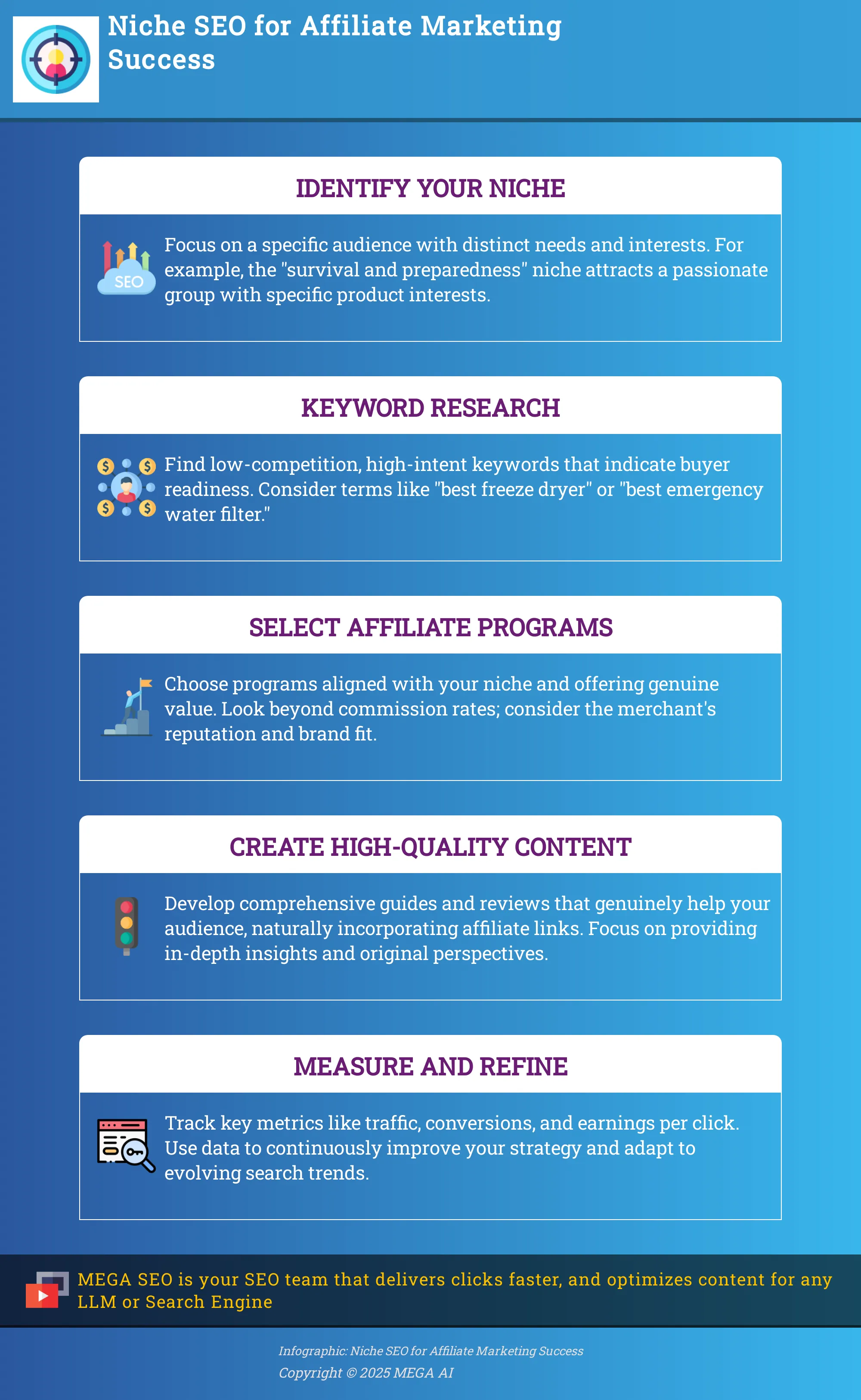
Affiliate marketing can feel like trying to shout in a crowded stadium, especially when you're just starting out or running a small team. The digital space is vast, and "SEO" can sound like a mountain to climb. But what if you could find your own dedicated corner, a place where your voice is clearly heard by people genuinely interested in what you offer? That's the core idea behind niche SEO for affiliate marketing. It’s about strategically narrowing your focus to a specific audience with distinct needs. This approach means less direct competition with the giants and a more direct line to potential customers. This guide will walk you through how to identify these valuable niches, find the keywords that attract ready-to-buy visitors, and create content that truly resonates, turning your affiliate efforts into a more manageable and effective venture.
Key Takeaways
- Define Your Niche and Target Keywords: Zero in on a specific audience and the high-intent search terms they use; this sharpens your focus and attracts buyers ready to act.
- Produce High-Quality, Trustworthy Content: Craft comprehensive guides and genuine reviews that truly serve your readers, making your affiliate recommendations more persuasive.
- Regularly Measure and Refine Your Approach: Consistently track your performance and adapt your SEO tactics to evolving search patterns, ensuring your affiliate business continues to thrive.
What is Niche SEO for Affiliate Marketing?
Niche SEO is all about focusing your affiliate marketing efforts on a very specific segment of a larger market. Instead of trying to appeal to everyone, you tailor your content and SEO strategy to a particular group of people who share distinct interests and needs. Think of it like being a specialist in a medical field rather than a general practitioner; you aim to become the go-to source for a particular topic. This targeted approach helps you attract a highly engaged audience that is more likely to be interested in the products you recommend. For affiliate marketers, especially those just starting or running small operations, this focus can mean facing less competition and having a clearer path to connect with potential buyers. It’s about working more strategically to get your affiliate links in front of the right people. By concentrating your efforts, you can build authority and trust within that specific community, making your recommendations more impactful.
This approach allows you to deeply understand your audience's pain points and desires, enabling you to create content that truly resonates. When your audience feels understood, they are more likely to trust your product suggestions. This is particularly crucial in affiliate marketing, where your income depends on the trust you build and the relevance of your recommendations. Ultimately, niche SEO helps you create a more sustainable and effective affiliate marketing strategy by concentrating your resources where they will have the most impact.
Find Low-Competition, High-Intent Keywords
A key part of niche SEO for affiliate marketing involves identifying keywords that don't have a ton of competition but clearly show that the searcher is looking to make a purchase or find specific recommendations. These are the search terms people use when they're further along in the buying cycle. For instance, instead of a very broad term like "cameras," a low-competition, high-intent keyword might be "best mirrorless camera for travel vlogging under $800." It's often easier to rank for these specific phrases, and the traffic they bring to your site is highly qualified. This means visitors arriving from these searches are more likely to act on your affiliate links. Using tools that offer automated keyword research can be a significant help in uncovering these valuable, targeted keywords.
Identify Profitable Niches (e.g., Survival and Preparedness)
Choosing the right niche is foundational to your affiliate marketing success. A profitable niche usually has a dedicated audience that is actively searching for specific products and information, but it isn't so broad that you find yourself competing against huge, established websites for every keyword. The "survival and preparedness" niche, for example, has shown itself to be quite lucrative because it attracts a passionate group with very specific needs and product interests. When you identify a niche that has clear demand and manageable competition, you can create content that genuinely speaks to your audience's problems and aspirations. This deep understanding allows you to recommend products that truly solve their issues, which builds trust and, in turn, leads to more affiliate sales. The goal is to find that sweet spot where audience passion meets market viability.
Create a Targeted Affiliate Marketing Strategy
Once you've pinpointed your niche, the next step is crafting a focused affiliate marketing strategy. This isn't just about randomly picking products; it's about a deliberate approach to connect with your audience and drive results. We'll look at how to select the right affiliate programs, ensure your chosen products truly resonate with your audience, and use specific keywords that attract ready-to-buy customers. Getting these elements right is key to turning your affiliate efforts into a reliable income stream.
Select the Right Affiliate Programs
Choosing the right affiliate programs is a critical first step. You want partners whose products or services genuinely align with your niche and offer real value to your audience. For example, a blog focused on sustainable living would naturally seek out eco-friendly brands. One successful approach, as seen with a prepper-focused blog, involves a clear monetization strategy where they rank for specific, high-intent keywords like 'best freeze dryer' and earn commissions when readers purchase recommended gear. When evaluating programs, look beyond just the commission rate; consider the merchant's reputation, the quality of their offerings, and how well their brand fits with yours.
Align Products with Your Audience's Interests
Promoting products that genuinely connect with your audience's needs and interests is essential for building trust and encouraging conversions. It’s about more than just listing features; your audience looks to you for authentic recommendations. Some of the most credible affiliate marketers are those who are "in the field testing, reviewing, and actually using this gear." This hands-on experience demonstrates a commitment to providing honest insights. When you truly understand your audience and their pain points, you can select products that offer genuine solutions, making your endorsements much more persuasive and effective.
Use High-Intent Keywords for Conversions
To effectively turn your content into affiliate sales, you need to target keywords that signal a strong likelihood of purchase. These are often longer, more specific phrases—think "best lightweight tent for backpacking" rather than just "tents." Focusing on "best of keywords...are perfect for adding affiliate links...because the searcher wants product recommendations." Instead of trying to compete for very broad, high-volume terms, a smart SEO strategy involves identifying these lower-competition, high-conversion keywords that your specific audience uses when they're close to making a buying decision. This targeted approach brings more qualified traffic to your affiliate offers.
Create High-Quality, SEO-Optimized Content
Content is the heart of a strong affiliate marketing strategy, particularly when you're focusing on niche SEO. It’s not simply about producing a large volume of articles; the real goal is to create valuable, insightful resources that genuinely assist your audience. This approach helps guide them toward relevant products in a natural way. Think of your content as the essential connection between what your audience needs and the solutions you offer. When crafted well, this connection is robust, trustworthy, and, importantly, easily discoverable by search engines, forming a solid foundation for your affiliate efforts.
Develop Comprehensive, Authoritative Content
To truly capture attention and build a loyal audience, your content must offer substantial value. This means going beyond surface-level information or repurposed product descriptions. Instead, focus on providing in-depth insights and original perspectives. As an expert from Ahrefs highlighted when discussing a top-performing affiliate site, "While most affiliate sites recycle product blurbs, Shawn's in the field testing, reviewing, and actually using this gear. Every piece he publishes gets the same 100% effort." This commitment to firsthand experience and thoroughness is what builds authority and fosters trust with readers. Aim to become the recognized expert in your niche by creating content that comprehensively answers your audience's questions. Utilizing tools for automated keyword research can help you pinpoint the specific queries your audience has, enabling you to create precisely targeted, authoritative content.
Balance Information with Product Recommendations
The most effective affiliate content skillfully weaves together useful information and relevant product suggestions. Your primary objective should always be to educate your readers or help them solve a specific problem. Once you have delivered that value, introducing a product as a potential solution will feel like a natural and helpful next step, rather than an intrusive sales pitch. For example, a proven strategy involves "rank[ing] for high intent survival keywords like best freeze dryer. And when thousands of people Google that each month, they land on his site, read his guides, click on the gear he recommends, and when they buy, he earns a commission." This method is successful because the recommendations are contextual and directly address the reader's established interest. Concentrate on developing guides, detailed reviews, and thoughtful comparisons that genuinely aid your audience in making informed decisions.
Prepare Content for Emerging Trends
Anticipating and preparing for emerging trends can provide a significant competitive edge in the world of niche SEO. By identifying what your audience is likely to search for in the near future, you can develop detailed, high-quality content before your competitors even realize the opportunity. As Ahrefs emphasizes, "A key to ranking for these queries is going to be to prepare well before the wave actually hits with 10x content. And this is going to make it so much harder for your competitors to actually catch you." This proactive stance requires you to consistently monitor industry news, observe discussions on social media, and analyze evolving search patterns. Consider leveraging tools that can help you update existing articles to incorporate new trends or identify content gaps where fresh, trend-focused material can make a substantial impact.
Use Advanced SEO Techniques for Affiliate Marketing
Once your niche is defined and you have a solid content strategy, applying advanced SEO techniques can really help your affiliate content connect with the right audience. This goes beyond simply inserting keywords; it’s about understanding what your audience is truly searching for and structuring your content in a way that’s easy for both them and search engines to digest. When done well, effective SEO can significantly increase your affiliate earnings by guiding targeted traffic—people genuinely interested in your recommendations—directly to your site. Think of it as creating a clear, welcoming path for potential buyers to find the valuable insights you offer.
Many successful affiliate marketers find that focusing on specific, high-intent keywords yields better results than chasing broad terms with huge search volumes. This targeted approach often leads to higher conversion rates because you're attracting visitors who are already considering a purchase. Using tools that offer automated keyword research can make this process much smoother, helping you uncover those prime opportunities where you can rank well and provide real value to your readers.
Conduct Keyword Research and Content Gap Analysis
Solid keyword research is the bedrock of any successful affiliate SEO strategy. Instead of just guessing what terms people use, you need to look at the data. It's often effective to target "best of" keywords, such as "best lightweight tents for backpacking" or "top noise-canceling headphones for travel." These phrases show that the searcher is actively looking for recommendations and is likely closer to making a purchase, making them ideal for placing your affiliate links. The goal isn't always to go after keywords with the highest search volume; instead, focus on lower-competition keywords that your specific audience is using and that you have a realistic chance of ranking for.
A content gap analysis is another useful technique. This involves looking at what your competitors are ranking for that you currently aren't. This can highlight some great opportunities to create new content or update your existing articles to fill those informational voids. For instance, if your competitors have in-depth reviews of individual products in a category where you only offer a general overview, that’s a clear gap you can address. These focused efforts often build on each other, creating a steady flow of organic traffic over time.
Optimize On-Page Elements for Affiliate Content
On-page SEO means optimizing the actual elements within your content to improve its ranking and the overall user experience. For affiliate marketers, this involves ensuring your product reviews, comparisons, and guides are not only packed with useful information but are also structured so search engines can easily understand their relevance. This includes using your target keywords naturally in your page titles, headings, meta descriptions, and throughout the main body of your text. For example, some of the most successful affiliate sites rank for high-intent keywords like "best emergency water filter" by creating comprehensive guides.
When people search for these specific terms, they find these well-optimized pages, read the detailed advice, click on the recommended products, and the site earns a commission when a purchase is made. Organizing your content with clear headings (like H2s and H3s) and including high-quality images with descriptive alt text also contributes significantly to good on-page SEO. It's also wise to regularly maintain and update your existing content to ensure it stays accurate, relevant, and continues to perform well in search results.
Capitalize on Search Trends and Seasonal Opportunities
Search trends and seasonal events can drive substantial traffic to relevant affiliate content. Think about annual occurrences like "Black Friday tech deals" or "best gardening tools for spring." To make the most of these predictable peaks in interest, you need to prepare your content well ahead of time. Don't wait until a trend is already in full swing to start creating your articles or guides. The strategy here is to anticipate these waves of interest and have your high-quality, optimized content ready before the main surge in searches begins.
Creating content that is significantly more comprehensive and valuable than what your competitors offer—sometimes called "10x content"—can make it much more difficult for them to outrank you when these trends hit. This proactive approach, perhaps supported by tools that help you generate content efficiently, allows you to establish your pages as authoritative resources early on. This way, you're well-positioned to capture a larger share of that valuable seasonal or trend-based traffic.
How to Monetize Your Affiliate Blog
Once your affiliate blog is up and running with quality content, the next step is to make it profitable. Effective monetization goes beyond simply scattering affiliate links across your pages. It involves a thoughtful approach to how you present products, attract the right audience, and structure your income streams. By implementing a few key strategies, you can significantly increase your blog's earning potential and build a sustainable income. Let's look at some practical ways to turn your affiliate content into a consistent source of revenue.
Maximize Earnings with High-Intent Keywords
Targeting the right keywords is fundamental to attracting visitors who are ready to make a purchase. Instead of focusing solely on keywords with high search volumes, which can be very competitive, concentrate on terms that signal strong purchase intent. Think about phrases a user types when they are close to buying, like "best [product type] for [specific need]" or "[product name] review."
Using tools for automated keyword research can help you find these valuable, often lower-competition keywords that align with what your audience is actively searching for. This approach not only improves your chances of ranking on search engine results pages but also tends to yield compounding results over time as your content gains authority for these specific, conversion-focused terms.
Diversify Your Revenue Streams
While affiliate commissions are your primary goal, relying on a single income source can be limiting. A smart way to enhance your blog's earnings is by adding display advertising. When your blog starts to attract consistent traffic, display ads can provide a steady income stream that complements your affiliate marketing efforts.
Consider platforms like Mediavine, which many bloggers find offer better payouts compared to Google AdSense, especially as your traffic grows. By diversifying your income, you create a more stable financial foundation for your blog. This means if one income stream fluctuates, others can help maintain your overall earnings, reducing financial pressure and allowing you to focus on creating great content.
Negotiate Better Commission Rates
Many affiliate marketers don't realize that the commission rates offered by affiliate programs are often not set in stone. Once you start generating consistent sales and can demonstrate the value your blog brings to a merchant, you're in a good position to negotiate for better terms. Don't hesitate to reach out to your affiliate managers.
Prepare a brief case showcasing your performance, such as your conversion rates or the quality of traffic you send. It's possible to see significant increases in your commission per sale simply by asking and showing your worth. For instance, some affiliates have successfully negotiated rates from a standard $50 to $200 per sale. This kind of increase can dramatically improve your earnings without needing to attract more visitors.
Build Authority and Engage Your Audience
Creating a successful affiliate marketing site isn't just about driving traffic; it's about building a brand that people trust and a community that actively engages with your content. When your audience sees you as a credible source, they're more likely to act on your recommendations. This authority doesn't appear overnight. It's cultivated through consistent effort, genuine connection, and providing real value. Engaging your audience means more than just getting clicks; it's about fostering a loyal following that looks forward to your insights. While tools like MEGA AI can streamline your SEO and content processes, freeing up valuable time, that reclaimed time is best invested in these authority-building and engagement activities. Think of it as laying a strong foundation – the more solid it is, the taller and more resilient your affiliate business can grow. This means showing up consistently, offering genuine insights, and making your audience feel seen and heard. It's this human touch, combined with smart strategy, that truly sets successful affiliate marketers apart.
Establish Credibility with Product Testing
In a digital landscape filled with generic reviews, firsthand experience makes your content stand out. When you actually use and test the products you recommend, you provide unique insights that your audience can't find elsewhere. This hands-on approach builds a strong foundation of trust. As one Ahrefs analysis highlighted about a particularly successful affiliate site, "While most affiliate sites recycle product blurbs, Shawn's in the field testing, reviewing, and actually using this gear." This dedication to genuine experience is what separates authoritative sites from the rest. Consider creating detailed review posts, video demonstrations, or case studies based on your personal use of affiliate products. This authentic perspective is invaluable for your audience and significantly enhances your credibility.
Foster Trust with Consistent, Quality Content
Trust is earned through reliability and consistency. Your audience needs to know they can count on you for accurate, helpful, and high-quality information every time they visit your site. This means putting significant effort into each piece of content you publish. The same Ahrefs piece mentioned earlier also noted, "Every piece he publishes gets the same 100% effort... This is like affiliate site done right." Consistently delivering well-researched, insightful content demonstrates your commitment to your audience and your niche. While maintaining this level of quality can be demanding, leveraging tools to automate aspects of content creation or updates, like MEGA AI's Maintenance Agent for refreshing existing articles, can help you focus your energy on research, unique insights, and ensuring every article meets your high standards.
Use Email Marketing and Giveaways
Building a direct line of communication with your audience is essential for long-term engagement. An email list allows you to reach your followers independently of search engine algorithms or social media platform changes. Giveaways can be an effective way to encourage email sign-ups and build excitement within your community. For instance, one affiliate marketer successfully ran a giveaway that "had 29,000 entries. He's actually giving stuff away. He's probably doing that to build his email list." This strategy not only grows your subscriber base but also fosters a sense of community and appreciation. Once you have an email list, you can use it to share exclusive content, announce new reviews, or offer special promotions, further nurturing your relationship with your audience and keeping them engaged with your brand.
What Tools and Resources Do You Need for Affiliate Marketing?
Having the right tools and resources can significantly impact your affiliate marketing efforts. They help streamline workflows, uncover valuable insights, and build a more profitable business. Think of them as your support system, enabling you to work smarter. From keyword discovery to managing partnerships and crafting compelling content, the right tools are essential. Let's explore key categories that can assist you.
Keyword Research and SEO Tools
Effective keyword research is foundational to a strong affiliate marketing strategy. Understanding what your audience searches for allows you to create content that meets their needs and ranks well. Tools designed for keyword research to simplify finding those valuable low-competition, high-intent keywords.
Affiliate Program Management Platforms
Once your niche is clear and content creation is underway, managing affiliate partnerships becomes crucial. Affiliate program management platforms provide the tools to join programs, generate unique affiliate links, and track your clicks and commissions. Networks like ShareASale or Commission Junction offer dashboards to monitor performance across merchants. For example, if your site reviews specific products, you can join programs from relevant retailers, and these platforms simplify earning and tracking sales. They handle the technical aspects of tracking and payments, letting you focus on content.
Content Creation and Optimization Tools
Consistently creating high-quality, engaging content is vital for attracting and keeping an audience. Many tools can assist with this. AI writing assistants like ChatGPT are useful for brainstorming, outlining, or drafting initial content; you could ask it for seed keywords in your niche for further analysis. Beyond creation, optimizing content for search engines is key. Tools for on-page SEO, readability, and grammar ensure your content is polished. MEGA AI provides robust content generation and optimization, including a Maintenance Agent to improve click-through rates and identify new content opportunities to maintain high rankings.
Measure and Analyze Your Affiliate Marketing Performance
Once your affiliate site is up and running, with great content and well-placed affiliate links, your work isn't quite done. To truly succeed, you need to understand what's working and what isn't. This is where measuring your performance and analyzing the data comes into play. It’s how you transform good efforts into great results and ensure your affiliate strategy continues to grow and adapt. Think of it as your roadmap to refining your approach and increasing your earnings over time.
Key Performance Indicators (KPIs) for Affiliate Success
To effectively measure your success, you'll want to focus on a few Key Performance Indicators, or KPIs. These are specific metrics that tell you how well your affiliate marketing efforts are doing. One of the most fundamental KPIs is website traffic. As the Ahrefs team points out in their analysis of successful affiliate sites, "Once your traffic goes up, so does your negotiation power with affiliate merchants." Higher traffic often means more opportunities for affiliate clicks and sales, and it can give you leverage when discussing commission rates.
Beyond overall traffic, keep a close eye on the performance of your high-intent keywords. Knowing which keywords are driving actual purchases is crucial. For instance, ranking for terms like "best freeze dryer," as highlighted in the True Prepper example from Ahrefs, directly leads to sales when users click through and buy. Other important KPIs include your click-through rate (CTR) on affiliate links, conversion rates (how many clicks turn into sales), and earnings per click (EPC). Tracking these will give you a clear picture of your affiliate income and where it's coming from.
Use Analytics to Refine Your Strategy
KPIs give you the numbers, but analytics help you understand the story behind them and refine your strategy. Digging into your website analytics allows you to see which content pieces are attracting the most visitors, which affiliate products are most popular, and where your audience is coming from. This information is invaluable for making informed decisions. For example, by analyzing trends, you can "prepare well before the wave actually hits with 10x content," making it much harder for competitors to catch up. This proactive approach, informed by data, can set you apart.
Furthermore, remember that "traffic isn't just money, it's leverage." Analyzing your traffic patterns and user behavior helps you understand how to best use that leverage. Are visitors bouncing quickly from certain pages? Perhaps the content isn't matching their intent, or the affiliate links aren't well-integrated. Are users from a specific demographic converting better? This could inform your future content creation or targeting. Using a platform that helps you optimize content based on these insights can be a game-changer, allowing you to continuously improve performance. Regularly reviewing your analytics will help you make smarter decisions and ultimately, grow your affiliate income.
How to Scale Your Affiliate Marketing Business
Once your affiliate marketing efforts start showing consistent results, the next logical step is to think about scaling. Scaling your affiliate business means finding ways to grow your revenue and reach without a proportional increase in your workload. It’s truly about working smarter, not just harder. This involves strategically expanding your operations and refining your existing processes so you can handle more traffic, generate more conversions, and ultimately, earn more commissions. Effective scaling allows you to build a more sustainable and profitable affiliate venture, moving beyond initial successes into a phase of more significant growth. Many successful affiliate marketers reach a point where their initial strategies yield good returns, but further expansion requires a more structured and deliberate approach. This isn't just about doing more of the same; it's about optimizing and expanding intelligently. This is where focusing on specific growth levers becomes essential. We'll explore two key areas to concentrate on: broadening your content offerings and maintaining robust SEO practices. These elements work together to help you reach a wider audience and keep your existing content performing well, paving the way for substantial long-term success.
Expand Your Content Portfolio
Growing your affiliate income often means growing your content. Think about broadening the range of topics you cover within your niche or even exploring closely related niches. A smart way to do this is by targeting "best of" keywords or other phrases that signal strong purchase intent. These are often less competitive than broad, high-volume keywords, but the audience searching for them is usually ready to buy. For instance, instead of just "running shoes," you might target "best running shoes for flat feet" or "most durable trail running shoes." This approach allows you to create content that directly answers specific user needs, leading to higher conversion rates. As you add more of this targeted content, the results can compound, steadily increasing your traffic and affiliate sales over time.
Maintain Consistent SEO Strategies
Scaling isn't just about creating more content; it's also about ensuring all your content performs optimally over the long term. This requires a consistent and proactive approach to SEO. One effective strategy is to develop what some call "10x content"—pieces that are significantly more comprehensive and valuable than anything else ranking for your target keywords. Preparing such high-quality content, especially for emerging trends or seasonal opportunities, well before the peak interest hits, can give you a strong competitive advantage. It makes it much harder for others to catch up. Regularly updating existing articles to keep them fresh, accurate, and aligned with current search engine best practices is also crucial for maintaining and improving your rankings and click-through rates.
Adapt and Future-Proof Your Affiliate Efforts
The online world, especially search, is in a constant state of flux. As an affiliate marketer, your ability to adapt is key to long-term success. This means keeping a close watch on how search engines refine their algorithms and, just as importantly, how people's search habits and interests change over time. Staying flexible and informed will help you maintain and grow your affiliate income, ensuring your efforts continue to yield results.
Stay Ahead of Algorithm Updates
Search engine algorithms don't stay static, and what works today might need adjustments tomorrow. Instead of simply reacting to changes, aim to be proactive. One effective approach is to consistently create comprehensive content that thoroughly addresses user needs. This kind of in-depth material not only serves your audience well but also makes it more challenging for competitors to outrank you when updates occur.
When your site consistently performs well and traffic increases, you'll find yourself in a stronger position. This improved standing isn't just about rankings; it can also give you more leverage when discussing terms with affiliate merchants. Many programs have standard commission rates, but strong performance often opens the door to negotiate better terms. Utilizing tools that assist with SEO optimization can be invaluable in maintaining this edge and keeping your content visible.
Evolve with Industry Trends and User Behavior
Understanding what your audience is looking for is fundamental. This involves more than just broad topics; it means getting to grips with specific user intent. For instance, targeting "best of" keywords can be very effective for affiliate marketing because people using these search terms are often ready to make a purchase. Focus on identifying low-competition keywords that your audience genuinely cares about and that you can realistically rank for.
User behavior isn't shaped in a vacuum. External events, from technological advancements to major global happenings, can significantly influence what people search for and how they search. Staying aware of these broader industry trends and shifts in user interest allows you to pivot your content strategy effectively. Regularly updating existing articles or identifying new content angles, perhaps with the help of a content maintenance solution, ensures your affiliate efforts remain relevant and profitable.
Related Articles
- Proven Affiliate Marketing Strategies to Maximize Profits
- Affiliate Marketing Guide: Drive Sales with Proven Strategies
- Advanced Affiliate Marketing Strategies: Drive Explosive Growth
- High-Intent Keywords: The Ultimate Guide (2024)
- Top Affiliate Marketing Strategies for 2025
Frequently Asked Questions
I'm just starting with affiliate marketing. Why should I focus on a niche instead of trying to reach more people? When you concentrate on a specific niche, you can really get to know your audience and what they need. This allows you to create content that speaks directly to them and build genuine trust. It's often easier to stand out and become a go-to resource in a smaller field than trying to compete with everyone in a broad market, especially when you're building your presence.
How can I tell if a niche idea I have will actually make money? Look for signs that people in that niche are actively spending money to solve their problems or pursue their interests. Are there dedicated online communities discussing products? Do you see businesses already selling to this group? If people are asking specific questions that show they're looking for solutions, that's a good indicator of a viable niche with purchasing power.
You mentioned 'high-intent keywords.' What exactly are those, and how do they help my affiliate sales? High-intent keywords are the search terms people use when they're pretty far along in their decision-making process and are close to making a purchase. Think phrases like "best lightweight tent for solo camping" or "compare noise-cancelling headphones under $200." Targeting these brings visitors to your site who are actively seeking recommendations, making them much more likely to click your affiliate links and buy something.
Is it really that important to personally test every product I recommend? That seems like a big commitment. While testing every single product might be a tall order, especially as you grow, sharing your firsthand experiences whenever possible makes a huge difference. When you can genuinely say you've used a product and can offer unique insights from that experience, it builds a level of trust with your audience that generic reviews just can't match. This authenticity makes your recommendations far more compelling.
If I already have an affiliate blog, what's one practical SEO step I can take right now to try and improve my results? A great starting point is to perform a content gap analysis. This means you look at what topics your direct competitors are covering successfully that you haven't addressed yet. Identifying these gaps can show you opportunities to create new, valuable content that meets an existing audience need, potentially bringing in more targeted traffic.