
Creating content that truly stands out and climbs the search engine rankings can feel like a monumental task. You need a strategy that not only targets the right topics but also ensures your content is demonstrably better than what's already out there. The Skyscraper Technique offers a clear path to achieving this by improving upon existing high-performing content. However, executing this technique effectively requires robust data and analytical tools. This is precisely where Moz steps in, providing the insights needed to identify opportunities, analyze competitors, and track your success. This guide will walk you through exactly how to use Moz for skyscraper technique?, transforming your approach from guesswork to a data-driven strategy for earning valuable backlinks and achieving higher search visibility.
Key Takeaways
- Start with What Works: Let Moz guide you to popular content, then focus on creating something even more thorough and valuable for your audience.
- Refine with Precision: Use Moz's analytical tools to polish your content, ensuring it’s optimized to perform well in search and genuinely helps your readers.
- Share and Keep Growing: Leverage Moz to find the right people for outreach and to monitor your content's impact, allowing you to adjust and maintain its success.
What is the Skyscraper Technique? (And How Moz Helps)
The Skyscraper Technique is a content marketing strategy for improving search rankings. It involves finding high-performing content, creating a significantly better version, and then promoting it to earn links. Executed well, it establishes your content as a key resource.
Tools like Moz are vital here, offering data to identify opportunities, analyze competitors, and find link prospects. Using Moz refines your Skyscraper approach. This section covers the Skyscraper Technique's core ideas and how Moz helps from research to tracking, building a strong foundation for your strategy.
Understand the Skyscraper Technique: Its Origin and Core Idea
The Skyscraper Technique, popularized by Brian Dean, is a structured method for creating content that earns backlinks and improves search rankings. The core idea is to find existing content ranking well for a target keyword that has already attracted links. Your goal is then to produce a piece on the same topic that is demonstrably superior—more comprehensive, current, or better designed. The final step involves contacting websites that linked to the original, less impressive content, offering your new resource as a more valuable alternative for their audience. This leverages existing link opportunities by providing superior value.
Why Use the Skyscraper Technique for SEO and Links?
A key reason the Skyscraper Technique works is its focus on topics with proven demand. Finding content that already ranks and attracts links confirms audience interest, reducing guesswork in topic selection. As G2.com notes, "You hit the jackpot every time you find existing content that is already pulling sizable traffic." This strategy also offers a clear path for building quality backlinks. By targeting sites that have previously linked to similar content, you increase your chances of success when presenting them with a genuinely better resource, which is crucial for improving site authority and rankings.
How Moz Supercharges Your Skyscraper Strategy
Moz offers tools that significantly boost your Skyscraper efforts, providing data for informed decisions from keyword research to backlink analysis. You can "use Moz to analyze high-ranking pages" and understand what makes top content successful. Moz itself uses "search data and link building metrics to find the opportunities." Its Link Explorer tool helps you examine competitor link profiles to find outreach targets. Complementing this, MEGA AI’s SEO capabilities can assist in identifying content gaps and ensuring your new article is optimized to outperform existing ones, streamlining your content creation process.
Start Your Content Analysis with Moz
Alright, so you're ready to get started with the Skyscraper Technique and see how Moz can give you an edge. Before you can dig into the data, the first thing you’ll need to do is get your Moz account up and running. Think of Moz as your co-pilot for this content journey, providing the essential data you need to find those golden opportunities for truly standout content.
Set Up Your Moz Account
To really make the Skyscraper Technique work for you, getting your Moz account sorted is the first practical step. This platform is packed with insights into search data and link-building metrics – exactly what you need to spot those content gaps and opportunities. As Moz itself explains, they use search data and link building metrics to find the opportunities for creating reference-worthy material. Setting up an account gives you access to the tools that will help you identify existing popular content and figure out how to make yours even better. It’s your foundation for building content that not only ranks but also earns valuable backlinks.
Key Moz Tools for Your Skyscraper Plan
Once your Moz account is active, you’ll find a suite of tools ready to support your Skyscraper strategy. You don't need to use every single one right away, but a few are particularly helpful. For instance, Moz allows you to analyze high-ranking pages for the keywords you're targeting. This means you can see what’s already performing well. You can also conduct a thorough backlink profile analysis to see who is linking to that top content. This is crucial because it helps you identify sources that might link to your improved content. Using tools like Moz helps you find popular articles by examining backlinks and identifying high-performing content, which will guide your efforts to create something superior.
Find Top-Ranking Content Using Moz
Once you're ready to apply the Skyscraper Technique, Moz becomes an invaluable ally in identifying the content you'll aim to surpass. The goal isn't just to find any content, but to pinpoint those high-performing pieces that, with your unique insights and improvements, can be taken to new heights. This process involves a bit of detective work, starting with broad keyword exploration and narrowing down to specific articles that present the best opportunities for a "skyscraper" approach. Moz offers a suite of tools that streamline this discovery phase, helping you understand what’s already resonating with audiences and search engines.
Use Keyword Explorer to Pinpoint Target Keywords
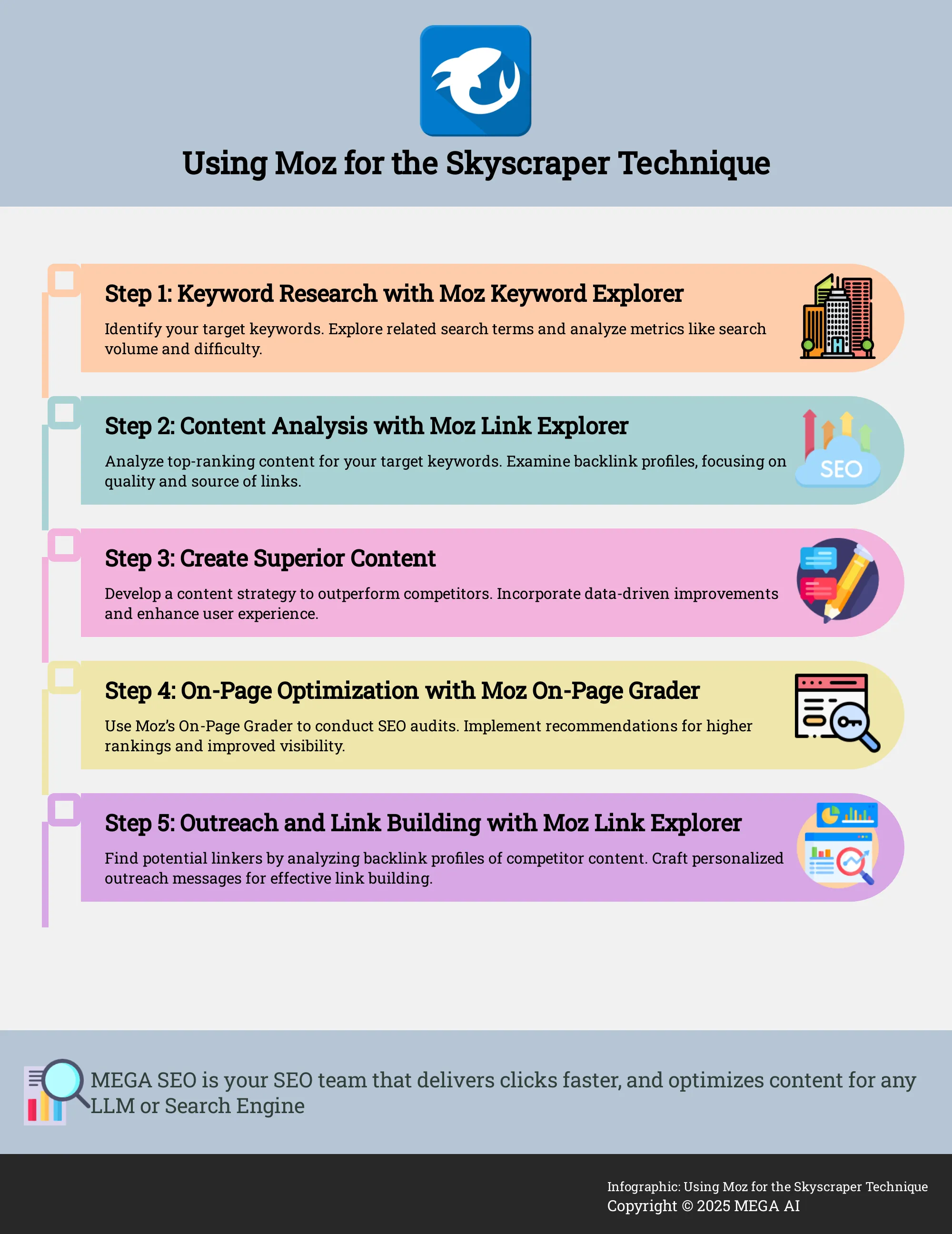
Your first step is to identify the foundational keywords for which you want to rank. Moz’s Keyword Explorer is excellent for this. Think about the topics central to your niche and start exploring related search terms. You're looking for keywords that people are actively searching for and that already have established, popular articles ranking for them. While some approaches suggest using various tools to discover popular terms and articles with significant backlinks, Keyword Explorer allows you to dig deeper into metrics like search volume and difficulty directly within the Moz ecosystem. As you research, keep an eye out for articles that have attracted a good number of referring domains, as this indicates it's a piece worth challenging and improving upon.
Analyze Top Content with Link Explorer
After you've pinpointed some promising keywords, it's time to see who currently owns the top spots for them. This is where Moz’s Link Explorer comes into play. By inputting a high-ranking URL, you can conduct a thorough backlink profile analysis. This isn't just about seeing how many links a page has, but understanding the quality and source of those links. You'll want to determine which websites are linking to the current top content. This information is valuable because these are the very sources you might later approach when you've created your superior piece. Analyzing these high-ranking pages helps you understand their authority and the specific link-building efforts that contributed to their success.
Assess Content Quality and Find Improvement Opportunities
With a list of top-ranking articles and an understanding of their backlink profiles, your next task is to critically assess their quality. Remember, the core idea of the Skyscraper Technique is to significantly improve upon existing content, not just to replicate it. Read the top articles thoroughly. Where are the gaps? Is the information outdated? Could it be more comprehensive, better designed, or include more engaging visuals? Perhaps the existing content is excellent, but you can offer a fresh perspective or more current data. It's crucial to avoid the common pitfall of not creating truly superior content; your goal is to build something that is demonstrably better, more thorough, or more valuable to the reader. This detailed assessment will form the blueprint for your own skyscraper content.
Analyze Existing Content with Key Moz Metrics
Once you've identified the top-ranking content for your target keywords, the next step is to dig deeper and understand why it's performing so well. This is where Moz's metrics come into play. By analyzing existing content through the lens of key Moz indicators, you can uncover valuable insights that will inform your own content creation process. This analysis helps you pinpoint the strengths you need to emulate and the weaknesses you can exploit to make your Skyscraper content even better.
What Are Domain Authority and Page Authority?
You'll often hear "Domain Authority" and "Page Authority" mentioned when discussing SEO, and for good reason. Domain Authority (DA) is a search engine ranking score developed by Moz that predicts how well a website will rank on search engine result pages. It’s scored on a 100-point logarithmic scale, with higher scores suggesting a greater ability to rank. Think of it as a measure of the overall strength and credibility of an entire website.
Page Authority (PA) is quite similar, but instead of looking at the whole domain, it focuses on the ranking strength of a single, specific page. So, while a site might have a high DA, individual pages on that site will each have their own PA score. Understanding these scores for competing content helps you gauge the level of authority you need to aim for with your own Skyscraper piece.
Assess Link Profiles and Backlink Quality
A crucial part of the Skyscraper Technique is building a strong backlink profile for your new, superior content. Moz tools are incredibly helpful here. You can use them to analyze the link profiles of the pages currently ranking at the top for your target keywords. This involves looking at more than just the sheer number of backlinks.
Pay close attention to the number of unique referring domains – that is, how many different websites are linking to the page. More importantly, assess the quality of these referring domains. Links from authoritative, relevant websites carry much more weight than links from low-quality or irrelevant sites. This analysis will help you identify potential link-building opportunities and understand the quality benchmark you need to meet or exceed.
Examine On-Page SEO Factors
Beyond authority and backlinks, the content itself plays a massive role in its ranking. Moz's tools can assist you in evaluating various on-page SEO factors of the competitor content. This includes looking at the overall quality and depth of the content. Is it comprehensive? Does it truly satisfy user intent?
Keyword optimization is another key element. Are the target keywords used naturally and effectively throughout the content, including in headings and meta descriptions? Also, consider user experience signals. For instance, Moz can provide insights into aspects like content length and the use of multimedia elements such as images or videos. These elements can significantly impact how engaging and valuable users find the page, which in turn influences its ability to attract backlinks and rank well.
Create Better Content with Moz Insights
Once you've identified promising content to "skyscraper," Moz provides the data you need to understand why it performs well and, more importantly, how you can create something even better. It’s about moving beyond guesswork and using concrete insights to shape your content. This approach helps you build a solid foundation for pieces that not only rank but also genuinely resonate with your audience. Think of Moz as your research partner, helping you dissect the competitive landscape and pinpoint specific opportunities for improvement. By leveraging its tools, you can gather intelligence on everything from keyword density and backlink quality to the on-page optimization factors of top-performing articles. This detailed understanding is crucial because creating "better" content isn't just about adding more words; it's about adding more value, clarity, and authority. The insights you gain will guide your content creation process, ensuring that your efforts are targeted and effective. For example, Moz can show you the exact search queries bringing users to competitor pages, the questions people are asking related to your topic, and the types of sites that link to existing high-quality content. This information is gold when you're aiming to build something that truly stands out and serves user needs more effectively. Let's look at how to translate Moz's data into a superior content piece.
Develop a Content Strategy to Outperform Competitors
To truly outperform competitors, you need a clear strategy. The Skyscraper Technique, at its core, involves finding content that already performs well for your target keywords and then creating something significantly better. Moz tools like Keyword Explorer and Link Explorer are invaluable here. They help you identify what your competitors are doing right—what topics they cover, what keywords they rank for, and who links to them. This isn't about copying; it's about understanding the existing benchmark so you can strategically plan how to surpass it. Your goal is to build upon their successes, address any content gaps they might have missed, and ultimately provide a more comprehensive resource for your audience.
Incorporate Data-Driven Improvements
Making data-driven improvements is key to the Skyscraper Technique. Instead of guessing what might work, you can use Moz to gather concrete information. For instance, when you analyze top-ranking pages for your target keyword, pay attention to the keywords they use, the depth of their content, and their backlink profiles. You can discover valuable keywords with Moz's Keyword Explorer, looking for terms with good search volume that the top pages might not be fully leveraging. This data allows you to make informed decisions about which keywords to target, what subtopics to include for greater depth, and how to structure your content to be more authoritative than what's currently ranking.
Improve User Experience and Engagement
Creating content that's simply longer isn't enough; it needs to offer a superior user experience. This means providing more in-depth information, incorporating better visuals like images or infographics, and ensuring your content is easy to read and engage with. When you analyze competitor content with Moz, look for opportunities to enhance these elements. Perhaps the top-ranking article is text-heavy with few visuals, or maybe it covers the topic well but could be organized more clearly. Focusing on these aspects can significantly improve user engagement and make your content more appealing to both readers and search engines, signaling that your piece is the most valuable resource available on the topic.
Optimize Your Skyscraper Content Using Moz
Once you've crafted your Skyscraper content, the next crucial step is to fine-tune it for search engines. This optimization phase is where you polish your piece, ensuring every element aligns with SEO best practices to give it the best possible chance of ranking. Moz offers powerful tools to help you meticulously review and enhance your content, transforming it from great to truly exceptional. Let's look at how you can use Moz to put the finishing touches on your masterpiece, ensuring it's ready to attract both readers and search engine attention. This detailed review can uncover opportunities you might have missed and solidify your content's foundation for success.
Use On-Page Grader for SEO Audits
Moz’s On-Page Grader is an invaluable ally in this process. Think of it as your personal SEO checklist, meticulously examining your content for areas that need a bit more attention. This tool evaluates your page against a variety of important SEO factors. It looks at how well you’ve used your target keywords, the effectiveness of your meta tags (like titles and descriptions), and the overall quality and structure of your content. By systematically addressing the suggestions from the On-Page Grader, you can significantly improve your content’s chances of being seen by the right audience and performing well in search results. It helps you pinpoint specific actions to take, making the optimization process clear and manageable.
Implement Moz's Recommendations for Higher Rankings
After the On-Page Grader gives you a roadmap, it's time to implement those recommendations to help your content climb the rankings. This often involves a final check using insights from tools like Moz's Keyword Explorer to ensure your keyword targeting is precise and that you've identified all relevant semantic terms. The goal is to create content that doesn't just meet the standard of existing top-ranking pages but clearly surpasses it in value and depth. Incorporating unique data, fresh perspectives, or original research can make a significant difference here. While building high-quality content is primary, remember that its authority is also enhanced by credible backlinks, a topic we'll explore more in outreach. Acting on these data-driven suggestions is key to outperforming competitors.
Execute Effective Outreach Strategies
Creating exceptional content is a significant step, but for the Skyscraper Technique to truly deliver results, effective outreach is essential. This is where you proactively share your superior piece with people who have already shown interest in similar topics by linking to existing, less comprehensive content. The goal is to convince them that your resource is a more valuable asset for their audience, meriting a link. Think of it as offering an upgrade; you've built something better, and now you're letting the right people know about it.
Moz provides tools that can simplify and refine this process. From identifying the right contacts to understanding their existing link profiles, you can approach your outreach with data-backed confidence. Remember, successful outreach is about building relationships and offering genuine value, not just asking for links. A well-planned strategy, supported by insights from tools like Moz, can dramatically increase your chances of acquiring high-quality backlinks that contribute to your SEO success. For businesses looking to streamline these efforts further, platforms like MEGA AI can help automate your SEO, including aspects of content optimization that make your outreach even more compelling by ensuring your content is always at its best.
Find Potential Linkers with Link Explorer
Once your superior content is live, the next step is to identify websites that are already linking to the competitor pieces you aimed to improve upon. This is where Moz’s Link Explorer becomes incredibly useful. By inputting the URLs of the original, lower-quality articles, you can see a list of all the sites linking to them. This list is your initial pool of outreach prospects.
Focus on sites with good Domain Authority and relevance to your topic. You can use these insights to analyze backlink profiles and understand who is linking out and why. Look for patterns: are they resource pages, blog posts citing sources, or something else? This information helps you tailor your pitch. The idea is to find webmasters who have already demonstrated a willingness to link to content on this specific subject; your job is to show them your piece is a better, more current option.
Craft Personalized Outreach Messages
One of the most common pitfalls in outreach is sending generic, impersonal emails. To stand out, you need to craft personalized messages for each prospect. This means going beyond just using their name. Reference a specific article on their site, mention something you admire about their work, or explain exactly why your content would be a valuable addition for their specific audience.
Avoid the mistake of using a single template for everyone. While having a basic structure is fine, the core of your message should be unique. Experts agree that failing to segment your outreach and personalize your communication significantly reduces your chances of getting a response, let alone a link. Show them you’ve done your homework and genuinely believe your content can benefit them and their readers. This thoughtful approach builds rapport and increases your success rate.
Follow Outreach Email and Follow-Up Best Practices
Effective outreach doesn’t stop with the first email. It’s important to follow up, but do so respectfully and strategically. A common best practice is to send a polite follow-up email a week or so after your initial message if you haven’t heard back. This serves as a gentle reminder without being overly aggressive or demanding.
Ensure your initial email clearly explains who you are, why you’re reaching out, and provides a direct link to your new, improved content. Highlight the specific value it offers over the content they currently link to. Remember, failing to promote the content effectively is a key reason why Skyscraper campaigns falter. Keep your emails concise, professional, and focused on the benefit to the recipient. Tracking your outreach efforts, perhaps in a simple spreadsheet, can help you manage follow-ups and measure response rates.
Track and Measure Your Success with Moz
Creating great Skyscraper content is a fantastic start, but the journey doesn't stop when you publish. To really see how your hard work is paying off and to build lasting success, you need a solid method for tracking and measuring your outcomes. This is where a comprehensive SEO toolset like Moz proves its worth. Without careful monitoring, even the best Skyscraper piece might not achieve everything it could. You need to understand what’s effective, what isn’t, and where you can make adjustments. Moz offers a suite of tools to help you keep tabs on important performance metrics. You can watch how your rankings shift for target keywords, see how much organic traffic your new content draws, and assess the quality and number of new backlinks you gain. This approach, grounded in data, helps you make smarter choices and clearly show the value of your content efforts. While platforms like MEGA AI can streamline many content and optimization tasks, knowing how to manually track and interpret these metrics with tools like Moz gives you deeper control over your SEO strategy. This cycle of creating, promoting, tracking, and adjusting is key to effective SEO.
Monitor Ranking and Traffic Gains
After your Skyscraper content goes live and you've started outreach, you'll naturally want to know if it's performing. The Skyscraper technique can yield impressive results, but it's important to do it right, as many marketers encounter setbacks. Moz helps you monitor your search engine rankings for your chosen keywords, so you can see if your content is moving up in the search results and how it compares to the competition.
Beyond rankings, it’s crucial to see if these improved positions bring in actual visitors. Moz allows you to analyze organic traffic to your Skyscraper page, showing how many people find your content via search. This is vital, as high rankings need to drive relevant traffic. Regularly checking these numbers helps you assess your content's initial impact and see if your keyword strategy is working.
Analyze New Backlinks and Their Impact
Earning high-quality backlinks is a primary objective of the Skyscraper Technique. SEO tools like Moz are designed to help you find popular articles by analyzing backlinks and understanding their impact. Specifically, Moz's Link Explorer lets you discover and analyze the new backlinks your content earns. You can examine their quality using metrics like Domain Authority and Page Authority, helping you see if you're getting links from authoritative sites.
This process also offers valuable feedback on your outreach. By seeing which messages or targets led to links, you can refine your future outreach. Understanding how these new links affect your content's authority helps you measure the SEO benefits of your Skyscraper efforts.
Refine Your Approach for Long-Term Success
The information you get from Moz is for ongoing improvement, not just a single report. Common mistakes with the Skyscraper Technique include not creating truly high-quality content or failing to promote it effectively. Regularly analyzing your rankings, traffic, and backlinks in Moz helps you spot where your content might need updates or further optimization to avoid these issues. Perhaps a competitor has new content, or searcher intent has changed.
This data helps you make smart decisions to refine your content strategy. You might update your Skyscraper piece, add visuals, or improve its on-page SEO using Moz’s suggestions. This continuous analysis and refinement keeps your content valuable and performing well over time, maintaining its search visibility.
Avoid Common Mistakes: Skyscraper Best Practices
The Skyscraper Technique sounds straightforward, and it can be incredibly effective when done right. However, like any powerful strategy, there are common pitfalls that can trip you up and prevent you from seeing those amazing results. Many marketers, unfortunately, make mistakes that hold their campaigns back. Understanding these potential missteps from the outset will help you refine your approach and significantly increase your chances of success. Think of it as learning from others so you don't have to learn the hard way. We're going to walk through some of the most frequent errors I've seen and, more importantly, how you can steer clear of them. By being mindful of these points, you'll be better equipped to build content that not only ranks but also earns valuable backlinks and authority.
Don't Overlook Content Quality for Metrics
It's easy to get caught up in the numbers—word count, keyword density, or the sheer volume of backlinks a competitor has. While Moz provides fantastic metrics to guide your strategy, these numbers should serve your content, not dictate its soul. One of the most common mistakes is not creating truly high-quality content, even if it technically "skyscrapers" by being longer. Your primary goal should always be to produce something genuinely better and more insightful. Avoid the temptation to simply copy or closely imitate existing articles. Instead, focus on bringing a fresh perspective or original research. Ask yourself: What unique value am I adding? While tools like MEGA AI can assist with content generation, the core of exceptional content still relies on delivering real solutions.
Don't Neglect Proper Outreach Techniques
Creating amazing content is only half the battle; the other half is getting the right eyes on it. This is where outreach comes in, and it's an area ripe for mistakes. A frequent misstep is overestimating your reach or targeting websites that are simply out of league for your current domain authority. Another common error is failing to segment your outreach. Sending a generic, one-size-fits-all email to dozens of contacts rarely works. Effective outreach is personalized and strategic. Make sure to include original insights in your content, and when you reach out to influencers or site owners, make it clear you've done your homework. Explain the unique benefits of your piece and the mutual value in linking.
Adapt to SEO Trends and Algorithm Changes
The world of SEO is anything but static. Search engine algorithms are constantly evolving, and what worked yesterday might not be as effective tomorrow. Relying on an outdated understanding of the Skyscraper Technique or SEO best practices can significantly hinder your success. It's crucial to stay informed about current trends and adapt your strategy accordingly. This means regularly using SEO tools like Moz to find top content and analyze their backlinks, keeping an eye on how they align with the latest search engine guidelines. Platforms like MEGA AI can also help by identifying when to update content after algorithm changes. Be prepared to refresh your skyscraper content to maintain its relevance. Flexibility and ongoing learning are key.
Integrate Moz with Other Tools for Better Skyscraper Results
While Moz offers a robust suite of tools perfect for executing the Skyscraper Technique, you can often achieve even better results by integrating its capabilities with other specialized platforms. Think of Moz as your strong foundation, and these other tools as ways to add extra layers of insight and efficiency to your content and outreach strategy. This multi-tool approach helps ensure you're covering all your bases and maximizing your chances of success.
For instance, when you're analyzing the backlink profiles of top-ranking content identified with Moz, using it alongside tools like Ahrefs or SEMrush can provide a more comprehensive view. You can use Moz to pinpoint high-ranking pages and then perform a thorough backlink analysis with another tool to identify specific sources where your superior content could earn a link. This combined approach helps you not only see who is linking but also understand the quality and context of those links more deeply. Similarly, while Moz tracks keyword rankings, pairing it with other analytics platforms or even Google Search Console can help you find popular articles and monitor a wider array of performance metrics, including social shares, giving you a fuller picture of your content's impact.
Ultimately, using Moz in concert with other SEO and content analysis tools allows you to gather diverse data points. This holistic view is invaluable for creating truly exceptional content—material that is not just better, but demonstrably more thorough, up-to-date, and engaging. By combining search data, link metrics from various sources, and Moz's powerful analytics, you can craft content that genuinely deserves to rank higher and become reference-worthy material in your niche.
Related Articles
- Grow Your Startup with Effective Content Marketing Tips
- SE Ranking vs Moz: Which SEO Tool Wins in 2025?
- Improve Google Rankings Fast: Actionable SEO Guide (2023)
- Crafting Compelling, Original Content for SEO Success - MEGA SEO | Blog
- Link Building Strategies: The Complete Guide
Frequently Asked Questions
What's the main point of the Skyscraper Technique? The Skyscraper Technique is really about finding content that's already doing well in search results and then creating something on the same topic that's noticeably superior. This could mean your version is more thorough, more current, or just designed in a way that's easier for people to use. The final piece is sharing it with sites that linked to the original, less impressive piece.
Why is Moz so helpful for this technique? Moz is a fantastic partner for the Skyscraper Technique because it gives you the data you need to make smart decisions. It helps you find those existing popular articles, understand why they're ranking by looking at things like their backlinks and authority, and then identify who you might reach out to once your better version is ready.
I've found some top content. What's the most important thing to do next to make mine better? Once you've identified the content you want to improve upon, the crucial next step is to really dig into why it's good, but also where its weaknesses lie. You're looking for gaps you can fill, information that could be updated, or ways to present the material more clearly or engagingly. Your goal isn't just to add more words, but to add significantly more value for the reader.
Is just making my content longer enough for the Skyscraper Technique? Simply making your content longer isn't the main goal, and it's a common misunderstanding. While comprehensive content is often better, the real aim is to create something that is demonstrably superior in quality, usefulness, or insight. This might mean it's more up-to-date, offers a unique perspective, includes better visuals, or is just easier to understand and use than what's already out there.
After I publish my "skyscraper" content, what's the one thing I absolutely can't forget to do? After you've put all that effort into creating fantastic content, the one step you absolutely can't skip is effective outreach. This means proactively sharing your new, improved piece with websites and individuals who have previously linked to the older, less comprehensive content you based your work on. Letting them know you have a superior resource for their audience is key to earning those valuable backlinks.