
If you’ve ever felt burned by an SEO agency that made big promises but delivered little transparency, Matt Diggity’s latest advice will resonate. He argues that the most important KPIs for long-term success aren't just rankings, but customer retention and a reputation for integrity. This focus on honest, transparent work is the foundation. He pairs this with a second, powerful idea: treating SEO as a numbers game. By combining a high-volume, data-driven approach with complete transparency, you can build a strategy that is both effective and trustworthy. Here, we’ll explore how to implement this model to achieve sustainable growth.
Key Takeaways
- Treat SEO like an investment portfolio: Avoid relying on a single high-performing page or keyword. Diversify your efforts across multiple content types and topics to build a resilient strategy that protects your traffic from algorithm shifts and market changes.
- Prioritize integrity to increase customer value: Focus on transparent communication and setting realistic expectations to build trust. This reduces client churn and improves Customer Lifetime Value (CLV), turning SEO into a sustainable source of long-term growth.
- Use automation to execute at scale: A high-volume, data-driven SEO strategy is difficult to manage manually. Use AI-powered tools to handle tasks like content creation and technical optimization, allowing you to scale your efforts while maintaining quality and strategic oversight.
Why Matt Diggity's 2025 SEO Advice Matters
When a seasoned SEO expert like Matt Diggity shares his outlook, it’s smart to listen. His advice for 2025 boils down to two powerful ideas: treat SEO as a numbers game and build your business on a foundation of integrity. This isn't just for agencies; it's a strategic shift that every business owner and marketing manager should consider. It moves the conversation from chasing single keywords to building a resilient, long-term growth engine.
The "numbers game" concept is about strategy, not gambling. Instead of pouring all your resources into one high-stakes project, Diggity advocates for diversification in SEO strategy. This means creating multiple assets, testing different approaches, and letting data guide your decisions. This method minimizes risk and multiplies your chances of finding what truly works. For many small businesses and startups, this sounds great in theory but feels impossible in practice due to limited time and budget.
The second piece of advice focuses on long-term health. Diggity points out that the most important KPI for sustainable growth is customer lifetime value (CLV), not just short-term traffic spikes. By prioritizing honest communication and delivering sustainable results, you build a reputation for integrity that reduces churn and attracts better customers. This shifts the focus from quick wins to building a business that people trust and stick with. Together, these principles create a roadmap for growth that is both scalable and sustainable.
What Does "SEO as a Numbers Game" Mean?
Thinking of SEO as a "numbers game" means shifting your perspective from searching for a single, magic-bullet keyword to building a broad, resilient strategy. It’s about understanding that success comes from volume, consistent effort, and data-driven testing, not from one perfect article or a handful of backlinks. This approach treats your SEO efforts like a diversified investment portfolio; some assets will perform exceptionally well, others will be average, and some might not pan out. The overall strength comes from the collective, not from any single piece.
For small businesses and startups, this can sound intimidating. "The Overwhelmed Founder" doesn't have time to manually play a high-volume numbers game. This is where the right systems and technology become critical. An AI-powered agent can execute a high-volume strategy autonomously, turning a complex, time-consuming process into a manageable one. By automating tasks like keyword research, content creation, and optimization, you can compete at a scale that was once only possible for large enterprises. This isn't about replacing strategy with automation; it's about using automation to execute your strategy at the necessary volume to win.
Adopt a Data-Driven Approach
A data-driven approach is the foundation of playing the numbers game effectively. It means every decision—from which keywords to target to how much to invest in content—is based on measurable data, not just intuition. A core part of this is understanding your business's core financial metrics. For example, measuring LTV (Customer Lifetime Value) allows you to determine a sustainable Customer Acquisition Cost (CAC) for your SEO channel. When you know what a customer is worth over their lifetime, you can confidently invest in acquiring them. This transforms SEO from a cost center into a predictable growth engine, where you can calculate the potential return on every action you take.
Replace Guesswork with Measurable Results
The days of optimizing based on gut feelings are over. To succeed, you need to replace guesswork with a system of testing and measuring. Understanding and improving Customer Lifetime Value is central to this, as it provides a clear metric to aim for. Instead of just chasing rankings, you can focus on attracting the right kind of traffic—visitors who are more likely to become high-value, long-term customers. This is where autonomous tools shine. An AI agent like MEGA's Lindsay can run a programmatic SEO strategy, creating and optimizing hundreds of pages at once. It continuously analyzes performance data to refine its approach, ensuring your efforts are always aligned with measurable business outcomes.
Focus on Metrics That Drive Growth
Playing the numbers game means focusing on metrics that directly contribute to business growth, not just vanity metrics. While ranking number one for a keyword feels good, it’s meaningless if it doesn’t drive traffic, leads, or sales. True growth comes from a diversified strategy. Instead of betting everything on a few high-competition keywords, a portfolio approach spreads your risk and creates multiple pathways for customers to find you. As noted by Search Engine Journal, diversification plays a major role in SEO success. This could mean targeting a wide range of long-tail keywords, creating different types of content, and building a varied backlink profile. This method creates a more stable and predictable flow of organic traffic that is resilient to algorithm updates and market changes.
How Can Diversification Protect Your SEO Investment?
Thinking of your SEO strategy like a financial portfolio is a smart move. You wouldn't put all your savings into a single stock, and the same logic applies to your online presence. Diversification in SEO means spreading your efforts across different keywords, content types, and strategies to minimize risk. When you rely on just one high-ranking page or a small set of keywords, a single Google algorithm update or a new competitor can seriously damage your traffic and leads.
A diversified approach creates a more resilient and stable foundation for growth. By not putting all your eggs in one basket, you can mitigate risks from algorithm changes or shifts in user behavior. This strategy is central to treating SEO as a numbers game. It’s not about betting on one lucky shot; it’s about systematically increasing your odds of success across the board. A well-rounded SEO strategy that includes various projects helps maintain consistent traffic, ensuring that even if one area takes a hit, your other assets continue to perform and protect your overall investment.
Avoid Relying on a Single Project
Putting all your resources into a single SEO project is a high-stakes gamble. For many small businesses, this looks like focusing exclusively on ranking for one or two "money" keywords. While the potential payoff seems huge, the risk is equally significant. If an algorithm change devalues that content or a competitor with deeper pockets outranks you, your primary source of organic traffic could vanish overnight. This leaves you back at square one, with little to show for your investment.
Instead, it's better to spread your efforts across multiple initiatives. This could mean targeting different customer segments with unique landing pages or building out content for various stages of the buyer's journey. By not putting all your eggs in one basket, you create a safety net. An automated system like MEGA AI's SEO agent can manage these parallel projects, ensuring each one gets the attention it needs to grow without overwhelming your team.
Build Multiple Revenue Streams with SEO
A diversified SEO strategy does more than just protect your traffic; it can create multiple streams of income for your business. Different types of content naturally align with different monetization models. For example, detailed service pages are designed to capture high-intent leads ready to make a purchase. Informational blog posts, on the other hand, can generate revenue through affiliate links or by promoting digital products. This approach builds a more robust business model.
By optimizing for various keywords and content formats, you can create a powerful ecosystem that supports your overall goals. Many SEO case studies show how this multi-pronged approach leads to more sustainable, long-term success. Think of a local contractor who has service pages for lead generation, a blog reviewing tools with affiliate links, and a YouTube channel with DIY tutorials that earns ad revenue. If one channel experiences a slow month, the others can help stabilize income.
Take a Portfolio Approach to Content
Adopting a portfolio approach allows you to balance risk and reward within your content strategy. Just like in investing, you should have a mix of assets. Some content will be your blue-chip stock—safe, reliable articles targeting long-tail keywords that consistently bring in qualified traffic. Other pieces might be more speculative, targeting highly competitive, high-volume keywords that could deliver massive returns if they rank. This balanced method ensures you get steady results while still aiming for significant breakthroughs.
This strategy involves creating various formats, from in-depth blog posts and case studies to programmatic landing pages and video content. Experimenting with different topics and angles helps you discover what resonates most with your audience and what search engines favor. A portfolio approach enhances your chances of ranking for a wide range of keywords and attracts different audience segments, increasing your overall reach.
What Is Customer Lifetime Value (CLV)?
When you treat SEO as a numbers game, one of the most important figures to track is Customer Lifetime Value (CLV). In simple terms, CLV is a metric that estimates the total revenue your business can expect from a single customer throughout your entire relationship. It encourages you to shift your focus from the short-term win of one sale to the long-term value of building a loyal customer base. For small businesses and startups, this perspective is a game-changer. Instead of just celebrating a new transaction, you start thinking about how to keep that customer engaged and happy for years to come.
Understanding CLV helps you make smarter, more sustainable decisions across your business. It informs everything from your marketing budget and product development to your customer service approach. When you know what a customer is worth over time, you can confidently invest in the strategies that attract and retain the best ones. This long-term view aligns perfectly with an integrity-first approach, where you’re not just chasing quick wins but building a foundation of trust that fuels predictable growth. It’s about recognizing that your most valuable asset is the continued business of your customers.
How CLV Applies to SEO
Understanding CLV is crucial for a sophisticated SEO strategy because it helps you focus on attracting profitable customers, not just website traffic. When you know which types of customers have the highest lifetime value, you can tailor your content and keyword strategy to reach them. This means moving beyond high-volume, generic keywords and targeting more specific, intent-driven phrases that people who need your long-term solution are searching for.
This approach allows you to guide your marketing strategies with much greater precision. For example, if you find that customers who first buy a specific product tend to make multiple repeat purchases, you can increase SEO efforts for content related to that item. This turns SEO from a simple traffic tool into a powerful driver of long-term profitability.
Let CLV Shape Your Marketing Budget
Knowing your CLV gives you the confidence to invest properly in your marketing channels, including SEO. When you understand that the average customer will spend $2,000 with your business over two years, spending a few hundred dollars on SEO to acquire them becomes a clear and justifiable decision. This data-driven approach removes the guesswork from your budget and helps you prove your return on investment.
By identifying your most profitable customer segments, you can focus your resources on acquiring more people like them. For small businesses and startups where every dollar counts, this is critical. An affordable, high-impact solution like Gomega's SEO agent becomes even more valuable when you can directly tie its cost to the acquisition of high-CLV customers, ensuring your marketing spend is both efficient and effective.
Measure and Optimize CLV for Better ROI
CLV isn't a metric you calculate once and forget. Its real power comes from continuously measuring it and using the insights to improve your business. Using LTV analysis empowers you to make data-driven decisions that directly contribute to sustainable growth. By tracking CLV, you can test different strategies and see what actually works to increase customer loyalty and spending over time.
Effective strategies often involve improving the customer onboarding process, acting on feedback, and implementing loyalty programs. For example, you might notice that customers who read your setup guides have a 20% higher CLV. With that insight, you can optimize those guides for search and promote them more heavily. This continuous loop of measuring, learning, and optimizing is what separates businesses that just survive from those that thrive.
How Does Integrity Lead to Long-Term Success?
In the world of SEO, it’s easy to get lost in metrics, algorithms, and technical jargon. But as Matt Diggity points out, one of the most critical, yet often overlooked, factors for sustainable growth is integrity. It’s not just about being honest; it’s about building a business foundation strong enough to withstand algorithm updates and market shifts. When clients trust you, they stick with you, turning short-term projects into long-term partnerships. This focus on integrity directly impacts your most important KPIs: customer lifetime value and churn. A solid reputation doesn't just keep current clients happy; it becomes your most powerful tool for attracting new ones.
Build Trust with Transparent SEO
Trust is the currency of any service-based business, and SEO is no exception. Diggity emphasizes this by stating, "Your number one KPI is customer lifetime and churn. Your number two KPI is your reputation of integrity." For small business owners, who are often "Overwhelmed Founders," handing over the keys to their online presence requires immense faith. The classic agency model can sometimes feel like a black box, where you pay a hefty fee without seeing exactly what work is being done.
Building trust starts with transparency. This means clear communication, honest reporting, and straightforward pricing. When clients can see the tasks being performed and understand the strategy behind them, their confidence grows. This visibility demystifies the process and turns a client relationship into a true partnership, fostering the loyalty needed for long-term success.
Why Honest Communication Reduces Churn
Client churn can sink an agency or stall a company's growth. According to Diggity, the antidote is simple: "Your customers need to know your word is gold if you expect them to stick around." This means delivering on your promises and, just as importantly, setting realistic expectations from the start. SEO is a marathon, not a sprint, and being upfront about timelines and potential challenges prevents disappointment down the road.
Honest communication is about more than just monthly reports. It’s about providing a clear view of the day-to-day work that goes into a successful SEO campaign. When a client can see the content being created, the technical fixes being implemented, and the keywords being targeted, they understand the value you provide. This continuous, transparent dialogue reinforces that you are actively working towards their goals and builds a resilient relationship that reduces the likelihood of churn.
How Reputation Impacts Customer Retention
A strong reputation is a growth multiplier. While excellent results keep your current clients on board, a reputation for integrity is what brings new ones to your door. As Diggity notes, "if this reputation exceeds you, prospective clients are going to be lining up... to work with you." For busy founders and marketing managers, choosing a partner with a proven track record of honesty and reliability simplifies their decision-making process.
This word-of-mouth endorsement is more powerful than any ad campaign. It’s built one successful partnership at a time, grounded in consistent delivery and transparent practices. When you prioritize integrity, you’re not just servicing an account; you’re building brand advocates. Over time, this creates a sustainable pipeline of high-quality leads, allowing you to grow your business on a solid foundation of trust. If you'd like to see how an autonomous agent operates with full transparency, you can book a demo to learn more.
How Can You Build Integrity in Your SEO?
Integrity is the foundation of any successful business relationship, and SEO is no exception. When customers trust you, they stick around. As Matt Diggity puts it, your reputation for integrity is a top key performance indicator, second only to customer lifetime value. For small business owners and startup founders who have been burned by agencies making empty promises, building that trust is everything. It’s the difference between a short-term contract and a long-term partnership that drives real growth.
This means moving beyond flashy sales pitches and focusing on clear, consistent, and sustainable practices that deliver measurable results. It’s about showing your work, setting honest timelines, and building an SEO strategy that delivers long-term value instead of relying on short-term hacks that can put your business at risk. This commitment to transparency and sustainability isn't just good ethics; it's good business. It reduces churn, improves your reputation, and ultimately leads to more predictable growth for both you and your clients. Here’s how you can build integrity into your SEO process from the ground up.
Deliver on Promises and Set Realistic Expectations
The fastest way to lose a client’s trust is to promise results you can’t deliver. Integrity in SEO starts with setting realistic expectations from day one. This means being upfront about timelines—explaining that meaningful SEO results often take 3-9 months—and focusing on the process rather than guaranteeing specific rankings. Instead of promising the #1 spot on Google, promise to execute a consistent, data-driven strategy. At MEGA AI, our SEO agent operates on this principle. We don’t sell vague promises; we deliver a full-service management plan that includes content generation, technical fixes, and keyword strategy. The promise is in the execution of these tasks, which you can monitor. This approach helps "The Overwhelmed Founder" feel secure, knowing that a clear plan is being implemented consistently to achieve their goals.
Communicate Transparently and Report Progress
For a customer to believe your "word is gold," they need to see what you’re doing. Transparent communication is non-negotiable. This involves providing clear reports on the work being done and the progress being made. When clients have visibility into the process, they understand the value you’re providing, even before the traffic and leads start rolling in. This is where many traditional models fall short, leaving clients in the dark. We built MEGA AI with "Task Visibility" at its core. You get a clear view of every task our agents perform, from writing a new blog post to fixing a technical issue. This human-in-the-loop oversight ensures you’re always aware of the strategy and its execution. This level of transparency builds confidence and proves that you are actively working toward the client’s success, solidifying a relationship built on trust.
Create Sustainable SEO Practices
Integrity also means building something that lasts. Relying on a single tactic or chasing algorithm loopholes is a risky game that can get your site penalized. A sustainable SEO strategy is a diversified one, incorporating on-page content, technical health, and a healthy backlink profile. This portfolio approach protects your investment and creates multiple avenues for attracting organic traffic. A sustainable strategy focuses on creating high-quality, relevant content and earning authority over time. This involves a comprehensive plan that covers all pillars of SEO. By diversifying your backlink profile and consistently publishing valuable content, you build a strong foundation that can withstand algorithm updates and market shifts. This long-term approach is the ultimate demonstration of integrity, as it prioritizes the client’s lasting success over temporary gains.
How Do You Measure Customer Lifetime Value?
Understanding how much a customer is worth over their entire relationship with your business is a game-changer. This metric, known as Customer Lifetime Value (CLV), helps you make smarter decisions about your marketing budget, especially for long-term channels like SEO. It shifts your focus from one-off sales to building sustainable, profitable growth. By knowing what a customer is truly worth, you can figure out how much you can afford to spend to acquire them and which customer segments deserve the most attention.
Key Metrics and Calculation Methods
At its core, Customer Lifetime Value (CLV) is an estimate of the total revenue you can expect from a single customer account. While there are complex ways to figure this out, a straightforward approach is a great starting point. You can get a solid estimate by dividing the average revenue a customer brings in over a period (like a year) by your customer churn rate for that same period. This gives you a simple CLV figure that represents the expected value of a customer. Think of it less as a perfect, fixed number and more as a guide to inform your LTV optimization efforts and overall business strategy.
How to Analyze CLV with Data
A basic CLV calculation is useful, but the real insights come from digging a bit deeper into your data. Go beyond the average and start segmenting your customers. Look at their purchasing patterns, how often they buy, and what they buy. This LTV analysis helps you identify your most valuable customers—the ones who spend more and stick around longer. By understanding the behaviors of these key segments, you can tailor your marketing and retention strategies to attract more customers like them. This ensures you’re focusing your resources where they will have the greatest impact on your bottom line.
Use CLV Insights to Inform Your SEO Strategy
Knowing your CLV is crucial for building an effective SEO strategy. It directly informs how much you can sustainably spend on customer acquisition. If you know the average customer will generate significant revenue over their lifetime, you can confidently invest more in the SEO campaigns needed to reach them. This metric helps you justify the long-term nature of SEO. Instead of just chasing quick wins, you can focus on attracting high-value customer segments with targeted content. This approach moves your strategy beyond acquisition to building a loyal customer base, which is the foundation for sustainable, profitable growth.
What Technology Can Help You Scale SEO?
Treating SEO as a numbers game requires a strategic shift from making a few big bets to making many small, calculated moves. But managing dozens of content pieces, tracking keyword clusters, and building a varied backlink profile can feel overwhelming, especially for a small team. This is where technology becomes your most valuable player. The right tech stack doesn't just make your job easier; it makes a high-volume, data-driven strategy possible.
Instead of manually tracking every variable, you can lean on systems that automate, analyze, and execute. This allows you to scale your efforts without scaling your headcount. Technology helps you manage a diversified portfolio of SEO projects, track the long-term value of your customers, and ultimately, automate the entire growth process. By implementing the right tools, you move from being a hands-on operator for every single task to a strategist overseeing a well-oiled machine. This is how you win the numbers game without getting lost in the numbers.
Tools to Diversify Your SEO Projects
A diversified SEO strategy is your best defense against algorithm updates and market shifts. Instead of pouring all your resources into one high-stakes keyword, a modern approach involves spreading your efforts across multiple content types, topics, and link sources. Technology makes this portfolio approach manageable. Tools for programmatic SEO, for example, allow you to create hundreds of targeted pages at scale. Content management systems and rank trackers help you monitor the performance of your entire content portfolio, not just a few hero posts. This diversification of your SEO efforts minimizes risk and creates multiple pathways for organic traffic to find you.
Systems to Automate Customer Value Tracking
Playing the numbers game effectively means focusing on the metrics that matter most to your bottom line. Traffic and rankings are important, but the ultimate goal is attracting and retaining high-value customers. This is where tracking Customer Lifetime Value (CLV) comes in. Customer Lifetime Value is a metric that predicts the total revenue your business can expect from a single customer account. Manually calculating this is nearly impossible. Automated systems, like CRMs and analytics platforms, can connect user behavior to revenue, giving you a clear picture of which SEO campaigns are attracting your most profitable customers. This data allows you to double down on what works and build a sustainable, long-term growth engine.
AI-Powered Solutions for Scalable Growth
Tools and systems are great for managing your strategy, but AI-powered solutions can execute it for you. This is the key to truly scalable growth. AI agents like MEGA AI’s Lindsay go beyond simple automation. They act as autonomous operators that can handle full-service SEO management, from keyword strategy and content generation to technical fixes and programmatic SEO. As MEGA AI puts it, "These are real Agents who come up with a strategy and execute the tasks needed to hit your goals." For busy founders and small businesses, this means you get the power of an entire marketing team working around the clock to scale your SEO efforts, freeing you to focus on running your business.
How Do You Balance Automation and Quality?
Scaling your SEO efforts to treat it like a numbers game can feel like walking a tightrope. On one side, you have the immense pressure to produce more content, build more links, and test more strategies to find what works. On the other, you have the non-negotiable need for quality and integrity, which are the bedrock of customer trust and long-term growth. How do you increase volume without letting your standards slip?
The key isn't to choose between speed and quality. It's about building a system where automation handles the repetitive, data-heavy lifting, freeing up human oversight to focus on strategy and maintaining high standards. This approach allows you to play the numbers game effectively while ensuring every action reinforces your brand's reputation. It’s about making automation a tool for consistency, not a replacement for integrity.
Maintain High Standards as You Scale
As Matt Diggity points out, your top key performance indicator (KPI) should be customer lifetime value and churn, with your reputation for integrity coming in a close second. This means that as you scale, the quality of your work can't dip. For many small businesses, this is the primary challenge. Hiring a large team or an expensive agency to increase output often leads to inconsistent results or prohibitive costs.
This is where leveraging the right technology makes a difference. An AI-powered system is built to execute tasks at a massive scale while adhering to a consistent quality standard. For example, MEGA AI’s SEO agent, Lindsay, can manage everything from content generation to technical fixes programmatically. This ensures that whether you’re publishing one article or one hundred, the underlying strategy and execution quality remain consistently high, helping you build a strong brand reputation without the massive overhead.
The Role of Human Oversight in Automation
Automation can feel like a black box, which is a major concern when your brand's integrity is on the line. Diggity emphasizes that customers need to know "your word is gold if you expect them to stick around." Handing over the keys to a fully automated system requires an immense amount of trust, and that trust is only possible with transparency.
True "human-in-the-loop" automation doesn't mean taking humans completely out of the equation. Instead, it provides them with complete visibility and control. At MEGA AI, we built our platform with "Task Visibility" at its core. Even when running on Autopilot mode, you can see every single task the agent is performing on your behalf. This transparency ensures you’re never in the dark. It allows you to trust the system to execute at scale while you maintain strategic oversight, ensuring the automated actions always align with your brand's promise.
Implement QA Systems for Consistent Results
To maintain quality at scale, you need robust quality assurance (QA) systems. This doesn't just mean a final check before something goes live. It means building quality control into every step of the process, from keyword research to content updates. A diversified approach to QA, much like a diversified SEO strategy, creates resilience and ensures consistent performance over time.
An advanced AI platform has these QA systems built-in. MEGA AI’s agents are trained on over 450 million Google Search data points, so their actions are based on proven models of success. The system includes features like the Maintenance Agent, which automatically updates existing content to improve its click-through rate and rankings. This is a form of continuous, automated QA that refines your assets over time. It’s a system designed not just to create, but to consistently optimize performance and deliver measurable results.
Turn Strategy into Action: Your Next Steps
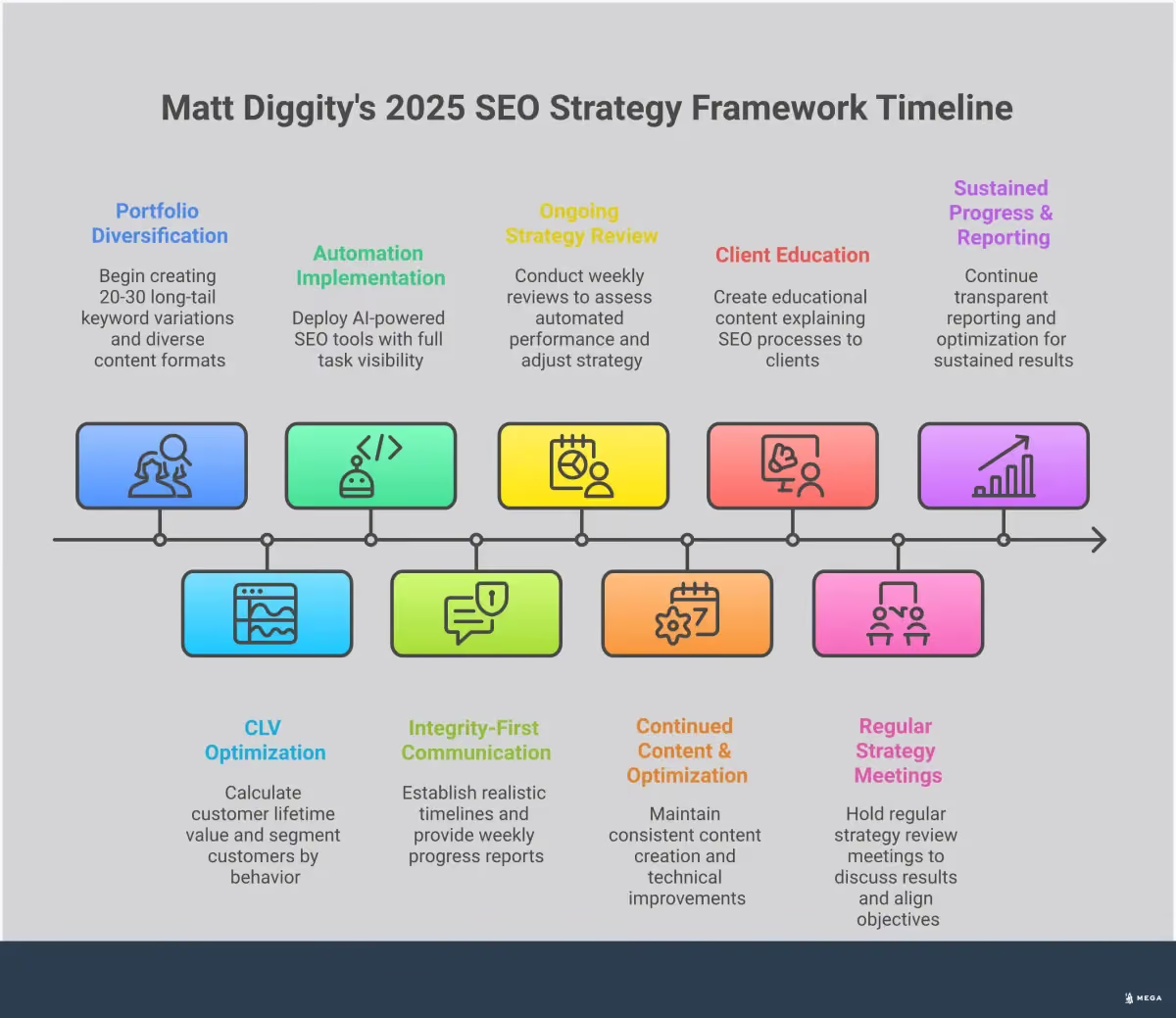
Adopting a strategy that treats SEO as a numbers game while prioritizing integrity is a powerful shift. It moves you from chasing algorithm updates to building a resilient, long-term asset for your business. For busy founders and marketing managers, the challenge is turning this high-level advice into a concrete plan. Here’s how you can start applying these principles today.
First, take a hard look at your current strategy and embrace diversification in your SEO efforts. Are you overly dependent on a small set of keywords or a single high-performing blog post? A portfolio approach to content protects you from volatility. Start by identifying new content clusters, exploring different formats like video or programmatic pages, and building multiple pathways for customers to find you. This spreads your risk and creates more stable, predictable growth over time.
Next, reframe your goals around Customer Lifetime Value (CLV). Instead of focusing solely on traffic and initial conversions, analyze which channels and keywords bring in the most profitable long-term customers. This data should guide your content strategy. Create resources that support customers post-purchase, answer their follow-up questions, and build loyalty. An SEO strategy optimized for CLV doesn't just attract visitors; it creates fans who stick around.
Finally, find a way to execute at scale without sacrificing quality. This is where technology becomes your most valuable partner. For most small businesses, manually managing a diversified, data-driven SEO strategy is impossible. An AI-powered solution like MEGA AI’s SEO agent can handle the full scope of tasks—from programmatic content creation to technical fixes and backlink acquisition. It allows you to play the numbers game effectively while you focus on running your business. When choosing a tool or partner, demand transparency. Your reputation depends on it, so insist on clear reporting and visibility into all the work being done, a principle reflected in our straightforward pricing and task-level reporting.