
If you’re a small business owner, you probably have deep expertise in very specific areas that larger competitors ignore. The problem is that this valuable knowledge is often hidden, buried in product catalogs or known only by your most experienced salesperson. Long-tail marketing is the process of uncovering these hidden gems and turning them into a powerful customer acquisition engine. Instead of focusing on your top 20% of bestsellers, this strategy helps you attract customers by creating content around the other 80% of your offerings. This article will show you how to find these opportunities and create content that connects with high-intent buyers.
Key Takeaways
- Prioritize Search Intent Over Volume: Instead of competing for broad, popular keywords, target specific phrases that signal a user is ready to act. This strategy connects you with highly qualified customers who are further along in their buying journey.
- Uncover Keywords in Your Own Data: Your best long-tail keyword ideas are already in your Google Search Console reports, internal site search logs, and customer service questions. Turn these real queries into targeted content to meet specific user needs.
- Scale Your Content Creation with Automation: A successful long-tail strategy requires a high volume of content, which is a challenge for small teams. Use AI-powered tools to handle the research, writing, and optimization, making it possible to execute this strategy efficiently.
What is Long-Tail Marketing?
Think of the most popular products you sell or the main service you offer. These are your "bestsellers," and they likely attract broad, competitive search terms. Long-tail marketing is a strategy that shifts focus from these few high-volume headliners to the massive number of less common, highly specific search queries. For example, instead of targeting the keyword "accountant," a long-tail approach would target "accountant for freelance graphic designers in Austin."
While each long-tail keyword brings in a small amount of traffic on its own, the combined volume from hundreds or thousands of these specific phrases can far exceed the traffic from a handful of broad terms. More importantly, this traffic is often higher quality. Someone searching for a specific solution is usually closer to making a purchase decision than someone browsing with a general query. A well-executed long-tail SEO strategy helps you connect with these high-intent customers right when they need you. This approach allows small and local businesses to find valuable traffic without competing directly with large companies for the most popular keywords.
Go Beyond the Bestsellers
Most businesses focus their marketing efforts on their top-selling products, but a huge amount of potential revenue is often hidden in the rest of their catalog. As one B2B marketing expert noted, up to 80% of a company's offerings can be "buried in catalogs or a salesperson's mind." This is the long tail, and it represents a significant, untapped opportunity. By creating content and pages that speak to these niche products or services, you can attract customers who are looking for exactly what you offer, even if it’s not your most popular item. This approach allows you to serve specific needs that your larger competitors might ignore.
Why Most Businesses Miss This Opportunity
Many businesses overlook the long tail because they make a common mistake: chasing high search volume instead of focusing on customer intent. It’s easy to get fixated on keywords that get thousands of searches per month, but these terms are often incredibly competitive and attract users who are just browsing. A more effective approach is to target less popular keywords that signal a clear need. A search for "emergency roof repair after hail storm" has much stronger purchase intent than a search for "roofer." The other major hurdle is scale. Creating content for hundreds of specific niches feels daunting, which is why many businesses stick to just a few general topics.
Why the "Unpopular" 80% Drives More Business
Most businesses focus on their top sellers—the 20% of products or services that bring in the most revenue. But what about the other 80%? This is the "long tail," a massive collection of niche items, specific services, and detailed product variations that often get overlooked. While each one might not sell in high volume, together, these specialized offerings can match or even exceed the sales from your most popular items.
For small and local businesses, this is a huge opportunity. You likely have deep expertise in very specific areas that larger competitors ignore. The problem is that this knowledge is often hidden. As one expert puts it, 80% of a company's offerings are "buried in catalogs or a salesperson's mind." Long-tail marketing is the process of digging up these hidden gems and putting them to work for you. By creating content around these specific topics, you attract customers who are further along in their buying journey and looking for exactly what you offer. MEGA AI's SEO agent is designed to find these opportunities and create the content you need to capture this high-intent traffic.
Find Hidden Value in Your Analytics
Your website's analytics are a goldmine for long-tail opportunities. Instead of just looking at your top-performing pages, dig into the search queries that bring people to your site. You’ll likely find highly specific, multi-word phrases that you aren't intentionally targeting. These are your customers telling you exactly what they want in their own words. For example, Neil Patel highlights how WPBeginner grew its search traffic by 20% in just two months by creating content around the long-tail keywords they found in their analytics. Each of these queries represents a specific need you can solve with a targeted blog post, service page, or product description.
Capture Your Team's Sales Knowledge
Some of your best marketing insights won't come from a dashboard. They come from the people who talk to your customers every day. Your sales and customer service teams know the exact questions, pain points, and unique requests that customers have. This is invaluable information for your long-tail strategy. By turning these common questions into content, you not only answer a potential customer's query but also build trust and authority. Using AI can make this process more efficient, helping you achieve more with the same resources. Instead of letting this knowledge stay with just a few team members, you can scale it to attract new business around the clock.
Maximize Your Data with Long-Tail Marketing
Your business is likely sitting on a treasure trove of valuable data you aren't fully using. Think about your detailed product catalogs, internal spec sheets, or even the specialized knowledge your most experienced salesperson has. This information holds the key to attracting highly motivated customers. Long-tail marketing is the strategy that turns these detailed data points into a powerful customer acquisition engine.
Instead of focusing only on broad, popular search terms, this approach targets the thousands of specific, less common phrases that reveal exactly what a customer wants. By creating content around these niche topics, you make your business discoverable to buyers who are much further along in their decision-making process. It’s about making every piece of your business knowledge work for you online.
Turn Data Points into Revenue
Much of a company’s most valuable information is "buried in catalogs or a salesperson's mind." When that salesperson retires or that catalog isn't fully digitized for search, that knowledge disappears. Long-tail marketing prevents this loss by systematically turning each data point into a discoverable asset. Imagine creating a specific page or article for every product model, every unique service, or every common customer question. When a potential customer searches for that exact thing, you’re the one who shows up. Even if a niche product only gets one search and one sale a year, that’s a highly profitable customer acquisition you would have otherwise missed.
Solve the "Too Many Products" Problem
If you have a large inventory, it’s easy to focus all your marketing efforts on the top 20% of bestsellers. But what about the other 80%? A long-tail strategy ensures your entire catalog gets the attention it deserves. As Vinci Digital notes, specialized products "can match or exceed the sales from more popular items" when marketed correctly. By creating content for each item, you give every product a chance to be found by its perfect customer. This approach transforms your large product catalog from a management challenge into a significant marketing advantage, making every single item work to bring in new business.
How Long-Tail Marketing Differs from Traditional SEO
Traditional SEO and long-tail marketing both use search to attract customers, but their methods are quite different. Think of traditional SEO as trying to produce a blockbuster hit by targeting a huge audience with a broad keyword. Long-tail marketing is more like building a library of niche classics, focusing on a vast number of specific interests. Understanding this distinction helps you build a smarter strategy that plays to your business's strengths.
Focus on Volume, Not Just Popularity
Traditional SEO often chases "head terms"—short, popular keywords like "women's boots." The competition is intense. Long-tail marketing targets a large quantity of longer, specific phrases, such as "black leather waterproof boots for winter." While each of these terms gets fewer searches, their combined traffic can easily surpass that of a single popular keyword. The strategy is to win hundreds of small races instead of one big one. This approach builds a wide net that captures organic traffic from many different, highly specific searches, creating a more resilient foundation for your online presence.
Get Better Results on a Small Budget
For small businesses, competing with major brands for popular keywords can drain resources with little to show for it. Long-tail marketing provides a clear advantage. Because long-tail keywords are less competitive, it costs less time and money to rank for them. Instead of spending your entire budget trying to get on the first page for one difficult term, you can secure top positions for dozens of easier ones. This approach delivers a much higher return on investment, allowing you to generate leads without needing a massive SEO budget to see results.
Connect with Highly-Targeted Audiences
A person searching for "laptops" has broad intent. Someone searching for "lightweight laptop for college student under $500" has a specific need. This is the core strength of long-tail marketing: it connects you with users who have high search intent. These searchers are often closer to making a purchase because they've already defined what they're looking for. By creating content that directly answers their specific questions, you attract highly qualified visitors who are more likely to convert. You're not just getting more traffic; you're getting the right traffic—people actively seeking the solutions you provide.
The SEO Power of Long-Tail Keywords
Focusing on long-tail keywords is one of the most effective ways for small businesses to gain traction with SEO. While broad, one- or two-word terms (called "head terms") get massive search volume, they are incredibly competitive and expensive to rank for. Think about trying to rank for a term like "shoes." You'd be competing against global giants with massive budgets. It's a tough, uphill battle that can drain resources with little to show for it.
Long-tail keywords, on the other hand, are longer and more specific search phrases, usually three or more words. Think "women's waterproof hiking boots for wide feet." While fewer people search for this exact phrase each month, the ones who do are much further along in their buying journey. They know exactly what they want and are often ready to make a purchase.
By targeting these specific phrases, you sidestep the intense competition for head terms and connect directly with customers who are ready to act. The collective traffic from hundreds of these niche keywords can easily surpass the traffic from a single, high-volume term. This approach allows you to build a strong foundation for your SEO strategy by attracting highly qualified visitors who are more likely to convert into customers. It's about working smarter, not just harder.
Lower Competition, Higher Intent
One of the biggest advantages of long-tail keywords is the lack of competition. Most of your competitors are busy fighting over the same popular head terms, leaving a wide-open field for more specific phrases. This gives your business a realistic chance to appear on the first page of search results without a massive marketing budget.
More importantly, these keywords signal a much higher search intent. A person searching for "restaurants" is likely just browsing. But someone searching for "best family-friendly Italian restaurant near downtown" is looking for a place to eat dinner tonight. By creating content that answers this specific query, you meet the user at the exact moment of need, making them far more likely to click, call, or visit.
Build Authority by Being Specific
When you consistently create content that answers very specific questions, you start to build topical authority. You become the go-to expert for a particular niche. For example, if a local plant shop writes articles on "how to care for a fiddle leaf fig in a dry climate" and "best low-light plants for apartment living," they establish themselves as a knowledgeable resource.
This does two things. First, it builds trust with potential customers, who see you as more than just a seller. Second, it signals to search engines like Google that your website is a credible source of information on that topic. Over time, as you cover more related long-tail queries, Google will begin to rank your site more favorably for broader terms as well, creating a powerful flywheel effect for your organic traffic.
Win at Voice Search with Conversational Keywords
The way people search is changing. With the rise of smart speakers and voice assistants, more searches are being spoken rather than typed. Voice queries are naturally conversational and almost always long-tail. People don't say "pizza near me." They ask, "Hey Google, where can I get a slice of deep-dish pizza that's still open?"
By optimizing your content for these natural language questions, you position your business to capture this growing segment of search traffic. This is especially critical for local businesses, as many voice searches are for local products and services. Creating FAQ pages or blog posts that directly answer the questions your customers are asking is a simple yet effective way to get ahead in the world of voice search.
How to Find Your Long-Tail Opportunities
Finding your long-tail opportunities is less about inventing new ideas and more about uncovering the specific needs your customers already have. These highly-focused keywords are hidden in your own data, your customer conversations, and the gaps your competitors have left in the market. The key is knowing where to look. Instead of guessing what people might search for, you can build a strategy based on real-world behavior and language that attracts high-intent visitors.
This process helps you connect with customers who are further along in their buying journey. They aren't just searching for "shoes"; they're searching for "women's waterproof trail running shoes for wide feet." Capturing that traffic is incredibly valuable because the user's intent is so clear. These are the searches that lead directly to sales and sign-ups. Below, we’ll walk through three practical methods for identifying these opportunities. By mining your internal data, analyzing customer questions, and spotting overlooked niches, you can build a powerful long-tail SEO strategy that drives qualified traffic to your site without competing for expensive, broad keywords. It's an approach that works especially well for small businesses looking to make a big impact with limited resources.
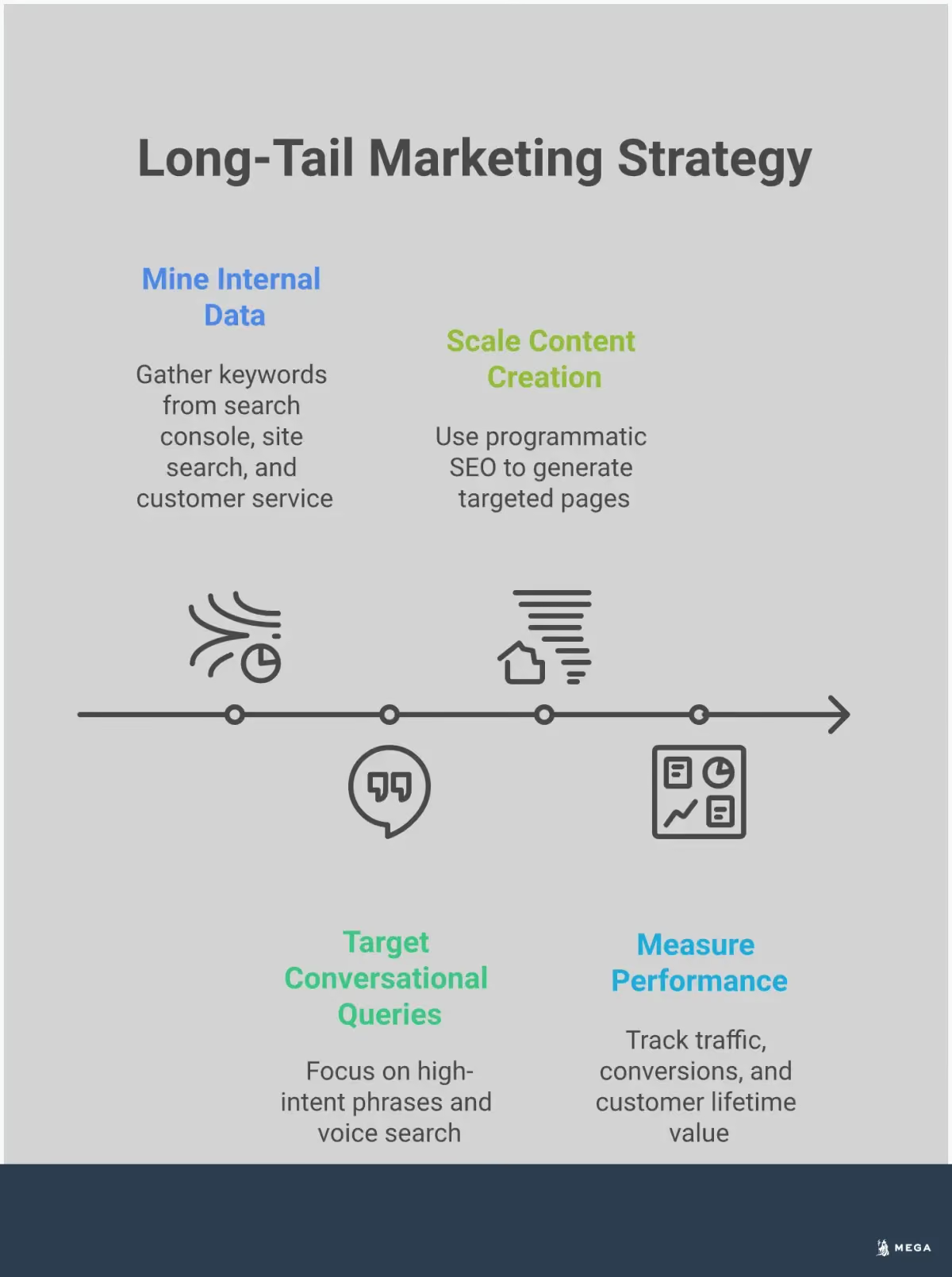
Mine Your Data for Hidden Gems
Your business already holds a treasure trove of long-tail keywords. Much of this valuable information is often buried in product catalogs, sales call notes, or internal analytics. Start by looking at your Google Search Console performance report. The "Queries" tab shows you the exact phrases people are using to find your website. You’ll likely find hundreds of specific, multi-word searches that you can create targeted content for. Another great source is your website’s internal search function. The terms people type into your search bar are direct indicators of what they want but might be struggling to find.
Analyze Customer Questions and Search Behavior
Your customers are constantly telling you what they need. The questions they ask your sales or support teams are perfect long-tail keywords. Review emails, support tickets, and live chat transcripts for recurring themes and specific phrasing. What problems are they trying to solve? What features are they asking about? As Neil Patel notes, one company was able to grow its search traffic by 20% in just two months by tracking the keywords its audience used. You can also use Google’s "People Also Ask" section and forums like Reddit or Quora to understand the conversational language people use when researching topics in your industry.
Find Niche Markets Your Competitors Ignore
Your competitors are likely focused on the same high-volume, broad keywords that you are. This creates an opportunity to own the niche topics they’ve overlooked. Start by analyzing their websites. Look at their blog posts, service pages, and FAQs to identify topics they only cover at a surface level. You can create more detailed, comprehensive content that better answers the user's question. Using a keyword research tool, you can also find specific long-tail phrases your competitors rank for but haven't created dedicated content around. This is your chance to build authority in specialized areas and attract high-intent customers who are ready to convert.
Common Challenges for Small Businesses (and How to Solve Them)
A long-tail strategy sounds great in theory, but executing it can feel daunting, especially when you’re already juggling a dozen other priorities. Small businesses often run into the same few roadblocks: not enough time, trouble creating content at scale, and uncertainty about how to measure the results.
The good news is that these challenges are solvable. With the right approach and tools, you can build a long-tail marketing engine that works for you, not the other way around. The key is to replace manual effort with smart, automated systems that handle the heavy lifting, so you can focus on running your business. Let's break down each challenge and its solution.
Overcoming Limited Time and Resources
For small business owners and lean marketing teams, time is the most valuable resource. The idea of researching hundreds of niche keywords and writing content for each one can seem impossible. A long-tail strategy requires focused effort, but that effort doesn't have to come directly from your limited hours. This is where automation becomes a game-changer.
Instead of spending weeks on manual keyword research and content planning, an AI-powered system can identify high-intent, low-competition phrases in a fraction of the time. Tools like MEGA AI’s SEO agent can autonomously handle the research, writing, and even the technical optimization needed to get your content ranking. This allows you to get all the benefits of a targeted long-tail strategy without the massive time commitment.
The Challenge of Creating Content at Scale
A successful long-tail strategy relies on volume. You need a steady stream of content that addresses the specific needs of many small audience segments. Creating this content manually is a significant bottleneck for most businesses. Writing unique, high-quality articles for every single niche topic is not only time-consuming but can also quickly burn through your marketing budget if you’re hiring writers.
The solution is to systematize your content creation. Programmatic SEO, for example, uses data to automatically generate thousands of unique pages for specific locations or product variations. AI can also generate content for hundreds of long-tail keywords, turning a list of topics into published blog posts with minimal oversight. This approach allows you to build a comprehensive library of content that covers your entire market, ensuring no potential customer is left behind.
How to Measure Success Across Many Niches
When you have hundreds of pages targeting different long-tail keywords, tracking performance can get complicated. It’s easy to get lost in analytics and hard to know what’s actually moving the needle. A common pitfall is targeting keywords with no search volume, which leads to creating content that no one will ever see. This wastes both time and resources.
To measure success effectively, you need to focus on the cumulative impact and connect your efforts to business outcomes. Instead of tracking rankings for every single keyword, monitor the overall growth in organic traffic and, more importantly, conversions from your long-tail pages. An integrated platform can help by automatically identifying which keywords are driving valuable traffic and which ones aren't worth the effort. This data-driven approach ensures you avoid common SEO pitfalls and continuously refine your strategy based on real results.
How to Create Content That Captures Long-Tail Traffic
Creating content for dozens of specific search terms might sound overwhelming, but it’s more manageable than you think. The key is to shift your mindset from creating one perfect, all-encompassing article to producing many targeted pieces that answer specific questions. This approach allows you to build authority in your niche and attract customers who are much further along in their buying journey. Instead of competing for broad, high-traffic keywords, you’ll be the go-to answer for highly specific needs. The right strategy focuses on systems and scalability, not just individual articles. By using smart techniques and tools, you can efficiently produce the content needed to dominate these valuable long-tail searches.
Use Programmatic SEO to Create Content
Programmatic SEO is a method of using data to create targeted landing pages or articles at scale. Think about a real estate site with a unique page for every neighborhood, or an ecommerce store with pages for every product variation. You can apply this same logic to your business. By identifying a template and the data points that make each search unique—like location or service type—you can generate hundreds of pages that target long-tail keywords. This approach helps you get organic traffic by naturally integrating specific phrases into useful, relevant content for searchers with clear intent.
Write for Niche Audiences, Not the Masses
Long-tail marketing works because it focuses on depth, not just breadth. Instead of trying to be everything to everyone, you create content that speaks directly to a small, highly motivated segment of your audience. These customers are looking for specific solutions, and generic content won't cut it. For example, a local groomer could target "grooming services for anxious dogs in Austin" instead of just "pet groomer Austin." This level of specificity builds immediate trust. As a marketing strategy, serving many small niches can collectively generate more revenue than chasing a few popular keywords.
Use Automation to Scale Your Efforts
For a small business, the biggest challenge with long-tail content is the sheer volume of work. This is where automation becomes your greatest asset. AI-powered tools can handle the heavy lifting of keyword research, content generation, and even technical optimization, making a robust long-tail strategy possible without a large team. An AI-powered growth agent can autonomously plan and execute your content strategy, creating and updating pages daily. This allows you to achieve more with your existing resources, turning the principle of long-tail marketing into a practical and efficient engine for business growth.
How to Measure Long-Tail Marketing Success
Measuring the impact of a long-tail strategy requires a shift in perspective. Instead of tracking the rank of a few high-volume keywords, you need to look at the cumulative effect of hundreds or even thousands of specific search terms. Success isn’t about one big win; it’s about the combined power of many small, targeted victories. By focusing on the right metrics, you can see how these niche queries translate directly into business growth.
Look Beyond Basic Traffic Numbers
It’s easy to dismiss a blog post that only gets 15 visits a month. But when you have 100 similar posts, that’s 1,500 monthly visitors you didn’t have before. The real power of long-tail marketing is in the aggregate. These specialized topics, when combined, can easily match or exceed the traffic from your more popular pages. This is a core part of a good marketing strategy for businesses that can scale their content. Instead of focusing on total traffic alone, track the growth of organic traffic to your entire blog or a specific content category over time. This gives you a clearer picture of how your long-tail efforts are paying off.
Measure the Quality of Your Conversions
Long-tail keywords attract users with very specific needs, which means they often have higher purchase intent. Someone searching for "how to fix a leaky faucet in a pedestal sink" is much closer to hiring a plumber than someone just searching for "plumbing services." Because long-tail keywords are more targeted search phrases, the traffic they generate tends to convert at a higher rate. Track conversions—like form submissions, phone calls, or product purchases—from your long-tail content pages. You’ll likely find that while these pages get less traffic, they generate a disproportionately high number of qualified leads and sales for your business.
Attribute Revenue Over the Long Term
A successful long-tail content strategy is an asset that appreciates over time. A single, helpful article can rank for dozens of niche terms and generate leads for years with minimal upkeep. The goal is to measure the long-term return on your investment, not just immediate sales. By becoming more efficient with your content, you can achieve more with the same resources. Connect your website analytics to your CRM to track how many leads from long-tail articles eventually become paying customers. This helps you attribute real revenue to your content and proves the lasting value of building a library of niche expertise. An automated SEO agent can help you build and maintain this content library, ensuring it continues to drive results.
Start Your Long-Tail Strategy Today
Putting a long-tail strategy into practice doesn't require a massive marketing department or an unlimited budget. It’s about shifting your focus from chasing the most popular, competitive keywords to winning the specific, high-intent searches your ideal customers are making every day. By breaking the process down into manageable steps, you can build a sustainable engine for organic growth that consistently brings qualified leads to your door.
The key is to start small, measure your results, and build a system that can scale over time. The initial work involves research and content creation, but the long-term payoff is a steady stream of traffic that is more likely to convert because it comes from people who are looking for exactly what you offer. For small businesses, this approach levels the playing field, allowing you to find and own profitable niches that larger competitors often overlook. MEGA AI's SEO agent is designed to automate this entire workflow, from finding keywords to creating and publishing content daily.
Step 1: Find Your Hidden Opportunities
Your first step is to become a detective within your own business. Long-tail opportunities are often hidden in plain sight. Start by looking at your existing customer data and sales records. Which less-popular products or services have surprisingly high profit margins? What specific questions do customers ask during sales calls or in support emails? These questions are direct clues to the long-tail keywords you should be targeting.
You can also use free tools to expand your search. Type a broad keyword related to your business into Google and look at the "People also ask" section and the autocomplete suggestions. These are real queries from real users. The goal isn't to find one perfect keyword but to gather a list of specialized phrases that signal strong purchase intent. Together, these specific searches can drive more sales than a handful of popular terms.
Step 2: Take Your First Implementation Steps
Once you have a list of potential long-tail keywords, it’s time to put them to work. The most effective way to do this is by creating content that directly answers the question or solves the problem behind the search. You don’t need to create a hundred pages at once. Pick three to five promising keywords and build a dedicated piece of content for each one, like a blog post, an FAQ page, or a detailed service page.
For example, one brand was able to grow its search traffic by 20% in just two months by creating content around low-competition, long-tail terms. The key is to be specific and helpful. Make sure you track your results using tools like Google Search Console to see which pages are gaining traction and bringing in the most valuable traffic.
Step 3: Build a System That Lasts
A successful long-tail strategy relies on consistency and scale. Manually creating content for every niche opportunity is challenging, especially for a small team. This is where building a system becomes critical. Your system should include a process for continuously finding new keywords, a content calendar for planning your posts, and a way to produce content efficiently.
This is where automation can make a huge difference. AI-powered tools can help you become more efficient by handling the heavy lifting of research and content creation, allowing you to achieve more with your existing resources. Instead of spending hours writing, you can focus on strategy and reviewing the content your system produces. To see how an AI agent can build and run this system for you, you can book a demo with our team.