
LinkedIn boasts billions of weekly impressions, yet a surprisingly small fraction of users consistently share content. This creates a significant opening for your business to stand out and make a real impact. If your current LinkedIn efforts feel like shouting into the void, or if you're unsure how to transform your presence from a simple profile into a powerful growth engine, you're in the right place. This guide will walk you through crafting a comprehensive LinkedIn strategy. We'll cover everything from optimizing your profile to developing content that resonates, building a valuable network, and mastering engagement techniques to turn connections into meaningful opportunities.
Key Takeaways
- Build a Strong Foundation: Ensure your LinkedIn profile clearly communicates your value and align your platform activities directly with your broader business objectives.
- Share Value and Connect Meaningfully: Consistently create content that genuinely helps your audience and participate in thoughtful conversations to build strong professional relationships.
- Track, Learn, and Adjust: Regularly review your LinkedIn analytics to understand what works, stay informed about platform changes, and refine your strategy for ongoing effectiveness.
What is a LinkedIn Growth Strategy?
So, what exactly is a LinkedIn growth strategy? Think of it as your comprehensive game plan for making a real impact on the platform. It’s not just about having a profile; it’s about strategically enhancing your presence, boosting your engagement, and thoughtfully expanding your professional circle. The main goal is to build a strong network, establish your credibility, and use compelling content to drive meaningful interactions.
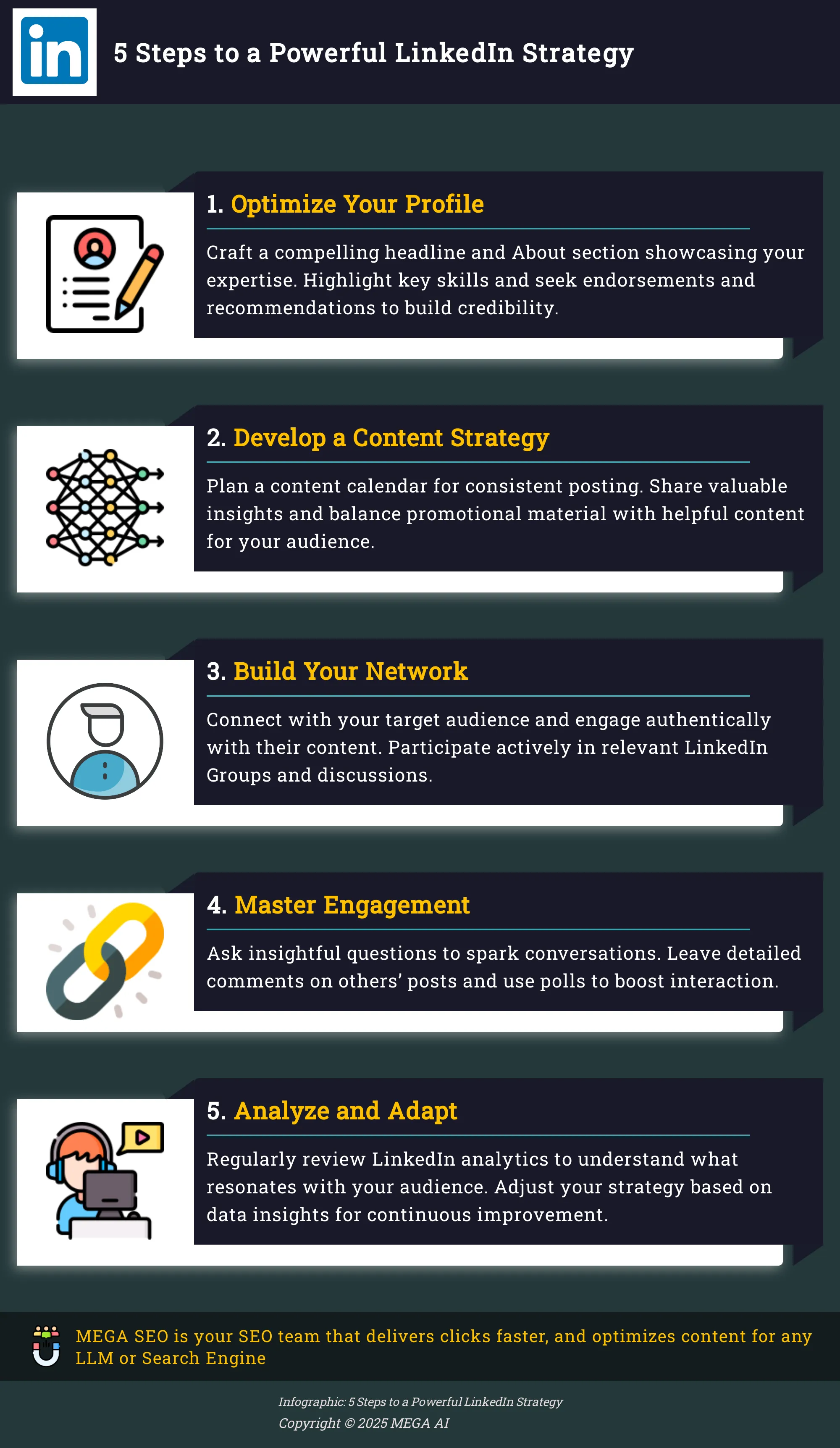
A core part of this strategy involves Building a Clear and Specific Network of Connections. This means focusing on quality over quantity, connecting with individuals and businesses that align with your goals, and nurturing those relationships to establish credibility and influence within your industry. It’s about creating a community, not just collecting contacts.
Content is another huge piece of the puzzle. A robust content plan is essential, and this includes understanding what types of content resonate most with your audience. For instance, video content and live streaming are increasingly becoming powerful tools for engaging audiences on LinkedIn, helping you to connect on a more personal level and share your expertise dynamically.
Beyond just posting, how you engage matters. This means finding a sweet spot between genuine, authentic interactions and smart, strategic approaches. For example, using formats like carousels for high engagement and consistently sharing valuable video content can significantly increase your visibility, especially since LinkedIn's algorithm tends to favor these. Finally, don't overlook the power of your team. An effective LinkedIn strategy often includes leveraging employee advocacy. When your employees actively share company content and engage with their own networks, it dramatically amplifies your brand’s reach and fosters a stronger sense of community and trust.
Why LinkedIn is Crucial for Business Growth in 2025
If you're aiming to grow your business, LinkedIn is a platform you really should consider. It's much more than just a place to find your next job; it's become a key space for professional networking, building your brand, and finding new leads. What's quite compelling is the sheer amount of untapped potential. LinkedIn sees over 9 billion impressions each week, yet only about 1% of its users actually post content on a weekly basis. This presents a fantastic opportunity for businesses ready to share their expertise and make their mark.
A significant benefit of LinkedIn is that its content feed isn't as crowded as platforms like Instagram or TikTok. This means your thoughtfully created content has a better chance of reaching a wider audience, traveling further, and staying relevant for a longer period. The LinkedIn algorithm also tends to favor active and meaningful participation. When you engage with others by leaving detailed comments, it demonstrates that you have valuable perspectives to share. This helps build your authority and increases recognition for your brand on the platform.
Moreover, LinkedIn offers robust analytics tools. These tools provide valuable insights into your audience, helping you understand which content performs best and how to refine your campaigns for better outcomes. By analyzing engagement metrics—like likes, comments, shares, and click-through rates—you can fine-tune your content strategy. This allows you to connect more effectively with your audience, which can lead to increased engagement and more successful lead generation. For any business serious about expansion, a strategic approach to LinkedIn is becoming increasingly vital.
Optimize Your LinkedIn Profile for Maximum Impact
Your LinkedIn profile is much more than a static online resume; it’s a dynamic tool for your professional growth, networking efforts, and personal brand building. To truly make the most of what LinkedIn offers, your profile needs to be thoughtfully constructed and consistently refined. Think of it as your digital storefront – it should be inviting, clearly informative, and effectively communicate the value you bring. Many professionals overlook the potential sitting in their profile, treating it as a set-it-and-forget-it document. However, in the current professional landscape, an optimized profile is crucial for visibility and credibility. It’s your primary touchpoint for potential employers, clients, and collaborators.
By focusing on key areas such as your headline, the about section, your listed skills, and your visual presentation, you can transform your profile from a passive listing into an active asset that works for you around the clock, attracting opportunities and connections. This isn't just about looking good online; it's about strategically positioning yourself to achieve your career goals. A well-crafted profile tells your professional story in a compelling way, making it easier for the right people to find you and understand what you offer. Let's explore how to fine-tune these essential elements for the greatest impact on your professional presence and open doors you might not even know exist.
Craft a Compelling Headline and About Section
Your LinkedIn headline is prime real estate. Think of it as your personal billboard – it’s often the first thing people see when they find your profile or see your activity on the platform. Go beyond just your current job title. Weave in keywords that reflect your expertise and the unique value you bring to the table. A guide to optimizing LinkedIn profiles emphasizes that a great headline should clearly and compellingly showcase what makes you stand out.
Then, your About section is where you bring your professional story to life. Don't just list your jobs; narrate your journey in an engaging way. Highlight key achievements, share your passions related to your field, and explain what drives you. This is your chance to connect with your audience on a more personal level, making your profile memorable and relatable, and encouraging them to learn more about you.
Showcase Skills, Endorsements, and Recommendations
Think of your Skills section as a quick, digestible snapshot of your core capabilities. It's essential to list skills that are truly relevant to your industry and the types of roles or opportunities you're interested in. But skills listed on their own are just words. Endorsements from your colleagues and connections act as important validation, adding significant weight to your claims. As a comprehensive LinkedIn optimization checklist notes, these endorsements can substantially confirm your expertise.
Recommendations take this validation a step further. These are personal testimonials from people who’ve actually worked with you, offering concrete examples of your skills in action and your work ethic. They provide powerful social proof, making your profile much more persuasive to anyone viewing it, whether they're a potential client, an employer, or a future collaborator.
Leverage Visual Elements for Personal Branding
Never underestimate the power of a picture in making a first impression. Your LinkedIn profile picture is essentially your digital handshake, so make sure it's professional, clear, and presents you as approachable. Beyond your photo, your banner image offers a fantastic opportunity to reinforce your personal brand and make your profile visually distinct. Instead of using the default LinkedIn banner, create a custom one that visually communicates who you are or what you do; a clean, bold banner with your name and tagline can really help you stand out.
These visual elements aren't just about aesthetics; they are strategic tools in building your brand. They contribute to a cohesive and memorable professional identity, making your profile more engaging and helping you make a stronger, more positive initial impact on anyone who visits your page.
Develop a Content Strategy that Resonates
Creating content that truly connects with your audience on LinkedIn doesn't happen by accident. It requires a thoughtful approach, blending a deep understanding of your audience with consistent, purposeful execution. A well-crafted content strategy is your roadmap to building a strong presence, engaging your network, and ultimately achieving your business goals on the platform. Think of it as the blueprint for how you'll show up, what you'll share, and how you'll interact. Without a clear strategy, your efforts can feel scattered and ineffective, making it difficult to measure progress or make a real impact.
Developing this strategy involves several key components, from identifying what your audience actually wants to see, to planning your content schedule, and ensuring your messaging is compelling. It’s about being intentional with every post and interaction. For businesses, especially startups and small to medium-sized enterprises, a strong LinkedIn content strategy can be a game-changer, helping you build brand awareness and establish authority in your niche. Let's explore the actionable steps to build a content strategy that not only resonates but also drives results.
Identify High-Performing Content for LinkedIn
To make your LinkedIn efforts count, you first need to understand what truly captures your audience's attention. This means regularly looking into your LinkedIn analytics. The platform provides valuable data on how your posts are performing, offering insights into impressions, engagement rates, and even the demographics of who is interacting with your content. As the team at Sprinklr advises, "From analyzing impressions to tracking profile views and conversion rates, we’ll break down the most important metrics every marketer should track to improve their LinkedIn performance." You can find these engagement metrics in the post analytics section for each piece of content you share. By consistently reviewing this data, you'll start to see patterns, helping you pinpoint the topics, formats, and writing styles that your audience values most. This allows you to refine your approach and create more of what works.
Create a Content Calendar for Consistency
Consistency is a cornerstone of growing your LinkedIn presence and building trust with your network. A content calendar is an essential tool for planning and scheduling your posts in advance, ensuring a steady stream of valuable content reaches your audience. This keeps your brand visible and top-of-mind. By mapping out your content, you can align your posts with specific campaigns, industry events, or ongoing themes relevant to your audience. Neil Patel highlights this in his LinkedIn growth course, stating, "By posting consistently at peak times, you'll maximize exposure, build audience trust, and turn visibility into qualified leads." A well-maintained content calendar helps you maintain this rhythm, preventing last-minute rushes for content ideas and ensuring you’re always prepared to engage meaningfully.
Balance Promotional and Value-Added Content
While LinkedIn is an excellent platform for showcasing your business and its offerings, your content strategy shouldn't be exclusively promotional. To cultivate a loyal following and establish credibility, you need to provide genuine value. This involves sharing insights, practical tips, industry news, and stories that educate, inspire, or help your audience solve problems. A commonly suggested guideline is the 80/20 rule: aim for 80% value-added content and 20% promotional content. LinkedIn’s own advice on tracking content strategy metrics suggests you should "Track metrics such as follower growth, post reach, and the virality of your content. Analyzing these metrics helps you understand which types of content resonate with your audience." This data will guide you in finding the right mix, ensuring your audience views you as a valuable resource.
Leverage LinkedIn's Native Content Features
LinkedIn offers a variety of native content formats that can help you engage your audience in diverse and interesting ways. Don't limit yourself to simple text posts. Consider using LinkedIn Articles to share in-depth thought leadership pieces, create polls for quick feedback and engagement, or share videos for more dynamic storytelling and behind-the-scenes glimpses. As Sprout Social points out in their guide, "LinkedIn’s native analytics lets you track metrics related to overall page performance, visitor and follower demographics, and individual post engagement." By experimenting with these different LinkedIn content formats and analyzing their performance, you can discover which ones your specific audience prefers. Using a mix of native content types keeps your feed fresh and provides multiple avenues for your network to interact with your brand.
Craft Attention-Grabbing Hooks and CTAs
In a fast-scrolling LinkedIn feed, capturing attention within the first few seconds is absolutely critical. Your posts need a compelling hook – the very first sentence or two – to make users pause and want to learn more. If your opening line doesn't immediately pique interest, your audience might just scroll past. Neil Patel emphasizes this point well: "The key is to have a short punchy hook. If you don't have a short punchy hook, it's not going to give people a reason to click that see more link." Once you have their attention, it's equally important to guide them on what to do next with a clear Call to Action (CTA). Whether you want them to comment with their thoughts, share the post, visit your website, or book a demo of your services, make your desired action explicit and easy to follow.
Build and Nurture Your LinkedIn Network
Growing your LinkedIn presence is less about amassing a high number of connections and more about cultivating a genuine, engaged network. This approach can open doors to real opportunities for your business. It involves being intentional about who you connect with and how you interact on the platform. When you thoughtfully nurture these professional relationships, your LinkedIn activity transforms from simple scrolling into a dynamic tool for growth. Let's look at practical ways to effectively build and cultivate your professional circle on LinkedIn, creating a foundation for meaningful interactions and collaborations. This strategic focus ensures your efforts yield tangible results, helping you expand your reach and influence within your industry.
Identify and Connect with Your Target Audience
To make truly valuable connections on LinkedIn, begin by clearly defining who your target audience is. Consider the industries, specific roles, and types of professionals you aim to engage with. A useful strategy is to think beyond directly approaching only your top-tier ideal contacts. As marketing expert Neil Patel suggests, "If you want to connect with your ideal hundred people on LinkedIn, the chances are they're probably going to ignore you. But if you connect with all the people they're connected with, they're more likely to see your content and then they're more likely to connect with you." This method increases the visibility of your content within their wider circles, making it more probable that your primary targets will notice your activity and be open to a connection. This approach helps you organically manage your LinkedIn network and establish a strong foundation.
Engage Authentically with Your Network's Content
Building a robust LinkedIn network requires more than just sending out connection requests; authentic engagement is fundamental. Concentrate on making strategic connections with individuals who operate within your professional sphere. When you consistently interact with the content shared by your network, particularly material that aligns with your expertise and interests, you naturally increase your organic impressions. This means your contributions are more likely to appear in the social feeds of others who appreciate similar content. As Neil Patel notes, "The key with doing this is to target people within your space... focus on strategic connections. You want to build more organic impressions and pull into other people's social feeds that value your kind of content." Aim to leave thoughtful comments, share posts accompanied by your own insights, and actively participate in relevant discussions to foster relationships.
Participate in LinkedIn Groups and Communities
LinkedIn Groups present an excellent avenue for connecting with professionals who share your specific interests and operate within your niche. Joining groups relevant to your field allows you to listen to ongoing conversations, stay informed about current trends, and identify potential collaborators or clients. Active participation, however, is what truly makes a difference. Make it a regular practice to "consistently engage on other people's content... it should be content related to what you want to be talking about," as Neil Patel advises. By sharing your knowledge, asking insightful questions, and offering helpful advice within these communities, you can establish your credibility and become a recognized voice, which often leads to more organic and meaningful connections.
Use LinkedIn's Advanced Search Features
To efficiently find and connect with the right individuals, make full use of LinkedIn's advanced search functionalities. These tools enable you to filter potential connections by various criteria such as industry, geographic location, job title, and company. This precision helps you pinpoint professionals who align with your networking objectives. Once you have identified relevant profiles, shift your focus to meaningful engagement. LinkedIn's algorithm often rewards users who contribute thoughtfully to discussions. Neil Patel highlights that "when you leave detailed comments, replying to others, it shows that you have thoughtful insights and it helps build up your authority." Using LinkedIn search features to discover these engagement opportunities is a smart tactic for enhancing your network and solidifying your professional standing.
Master LinkedIn Engagement Techniques
LinkedIn is more than just a digital resume; it's a dynamic platform where meaningful interactions can significantly shape your professional presence and business growth. True growth on LinkedIn stems from consistent and authentic engagement. It’s about building relationships, sharing value, and fostering a community around your expertise. When you actively engage, you increase your visibility, establish authority, and create opportunities that might otherwise remain hidden. Think of engagement as the engine that powers your LinkedIn strategy, turning passive connections into active followers and potential leads.
Effectively engaging on LinkedIn involves several key practices. It's not just about posting content; it's about how you interact with the content of others and how you encourage interaction with your own. By thoughtfully participating in discussions, offering valuable insights, and making your content interactive, you can transform your LinkedIn presence. We'll explore specific techniques like asking insightful questions, leaving substantive comments, utilizing interactive tools like polls, and strategically timing your posts to ensure they reach your audience when they're most receptive. These methods, when applied consistently, can help you build a strong personal brand and achieve your networking goals.
Ask Thoughtful Questions to Spark Discussions
One of the most effective ways to stimulate engagement on your LinkedIn posts is by asking questions that genuinely make people think. As marketing expert Neil Patel advises in his LinkedIn growth strategy course, "By asking people a thoughtful question at the end of your post, not one that's just going to regenerate yeses or nos, but literally cause people to leave a meaningful comment. This leads to more people commenting." Instead of posing simple questions that elicit one-word answers, aim for open-ended inquiries that invite diverse perspectives and detailed responses. For example, rather than asking "Do you agree?", try something like, "What's one challenge you've faced in implementing [industry-specific strategy], and how did you approach it?" This encourages your network to share their experiences and insights, fostering a richer discussion and increasing the visibility of your post through more substantial interaction.
Leave Detailed Comments on Others' Posts
Your engagement strategy shouldn't be limited to your own content. Actively participating in other people's discussions by leaving detailed, insightful comments is equally important. Generic comments like "Great post" or "I agree" add little value. Instead, aim to contribute to the conversation. Neil Patel highlights this by stating, "When you leave detailed comments, replying to others, it shows that you have thoughtful insights and it helps build up your authority and it brings recognition on that platform." When you share a relevant experience, ask a clarifying question, or offer a different perspective respectfully, you demonstrate your expertise and willingness to engage meaningfully. This not only helps you build professional relationships but also positions you as a knowledgeable voice in your field, which can attract attention to your profile and work.
Use Polls and Surveys for Engagement
Interactive content like polls and surveys are excellent tools for increasing engagement and gathering valuable insights from your LinkedIn audience. Polls are simple to create and encourage quick participation, making them an easy way for your network to interact with your content. You can use polls to ask about industry trends, preferred content types, common challenges, or opinions on a specific topic. For instance, a digital marketing agency could poll its audience on which social media platform they find most effective for lead generation. Surveys, while requiring a bit more effort from participants, can provide deeper insights. Both methods not only make your feed more dynamic but also show your audience that you value their input, fostering a stronger sense of community.
Time Your Posts for Maximum Visibility
The timing of your LinkedIn posts can significantly impact their reach and engagement levels. You want your content to appear in your network's feed when they are most active and likely to interact. As Neil Patel points out, "You want to align your content's timing with your ideal customer profile's ideal time. When are they on LinkedIn? When are they engaging?" While general guidelines suggest certain days and times are better for posting, the optimal timing can vary based on your specific industry and audience. Pay attention to your LinkedIn analytics to understand when your followers are most active. Experiment with posting at different times and on different days, then track the performance of your content to identify patterns and refine your posting schedule for the best results.
Leverage LinkedIn's Advanced Features for Growth
LinkedIn offers much more than just a place to list your work experience. If you're looking to truly grow your professional presence, there's a whole suite of features ready to help you connect more deeply with your audience and really show what you know. Think of these tools as your next step in making LinkedIn work harder for you. By exploring features like articles, newsletters, live events, and specialized modes, you can move beyond basic networking. These advanced options are designed to help you build a stronger brand, share your expertise in compelling ways, and attract the right kind of attention. It’s about strategically using what LinkedIn provides to not just be present, but to be influential and memorable in your field. For instance, consistently publishing insightful articles can position you as a thought leader, while interactive live events can foster genuine community engagement. Optimizing your company page ensures your brand message is clear and impactful, and leveraging creator mode can significantly boost your personal visibility. Each of these tools offers a unique avenue to expand your reach and solidify your professional standing. Let's look at a few key features that can make a real difference in how you grow on the platform.
Use LinkedIn Articles, Newsletters, and Live Events
Sharing your unique insights through long-form content is a powerful way to build authority on LinkedIn. Think about publishing articles that dive deep into topics you're passionate about, or starting a newsletter to share regular updates and valuable information with a dedicated audience. LinkedIn's system often highlights content that sparks good engagement, so well-crafted pieces can really increase your visibility. Don't overlook LinkedIn Live events either. They offer a fantastic opportunity to connect with your audience in a more personal, interactive way. You could host Q&A sessions, share behind-the-scenes insights, or discuss industry trends, all while building a stronger community around your expertise.
Optimize LinkedIn Company Pages
Your LinkedIn Company Page is a key touchpoint for your brand. It's not just a static profile; it's a space where you can actively engage with your audience and share your company's story. To get the most out of it, make it a habit to review your content's performance using the analytics LinkedIn provides. This data shows you what resonates with your followers, helping you fine-tune your content strategy. Keep your page dynamic with regular updates, interesting posts, and clear information about what you do. Responding to comments and messages promptly also shows you're engaged and value your community. Think of it as your brand's digital headquarters on LinkedIn.
Explore LinkedIn Creator Mode Benefits
If building your personal brand and expanding your influence is a priority, LinkedIn Creator Mode is definitely worth checking out. When you switch to Creator Mode, your profile shifts to highlight you as a content creator. You can specify topics you focus on using hashtags, making it easier for interested people to find your content. This mode also changes your "Connect" button to "Follow," encouraging audience growth. By consistently sharing valuable content and using LinkedIn's analytics to understand what your audience enjoys, Creator Mode can help you attract a larger, more dedicated following. It’s a great way to clearly signal your areas of expertise and the value you bring to your network.
Measure and Analyze Your LinkedIn Performance
Posting content and building your network are important first steps, but understanding what’s working (and what’s not) is how you truly refine your LinkedIn approach. Regularly measuring your performance helps you make smarter decisions, ensuring your efforts lead to meaningful growth. Let's look at how to effectively track your progress and use that information to your advantage.
Identify Key Metrics for Success
To really understand how your LinkedIn strategy is performing, you'll want to focus on a few key metrics. Think about your audience engagement, which includes metrics like reach (how many people see your content) and interaction rates (likes, comments, shares). These numbers tell you if your content is hitting the mark and resonating with the people you want to connect with.
Beyond engagement, keep an eye on impressions, profile views, and conversion rates. These LinkedIn metrics offer a broader picture of your impact, showing how your content contributes to your overall marketing objectives, like driving traffic to your website or generating leads. Tracking these consistently will highlight what resonates and where you might need to adjust your tactics for better outcomes.
Use LinkedIn Analytics Tools Effectively
LinkedIn provides its own set of analytics tools, and they are quite valuable for getting a clear view of your performance. These native tools let you track important metrics related to your overall page activity, understand the demographics of your visitors, and see how individual posts are doing. This direct data source is your first stop for performance insights.
By regularly checking these analytics, you can gather information into who is engaging with your content and what types of posts perform best. This information is crucial for making data-driven decisions. For instance, if you notice that posts with videos get more engagement, you might decide to create more video content. This direct feedback loop helps you continuously refine your content strategy.
Adjust Your Strategy with Data Insights
Once you’ve gathered your performance data, the next step is to use those insights to make adjustments. Understanding which content types truly connect with your audience allows you to refine your content strategy for better results. If certain topics or formats consistently perform well, it makes sense to lean into them and produce more of what your audience clearly values.
For a deeper understanding, consider tools that can help automate the calculation of engagement rates and even provide competitive benchmarks. For example, some platforms can show you how your engagement compares to others in your industry, offering valuable context. This actionable analytics approach helps you see where you stand and identify opportunities to improve, ensuring your LinkedIn efforts are as effective as possible and continually evolving.
Integrate LinkedIn with Your Overall Marketing Strategy
LinkedIn isn't an island; it's a powerful continent in your marketing world. To truly make the most of it, your LinkedIn activities need to connect seamlessly with your wider marketing efforts. Think of it as ensuring all your marketing channels are singing from the same song sheet, creating a harmonious message that resonates with your audience. This integration amplifies your reach and reinforces your brand identity across every touchpoint.
Align LinkedIn Goals with Business Objectives
Before posting or connecting, consider your main business goals. Are you focused on brand awareness, lead generation, website traffic, or thought leadership? Your LinkedIn strategy must directly support these aims. If lead generation is key, your LinkedIn content and interactions should attract and capture potential customers.
To effectively measure your content strategy, track engagement metrics like reach, interaction rates, and conversions. This alignment ensures LinkedIn efforts contribute to broader business goals. Regularly review your LinkedIn performance against these objectives. If your activities aren't making an impact, reassess your approach. This ensures your LinkedIn resources are well spent.
Create Cross-Platform Content Synergy
Your audience likely sees your brand on multiple platforms. Creating synergy with your content across these channels strengthens your message. This means adapting your core message for each platform's style, not just copying posts. A detailed blog post, for example, can become a concise LinkedIn article, informative posts, or a visual carousel.
LinkedIn's algorithm considers engagement, click-throughs, and shares to rank content. By creating content that performs well across platforms, you improve your LinkedIn visibility. This consistency builds brand recognition and trust. A cohesive message across your website, emails, and LinkedIn profile reinforces your expertise and makes your brand memorable.
Leverage LinkedIn for Lead Generation and Sales
LinkedIn is excellent for B2B lead generation and supporting sales. Its professional focus and detailed profiles help you find and connect with ideal prospects. Consider how your content can guide leads through your sales funnel. Value-packed posts, insightful articles, and targeted messages nurture relationships and move prospects toward a conversation.
Analyzing LinkedIn metrics reveals what content resonates with your audience, driving engagement and leads. By leveraging LinkedIn's unique features, like sponsored content and targeted ads, you can convert connections into leads. LinkedIn Sales Navigator can aid advanced prospecting. Additionally, tools for paid ads optimization can streamline advertising on LinkedIn and other platforms, ensuring your budget effectively generates leads.
Future-Proof Your LinkedIn Strategy: Trends and Adaptations
LinkedIn isn't a static platform; it's constantly evolving. To maintain your growth trajectory and ensure your efforts continue to yield results, it's essential to keep an eye on emerging trends and be ready to adapt your approach. This means more than just occasional updates to your profile; it involves a proactive stance on content, engagement, and understanding the platform's mechanics. By staying informed and flexible, you can ensure your LinkedIn strategy remains effective for the long haul, helping you connect with your audience and achieve your professional goals. Thinking ahead allows you to anticipate shifts and position yourself advantageously. For businesses looking to streamline their digital marketing, understanding these nuances is key, much like how MEGA AI helps simplify SEO and paid advertising. This proactive mindset ensures you're not just reacting to changes but are prepared for them, making your LinkedIn presence robust and resilient.
Stay Ahead with Trend-Informed Content
One of the most significant opportunities on LinkedIn lies in content creation. While the platform sees billions of impressions weekly, a surprisingly small percentage of users consistently post content, creating a substantial opening for your voice to be heard. To make your content truly impactful, look beyond LinkedIn for inspiration. Consider what's gaining traction on other platforms like YouTube or TikTok. You can then thoughtfully adapt those trending topics or formats for LinkedIn’s professional audience. Using tools to discover emerging themes across the web can be invaluable here, allowing you to create timely and relevant posts that capture attention and spark conversation within your network.
Decode LinkedIn's Algorithm for Better Reach
Understanding how LinkedIn decides what content to show its users can significantly influence your visibility. The platform's algorithm considers several factors to determine a post's value and relevance. Key metrics include the engagement rate (likes, comments, reactions), click-through rate (how many people click on your links or "see more"), and share rate. When your content performs well on these fronts, LinkedIn is more likely to promote it to a wider audience. Focusing on creating posts that naturally encourage these interactions—like asking insightful questions or sharing genuinely useful information—can help your content gain more traction and reach the right people.
Leverage Analytics for Continuous Improvement
To truly refine your LinkedIn strategy, you need to pay close attention to your performance data. Regularly track metrics such as your follower growth, the reach of your individual posts, and how often your content is shared or achieves virality. Analyzing this information helps you understand what resonates most with your audience and what might be falling flat. LinkedIn provides its own analytics tools that offer valuable insights into your audience demographics and content performance. Use these tools to identify patterns, test different types of content, and make informed adjustments to your approach, ensuring your strategy evolves with your audience's preferences and platform changes.
Related Articles
- Drive Revenue Growth: Smart Hiring Strategies
- Social Media Marketing in 2025: Strategies for Success
- The Ultimate Guide to Content Marketing in 2024
- How to Build a Private Blog Network: A Step-by-Step Guide
- How to Use Google Analytics to Track Blog Performance
Frequently Asked Questions
What's the first thing I should focus on if I want to grow on LinkedIn? Start by really optimizing your LinkedIn profile. Think of your headline and "About" section as your first impression. Make them clear, compelling, and use keywords that reflect your expertise. A strong profile is the foundation for all your other growth efforts.
How often should I be posting on LinkedIn to see results? Consistency is more important than a specific number, but aiming for a few high-quality posts per week is a good starting point. The key is to create a content calendar you can stick to. This ensures you're regularly sharing valuable information and staying visible to your network.
Is it better to have more connections or more engagement on LinkedIn? Meaningful engagement generally trumps a high connection count. Focus on building a network of people relevant to your industry and goals. Then, actively engage with their content and create posts that spark genuine conversations. Quality interactions build stronger relationships and authority.
My posts aren't getting much attention. What can I do? Try crafting more attention-grabbing hooks – that first sentence is crucial. Also, end your posts with thoughtful questions that encourage detailed comments, not just yes/no answers. Experiment with different content formats, like articles or polls, to see what resonates with your audience.
How do I know if my LinkedIn strategy is actually working? Regularly check your LinkedIn analytics. Pay attention to metrics like post reach, engagement rates (likes, comments, shares), and profile views. This data will show you what type of content your audience responds to best, allowing you to refine your approach over time.