Link building often feels like one of the most challenging parts of SEO. The manual outreach and endless follow-up can be exhausting. But what if you could create content that does the heavy lifting for you? That’s the idea behind linkable assets. These are not your standard blog posts; they are high-value resources like free tools, original research, or comprehensive guides that other sites want to link to. This approach shifts your focus from tedious outreach to smart creation. Ahead, we’ll show you how to use AI to efficiently build these content magnets and attract valuable backlinks.
Key Takeaways
- Create assets that provide real utility: Shift your focus from standard blog posts to valuable resources like free tools, original data studies, or in-depth guides. The goal is to build content so useful that other websites feel compelled to link to it.
- Pair AI efficiency with human insight: Use AI to automate the heavy lifting of research, data analysis, and list building. This allows you to apply your unique expertise, brand voice, and original ideas to create content that is truly one-of-a-kind.
- Extend your strategy beyond creation: A great asset needs a promotion plan to succeed. Actively share your content through targeted outreach, integrate it with internal links to spread authority, and track key metrics like linking root domains to measure what works and improve your process.
What Are Linkable Assets?
A linkable asset is any piece of content on your website created with the specific goal of attracting backlinks. As SEO expert Nathan Gotch explains, these assets are "engineered specifically to attract backlinks," setting them apart from your standard blog posts or product pages. Think of them as magnets for links from other websites. Creating them is a proactive strategy to build your site's authority and improve its search engine performance. The goal is to create something so valuable, useful, or unique that other creators, journalists, and bloggers in your industry want to reference and link to it.
Types of linkable assets
Many people assume that only long, in-depth articles can be linkable assets, but that’s a common misconception. In reality, some of the most effective linkable assets are creative and concise. Your "About" page can be a linkable asset if it tells a compelling story. An affiliate program page can attract links from partners and review sites. Other powerful examples include free tools like calculators or templates, original data-driven studies, and visually engaging infographics. The key is to create a resource that serves a specific need for your audience, making it a go-to piece of content that others will naturally want to share.
Why linkable assets matter for SEO
Building a strong backlink profile is fundamental to any successful SEO strategy. Backlinks act as votes of confidence from other websites, signaling to search engines that your content is credible and valuable. This isn't just a legacy ranking factor for Google; it's also critical for the next wave of search. Backlinks influence AI search engines like ChatGPT and Perplexity, making them essential for future visibility. As Nathan Gotch notes, understanding how to get more backlinks is "one of the most important skills we can have at this point." By creating linkable assets, you are actively building the authority needed to rank well across all search platforms.
How to Use AI for Strategic Asset Creation
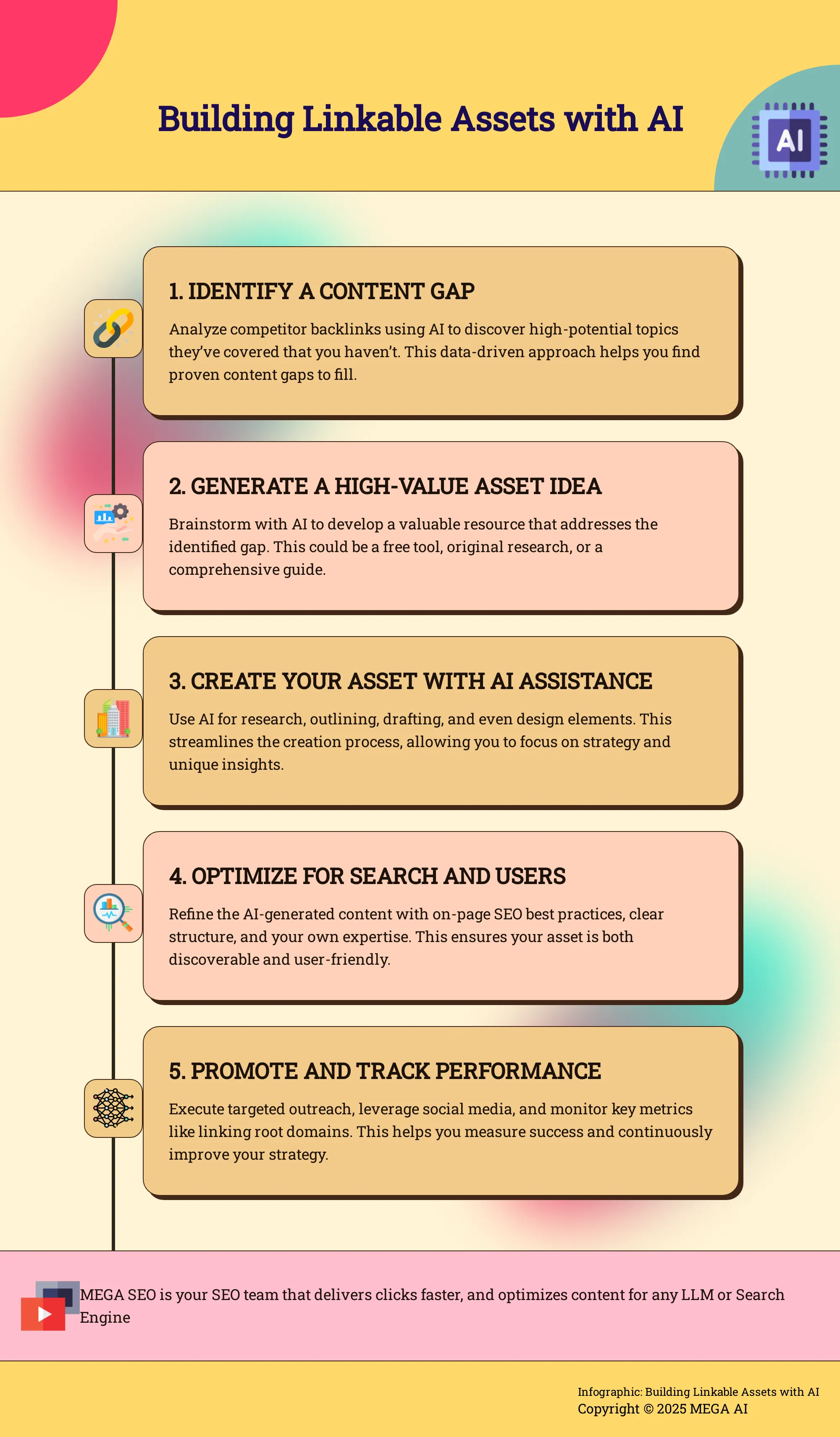
Creating assets that naturally attract links requires a smart strategy, but it doesn’t have to be a manual grind. AI tools can handle the heavy lifting across the entire creation process, from the initial idea to the final outreach list. This shift allows you to move from tedious, time-consuming tasks to focusing on the high-level strategy that drives results. Instead of getting lost in spreadsheets and search results, you can direct your energy toward understanding your audience and refining your brand’s message.
The right AI-powered SEO tools can act as your research assistant, data analyst, and strategist all in one. They can uncover what topics your audience is searching for, analyze what your competitors are doing successfully, and identify the best websites to connect with for promotion. By automating these foundational steps, you can build a more efficient and effective link-building engine. This approach isn't about replacing human creativity; it's about augmenting it with data-driven insights. It allows you to create assets that are strategically designed to earn backlinks and build authority from day one, ensuring your efforts are both targeted and impactful.
Automate research and content generation
Using AI tools, you can streamline the process of creating SEO content that not only attracts traffic but also passively generates backlinks. This approach allows you to focus on strategy rather than getting bogged down in the technical aspects of coding or design. AI can accelerate your research by identifying relevant keywords, analyzing search intent, and clustering topics to build topical authority. It can even generate detailed outlines or first drafts, giving you a solid foundation to build upon. This frees you up to infuse the content with your unique expertise, brand voice, and creative insights, ensuring the final asset is both valuable and original.
Analyze data to find content gaps
To identify content gaps, you can use AI to analyze competitor data at scale. By entering a competitor's URL into an analysis tool, you can discover which of their pages have earned the most backlinks. This insight helps you understand what type of content is resonating with your target audience and where you can fill in the gaps with something better or more comprehensive. AI can quickly sift through thousands of pages to pinpoint proven topics that attract links. This data-driven approach to content strategy removes the guesswork, allowing you to invest your resources in creating assets that have a high probability of success.
Build a "Dream 100" list for outreach
Creating a "Dream 100" list involves identifying the top 100 websites in your industry where you would ideally want to secure backlinks. By focusing your outreach efforts on this curated list, you can significantly improve your chances of obtaining valuable links. AI can automate the discovery process, scanning the web to find authoritative and relevant sites that are likely to link to your content. It analyzes factors like a site's niche, audience, and past linking patterns to build a highly targeted list for your outreach campaigns. This saves countless hours of manual research and ensures your promotional efforts are aimed at the publications that can make the biggest impact.
How to Create Compelling Linkable Content with AI
Once you’ve identified strategic opportunities, the next step is creating the content itself. AI can accelerate this process, but the key is to focus on creating assets that provide unique value—the kind other sites will want to reference. The most effective linkable assets are those that are genuinely useful, original, and hard to replicate. Instead of just generating standard blog posts, think bigger. Use AI to help you build resources that serve a real purpose for your audience, making them a natural magnet for backlinks.
Produce data-driven research and guides
Data-driven content is a powerful link-building tool because it provides concrete, citable information. The best approach is to use your own proprietary data, but well-curated industry data can be just as effective. Use AI to analyze datasets, identify trends, and pull out compelling statistics that can form the backbone of a report or guide. For example, you can analyze your own customer data or survey results to create an original industry study. MEGA AI’s SEO tools can then help you structure this data into a comprehensive, readable guide that positions you as an authority. This strategy works across any industry because original statistics are highly valuable and frequently cited.
Design interactive tools and infographics
Another effective way to generate backlinks is by creating free, useful tools. Simple calculators, quizzes, or checklists that solve a specific problem for your audience are highly linkable because they provide immediate utility. You can use AI to brainstorm tool ideas or even help with the initial logic and content. Similarly, AI can help you synthesize complex information into a visually appealing infographic. The goal is to create a helpful resource that people will not only use but also share with their own audiences. This focus on utility is what turns a piece of content into a valuable asset.
Ensure quality and originality in AI content
When using AI, it’s critical to prioritize quality and originality. If an AI can generate an answer to a question instantly, that content probably isn't a strong linkable asset. The real value lies in creating something AI can't easily replicate on its own, like content based on original research or a unique interactive tool. Use AI as a partner to speed up research and production, but always add your own unique perspective and human oversight. This ensures your content is not only helpful but also distinct from everything else out there. You can book a demo to see how to balance powerful AI automation with the strategic human touch needed to create truly original assets.
How to Optimize AI-Created Assets
Creating a linkable asset with AI is a powerful first step, but the work doesn’t stop there. To get the most value from your new content, you need to optimize it for both search engines and the people you want to reach. This process ensures your asset not only gets discovered but also earns the high-quality backlinks you’re after. By focusing on a few key areas—on-page SEO, content structure, and human insight—you can transform a good AI-generated draft into a high-performing SEO asset that works for your business long-term.
Optimizing your content involves more than just adding keywords. It’s about refining the on-page elements, structuring the information logically, and adding a unique human perspective that AI alone can’t replicate. Think of your AI tool as a brilliant research assistant and a fast writer; you are the editor and strategist who provides the final polish and unique insight. This combination is what makes your content truly stand out and attract authoritative links. With a platform like MEGA AI, you can automate much of the technical optimization, freeing you up to focus on these high-impact strategic touches that make all the difference.
Apply on-page SEO best practices
Once your AI-generated asset is drafted, it’s time to apply fundamental on-page SEO. This means engineering the content specifically to attract backlinks. Start with a compelling, keyword-rich title and a meta description that encourages clicks from the search results page. Within the content, use clear headers (H2s, H3s) to break up the text and guide readers through the information.
Make sure you also establish a strong internal linking structure. Link from your new asset to relevant commercial or informational pages on your site to pass authority. Likewise, link to your new asset from other high-traffic pages on your blog. Every element, from the URL slug to the image alt text, should be optimized to tell search engines exactly what your content is about and why it’s valuable.
Structure content for search and users
How you structure your content directly impacts its performance. The goal is to build authority safely and naturally. Linkable assets are perfect for this because they attract links to informational content rather than directly to your commercial pages, which can be a risky strategy. Once your asset earns backlinks, you can strategically use internal links to pass that authority to your product or service pages.
For the user, the structure should be clean and intuitive. Use short paragraphs, bullet points, and bold text to make the content easy to scan. If you’ve created a data-heavy report, use charts or graphs to visualize the findings. A well-structured, user-friendly page is more likely to be read, shared, and linked to by others.
Balance AI generation with a human touch
The most linkable assets offer something unique that AI cannot easily replicate on its own. While AI is excellent for generating drafts and analyzing existing data, it can’t conduct original research or create proprietary data from scratch. This is where your human expertise becomes a competitive advantage. Incorporate unique insights, personal experiences, or data from your own surveys to make your content truly one-of-a-kind.
For example, you could use AI to analyze industry trends and then add your own expert commentary and predictions. Or, you could run a customer survey and use AI to help you draft a data-driven report based on the results. This human-AI collaboration results in content that is not only well-researched and comprehensive but also original and highly valuable to your audience.
How to Promote Your AI-Generated Assets
Creating a valuable asset is only half the battle. For it to build authority and drive traffic, you need a solid promotion strategy. Once your AI-generated content is published, the real work of getting it in front of the right audience begins. A multi-channel approach that combines direct outreach, social media engagement, and smart integration into your existing content will give your asset the visibility it needs to attract high-quality backlinks and establish your site as a trusted resource.
Execute targeted outreach campaigns
Once your asset is live, your first move is to conduct targeted outreach. The goal is to proactively build your initial set of backlinks to get the momentum going. Using the "Dream 100" list you developed earlier, you can start contacting relevant websites, bloggers, and journalists who might find your asset valuable for their audience. While AI can help draft initial email templates, personalization is key to making a genuine connection. A well-crafted outreach email that clearly explains the value of your asset can kickstart the process, creating a snowball effect where your content starts earning links naturally as its visibility grows.
Use social media and industry influencers
Your personal and company brands are powerful tools for promotion. Share your new asset across relevant social media platforms like LinkedIn and X (formerly Twitter), but don't just post a link and walk away. Start a conversation by asking questions, sharing a key insight from the asset, or tagging influencers and companies you featured in your research. Engaging with industry leaders can amplify your reach significantly, leading to more shares and organic backlinks. Building a strong personal brand is a long-term strategy that drives awareness and lends credibility to everything you publish, making promotion feel more natural and effective.
Integrate assets into your content strategy
Your linkable asset shouldn't exist on an island. To maximize its impact, weave it into your broader content strategy. This means linking to it from existing blog posts, featuring it in your email newsletter, and adding it to a dedicated resources page on your website. This internal linking strategy helps users and search engines discover your new content more easily. More importantly, it allows the authority your asset gains from backlinks to flow to other important pages on your site, improving your overall SEO performance. By treating your asset as a core part of your content ecosystem, you ensure its value extends across your entire domain.
How to Measure and Improve Performance
Creating and promoting your assets is just the beginning. To build a strategy that gets better over time, you need to know what’s working and what isn’t. This is where measurement comes in. By tracking the right metrics and using data to guide your next steps, you can refine your approach and consistently create assets that attract valuable links.
Define your link building KPIs
To measure success, you first need to define it. Key performance indicators (KPIs) are the specific metrics you’ll track to see if your efforts are paying off. While you might look at referral traffic or social shares, the most important KPI for link building is the number of total linking root domains. This metric counts the unique websites linking to you. Think of it as a vote of confidence; getting links from 10 different high-quality sites is far more valuable than getting 10 links from the same site. Focusing on this number helps you build a diverse and authoritative backlink profile, which is a powerful SEO signal.
Use AI to track and analyze performance
AI tools can dramatically speed up how you track and analyze your link building performance. Instead of waiting weeks to gather data, you can get insights much faster. It helps to adopt a mindset of rapid iteration. Treat your first piece of content as a version 1.0—a minimum viable product (MVP) designed to test an idea. Once it’s live, you can use AI to monitor its performance and identify opportunities for improvement. For example, MEGA AI’s Maintenance Agent can analyze an asset’s click-through rate and suggest new content to add, helping you quickly refine your work based on real-world data.
Improve your strategy with data
Data should be the foundation of your link building strategy. Aim for about 80% of your linkable asset ideas to be backed by some form of validation. This means you have data—like user signals or seeing that similar content has already earned links—that suggests your idea has a high chance of success. The other 20% can be for more experimental ideas that don't have clear proof but could lead to a big win. This balanced approach lets you pursue reliable wins while still innovating. You can book a demo to see how a platform can provide the data you need to make these strategic decisions confidently.
How to Address Common Challenges
Using AI to create linkable assets is powerful, but it’s not without its hurdles. To build a sustainable strategy, you need to anticipate potential issues and have a plan to manage them. Focusing on your brand identity, ethical practices, and adaptability will ensure your AI-powered efforts build long-term value instead of creating short-term problems. Let's look at how to handle three of the most common challenges you might face.
Maintain your brand voice
When you use AI to scale content creation, your unique brand voice can get lost in the process. It's crucial to guide the AI to ensure every asset sounds like it came from you. A consistent voice builds trust and makes your content recognizable, which is essential when the end goal is to "drive real revenue." To achieve this, feed your AI tools a detailed brand style guide, including tone, vocabulary, and formatting rules. Always have a human editor review and refine the AI's output to add the final layer of personality and ensure it aligns perfectly with your brand identity.
Address ethical considerations
Link building requires a careful approach. Focusing on quality over quantity is the most sustainable path forward. The goal is to focus your efforts on "creating real assets that people actually want to link to," which is one of the least risky methods for growing authority. Using AI to generate low-quality content just to get links can harm your reputation and lead to penalties from search engines for engaging in link spam. Instead, use AI as a tool to produce valuable, well-researched content that earns links on its merit. This ethical approach builds genuine trust and a strong foundation for success.
Adapt to new algorithms and AI tech
The digital world is constantly changing, with new search algorithms and AI platforms emerging regularly. The key to staying relevant is to focus on a foundational principle: website authority. As experts note, "overall website authority will greatly influence your ability to be visible" across Google and new large language models because it’s a "good signal for trust." Instead of chasing every new trend, concentrate on using AI to build a library of high-quality, authoritative assets. Tools like MEGA AI's Maintenance Agent can help by re-optimizing your existing content for new platforms or algorithm updates, ensuring your assets continue to perform over time.
Create a Future-Proof AI Link Building Strategy
Building a link building strategy that lasts means looking beyond today’s search algorithms. It’s about creating a foundation of authority that can withstand changes in technology and user behavior. By focusing on sustainable practices and high-quality assets, you can create a "snowball effect" where your content naturally attracts links over time. This approach not only supports your current SEO goals but also positions your brand for success in an AI-driven future.
Keep up with emerging AI technologies
Backlinks remain a core ranking factor for Google, but their influence now extends to AI search engines like ChatGPT and Perplexity. This means your link building efforts have an even broader impact. Staying current with AI advancements is fundamental to understanding how to earn backlinks that serve both traditional and conversational search. Using automated SEO tools can help you adapt your strategy by identifying what kind of content earns links across these different platforms. The key is to see AI not just as a tool for creation, but as a new landscape where your brand’s authority is being measured.
Build a sustainable backlink strategy
The most effective link building strategy is one that becomes self-sustaining. The goal is to create such valuable assets—whether they are data-driven reports, free tools, or in-depth guides—that they begin to attract links naturally. This is the only true form of passive link acquisition, and it’s the ultimate long-term play. Instead of constantly chasing individual links, your focus shifts to building content that people genuinely want to reference and share. This method builds a strong, defensible backlink profile that grows organically, creating a lasting competitive advantage for your brand.
Connect linkable assets to your overall SEO goals
While it might be tempting to point all your new backlinks directly to your money-making pages, this can be a risky approach. A safer and more effective strategy is to focus your link building efforts on your linkable assets. By building the authority of these informational resources, you create a halo effect that lifts your entire domain, including your commercial pages. This method is one of the least risky ways to build authority. It centers on creating real assets that provide genuine value, which in turn supports your broader business objectives without putting your site at risk. Continuously optimizing your content ensures these assets remain relevant and continue to attract high-quality links.
Related Articles
- Mastering SEO Content: Best Practices for Effective Linking
- Proven Link Building Methods for SEO Success Today
- Backlinks AI: The Ultimate Guide (2024)
- 8 Smart Ways to Earn Backlinks With Content
- AI Content for SEO: Benefits, Risks & Best Practices
Frequently Asked Questions
What makes a linkable asset different from a standard blog post? A standard blog post is typically created to share information or a point of view. A linkable asset is engineered from the ground up with the specific purpose of attracting backlinks. Think of it as a resource, like a free tool, an original data study, or a comprehensive guide, that is so useful or unique that other websites will naturally want to cite it.
If I use AI, does that mean I don't have to do any work? Not at all. Think of AI as a powerful assistant that handles the time-consuming tasks like research, data analysis, and drafting. Your role shifts to that of a strategist. You provide the unique insights, guide the content's direction, and ensure the final product has the human touch and brand voice that AI alone cannot replicate.
Why should I build links to a free guide instead of my main product page? Building links directly to your commercial pages can be a risky strategy that search engines may view as overly aggressive. By earning links to a high-value informational asset, you build your website's overall authority in a more natural and sustainable way. You can then pass that authority to your product pages through internal links, which is a much safer approach.
How can I be sure my AI-generated content is high-quality and not just spam? The quality of your content depends on your strategy and oversight. The goal is to use AI to create genuinely helpful resources that people want to reference, not to produce low-effort articles at scale. Always have a human editor review the AI's output to check for accuracy, add unique insights, and ensure the content provides real value that couldn't be easily replicated.
What is the single most important metric to track for my linkable assets? While metrics like traffic and social shares are useful, the most important key performance indicator for a linkable asset is the number of total linking root domains. This metric shows you how many unique websites are linking to your content. A high number of links from diverse, authoritative sites is a strong signal to search engines that your content is credible and trustworthy.