
Your business data is likely scattered across a dozen different platforms. Trying to connect the dots between your marketing analytics, sales numbers, and project updates can feel like a full-time job. For a remote team, this data chaos makes it nearly impossible to stay aligned. Key Performance Indicators (KPIs) cut through the noise by focusing everyone on a handful of metrics that truly matter. They create a single source of truth that guides decision-making. In this post, we'll show you how to choose the right KPIs and build a centralized system to track them without the overwhelm.
Key Takeaways
- Focus on results, not just activity: For remote teams, measuring tangible outcomes like completed projects or sales goals is more effective than tracking hours. This approach builds trust and empowers your team to manage their work in a way that best suits them.
- Establish KPIs as your team's roadmap: Clear metrics ensure everyone is working toward the same business objectives. When each person understands how their role contributes to the bigger picture, you create alignment and a shared sense of purpose across different locations.
- Use a central dashboard to track progress: Avoid the complexity of spreadsheets and multiple tabs by consolidating all your key data in one place. This provides a single source of truth, making it easier to monitor performance, spot trends, and make informed decisions quickly.
Why Clear KPIs Are a Must-Have for Remote Teams
When your team is distributed across different locations, you lose the natural rhythm and visibility of an in-person office. It becomes harder to gauge progress, ensure everyone is aligned, and maintain momentum. This is where Key Performance Indicators (KPIs) become less of a corporate buzzword and more of a vital tool for clarity and connection. Setting clear, measurable goals provides remote teams with the focus and direction needed to move forward together, even when they’re physically apart.
Effective KPIs act as a shared language for your team. They translate high-level business objectives into tangible targets that every team member can understand and work toward. When an employee knows exactly how their daily tasks contribute to the company’s bottom line, their work gains a stronger sense of purpose. This is especially important in a remote setting, where it’s easy to feel disconnected from the larger mission. By tying individual contributions to specific outcomes, you build a culture of accountability based on results, not just hours logged.
Ultimately, KPIs provide the objective data you need to make smart decisions. Instead of relying on gut feelings or anecdotal updates, you can see exactly what’s working and where you need to adjust your strategy. For small business owners juggling countless responsibilities, this clarity is invaluable. The challenge, however, is tracking these metrics without adding more complexity to your plate. Having a single source of truth where you can track all of your KPIs in one place eliminates the need to jump between a dozen different tabs, giving you a clear view of your team’s performance and the health of your business at a glance.
What Are KPIs (and Why Do They Matter for Remote Work)?
Key Performance Indicators, or KPIs, are the specific, measurable values that show how effectively your company is achieving its main business objectives. Think of them as signposts on a road trip. They don't just tell you that you're moving; they tell you if you're on the right road and how close you are to your destination. For remote teams, these signposts are essential. When you can't rely on physical presence to gauge progress, you need a shared, objective way to measure what matters.
In a remote setting, KPIs are the foundation for alignment and clarity. They give every team member, regardless of their location, a clear picture of what success looks like. Using the right KPIs helps you evaluate team productivity, ensure everyone is working toward the same goals, and empower managers to make informed decisions based on data, not just gut feelings. This shared understanding keeps the team connected and focused, turning individual efforts into collective momentum.
Objectives vs. Metrics vs. KPIs: What's the Difference?
It’s easy to get these terms mixed up, but understanding the difference is key to setting goals that actually work. An objective is your broad, strategic goal—what you want to achieve. For example, your objective might be to improve client retention. A metric is simply something you can measure. In this case, a relevant metric would be your customer churn rate.
A KPI is the specific metric you choose to track that is critical to the success of your objective. It’s not just any metric; it’s a key one. So, while you might track several metrics related to customer happiness, your KPI could be "reduce monthly customer churn to below 3%." An effective remote work KPI is always clear, measurable, and directly tied to your most important business objectives.
How KPIs Create Accountability Across Time Zones
In an office, accountability often happens naturally through casual check-ins and shared physical space. For remote teams, that structure is gone. This is where KPIs become critical. They create a framework for accountability that transcends distance and time zones. When you establish clear KPIs tied to individual roles, every employee knows exactly what they are responsible for delivering.
This clarity removes ambiguity and shifts the focus from hours worked to results achieved. It doesn't matter if a team member starts their day in London while another ends theirs in Los Angeles. The KPIs provide a universal language for performance. This system ensures everyone is held to the same standard and understands how their contributions directly impact the team’s success, fostering a culture of ownership and trust.
What Challenges Will Your Remote Team Face When Setting KPIs?
Setting KPIs for a remote team isn't as simple as copying what works in an office. When your team is distributed, you lose the casual check-ins and ambient awareness that keep everyone aligned. This distance introduces specific hurdles that can make goal-setting feel like you're shouting into the void. From communication gaps to a lack of visibility, these challenges require a deliberate and thoughtful approach to measurement.
Overcoming Communication Barriers
When you can't gather everyone in a room to discuss goals, it's easy for wires to get crossed. Nuance gets lost in emails and Slack messages, leading to different interpretations of the same metric. To counter this, you need to be exceptionally clear. Setting specific, measurable goals provides remote teams with the focus and direction needed to move forward together. Documenting each KPI, including its definition and purpose, creates a single source of truth that prevents confusion and ensures everyone is working from the same playbook. This clarity is the foundation of effective remote team communication.
Gaining Visibility into Team Performance
Managing a remote team can sometimes feel like you have blind spots. Without the natural accountability of an in-person office, it’s tough to gauge progress or know when someone needs support. This is where KPIs become essential. They provide objective visibility into performance and shift the focus from hours worked to results achieved. Instead of wondering what everyone is doing, you can look at shared data to see how projects are advancing. This helps ensure that every team member is aligned with organizational goals and contributing effectively, no matter where they are located.
Managing Different Time Zones and Work Schedules
When your team is spread across different cities or even countries, a "9-to-5" mindset no longer applies. Asynchronous work becomes the norm, which makes real-time collaboration a logistical puzzle. KPIs act as the constant in this equation. They are the anchor that connects everyone's efforts, regardless of their work schedule. A team member in London can log off just as a colleague in Los Angeles is starting their day, but both can see and contribute to the same set of goals. This requires flexible work schedules and a central place to track progress that is always accessible.
Setting Relevant Metrics for Remote Roles
It’s tempting to measure what’s easy, like keyboard activity or hours logged online, but these metrics don’t tell you anything about impact. The real challenge is defining KPIs that reflect the actual value a remote employee brings to the business. An effective remote work KPI should be clear, measurable, and directly tied to larger business objectives. For a content writer, this might be organic traffic generated, not words written. For a salesperson, it’s closed deals, not calls made. Focusing on outcomes ensures you’re measuring what truly drives growth.
How to Choose the Right KPIs for Your Remote Team
Selecting the right Key Performance Indicators (KPIs) for a remote team can feel like a major hurdle, but it doesn’t have to be complicated. When your team is distributed, you can't rely on physical presence to gauge productivity. This makes clear, data-driven metrics more important than ever. The goal is to find indicators that give you a transparent picture of performance without making anyone feel like they're being watched over their shoulder. Good KPIs provide direction, clarify expectations, and help everyone focus on what truly moves the business forward. Instead of guessing what’s working, you’ll have concrete data to guide your decisions and empower your team.
Building a framework that is both meaningful and manageable is key. This means choosing metrics that reflect real business results, not just busywork. For small businesses, where every action needs to count, this is especially critical. The right KPIs align individual efforts with your company's mission, ensuring everyone understands their role in the bigger picture. They also create a common language for success that transcends time zones and work styles. By focusing on a few core principles, you can create a KPI system that builds trust, encourages autonomy, and drives sustainable growth for your remote team. The following steps will help you define what to measure and how to do it effectively.
Focus on Outcomes, Not Just Activities
One of the biggest shifts when managing a remote team is moving from tracking activity to measuring outcomes. It’s less about the hours someone spends at their desk and more about what they accomplish. An effective remote work KPI should be clear, measurable, and directly tied to business objectives. For example, instead of tracking the number of sales calls made (an activity), focus on the number of new deals closed (an outcome). For a content team, you might measure organic traffic generated from new articles rather than just the number of articles published. This approach gives your team the autonomy to figure out the best way to get results, fostering trust and accountability.
Align KPIs with Your Business Objectives
Your KPIs are only useful if they support your company's larger goals. If your main objective is to increase customer retention, a relevant KPI for your support team would be Customer Satisfaction Score (CSAT) or Net Promoter Score (NPS), not just the number of tickets closed. Setting specific, measurable goals provides your remote team with the focus and direction needed to make a real impact. When every team member understands how their individual performance contributes to the company’s success, they become more engaged and motivated. This alignment ensures that everyone is pulling in the same direction, even when they’re miles apart.
Make Your KPIs Measurable and Time-Bound
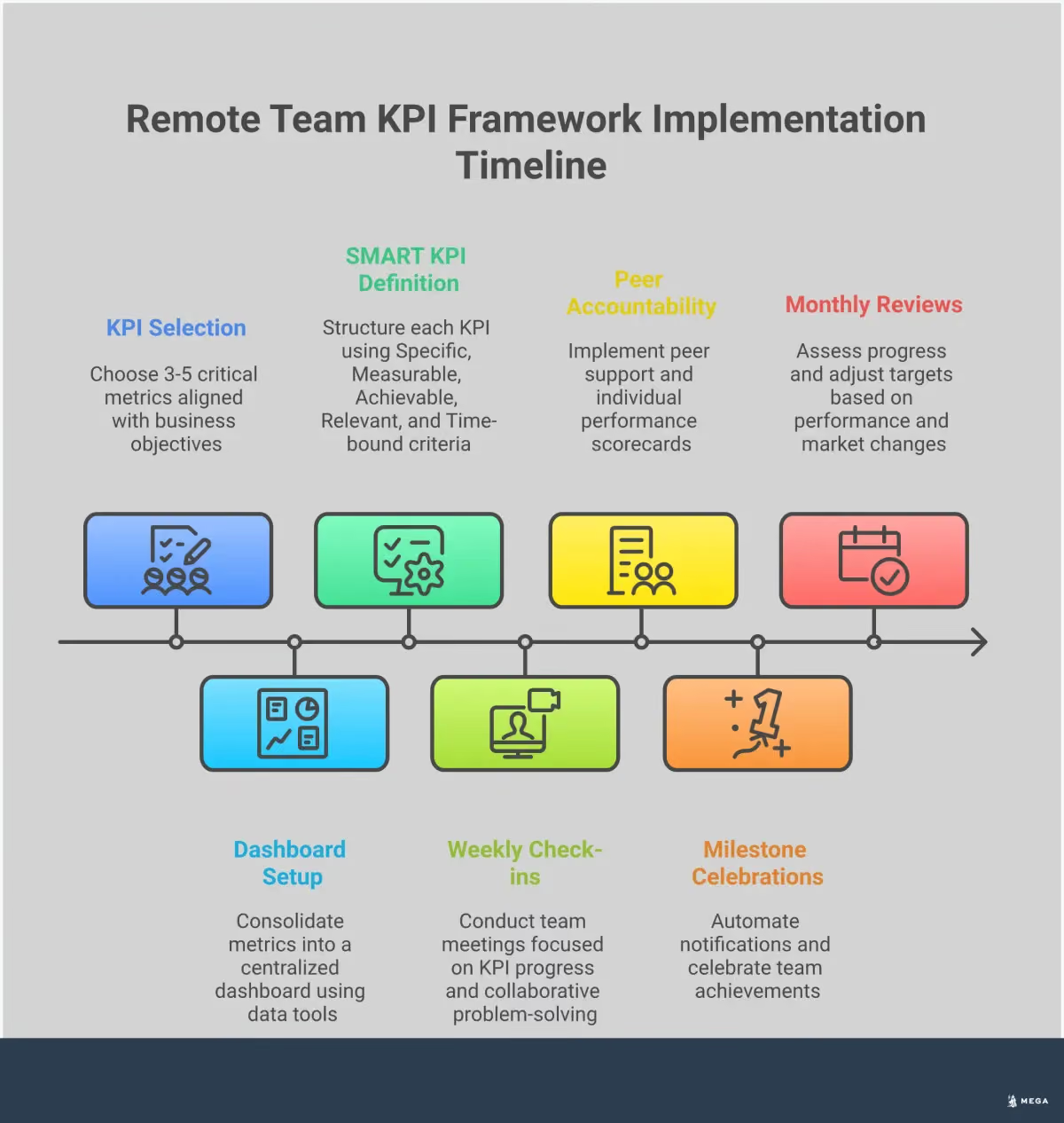
Vague goals lead to vague results. To be effective, every KPI should follow the SMART criteria: Specific, Measurable, Achievable, Relevant, and Time-bound. For instance, instead of a goal like "improve website traffic," a SMART KPI would be "Increase organic website traffic by 15% in the next quarter." This provides a clear target and a deadline. Using virtual team success metrics that are well-defined makes performance conversations more objective and data-driven. It removes ambiguity and helps your team understand exactly what success looks like for their role.
Consider Your Team's Unique Work Dynamics
There is no one-size-fits-all set of KPIs. The metrics that work for your sales team won’t be the same for your engineering team. It’s important to tailor your KPIs to the specific roles and responsibilities within your company. A developer might be measured on code quality and deployment frequency, while a marketer’s success might be tied to lead generation and conversion rates. Understanding the unique dynamics of your team allows you to implement KPIs that genuinely reflect productivity and contribution. When you use KPIs and deliverables that are customized to each function, you create a fair and effective system for measuring performance across the board.
Key KPI Categories for Any Remote Team
While the specific KPIs you choose will depend on your business goals and team structure, most effective metrics fall into four main categories. Thinking about your team’s performance through these lenses helps ensure you have a balanced view of what’s working and where you need to improve. It’s not about tracking every single action but about focusing on the key results that drive your business forward. A balanced approach ensures that you’re not just measuring productivity at the expense of customer happiness or team collaboration.
Performance and Productivity
For remote teams, measuring performance is less about tracking hours and more about evaluating output. Clear metrics help everyone understand what "a good day's work" looks like. Focus on tracking things like task completion rates, project turnaround times, and the quality of deliverables. These work output metrics provide a clear, objective view of how productive your team is, regardless of where they are. By measuring the results of their work, you empower team members to manage their own time effectively while ensuring that key business objectives are being met consistently. This approach builds trust and focuses the team on what truly matters: delivering high-quality work on schedule.
Communication and Collaboration
Effective communication is the foundation of any successful remote team. While it can feel difficult to measure, you can track indicators that show how well your team is collaborating. Consider metrics like response times to internal messages, participation in team meetings, and the adoption rate of your primary communication tools. These KPIs aren't for micromanaging but for spotting potential bottlenecks or communication breakdowns before they become serious problems. Fostering open dialogue also allows team members to voice pain points and work together on solutions, strengthening collaboration and ensuring everyone feels connected and heard.
Customer Satisfaction and Retention
Your team’s internal efforts should always connect to external results. Customer-centric KPIs are essential for ensuring your remote team is aligned with the most important business goal: keeping customers happy. Metrics like Net Promoter Score (NPS), customer satisfaction (CSAT) scores, and customer retention rate provide direct feedback on your team's impact. An effective remote work KPI should be directly tied to these business objectives. When your team can see how their work influences customer loyalty, it provides a powerful sense of purpose and ensures everyone is working toward the same goal of creating a positive customer experience.
Revenue and Growth
Ultimately, every activity should contribute to the financial health of your business. Revenue and growth KPIs connect your team’s daily tasks to the bottom line. Key metrics in this category include customer acquisition cost (CAC), conversion rates, and monthly recurring revenue (MRR). These numbers tell a clear story about your company’s growth trajectory and the effectiveness of your marketing and sales efforts. By defining specific, measurable objectives for each team member that tie back to revenue, you create a direct line of sight between individual contributions and the company's overall success. This keeps the entire team focused on growth.
How to Communicate KPIs Effectively to Your Remote Team
Setting KPIs is the first step, but how you share them with your team makes all the difference. For remote teams, clear communication isn't just helpful—it's essential for keeping everyone aligned and motivated. When your team is spread out, you can't rely on office osmosis to keep everyone on the same page. A well-communicated KPI framework transforms abstract numbers into a shared roadmap that guides everyone's efforts toward the same destination. It’s about creating clarity and a sense of collective purpose, no matter where your team members log in from.
Explain the "Why" Behind Each Metric
Don't just present a list of metrics. Take the time to connect each KPI to the bigger picture. When a team member understands how their work on improving "time on page" directly impacts the company's goal of becoming a trusted industry resource, the metric becomes more than a number—it becomes a mission. This context fosters a sense of ownership. Schedule time to discuss the reasoning behind your chosen KPIs and create a space where team members can ask questions and strategize solutions together. This dialogue ensures everyone feels like a partner in the company's success.
Involve Employees in the KPI-Setting Process
The most effective KPIs are the ones your team helps create. Involving your employees in the goal-setting process ensures the metrics are realistic, relevant, and directly tied to their roles. When people have a say in defining their own measures of success, their commitment to achieving them grows significantly. This collaborative approach is especially valuable for remote teams, as it builds accountability from the ground up. Instead of handing down targets, work with each team member to set individual objectives that align with broader team and company goals.
Create a Transparent Reporting System
For a remote team, a centralized dashboard is the virtual equivalent of the office whiteboard. It's the single source of truth that everyone can turn to for real-time updates on progress. Transparency builds trust and keeps the entire team aligned, allowing managers to make informed decisions and team members to see how their contributions fit into the overall picture. Instead of juggling spreadsheets and multiple tabs, a platform that lets you track all of your KPIs in one place removes confusion and ensures everyone is working with the same information. This clarity is fundamental to maintaining momentum and cohesion across different locations.
Provide Training on How to Use the Metrics
Simply sharing access to a dashboard isn't enough. You need to ensure your team knows how to read, interpret, and act on the data. Provide training that explains what each KPI measures, how it's calculated, and what different trends might indicate. This empowers your team to make smarter, independent decisions about their work. When your team members understand the story the numbers are telling, they can proactively adjust their strategies without waiting for top-down direction. Investing in your team's data literacy is an investment in their autonomy and effectiveness, which are critical traits for any high-performing remote employee.
How to Track KPIs Without the Overwhelm
Setting KPIs is one thing; tracking them without adding another full-time job to your plate is another challenge entirely. For small businesses and remote teams, the goal is to create a system that provides clarity, not clutter. Drowning in spreadsheets and manually pulling reports every week is a recipe for burnout. The key isn’t to track every possible metric, but to monitor the right ones in a way that’s efficient, sustainable, and drives action. By focusing on a few core metrics and leveraging the right tools, you can build a performance-tracking system that empowers your team instead of overwhelming them. This approach helps you spend less time collecting data and more time using it to make smart decisions for your business.
Start with Three to Five Core Metrics
The first step to avoiding overwhelm is to resist the urge to measure everything. More data doesn't always lead to better insights; often, it just creates noise. Instead, identify three to five core metrics that are most critical to your team's success and align directly with your main business objectives. This forces you to prioritize what truly matters. For example, instead of tracking a dozen different website engagement metrics, you might focus on organic traffic, lead conversion rate, and customer acquisition cost. This small, focused set of KPIs provides a clear and immediate snapshot of performance without requiring you to sift through irrelevant data. This approach ensures your team stays focused on the most impactful indicators, avoiding the confusion that comes from a bloated list of metrics.
Use a Centralized Dashboard for All Your Data
Constantly switching between Google Analytics, your ad platforms, and your CRM to get a full picture of performance is inefficient and frustrating. A centralized dashboard brings all your essential data into one place, creating a single source of truth for the entire team. This not only saves time but also ensures everyone is looking at the same numbers, which is crucial for remote alignment. A good KPI dashboard provides real-time insights into productivity and performance, making it easy to spot trends and make quick decisions. The goal is to stop opening ten different tabs just to understand what’s happening. When you can track all your KPIs in one place, your team can focus on strategy instead of data hunting.
Automate Data Collection and Reporting
Manually pulling numbers and building reports is a time-consuming task that’s highly susceptible to human error. Automating this process is one of the most effective ways to streamline your KPI tracking. When you automate data collection, you free up valuable time for your team to analyze the insights and work on strategic initiatives that actually grow the business. Modern marketing platforms can automatically gather performance data from all your channels and generate reports for you. For instance, MEGA AI’s agents can autonomously track your SEO and paid ad performance, surfacing insights without you having to lift a finger. This reduces manual effort and ensures you always have accurate, up-to-date information at your fingertips.
Establish a Regular Review Cadence
Collecting data is only useful if you regularly review it and take action. Establishing a consistent review cadence—whether it's a weekly check-in or a monthly performance meeting—creates a dedicated time for your team to discuss the KPIs. This practice turns data into a conversation about progress, challenges, and next steps. These meetings shouldn't just be about reading numbers off a screen. They should be strategic discussions focused on what the data is telling you. A simple agenda can keep these reviews productive: discuss what went well, identify areas for improvement, and set clear priorities for the upcoming week or month. This consistent rhythm of review and adjustment keeps the team aligned and ensures your KPIs are actively guiding your strategy.
What Happens When Remote Teams Ignore KPIs?
Operating a remote team without clear Key Performance Indicators (KPIs) is like trying to navigate a ship without a compass. You might be moving, but you have no idea if you're heading in the right direction. When metrics are an afterthought, teams often drift into inefficiency and confusion. This lack of clarity doesn't just affect project timelines; it can impact morale, performance, and your bottom line. Without a shared understanding of what success looks like, remote employees are left to guess, which leads to wasted effort and disconnected results. Let's look at the specific challenges that arise when KPIs are left out of the picture.
Loss of Direction and Team Alignment
Without shared goals, team members are left to define success on their own terms, leading to a scattered effort where everyone is busy but their work doesn't add up to meaningful progress. When remote teams lack clear direction, individuals might spend weeks on tasks that aren't aligned with company priorities. Setting specific, measurable goals gives everyone a shared destination. It ensures each person, no matter their location, understands how their contributions push the entire team forward, turning a group of remote workers into a cohesive unit.
A Drop in Accountability and Performance
When expectations are vague, accountability becomes nearly impossible to maintain. Without clear metrics, it’s difficult to objectively assess performance, leading to conversations based on feelings rather than facts. This ambiguity can cause top performers to feel undervalued while others slide by without taking full ownership of their work. Clear KPIs remove the guesswork by defining what success looks like for each role. This structure fosters personal responsibility and reduces the need for constant check-ins, allowing you to trust your team to deliver.
Missed Opportunities for Growth
KPIs are more than a report card; they are a vital source of business intelligence. They tell you what’s working, what isn’t, and where your biggest opportunities are hiding. By ignoring these metrics, you’re essentially flying blind. You might miss a marketing channel that’s delivering high-quality leads or fail to notice a dip in customer satisfaction until it’s too late. An effective remote work KPI is tied directly to business objectives, turning raw data into actionable insights. This allows you to make informed decisions and capitalize on growth opportunities.
How to Keep Your KPIs Relevant and Up-to-Date
Setting your initial KPIs is a great first step, but it’s not the final one. Markets shift, teams evolve, and business goals change. For your KPIs to remain effective tools for alignment and growth, they need to be treated as living documents, not as rules set in stone. A metric that was critical during a product launch might be less important six months later, while a new KPI might be needed to track an emerging opportunity.
Keeping your metrics current ensures your remote team stays focused on what truly matters right now. This process isn't about constantly changing the goalposts; it's about making sure you're measuring what drives success today and tomorrow. A regular process of review and refinement helps you adapt, learn, and grow more effectively. It transforms your KPIs from a simple report card into a strategic guide that helps your team make better decisions, whether they’re working from the next room or the other side of the world.
Review and Adjust Metrics Regularly
The most effective KPIs are dynamic. It’s essential to schedule regular check-ins to assess whether your metrics are still aligned with your team's priorities and the company's larger objectives. A good practice is to review them quarterly. This cadence is frequent enough to catch misalignments before they become major issues but allows enough time to gather meaningful data.
During these reviews, ask critical questions: Is this metric still driving the right behaviors? Does it accurately reflect success for this role or project? Is there a better way to measure our progress? The goal is to continuously re-evaluate your metrics to ensure they remain useful. This process keeps your team agile and focused on productive work, preventing them from chasing outdated targets that no longer serve the business.
Incorporate Feedback from Your Team
Your team members are on the front lines, and they often have the clearest view of what’s working and what isn’t. Involving them in the KPI review process is crucial for both relevance and buy-in. When employees have a voice in shaping their own metrics, they feel a greater sense of ownership and are more motivated to achieve them.
Create opportunities for team members to share their thoughts on current KPIs. You can do this during one-on-one meetings, team brainstorming sessions, or through feedback surveys. Ask them what challenges they face with the current metrics and if they have ideas for more meaningful measurements. This collaborative approach not only improves the quality of your KPIs but also strengthens communication and trust within your remote team.
Adapt to Changes in Your Business or Market
Your business doesn’t operate in a vacuum. External factors like new competitors, shifts in consumer behavior, or major industry updates can all impact your strategic priorities. When these changes happen, your KPIs must adapt as well. For example, if a Google algorithm update changes the SEO landscape, your content team’s KPIs might need to shift from pure traffic volume to metrics like search engine results page (SERP) visibility or click-through rate.
To stay ahead, you need to align your team’s goals with the current market reality. This ensures your remote team’s efforts are always directed toward the most impactful activities. An AI-powered platform can help by automatically tracking performance and surfacing insights, making it easier to see when a strategic pivot—and a corresponding KPI update—is needed for your SEO or paid ads campaigns.
Build a Culture of Continuous Improvement
Ultimately, the goal of maintaining your KPIs is to foster a culture of continuous improvement. Frame your metrics not as tools for judgment, but as tools for learning. When a target is missed, the conversation shouldn't be about blame. Instead, it should be a constructive discussion about what happened, what was learned, and how you can adjust your approach moving forward.
This mindset encourages experimentation and resilience. It gives your remote team the psychological safety to try new things without the fear of failure. By treating KPIs as a guide for growth, you empower your team to take ownership of their performance and proactively seek out ways to get better. This creates a positive feedback loop where clear goals inform action, and action leads to better results over time.
Build Your Remote Team's KPI Framework
Creating a successful KPI framework isn't about picking a few numbers and hoping for the best. It’s a structured process that gives your remote team clarity, direction, and a shared sense of purpose. When everyone understands what success looks like and how their work contributes to it, alignment happens naturally, even across different cities and time zones. A solid framework is built on three core pillars: a clear implementation plan, genuine team buy-in, and a commitment to ongoing refinement.
Think of your framework as a living document, not a static rulebook. It should provide a clear path forward while being flexible enough to adapt as your business grows and market conditions change. The key is to establish a system that empowers your team with data, fosters open communication, and connects individual efforts to the company's larger goals. By focusing on these foundational steps, you can build a system that not only tracks performance but also strengthens your team's cohesion and drives meaningful results.
How to Implement Your First KPI System
The first step is to translate your high-level business goals into specific, measurable objectives for each team member and function. Start by defining what you need to achieve, then work backward to identify the key results that will get you there. For a marketing team, a broad goal like "increase brand awareness" could be broken down into KPIs such as a 15% increase in organic website traffic or a 10% growth in social media engagement over the next quarter. Using a project management tool can help you assign, track, and visualize these goals, ensuring everyone knows what they are responsible for.
Get Team Buy-In and Encourage Participation
KPIs can feel like top-down mandates if they are implemented without context or conversation. To create a system that truly works, you need to involve your team in the process. Schedule sessions to discuss the company’s objectives and brainstorm how each person's role contributes. When employees help set their own KPIs, they develop a stronger sense of ownership and are more invested in the outcomes. This collaborative approach turns KPI tracking from a management exercise into a shared team effort, building trust and accountability along the way.
Measure Your Success and Make Adjustments
Your first set of KPIs won't be perfect, and that's okay. The goal is to create a starting point and refine it over time. Schedule regular check-ins—monthly or quarterly—to review performance, discuss what’s working, and identify what isn’t. This is where a framework like SMARTER goals becomes valuable, as it encourages you to evaluate and re-evaluate your metrics. If a KPI isn't driving the right behavior or has become irrelevant, don't be afraid to change it. A successful KPI system is one that evolves with your team and your business.