
Telling someone their strategy has a flaw can feel a lot like telling them their baby is ugly. It rarely goes over well. When you directly point out what’s wrong with a project, the natural human response isn’t gratitude—it’s defensiveness. This approach fails because it bypasses the critical step of self-discovery. People are far more committed to solving problems they identify on their own. This guide offers a more effective method. Instead of creating conflict, you’ll learn how to hold up a mirror, using data and strategic questions to guide your team to their own conclusions and create lasting, collaborative change.
Key Takeaways
- Guide, Don't Tell: Instead of pointing out flaws directly, use data and open-ended questions to lead your team to their own conclusions. This approach reduces defensiveness and encourages them to take ownership of the solution.
- Build a Foundation of Trust: Self-reflection can only happen in a safe environment. Build trust by modeling vulnerability yourself, listening without judgment, and making reflection a regular, expected part of your team's routine.
- Connect Insight to Action: A realization is wasted without a follow-up plan. Translate every discovery into a concrete action plan with clear steps, owners, and deadlines to ensure that reflection leads to real business improvements.
Why Direct Confrontation Fails
Telling someone their strategy has flaws can feel a lot like telling them their baby is ugly. It rarely goes over well. When you walk into a meeting and directly point out what’s wrong with a project or process, the natural human response isn’t gratitude—it’s defensiveness. Direct confrontation often feels like a personal attack, causing people to shut down, justify their actions, or dismiss your feedback entirely. Instead of opening a door to productive problem-solving, you’ve just built a wall.
This approach fails because it bypasses the critical step of self-discovery. When you simply state what's wrong, you remove any sense of ownership from the stakeholder. The problem becomes your observation, not their realization. As someone who may be an outsider to their specific daily workflow, your attempt to force a change can feel uninformed and unwelcome. A more effective method is to hold that mirror up so they can see the issue for themselves. People are far more committed to solving problems they identify on their own.
Furthermore, an aggressive, head-on critique can erode trust and damage working relationships. It positions you as an adversary rather than a collaborator. The goal isn't to win an argument; it's to achieve a better outcome for the business. Building a genuine connection and finding common ground is essential for progress. When people feel understood and respected, they become partners in finding a solution, not obstacles to be overcome. The most effective leaders guide their teams to conclusions instead of just handing them down.
The Psychology: Why Self-Discovery Is More Effective
When you spot a problem in your business, the most direct path seems to be pointing it out. You see a flaw in a marketing campaign or an inefficiency in a workflow, and your first instinct is to tell the person responsible what’s wrong. While this approach is fast, it’s rarely effective. People tend to resist criticism, no matter how valid it is. A more productive strategy is to guide them to discover the problem on their own.
This method works because it taps into fundamental aspects of human psychology. When someone identifies an issue themselves, they feel a sense of ownership over it and are more motivated to find a solution. It also prevents the defensive reactions that shut down collaboration and creative thinking. Instead of creating conflict, you create a partner in problem-solving. This approach isn't about manipulation; it's about fostering an environment where your team can grow, innovate, and take genuine accountability for their work. It shifts the dynamic from top-down instruction to collaborative improvement.
The Power of the Ownership Effect
The ownership effect is the idea that we place a higher value on things we own. This applies to ideas and solutions just as much as it does to physical objects. When a stakeholder or team member uncovers a problem through their own analysis, they aren't just seeing an issue; they are taking ownership of it. The problem becomes theirs to solve.
This sense of ownership is a powerful motivator. Instead of feeling like they’re being forced to fix a mistake someone else found, they become invested in the outcome. This is where true self-reflection becomes a business tool, inspiring team members to adapt to challenges and drive more meaningful results because they are personally connected to the success of the solution.
How to Reduce Defensive Responses
No one likes to be told they’re wrong. Direct criticism, even when delivered with the best intentions, often triggers a defensive response. People may get quiet, make excuses, or become argumentative. Once that wall goes up, any chance for a productive conversation disappears. The focus shifts from solving the business problem to defending personal pride.
Guiding someone to their own conclusion is like holding up a mirror instead of pointing a finger. As one expert puts it, you’re helping them see the “spinach between their teeth” for themselves. This approach promotes open communication and trust, making people more receptive to feedback because it doesn’t feel like an attack. By asking questions and presenting data, you create a safe space for them to see the reality of the situation without feeling judged.
What Is the Mirror Technique?
The Mirror Technique is a method for pointing out problems by reflecting a situation back to someone, allowing them to see the issue for themselves. Instead of directly stating a problem, which can trigger defensiveness, you present objective information and guide the other person to their own conclusion. This approach encourages self-awareness and accountability, turning a potentially difficult conversation into a productive problem-solving session.
For small business owners and managers, this technique is especially useful. It helps you address performance issues with your team without damaging morale or creating conflict. You can also use it on yourself to assess your own business strategies with a clear, unbiased perspective. The goal is to shift the focus from blame to understanding. Rather than saying, "Our ad spend is wasted," you can present the campaign data and ask, "What does this report tell us about where our budget is going?" This empowers your team members to own both the problem and the solution, leading to more effective and lasting change.
Create a Safe Space for Reflection
For the Mirror Technique to work, you first need an environment where people feel safe enough to be honest. If your team members expect criticism, they’ll remain guarded and defensive. A safe space encourages open exploration of challenges without fear of judgment. When you foster a culture of reflection, you signal that the goal is collective improvement, not individual blame. Frame these discussions as collaborative check-ins focused on growth. The business value of self-reflection is that it helps leaders and their teams adapt to challenges and drive more meaningful results. When people feel secure, they are more willing to engage with difficult truths and contribute to finding a solution.
Ask Strategic Questions
Once you have a safe environment, strategic questions become your primary tool. These are open-ended, non-leading questions that guide someone’s thinking without telling them what to conclude. The right questions prompt team members to connect their actions to the results, helping them understand their individual impact on the company’s success. Instead of pointing out a flaw, you can use data as a starting point for a guided conversation.
For example, you could ask:
- "Looking at this month's traffic report, what patterns stand out to you?"
- "How does our current conversion rate compare to the goal we set?"
- "What do you think is the biggest obstacle preventing us from hitting our target?"
These questions encourage critical thinking and place the responsibility for analysis on the individual, making them an active participant in solving the problem.
How to Create a Supportive Environment for Self-Reflection
Guiding someone to discover a problem on their own only works if they feel safe enough to look for it. Your role as a leader is to create an environment where honest self-assessment isn't just encouraged but is a normal part of how your team operates. Without a foundation of trust and psychological safety, even the most strategic questions will be met with defensive answers. The goal is to build a culture where reflection is seen as a tool for growth, not a prelude to criticism. This means shifting the focus from finding fault to finding solutions together.
This supportive atmosphere doesn't happen by accident. It requires intentional effort to show your team that vulnerability is a strength and that mistakes are simply data points for improvement. When people feel secure, they are more willing to analyze their own performance, admit when they need help, and contribute to solving the very problems you want to address. By focusing on the environment first, you make the process of self-discovery a collaborative effort rather than an uncomfortable confrontation. This sets the stage for meaningful conversations and, ultimately, more effective solutions that the whole team feels invested in.
Model Vulnerability and Open Communication
Creating a space for honest reflection starts with you. When leaders model vulnerability, it signals to the entire team that it’s safe to be open. This means admitting when you don't have the answer, sharing lessons from past mistakes, and talking openly about challenges you're facing. This behavior builds a foundation of psychological safety, where team members feel secure enough to express their own thoughts without fear of negative consequences. Open communication isn't just about sharing updates; it's about fostering a dialogue where difficult topics can be discussed constructively. When your team sees you approach challenges with curiosity instead of blame, they are more likely to do the same.
Establish Trust Without Judgment
Trust is the bedrock of effective self-reflection. Your team members need to know that they can share their insights, concerns, and even their errors without facing criticism or blame. To build this trust, practice active listening and respond with empathy. When someone brings up a mistake, frame it as a learning opportunity for the entire team. Avoid interrupting or immediately jumping to solutions. Instead, ask questions that encourage deeper thinking, like "What do you think we can learn from this?" or "How might we approach this differently next time?" When judgment is removed from the equation, people are far more willing to engage in the honest self-assessment required to identify and solve core business problems.
Implement Regular Reflection Practices
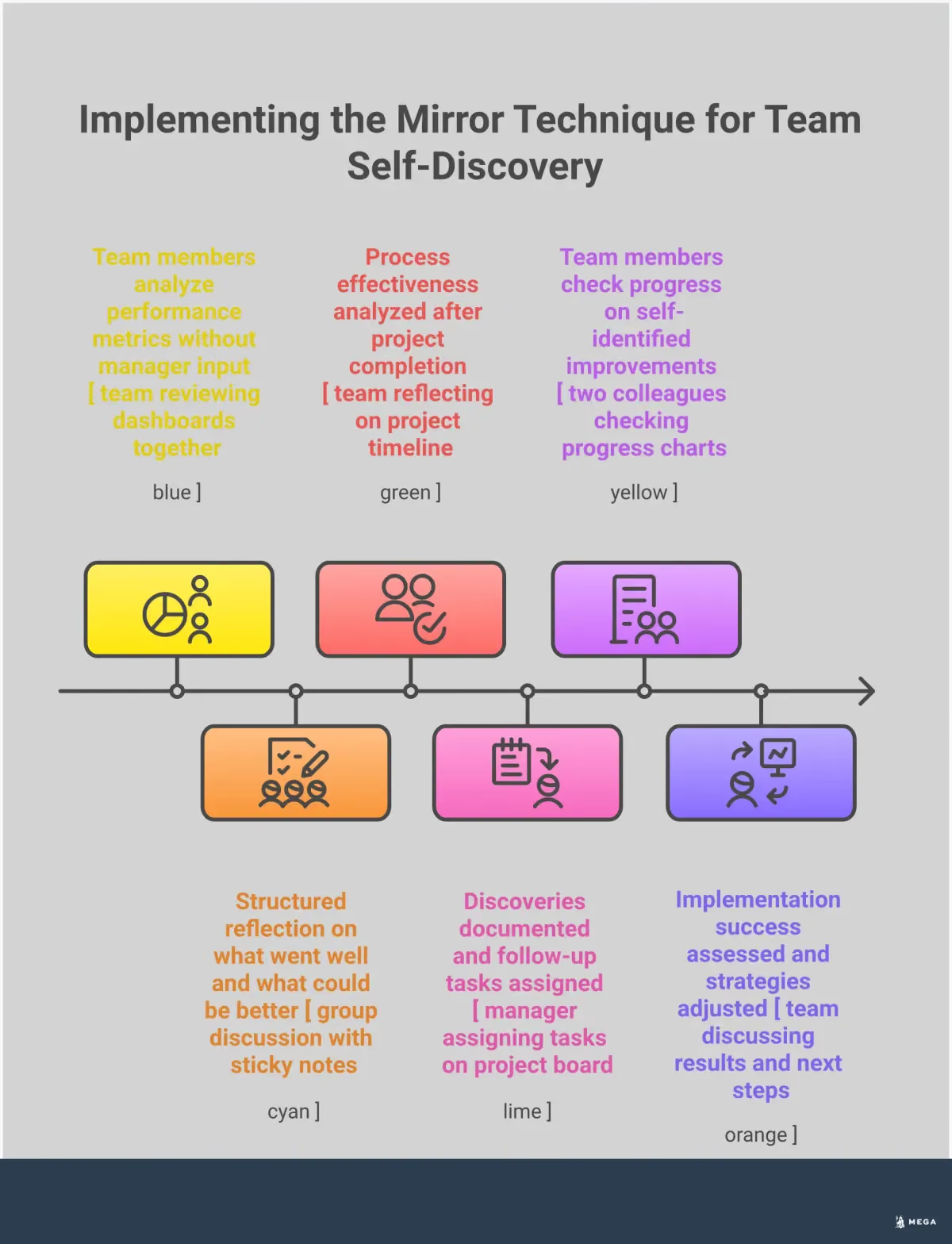
A supportive environment is reinforced by consistent habits. To make self-reflection a normal part of your workflow, you need to build structured opportunities for it to occur. This can take many forms, such as weekly team debriefs to discuss what went well and what didn't, or dedicated time in one-on-one meetings to talk about personal growth and challenges. Running a project retrospective after a major initiative is another great way to analyze performance collectively. These regular practices create a predictable rhythm for reflection, turning it from a rare, intimidating event into a routine process for continuous improvement. They provide the time and space for individuals to evaluate their work and identify areas for growth.
Common Challenges When Promoting Self-Discovery
Guiding your team toward self-discovery is a powerful approach, but it’s not without its hurdles. Encouraging people to look inward at their work and its impact requires working through some common human and organizational obstacles. Understanding these challenges ahead of time is the first step to creating a process that feels productive instead of painful. The two biggest roadblocks you’re likely to face are personal resistance and systemic cultural issues. By anticipating them, you can build a framework that supports genuine reflection and leads to meaningful change, rather than shutting down the conversation before it even starts.
Resistance to Vulnerability and Time Constraints
Asking someone to identify a problem is also asking them to be vulnerable. It requires admitting that something isn’t working, which can feel like a personal failure, especially in high-performance environments where everyone is expected to have the right answers. Self-reflection is a skill that requires practice, and many people will naturally resist it at first. Compounding this is the simple issue of time. As a small business owner, you and your team are already stretched thin. Finding the bandwidth for deep, reflective work can feel like a luxury you can’t afford when daily operations are so demanding.
Cultural Barriers and Team Dynamics
Your company’s existing culture plays a huge role in how receptive your team will be to self-discovery. If your environment is built on blame or fear of mistakes, employees will be hesitant to point out problems. A truly inclusive and psychologically safe culture is necessary for this process to work. Beyond the broader culture, the dynamics within the team are critical. Effective sales leadership, for example, involves building a culture that supports growth and accountability. If team members don’t trust each other or their manager, they won’t engage in the open, honest dialogue required to uncover and address underlying issues.
How to Guide Stakeholders to Discover Problems
Pointing out a problem directly can feel like an accusation, often causing team members or clients to become defensive. A more productive approach is to guide them toward discovering the issue on their own. When someone identifies a problem themselves, they take ownership of it and become more invested in finding a solution. This method builds trust, encourages critical thinking, and leads to more sustainable change. Instead of being the person with all the answers, you become a facilitator who empowers others to think strategically.
This process involves shifting from telling to asking. It’s about presenting information in a neutral way and using thoughtful questions to help others connect the dots. For a small business owner, this could mean reviewing marketing data with a team member and asking, "What trends do you see here?" rather than stating, "Our ad spend is inefficient." This collaborative discovery process strengthens your team's analytical skills and fosters an environment where problems are seen as opportunities for growth, not failures. MEGA AI's autonomous agents for SEO and Paid Ads can provide the objective data needed to start these conversations.
Use Data to Build Awareness, Not Blame
Data is your best friend when you want to highlight an issue without pointing fingers. Objective metrics, like website traffic, conversion rates, or ad performance, present a neutral picture of reality. When you share this information, you’re not offering an opinion; you’re presenting facts. This approach allows stakeholders to see the situation clearly and draw their own conclusions about what needs to change. By using data effectively, leaders can create an environment where their teams feel empowered to recognize issues. This method helps inspire their teams to adapt and drive results without feeling blamed for shortcomings.
Facilitate Guided Conversations
Once you have the data, your role is to facilitate a conversation around it. Instead of explaining what the data means, ask open-ended questions that encourage exploration. For example, you might say, "Our report shows that leads from Platform X are down 30% this quarter. What are your initial thoughts on that?" This technique is like holding the mirror up and letting people see the situation for themselves. It re-educates them on their own business and prompts them to identify the root cause. This guided discovery is far more powerful than simply being told what’s wrong because it leads to genuine buy-in for the solution.
Provide Self-Assessment Tools and Frameworks
Equip your team with the tools they need to evaluate performance on their own. This could be a shared dashboard, a weekly performance checklist, or a simple framework for reviewing key metrics. When people have direct access to performance data, they can spot issues proactively. Platforms like MEGA AI act as a continuous self-assessment tool, autonomously analyzing your SEO and ad campaigns to surface insights. These tools create open feedback loops that are based on data, not personal opinion. This empowers your team to identify challenges and propose solutions, turning problem-solving into a regular, collaborative practice.
How to Measure the Impact of Self-Reflection
Guiding your team toward self-discovery is a powerful approach, but how do you know if it’s actually working? The results of self-reflection aren't just feelings; they show up in tangible business outcomes. Measuring this impact helps you see what’s effective and demonstrates the value of investing time in this process. Instead of guessing, you can track specific changes in your team’s behavior and their ability to solve problems.
Think of it like any other business initiative. You set a goal, implement a strategy, and then measure the results. Here, the strategy is fostering self-reflection, and the results are a more engaged, effective, and proactive team. By focusing on a few key areas, you can move from abstract concepts like "better communication" to concrete evidence of improvement. The two most important areas to watch are shifts in team dynamics and the effectiveness of your problem-solving process over time. These metrics will give you a clear picture of how self-reflection is shaping your workplace for the better.
Track Behavioral Changes and Team Engagement
When self-reflection starts to take hold, you’ll notice a shift in how your team interacts. Conversations may become more constructive and less defensive. Team members might start offering solutions instead of just pointing out problems. These are the behavioral changes that signal a healthier culture. To track this, pay attention to the language used in meetings and written communications. Are people using "we" more than "I"? Is feedback delivered and received more openly?
This shift in communication and accountability is a direct path to higher team engagement. Engaged employees are more invested in their work and the company's success. You can measure this with simple, regular pulse surveys asking about clarity, support, and collaboration. Over time, you should see these scores improve as individuals become more self-aware and aligned with team goals.
Assess Problem-Solving Effectiveness Over Time
A team that reflects is a team that learns. One of the most significant impacts of self-discovery is an improved ability to solve problems efficiently and effectively. Instead of repeatedly facing the same obstacles, your team will get better at identifying the root cause and implementing lasting solutions. This is a clear, measurable outcome that directly affects your bottom line.
To measure this, start tracking key metrics related to your team's challenges. How long does it take to resolve a typical issue? Are you seeing a reduction in recurring problems? You can monitor project timelines, customer support ticket resolutions, or the frequency of errors. As your team uses self-reflection to learn from experience, you should see these metrics trend in a positive direction, demonstrating a clear return on the time invested in this practice.
Turn Self-Discovery into Actionable Change
Identifying a problem is a critical first step, but it’s the action that follows that creates real change. Once your team or stakeholders have reached their own conclusions about a business challenge, the focus must shift from reflection to resolution. This transition is where many teams falter. Valuable insights from a productive meeting can easily fade by the next morning without a clear path forward, leaving the original problem unsolved and the team feeling like their efforts were pointless. The momentum gained from that shared understanding is a perishable resource.
To make self-discovery stick, you need a structured approach that converts those "aha" moments into concrete plans. It’s also an opportunity to foster a team environment where personal growth is part of the process. This isn't just about creating a to-do list. It's about building a bridge from awareness to tangible outcomes, ensuring that every realization leads to meaningful improvement for the business and the people who run it. The goal is to create a repeatable system where problems are not just identified, but systematically addressed, turning your team into a more proactive and effective unit that drives the business forward.
Convert Discoveries into Strategic Action Plans
An insight without a plan is just an observation. Once a problem has been identified through guided discovery, the next step is to create a clear action plan. This involves breaking down the solution into specific, manageable tasks with clear owners and deadlines. For example, if the team realizes the current content strategy isn't driving qualified leads, the action plan might include researching new keywords, updating existing articles, and tracking conversion rates on specific pages.
Effective sales leadership ensures every team member understands how their individual tasks contribute to the company's overall success. This creates a sense of shared purpose and accountability. Whether you're adjusting internal processes or implementing new tools to automate tasks like SEO and ad management, the goal is to translate the team's discovery into a documented strategy that everyone can follow.
Develop Your Team Through Self-Awareness
This process isn't just about fixing business problems; it's also a powerful tool for professional development. When individuals learn to identify challenges on their own, they build critical thinking and problem-solving skills. As a manager, your role is to support this growth by creating an environment that encourages continuous learning and emotional intelligence.
Provide resources and coaching to help your team members build on their newfound awareness. Encouraging practices like journaling or structured self-reflection can help individuals process feedback and learn from their experiences. By investing in your team's ability to be self-aware, you cultivate a more resilient and adaptable workforce that can identify and solve future problems with greater autonomy.
How to Build a Culture of Continuous Self-Reflection
To make self-discovery a lasting part of your business, it needs to be more than a one-time technique. It should be woven into your company's culture. A culture of continuous self-reflection creates an environment where team members are always looking for ways to improve, both individually and collectively. This isn't about constant criticism; it's about building a shared habit of thoughtful review and learning. When your team is accustomed to reflecting on its processes and outcomes, pointing out problems becomes a natural part of the workflow, not a stressful confrontation. This proactive approach helps you adapt to challenges and find opportunities for growth before they become major issues. For small businesses especially, this is a powerful way to stay agile without a large budget for formal training. It empowers every team member to contribute to the company's success by spotting inefficiencies and suggesting solutions. This bottoms-up approach to problem-solving is often more effective and sustainable than top-down directives. Building this culture requires two key components: training your team to think reflectively and creating consistent opportunities for them to do so.
Train Your Team to Ask Better Questions
Reflection starts with inquiry, but not all questions are created equal. To guide your team toward productive self-discovery, you need to train them to ask better questions. Instead of asking "Why did this fail?" which can trigger defensiveness, try "What did we learn from this outcome?" or "What could we do differently next time?" Leaders with an inclusive mindset are skilled at this; they overcome personal biases to encourage deeper thinking in those around them. Focus on open-ended questions that explore processes, assumptions, and potential alternatives. This shifts the focus from blame to learning, making it easier for everyone to engage honestly and identify the root causes of problems.
Create Regular Reflection Checkpoints
Good intentions aren't enough to build a habit. Self-reflection needs to be a scheduled part of your team's routine. By creating regular checkpoints, you signal that this practice is a priority. These don't have to be long, formal meetings. You can integrate reflection into existing structures, like adding 10 minutes to the end of a weekly team meeting for a "what went well, what could be better" discussion. Post-project retrospectives are another great tool. The key is consistency. When your team knows there's a dedicated time and place to reflect, they're more likely to think critically about their work throughout the week. Establishing structured reflection tactics is essential to learning from experience and driving meaningful results.
How AI Tools Can Support Self-Discovery
Using AI tools can feel like having an impartial analyst on your team. Instead of a person pointing out what’s wrong, an AI platform presents objective data and performance metrics. This shifts the focus from potential blame to a shared goal of understanding the numbers. It removes the emotional weight from the conversation, making it easier for stakeholders to see and accept where the business has opportunities to improve. This approach turns problem-solving into a collaborative, data-driven exercise.
For small businesses and local shops, this is especially powerful. You don't need a full marketing team to get this level of insight. An AI-powered growth agent can autonomously plan, launch, and optimize your campaigns, effectively holding up a mirror to your marketing efforts. It shows you what’s working and what isn’t, based entirely on performance data. This allows you and your team to identify gaps and opportunities together, without the friction of direct confrontation. When the data comes from a neutral source, it’s no longer one person’s opinion against another’s; it’s a clear picture of reality that everyone can work from. This helps build alignment and gets everyone focused on finding solutions rather than defending their past decisions.
Use AI for Automated Data Analysis
For many business owners, the biggest barrier to data-driven decisions is the time and expertise required for analysis. AI tools make data analysis accessible, even for non-technical users. They can automate routine tasks like generating performance reports, tracking keyword rankings, or monitoring ad spend. This gives stakeholders a clear and direct view of what’s happening. When an AI agent for SEO provides a technical audit highlighting site speed issues, it’s not a criticism. It’s a factual report that empowers the team to see the problem and its potential impact for themselves.
Use AI to Surface Hidden Insights
Beyond automating reports, AI can identify patterns and trends that are nearly impossible for humans to spot. These tools can analyze thousands of data points to find non-obvious correlations, helping you understand customer behavior on a deeper level. For instance, an AI agent managing your Paid Ads can test hundreds of creative variations to discover that a specific image and headline combination dramatically increases conversions with a niche audience you hadn't prioritized. These AI-driven discoveries help teams uncover trends and make strategic pivots based on fresh, unbiased insights.