
The Helpful Content Update was supposed to reward authentic, expert-driven content. Instead, it left many creators asking: what went wrong? Reputable sites saw traffic disappear overnight, sparking widespread Helpful Content Update (HCU) criticism. The algorithm's impact often felt disconnected from its intent, devaluing genuine expertise while rewarding low-effort pages. This created a frustrating environment for marketers. This guide breaks down the content hit hardest, analyzes the flaws in the rollout, and outlines a sustainable path forward for your strategy.
Key Takeaways
- Treat content quality as a site-wide signal: The Helpful Content Update evaluates your entire domain, meaning a few low-quality pages can pull down the rankings of your best articles. A comprehensive content audit is essential for identifying and fixing these weak spots.
- Prioritize expertise over simple optimization: Shift your focus from just using the right keywords to demonstrating genuine, first-hand knowledge. The goal is to create content that thoroughly answers a user's questions and directly serves their needs.
- Continuously improve your existing content: Your work isn't finished after you hit publish. Protect your site's performance by regularly reviewing, updating, and consolidating older articles to ensure your entire content library remains accurate and valuable.
What is Google's Helpful Content Update?
The Helpful Content Update (HCU) is a significant change Google introduced to its ranking systems. The update is designed to better reward content that provides a satisfying experience for users, while content that doesn't meet a visitor's expectations won't perform as well. It’s a core part of Google's ongoing effort to clean up search results and show content that is genuinely useful, reliable, and created for people rather than for search engine algorithms.
Unlike some past updates that targeted specific pages, the HCU introduced a site-wide signal. This means that having a significant amount of unhelpful content on your site can negatively affect the rankings of all your pages, even the helpful ones. The system is automated and runs continuously, making it a permanent factor in how Google evaluates websites. Understanding its purpose and how Google defines "helpful" is the first step in adapting your SEO strategy to this new landscape.
What Was the HCU Designed to Do?
The primary goal of the Helpful Content Update is to elevate content that puts the user first. Google wants to ensure that when someone clicks on a search result, they land on a page that directly answers their question, solves their problem, or provides them with valuable insight. The system aims to demote content that seems created primarily to attract clicks from search engines without delivering real value.
This update has led to significant shifts in traffic and rankings for many websites. The system is designed to identify content that leaves a user feeling like they need to go back to the search results to find a better answer. By rewarding authentic and satisfying content, Google hopes to improve the overall quality of its search results and build greater user trust. Many site owners have been working to understand what led to a Google HCU recovery after seeing performance drops.
The Evolution of the Helpful Content System
The Helpful Content system wasn't a one-time event. It has evolved through several key phases, each one reinforcing Google's commitment to rewarding high-quality, user-centric content. Understanding this timeline helps clarify why content that performed well in the past might not anymore and what it takes to succeed now. The system has become more sophisticated and deeply integrated into Google's core ranking processes, making a people-first approach to content non-negotiable for long-term success.
Initial Rollout in August 2022
The journey began on August 25, 2022, when Google first launched the Helpful Content Update. The stated goal was clear: to better reward content where visitors feel they've had a satisfying experience. As Google's official announcement explained, the update was designed to promote original, helpful content created by people, for people. This initial rollout put creators on notice that content written primarily for search engine rankings, rather than to inform or help a human reader, would be devalued. It marked the beginning of a major shift, moving the focus from keyword optimization to genuine user value.
Expansion to All Languages in December 2022
Just a few months after its debut, the Helpful Content system went global. In December 2022, Google expanded the update to encompass all languages, not just English. This move signaled that the principles of helpfulness and user satisfaction were not limited to a single market. For small and local businesses operating in diverse communities or with multilingual websites, this expansion made it clear that content quality standards were now universal. It was no longer enough to translate keywords; the content itself had to be genuinely helpful to the intended audience, regardless of their language.
Integration into the Core Algorithm in March 2024
The most significant change arrived in March 2024, when Google announced that the Helpful Content system was no longer a separate, periodic update. Instead, its signals were integrated directly into the core ranking algorithm. This means the system now operates continuously and in real-time. There's no longer a waiting period for the next "update" to see a recovery or a drop. Your site's content is constantly being assessed. This evolution makes ongoing content maintenance essential. Regularly updating articles to improve their value isn't just good practice; it's a necessary strategy to align with a system that is always evaluating your site's helpfulness.
What Does Google Consider "Helpful" Content?
Google's definition of "helpful" centers on whether the content fulfills the user's intent and provides a satisfying experience. According to Google's own guidance, this means creating content that demonstrates first-hand expertise and a depth of knowledge. It should be clear that the content was produced by someone with experience in the topic.
Helpful content is also original, insightful, and goes beyond simply summarizing what other sources have already said. It should fully answer a user's question and address their needs effectively. A key part of this is writing for a human audience first and using SEO best practices to help search engines find and understand it. You can review Google's official documentation to learn more about creating helpful, reliable, people-first content.
Why the Helpful Content Update Sparked Controversy
While the intention behind the Helpful Content Update was to improve search results, its rollout and execution drew significant criticism from the SEO community. Many site owners who believed they were following best practices saw their traffic plummet overnight, leading to widespread confusion and frustration. The core of the issue stemmed from a few key areas where the update’s logic seemed inconsistent or poorly communicated, making it difficult for marketers to adapt.
The Challenge of Unclear Evaluation Standards
One of the biggest frustrations with the HCU was the lack of clear, objective criteria for what Google considers "helpful." Many website owners felt their content was useful and well-researched, only to be penalized. The problem is that while you might think your content is good, it might not measure up when compared to others in the eyes of the algorithm. This ambiguity left creators guessing what they needed to fix. Without specific guidelines, diagnosing and correcting issues became a difficult process of trial and error, making a stable content strategy feel out of reach for many.
When "Helpful" Isn't So Clear-Cut
The very definition of "helpful" is subjective, which became a major point of contention. Google’s advice has long been to create content for people, not just for search engines. While sound in theory, this guidance is open to interpretation. Some argued that what one person finds helpful, another might not, potentially introducing bias into Google's rankings. This gray area made it challenging for businesses to create content with confidence. They were left wondering if their expert-written, factual articles were being devalued simply because an algorithm deemed them less "satisfying" than a competitor's more conversational piece.
Why Even High-Quality Sites Were Penalized
Perhaps the most surprising outcome of the HCU was its impact on large, reputable websites. Many sites with strong domain authority and what was previously considered high-quality content saw their rankings drop. This suggested the update wasn't just about the quality of a single article but about the site as a whole. The HCU also devalued many previously powerful backlinks, as a large number of sites that used to provide strong authority signals no longer helped rankings. This shift forced a re-evaluation of long-standing SEO practices, even for the most established players.
Was AI Content Okay or Not?
The HCU arrived when AI-generated content was becoming more common, and Google's stance seemed to shift. Initially, many SEOs were wary of using AI, fearing penalties. However, Google later clarified that it was okay with AI-written content as long as it was high-quality and created for people. This mixed messaging created confusion. While Google aimed to reward helpfulness regardless of how the content was made, the algorithm's ability to distinguish high-quality AI content from spammy, low-effort text was questioned, leaving marketers unsure how to best use new technologies.
Using AI to Help vs. Manipulate
The distinction between using AI to help versus manipulate comes down to intent. The real question isn't *if* you use AI, but *how*. Google's guidelines are clear: they want to reward content created for people, not just for search engine rankings. Using AI to mass-produce low-quality, unoriginal articles in an attempt to game the system is a manipulative tactic that the HCU was designed to penalize. This approach ignores user needs and focuses solely on ranking signals. In contrast, using AI as a tool to assist in creating genuinely insightful and well-structured content is a helpful application that aligns with Google's goals. The focus should always be on providing a satisfying experience for the user.
A helpful approach involves using AI to streamline the creative process, not replace human expertise. For example, you can use AI to brainstorm topics, generate outlines, or even draft sections that a human expert then reviews, edits, and enriches with first-hand knowledge. This ensures the final piece is accurate, original, and truly serves the reader's intent. Platforms like MEGA AI are built on this principle, offering tools that help you research and generate high-quality drafts that you can then refine. Our Maintenance Agent even identifies opportunities to add new, relevant information to your existing articles, continuously improving their value to readers. This method uses technology to enhance quality, which is exactly what Google wants to see.
How Google Assesses Content Quality
Understanding how Google evaluates your website is key to creating a strategy that stands the test of time. With the Helpful Content Update (HCU), Google shifted its focus from individual pages to a more holistic view of your entire site. It’s no longer enough to have a few great blog posts; Google now looks at the bigger picture, including your site's structure, user experience, and overall purpose. This site-wide signal means that every piece of content contributes to your site's overall "helpfulness" score in Google's eyes. Let's break down the main factors Google uses to assess your content and what that means for your SEO strategy.
What Key Factors Does Google Evaluate?
Many marketers initially believed the Helpful Content Update was designed simply to penalize low-quality content. However, the reality is more complex. The update wasn't just about the quality of a single article but about the quality of the entire site. A study of over 12,000 websites revealed that the HCU was more focused on how all the content and links on a website work together. Google is now assessing the overall health and structure of your domain. This means it looks at whether your content collectively serves a clear purpose and provides a satisfying experience for visitors, rather than just evaluating pages in isolation.
Understanding E-E-A-T: Experience, Expertise, Authoritativeness, and Trust
To align with the HCU, it's essential to understand E-E-A-T, which stands for Experience, Expertise, Authoritativeness, and Trust. Think of Trust as the ultimate goal, with the other three elements serving as its foundation. Experience means showing you have real, first-hand knowledge of the topic. Expertise is about demonstrating a high level of skill or knowledge. Authoritativeness refers to your reputation as a go-to source in your field. According to Google's guidelines on creating helpful content, these signals are especially important for topics that could impact a person's health or finances, but they are a good practice for all content.
Answering "Who, How, and Why" to Build Trust
Building trust is about transparency. You can do this by clearly answering three questions for your audience: Who, How, and Why. "Who" created this content? Introduce your authors with detailed bios that showcase their experience. "How" was this content created? Explain your research process, how you tested products, or where you got your data. "Why" should the reader trust your site? Be clear about your site's purpose and what you aim to provide for your audience. Answering these questions shows that you value your readers' trust and are committed to providing reliable information, which is a core principle of people-first content.
Why It's a Site-Wide Signal
The HCU functions as a site-wide signal, which means its effects can be felt across your entire domain, not just on specific pages. Data suggests the update acted as a demotion for sites that appeared "over-optimized" with links but lacked genuine brand interest or authority. Even websites with high-quality content and established brand names experienced ranking drops. This happened because Google's evaluation now includes the site's complete link profile and overall content strategy. The key takeaway is that a few unhelpful or low-quality pages can negatively impact the rankings of your best-performing content, making a comprehensive content audit more important than ever.
How the Automated System Works
The Helpful Content system isn't a one-time penalty but an automated, continuous classifier that assesses your website's content. Think of it as a constant quality check running in the background. It generates a site-wide signal, meaning if it finds a significant amount of content that seems unhelpful or created just for search engines, it can apply a negative ranking factor to your entire site. This is why even your best-performing articles can see a drop in traffic if they're surrounded by low-quality pages. The system is always on, constantly re-evaluating as you add or change content, which makes ongoing content maintenance more critical than ever.
The Months-Long Road to Recovery
If your site has been negatively impacted by the HCU, recovery is a marathon, not a sprint. Because the system is automated and continuously running, there's no "reconsideration request" to submit. The path back involves a thorough audit to identify and either improve or remove the unhelpful content from your site. Once you've made these improvements, it can take several months for the classifier to recognize the changes and lift the negative signal. Google needs to see a sustained history of high-quality, helpful content before it re-evaluates your site's overall quality, which is why a proactive SEO strategy focused on content health is the best defense.
How User Experience Factors into the HCU
Beyond the content itself, Google places a heavy emphasis on user experience. Factors that directly impact a visitor's journey, like fast page load times, mobile-friendliness, and secure browsing with HTTPS, are now critical ranking components. Google’s goal is to ensure that when it sends a user to your site, they have a smooth and positive interaction. A poor user experience can signal to Google that your site isn't helpful, regardless of how well-written your articles are. Thinking about the user's experience from the moment they land on your site to the moment they leave is a fundamental part of modern SEO.
What Went Wrong During the Rollout?
The rollout of the Helpful Content Update was not without its issues, causing significant disruption for many site owners. Some industries were hit particularly hard; for example, 32% of travel sites reportedly lost over 90% of their traffic. Many sites specializing in product reviews and comparisons also saw major declines. A core criticism is that the definition of "helpful" is subjective and can lead to perceived biases in Google's rankings. This has left many creators and businesses frustrated, as content they believed to be valuable was suddenly demoted, leading to a loss of traffic and revenue without a clear path to recovery.
What Types of Content Were Hit Hardest?
The Helpful Content Update sent ripples across the web. While Google stated it wasn't targeting specific niches, the data shows clear patterns. The common thread among impacted sites is a perceived lack of unique value or a user experience that felt secondary to monetization. Understanding which content models were most affected can help you diagnose issues with your own site.
Impact on Educational, Entertainment, and Tech Content
Many educational, tech, and entertainment sites saw significant traffic drops because the HCU looked beyond the surface-level topic. The algorithm penalized sites that appeared to prioritize ad revenue or affiliate links over a quality user experience. For example, a tech review site that simply listed product specifications without offering unique, hands-on insights was seen as less helpful than one that provided original testing and analysis. The update acted as a site-wide signal, meaning even a few low-quality or overly-monetized articles could negatively impact the rankings of an entire domain, leaving many creators confused about why their expert content was suddenly devalued. The key takeaway was that demonstrating first-hand experience became critical. Instead of just summarizing information, sites needed to prove their expertise through original research and content that genuinely served the user's primary goal. This is why continuously improving existing content is so important; it helps signal to Google that your entire site is a reliable and valuable resource.
Why Product Review Sites Saw a Drop
Sites built around product reviews and affiliate links were among the most visibly impacted. Many websites that review products or compare them saw significant traffic drops, suggesting Google is cracking down on content created solely for commissions. The update favors reviews demonstrating authentic, first-hand experience. If a site feels more like a catalog of affiliate links than a trusted resource, it was likely at risk. The key takeaway is that value must come before monetization.
The Effect on Travel and Tourism Content
The travel industry also saw a major shake-up, with one study showing nearly a third of travel sites lost over 90% of their traffic. This niche often relies on generic listicles and aggregated information that fails to provide unique insights. The HCU aimed to surface content with a more personal, experience-based perspective from creators with demonstrable expertise, rather than rehashing common knowledge found on countless other sites.
Challenges for Niche Informational Sites
Even sites that weren't strictly review-based felt the heat. Some niche informational sites, especially those offering simple tools or aggregated data, saw their visibility plummet. The issue wasn't that the information was wrong, but that it lacked original analysis or context. A site with a mortgage calculator is useful, but if it's surrounded by thin content, the entire site could be classified as unhelpful. Google wants to see that you're not just presenting data but also helping users understand it.
How Expert Blogs and Publications Fared
Perhaps the most surprising outcome was the impact on established, high-authority sites. The HCU wasn't just for low-quality players; even well-known publications with high-quality content lost rankings. This suggested the algorithm was assessing the site as a whole. A site might have excellent expert-written posts but also feature thin or outdated content elsewhere. The HCU's site-wide signal meant this unhelpful content could drag down the entire domain, highlighting the need for consistent quality.
Why Good Content Can Still Lose Rank
It’s one of the most frustrating experiences for any content creator: you follow all the best practices, create genuinely helpful articles, and still see your rankings drop after a Google update. The Helpful Content Update (HCU) left many marketers in this exact position. Even with a solid content strategy, factors beyond the quality of a single page can impact your site’s performance. Understanding these nuances is key to building a more resilient SEO strategy.
Why Traffic Became So Unpredictable
One of the most jarring outcomes of the HCU was the sudden and severe traffic drops many site owners experienced. Many website owners started reporting big drops in visitors, sometimes by 30% to 50%, with little explanation as to why. This volatility makes it incredibly difficult to forecast traffic or build a stable growth strategy when the ground can shift so unexpectedly. When high-quality sites lose significant traffic overnight, it highlights the challenge of relying on a single channel and underscores the need for constant monitoring and the ability to adapt quickly.
When a Mix of Content Types Causes Issues
The HCU introduced a new layer of complexity by evaluating content on a site-wide basis, not just page by page. As a result, even websites with excellent articles and established brand names lost their rankings. This happened because Google’s assessment included the entire site, from its overall link profile to its oldest, least-helpful pages. A few poor-quality posts or a section of your site that isn't up to standard could drag down your best-performing content. This shift means it’s no longer enough to have great individual articles; your entire domain needs to present a consistent signal of quality and helpfulness.
Why Some Search Results Seemed Off
Ironically, the "Helpful" update sometimes produced search results that felt anything but. In a twist that left many creators scratching their heads, some sites using purely AI-generated content saw traffic increases, while well-researched, human-written articles experienced drops. This contradiction created widespread confusion and skepticism about the update's true effectiveness. When an algorithm designed to prioritize user value seems to reward low-effort content, it becomes difficult for marketers to trust the guidelines. This inconsistency made it challenging to plan a content strategy with confidence.
When Authority and Expertise Are Overlooked
Another challenge was the update's imperfect handling of site authority and backlinks. The algorithm correctly penalized sites with many backlinks from "link farms," which are sites created solely to provide links. While targeting spammy tactics is a good thing, the execution wasn't perfect. Some legitimate sites were likely caught in the crossfire due to historical links they couldn't control. This demonstrates that automated systems still struggle to perfectly interpret the nuances of a site's true authority, leaving some high-quality sites unfairly devalued while others with weaker credentials slipped through.
How to Adapt Your Content Strategy
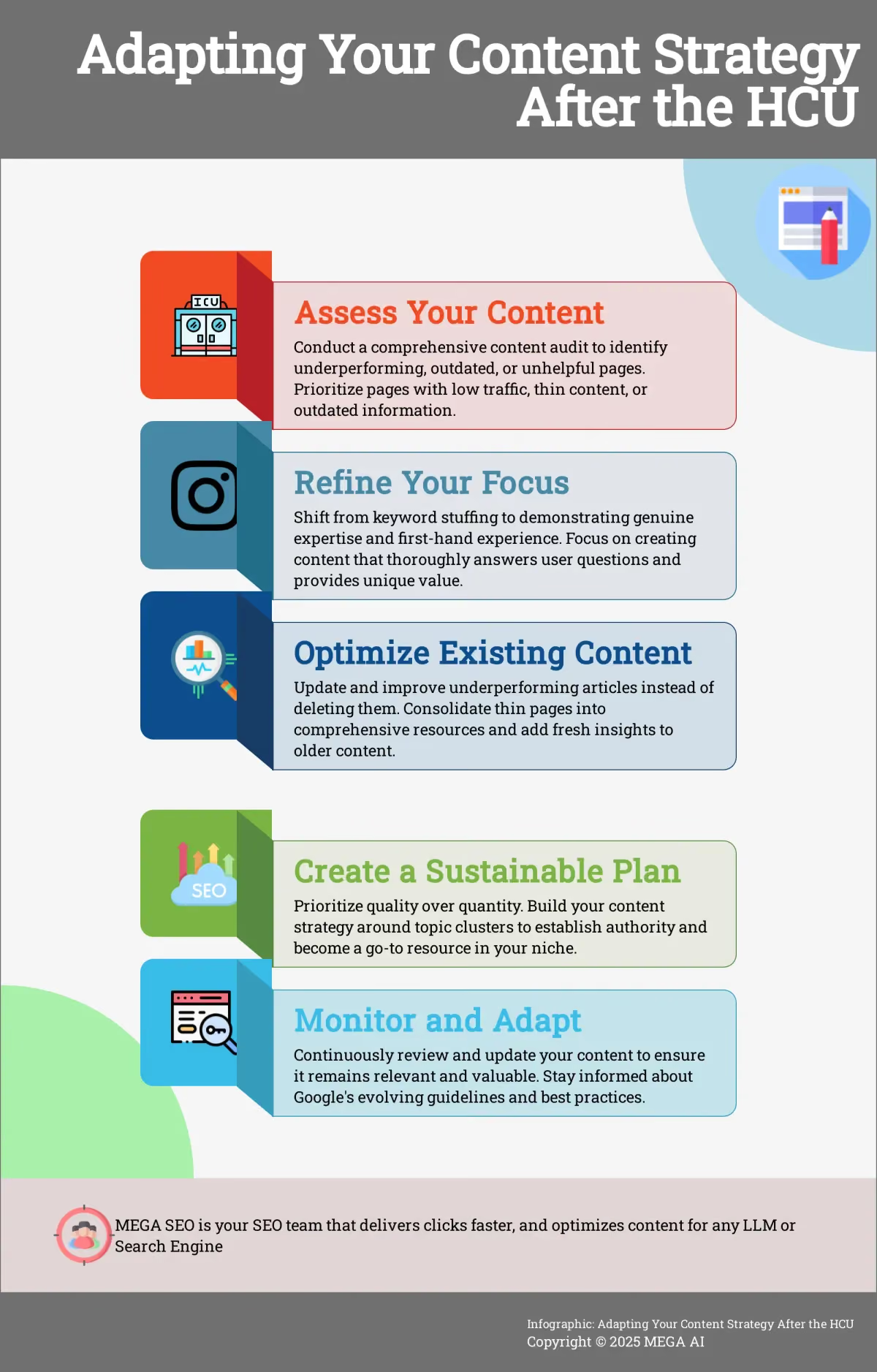
Navigating Google's updates means shifting your focus from chasing algorithms to serving your audience. Instead of a complete overhaul, think of it as a strategic refinement. By focusing on quality, user experience, and the genuine value your content provides, you can build a more resilient and effective content strategy. The following steps will help you assess your current content, protect your site from future updates, and create a sustainable plan for growth.
How to Perform a Content Quality Audit
The first step is to conduct an honest content audit. Many site owners believe their content is high-quality, but when compared to top-ranking pages, it may fall short. Be critical and evaluate whether your articles are truly comprehensive or just "thin" content that rehashes information already available elsewhere. A good rule of thumb is to assume only a small fraction of your content is performing at its peak. Identifying the pages that lack depth, originality, or a clear purpose is essential before you can make meaningful improvements. This process helps you understand what content resonates with your audience and what needs to be pruned or improved.
Deciding When to No-Index or Redirect Underperforming Pages
Once your audit identifies underperforming pages, you need a plan for each one. Since the HCU uses a site-wide signal, a few low-quality articles can pull down your entire domain's rankings. For each weak page, you have three main choices: improve it, no-index it, or remove it entirely. If the topic is still relevant but the content is thin, your best bet is to update it with more depth and expertise. Tools like MEGA AI's Maintenance Agent can help by identifying new information to add and re-optimizing the content. For pages that have some user value but aren't meant for search rankings, like old press releases, applying a "noindex" tag is a smart move. Finally, if a page offers no real value and hurts your site's performance, it's best to remove it and redirect the URL to a more relevant, helpful page on your site. This ensures you're only presenting your best content to both users and search engines.
How to Minimize Risk in Future Updates
To build a strategy that withstands future updates, prioritize creating people-first content. This means writing for your audience, not just for search engine crawlers. Focus on demonstrating real expertise and first-hand experience in your subject matter. Instead of stuffing articles with keywords, concentrate on answering your audience's questions thoroughly and providing unique insights they can't find anywhere else. Every piece of content should have a clear purpose and serve a specific user need. This approach aligns with Google's long-term vision and reduces the risk of being negatively impacted by algorithm changes designed to weed out unhelpful, search-engine-first pages.
How to Update and Optimize Existing Content
Once you've identified underperforming pages, you can decide how to handle them. Not all content needs to be deleted; much of it can be improved. Review your existing articles for relevance, accuracy, and detail. You can often achieve significant gains by updating outdated information or consolidating multiple thin pages into one comprehensive resource. Adding new sections with fresh information can also make an article more valuable and help it rank more highly. Tools like MEGA AI's Maintenance Agent can automatically identify new content to add to existing articles, helping you re-optimize your library for better performance after a Google update.
Improve Readability with Formatting and Media
Great content can get lost if it's presented as a wall of text. Beyond the words themselves, Google emphasizes the overall user experience, making factors like readability critical ranking components. Break up your articles with clear headings, subheadings, and short paragraphs to make them easier to scan. Use bullet points and numbered lists to highlight key information. Incorporating relevant media like images, infographics, and videos not only makes your content more engaging but also helps illustrate complex points. A positive visitor journey, supported by clear formatting and fast load times, signals to Google that your site is helpful and user-friendly.
Using Automation to Maintain and Refresh Content
Keeping your entire content library fresh and relevant is a continuous process that can be overwhelming for small businesses. Instead of letting old articles become outdated, you can use automation to streamline the maintenance process. Regularly refreshing your content ensures it remains accurate and valuable to your audience. For small teams, leveraging AI can make this manageable. For example, MEGA AI's Maintenance Agent can automatically review your existing articles and identify new information to add, helping you re-optimize your content and maintain its performance over time without requiring hours of manual work.
Create a Content Plan That Lasts
Moving forward, your content plan should prioritize quality over quantity. Focus on creating detailed, accurate, and genuinely helpful articles that establish your authority on a topic. Build your strategy around topic clusters that cover a subject comprehensively rather than targeting isolated keywords. This shows search engines that you are an expert in your niche. Your goal is to become the go-to resource for your audience. By consistently producing valuable content that serves user needs, you create a sustainable foundation for long-term SEO success that is less susceptible to the whims of algorithm updates.
Content Practices to Avoid
Adapting to the new rules of SEO isn't just about what you should do; it's also about what you need to stop doing. Many old-school SEO tactics that once worked are now liabilities that can harm your site's performance. Avoiding these common pitfalls is just as important as creating new, high-quality content. Here are a few key practices to leave behind for good.
Writing for Search Engines Instead of People
It’s easy to get caught up in keywords and technical signals, but if your content sounds like it was written for a robot, you’re on the wrong track. Google’s systems are now much better at understanding context and user intent. Practices like keyword stuffing or forcing awkward phrases into your text just to match a search query are outdated and can signal to Google that your content is low-quality. Instead, focus on creating content for people first. Write naturally, answer questions clearly, and provide a satisfying reading experience. When you serve your audience's needs, you're also aligning with what search engines want to reward.
Chasing Irrelevant Trends or Arbitrary Word Counts
Jumping on a trending topic might seem like a smart way to capture traffic, but if it's outside your area of expertise, it can do more harm than good. Writing about topics that aren't relevant to your core audience can dilute your site's authority and confuse search engines about what your site is about. Similarly, don't get fixated on a specific word count. Google has been clear that it doesn't have a preferred article length. The goal is to cover a topic comprehensively, whether that takes 800 words or 3,000. Focus on answering the user's question completely, not on hitting an arbitrary number.
Promising Answers to Questions That Have None
Trust is a critical component of a successful content strategy. Using clickbait-style headlines that promise information that doesn't exist is a surefire way to erode that trust. This includes making definitive statements about unconfirmed information, such as a future product's release date or a simple answer to a complex, speculative question. When a visitor clicks on your page and doesn't find the promised answer, they'll likely leave immediately. This behavior signals to Google that your content is unsatisfying. Stick to providing reliable, factual information that you can support, and build a reputation for being a credible source in your niche.
What's Next for Content Quality?
The HCU and its aftermath have made it clear that the rules of content are changing. To succeed, you need to look beyond individual algorithm updates and focus on building a sustainable, quality-first content strategy. This means understanding where Google is headed and aligning your efforts with its long-term vision for search. It’s less about reacting to every change and more about proactively creating a site that users and search engines will trust for years to come.
What Is Google's Vision for Search?
Google's ultimate goal is to connect users with the most helpful and relevant information possible. Updates like the HCU are steps toward that vision, designed to reward content that genuinely satisfies a user's query. The focus is shifting away from rewarding pages that simply check the right SEO boxes and toward those that provide a truly high-quality experience. Think of it as Google trying to replicate how a human expert would answer a question—with depth, clarity, and a clear understanding of the user's needs. This means your content strategy should prioritize creating helpful, reliable, people-first content that serves your audience above all else.
How Search Quality is Changing
The definition of "quality" is becoming more sophisticated. Google is moving beyond simple keywords to a deeper, semantic understanding of topics. It's no longer enough to include a target keyword a few times. Instead, your content needs to cover a topic comprehensively, anticipating and answering the follow-up questions a user might have. The algorithm is getting better at recognizing content created for people, not just for search engine crawlers. This means writing naturally, focusing on user intent, and structuring your information in a way that is easy to digest. The goal is to become a go-to resource on your chosen topics, demonstrating true authority and depth of knowledge.
How to Balance AI and Human-Created Content
Google has clarified its stance on AI: the creation method is less important than the final product's quality. Their guidance has evolved from preferring "content written by people" to rewarding "content written for people." This opens the door for using AI as a powerful assistant in your content workflow. You can use AI-powered SEO tools to handle initial research, generate outlines, and even draft content. However, the key is to have a human expert review, edit, and add unique insights to ensure the final piece is accurate, authoritative, and genuinely helpful. This hybrid approach allows you to scale content production without sacrificing the quality and expertise that builds trust with your audience.
Focusing on Value, Not Volume
The old strategy of publishing content daily or weekly just to stay active is no longer effective. The Helpful Content Update evaluates your entire domain, meaning a few low-quality pages can pull down the rankings of your best articles. This site-wide signal means your focus should shift from frequency to depth. Instead of churning out content, aim to create fewer, but better, pieces. Each article should be a comprehensive resource that thoroughly answers a user's questions and demonstrates genuine expertise. This approach builds a stronger foundation for your SEO strategy and ensures every page on your site contributes positively to your overall authority.
How to Prepare for What's Next
Future-proofing your site means focusing on site-wide quality, not just individual page performance. The HCU was a clear signal that Google is evaluating the overall trustworthiness and authority of a domain. To prepare, concentrate on building a reputation as an expert in your niche. Consistently publish high-quality, in-depth content that demonstrates your expertise. Regularly audit and update your existing articles to ensure they remain accurate and relevant. Tools that help you re-optimize existing content can be invaluable here. By building a truly authoritative site, you make your content more resilient to the inevitable algorithm updates to come.