Creating compelling product reviews requires a blend of thorough research, personal experience, and clear communication. With Google's ongoing Product Review Updates, the emphasis on authentic, user-first content has become even more pronounced. This shift presents a fantastic opportunity for those willing to invest in creating truly valuable reviews. In this piece, we'll delve into the specifics of what makes a review stand out in Google's eyes and, more importantly, to your readers. You'll discover how to effectively share your unique insights, compare products meaningfully, and ensure your hard work translates into reviews that inform, persuade, and perform well.
Key Takeaways
- Demonstrate Firsthand Use: Incorporate original photos, videos, and specific anecdotes from your personal interaction with the product to build credibility and offer unique insights.
- Build Trust with Balanced Content: Provide a thorough perspective by comparing products, honestly discussing pros and cons, and offering multiple seller links to empower reader choice.
- Maintain Relevance Through Refinement: Regularly review and update your product assessments with fresh insights and performance data to ensure they remain valuable and align with current standards.
What's Google's Product Review Update All About?
Google's Product Review Update is a series of changes aimed at ensuring that when people search for product reviews, they find content that's genuinely helpful and insightful, not just a summary of what the manufacturer says. Think of it as Google's effort to highlight reviews from people who have actually used the products and can offer real, firsthand knowledge. The first of these updates appeared in April 2021, and Google has continued to refine it, with notable enhancements like the one in December 2021, all building on the same core principle.
The main goal here isn't to punish websites with less detailed reviews. Instead, the update is designed to elevate and reward sites that provide exceptionally thorough and expert-level content. So, if you've noticed your rankings shift after one of these updates, it’s likely because other websites offering more comprehensive reviews were recognized for their quality and moved up. Google really wants to see that you've interacted with the product and can share unique perspectives. This means your content should go far beyond the basic information available on a sales page, offering genuine value that helps readers make well-informed decisions.
What Makes a Product Review High-Quality?
When Google refines its approach to product reviews, it’s a clear message for us content creators: the focus is squarely on quality and genuine user value. So, what does "high-quality" truly mean when we're talking about product reviews? It’s about offering authentic insights, showcasing your understanding, and genuinely helping your audience make an informed choice. Think of yourself as that trusted, knowledgeable friend who can guide someone through the pros and cons before they decide to buy. Let's explore the core elements that both Google and your readers are looking for.
Share Your Personal Experience and Expertise
One of the biggest shifts we've seen is the strong emphasis on authentic, firsthand experience. It's no longer enough to just list product features or echo what others have said. Your audience wants to know that you've actually interacted with the product. As Google's guidelines suggest, and as experts like Matt Diggity have pointed out in analyses of the updates, you should "provide evidence such as visuals, audio, or other links of your own experience with the product to support your expertise and reinforce the authenticity of your review."
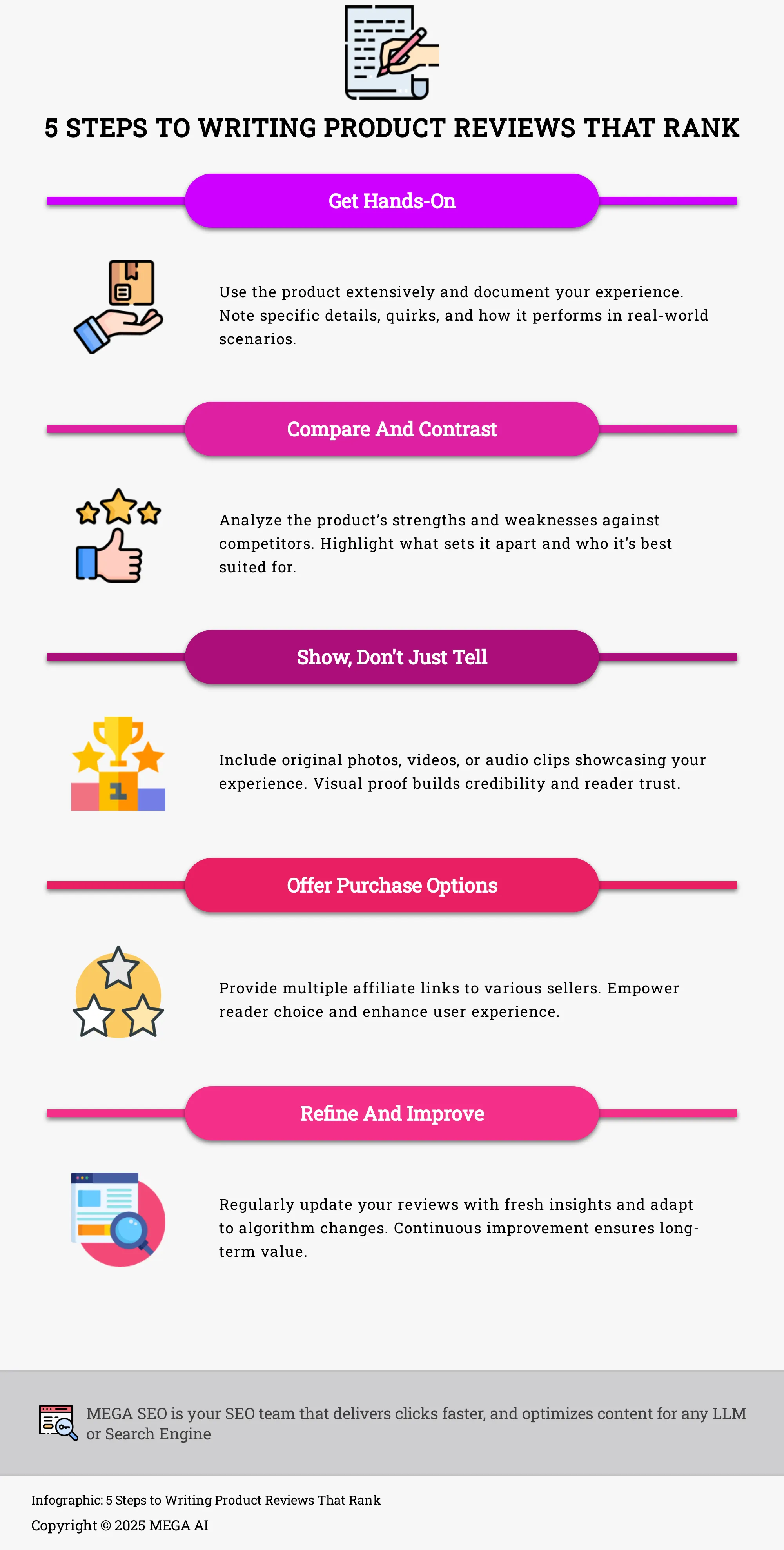
This means you need to get hands-on. If you're reviewing software, use it for tasks you'd normally perform. If it's a physical item, put its features to the test. Your personal observations, the little details you pick up, and the unique angle you bring are what will make your review valuable and help you build trust with your readers.
Offer In-Depth Analysis and Comparisons
A truly high-quality review moves beyond just describing a product. It offers a thorough look at what the product does well and where it might not meet expectations. Importantly, it also provides context. As Matt Diggity highlights, you need to "show how a product stacks up against competition. Don't just sell the crap out of a product as a standalone entity; talk about what it does that sets it apart from its competitors."
This involves doing your homework and understanding the current market. How does this product measure up against similar ones? What are its standout features? Are there other options that might be better for certain needs? Providing this comparative analysis helps your readers see the product's value within the bigger picture, enabling them to choose what’s genuinely right for them.
Include Visual and Audio Evidence
The old saying "show, don't just tell" is incredibly relevant for product reviews. Google actively encourages creators to provide visual and audio proof of their experience. As noted in discussions around the updates, Google has "crystallize[d] this requirement," really underscoring the word "show." And, as the analysis rightly puts it, "How else do you show something other than in an image?" or, I would add, through a video or audio snippet.
Original photos of the product being used, screenshots that highlight key features (especially for software), or even brief video demonstrations can significantly improve your review. This kind of multimedia evidence makes your statements more concrete and believable. It lets readers see the product from your perspective, making the review more engaging. For example, if you're reviewing a content optimization tool, screenshots of its interface or examples of optimized content would be very effective.
How to Weave Personal Experiences into Your Reviews
When you're writing a product review, sharing your genuine experiences is what truly connects with your readers and builds a foundation of trust. It’s not just about listing features copied from a spec sheet; it’s about telling a compelling story – your story with the product. This personal touch is precisely what Google emphasizes in its product review guidelines, and more importantly, it’s what empowers your audience to make informed purchasing decisions. Think of it as offering heartfelt advice to a friend. You’d share the good, the bad, and the nuances of your actual experience, wouldn't you? That authentic, firsthand perspective is the cornerstone of a high-quality, helpful review.
Moving beyond generic descriptions and truly embedding your personal journey with a product transforms a simple review into a valuable resource. Readers are savvy; they can often spot a review that lacks genuine interaction. By detailing how you used the product, the context of its use, and the real outcomes you experienced, you provide a layer of credibility that is hard to replicate. This approach not only satisfies search engine expectations for E-E-A-T (Experience, Expertise, Authoritativeness, Trustworthiness) but also resonates deeply with potential buyers looking for honest insights. Let's explore specific strategies for how you can effectively weave your personal experiences into your reviews, making them more credible, engaging, and ultimately, more helpful.
Show You've Used the Product
The best way to build trust is to show readers you’ve actually spent time with the product. As Matt Diggity highlighted regarding Google's updates, providing evidence of your personal experience is key. This could be original photos or videos of you using the product – think unboxing shots, the product in action, or a short video walkthrough. These visuals aren't just filler; they're proof your review is based on real-world use. Sharing specific anecdotes about your experience, like when and why you used it, makes your review much more relatable than just repeating manufacturer specs. For instance, if you're reviewing a project management tool, show screenshots of how you organized a specific campaign or managed tasks within the platform.
Give Unique Insights
Anyone can list a product’s features, but your unique perspective makes your review valuable. Go beyond information a reader finds on the manufacturer’s site. What did you discover while using it? Maybe you found an unconventional use, or a particular feature stood out in a way not obvious from marketing materials. Sharing these unique observations helps establish your expertise and gives readers something they can’t get elsewhere. Did the product solve a specific problem for you in an unexpected way, or did it integrate with other tools you use seamlessly? Highlighting these personal discoveries can make your review shine and offer genuine value.
Balance the Pros and Cons
No product is perfect, and your readers know this. Presenting a balanced view, acknowledging both strengths and weaknesses, is crucial for credibility. If a review only sings praises, it can seem biased. Being honest about a product's shortcomings, or aspects that might not suit everyone, actually builds more trust. Consider who the product isn't for, or what limitations a user might encounter. This isn't about tearing a product down; it’s about providing a realistic and transparent assessment that helps readers choose wisely for their specific needs. This balanced approach shows you've thoroughly considered the product from multiple angles.
How to Use Supporting Evidence Effectively
Backing up your opinions with solid evidence is key to helping readers make informed decisions, especially with Google's emphasis on authentic, experience-based content. Clear proof builds trust and signals credibility. Strategically using different types of proof to show your firsthand experience makes your review impactful. For businesses looking to optimize their content for these review standards, presenting evidence effectively is essential.
What Kind of Evidence Works Best?
Google clearly values reviews showing genuine product interaction. This means providing evidence like visuals, audio, or links to your own content demonstrating your experience. Think screenshots of you using software, photos of a physical product, or short video clips of a key feature. This tangible proof powerfully shows readers you’ve actually engaged with what you’re reviewing.
This type of evidence reinforces authenticity and supports your expertise. For instance, reviewing a project management tool, include a screenshot of a project you managed. For a physical item, show it unboxed and in use. This firsthand proof is far more convincing than generic stock photos.
Weave in Evidence Smoothly
Listing features isn't as effective as showing how a product performs, especially against competitors. Demonstrate how a product stacks up and what makes it unique. Instead of stating "Product X is faster," say, "In our tests, Product X completed the task in 30 seconds, while competitor Y took 55 seconds. A screen recording is below."
Integrate evidence naturally. Don't just append an image gallery; place relevant visuals where you discuss that aspect. This makes your review easier to follow. For instance, discussing a software feature, embed a screenshot or GIF that illustrates it. This helps readers understand the product more deeply.
Use Expert Opinions and Compare Products
To add true value, your reviews should feature custom rating criteria. Don't just give a star rating; explain why based on specific aspects. For example, reviewing a smartphone, rate battery life, camera quality, and processing speed. This detailed breakdown helps readers understand your evaluation.
It's also crucial to discuss a product's cons. No product is perfect; acknowledging drawbacks makes your review balanced and trustworthy. When comparing products, highlight differences clearly. You might say, "Product A offers superior battery life, Product B has a more intuitive interface." This nuanced comparison, backed by your findings, helps readers choose what best fits their needs.
Why Use Multiple Affiliate Links?
When you're crafting product reviews, the way you present purchase options can significantly affect both user experience and how search engines view your content. Offering multiple affiliate links is a smart strategy that aligns with providing genuine value to your readers and can also be seen favorably by Google. This approach isn't just about trying to increase potential commissions; it's fundamentally about building trust and catering to your audience's diverse preferences. Let's look at why this method is beneficial and how you can implement it effectively in your reviews.
By giving your audience choices, you empower them to make decisions that best suit their individual needs, whether that's based on price, shipping speed, or loyalty to a particular retailer. This reader-centric approach is a cornerstone of creating high-quality, helpful content that resonates.
Give Readers Choices for Purchase
Google has signaled a preference for product reviews that offer multiple purchasing options. As Matt Diggity pointed out in his analysis of Google's Product Reviews Update, providing links to several sellers gives the reader the freedom to buy from their merchant of choice. This isn't merely about satisfying search engine algorithms; it's about genuinely improving the user experience.
When readers land on your review, they might already have a preferred online store. This preference could stem from existing memberships, positive past experiences, or better shipping options for their specific location. By offering a selection of reputable sellers, you cater directly to these preferences, making it more convenient for them to complete a purchase and increasing the likelihood that your review will be the one that helps them make their decision.
How to Include Links Smartly
Incorporating multiple affiliate links into your reviews doesn't need to be a complicated process. For a single product review, it might seem natural to simply direct readers to the affiliate program that offers you the highest commission. However, when your goal is to provide comprehensive options, or when you're dealing with comparison reviews, a more thoughtful approach is beneficial. You can clearly display purchase links for various retailers, making it easy for the reader to see their choices at a glance.
For instance, a review for a piece of furniture might include links to Amazon, the manufacturer's direct store like Ashley Furniture, and another major retailer such as Walmart. This can be achieved through clear call-to-action buttons, a dedicated "Where to Buy" section, or even well-structured comparison points that list prices and availability across different sellers. The key is to present these options in an organized and user-friendly manner, ensuring your overall content strategy prioritizes reader convenience and clarity.
Adapt Your Content Strategy for Better Reviews
If you've noticed shifts in how your product reviews perform, especially after Google updates, it's a good signal to take a closer look at your content strategy. It's not about overhauling everything overnight, but more about making smart, informed adjustments. Think of it as fine-tuning your approach to better meet what both search engines and your readers are looking for. The goal is to create reviews that are not only helpful and informative but also build trust and genuinely guide your audience.
When Google refines its algorithms for product reviews, it’s usually to prioritize content that shows in-depth knowledge and authentic experience. This means your reviews need to go beyond just listing features; they should offer real value. By adapting your strategy, you can ensure your reviews stand out for their quality and usefulness, which often translates to better visibility and engagement. Let's explore a few practical ways you can refine your product review content to meet these higher standards and better serve your readers.
Audit and Improve Your Current Reviews
First things first, take a good look at the reviews you already have. It's less about worrying that Google might penalize less-than-perfect reviews and more about understanding that high-quality content gets rewarded. If you've seen a dip in rankings, it’s often because other sites with more thorough or helpful reviews are being recognized. The good news is that any positive changes you make can lead to improvements reflected over time.
Start by conducting a content audit focused specifically on your reviews. Are they detailed enough? Do they truly reflect firsthand experience? Look for opportunities to add more depth, evidence, or unique insights that you might have initially overlooked. Updating your existing content to meet current best practices can be a very effective way to regain or improve your standing.
Create a New Approach for Product Reviews
When crafting new product reviews, or even significantly updating old ones, think about how you can demonstrate genuine expertise and experience. It's really important to provide evidence of your interaction with the product. This could be through original photos or videos showing you using the item, or even audio clips discussing your experience. This kind of proof reinforces the authenticity of your review and helps build credibility with your readers.
Another helpful practice is to include links to multiple sellers. This gives your audience the freedom to choose where they want to purchase from, which is a user-friendly touch that can also build trust. It shows you're focused on providing comprehensive information rather than just pushing one specific retailer, enhancing the overall user experience.
Customize Your Rating Criteria
Generic rating criteria often fall flat. If you're reviewing a range of different products, using the same checklist for everything won't provide much real value. For instance, if you're reviewing fitness trackers, simply rating them on "price" and "overall rating" isn't very insightful. Readers will want to know about specifics like battery life, data accuracy, comfort, and app integration – the things that truly matter for that type of product.
Take the time to develop custom rating criteria for each category of products you review. Think about what features and performance aspects are most important to someone considering a purchase in that specific niche. Tailoring your criteria ensures your reviews are relevant, genuinely helpful, and address the specific questions and concerns your audience is likely to have. This attention to detail can make your reviews a go-to resource.
Tackle Common Product Review Challenges
Creating high-quality product reviews that genuinely help your readers while also climbing the search engine rankings is a significant undertaking. It’s more than just listing features; it’s about weaving a narrative from personal experience, offering unique insights, and building trust. However, this path is often peppered with challenges that can stump even seasoned content creators. One of the primary balancing acts is maintaining your authentic voice and sharing real, hands-on experiences while simultaneously ensuring your content is optimized for search engines to find. It's easy to lean too far one way, either sounding like a marketing brochure or getting lost in the digital noise.
Then there's the very practical matter of product acquisition. For businesses, especially startups and smaller operations, the cost and logistics of obtaining multiple products for review can be a considerable barrier. How do you provide comprehensive comparisons or cover a range of items when resources are limited? Finally, the digital landscape is ever-evolving. Search engines, particularly Google, frequently refine their algorithms and update their guidelines for what constitutes a valuable product review. Keeping pace with these changes and adapting your content strategy accordingly requires ongoing effort and attention. Understanding these common obstacles is the first step to overcoming them and consistently producing reviews that are both impactful and discoverable.
Balance Authenticity with SEO
One of the biggest puzzles is making your review feel genuine while also making sure Google can find it. The good news is, these two goals aren't mutually exclusive. Google actually wants you to provide evidence like visuals, audio, or other links showing your own experience with the product. This supports your expertise and reinforces the authenticity of your review.
So, lean into sharing your real experiences. When you describe how a product solved a problem for you, or what surprised you about it, you're creating unique content that's hard to replicate. For SEO, naturally incorporate terms your audience might use when searching for solutions the product offers. Think about user intent and weave in relevant keywords thoughtfully, rather than stuffing them in. Tools that assist with automated keyword research can help identify these terms without compromising your authentic voice.
Manage Costs When Reviewing Multiple Products
Getting your hands on every product you want to review can get expensive, fast. If you're just starting or working with a tight budget, this can feel like a major roadblock. However, there are ways to manage these costs. For many items, especially those that aren't super expensive, you can often get products for free by reaching out to brands and offering to review them.
Building relationships with companies can lead to ongoing opportunities. Another approach is to focus on digital products or services where access might be granted for review purposes. You can also explore affiliate partnerships, as some networks or brands provide products to their top affiliates. Consider starting with products you already own and genuinely use, allowing you to build a portfolio of authentic reviews before seeking out new items.
Keep Up with Google's Guidelines
Google's guidelines for product reviews can seem like a moving target, but their core intention is to reward helpful, user-first content. It's less about penalizing sites with "bad" reviews and more about rewarding sites that do it well. Google often provides a clear playbook on what they consider a high-quality product review.
Make it a habit to check the official Google Search Central blog for announcements and detailed explanations of any updates. Following reputable SEO news sources can also keep you informed. The key is to focus on creating reviews that genuinely help the reader make an informed decision. When your content is thorough, honest, and provides unique value, you're generally aligning with what Google wants to see. For existing content, platforms that offer content re-optimization can be valuable for updating your reviews to meet new standards.
How to Measure and Improve Your Review Performance
Creating insightful product reviews is a solid first step, but understanding their impact is just as important. How do you know if your reviews are truly connecting with your audience and meeting Google's expectations? This is where measuring your review performance comes into play. By keeping a close watch on the right metrics and utilizing effective tools, you can gain clarity on what’s working well, identify areas for improvement, and refine your approach. Think of it as a cycle of continuous learning that helps keep your content valuable and effective in the long run.
What KPIs Should You Track?
When you start to assess your product reviews, a few key performance indicators (KPIs) will give you the clearest picture. First, look at engagement metrics. Are people spending a good amount of time reading your review? Are they interacting with elements like your embedded videos or the photos you've shared? High engagement suggests your review is captivating and provides the detailed information readers seek, especially when you provide authentic evidence of your experience.
Another vital KPI is the Click-Through Rate (CTR), particularly for any affiliate links or links directing readers to seller pages. When readers click these links, it’s a strong indicator that your review has effectively guided their purchasing decision. Tracking which specific links perform best also offers insights into the products or merchants that appeal most to your audience. Continuously working to improve your content's CTR is a smart move, and MEGA AI's Maintenance Agent product can help by identifying opportunities to optimize your existing articles.
Use Tools to Track and Analyze Reviews
To get a firm grasp on these KPIs, you’ll want to use the right tools. Website analytics tools, like Google Analytics, are fundamental. They allow you to monitor the impact of any content adjustments you make over time. It's good to remember that the positive changes you implement in your reviews might not show immediate results, particularly with Google updates rolling out periodically. Consistent tracking helps you see the true effect of your efforts.
Beyond general website analytics, it's wise to closely monitor your affiliate link performance. Most affiliate platforms provide dashboards where you can see clicks, conversions, and earnings for each link. This data is incredibly valuable because it directly shows which of your reviewed products are leading to actual sales. If, as some analyses suggest, Google appreciates reviews that offer multiple purchasing options, tracking these varied links helps you understand which choices your audience values, enabling you to further refine your content strategy.
Future-Proof Your Product Reviews
Keeping your product reviews relevant and effective in the long run means staying adaptable and committed to quality. Google's landscape is always evolving, but a proactive approach can help your content continue to perform well.
Think Ahead About Future Updates
Google's updates to how it evaluates product reviews can feel like a constant adjustment. It's helpful to understand that these updates generally don't penalize sites with less-than-stellar reviews. Instead, they aim to reward sites that are already creating excellent, helpful content for users. So, if you notice a dip in your rankings after an update, it’s often because other sites, with more comprehensive and user-focused reviews, have been recognized and moved ahead.
The encouraging part is that positive changes you make to your content can lead to improvements in how your reviews are seen. This means proactive effort truly pays off. Rather than waiting for an update to react, consistently refining your reviews to meet high-quality standards is the best way to stay prepared. Think of it as an ongoing commitment to providing genuine value to your readers.
Adopt Strategies for Continuous Improvement
To keep your product reviews fresh and valuable, building in strategies for continuous improvement is essential. One effective approach is to consistently provide strong evidence of your experience with the product. This could include visuals like photos or videos you've taken, audio clips, or even links to other content you've created that demonstrates your hands-on use. This kind of evidence supports your expertise and really helps reinforce the authenticity of your review in the eyes of your readers and search engines.
Another important strategy is to offer your readers choices. When it comes to making a purchase, people appreciate options. Including links to multiple sellers gives your audience the flexibility to buy from their preferred merchant. Google has indicated that providing multiple affiliate links for a product is a positive signal, suggesting that offering more choices is generally better. This not only serves your readers well but also aligns with what search engines are looking for in helpful product review content. Regularly revisiting your reviews to ensure they meet these evolving standards will help them perform well over time.
How MEGA AI Can Help Your Product Review Strategy
Crafting product reviews that genuinely connect with your readers while also climbing the search engine rankings is quite an undertaking. This is where a platform like MEGA AI can really support your content strategy. Instead of manually sifting through mountains of customer comments, MEGA AI can help you uncover deeper patterns and connections within all that customer feedback. This data is incredibly valuable, offering insights that can directly inform the angle of your reviews, the points you emphasize, and even guide your broader product development and marketing strategies. You'll be able to create reviews that speak directly to customer needs and concerns because you have a clearer understanding of them.
Then there's the visibility factor. MEGA AI’s SEO features are designed to analyze your existing review content, including customer reviews if you incorporate them, to identify areas for improvement and optimization. This means your carefully crafted reviews are more likely to be discovered by your target audience. Think about the efficiency gained when parts of the keyword research and content optimization process for your reviews are streamlined. Furthermore, the insights you gather from analyzing review data can lead to more informed decisions about product enhancements. When you understand what customers truly value or where their pain points lie, you can refine your products. This, in turn, provides richer, more authentic material for your future reviews, creating a positive feedback loop that benefits both your audience and your business.
Related Articles
- Google Review Algorithm: A 2024 Guide for Businesses
- Review Script Template for SEO-Optimized Product Pages
- Product Review Template: Free Sample & Guide
- Affiliate Marketing: The Ultimate Guide (2024)
- Review Maker Guide to Create SEO-Friendly Product Reviews
Frequently Asked Questions
What's the most important thing to remember about Google's Product Review Update? The main idea is that Google wants to highlight reviews offering genuine, firsthand experience. So, focus on creating content that truly helps your readers by sharing your unique insights from actually using the product, rather than just repeating what's on the sales page.
How can I make my product reviews more convincing and show I've actually used the item? To make your reviews more believable, share specific stories or anecdotes about your time with the product. Include original photos or short videos of you interacting with it. Pointing out small details or quirks that only a real user would notice also goes a long way in building trust.
Do my reviews always need to be positive to rank well? Not at all. In fact, presenting a balanced view that includes both the strengths and any potential drawbacks of a product makes your review more credible. Readers appreciate honesty, and it helps them make a more informed decision, which is what high-quality reviews are all about.
Why is adding my own photos or videos to reviews so important? Including your own visuals, like photos of the product in use or a quick video demonstration, provides clear proof that you've personally engaged with it. This makes your review more tangible and helps your audience visualize your experience, which significantly boosts your review's authenticity.
My review rankings have slipped. What's a good first step to try and improve them? A great starting point is to revisit your existing reviews. Look for opportunities to add more depth, such as more detailed personal experiences, stronger visual evidence of your use, or a more thorough comparison with similar products. Enhancing the helpfulness and detail of your current content can make a real difference.