
The Google penalty box. It’s the last place any website owner wants to be, but unfortunately, many find themselves there. Whether it’s due to a technical SEO issue, a sudden drop in rankings, or a manual action from Google, the impact on your website’s visibility can be devastating. But there is a way out. This guide gives you the knowledge and tools to understand, address, and recover from Google penalties. We’ll explore common triggers, the differences between algorithmic and manual actions, and the steps you can take to get your site back in good standing.
Key Takeaways
- Google penalties, a.k.a. manual actions, hurt your search ranking: They happen when your site breaks Google’s rules. Learn to identify the signs of a penalty, like traffic drops and ranking changes, so you can address them quickly.
- Regular site audits are key to prevention: Check your content, backlinks, and technical SEO regularly. Use tools like Google Search Console and MEGA SEO to make this easier and catch problems before they become penalties.
- Focus on providing value to your audience: High-quality, user-focused content and ethical SEO practices are the foundation of a strong, penalty-resistant strategy. Stay informed about Google’s guidelines and algorithm updates to keep your site healthy.
What is the Google Penalty Box?
The “Google Penalty Box” isn’t a literal place, but it’s a useful way to think about what happens when Google lowers your website’s ranking. This happens when Google, after reviewing your site, decides it’s breaking their rules. Think of it as a time-out for websites. These penalties, also known as manual actions, are a direct result of not complying with Google’s guidelines.
The "Penalty Box" in an SEO Context
The term "penalty box" is what SEO professionals call the situation when a website gets hit with a Google penalty. It's not an official Google term, but it accurately captures the feeling of being sidelined. When your site is in the penalty box, you'll see a sharp drop in your search rankings or, in severe cases, your site might disappear from search results entirely. For a small business or startup, this loss of visibility directly translates to a loss of traffic and potential customers. These penalties come in two main forms: algorithmic penalties from Google's automated systems and manual actions, which are applied by a human reviewer at Google who found a specific violation on your site.
What Does It Mean to Be Penalized?
A Google penalty means a human reviewer has looked at your website and found it lacking. It’s important to distinguish between a penalty and an algorithm update. Major Google updates like Panda or Penguin are algorithm changes, not penalties, though they can hurt your site’s performance. A penalty is a targeted action taken against your site.
How Penalties Hurt Your Visibility and Traffic
Penalties directly impact your site’s visibility on search engine results pages (SERPs). A lower ranking means fewer people see your site, leading to a drop in organic traffic. This can affect your overall SEO performance and your business. A manual action penalty from Google can significantly impact your website traffic and ranking, so addressing any issues is crucial. You can learn more about how Google penalties work and how to recover from them on Semrush.
The Real-World Business Impact
A Google penalty is more than just a technical issue; it's a direct threat to your business's financial health. The consequences go beyond a dip in rankings. Penalties can severely reduce website traffic, which often translates to a sharp decline in leads, sales, and overall income. For some businesses, the financial fallout has been so significant that it has led to difficult operational decisions, including laying off staff. This highlights why proactive SEO management isn't just a marketing activity but a crucial business function. Consistently monitoring your site's health and adhering to Google's guidelines is essential for protecting your revenue and ensuring long-term stability.
The "Penalty Box": More Than Just an SEO Term
While the term "penalty box" is common in SEO circles, the concept extends far beyond website rankings. It’s a useful metaphor for facing consequences after breaking a set of established rules. Ironically, even Google has found itself in its own version of a penalty box, facing legal and financial repercussions for its business practices. Understanding these broader contexts can help demystify the idea of a Google penalty. It’s not some arbitrary punishment, but rather a structured consequence, similar to those seen in legal systems, financial regulations, and even school classrooms. Examining these parallels shows that the core principle is the same: actions have consequences, whether you're a small business or a tech giant.
Google's Legal and Antitrust Issues
It’s a fascinating turn of events when the rule-maker faces judgment. Recently, Google's digital ad network was declared an illegal monopoly by a federal judge, placing the company under intense legal scrutiny. This ruling highlights that even the largest players must operate within the bounds of the law. Just as Google penalizes websites for violating its search quality guidelines to ensure a fair user experience, governments and courts hold Google accountable for anti-competitive behavior. This situation serves as a powerful reminder that rules and oversight exist at every level, and no entity is too big to face consequences for overstepping them.
Financial Penalties for Privacy Violations
The consequences of breaking rules often come with a hefty price tag. In a major settlement, Google agreed to pay a significant penalty for illegally collecting user data without consent. This massive financial loss is a direct result of violating privacy laws, putting the company in a financial penalty box. For website owners, the parallel is clear. While a Google penalty might not cost you billions, the resulting drop in traffic and revenue can be devastating for your business. This underscores the importance of adhering to guidelines—whether they relate to user privacy or search engine optimization—as the financial stakes are very real.
The "Penalty Box" in Educational Settings
The "penalty box" concept is also used in schools, but its purpose is more corrective than punitive. In some educational settings, students who misuse their Chromebooks are placed in a "penalty box" setup designed to limit distractions and help them refocus on their work. This approach mirrors the goal of a Google penalty. The intent isn't simply to punish your website but to signal that something is wrong and needs fixing. It’s an opportunity to audit your site, correct your course, and realign your strategy with best practices. Viewing a penalty through this lens can shift your perspective from one of frustration to one of productive action, focusing on the necessary changes to get back on track.
Manual vs. Algorithmic: The Two Types of Google Penalties
Google uses two main categories of penalties to address websites that violate its guidelines: algorithmic and manual. Understanding the difference is the first step toward protecting your site’s search ranking.
Algorithmic Penalties: When a Bot Flags Your Site
Algorithmic penalties are automated responses triggered when your website’s content or structure doesn’t meet Google’s quality standards. These penalties are often associated with major Google algorithm updates like Panda (targeting thin or duplicate content) and Penguin (focused on manipulative link schemes). While these updates aim to improve overall search quality, they can significantly impact a site’s visibility if its content or link profile falls short. Think of it like a filter sweeping through search results, automatically devaluing sites that don’t measure up. Google is constantly refining its algorithms, so staying informed about these updates is crucial for maintaining good SEO health.
Manual Penalties: When a Human Steps In
Manual penalties, also known as manual actions, are more direct interventions. These occur when a member of Google’s webspam team reviews your site and identifies violations of their quality guidelines. Manual penalties are typically more severe than algorithmic ones and can result in a drastic drop in rankings or even complete removal from search results. Google provides detailed information about the specific violation within Google Search Console, making it easier to diagnose and address the problem. This direct feedback from Google offers a valuable opportunity to rectify issues and restore your site’s standing.
Why the Difference Matters
The core difference lies in how these penalties are applied. Algorithmic penalties are automatic and widespread, affecting numerous sites simultaneously. Manual penalties are targeted and specific, resulting from a direct review of your site. Algorithmic penalties can sometimes be harder to pinpoint, requiring careful analysis of your site and recent algorithm updates. Manual penalties, while more serious, offer clearer guidance on the necessary fixes. Both types of penalties can significantly harm your site’s traffic and visibility, so understanding their distinct characteristics is crucial for effective recovery and prevention. MEGA SEO helps you stay ahead of these issues with automated tools and strategies designed to keep your site in line with Google’s ever-evolving best practices.
What Causes a Google Penalty?
Getting penalized by Google can severely hurt your website’s visibility. Understanding common triggers helps you avoid these pitfalls and maintain a healthy site. Let’s explore some of the most frequent issues that land websites in the Google penalty box.
Content Violations: Keyword Stuffing and Low-Quality Pages
Google’s algorithms prioritize valuable, user-friendly content. Keyword stuffing, a practice where keywords are crammed into text unnaturally, disrupts readability and provides little value to readers. Search engines recognize this manipulative tactic and penalize sites that employ it. Similarly, thin or low-quality content, which lacks depth and offers minimal information, can trigger penalties. Websites that prioritize user experience with informative, engaging content are less likely to face these issues. Focus on creating content that genuinely helps your audience, and you’ll steer clear of these content-related penalties.
Site Reputation Abuse
Site reputation abuse happens when a trusted website hosts low-quality, third-party content to exploit the main site's authority. Think of a reputable online journal suddenly featuring spammy articles that have nothing to do with its core topic. This tactic is used to manipulate search rankings, as the low-value content piggybacks on the domain's good standing. Google is actively penalizing this behavior because it degrades the user experience and undermines the integrity of search results. Engaging in site reputation abuse can lead to a manual action that harms the credibility you've worked hard to establish.
Improper Use of AI-Generated Content
While AI is a powerful asset for content creation, it requires careful management. The improper use of AI-generated content, such as publishing articles without thorough editing for quality, originality, and helpfulness, can result in a penalty. Google’s primary concern is whether content is valuable to the user, not how it was created. Using AI to mass-produce generic or unhelpful material is a spam tactic that Google’s systems are designed to identify. The goal is to use AI as a tool to assist your content strategy, not replace it. Platforms like MEGA AI help you generate and maintain high-quality content that meets Google's standards and genuinely serves your audience.
Link Violations: The Problem with Bad Backlinks
Your website’s backlink profile plays a significant role in its search engine ranking. Bad backlinks, originating from spammy or low-quality websites, can harm your site’s reputation in Google’s eyes. These links might come from link farms, irrelevant directories, or sites known for distributing malicious software. Even links from websites with questionable content, such as those related to pornography or illegal activities, can negatively impact your rankings. Regularly auditing your backlink profile and disavowing harmful links is crucial for maintaining a clean and penalty-free site.
Technical Violations: Cloaking and Hidden Text
Technical SEO issues can also lead to Google penalties. Cloaking, a deceptive practice of showing different content to users and search engines, is a major violation. This tactic misleads both visitors and Google, leading to a poor user experience and a damaged search engine reputation. Another technical foul is using hidden text or links, content invisible to users but designed to manipulate search rankings. These elements are easily detected by search engine crawlers and can result in penalties. Maintaining transparency in your website’s code and design is essential for avoiding these technical pitfalls.
Incorrect Structured Data or Schema
Structured data, or schema markup, is code you add to your website to help search engines understand your content. It’s what allows Google to show rich snippets like star ratings, event times, or recipe cook times directly in the search results. However, using this code incorrectly can get you into trouble. If you apply review schema to a page without actual reviews or mark up content with misleading information, Google considers it a violation. This is because you’re attempting to gain an unfair advantage in the SERPs. Using inappropriate structured data can lead to a manual penalty, where Google may disable your rich snippets or lower your ranking. Ensuring your schema is accurate and honestly represents your page content is essential for avoiding this type of penalty.
Mismatched AMP and Desktop Pages
Accelerated Mobile Pages (AMP) are designed to provide a faster, more streamlined experience for mobile users. While a great tool for performance, they can also be a source of penalties if not handled correctly. Google expects the content on your AMP page to be a close equivalent to the content on your canonical desktop page. If your AMP version is significantly stripped down or the structured data between the two versions doesn't align, it can be seen as a deceptive practice. Incorrectly structured data can mislead search engines, and major discrepancies between page versions can confuse them, potentially leading to reduced visibility and penalties. The key is to maintain consistency in content and user experience across all versions of your pages.
Violating Policies for Specific Google Services
Beyond general search guidelines, Google maintains specific policies for its various services, such as Google News, Discover, and Google Jobs. Each of these platforms has its own set of rules regarding content quality, technical implementation, and user experience. For example, content that is perfectly acceptable for a standard blog post might violate the policies for inclusion in Google News. Failure to read and follow the guidelines for these specific data types and services can result in your content being excluded from them or, in more serious cases, trigger a site-wide manual action. It’s crucial to understand the unique requirements of any Google service you are targeting to avoid running afoul of their rules.
Google News and Discover Policy Violations
Getting your content featured in Google News or Discover can drive a massive amount of traffic, but these platforms are closely monitored for quality. Violating their policies is a quick way to get penalized. A common issue is the use of spammy structured markup, where schema is used to misrepresent content. For instance, marking up a promotional article as a "NewsArticle" to try and get it into the news feed is a direct violation. The Spammy Structured Markup Penalty is specifically designed to combat these tactics. Other violations include clickbait headlines, sexually explicit material, or hateful content. The consequences can be severe, often resulting in your entire site being removed from these high-visibility surfaces.
How to Identify and Recover From a Google Penalty
Discovering your site has been penalized can feel like a setback, but recovery is entirely possible. A systematic approach and the right tools can get your SEO strategy back on track. Let’s break down how to identify, address, and recover from a Google penalty.
What Are the Warning Signs of a Penalty?
A sudden, significant drop in organic traffic is often the first indicator of a penalty. You might see your website traffic plummet, as one site owner experienced, going from thousands of monthly visits to zero after a manual action. Check your analytics platform for unusual traffic patterns. Also, monitor your keyword rankings. A sudden drop in rankings across multiple keywords can also signal a problem.
Analyzing Your Crawl Stats in GSC
Your Google Search Console account holds valuable clues. The Crawl Stats report, found under "Settings," shows how frequently Googlebot visits your site. A healthy, consistently updated site will typically have a steady crawl rate. If you notice a sudden, sharp decline in the number of pages crawled per day, it could be a red flag. As noted in Search Engine Land's penalty guide, a drop in crawl frequency can indicate that Google trusts your site less, which is often a precursor to or a symptom of a penalty. This is one of the first technical signs you should investigate if you suspect an issue.
Distinguishing a Penalty from Other Traffic Drops
It's important not to panic every time your traffic dips. Not all drops are the result of a penalty. Other factors, such as seasonality, a major algorithm update, or a simple technical glitch like a broken tracking code, can cause fluctuations. The key difference with a penalty is the nature of the drop. A penalty typically causes a sudden and severe decline in organic traffic and keyword rankings, rather than a gradual slide. If you see a sharp, cliff-like drop in your analytics that corresponds with a manual action notice in GSC or a known spam update, a penalty is the likely culprit.
Using Google Search Console to Find a Penalty
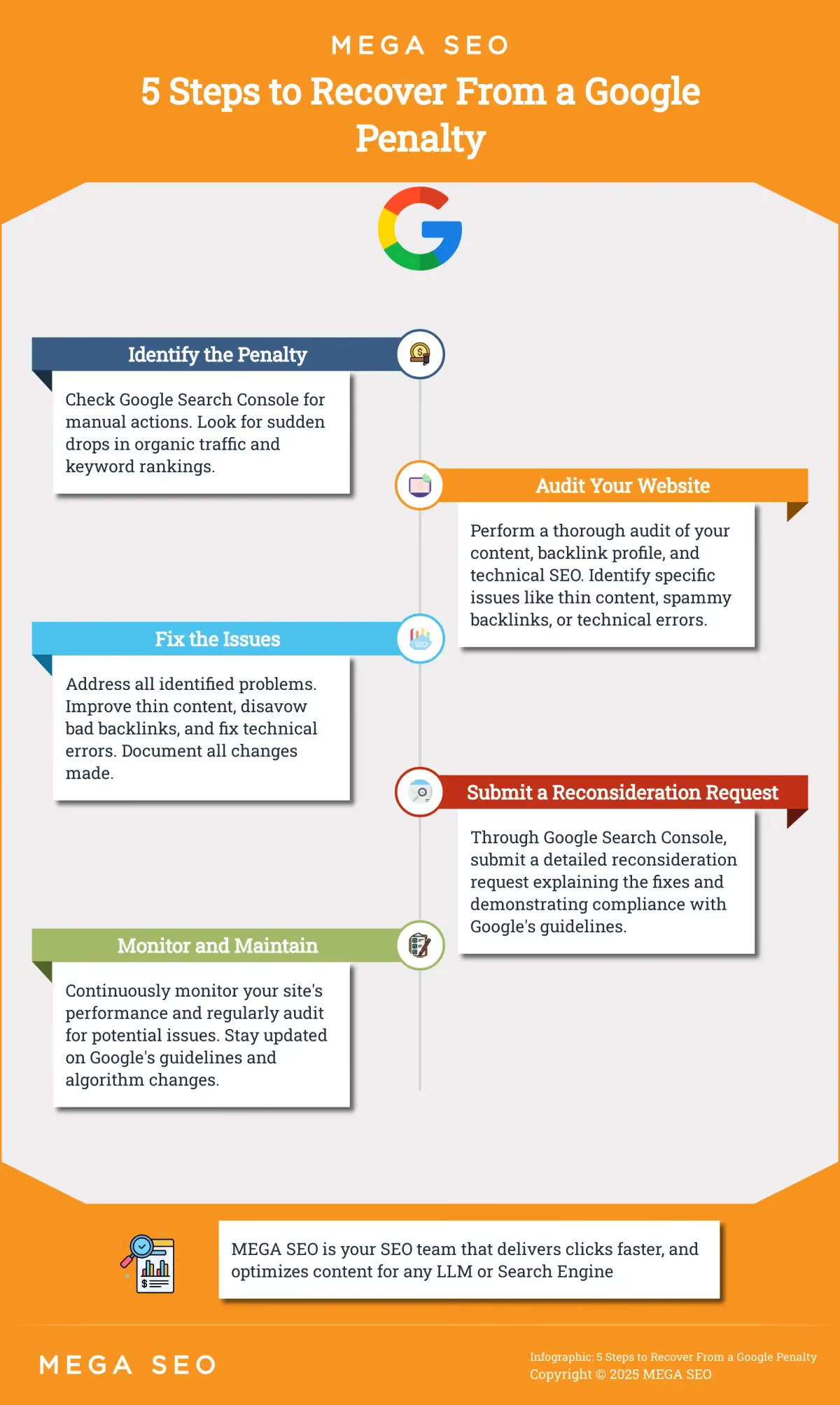
Google Search Console is your essential resource for penalty identification. Within the platform, go to the “Security & Manual Actions” section, then “Manual Actions.” This area will clearly indicate if Google has applied a manual penalty to your site. Even without a manual penalty, Search Console offers valuable data on security issues, indexing problems, and other technical errors that could be hindering your performance.
How to Audit Your Site for Penalty-Related Issues
A thorough website audit is crucial for uncovering the root cause of a penalty. This involves examining your content, backlink profile, and technical SEO elements. Look for issues like thin content, keyword stuffing, spammy backlinks, or broken pages. MEGA SEO’s automated tools can streamline this audit process, providing a comprehensive analysis of your site’s health and pinpointing areas for improvement. Regular site audits are a cornerstone of proactive SEO, helping you catch and fix issues before they escalate into penalties.
Your Action Plan for Fixing Penalty Issues
Once you’ve identified the problems, take action to fix them. If you’ve received a manual penalty, address every issue Google has flagged. For content issues, rewrite thin content, remove keyword stuffing, and ensure all content is high-quality and user-focused. For backlink problems, use a backlink audit tool to identify and disavow harmful links. Address technical SEO issues like broken pages, slow loading speeds, or mobile-friendliness problems. Document every change you make, as this documentation will be important for your reconsideration request. Consider using MEGA SEO’s Maintenance Agent to automatically update and optimize your content, ensuring it aligns with best practices and search engine guidelines.
Focusing on E-E-A-T Signals
Google's E-E-A-T framework—Experience, Expertise, Authoritativeness, and Trustworthiness—is your guide for content quality. Instead of looking for algorithm loopholes, your primary goal should be creating content that clearly demonstrates these qualities. This means writing from a place of genuine knowledge, backing up claims with credible sources, and building a trustworthy brand. The most effective way to handle content-related issues is to prevent them. As SEO experts advise, "focus on creating content that genuinely helps your audience, and you’ll steer clear of these content-related penalties." This user-first approach is the most sustainable way to protect your site. Tools like MEGA AI can help you generate and maintain high-quality content that aligns with E-E-A-T principles, ensuring your articles remain valuable over time.
Using the Disavow Tool with Caution
When you discover toxic backlinks, your first instinct might be to use Google's disavow tool. This tool requires a careful, deliberate approach. It tells Google to ignore specific links pointing to your site, which is necessary if you're dealing with a penalty for unnatural links. As experts at Search Engine Land emphasize, you should only use this tool if you have a manual penalty or are very sure one is coming. Using it incorrectly can cause more harm than good, as you might accidentally disavow valuable links that are helping your rankings. Before you take this step, perform a meticulous backlink audit to be absolutely certain which links are problematic.
How to Submit a Reconsideration Request
After addressing all issues, submit a reconsideration request to Google through Search Console. This request is your opportunity to explain the steps you’ve taken to fix the problems and demonstrate your commitment to complying with Google’s guidelines. Provide detailed information about the corrections made, including URLs of updated pages and any supporting documentation. A well-crafted reconsideration request is essential for getting your site back in Google’s good graces. For personalized guidance and support during this process, explore MEGA SEO’s customized posts and resources.
Understanding the Reconsideration Timeline
Once you've cleaned up your site, the reconsideration request is your formal appeal to Google. The timeline for a response isn't set in stone and can vary from a few days to several weeks. The key to a successful request is a thorough and honest explanation of the actions you've taken. You need to show that you understand the violation and have made a genuine effort to comply with Google’s guidelines. Be specific about the changes you made, providing examples if possible. A vague or incomplete request will only prolong the process, so take the time to build a strong case for your site’s reinstatement.
Why You Can't Submit a Request for Algorithmic Penalties
You can't submit a reconsideration request for an algorithmic penalty because there's no manual action to reconsider. As Search Engine Land notes, these penalties are automatic actions from Google's systems, often triggered by issues with content quality or a poor user experience. Since a bot, not a person, flagged your site, there’s no one to review your appeal. Recovery involves fixing the underlying problems and waiting for Google’s algorithm to recrawl and re-evaluate your site. This is why continuous site maintenance is so important; you have to improve your site's quality so the algorithm sees the improvements on its own time.
Understanding Penalty Duration
The duration of a Google penalty depends on its type and how quickly you address the root cause. There's no single answer for how long your site will be in the penalty box. According to Search Logistics, a manual penalty might last for a few weeks, while an algorithmic one could affect your site for months or even up to a year. The recovery clock starts ticking the moment you begin fixing the problems. A swift and thorough response can shorten the penalty's lifespan, while ignoring the issue will only lead to prolonged damage to your site's visibility and traffic.
How Long Manual Penalties Last
Manual penalties are often more severe and can lead to a sharp drop in rankings or complete removal from search results. The duration of a manual penalty is directly tied to your response. It will remain in effect until you have fixed all the identified issues and Google has approved your reconsideration request. This process can take anywhere from a few weeks to over a month. The timeline depends on the complexity of the violations and the clarity of your request. A well-documented, comprehensive fix will likely result in a faster recovery, while a half-hearted attempt could lead to rejection and a longer penalty period.
How Long Algorithmic Penalties Last
Recovering from an algorithmic penalty can be a longer, more uncertain process. Since there is no reconsideration request, you must wait for Google's algorithm to recrawl your site and recognize the improvements you've made. Algorithmic penalties can be harder to diagnose, often requiring a deep analysis of your site against recent algorithm updates. Recovery could take weeks or even months, as it depends on Google's crawling schedule and when the next relevant algorithm refresh occurs. This uncertainty highlights the importance of proactive SEO and consistently creating high-quality content that aligns with Google's standards from the start.
How to Stay Out of the Google Penalty Box
Let’s shift gears from recovery to prevention. It’s always better to avoid Google penalties in the first place. Here’s how:
Follow Google’s Webmaster Guidelines
Google’s Webmaster Guidelines are your rulebook for building a site that ranks well. These guidelines cover everything from technical SEO (like site speed and mobile-friendliness) to content quality and link building. Think of them as Google’s best practices for creating a high-quality website that offers a good user experience.
Prioritize High-Quality, User-First Content
Valuable content is at the heart of any successful SEO strategy. Focus on creating informative, engaging, and original content that meets your target audience’s needs. When you prioritize your audience, Google notices. Regularly audit your site for thin or outdated content and refresh it to maintain a healthy online presence. MEGA SEO can help you generate this type of content and optimize existing articles to improve their ranking.
Stick to Ethical SEO Practices
Some SEO tactics might seem like shortcuts, but they can lead to penalties. Keyword stuffing, buying backlinks, and hiding text are all examples of unethical SEO practices that Google actively penalizes. Instead, focus on building a strong link profile through genuine outreach and creating valuable content that attracts natural links. Ethical SEO is a long-term game, but it’s the only sustainable way to build a successful online presence. Learn more about ethical SEO strategies and how to avoid penalties in MEGA SEO’s Google Penalties Guide.
Using AI Content Tools Responsibly
AI content tools can be a major asset for startups and small businesses, but they require careful handling. If used without oversight, these tools can generate generic or low-quality content that Google may flag as unhelpful, putting you at risk for a penalty. The goal is to use AI as a collaborator, not a replacement for human expertise. Always review, edit, and fact-check AI-generated drafts to ensure they are accurate, original, and provide real value to your audience. This human touch is essential for creating content that resonates with readers and meets Google’s quality standards. Tools like MEGA AI can help you generate high-quality content that serves as a strong foundation, which you can then refine to perfectly match your brand's voice and your audience's needs.
Tools for Penalty Prevention and Recovery
Preventing Google penalties is always better than trying to recover from them. Proactive SEO, through regular site audits, performance monitoring, and prompt attention to technical issues, is key. Thankfully, a wealth of tools and information is available to help you stay ahead of the curve.
Essential SEO Software for Monitoring Your Site
Several SEO software tools can significantly streamline your penalty prevention and recovery efforts. Google Search Console provides valuable insights into your website’s performance and health, including indexing issues, mobile usability, and security problems. MEGA SEO offers a comprehensive suite of tools to automate many SEO tasks, from keyword research and content generation to technical SEO improvements and ongoing content maintenance. For example, our Maintenance Agent helps improve your content’s clickthrough rate and identifies opportunities to add valuable content to existing articles, boosting their ranking potential. It can also re-optimize your existing content for any platform, ensuring it remains effective even after algorithm updates or if you decide to optimize for a platform beyond Google. Book a demo to see how MEGA SEO can help you.
Penalty Checker Tools
When your website's traffic suddenly drops, a penalty checker tool can help you diagnose the problem. These tools work by overlaying your website’s traffic data with the dates of known Google algorithm updates. This correlation can help you figure out if a specific update is the likely cause of your performance issues. Identifying the penalty is the critical first step toward recovery. Once you know which Google penalty may have hit your site and why, you can create a targeted plan to address the underlying issues, whether they relate to content quality, technical problems, or your backlink profile.
Algorithm Volatility Monitors
Think of algorithm volatility monitors as a weather report for the search engine results pages. Tools like MozCast track daily fluctuations in Google's rankings, and significant turbulence often indicates that a new algorithm update is being rolled out. Keeping an eye on these monitors helps you stay informed about potential changes that could affect your site. If you notice high volatility, it’s a good signal to check your analytics and rankings more closely. This proactive approach allows you to quickly see if your site has been impacted, helping you distinguish between a broad algorithm shift and a site-specific penalty.
Backlink Audit Tools
Your backlink profile is a major factor in how Google perceives your site's authority and trustworthiness. A backlink audit is essential for identifying and removing harmful links that could lead to a penalty. You can use tools like Ahrefs, Majestic, SEMrush, and Google Search Console to compile a complete list of all the websites linking to yours. With this data, you can analyze the quality of each link and identify any that come from spammy or irrelevant sources. Regularly auditing your backlinks and disavowing toxic ones is a fundamental practice for maintaining a healthy SEO profile and staying out of the penalty box.
Where to Find Reliable SEO Information
Staying informed about SEO best practices and Google’s ever-evolving algorithms is crucial for penalty prevention. Misinformation abounds, so it’s essential to rely on credible sources. One common misconception is that a Google penalty and an algorithm update are the same. They are not. A Google penalty is a specific action taken against a website that violates its quality guidelines, while an algorithm update is a broader change to how Google ranks websites. Understanding this distinction is fundamental to effective SEO. Resources like our blog offer guidance on various SEO topics, including Google penalties, helping you stay informed. You can also explore our free SEO tools to get started.
Building a Penalty-Resistant SEO Strategy
A penalty-resistant SEO strategy isn’t a one-time fix; it’s about building a site that thrives long-term. This means focusing on sustainable practices that benefit users and comply with search engine guidelines. It also requires staying informed about algorithm updates and adapting your approach accordingly.
Adopting a Long-Term SEO Mindset
Think of your website as a garden. You can’t just plant seeds and expect a thriving landscape without ongoing care. Similarly, SEO requires consistent effort. Regularly auditing your site for technical issues, monitoring your performance, and addressing problems promptly are crucial for long-term health. Tools like Google Search Console can help you identify technical errors, track keyword rankings, and understand how Google views your site. Combining these insights with an SEO automation platform like MEGA SEO streamlines these efforts, allowing you to identify and fix issues, optimize content, and build links, all from a single dashboard. This proactive approach helps prevent penalties and keeps your site in top shape.
Beyond the technical aspects, focus on creating high-quality content that genuinely serves your audience. Ask yourself: would someone find this information valuable? Would they share it with others? If the answer is yes, you’re on the right track. Pair this user-focused approach with building a strong link profile. Earn links from reputable sites through valuable content and outreach, rather than resorting to manipulative tactics that could trigger penalties. Google’s Webmaster Guidelines offer a comprehensive guide to best practices, helping you steer clear of trouble and build a site that Google—and your users—will love.
How to Adapt to Ongoing Algorithm Changes
Google’s algorithms are constantly evolving to improve search results. High-profile updates like Panda and Penguin often cause a stir, but it’s important to remember that these are algorithms, not penalties in themselves. However, they can significantly impact your rankings if your site doesn’t comply with the new standards. Staying informed about these updates and understanding how they affect your SEO strategy is crucial. Resources like the MEGA SEO blog offer insights into algorithm changes and provide actionable advice for adapting your approach.
Regularly checking your website’s backlinks is another important step. A sudden drop in rankings could indicate a penalty, but it could also be a result of an algorithm update or changes in the competitive landscape. By staying informed and monitoring your site’s health, you can quickly identify the root cause of any ranking fluctuations and take appropriate action. If you suspect a penalty, a thorough review of your content and link profile is essential. If necessary, submitting a reconsideration request to Google can help you get back on track.
Common Misconceptions About Google Penalties
Myth vs. Fact: What You Need to Know
It’s easy to get confused about Google penalties. Let’s clear up some common misunderstandings. A lot of anxiety around penalties comes from misinformation, so understanding the facts is the first step to a strong SEO strategy.
Myth: A penalty and an algorithm update are essentially the same thing. A major algorithm update like Google Panda or Penguin isn’t a penalty in itself. These algorithms aim to improve search quality overall. While an algorithm change can hurt your site’s ranking, it’s not a direct penalty. Think of it this way: a penalty is a specific action taken against your site, while an algorithm update changes the rules of the game for everyone.
Myth: Duplicate content will result in a penalty. Google doesn’t penalize duplicate content directly. However, too much duplicate content can hurt your search rankings. Google wants to show users unique, valuable content. Focus on creating original content to avoid this issue. If you must reuse content, consider canonical tags to tell Google which version is the original. MEGA SEO’s automated content generation tools can help you create original, high-quality content consistently.
Myth: All penalties are permanent. Many site owners think a penalty is a life sentence for their website. This simply isn’t true. You can often recover from penalties by fixing the problems that caused them. Once you’ve addressed the issues, you can submit a reconsideration request to Google. MEGA SEO can help identify and fix technical issues that may lead to penalties.
Myth: All penalties are created equal. Penalties come in different forms, like algorithmic and manual penalties. Each type needs a different recovery strategy. Figuring out which type of penalty you’re dealing with is key to fixing it. Manual penalties are applied by a person at Google, while algorithmic penalties are automatic. Learn more about how MEGA SEO can help you develop a penalty-resistant SEO strategy.
The Google Sandbox Is Not a Penalty
Another common point of confusion is the "Google Sandbox." Many new website owners worry they've been penalized when their site doesn't rank immediately, but the Sandbox effect is a different concept entirely. The Sandbox is a widely discussed theory suggesting new websites go through a probationary period where they struggle to achieve top rankings, regardless of their content quality. It's less of a penalty and more of a "waiting room" while Google assesses your site's credibility and authority. Unlike a penalty, which is a direct response to a violation, the Sandbox is considered a filter that new domains must pass through to prove their trustworthiness. While its existence is a subject of debate among SEO professionals, the experience of slow initial growth for new sites is very real. The key takeaway is that if your new site isn't ranking, it doesn't automatically mean you've done something wrong; it often just takes time and consistent effort to establish your site and move past this initial phase.
What's Next for Google Penalties?
As Google’s algorithms evolve, so too will the nature of SEO. What constitutes a penalty today might simply be a ranking devaluation tomorrow. Understanding this distinction is crucial for navigating the future of search engine optimization. A helpful guide from Lilo explains that updates like Panda or Penguin aren’t penalties themselves, but algorithms that can significantly impact rankings.
The Effect of Evolving Search Algorithms
Google’s algorithms are constantly changing, making it more important than ever to stay informed and adapt your SEO strategies. What worked a year ago might not work today, and what works today might not work tomorrow. This constant evolution means businesses need to be proactive in their approach to SEO. Regularly checking your backlinks and adhering to Google’s guidelines are essential for maintaining a healthy online presence, as Semrush advises. Focusing on user experience, creating high-quality content, and building a strong website architecture will always be important ranking factors. Remember that search engine optimization is an ongoing process, not a one-time fix.
How to Prepare Your SEO for the Future
The best way to prepare for the future of Google penalties is to build a resilient SEO strategy. This means focusing on creating high-quality, user-focused content and staying up-to-date with the latest algorithm changes. Regularly auditing your site and addressing technical issues promptly, as recommended in MEGA SEO’s guide to Google penalties, will also help you avoid penalties and maintain a healthy online presence. Diversifying your content strategy with various formats, such as infographics and videos, can also help you reach a wider audience and build a stronger online presence, according to SEO Optimizers. Consider exploring MEGA SEO’s free tools to start optimizing your content today. For a more customized approach, check out our customized posts options. If you’re ready for a comprehensive solution, book a demo to see how MEGA SEO can automate your SEO strategy. You can also explore additional resources to further enhance your SEO knowledge.