
Getting to the first page of Google feels different now, doesn't it? The old SEO playbook is becoming obsolete as AI-powered answers and voice assistants constantly reshape the search results. What worked last year might not be enough to keep you visible tomorrow. Building a lasting presence requires more than just mastering today's best practices; it means understanding where search is headed. This guide covers the foundational strategies you need to rank now and shows you how to create a future-proof approach that keeps you ahead of the curve.
Key Takeaways
- Answer the User's Question Better Than Anyone Else: Your ranking depends on creating high-quality, comprehensive content that directly addresses the "why" behind a search query. A positive user experience and content that satisfies search intent are your most powerful assets.
- Build Your Strategy on a Solid Technical Foundation: Even the best content will fail to rank if your site is slow, hard to use on mobile, or difficult for search engines to crawl. Prioritize site speed, mobile-friendliness, and a logical structure to support all your SEO efforts.
- View Ranking as a Long-Term Commitment: Earning a spot on page one is just the beginning. Staying there requires consistently updating your content, monitoring competitors, and adapting to algorithm changes to ensure your pages remain relevant and valuable over time.
Why Does a Page One Ranking Matter?
Landing on the first page of Google is more than just a bragging right; it's a fundamental driver of business growth. Think about your own search habits. When you need an answer, a product, or a local service, how often do you click to the second page of results? If you're like most people, the answer is rarely, if ever. This behavior is at the core of why page one is the most valuable real estate on the internet. It’s where visibility happens, trust is built, and potential customers are won.
Achieving a top spot means your business becomes a primary answer to a user's query. This position translates directly into more website traffic, higher brand recognition, and a stronger perception of authority in your field. Every spot on that first page is a competitive advantage, funneling a steady stream of engaged visitors to your site. While paid ads can buy you a spot at the top, earning an organic ranking on page one provides lasting credibility and a consistent return on your SEO investment. It signals to both users and search engines that your content is relevant, valuable, and trustworthy.
Understand How People Search
When someone types a query into Google, they are looking for the best possible answer, and they trust the search engine to deliver it quickly. This creates a powerful psychological bias: users assume the top results are the most credible and relevant. This perception is reinforced by Google's own systems. Search engines analyze user engagement signals, like how long someone stays on your site or your click-through rate, to help determine rankings. A high ranking leads to more clicks and engagement, which in turn signals to Google that your page is a quality result, helping you maintain that top position. It’s a self-reinforcing cycle that all starts with being on page one.
See Where the Clicks Actually Go
The distribution of clicks on a search results page is incredibly top-heavy. The first result on Google gets the lion's share of clicks, and the click-through rate (CTR) drops sharply with each subsequent position. By the time you get to the bottom of page one, the CTR is in the low single digits. Page two? It’s practically a ghost town. Google tracks how people interact with search results to refine its rankings, meaning that pages that get clicked more often are seen as more relevant. If your business isn't on the first page, you're missing out on the vast majority of potential traffic for your target keywords, making you virtually invisible to your audience.
Build Credibility with a Page One Ranking
A top ranking on Google acts as a powerful, third-party endorsement. It tells users that your business is a legitimate and authoritative source of information. This trust is not easily earned. Google’s algorithms are designed to reward high-quality, comprehensive content that genuinely helps the user. As Michigan Tech points out, quality, authoritative content is the number one driver of search engine rankings. When users see your site on page one, they subconsciously associate it with credibility. This initial trust makes them more likely to engage with your content, remember your brand, and ultimately convert into a customer.
What a Top Ranking Means for Local Businesses
For businesses that rely on local customers, appearing on the first page of Google is not just an advantage—it's essential. When someone searches for "coffee shop near me" or "plumber in [city]," they are typically looking to make a purchase or book a service immediately. Showing up in the "local pack" map results or the top organic listings on page one can be the deciding factor between a customer choosing you or a competitor down the street. By optimizing for local search with targeted keywords and valuable content, small businesses can capture high-intent local traffic and drive real-world foot traffic directly to their doors.
A Quick Trip Back in Time: The Original "First Page of Google"
To understand how to win on the first page of Google today, it helps to know where it all started. The core principles that made Google the world's dominant search engine are still woven into its DNA. Long before featured snippets and AI overviews, the goal was simple: deliver the best, most relevant answers. Looking back at its origins reveals a foundational focus on quality and authority that remains important for your business's SEO strategy.
The Founders and Their Mission
Google began as a research project at Stanford University by Ph.D. students Larry Page and Sergey Brin. In 1998, they launched their search engine with a clear purpose: to organize the chaotic web and make it useful. Their mission wasn't just to find pages with certain keywords, but to identify the most important and helpful pages for any query. This focus on user satisfaction was a departure from other search engines. The entire system was built on the idea that a search engine should find useful results, a principle that guides every algorithm update.
How PageRank Changed Search
The "special formula" behind Google's early success was an algorithm called PageRank. It worked by counting links between web pages as votes. If a high-quality, trusted website linked to your page, it cast a powerful vote in your favor, signaling to Google that your content was valuable. This approach meant rankings were based on merit and authority, not just keyword stuffing. It created a system where credibility could be measured and is the direct ancestor of modern off-page SEO. Earning high-quality backlinks remains a critical factor for building authority and achieving a page one ranking.
The Simple Look of the First Homepage
The original Google homepage from 1998 was strikingly minimalist. It featured a clean white background, a simple logo with the primary colors we still recognize, and the famous "I'm Feeling Lucky" button. There were no ads, news feeds, or complex features. The design was clean, fast, and focused on its one job: search. This simplicity underscored the founders' mission to provide a straightforward path to information. While today's results page is packed with features, that original design is a reminder that Google's core goal is to get users answers efficiently, a fact you can see in what Google looked like the day it launched.
Understanding the Google Search Results Page
When you search on Google, the results page you see is much more than a simple list of links. It’s a dynamic space composed of different sections, each offering a unique opportunity to connect with potential customers. Understanding these components is the first step toward creating a strategy that captures attention and drives traffic. From paid ads that offer immediate visibility to earned organic spots that build long-term trust, every element plays a role. Let's look at the key features you'll find on a modern search engine results page (SERP).
Organic vs. Paid: What's the Difference?
The two most fundamental parts of any search results page are the paid and organic listings. Paid results, often labeled "Sponsored," appear at the top and bottom of the page. These are ads that businesses pay for through platforms like Google Ads. They offer a direct way to get in front of an audience for specific keywords. While effective for immediate visibility, the traffic stops as soon as you stop paying.
Organic results are the listings that are earned, not paid for. Having your web pages rank high in Google’s organic search listings for important keywords can be incredibly valuable for driving traffic to your site. These rankings are determined by Google's algorithm, which assesses factors like relevance and authority. The best SEO strategy for ranking on Google is to write relevant articles based on keywords, phrases, and what users are actually looking for.
The Timeline for Organic SEO
Earning an organic spot on the first page is a marathon, not a sprint. It requires a consistent, long-term effort because you are essentially building trust with Google. This process involves showing the search engine that your site is an authoritative and reliable answer for specific queries. A long-term SEO strategy typically includes in-depth keyword research to understand what your audience is looking for, creating high-quality content that satisfies their needs, and earning backlinks from other trusted sites to build your authority. While it can take several months to see significant results, the benefit of an organic ranking is its staying power and credibility.
The Cost of Paid Ads
If organic SEO is the long game, paid ads are your express lane to the top of the page. Through platforms like Google Ads, you can guarantee immediate placement by bidding on targeted keywords. This model is known as pay-per-click (PPC), which means you only pay when a user actually clicks on your ad. The cost can vary widely depending on how competitive your industry and keywords are. For small businesses, this provides a direct way to capture traffic while you build your organic presence. Managing these campaigns and budgets can be complex, but AI-powered Paid Ads tools can simplify the process by automatically creating ad variations and optimizing your spend.
Decoding Featured Snippets and Rich Results
At the very top of the page, often above the first organic result, you might see a Featured Snippet. This is a box that directly answers the searcher's query with a short excerpt pulled from a webpage. Earning this spot, sometimes called "position zero," can significantly increase your visibility. Similarly, Rich Results are enhanced organic listings that include extra information like star ratings, images, or prices.
These features are designed to give users quick, valuable information. AI-powered search features also pull data from content that’s structured clearly and appears trustworthy, regardless of its ranking position. Using schema markup on your site helps Google understand your content and display it as a rich result, making your listing more appealing to searchers.
Winning a Spot in the Local Pack and Knowledge Panels
For searches with local intent, like "coffee shop near me," Google often displays a "Local Pack." This is a map with three business listings that include the address, phone number, and customer ratings. For small businesses, appearing in the Local Pack is essential for attracting nearby customers. To improve your chances, it's critical to keep your Google Business Profile information accurate and up-to-date.
On the right side of the desktop results, you may see a Knowledge Panel. This is an information box that appears for searches about specific entities like companies, people, or places. It pulls information from various sources to provide a quick summary. For businesses, a branded Knowledge Panel reinforces credibility and gives searchers easy access to key details about your company.
How Search Results Change on Mobile vs. Desktop
The search experience isn't the same on every device. Google uses mobile-first indexing, meaning it primarily uses the mobile version of your content for indexing and ranking. Mobile SERPs are designed for smaller screens, with a single-column layout that makes top positions even more valuable. Features like click-to-call buttons are more prominent, and the Local Pack is often the first thing users see.
Google also pays close attention to how users interact with your site on different devices. It tracks whether they click a link, how long they stay on a page, or if they quickly return to the search results. A poor mobile experience can lead to negative user behavior signals, which can harm your rankings on all devices. A responsive, mobile-friendly design is no longer optional; it's a requirement for success.
What Does It Take to Get on the First Page of Google?
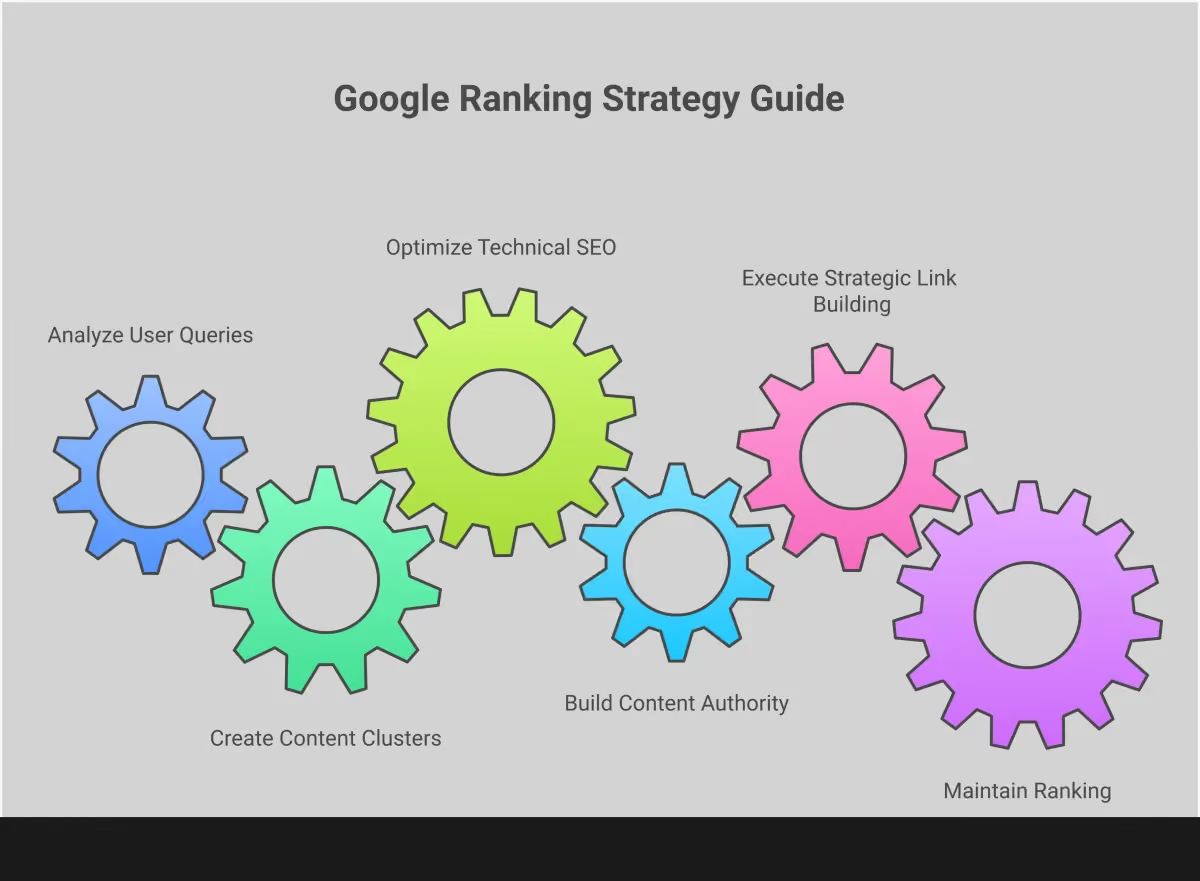
Getting to the first page of Google isn't about finding a single secret trick. It’s about building a comprehensive strategy that touches on several key areas. Think of it like building a house. You need a solid foundation, strong walls, a functional layout, and a welcoming design. In the world of SEO, this means combining excellent content with a technically sound website, a positive user experience, and a credible reputation.
Each of these elements sends signals to Google about your website's quality and relevance. When you get them all right, Google takes notice and rewards you with higher visibility. The good news is that you don't have to be a technical wizard to understand these components. Let's break down the essential pillars that support a page-one ranking, so you can build a strategy that gets results.
Create High-Quality, Relevant Content
At the heart of any successful SEO strategy is great content. As experts at Michigan Tech note, "Quality, authoritative, authentic content is the number one driver of your search engine rankings and there is no substitute for great content." This means creating articles, blog posts, and pages that genuinely answer the questions your audience is asking. Your content should be well-researched, clearly written, and provide real value. Instead of just stuffing keywords, focus on covering a topic comprehensively. When you create the best resource available for a specific search query, you give Google a compelling reason to show your page to its users. Tools that help with automated content generation can provide a strong starting point for building out these resources.
Build a Strong Technical Foundation
Your website could have the best content in the world, but if search engines can't find, crawl, and understand it, you won't rank. This is where technical SEO comes in. It’s the process of optimizing your site's infrastructure to make it search-engine-friendly. This includes having fast page load speeds, a mobile-friendly design, and a logical site structure. Simple elements like header tags are also important. As one agency points out, the "proper use of header tags can assist search engines in understanding the structure and content of the pages on your website." A solid technical foundation ensures there are no roadblocks preventing Google from recognizing and rewarding your great content.
Send Positive User Experience Signals
Google wants to send its users to websites they'll enjoy using. That's why it pays close attention to user experience (UX) signals. These are clues that tell Google whether visitors are having a good time on your site. As explained on Quora, "user engagement signals, such as time on site, click-through rates, and bounce rates, can influence search rankings." If people click on your link, spend several minutes reading, and visit other pages on your site, it signals that you provided a valuable answer. Conversely, if they click and immediately hit the "back" button (a "bounce"), it suggests your page wasn't a good match for their query.
Develop a Strong Backlink Profile
Backlinks are links from other websites to yours, and they act as a powerful vote of confidence in the eyes of search engines. When another site links to your content, they are essentially vouching for its quality and authority. However, not all backlinks are created equal. According to the marketing platform Invoca, "Google values high-quality backlinks from authoritative sources." This means a single link from a well-respected industry website is far more valuable than dozens of links from unknown, low-quality blogs. Building a strong backlink profile takes time and effort, but it's a critical component for establishing your site's credibility and climbing the search rankings.
Adapt to Google's Algorithm Updates
The only constant in SEO is change. Google is always updating its algorithm to provide better search results, and what works today might need adjustments tomorrow. The rise of AI in search is a perfect example. According to SEO resource Backlinko, "AI Overviews and chat tools like Gemini or ChatGPT pull data from content that’s structured clearly and appears trustworthy." This means adapting your content strategy to be easily digestible by these new systems is becoming essential. Staying on page one requires you to be agile, stay informed about major updates, and be prepared to refine your approach. This is where an SEO maintenance tool can be invaluable, helping you re-optimize content as the digital landscape evolves.
Understand Key User Behavior Metrics
Beyond how users interact with your site, Google also watches how they behave on the search results page itself. Key user behavior metrics like click-through rate (CTR) have a direct impact on your rankings. A high CTR—meaning a large percentage of people who see your link in the search results click on it—tells Google that your page is a highly relevant match for that specific query. This is why your page title and meta description are so important. They are your first, and sometimes only, chance to convince a user that your page has the answer they need, making optimization a critical task.
How to Get on the First Page of Google
Getting your website to the first page of Google isn’t about finding a single secret trick. It’s about building a comprehensive strategy that tells search engines your site offers the best answer to a user's query. This involves understanding your audience, creating valuable content, and ensuring your website is technically sound. By focusing on a few key areas, you can create a clear path toward higher visibility and more organic traffic. Here are the essential steps to improve your ranking and land on that coveted first page.
Align Your Keywords with Search Intent
Before you write a single word, you need to understand what your audience is actually looking for. This is known as search intent—the "why" behind a search query. Are they looking for information, trying to find a specific website, or ready to make a purchase? Conducting thorough research allows you to target the right keywords and phrases. This helps you craft content that directly addresses user needs, which is exactly what Google wants to see. By aligning your content with what people are searching for, you create a better user experience and signal to Google that your page is a relevant result, which is fundamental for improving your rank.
Create a Winning Content Strategy
Content is the cornerstone of any successful SEO effort. As one expert notes, "Quality, authoritative, authentic content is the number one driver of your search engine rankings and there is no substitute for great content." Your goal should be to create the best resource available for your target topic. This means your content needs to be comprehensive, well-researched, easy to read, and genuinely helpful. A solid content strategy involves planning your topics, creating a consistent publishing schedule, and regularly updating your existing articles to keep them fresh and accurate. Using an AI content generator can help you scale this process while maintaining a high standard of quality for every piece you publish.
Optimize Your Site's Technical SEO
Technical SEO is all about making sure search engines can easily find, crawl, and understand your website. If Google can’t access your content, it doesn’t matter how great it is. Key elements include having a fast-loading site, a mobile-friendly design, a logical site structure, and a clean XML sitemap. Simple things like using header tags correctly help search engines grasp the hierarchy and context of your content, which can lead to a better ranking. A strong technical foundation ensures that all your other SEO efforts aren't wasted. It’s the framework that supports your entire strategy, making it easier for your great content to be discovered and indexed properly.
Set Up and Use Google Search Console
Think of Google Search Console as a free diagnostic tool for your website, straight from Google itself. Setting it up is a critical step because it gives you a direct look at how Google sees your site's performance. It helps you understand how Google views your site and will alert you to technical issues that could be affecting your ranking, such as crawling errors or security problems. You can use it to see which search queries are bringing people to your pages, check the indexing status of your content, and submit a sitemap to help Google discover all your important pages more efficiently. Monitoring this data is essential for making informed decisions about your SEO strategy.
Manage Duplicate Content with Canonicals
Sometimes, the same piece of content can live on multiple URLs on your site. This can happen with printer-friendly versions of pages or if you use tracking parameters in your links. This creates duplicate content, which can confuse search engines and dilute your ranking power. The solution is to use a canonical tag. This is a small snippet of code that tells Google which URL represents the main version of a page. By adding a `rel="canonical"` tag, you consolidate all the ranking signals for the duplicate pages into your preferred URL, ensuring the right page appears in search results and gets the credit it deserves.
Control Indexing with Robots.txt and Noindex Tags
Not every page on your website needs to appear in search results. You might have internal search pages, thank-you pages after a form submission, or admin areas that you want to keep private. You can tell Google what to ignore by using a `robots.txt` file or `noindex` tags. A `robots.txt` file gives crawlers instructions on which sections of your site to avoid. For a more direct command, you can add a `noindex` tag to the HTML of a specific page. This tells Google not to include that page in its index at all. Using these tools correctly helps you focus your SEO efforts on the pages that truly matter to your business.
Build High-Quality Backlinks
Backlinks—links from other websites to yours—are a powerful signal of authority and trust to search engines. Think of them as votes of confidence from other players on the web. However, quality is far more important than quantity. Google values high-quality backlinks from authoritative and relevant sources. A single link from a well-respected industry site is worth more than dozens of links from low-quality directories. You can earn these valuable links by creating exceptional, shareable content, guest posting on reputable blogs, and building relationships with others in your niche. A strong backlink profile shows Google that your site is a credible resource, which is a key factor in achieving a page-one ranking.
Use Nofollow for Untrusted Links
While getting good backlinks is important, the links on your own site also send signals. When you link out to another website, you’re essentially giving it a vote of confidence. To protect your site's credibility, you need to be mindful of the company you keep online. This is where the `nofollow` attribute comes in handy. By adding a `nofollow` tag to a link, you're telling search engines not to pass your site's authority to that page. Google's own guidelines recommend you use this tag for any content you don't fully trust, like links in user comments or for sponsored posts. This simple step helps ensure your site isn't negatively associated with low-quality sources.
Sharpen Your Focus on Local SEO
For businesses that serve a specific geographic area, local SEO is essential. When people search for products or services "near me," Google prioritizes results that are geographically relevant. To appear in these searches, you need to optimize your online presence for your location. This starts with creating and fully optimizing a Google Business Profile. You should also work on getting listed in local directories, ensuring your business name, address, and phone number are consistent everywhere. Encouraging happy customers to leave reviews is also crucial, as positive reviews build trust and improve your local visibility. By focusing on local signals, you can capture high-intent customers right in your neighborhood.
Adopt a Mobile-First Design
The majority of Google searches now happen on mobile devices, which is why Google uses mobile-first indexing. This means it primarily looks at the mobile version of your website to determine its rankings. If your site isn't optimized for mobile, you're fighting an uphill battle. A mobile-first design ensures your site is responsive and provides an excellent experience on any screen size. This includes having readable text without zooming, adequate space for tapping links and buttons, and fast load times over a cellular network. You can use Google's Mobile-Friendly Test to see how your site performs and identify areas for improvement. A seamless mobile experience is no longer optional—it's a requirement for ranking well.
Optimize Your On-Page Elements
Once your content is written, the next step is to optimize the other elements on the page. On-page SEO is more than just the words you write; it’s about making every component of your page work together to provide context for search engines and a better experience for users. This includes your images, videos, and the links you use to connect your pages. According to Google's own SEO starter guide, paying attention to these details helps its systems better understand what your content is about, which is a critical part of the ranking process. Each element is an opportunity to reinforce your topic's relevance and improve usability.
Use Descriptive Alt Text for Images
Every image on your site should have "alt text," which is a short, descriptive phrase that explains what the image shows. This text serves two important functions. First, it helps search engines understand the content of an image, allowing it to be indexed correctly in image searches. Second, and just as importantly, it makes your site more accessible to people who use screen readers, as the alt text will be read aloud. Instead of a generic description, be specific. For example, instead of "dog," use "golden retriever catching a red frisbee in a park."
Embed High-Quality, Relevant Videos
Video is a powerful tool for engaging visitors and keeping them on your page longer, which is a positive user experience signal. When you embed videos, make sure they are high-quality and directly relevant to the page's topic. Just like with images, you need to provide context for search engines. Write descriptive titles and detailed descriptions for your videos. This helps Google understand the video's content and can even help your video appear in search results, giving you another way to attract traffic to your site.
Write Clear and Descriptive Link Text
The clickable text of a hyperlink, known as anchor text, should clearly communicate where the link will take the user. Vague phrases like "click here" or "read more" don't provide any context for users or search engines. Instead, use descriptive text that naturally fits into your sentence. For example, instead of "To learn about our services, click here," you should write "You can learn more about our SEO services on our features page." This simple change makes your site easier to use and helps search engines understand the relationship between your pages.
Promote Your Content and Website
Creating excellent content and optimizing your pages is only half the battle. The other half is actively promoting it. Hitting "publish" and hoping for the best is not a strategy. You need to get your content in front of the right audience to start generating traffic, earning backlinks, and sending positive signals to Google. A good promotion strategy ensures your hard work pays off and helps you build a more resilient business by not depending on a single source for all your visitors. It's about creating multiple pathways for customers to find you.
Share Your Content on Social Media
Social media platforms are a powerful channel for distributing your content to a wider audience. Share your new blog posts and pages across your business's social profiles to drive initial traffic. But don't just post a link; engage with communities and discussions where your content would be helpful. You can also use paid ads on platforms like Meta and LinkedIn to target specific demographics and amplify the reach of your best-performing content, ensuring it gets seen by people who are most likely to be interested in your business.
Don't Rely on a Single Traffic Source
While ranking on Google is the goal, it's a mistake to become completely dependent on it for traffic. As one discussion among SEO professionals highlights, getting customers from many different places is a much more stable business strategy. Algorithm updates can change rankings overnight, so diversifying your traffic sources is key to long-term success. In addition to search and social media, focus on building an email list, fostering a community, and encouraging word-of-mouth referrals. A healthy mix of traffic sources protects your business from unexpected changes and creates a more sustainable growth model.
Are You Making These SEO Mistakes?
Getting to page one can feel like a moving target, and it’s easy to make missteps that hold your website back without even realizing it. Many businesses focus so much on what they should do that they overlook the common mistakes that are actively hurting their rankings. The good news is that these pitfalls are often fixable once you know what to look for. From choosing the wrong keywords to ignoring how users interact with your site, a few key errors can prevent even the best content from reaching its audience.
Think of your SEO strategy like building a house. You can have beautiful furniture (your content) and a great address (your domain), but if the foundation is cracked (technical SEO) or the front door is hard to find (poor keyword targeting), people won't come inside. This section is designed to help you inspect your own foundation and make sure you're not accidentally sabotaging your efforts. Understanding these common mistakes is the first step toward correcting your course and building a stronger strategy to climb the search results. Let's walk through the most frequent issues that can get in your way.
Picking the Wrong Keywords
Keyword research is about more than just finding popular terms; it's about finding the right terms for your audience and your business. A common mistake is targeting keywords that are either too broad and competitive or so obscure that no one is searching for them. You might also be targeting keywords that aren't relevant to what you actually sell. As experts at 310 Creative note, "Conducting thorough research enables you to precisely target these keywords and phrases, crafting content that not only engages your target audience but also ranks well." A successful strategy involves finding a sweet spot: keywords with decent search volume that you can realistically rank for and that align perfectly with your offerings. MEGA AI's SEO tools can help automate this research to uncover these valuable opportunities.
Forgetting About Search Intent
Search intent is the "why" behind a search query. Is the user looking to buy something, find information, or navigate to a specific website? Creating content that doesn't match this intent is a recipe for a low ranking. For example, if someone searches for "best running shoes," they likely want to see product comparisons and reviews, not a history of athletic footwear. Google pays close attention to how users engage with search results. According to Fireus Marketing, "Google tracks how people interact with search results to decide which sites are most useful and relevant." If a user clicks on your page and immediately bounces back to the search results, it signals to Google that your content didn't satisfy their intent, making it less likely to rank for that query in the future.
Creating Low-Quality Content
In the world of SEO, content is still king, but only if it's high-quality. Thin, poorly written, or unoriginal content simply won't cut it. Google's primary goal is to provide users with the most helpful and authoritative answers to their questions. As the team at MTU puts it, "Quality, authoritative, authentic content is the number one driver of your search engine rankings and there is no substitute for great content." This means your content needs to be comprehensive, well-researched, and genuinely useful to your reader. Avoid keyword stuffing and focus on creating valuable resources that establish your expertise and build trust. This approach not only helps with rankings but also turns visitors into loyal customers.
Overlooking Technical SEO Issues
You can have the best content in the world, but if search engines can't find, crawl, and understand it, you won't rank. Technical SEO is the foundation your entire strategy is built on. Common mistakes include slow page load speeds, a site that isn't mobile-friendly, broken links, and a confusing site structure. Even small details matter. For instance, "Proper use of header tags can assist search engines in understanding the structure and content of the pages on your website... leading to a better Google ranking." A technically sound website provides a better experience for both users and search engine crawlers, making it a critical component of any effort to reach page one.
Relying on Poor Link-Building Tactics
Backlinks act as votes of confidence from other websites, signaling to Google that your content is credible and valuable. However, not all links are created equal. A frequent mistake is focusing on the quantity of links over their quality. Using outdated tactics like buying links or participating in link schemes can earn you a penalty from Google. As Invoca highlights, "Google values high-quality backlinks from authoritative sources, and guest posting on reputable websites can enhance your site's credibility and search engine ranking." The goal should be to earn links naturally by creating exceptional content that other reputable sites in your industry want to reference and share with their own audiences.
Ignoring How Users Behave on Your Site
Google doesn't just rank your site and walk away. It constantly monitors how users interact with it to determine if it's a good result. Metrics like click-through rate (CTR), bounce rate, and time on page are crucial signals. As one Quora contributor explains, "User engagement signals, such as time on site, click-through rates, and bounce rates, can influence search rankings." A low CTR might mean your title tag and meta description aren't compelling enough. A high bounce rate could indicate that your content doesn't match search intent. By analyzing and improving these user behavior metrics, you can provide a better experience and show Google that your page deserves its spot on page one. This is an area where automated SEO optimization can make a significant impact by testing and refining elements to improve engagement.
Common SEO Myths Debunked
The world of SEO is filled with advice, but not all of it is accurate. Old tactics die hard, and it's easy to spend time on strategies that no longer work. This can be especially frustrating for small business owners who have limited time and resources. To help you focus your energy on what truly moves the needle, let's clear up a few of the most common myths that can distract you from your goal of reaching the first page. By understanding what doesn't work, you can build a more efficient and effective SEO strategy.
Believing in the Meta Keywords Tag
One of the most persistent myths is the power of the meta keywords tag. Years ago, this was a way to tell search engines what your page was about, but those days are long gone. If you're still spending time brainstorming and adding keywords to this field, you can stop. Google has been very clear that it does not use the meta keywords tag for ranking purposes. This is an outdated practice that offers no SEO value. Your time is much better spent focusing on creating high-quality content and writing a compelling meta description that encourages users to click.
Obsessing Over a Perfect Word Count
You may have heard that a blog post needs to be over 2,000 words to rank well. The truth is, there is no magic number when it comes to word count. Google's own guidance emphasizes creating content that is high-quality and comprehensive enough to address user needs effectively. A concise 800-word article that perfectly answers a specific question is far more valuable than a 3,000-word post filled with fluff. Instead of aiming for an arbitrary length, focus on covering your topic thoroughly and satisfying the user's search intent. Quality and relevance will always trump quantity.
Thinking Keywords in a URL Are a Major Factor
Many people believe that having keywords in a URL is a significant ranking factor. While a relevant keyword in your URL can provide a small hint about the page's topic, it is not a major determinant of your ranking. Google's priority is a user-friendly URL structure that is simple and easy to understand. A clean, descriptive URL is better for both users and search engines than a long, keyword-stuffed one. As Google's SEO starter guide suggests, the emphasis should be on creating a logical site structure, not on cramming keywords into every possible place.
Misunderstanding E-E-A-T
The concept of E-E-A-T—Experience, Expertise, Authoritativeness, and Trustworthiness—is often misunderstood as a direct ranking factor. It's more accurate to think of it as a framework Google uses to guide its human raters in evaluating the quality of search results. There is no "E-E-A-T score" for your website. Instead of treating it like a checklist, focus on genuinely demonstrating your expertise and credibility. Create content that showcases your real-world experience and builds trust with your audience. By doing so, you will naturally align with the principles that Google uses to identify high-quality content that serves user needs.
How to Keep Your Spot on the First Page of Google
Getting to the first page of Google is a major achievement, but the work doesn’t stop there. The search landscape is dynamic, with competitors vying for your spot and Google constantly refining its algorithms. Staying on top requires a proactive and consistent strategy. It’s not about a one-time fix; it’s about continuous maintenance and improvement. Think of your top-ranking page as a garden. You can't just plant it and walk away; you need to tend to it regularly to keep it healthy and thriving. This means keeping your content relevant, adapting to changes, and always prioritizing the user experience.
Refresh and Update Your Content Regularly
High-quality, authoritative content is the cornerstone of high search engine rankings. But "quality" isn't a static attribute. Information becomes outdated, statistics change, and new developments emerge. Regularly updating your top-performing pages signals to Google that your content is still relevant and valuable to users. This can involve refreshing data, adding new sections to cover a topic more comprehensively, or updating examples to be more current. Think of it as maintaining your content's accuracy and authority over time.
MEGA AI’s Maintenance Agent automates this process by identifying new content to add to existing articles and updating them to improve their click-through rate. This ensures your pages remain fresh and competitive without constant manual effort.
Using AI to Maintain and Optimize Content
For small businesses, consistently updating content can feel like a full-time job. Manually tracking performance, identifying outdated information, and finding new angles to keep articles fresh is a constant battle against the clock. This is where AI can automate much of the heavy lifting. AI-powered platforms can monitor your content's performance and flag pages with declining traffic or engagement. For example, MEGA AI's Maintenance Agent can analyze your top articles, identify opportunities to add new sections, and re-optimize the page to improve its click-through rate. This allows you to maintain your content's ranking and relevance without dedicating countless hours to manual updates, ensuring your best assets continue to work for you.
Stay Ahead of Algorithm Changes
Google’s search algorithm is always evolving. While it’s not practical to react to every minor tweak, staying aware of major core updates is essential. These updates often signal a shift in how Google evaluates content and user experience. Google tracks how people interact with search results to determine which pages are the most useful and relevant. Instead of chasing the algorithm, focus on the principles behind the changes, which almost always circle back to providing a better experience for the user. This means creating helpful content, ensuring your site is fast and easy to use, and building genuine authority. This approach makes your site resilient to future updates.
Keep an Eye on Your Competitors
Ranking high for important keywords can drive significant traffic to your site, and you can be sure your competitors want that traffic too. Regularly monitoring the other sites on page one gives you valuable insight into the competitive landscape. See what kind of content they are creating, what keywords they are targeting, and which sites are linking to them. Are they using videos or infographics that are performing well? Have they recently updated a key article? This isn't about copying their strategy but about understanding what's working in your niche. It helps you identify gaps in your own content and find new opportunities to provide even more value to your audience.
Run Regular Technical SEO Audits
Technical SEO is the foundation upon which your content sits. Over time, even the best-maintained websites can develop issues like broken links, slow-loading pages, crawl errors, or problems with mobile usability. These technical glitches can harm the user experience and negatively impact your rankings. Conducting a regular technical SEO audit, perhaps quarterly, helps you catch and fix these problems before they cause significant damage. A healthy site is easier for search engines to crawl and index, ensuring your great content gets the visibility it deserves. It’s a crucial part of website hygiene that keeps your foundation strong and supports your long-term ranking goals.
Check if Your Site is Indexed on Google
Before your site can even compete for a spot on page one, it needs to be in Google's massive library of web pages, known as its index. If Google's crawlers haven't found and added your site, it's effectively invisible to anyone searching. Luckily, there's a quick way to check your site's indexing status. Just go to Google and type site:yourwebsite.com into the search bar, replacing yourwebsite.com with your actual domain. If a list of your site's pages appears, you're in the index. If you see a message that no results were found, it means Google doesn't know you exist yet. This makes getting indexed your immediate first step.
Continuously Improve Site Performance
How quickly your pages load and how well they function on mobile devices are critical ranking factors. In an age of short attention spans, users won't wait around for a slow website to load. High bounce rates from slow pages can signal to Google that your site provides a poor user experience. To improve your website’s SEO, focus on optimizing performance. This includes compressing images to reduce file size, leveraging browser caching, minimizing code, and using a Content Delivery Network (CDN) to serve content faster to users around the world. A fast, responsive site keeps users happy and helps you maintain your position on page one.
Refine Your User Experience
Ultimately, all SEO efforts should serve the user. Google pays close attention to user engagement signals like click-through rates (CTR), time on site, and bounce rates to gauge whether users find a page valuable. If people click on your result but immediately leave, it tells Google your page wasn't a good match for their query. To stay on page one, you must continuously work to improve the user experience. Make your site easy to use, ensure your content is readable and well-structured with headings and lists, and answer the user's question as clearly and comprehensively as possible. A positive user experience is the ultimate defense for your rankings.
Avoid Intrusive Advertisements
While it can be tempting to monetize your traffic with ads, intrusive advertisements that get in the way of your content can do more harm than good. Pop-ups that cover the text, ads that cause the layout to shift unexpectedly, or videos that auto-play with sound create a frustrating experience. When users are annoyed, they leave. This quick exit, or "bounce," sends a negative signal to Google. The search engine pays close attention to these user experience signals to determine if a page is valuable. A high bounce rate suggests your page wasn't a good match for the user's query, which can hurt your ranking over time. Prioritizing a clean, fast, and user-friendly experience is a more sustainable strategy for keeping your spot on page one.
The Future of Google Search Rankings
The world of search is in a constant state of change. Just when you think you have it all figured out, a new algorithm update or technology shifts the landscape. Staying on page one means not just mastering today's rules, but also understanding where search is headed. The future of ranking is less about checking boxes and more about creating a holistic, user-focused experience that aligns with increasingly intelligent search engines. Key trends like the integration of AI, the growth of voice and mobile search, and a deeper analysis of user behavior are shaping the next generation of SEO. Keeping these developments on your radar is essential for building a strategy that lasts.
AI and Machine Learning's Role in Search
Artificial intelligence is no longer a futuristic concept; it's at the core of how search engines operate. Google uses sophisticated AI systems to understand the context and intent behind a search query, not just the literal keywords. This means your content needs to be genuinely helpful and well-structured. AI tools like ChatGPT and Gemini are trained on data from content that is clear and trustworthy, so organizing your information logically helps both users and search engines. Creating comprehensive, authoritative content is the best way to show AI-driven search algorithms that you’re a reliable source of information. This is where automated SEO tools can help you generate and structure content that meets these new standards.
Preparing for the Growth of Voice Search
With the popularity of smart speakers and digital assistants, more people are searching with their voices. Voice queries are typically longer and more conversational than typed ones. Instead of typing "best running shoes," someone might ask, "What are the best running shoes for someone with flat feet?" To capture this traffic, you need to optimize for these natural language questions. Focus on creating content that provides direct, concise answers. This approach not only targets voice search but also increases your chances of landing a coveted Featured Snippet at the top of the search results page, a prime spot for both voice and text queries.
How Mobile-First Indexing Continues to Evolve
Google now primarily uses the mobile version of your website for indexing and ranking. This means your site's mobile experience isn't just an option; it's the foundation of your SEO performance. A slow, clunky, or hard-to-read mobile site will frustrate users, causing them to leave quickly. This behavior sends negative signals to Google, indicating your page isn't a good result for their query. As search engines get better at analyzing user engagement, a seamless mobile design is critical. Your site must be responsive, load quickly, and be easy to use on a small screen to keep both users and Google happy.
Watch for New SERP Features
The search engine results page (SERP) is much more than a simple list of links. It’s a dynamic page filled with features like the "People Also Ask" box, video carousels, image packs, and knowledge panels. Earning a spot in one of these features can give you incredible visibility, often placing you above the traditional number one organic result. To increase your chances, you need a clear content strategy that avoids keyword cannibalization, where multiple pages on your site compete for the same terms. Using structured data also helps search engines understand your content's context, making it easier for them to pull your information into these rich results.
A Deeper Look at User Behavior Analysis
Search engines are getting smarter about measuring how people interact with search results. Metrics like click-through rate (CTR), how long a user stays on your page (dwell time), and whether they return to the search results (bounce rate) are powerful indicators of your content's quality. If users click on your link but immediately leave, it tells Google your page wasn't a good match for their query. On the other hand, when users click and stay, it signals that you provided a valuable answer. Improving these user engagement signals is crucial, and it starts with creating content that truly satisfies the searcher's intent.
What Are the Next-Generation Ranking Factors?
Looking ahead, the core principles of SEO remain the same: create great content for people. However, the tactics are becoming more sophisticated. The focus is shifting from individual keywords to broader topics and entities. Search engines want to see that you are an authority on a subject, with a collection of content that covers it from multiple angles. This requires thorough research to understand what your audience is looking for and how you can provide the most comprehensive answers. The future of ranking lies in building a user-centric experience that demonstrates your expertise and builds trust, creating a strong foundation that can withstand any algorithm update.