
Keeping pace with Google's core algorithm updates can feel like a full-time job. The changes are frequent, the impacts can be significant, and the data analysis required to understand them is immense. For small businesses and marketing teams, trying to manually track and adapt to every shift is becoming unsustainable. This is where technology can provide a critical advantage. Artificial intelligence can analyze vast amounts of data to identify patterns and provide data-driven recommendations for improvement. This guide explains how you can use AI-powered tools to automate analysis, optimize content efficiently, and build a proactive SEO strategy that stays ahead of the curve.
Key Takeaways
- Focus on Fundamentals, Not Fluctuations: The best way to prepare for any core update is to consistently create helpful, high-quality content, ensure a great user experience, and maintain a technically sound website. This user-first approach aligns your site with Google's long-term goals.
- Analyze Before You Act: When an update causes ranking shifts, avoid immediate, drastic changes. Instead, use your analytics to understand which pages were impacted, study what competitors who ranked higher are doing right, and build a data-driven improvement plan.
- Use Automation to Adapt Efficiently: Manually keeping your site optimized is a huge task. AI-powered tools can streamline the process by identifying content that needs refreshing, automating technical fixes, and helping you adapt to new standards with speed and precision.
What Are Google Core Algorithm Updates?
Google's core algorithm updates are broad, significant changes to its main search system. Think of them less as minor tweaks and more as fundamental adjustments to how Google assesses content across the web. These updates are designed to improve the overall search experience by better understanding what users are looking for and which pages best answer their queries.
Because these changes are so comprehensive, they can cause noticeable shifts in search engine rankings. Some sites may see a drop in traffic, while others might see an increase. It’s important to remember that these fluctuations don't necessarily mean there's something wrong with your site. Instead, it often means Google has refined its evaluation process, and other pages are now seen as better answers to certain queries. Understanding these updates is the first step to building a resilient SEO strategy.
What is their purpose?
The primary goal of any core update is to improve the quality and relevance of search results. Google's mission is to organize the world's information and make it universally accessible and useful. To do that, its algorithm must constantly evolve to better understand content and user intent. According to Google, the main objective is to ensure search results are as helpful and reliable as possible for users. This means rewarding content that is well-researched, comprehensive, and trustworthy while deprioritizing pages that are thin, unhelpful, or misleading. Ultimately, these updates are about creating a better experience for the searcher.
How often do they happen?
Google rolls out major core algorithm updates several times a year. These are the large-scale, announced updates that tend to get the most attention in the SEO community. However, the algorithm is in a constant state of flux, with smaller, unconfirmed changes happening almost daily. While you don't need to react to every minor tremor, being aware of the major updates is crucial. This regular cycle of refinement means that maintaining your site's performance requires an ongoing effort. A proactive SEO approach that focuses on quality and user experience is the best way to stay prepared for whenever the next update arrives.
How Do Core Updates Affect Your Website?
When Google announces a core update, it’s common for marketers and business owners to feel a mix of anticipation and anxiety. These updates can cause noticeable shifts in search engine results pages (SERPs), meaning your website's performance can change, sometimes overnight. It’s important to remember that core updates aren't penalties. Instead, they are broad changes to Google's main ranking algorithm, designed to improve how it assesses content and better meet the expectations of searchers.
Think of it as Google refining its standards. An update might re-evaluate signals related to content quality, user experience, or authoritativeness. As a result, pages that were previously under-rewarded might see their rankings improve, while others that don't align with the new standards might see a drop. The aftermath for many websites can range from exciting climbs in rankings to significant drops in traffic. For instance, some updates have heavily impacted specific industries, like health and wellness, by re-evaluating expertise signals. Understanding why these shifts happen and what to look for is the first step in building a resilient SEO strategy that can weather any algorithmic storm. Below, we’ll break down the specific effects you might see and which metrics deserve your attention.
Why your traffic might change
After a core update finishes rolling out, you might see fluctuations in your website traffic. This happens because the update changes how Google weighs different ranking factors. For example, one update might place a greater emphasis on page load speed, while another might focus more on the depth and helpfulness of the content. If your site excels in an area that Google has decided to value more, your traffic may increase. Conversely, if your competitors better align with the new criteria, you might experience a traffic decline. This isn't a penalty; it's simply a re-shuffling as Google's algorithm gets better at surfacing the most relevant and reliable results for its users.
Key metrics to watch
When an update hits, it’s tempting to only watch your overall traffic numbers, but it's more effective to look at a specific set of metrics. Start with your technical health by monitoring your Core Web Vitals, which measure loading speed, interactivity, and visual stability. These are direct indicators of user experience. Beyond technicals, focus on content performance. Google consistently states that its goal is to reward helpful, reliable, and people-first content. Check the rankings for your most important keywords, and analyze the click-through rate (CTR) and bounce rate for key landing pages. A sudden drop in these metrics can signal that your content is no longer meeting user intent as effectively as it once did.
Short-term vs. long-term effects
The impact of a core update can vary in timing. In the short term, you might see your pages move up or down a few spots in the search results. These minor shifts are normal and don't always mean you need to revamp your entire site. However, the full effects aren't always immediate. If you make significant improvements to your content or technical SEO in response to an update, it can take time for Google to re-crawl and re-evaluate your site. In some cases, you may not see the full benefit of your hard work for several months, or even until the next core update is released. This underscores the importance of viewing SEO as a continuous, long-term strategy rather than a series of reactive fixes.
What Influences Your Site's Performance After an Update?
When Google rolls out a core update, it’s re-evaluating how it assesses websites against its core principles. Think of it less as a penalty and more as a realignment. The algorithm’s goal is to better surface content that is helpful, reliable, and provides a positive user experience. If your site’s performance changes, it’s because Google’s perception of your site in relation to these factors has shifted. Understanding these key areas helps you diagnose issues and build a more resilient SEO strategy.
Content quality and relevance
At the heart of every core update is a renewed focus on content. Google wants to reward pages that are helpful, people-first, and demonstrate a deep understanding of a topic. This means your content should directly answer the user's search query, offer unique value, and be well-researched and clearly written. After an update, take a hard look at your pages. Do they meet user expectations? Is the information still accurate and comprehensive? Creating helpful, reliable, and people-first content is the most critical factor for long-term success. Pages that are thin, unoriginal, or created just for search engines are most vulnerable to negative impacts.
User experience signals
How users interact with your site sends strong signals to Google. If your website is slow, difficult to use on a mobile device, or has intrusive pop-ups, users will likely leave quickly. These negative interactions can harm your rankings. Core updates often refine how these user experience signals are measured. Key metrics, known as Core Web Vitals, assess your site's loading speed, interactivity, and visual stability. A seamless and intuitive experience across all devices is no longer a nice-to-have; it’s a fundamental part of modern SEO. A positive user experience encourages visitors to stay longer and engage more deeply with your content.
Technical SEO health
Your content can be the best in the world, but if Google’s crawlers can’t find, access, or understand it, it won’t rank. Technical SEO is the foundation upon which your content and user experience are built. This includes having a secure site (HTTPS), a logical site structure, clean URLs, and no broken links or crawl errors. Core updates can change how Google processes certain technical elements, making a solid foundation even more important. Regularly conducting a technical SEO audit ensures your site is accessible to search engines and provides a smooth experience for both bots and human visitors, protecting you from potential ranking drops.
Expertise, Authoritativeness, and Trustworthiness (E-A-T)
Google places a high value on content created by credible sources, especially for topics that could impact a person's health, finances, or safety. This concept is known as E-A-T: Expertise, Authoritativeness, and Trustworthiness. Google has also added an extra "E" for Experience. To build your site’s E-E-A-T, you should showcase author credentials, cite reputable sources, and secure mentions from other authoritative websites in your industry. Core updates often include refinements to how Google evaluates these trust signals. Demonstrating that your content is created by experts and is a reliable source of information is crucial for building and maintaining your rankings through algorithm changes.
How to Prepare for a Core Update
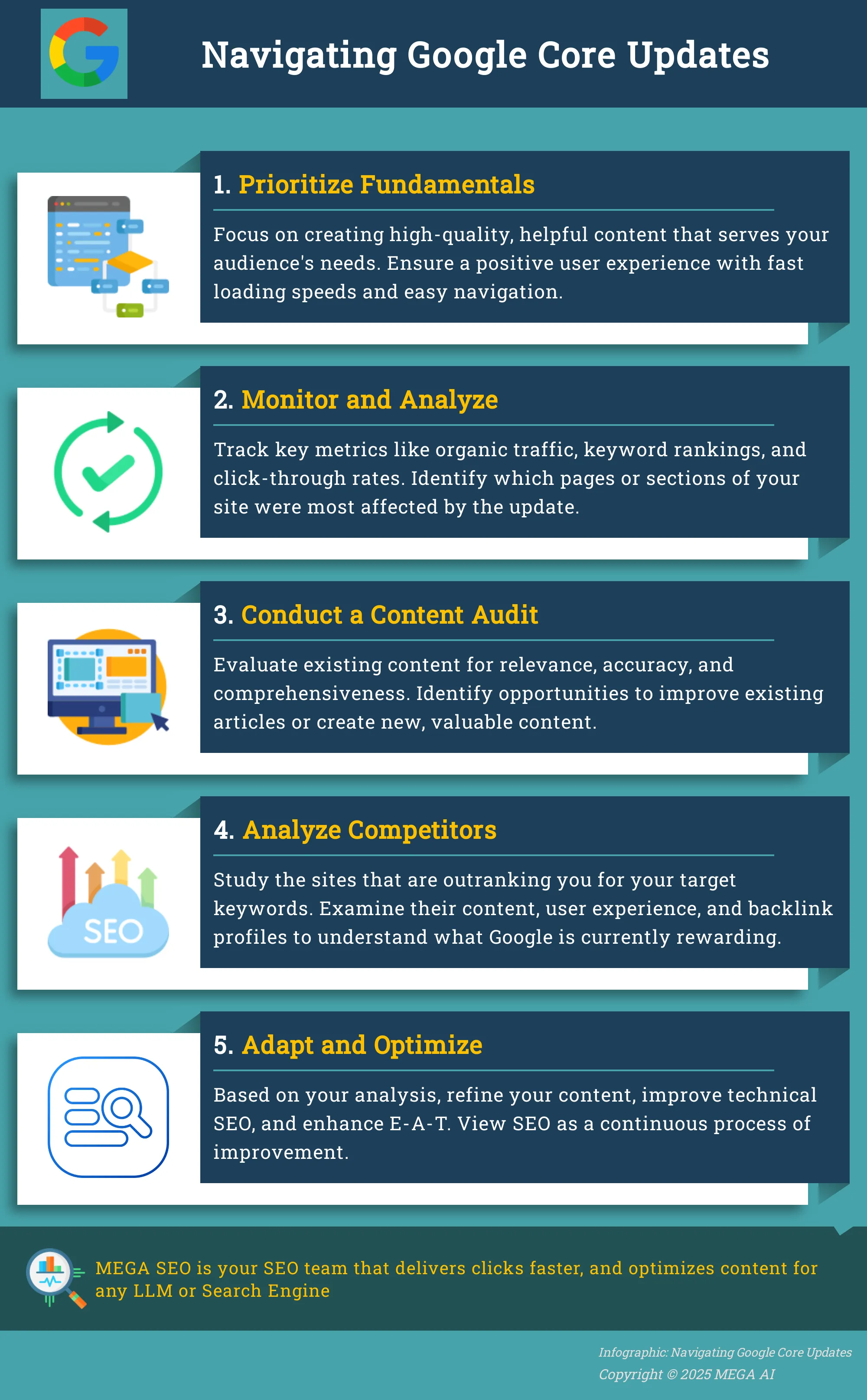
Preparing for a Google core update isn't about a last-minute frenzy of activity. Instead, it's about consistently applying a user-focused SEO strategy. Think of it as maintaining a healthy lifestyle rather than crash dieting before a big event. The most resilient websites are those built on a solid foundation of quality content, a great user experience, and technical soundness. When you prioritize giving users what they want, you’re already aligning your site with Google’s ultimate goal.
Google's algorithm updates are designed to better reward pages that deliver a satisfying experience. By focusing on long-term value over short-term tricks, you position your site to withstand the fluctuations that often accompany these updates. The following strategies are not just for update preparation; they are the pillars of a sustainable and successful SEO approach. By integrating these practices into your regular workflow, you can build a site that not only survives core updates but thrives because of them.
Stick to SEO best practices
The most effective way to prepare for a core update is to follow the fundamentals of good SEO. Google’s main objective is to connect users with the most relevant and reliable answers to their questions. Core updates are simply adjustments to how the algorithm measures that relevance and reliability. This means that chasing algorithm loopholes is a losing game. Instead, focus on creating a genuinely useful resource for your audience.
This includes building a logical site structure, writing clear and helpful content, and ensuring your website is easy to use on any device. When you consistently apply these SEO best practices, you are inherently aligning your website with what Google aims to reward. It’s a long-term strategy that builds a durable online presence.
Audit and improve your content
Content is not a "set it and forget it" asset. To stay relevant, it needs regular attention. A key part of preparing for updates is auditing your existing content to find opportunities for improvement. Are your articles still accurate? Could they be more comprehensive? Is the information still the best answer for a user's query? According to Google, making meaningful content improvements is the recommended path to recovery if your rankings drop.
This process can be time-consuming, but AI-powered tools can streamline it. For example, MEGA AI’s Maintenance Agent can automatically identify which articles need a refresh to improve their click-through rate. It can also suggest new sections to add, ensuring your content remains comprehensive and competitive without requiring hours of manual analysis.
Build your site’s E-A-T
E-A-T stands for Expertise, Authoritativeness, and Trustworthiness. While not a direct ranking factor, it’s a concept that encapsulates what Google’s algorithms look for in high-quality content. Essentially, Google wants to show users content they can trust, especially for topics that could impact their health, finances, or safety. You can demonstrate E-A-T by showcasing author credentials, citing reputable sources, and earning backlinks from other authoritative websites in your industry.
Creating helpful, reliable, and people-first content is the core of this principle. Think about who is writing your content and why a user should trust them. Adding clear author bios, displaying customer testimonials, and making your contact information easy to find are all practical steps toward building trust with both users and search engines.
Optimize for Core Web Vitals
User experience is a critical component of SEO, and Core Web Vitals are the specific metrics Google uses to measure it. These vitals assess your site's loading speed, interactivity, and visual stability. A slow, clunky website frustrates users, causing them to leave. This behavior sends negative signals to Google, which can harm your rankings, especially after an update that places more emphasis on user experience.
Ensuring your site is fast and mobile-friendly is non-negotiable. Poor loading speeds and a difficult mobile experience are common reasons for ranking drops. You can use Google's PageSpeed Insights to check your performance and get recommendations. Automating your technical SEO can also help by continuously monitoring and fixing issues that affect your Core Web Vitals, keeping your site in top shape for users and search engines alike.
How to Analyze and Respond to a Core Update
When a core update rolls out, it’s easy to feel a sense of panic, especially if you see your traffic numbers dip. But the best response is a calm and methodical one. Instead of making reactive changes, take the time to analyze what happened and create a strategic plan. By understanding the update's focus and its specific impact on your site, you can make informed decisions that lead to long-term stability and growth. The key is to diagnose before you prescribe a solution. This approach helps you move from a position of uncertainty to one of control, ensuring your efforts are focused and effective.
Know when an update is happening
The first step in responding is simply knowing that an update is in progress. Google's algorithm updates are something every digital marketer and SEO expert keeps a close eye on, as they can significantly influence how websites rank. Google typically announces core updates on its Google Search Central blog and official social media channels. It’s wise to follow these sources and other reputable SEO news outlets. Remember that updates can take a couple of weeks to fully roll out, so you’ll want to monitor your site’s performance throughout this period before drawing any firm conclusions or making drastic changes.
Assess the impact on your site
Once an update is complete, it’s time to dig into your analytics. Several notable cases illustrate how Google's core algorithm updates impact website traffic, with some sites gaining traffic while others experience sharp declines. Log into Google Analytics and Google Search Console to look for significant changes in organic traffic, keyword rankings, and click-through rates (CTR). Identify which pages or sections of your site were most affected. Did specific types of content drop in rankings? Understanding these patterns is the first step toward forming a recovery plan. Tools like MEGA AI’s Maintenance Agent can help you monitor and improve the CTR of your existing content, a key metric to watch after any update.
Adjust your SEO strategy
If your site was negatively affected, avoid making hasty, sweeping changes. Instead, use this as an opportunity to realign with best practices. The best advice is to stay updated with Google’s guidelines and adapt your strategy accordingly. Start by conducting a content audit, focusing on the pages that lost the most visibility. Evaluate them against Google’s E-A-T (Expertise, Authoritativeness, and Trustworthiness) principles and user intent. Ask yourself if the content is truly helpful and provides a satisfying experience. AI-powered tools can help you efficiently re-optimize existing content to meet new standards, whether it's for a Google update or another platform.
Check on your competitors
After a Google core algorithm update is fully rolled out, the aftermath can range from exhilarating climbs in rankings to heart-wrenching drops. One of the most insightful things you can do is analyze your competitors. Look at the sites that are now outranking you for your target keywords. What are they doing well? Examine their content quality, site structure, user experience, and backlink profiles. This competitor analysis can provide valuable clues about what the algorithm is currently rewarding. By identifying the characteristics of the "winners," you can uncover specific areas where your own site may be falling short and build a more effective action plan.
Common Misconceptions About Core Updates
Google's core algorithm updates often evoke a flurry of reactions, some based on sound understanding and others stemming from misconceptions that can cloud judgment. When your traffic shifts, it’s easy to fall for myths or chase quick fixes. Understanding what's true and what isn't is the first step toward building a resilient SEO strategy that can withstand these changes. Let's clear up a few common misunderstandings and refocus on what truly matters for long-term success.
Separating myths from facts
One of the most persistent myths is that core updates are designed to penalize websites. This isn't the case. Google's aim is to refine its systems to better reward deserving pages, not to punish others. If your site's performance drops after an update, it's not a penalty; it's a sign that other sites are now seen as providing better answers to user queries. Another common mistake is focusing too heavily on specific ranking factors, believing a small tweak will reverse the trend. The reality is that a core update assesses your site holistically, looking at hundreds of signals together. There is no single magic bullet for recovery.
What to focus on instead
Instead of trying to game the system, your energy is better spent on creating high-quality, user-centric content. Ask yourself if your content is genuinely helpful, reliable, and provides a satisfying experience for your target audience. This means moving beyond just keywords and focusing on the intent behind the search. A long-term commitment to quality will always serve you better than chasing short-term fixes. By consistently publishing and refining content that meets user needs, you align your site with Google’s ultimate goal. This approach builds a strong foundation that is less susceptible to the volatility of algorithm changes.
Tools to Help You Prepare for Core Updates
Staying proactive is much easier when you have the right tools in your corner. Instead of reacting to changes, you can use technology to monitor your site's health, optimize your content, and track performance consistently. This approach helps you build a resilient SEO strategy that can better withstand the shifts that come with core updates.
SEO software and analytics
Google's algorithm updates are a constant in the world of digital marketing, and they can significantly influence how websites rank. SEO software and analytics platforms are your eyes and ears, providing the data you need to monitor your site’s performance. Tools like Google Analytics, Google Search Console, and other third-party platforms help you track keyword rankings, organic traffic, click-through rates, and user behavior. By keeping a close watch on these metrics, you can establish a baseline for your site's performance. This makes it much easier to spot anomalies and understand the direct impact of a core update when it rolls out.
Automated content optimization tools
Manually auditing and updating every piece of content on your site is a monumental task. This is where automated tools can be a game-changer. Instead of getting lost in specific ranking factors, these tools help you focus on what really matters: content quality. AI-powered platforms like MEGA AI’s Maintenance Agent can analyze your existing articles, identify opportunities for improvement, and even re-optimize content to align with new algorithm standards. This ensures your content continues to meet Google’s goal of providing a great user experience. Automation allows you to adapt your content strategy quickly and efficiently, keeping your site relevant and competitive.
Performance tracking methods
After a Google core update finishes rolling out, the results can range from ranking boosts to significant traffic drops. Consistent performance tracking is the only way to know where you stand. By regularly monitoring your key metrics, you can see the real-world consequences of an update on your site’s visibility. Set up custom dashboards or reports to track your most important pages and keywords before, during, and after an update. This practice helps you connect changes in your performance directly to the update, giving you clear insights into what aspects of your strategy are working and which ones need to be adjusted.
How to Future-Proof Your SEO Strategy
Building an SEO strategy that lasts means looking beyond temporary gains and focusing on creating a resilient foundation. Future-proofing isn't about predicting Google's next move. It's about creating a website and content strategy so solid that it can withstand algorithmic shifts and continue to serve your audience effectively. The days of chasing loopholes and quick fixes are over. True long-term success comes from aligning your goals with the search engine's primary objective: providing the best possible experience for the user.
This approach requires a commitment to quality and a willingness to adapt. When you prioritize creating genuinely helpful content and a seamless user experience, you're not just preparing for the next core update; you're building a sustainable digital asset. A future-proof strategy is proactive, not reactive. It involves continuously adapting to evolving search algorithms, maintaining a steadfast focus on your user's needs, and staying informed about the broader trends shaping the digital landscape. By focusing on these core pillars, you can move away from the anxiety of algorithm updates and toward a more confident, strategic approach to SEO that delivers consistent results over time.
Adapt to evolving search algorithms
Search algorithms are in a constant state of evolution. Google regularly rolls out algorithm updates with the goal of improving the quality and relevance of its search results. Instead of trying to outsmart the algorithm, the most effective strategy is to understand its intent and align your efforts accordingly. This means building a technically sound website and creating content that genuinely answers user queries.
A flexible approach is essential. What works today might need adjustment tomorrow. Being prepared to re-optimize your content after a major update can make all the difference. Using tools that can analyze performance and identify opportunities for improvement helps you stay agile. For instance, an AI-powered platform can automatically identify which articles need updates to improve their ranking, ensuring your content remains competitive and aligned with the latest algorithmic standards.
Balance SEO with a user-first approach
The most effective SEO strategy is one your audience never notices. While keywords and technical optimizations are important, they should support, not dictate, your content. Google has been very clear that creating helpful, reliable, and people-first content is the key to performing well in search. This means writing for humans, not just for crawlers. Focus on providing clear, valuable information that addresses your audience's pain points and questions.
A user-first approach naturally builds the signals that search engines value, such as Expertise, Authoritativeness, and Trustworthiness (E-A-T). When users find your content useful, they are more likely to spend time on your site, share your articles, and return in the future. These positive user signals tell Google that your site is a valuable resource, which can lead to better and more stable rankings over time.
Stay informed about industry trends
The digital marketing landscape changes quickly, and staying informed is critical for long-term success. Paying attention to industry news and learning from past algorithm updates can provide valuable insights into where search is headed. For example, the Page Experience update signaled a major shift toward prioritizing user experience, and those who prepared ahead of time saw the benefits.
Make it a habit to follow reputable SEO publications and official sources like the Google Search Central Blog. The goal isn't just to know that an update happened but to understand the underlying reason for the change. This deeper understanding allows you to make strategic adjustments rather than panicked reactions. Staying aware of emerging technologies, like the growing role of AI in search, will also help you prepare your strategy for what's next.
Use AI to Stay Ahead of Core Updates
Keeping up with Google's core updates can feel like trying to hit a moving target. Just when you think you have a handle on your SEO, the rules seem to shift. Instead of constantly reacting to these changes, you can use artificial intelligence to get ahead of them. AI tools can process and analyze massive datasets far more quickly than any human team, identifying the subtle patterns and shifts that signal what Google values most. This allows you to move from a reactive to a proactive SEO strategy.
AI helps you understand the underlying principles of an update, not just the surface-level changes. It provides data-driven recommendations for improving content quality, user experience, and technical health, aligning your site with Google’s long-term goals. By integrating AI-powered SEO tools, you can augment your team's expertise, automate routine tasks, and focus your energy on strategic initiatives that drive meaningful growth. This means less time spent on manual analysis and more time implementing changes that matter. The right AI platform can act as a partner, continuously monitoring your site's performance and suggesting optimizations to keep you aligned with search engine expectations, even as they evolve.
AI-driven content optimization
Google's algorithm updates are adjustments to how websites rank, and your strategy can be supported through AI-driven content optimization. Instead of guessing what changes to make, AI analyzes top-ranking pages and your own content to provide specific, actionable recommendations. It can identify content gaps, suggest relevant keywords you might have missed, and even help refine your writing for better readability and user engagement. For example, an AI agent can automatically update an article's title and meta description to improve its click-through rate or add new sections to an existing post to make it more comprehensive and helpful for readers. This ensures your content stays fresh and relevant.
Predictive SEO analytics
Understanding past algorithm updates provides valuable insights for predictive SEO analytics, allowing you to anticipate changes and adjust your strategy. AI models can analyze historical data from previous core updates, looking for patterns in how rankings shifted across different industries and site types. This analysis can help forecast the potential impact of future updates on your website. By identifying which types of content or technical factors are likely to be favored, you can make proactive adjustments. This approach helps you protect your existing rankings and discover new opportunities before an update even rolls out, giving you a significant competitive advantage in the search results.
Automated SEO tasks
Automating SEO tasks can help streamline the process of adapting to algorithm updates, ensuring you can quickly implement necessary changes. Many of the technical adjustments required after an update are time-consuming but essential, such as updating internal links, fixing broken pages, or adding schema markup. AI can handle these repetitive tasks efficiently and at scale, freeing up your team to focus on high-level strategy. This automation ensures that your site remains technically sound and aligned with best practices, allowing you to respond to Google's changes with speed and precision. You can book a demo to see how automation can transform your workflow.
Related Articles
- Google Core Update Plan: Key Strategies for Success
- What Are Google Core Updates and How to Handle Them
- How to Prepare for Google’s Latest Algorithm Updates
- Google Algorithm Update: Adapting Your SEO Strategy
- Google Algorithm Updates: A 2024 SEO Guide
Frequently Asked Questions
My traffic dropped right after a core update. Does this mean my site has been penalized? It's natural to think that, but a traffic drop after a core update isn't a penalty. Think of it more as a re-evaluation. Google has refined how it assesses content quality, and other pages may now be considered a better match for certain search queries. Your focus should be on understanding what the update prioritized and how you can better align your content with those quality signals, rather than thinking you've been punished.
If my rankings fall, how long will it take to see them improve again? There isn't a set timeline for recovery, as it depends on the changes you make. Sometimes, improvements to your content and user experience can be recognized by Google relatively quickly. However, for significant changes, you might not see the full impact until the next core update rolls out. The best approach is to view SEO as a continuous process of improvement rather than a one-time fix.
What is the most important thing I should do to prepare for future core updates? The single most effective strategy is to consistently create and maintain helpful, reliable, people-first content. Instead of chasing algorithm trends, focus on genuinely answering your audience's questions and providing a great user experience on your site. A strong foundation built on quality and user satisfaction is the best defense against algorithmic shifts.
Should I completely overhaul my SEO strategy every time Google announces an update? It's best to avoid drastic, reactive changes. A core update is a good time to audit your site and strategy, but it doesn't mean you need to start from scratch. Analyze what the update seems to be rewarding by looking at competitors who saw gains. Then, make strategic, data-informed adjustments to your content and technical SEO rather than making sweeping changes based on speculation.
How can I tell if a traffic change is from a core update or just normal fluctuation? First, confirm if Google has announced a core update, which they typically do on their official channels. If the timing aligns, look at the scale of the change. Core updates often cause broad, site-wide shifts rather than affecting just a few pages. Also, check your analytics to see if the changes are specific to Google organic traffic. If so, and it coincides with an announced update, that's a strong indicator.