
Creating exceptional content with the Skyscraper Technique is just the first step. To truly make an impact and climb the search rankings, you need to understand how your audience interacts with that content. Are they finding it? Are they engaging with it? Is it driving the desired actions? Answering these questions effectively requires knowing how to use Google Analytics for skyscraper technique?. This isn't just about looking at page views; it's about uncovering deeper insights into user behavior, keyword performance, and the effectiveness of your promotional efforts. This article will guide you through setting up, interpreting, and acting on the data within Google Analytics to ensure your Skyscraper content not only stands tall but also achieves your strategic SEO goals.
Key Takeaways
- Build a Strong Foundation for Skyscraper Success: Use Google Analytics to identify popular content and understand user engagement, then create a superior piece that addresses proven audience interest.
- Actively Track and Refine Your Skyscraper Content with Google Analytics: Regularly monitor key metrics like organic traffic, engagement, and referral sources to understand performance and make data-driven improvements to your content and promotion.
- Sharpen Your Strategy with Advanced Analytics and Tool Integration: Move past basic tracking by setting clear goals, segmenting your audience in Google Analytics, and merging its data with other SEO tools for a fuller picture and smarter decisions.
The Skyscraper Technique & Google Analytics: What You Need to Know
If you're serious about improving your website's authority and search engine rankings, the Skyscraper Technique is a powerful strategy to consider. Creating exceptional content is a fantastic start, but understanding its performance is crucial for long-term success. That's where Google Analytics comes in, providing the data you need to refine your approach and maximize your results. Let's explore what this technique involves and how analytics can support your efforts.
The Skyscraper Technique: What It Is and Why It Works
The Skyscraper Technique is a smart content marketing strategy focused on earning high-quality backlinks and improving your search rankings. It’s essentially a three-part plan. First, you identify existing content that already ranks well for your target keywords and has attracted a good number of links. Then, your job is to create something significantly better – perhaps it's more comprehensive, more current, or offers a superior user experience. The goal is to make your content the most valuable resource available on that topic.
This method works because you're not starting from scratch. You're building upon topics with proven interest and then aiming to surpass the existing top content. By developing a truly exceptional piece, you provide a strong incentive for other websites to link to your resource, helping you climb the search engine results pages.
How Google Analytics Aids Your Content Optimization
Once you’ve published your impressive Skyscraper content, the work isn't quite done. This is where Google Analytics steps in as an invaluable tool. It helps you understand how your new content is actually performing and shows you areas for potential improvement. By looking at key performance indicators (KPIs) within Google Analytics, you get clear insights into how users are engaging with your Skyscraper piece.
You can see metrics like how many people are visiting the page, the sources driving that traffic, and how long visitors are staying. For the Skyscraper Technique, it's particularly important to monitor referral traffic from the new backlinks you're aiming to acquire. This data empowers you to make well-informed decisions, adjust your promotional strategies, and ensure your content effectively meets both user needs and your SEO objectives.
Set Up Google Analytics for Your Skyscraper Content
Creating exceptional Skyscraper content is a significant achievement, but your work doesn't stop once you hit "publish." To truly understand if your efforts are paying off, you need a reliable way to measure its impact. This is where Google Analytics becomes an indispensable tool. Setting up Google Analytics correctly is the foundational step to gaining clear insights into how your audience interacts with your meticulously crafted content. It’s about more than just adding a tracking code to your site; it involves configuring your analytics to capture the data that specifically reflects the goals of your Skyscraper strategy.
Think of it this way: your Skyscraper content is designed to be the best, most comprehensive piece on a particular topic. Google Analytics helps you verify if it's performing as such. Are users finding it? Are they engaging with it deeply? Is it driving the desired actions? A proper setup ensures the data you collect is clean, accurate, and truly representative of user behavior. This means taking steps like filtering out internal traffic and ensuring your tracking is consistent across your site. Without this diligence, you might be looking at skewed data, leading to misguided conclusions about your content's success. Once Google Analytics is properly configured and gathering reliable information, you can then dive into specific metrics and custom reports to get a granular view of your Skyscraper content's performance, allowing you to make informed decisions and continuously refine your approach.
Key Metrics to Watch for Skyscraper Success
To effectively gauge how your Skyscraper content is performing, you'll want to keep a close eye on several Key Performance Indicators (KPIs) within Google Analytics. These metrics provide quantifiable data on user behavior. Start by monitoring page views, which tell you how many times your Skyscraper piece is being seen. Then, look at the bounce rate; a high bounce rate might suggest that the content isn't meeting user expectations or that the page experience needs improvement.
Another critical metric is average session duration, indicating how long visitors are spending on your page – a longer duration often signals strong engagement with your comprehensive content. Also, consider tracking pages per session if your Skyscraper content links to other relevant resources on your site. These KPIs in Google Analytics help you understand if your content is not only attracting visitors but also keeping them engaged and encouraging further exploration. Regularly reviewing these numbers will help you make data-driven adjustments to your content strategy.
Create Custom Reports and Dashboards
While Google Analytics offers a wealth of standard reports, creating custom reports and dashboards can significantly streamline how you track your Skyscraper content's performance. Customization allows you to bring together the specific metrics and dimensions that matter most for your Skyscraper goals, all in one view. Imagine a dashboard dedicated solely to your key Skyscraper articles, displaying their page views, average session duration, bounce rates, and any relevant conversion metrics side-by-side.
This tailored approach makes it much easier to monitor your website's KPIs at a glance, spot trends, and compare performance over time or against other content pieces. Visualizing data this way can quickly highlight what’s working well and where you might need to make improvements. For instance, you could see if a new Skyscraper piece is driving more engagement than the older content it was designed to surpass. This focused insight is invaluable for ongoing optimization.
Find High-Performing Content for Skyscraper Ideas
To create content that truly stands out using the Skyscraper Technique, you first need a solid foundation. This means identifying content topics that already have a proven track record of success and understanding what makes them resonate with an audience. Google Analytics is an invaluable tool in this discovery phase, helping you pinpoint existing high-performers and understand user engagement. By looking at what already works, you can create something even better. This approach allows you to build on proven concepts, increasing the likelihood that your new, improved content will attract attention and backlinks.
The core idea is to find content that has performed well, analyze its strengths and weaknesses, and then create a piece that is significantly more comprehensive, up-to-date, or better presented. Google Analytics provides the data you need to make these informed decisions. It helps you move beyond guesswork and base your content strategy on actual user behavior. For businesses looking to enhance their online presence, like those using SEO tools for optimization, this data-driven approach is key to efficient and effective content creation. Understanding what your audience already loves is the first step to giving them something they'll love even more.
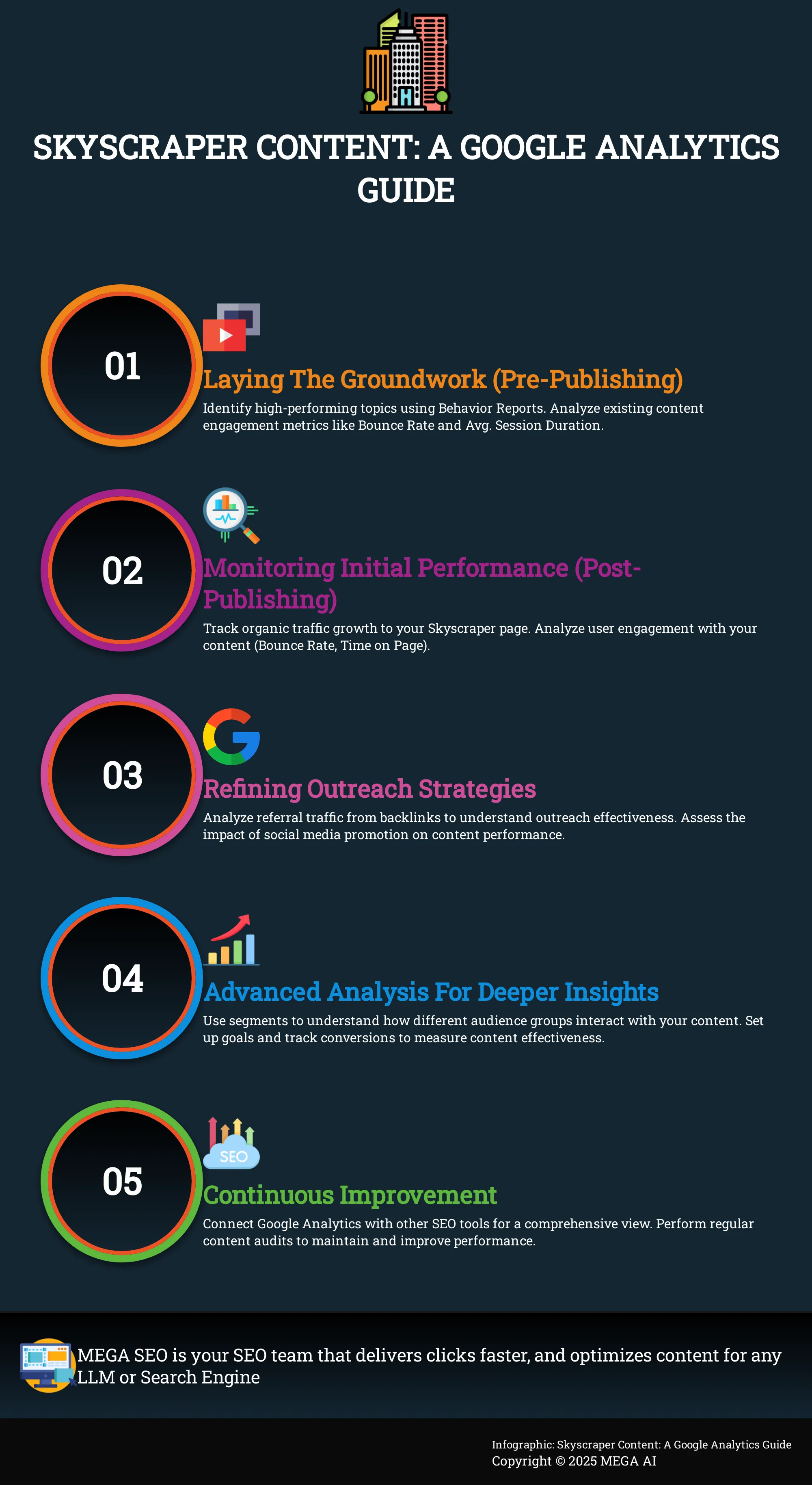
Use Behavior Reports to Spot Top-Performing Pages
Behavior reports in Google Analytics show you how users interact with the content on your website. When you're looking for Skyscraper opportunities, these reports are your starting point for finding pages that already attract and engage visitors. The Skyscraper Technique involves improving upon existing popular content, and to do this effectively, you first need to identify that high-performing content which already connects with your target audience.
Within Google Analytics, you can find these insights by going to the "Behavior" section, then "Site Content," and finally "All Pages." Here, you'll see metrics like Page Views, Unique Page Views, and Average Time on Page. Sort by these metrics to find your most popular articles or blog posts. These are strong candidates for Skyscraper content because they cover topics your audience is clearly interested in. This data helps you choose topics that have a built-in demand, giving your Skyscraper piece a head start.
Analyze Engagement Metrics to Improve Your Content
Once you've identified popular pages, the next step is to understand why they perform well and how you can make your Skyscraper version even more compelling. This is where analyzing engagement metrics comes in. Key performance indicators (KPIs) offer deep insights into how users interact with your content, allowing you to make informed decisions for improvement. By analyzing engagement metrics such as bounce rate, average session duration, and pages per session, you can refine your content to better meet audience needs.
Metrics like a low bounce rate suggest visitors find the content relevant, while a high average session duration indicates they are spending significant time consuming it. Pages per session can show if a piece of content encourages further exploration of your site. Tracking these Google Analytics KPIs helps you understand what aspects of existing content are successful and where your Skyscraper piece can offer superior value, perhaps by being more comprehensive, up-to-date, or better designed. This detailed analysis is crucial for crafting content that not only ranks but also genuinely satisfies user intent.
Use Google Analytics for Keyword Research
Once you've pinpointed some promising content areas using behavior reports, your next move is to explore the specific keywords that will help your Skyscraper content really shine. Google Analytics, particularly when connected with Google Search Console, is a fantastic resource for this. It helps you understand not just what people are searching for, but also how they're currently finding your content. This insight is key for sharpening your Skyscraper strategy, making sure you target terms that attract the right audience. For an even smoother process, platforms offering automated keyword research can be a great help. Let's look at how you can uncover these valuable keywords.
Get Keyword Insights with Search Console Integration
One of the most effective ways to access keyword data directly within Google Analytics is by linking it with Google Search Console. This integration is incredibly useful because it brings in actual search query information. This connection allows you to gain insights into the keywords that are driving traffic to your site. You'll be able to see the terms people typed into Google to land on your pages, along with data on impressions and click-through rates. This information helps you identify keywords that are already performing well, which you might want to expand on, and those that could use more focus or might be better suited for new Skyscraper content.
Find Keyword Gaps and New Opportunities
Beyond understanding what you currently rank for, Google Analytics can also help you discover what you might be missing. By carefully reviewing the performance of your existing content, you can start to identify keyword gaps. These are terms your competitors might be ranking for and attracting traffic with, but that you haven't effectively targeted yet. This analysis can reveal new opportunities for content creation using the Skyscraper Technique, allowing you to target high-potential keywords that can drive additional traffic. This is a fantastic find for your strategy because it directly shows you where you can create superior content around these valuable keywords, aiming to capture traffic you're currently not getting.
Measure and Optimize Your Skyscraper Content's Performance
Once your Skyscraper content is live, your work isn't quite done. Now it's time to see how it's performing and find ways to make it even better. Think of Google Analytics as your performance dashboard. It shows you what's working, what's not, and where you can fine-tune your efforts. By regularly checking in on your content's performance, you can ensure your hard work pays off and your Skyscraper content truly reaches new heights. This step is all about using data to refine your strategy and maximize your content's impact.
Monitoring your content helps you understand if you're reaching the right audience and if your message is resonating. For businesses, especially startups and small businesses looking to grow their online presence, this is invaluable. It’s not just about creating great content; it’s about ensuring that content achieves its goals, whether that's driving traffic, generating leads, or building brand authority. Let's look at some key areas within Google Analytics to focus on for your Skyscraper pieces.
Track Organic Traffic and Search Visibility
After publishing your amazing Skyscraper piece, you’ll want to know if people are finding it through search engines. This is where tracking organic traffic comes in. In Google Analytics, you can see exactly how many visitors are landing on your content from organic search results. Key performance indicators (KPIs) here, like the number of organic sessions or new users to your Skyscraper page, are crucial. These quantifiable measurements help you understand if your SEO efforts are hitting the mark. Keep an eye on trends over time; an upward curve in organic traffic to your Skyscraper page is a great sign that search engines are recognizing its value and ranking it well. This data allows you to make informed decisions for continuous improvement.
Analyze User Engagement and Conversion Rates
Beyond just getting eyes on your content, you need to know if it’s captivating your audience. Google Analytics offers a wealth of information on user engagement. Metrics like bounce rate (are people leaving immediately?), average time on page (are they actually reading?), and pages per session (are they exploring more of your site?) paint a picture of how users interact with your Skyscraper piece. Understanding these metrics provides valuable insights into your content's effectiveness and overall website performance. If your Skyscraper content has a specific goal, like signing up for a newsletter or requesting a demo, you can also track conversion rates to see if it’s prompting action. High engagement usually means your content is resonating well with your visitors.
Improve Your Outreach Strategies with Analytics Data
Once your Skyscraper content is live and you've started your outreach, Google Analytics becomes your best friend for understanding what's working and what's not. It’s not just about creating great content; it’s also about ensuring your efforts to promote it are effective. By diving into your analytics data, you can see exactly how people are finding your content and which outreach channels are delivering the best results. This information is invaluable for refining your approach, helping you focus your energy on strategies that genuinely expand your reach and build valuable connections. Think of it as a feedback loop: your outreach efforts drive data, and that data, in turn, helps you make smarter outreach decisions for future Skyscraper pieces. For instance, you can pinpoint which referring sites are sending engaged visitors or how much traction your social media shares are gaining. This data-driven approach ensures your hard work in content creation and promotion pays off, allowing you to continuously improve how you connect with your audience and build authority. MEGA AI's SEO services can help you lay the groundwork for content that's ready for effective outreach.
Monitor Referral Traffic and New Backlink Acquisition
A key goal of Skyscraper outreach is to earn backlinks from authoritative sites. To effectively measure the success of your skyscraper outreach, it's essential to monitor the referral traffic generated from the backlinks you acquire. In Google Analytics, you can find this information by going to the 'Acquisition' reports, then 'All Traffic,' and finally 'Referrals.' This section shows you which websites are sending visitors to your content. After you launch an outreach campaign, keep an eye out for new referring domains appearing on this list. This not only confirms that your outreach efforts are successful but also helps you assess the quality of traffic these new links are bringing. Are visitors from these sites spending a good amount of time on your page, or are they leaving quickly? This insight helps you understand which outreach targets are most valuable for future efforts.
Assess Social Media's Impact on Content Performance
Social media is often a significant component of any outreach strategy, but it's important to understand if your shares and promotional activities are truly making an impact. Utilizing Key Performance Indicators (KPIs) in Google Analytics can provide valuable insights into how your content is performing across various channels, including social media. As Datapad explains, KPIs in Google Analytics are quantifiable measurements that help you collect, analyze, and optimize user behavior on your website. You can check traffic from social channels under 'Acquisition' then 'Social,' looking at metrics like page views, average time on page, and bounce rate. If you're running specific social media campaigns, using UTM parameters will allow for more precise tracking. By analyzing these metrics, you can determine the effectiveness of your outreach strategies and make data-driven decisions to enhance your content's reach and engagement.
Go Further: Advanced Google Analytics Tips for Skyscraper Wins
Once you've got a handle on the basics of using Google Analytics with your Skyscraper content, you're ready to explore some more advanced features. These tips will help you gain even deeper insights into your audience and how your content performs, allowing you to fine-tune your strategy for even more significant results. Think of it as moving from a general overview to a highly detailed map of your content's journey and its impact on your audience.
By digging a bit deeper, you can uncover specific patterns and opportunities that might not be apparent at a surface level. This means you can make more informed decisions about how you create, optimize, and promote your Skyscraper pieces. For instance, understanding precisely which demographics engage most with your best content can really change how you approach your outreach. Similarly, clearly defining what a "win" looks like for each piece of content helps you measure success accurately and consistently. These advanced approaches are key to continuously improving your SEO results and ensuring your Skyscraper content truly stands out from the crowd.
Use Segments to Understand Specific Audience Groups
Google Analytics collects a wealth of audience data, including details like age, location, and interests. To make the most of this, you can create custom audience segments within the platform. This feature allows you to isolate and analyze specific subsets of your audience. For example, you could create a segment for users from a particular country, visitors who found your site via organic search, or those who viewed a specific Skyscraper article.
By creating segments, you can "understand how different groups behave and tailor campaigns accordingly." This means you can see if your Skyscraper content resonates more with younger audiences versus older ones, or if users from a specific region spend more time on your page. This information is invaluable for refining your content's tone, focus, and even the channels you use to promote it, ensuring it connects effectively with the right people.
Set Up Goals and Conversions for Your Content
To truly measure the success of your Skyscraper content, you need to define what actions you want visitors to take. This is where setting up goals in Google Analytics comes into play. As Metrics Watch points out, you should "set goals: Define actions you want visitors to take (purchases, form submissions, etc.). Google Analytics will track these as conversions, helping measure marketing campaign success." For your Skyscraper content, a conversion might be a newsletter signup, a download of a related guide, or even a click-through to a service page.
These defined goals become your key performance indicators (KPIs). As Quick Creator highlights, "Key performance indicators (KPIs) provide valuable insights into the performance of implemented strategies, allowing businesses to make data-driven decisions for continuous improvement." Tracking these conversions helps you understand not just how much traffic your content attracts, but how effectively it contributes to your broader business objectives. This data can then inform your content strategy, perhaps by using tools like MEGA AI's Maintenance Agent to further optimize content for higher conversion rates.
Connect Google Analytics with Other SEO Tools
While Google Analytics offers a wealth of information about your website's performance, it truly shines when its insights are combined with data from other specialized SEO tools. For a comprehensive strategy like the Skyscraper Technique, relying solely on Google Analytics means you might only be seeing part of the story. Think of Google Analytics as your expert on what’s happening on your website – user behavior, traffic sources, and content engagement. However, to understand the broader search landscape, your competitors' moves, and detailed technical SEO elements, you'll benefit from integrating other tools.
Platforms such as MEGA AI are designed to simplify this process by offering end-to-end SEO capabilities, effectively bringing diverse data points under one roof. Whether you use an all-in-one platform or a selection of specialized tools, the goal is to create a cohesive view. This synergy allows you to cross-reference information, confirm your findings, and uncover deeper insights that a single tool might not reveal. For instance, you can compare the keyword opportunities identified in Google Search Console with competitive keyword data from another SEO platform, or analyze backlink profiles alongside your referral traffic metrics in Google Analytics. This integrated approach empowers you to make more strategic decisions, refine your Skyscraper content with greater precision, and ultimately achieve more impactful results.
Combine Data Sources for a Fuller Picture
To truly grasp your Skyscraper content's performance and identify fresh opportunities, it’s beneficial to merge data from Google Analytics with insights from other SEO platforms. Google Analytics is excellent for detailing on-site user interactions, traffic origins, and conversion paths for your Skyscraper piece. Yet, other tools can offer a richer perspective on external factors. For example, many SEO platforms provide in-depth analysis of competitor backlink strategies, keyword rankings across the wider web, and content gap analyses that can inform your Skyscraper efforts.
"Leveraging SEO analytics platforms such as Google Analytics and SEMrush provides valuable insights into the performance of implemented strategies, allowing businesses to make data-driven decisions for continuous improvement." By integrating these varied data streams, you construct a more complete and actionable understanding. You might discover a competitor's Skyscraper content is capturing traffic from keywords you hadn't considered, or that they are successfully acquiring high-quality backlinks from sources you could also approach. This holistic view is vital for refining both your content and your outreach strategy.
Use Google Data Studio to Visualize Your Data
When you begin combining data from Google Analytics with other SEO tools, you'll quickly accumulate a significant amount of information. Making sense of it all efficiently can be a hurdle. This is where visualization tools become invaluable. Google Data Studio, now known as Looker Studio, is a powerful, free tool that helps you create clear, customizable dashboards and reports. It allows you to pull data from various sources, including Google Analytics, Google Sheets (where you might consolidate data from other SEO tools), and numerous third-party connectors.
"Google Data Studio allows you to create customizable dashboards and reports that can pull data from various sources, including Google Analytics. This helps in visualizing your KPIs and understanding the effectiveness of your SEO strategies." For your Skyscraper content, you could design a dashboard that displays organic traffic, key engagement metrics from Google Analytics, keyword rankings from Google Search Console, and even backlink acquisition progress from another tool, all in one accessible view. This makes monitoring performance and identifying areas for improvement much more straightforward than sifting through multiple spreadsheets.
Keep Improving Your Skyscraper Strategy
Creating and launching Skyscraper content is a significant achievement, but the journey doesn't end there. To truly maximize its impact and maintain its effectiveness over time, you need a plan for ongoing improvement and refinement. This involves regularly checking in on your content's performance and adapting your strategy based on what the data tells you.
Perform Regular Content Audits Using Analytics Data
Your Skyscraper content is live, but the work doesn't stop there. To ensure your hard-earned rankings and traffic continue to grow, performing regular content audits is key. Think of these audits as routine check-ups for your articles, helping you understand their ongoing performance. By diving into your analytics data, you can see exactly how users are interacting with your content. Key Performance Indicators (KPIs) like page views, bounce rate, and time on page, readily available in Google Analytics, offer valuable insights. This information allows you to make smart, data-driven decisions, ensuring your Skyscraper pieces remain effective and continue to deliver results long after publication.
Refine and Scale Your Skyscraper Technique Efforts
The Skyscraper Technique is powerful, but it's not a set-it-and-forget-it strategy. To truly succeed, you'll need to continuously refine your approach. Google increasingly values content that demonstrates genuine experience and expertise, so ensure your content consistently meets these high standards. As you build backlinks through your outreach efforts, make it a practice to use Google Analytics to track referral traffic from these new sources. This helps you see the direct impact of your outreach and understand which links are driving valuable visitors. Once you've honed your process and see positive results, you can then confidently think about scaling your efforts to create more high-performing Skyscraper content.
Common Mistakes to Sidestep with Google Analytics for the Skyscraper Technique
Pairing Google Analytics with your Skyscraper Technique efforts can significantly amplify your content's reach and impact. However, it's quite common to encounter a few bumps along the road if you're not mindful of certain pitfalls. Imagine investing all that time and creativity into building an impressive piece of skyscraper content—the digital equivalent of a stunning architectural feat. Now, picture not having the tools to see how people are interacting with it, which floors they visit most, or where they might be getting stuck. That's what happens when Google Analytics isn't used effectively.
Many businesses, particularly startups and small teams where everyone wears multiple hats, might go through the motions of setting up Google Analytics but then rarely examine the data it offers. An even more common scenario is not using Google Analytics at all. This essentially means you're operating in the dark. You've poured resources into crafting top-tier content, aiming to outshine competitors, but without robust analytics, you lack the critical feedback loop to understand its performance, identify areas for refinement, or truly measure its success. The Skyscraper Technique demands considerable effort in research, creation, and outreach; sidestepping these common analytics mistakes ensures that your hard work translates into tangible results. Let's explore some frequent missteps and how you can avoid them, ensuring your content strategy is built on a solid foundation of data.
Not Using or Analyzing Your Data
It sounds basic, but one of the most frequent missteps is simply not using Google Analytics consistently or not digging into the data it provides. You might have the tracking code perfectly installed, but if you're not regularly analyzing your data, you're missing out on a goldmine of information. This data tells you how users are interacting with your skyscraper content, which parts are resonating, and where they might be dropping off. Without this analysis, you can't make informed decisions to refine your content or your overall strategy. Make it a habit to schedule time to review your analytics; even a quick check-in can reveal valuable insights.
Ignoring Referral Traffic Insights
When you're executing the Skyscraper Technique, a significant part of its success hinges on building high-quality backlinks. These backlinks are intended to drive referral traffic to your site. A common oversight is not closely monitoring this referral traffic within Google Analytics. By tracking which sites are sending you visitors, you can understand which outreach efforts are yielding results and which relationships are most valuable. This information not only validates your backlink strategy but also highlights new opportunities for collaboration or content promotion. Consistently reviewing these referrals helps you refine future outreach by focusing on tactics and sources that genuinely work.
Overlooking Goal Tracking
What does success look like for your skyscraper content? Is it email sign-ups, demo requests, or a certain amount of time spent on the page? If you haven't set up goals in Google Analytics, it's incredibly difficult to measure the true impact of your content. Setting up goals allows you to quantify how well your skyscraper piece is achieving its objectives. Without clear goals, you're essentially guessing at its effectiveness. Take the time to define what you want your content to achieve and configure those goals in Google Analytics. This will give you clear metrics to prove your content's ROI.
Related Articles
- Harnessing the Power of Google Analytics for Enhanced SEO Strategies - MEGA SEO | Blog
- Crafting Compelling, Original Content for SEO Success - MEGA SEO | Blog
- Content Analytics Best Practices for 2025
- Improve Google Rankings Fast: Actionable SEO Guide (2023)
- Link Building Strategies: The Complete Guide
Frequently Asked Questions
How soon can I expect to see results in Google Analytics after publishing Skyscraper content? Seeing significant results in Google Analytics for your Skyscraper content takes a bit of patience. While you might see initial traffic data within a few days, the real impact, especially in terms of organic search improvements and backlink referrals, often builds over weeks or even a few months. Focus on consistent promotion and outreach, and give search engines time to discover and value your new, comprehensive piece.
My Skyscraper content isn't getting much traffic according to Google Analytics. What should I do? If your Skyscraper content isn't attracting the traffic you hoped for, start by revisiting your promotion and outreach strategy. Ensure you've actively shared it with relevant audiences and reached out to sites you identified as potential linkers. Also, double-check in Google Analytics if there are any technical issues hindering its visibility or if the keywords you targeted are perhaps more competitive than initially anticipated. Sometimes, a few targeted tweaks to your outreach or on-page optimization can make a difference.
Can Google Analytics tell me which specific backlinks to my Skyscraper content are most effective? Google Analytics, particularly through its referral traffic reports, can show you which websites are sending visitors to your Skyscraper content. While it won't directly score the "SEO value" of each backlink, you can infer effectiveness by looking at the volume and quality of traffic from these referring sites. For instance, if a backlink from a particular site sends a lot of engaged visitors who spend time on your page, that's a good indicator of a valuable link.
Based on Google Analytics, should I update an existing high-performing page or create a new Skyscraper piece on a similar topic? This is a great strategic question. If Google Analytics shows an existing page is already performing well, attracting good traffic, and has some authority, often the best approach is to update and expand that page to Skyscraper-level quality. This leverages its existing strengths. However, if the topic is distinct enough or if the existing page's structure isn't conducive to a major overhaul, creating a new, dedicated Skyscraper piece might be more effective. Analyze the engagement on the current page and the potential for significant improvement.
How often should I be checking Google Analytics for my Skyscraper content? For newly launched Skyscraper content, it's a good idea to check Google Analytics weekly for the first month or two to monitor initial traction, referral traffic from outreach, and user engagement. After that initial period, and once the content is more established, checking in monthly is usually sufficient to track long-term performance, identify any new trends, or spot opportunities for updates.