
When Google announces an algorithm update, it's a signal that the search engine is refining its understanding of quality and relevance. These updates are essential for Google to deliver the best possible search experience. For your website, the Google algorithm update impact can mean changes in visibility, but it also presents an opportunity. By understanding what Google is aiming for with these updates—typically, a better experience for users and higher quality content—you can fine-tune your own strategies. This piece will help you learn about these updates, assess their effect on your site, and discover how to optimize your content and technical SEO to align with Google's evolving standards.
Key Takeaways
- Prioritize High-Quality Content and User Experience: Google's updates consistently aim to reward sites that serve users best. Focus on creating genuinely helpful, trustworthy content (E-E-A-T principles are vital) and ensure your website is technically sound, fast, and easy for visitors to use.
- Monitor Your Site's Performance and Stay Updated on Changes: Algorithm shifts are a regular part of SEO. Use tools like Google Search Console to track your site's performance, especially after core updates, and follow reputable industry news to understand how these changes might impact your strategy.
- Analyze and Adjust Methodically if Rankings Are Affected: If you notice a drop in rankings after an update, conduct a thorough site audit. This helps you pinpoint specific areas for content or technical SEO improvements, allowing you to make data-driven adjustments rather than quick fixes.
What Exactly Are Google Algorithm Updates?
Think of Google's search algorithm as its complex system for sorting through billions of web pages to find the most relevant and helpful results for any given query. It's not a static rulebook; instead, it's constantly being refined. Google regularly makes changes to this system, and these are known as algorithm updates. Some of these are minor tweaks that happen almost constantly, often without much fanfare, aimed at incremental improvements. However, others are more significant, broad changes designed to noticeably improve how the entire search system assesses content. These major shifts, which can happen several times a year, are often called "core updates." Google usually announces these core updates on its Search Status Dashboard, giving website owners and SEO professionals a heads-up. The overarching purpose of all these updates, big or small, is to ensure that Google is consistently delivering the best possible search experience by surfacing high-quality, relevant, and trustworthy information. For businesses and marketers, understanding the nature and rhythm of these updates is fundamental to developing a resilient SEO strategy. This knowledge helps you adapt effectively and maintain, or even improve, your online visibility in a dynamic search landscape.
Why Google Updates Its Algorithm and What It Means for You
Google's primary goal with algorithm updates is to enhance the quality of its search results and improve the overall user experience. Over time, the focus has increasingly shifted towards rewarding websites that provide high-quality, genuinely helpful content. Conversely, these updates often aim to reduce the visibility of sites that use manipulative tactics to try and rank higher. This continuous evolution means Google is always working to present users with the most accurate and useful information.
For you, this means that staying on top of these changes is important. When Google refines its algorithm, it's essentially refining its understanding of what makes a webpage valuable to a user. This underscores the need to consistently create content that truly serves your audience and to follow best practices for website quality. The history of Google's algorithm changes shows a clear trend towards prioritizing user satisfaction.
Core Updates vs. Specific Changes: Understanding the Difference
It's useful to distinguish between "core updates" and more specific, targeted changes. Core updates are broad changes designed to improve how Google's systems assess content overall. These updates can have a noticeable impact on website rankings and traffic across many sites. The intention isn't to penalize specific pages, but rather to better reward pages that were previously under-rewarded or to adjust the ranking of pages that might not be as relevant or helpful as Google's systems previously thought.
The main goal is to ensure search results align closely with user search intent and highlight high-quality content. Smaller, more specific updates might target particular issues like spammy link-building tactics or specific technical SEO problems. While these can also affect rankings, their scope is usually narrower. Core updates are more about a fundamental reassessment of content quality and relevance across the web. Understanding this distinction helps you interpret any changes in your site's performance more accurately.
A Look at Major Google Algorithm Updates and Their Effects
Google is always working to make its search results better. This means its algorithm—the complex system it uses to rank websites—gets updated regularly. Understanding these updates can help you see why your site's performance might change and how to keep your SEO strategy effective.
Core Updates: The Big Picture of Search Quality Shifts
Several times a year, Google implements what it calls "core updates." You can think of these as significant, broad adjustments aimed at improving how its systems assess content across the board. The main goal, according to Google Search Central, is to ensure search results are as helpful and reliable as possible for users. These updates aren't designed to penalize specific websites.
Instead, they reflect refinements in how Google understands and ranks quality. If you notice a shift in your rankings after a core update, it doesn’t automatically mean your site has done something wrong. It might simply indicate that Google's criteria for relevance have evolved. The best approach is to consistently create people-first content and follow Google's guidelines for webmasters.
Key Named Updates: From Panda and Penguin to BERT and More
Beyond the regular core updates, Google has released several major named updates that have notably shaped SEO practices. For instance, the Panda update, which first appeared in 2011, focused on reducing the visibility of sites with low-quality or thin content. This made original, valuable content more critical. Then, in 2012, the Penguin update targeted manipulative link-building tactics, like buying links, and underscored the importance of earning natural backlinks.
More recently, the BERT update in 2019 significantly improved Google's ability to understand the nuances and context of search queries, much like a human would. This highlighted the need for content that thoroughly answers the intent behind a user's search. Ongoing updates continue to address issues such as spam, unhelpful AI-generated content, and the credibility of reviews, as detailed in comprehensive histories of algorithm changes.
How Google Updates Can Change Your Website's Performance
When Google tweaks its search algorithm, the effects can ripple across the internet, sometimes significantly altering how your website shows up in search results. It's not about penalizing sites; rather, Google is constantly refining how it understands and ranks content to provide users with the most relevant and helpful information. Understanding these shifts is key to maintaining and improving your site's visibility.
The Impact on Your Rankings, Traffic, and Overall Visibility
A Google core update can lead to noticeable shifts in your website's rankings and the amount of traffic it receives. It's important to remember these updates aren't designed as penalties. Instead, Google is reassessing content across the web based on its evolving quality standards. The best approach is to consistently follow Google's Webmaster Guidelines and focus on creating "people-first" content that genuinely serves your audience.
While many websites might not see dramatic changes from every update, a substantial drop in rankings—say, falling from position 4 to 29 for a key term—signals a need to assess your website's content more deeply. This involves looking at your pages through the lens of what Google now considers high-quality and relevant.
Spotting Changes in Search Results After an Update
If you notice a dip in your rankings after an update, don't immediately assume you've done something wrong. It could simply mean that Google's understanding of what makes content relevant for certain queries has evolved. To get a clear picture, it's helpful to use a rank tracker tool to compare your site's positions before and after the update rolled out.
Pay attention to patterns in how your site was affected. For instance, were specific types of pages, like blog posts or product pages, hit harder than others? This can offer clues about what Google is currently prioritizing. Perhaps the update favors longer, more comprehensive articles, or pages with richer visual content. Analyzing these changes can help you adapt your content strategy effectively.
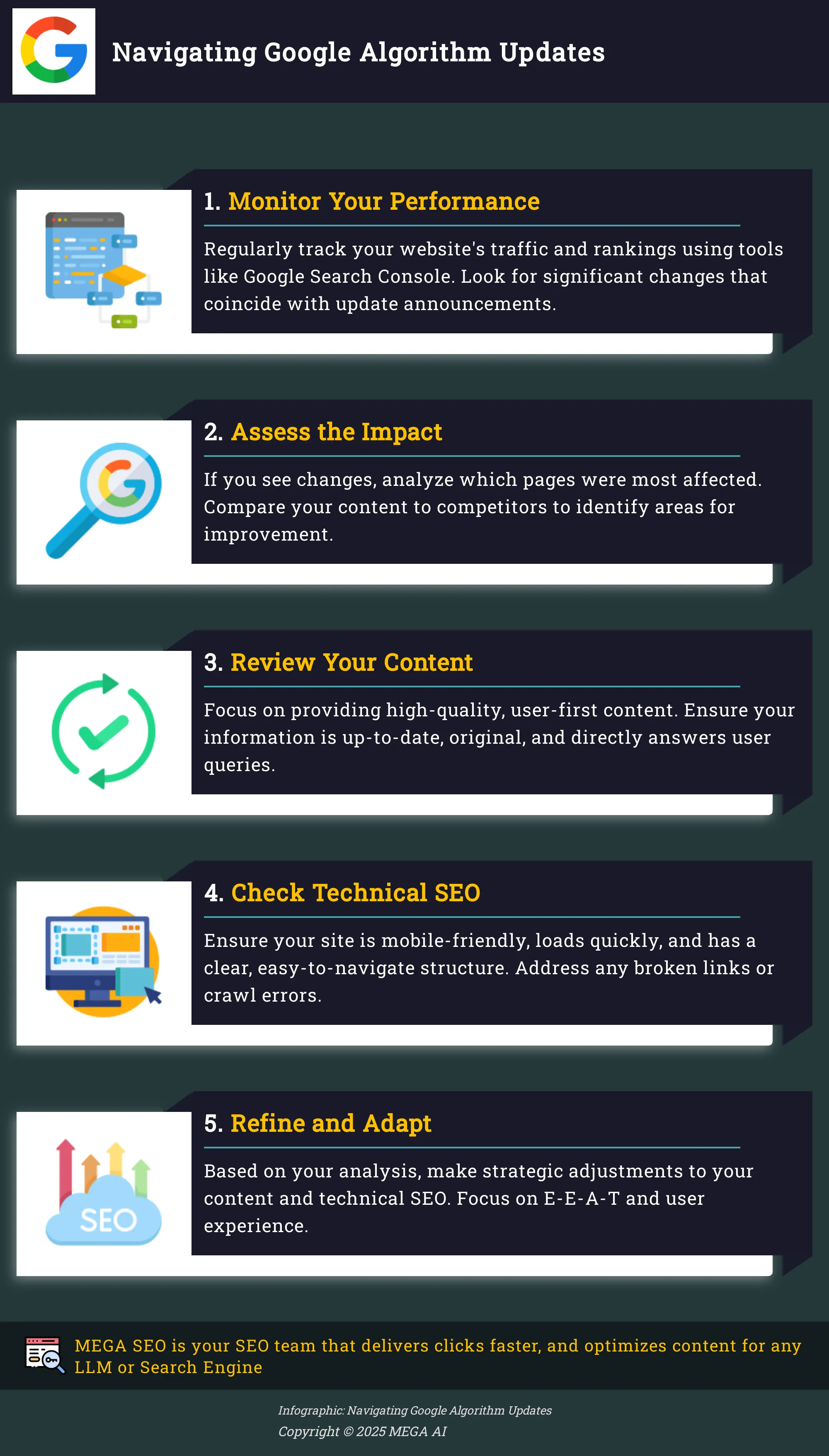
How to Tell if an Update Affected Your Site (And What to Do)
A Google algorithm update can feel like a sudden shift in the digital landscape. If you notice changes in your website's performance, it's natural to wonder if an update is the cause. Pinpointing the impact and knowing what steps to take next are key to maintaining your online presence. Let's look at how you can monitor your site and understand these changes.
Keeping Tabs on Your Rankings and Traffic Flow
When Google rolls out a core update, it's essentially fine-tuning its search engine to better serve users. These updates aim to improve the overall quality and relevance of search results. So, if you notice a shift in your website's rankings, it doesn't automatically mean you've done something wrong; it could just be that Google's idea of what's most relevant for a particular search query has changed.
Patience is key after an update. Google Search Central actually recommends waiting at least a week after a core update has finished rolling out before you dive into your traffic data. This pause allows the fluctuations to settle. When you do analyze, compare your traffic for a full week after the update concluded with a full week before it began. This approach gives you a more reliable snapshot of any sustained impact.
Useful Tools for Tracking and Making Sense of Update Impacts
To get a clearer picture of how an update might have affected your site, there are some excellent tools at your disposal. A great starting point is Google Search Console. This free tool from Google itself helps you monitor your website's performance in search results, showing you crucial data like impressions, clicks, and your site's average ranking position.
Beyond Search Console, using a dedicated rank tracker tool can be very insightful. These tools allow you to compare your keyword rankings from before an update to after it rolled out. A noticeable drop in rankings that lines up with the update's timing is a strong signal that the update had an effect. And remember, it's always a good practice to regularly audit your website's content and technical SEO, and to stay informed about Google's algorithm changes through trustworthy industry news sources.
Smart Ways to Adapt Your SEO to Algorithm Changes
When Google announces an algorithm update, it can feel like the ground is shifting beneath your feet. But here’s the good news: adapting your SEO strategy doesn’t have to be a frantic scramble. Think of these updates as Google’s way of refining its ability to connect users with the best possible information. So, if your core strategy already revolves around providing genuine value, you’re on the right track. These changes aren't meant to be punitive traps for well-meaning site owners; rather, they're course corrections to better serve searchers.
The key is to stay informed and be proactive rather than reactive. Instead of overhauling your entire approach with every minor tremor, focus on strengthening the foundational elements of good SEO. This means consistently creating content your audience loves, ensuring your website is technically sound, and building authority in a sustainable way. Many businesses find that leveraging tools for SEO automation can help them stay agile and implement necessary adjustments efficiently, especially when it comes to analyzing performance and optimizing existing assets after an update. By understanding the principles behind these changes, you can make smart, targeted adjustments that keep your site performing well. Remember, a solid SEO foundation built on user-centric principles is your best defense against algorithm volatility. It’s about playing the long game, not chasing short-term algorithm hacks.
Always Prioritize High-Quality, User-First Content
At the heart of every Google algorithm update is a drive to improve search quality and user experience. As Impression Digital notes, "The focus has shifted towards rewarding high-quality, helpful content and penalizing manipulative practices." This means your content strategy should always begin and end with your audience. Ask yourself: Is this content genuinely useful? Does it answer the questions my target users are asking? Is it original and engaging?
Creating truly valuable content is non-negotiable. Content Whale puts it simply: "Create high-quality content: Write useful, original content that answers people's questions." This might involve in-depth guides, insightful articles, or clear, concise answers to common queries. Platforms like MEGA AI can assist in this by helping you generate content that is not only keyword-optimized but also structured to meet user needs effectively. Remember, content that serves the user first is content that search engines are designed to favor.
Fine-Tune Your Technical SEO and Site Speed
While compelling content is king, its kingdom can crumble without a solid technical foundation. Your website's technical health plays a significant role in how search engines crawl, index, and rank your pages. After an update, it’s wise to review your site’s technical aspects. As Wincher advises, "Ensure your site loads quickly, works well on both computers and phones, and has no broken links or indexing problems." These elements directly impact user experience, which Google prioritizes.
Don't let technical glitches undermine your great content. Regularly check your site speed, ensure it's mobile-friendly, and fix any broken links or crawl errors. Google Search Central itself recommends focusing on user experience and not panicking over minor fluctuations. Tools that offer technical SEO improvements can be invaluable here, helping you identify and address issues that might otherwise go unnoticed, ensuring your site provides a smooth experience for both users and search engine crawlers.
How to Build a Strong and Natural Backlink Profile
Backlinks continue to be a crucial signal to search engines about your site's authority and relevance. However, the emphasis is firmly on natural and earned links. Manipulative link-building practices are a fast track to penalties, especially as updates get smarter at detecting them. Impression Digital highlights that "Many updates focused on combating spam, low-quality content...and manipulative link-building practices." This underscores the need for an ethical approach.
The best way to build a strong backlink profile is to create content so valuable that other websites genuinely want to link to it. As Content Whale suggests, "Get links naturally: Don't buy links; earn them by creating great content that other websites want to link to." This means focusing on producing original research, insightful articles, or useful resources that naturally attract attention. While MEGA AI can help you optimize content to be share-worthy, the core principle is earning links through merit, not manipulation.
Optimizing Your Content to Be More Algorithm-Proof
Creating content that stands strong through Google's algorithm updates isn't about chasing fleeting trends. It's about building a solid foundation of quality and relevance. When your content genuinely serves your audience and meets Google's quality standards, it's far more likely to maintain its performance, regardless of the latest algorithm tweak. Two key areas to focus on are demonstrating E-E-A-T and ensuring your content directly answers user queries. By concentrating on these aspects, you're not just optimizing for search engines; you're building a more valuable resource for your users, which is what Google ultimately aims to reward. This approach helps create a more stable and reliable online presence for your business.
Why E-E-A-T (Experience, Expertise, Authoritativeness, Trustworthiness) Matters More Than Ever
Google's updates have consistently underscored the importance of E-E-A-T, which stands for Experience, Expertise, Authoritativeness, and Trustworthiness. This framework helps Google assess the quality and reliability of content. Essentially, Google wants to connect users with information they can trust, created by people or organizations that genuinely know their subject. Google Search Central often highlights the need for content that is helpful and puts the user first, making E-E-A-T a cornerstone of a resilient content strategy.
To demonstrate E-E-A-T, focus on showcasing real-world experience in your content, clearly indicating the expertise behind your information, building your site's authority within your niche, and ensuring your content is accurate and your website is secure. This might involve featuring author bios that highlight relevant credentials, citing reputable sources, or gathering positive user reviews. It’s about proving your content is credible and valuable.
Make Sure Your Content Answers What People Are Searching For
Beyond credibility, your content must directly address what users are looking for. With advancements like the BERT update, Google has become increasingly adept at understanding the context and intent behind search queries. This means your content needs to do more than just touch on relevant keywords; it must provide comprehensive answers and solutions to the user's underlying needs. Whether someone is looking to learn, find, or buy, your content should clearly satisfy that intent.
Regularly audit your content to ensure it is helpful, relevant, original, and directly answers the questions your audience is asking. Understanding user intent often involves thorough keyword research and analyzing the types of content that already rank well for those queries. For businesses using platforms like MEGA AI, features such as the Maintenance Agent can help identify opportunities to enhance existing articles by adding new, relevant information, ensuring your content stays fresh and continues to meet user expectations effectively.
Technical SEO: What to Check After an Update Rolls Out
After a Google algorithm update, it's wise to check your website's technical health. This is like essential maintenance for your online presence. Google wants to connect users with sites that offer a great experience. If your site has technical problems, such as slow speed or poor mobile usability, an update could impact your visibility. Examining your technical SEO isn't just about fixing things; it's about making sure your site is strong, user-friendly, and meets search engine expectations. This approach helps your site perform well through algorithm changes more effectively. Here are key areas to focus on.
Is Your Site Mobile-Friendly? What About Core Web Vitals?
First things first, let's talk about how your site looks and performs on different devices, especially mobile phones. Google has been using mobile-first indexing for a while now, which means it primarily looks at your mobile site to decide how to rank your content. So, it's absolutely essential that your website is easy to view and use on a smartphone.
Beyond just looking good on mobile, your site needs to be fast. This is where Core Web Vitals come in. These are specific factors Google considers important for a user's overall experience, including loading speed, interactivity, and visual stability. A slow-loading site can frustrate visitors and negatively impact your rankings, especially after an update that might place more emphasis on user experience. Regularly checking these aspects ensures your site offers a pleasant experience for everyone, no matter how they access it.
Review Your Site's Structure, Links, and How Easy It Is to Use
Next up, take a close look at your website's overall organization and how easy it is for people to find what they need. A clear and logical site structure not only helps users but also makes it easier for Google to crawl and understand your content. Think about whether your navigation is intuitive and if your content is arranged in a way that makes sense.
Part of this review should also include checking for any broken links. These can create a frustrating experience for users and can also be a sign to search engines that your site isn't well-maintained. Finally, always put yourself in your users' shoes. Is your content genuinely helpful and does it answer their questions effectively? A site that’s easy to use and provides valuable information is more likely to perform well, especially when Google refines its algorithms to better reward user-friendly experiences.
Steps to Take if an Update Has Hurt Your Rankings
If you suspect a Google algorithm update has negatively impacted your website's rankings, the first thing to remember is not to panic. There are concrete steps you can take to understand what happened and work towards recovery. It begins with a careful analysis of your site and strategic adjustments based on what you find. Taking a methodical approach will help you identify the core issues and make informed decisions to improve your site's standing in search results.
First Step: Conduct a Comprehensive Site Audit
It can be unsettling to see your rankings dip after a Google update, but your initial step should be calm and methodical. Start by conducting a thorough audit of your website. Pay close attention to your content. Ask yourself: Is it genuinely helpful and relevant to your audience? Is it original, or does it simply echo what’s already available online? Ensure your information is up-to-date, well-structured, and directly answers the questions your users are asking. Simply repeating existing information won't provide the value Google looks for. Tools like MEGA AI's SEO platform can assist in analyzing your content and identifying areas for improvement, ensuring it meets these crucial quality standards.
Making Smart Changes Based on What the Data Tells You
Once your audit gives you a clearer picture, it's time to use data to guide your next moves. Google Search Console is an invaluable resource for this; it helps you track your website's performance in Google search results and can highlight specific issues. Pinpoint the pages that experienced the most significant ranking drops. Then, critically examine them. Are competing websites offering more comprehensive or better-presented information on those same topics?
Using a rank tracker tool can also be very helpful to compare your rankings before and after the update, which can confirm if the update was indeed the cause of the drop. Remember, any changes you implement should primarily benefit your users, not just aim to please search engine algorithms. Focusing on enhancing the user experience often aligns with what Google aims to reward.
Building an SEO Strategy That Can Weather Any Storm
Understanding how to build a resilient SEO strategy is crucial. Google's algorithm is constantly evolving, so your approach to SEO needs to be adaptable and informed.
How to Stay in the Know About SEO News and Google's Moves
Google is always tweaking its search algorithm – in fact, they make thousands of changes every year. While most of these are small adjustments, some, like major core updates, can take several weeks to fully implement and can have a noticeable impact. The best approach is to consistently create high-quality, original content that genuinely helps your audience. It's also wise to keep an eye on news about Google's algorithm updates from trustworthy sources. However, try not to panic or make sudden, drastic changes to your website right after an update is announced. It's often better to observe the effects first and gather information before taking action.
Why a Flexible, User-Focused SEO Plan is Key
The main goal behind Google's algorithm updates is to consistently refine search quality and enhance the user experience. The search engine aims to reward websites that provide genuinely helpful, high-quality information while discouraging manipulative tactics. Think of core updates as broad improvements to how Google assesses content overall, rather than penalties aimed at specific pages or sites. To maintain and improve your website's performance through these changes, your strategy should center on creating excellent content, ensuring a smooth user experience, and adhering to Google's guidelines. A flexible plan that puts your audience first is your best bet, and tools that help you adapt your content quickly after an update can also be incredibly valuable in this dynamic environment.
Related Articles
- How to Prepare for Google’s Latest Algorithm Updates
- Google Algorithm Updates: A 2024 SEO Guide
- SEO for Creators: Adapting to Google's Algorithm Changes
- Google Core Update Plan: Key Strategies for Success
- SEO Ranking Drop After Update? Here's Why & How to Fix It
Frequently Asked Questions
What's the main reason Google keeps changing its search algorithm? Google's main aim with these updates is to consistently improve the search results it provides. They are always working to better understand what makes a webpage truly helpful and relevant to what someone is looking for, and to reduce the visibility of content that isn't up to par or uses misleading tactics.
How can I tell if a recent Google update is why my website traffic changed? If you notice a shift in your website's traffic or search rankings, it's a good idea to check if Google announced a core update around that time. You can usually find this information on Google's Search Status Dashboard. Comparing your site's performance data from before and after the update period, using tools like Google Search Console, can help you see if there's a connection.
If an update seems to have hurt my site, what's the first thing I should do? The most constructive first step is to conduct a thorough review of your website, especially your content. Consider whether your pages offer genuinely useful, original information that truly serves your audience's needs. It's about assessing your site against Google's quality guidelines rather than making quick, reactive changes.
Are all Google updates major events that will shake up my rankings? Not every change Google makes will cause significant shifts. Google makes many small adjustments regularly. The ones that tend to have a broader impact are called "core updates," which are designed to improve how Google assesses content overall. Other updates might be more specific, targeting particular issues like spam.
What's the best long-term strategy to handle these ongoing Google updates? The most sustainable approach is to consistently focus on creating high-quality, user-first content that genuinely meets the needs of your audience. Alongside this, maintaining good technical SEO, ensuring your site is user-friendly, and building a natural backlink profile will help your website remain resilient through various algorithm changes.