
Have you noticed that the latest US new AI features from major tech companies launch in America months before arriving in Europe? You're not imagining it. This staggered rollout is a direct result of Europe's complex digital regulations. While these rules aim to protect consumers, they also create a cautious environment for tech companies. This guide explains the specific laws causing these delays, which tools you are missing out on, and how this AI gap affects your business. We will also explore how you can find globally compliant solutions to stay competitive right now.
Key Takeaways
- Europe's Strict Regulations Cause Delays: Comprehensive data privacy laws like GDPR require tech companies to adapt new AI features before launching in the EU, resulting in staggered rollouts compared to the US market.
- The AI Gap Creates a Competitive Disadvantage: When European businesses lack access to the latest AI marketing and productivity tools, their ability to innovate and keep pace with international competitors is limited.
- Seek Out Globally Compliant AI Solutions: Instead of waiting, businesses can find an edge by using specialized platforms built with global data privacy standards in mind, allowing them to implement powerful automation immediately.
What is Artificial Intelligence?
At its core, artificial intelligence is a field of computer science focused on creating smart machines. These machines are designed to perform tasks that typically require human intelligence, such as learning from experience, reasoning through problems, and understanding language. For a small business, this technology can analyze customer behavior, write compelling ad copy, or identify the most valuable keywords to target, all based on patterns it finds in data. It’s about using technology to handle complex, data-driven tasks efficiently, freeing you up to focus on other parts of your business.
From Concept to Cutting-Edge
The journey of AI from a theoretical concept to a practical business tool is all about learning. Modern AI systems are not programmed with rules for every possible situation. Instead, they learn by processing huge amounts of data and identifying patterns within it. For example, an AI system can analyze thousands of successful ad campaigns to understand what headlines, images, and calls to action resonate most with a specific audience. It then uses that knowledge to create new, high-performing ads. This ability to learn and adapt is what makes AI so powerful for marketing and sales, as it can continuously refine its approach based on real-world results.
Key Technologies Powering AI
Artificial intelligence isn't magic; it's powered by a combination of three essential components. The first is data—and lots of it. Data acts as the fuel, providing the raw information from which the AI learns. The second is algorithms, which are the complex instructions that guide the learning process, telling the AI how to interpret the data and find meaningful patterns. Finally, none of this would be possible without immense computing power. Strong processors and cloud infrastructure are the engines that run the algorithms and process the data at incredible speeds, allowing AI to deliver insights in minutes instead of months.
The Different Types of AI
It's helpful to know that the AI you interact with today is known as Artificial Narrow Intelligence (ANI). This type of AI is designed to perform a single task exceptionally well. The spam filter in your inbox, a GPS mapping the fastest route, and tools that automate SEO optimization are all examples of ANI. They are experts in their specific domain. The other types, Artificial General Intelligence (AGI)—a machine with human-level cognitive abilities—and Artificial Superintelligence (ASI)—an intellect far smarter than any human—remain theoretical concepts. For now, the AI available to your business is a safe, specialized tool built to solve specific problems and create new opportunities.
Why Does the US Get New AI Features First?
If you've ever noticed that the latest AI-powered tools from Google seem to launch in the United States months before they arrive in Europe, you're not imagining things. This staggered rollout isn't a coincidence; it's a direct result of Europe's complex and comprehensive digital regulations. While these rules aim to protect consumers, they also create a cautious environment for tech companies looking to introduce new products.
The main reason for the delay is what many tech leaders call regulatory uncertainty. A wave of new legislation, including the AI Act, the Digital Services Act (DSA), and the Digital Markets Act (DMA), requires companies to meet strict standards for data privacy, transparency, and fair competition. Before launching a new AI feature, Google must ensure it fully complies with these rules, which often requires significant adjustments to the product. This process takes time and careful planning, leading to delays for European users.
This isn't just a Google issue. Other major tech companies also slow their European rollouts for the same reasons. A clear example was when Google expanded its new AI Search feature to over 180 countries, while the European Union was notably left off the list. A company official confirmed that the flurry of EU tech rules can hold back the launch of innovative features. For small and local businesses, this means a longer wait for powerful tools that could help them grow and connect with customers more effectively.
Why European Regulations Slow Down New Tech
If you’ve ever wondered why an exciting new tech feature is available in the US but not in Europe, the answer often comes down to regulation. The European Union has a fundamentally different approach to data privacy and market competition than the United States. This approach is built on the idea that individuals should have strong control over their personal information and that large tech companies shouldn't have an unfair advantage.
While these principles are designed to protect consumers and foster a competitive market, they also create a complex environment for global tech companies like Google. Before launching a new AI product in Europe, companies must ensure it complies with a strict set of rules. This process involves legal reviews, technical adjustments, and sometimes even fundamental changes to how a product works. For businesses waiting to use these new tools, this means patience is key, as the path to a European launch is often much longer and more complicated than the one in the US.
What Is the GDPR?
The General Data Protection Regulation (GDPR) is the cornerstone of Europe's data privacy laws. At its heart, GDPR gives individuals significant rights over their personal data. This includes the right to know how their data is being collected, used, and shared, as well as the right to have it deleted. For companies, this means they need a clear legal basis for processing any personal information, and they must be transparent with users about it. When it comes to AI, which often relies on vast amounts of data to learn and function, GDPR compliance becomes a major hurdle that requires careful planning and engineering.
Why Moving Data Across Borders Is So Complex
One of the biggest complexities of GDPR involves transferring data outside of the EU. Many global tech companies, including Google, have data centers located in the United States. Processing the data of European citizens in these US-based centers is subject to strict legal requirements. Because of this regulatory uncertainty, companies often delay launching data-intensive AI features in Europe until they can ensure all cross-border data transfers are fully compliant. This is a primary reason why a feature might be available in the US long before it appears in the EU.
What Is the Digital Markets Act (DMA)?
The Digital Markets Act (DMA) is another key piece of EU legislation that impacts tech rollouts. The DMA targets large online platforms, known as "gatekeepers," to ensure they behave fairly and don't stifle competition. Under these rules, companies like Google may be required to make their services and data accessible to smaller rivals. This adds another layer of complexity to launching new AI products, as Google must not only ensure user privacy but also manage antitrust scrutiny and build systems that allow for fair competition, potentially slowing down internal development and deployment.
Which Google AI Features Are Missing in Europe?
If you've ever felt like you're missing out on the latest tech, you're not wrong. The gap between the AI tools available in the United States and Europe is real and growing. It’s not just about small updates or beta tests; entire feature sets and AI models that are changing the game for US businesses are simply not available across the Atlantic. This disparity affects everything from how you search for information to the tools you can use for marketing and content creation.
For small businesses in Europe, this means operating with a different set of tools than your US counterparts. While they are leveraging AI to personalize customer interactions, generate content, and analyze data, you might be stuck waiting. This delay impacts core Google products that businesses rely on daily, including Chrome, Google Search, and Google Photos. Understanding which specific features are missing is the first step to finding a way to work around these limitations and keep your business competitive on a global scale.
Why You Have Limited Access to Gemini AI
One of the most significant missing pieces is the full integration of Gemini, Google's most advanced AI model. While you might be able to access some versions of Gemini through a web interface, its deeper integrations are often missing in Europe. For example, the powerful Gemini features built directly into the Chrome browser have not been consistently available in Europe since their launch. This means users miss out on AI-powered writing assistance, browsing summaries, and other productivity tools that are becoming standard in the US. The absence of these native integrations creates a less efficient workflow for businesses that depend on these tools for daily operations.
Missing Out on Personal AI Tools
Another key area where Europe lags is in personal AI assistants. Google has rolled out features in the US that allow its AI to tap into your personal data across your Google account—like past chats, emails, and documents—to provide highly customized and context-aware help. This "personal intelligence" can draft an email referencing a past conversation or summarize a document from your Drive. Due to Europe's stricter data privacy regulations, these deeply integrated personal AI tools are not available. This leaves European businesses without access to a powerful layer of AI-driven productivity that can streamline administrative tasks and improve efficiency.
No AI Upgrades for Search and Photos
The feature gap also extends to Google's core products: Search and Photos. The new AI Overviews in Google Search, which provide AI-generated summaries at the top of results, have been put on hold in most EU countries due to regulatory concerns. This directly affects how customers find your business. Additionally, advanced AI photo editing features, like the ability to create or edit images of people within the Gemini app or Google Photos, are often exclusive to the US. For small businesses that rely on creating visual content for marketing, this limitation means missing out on tools that could save significant time and resources.
Why Regulations Are Slowing Down AI Development
While regulations are designed to protect consumers, they often create a complex web of rules that tech companies must untangle before launching new products. This is especially true for artificial intelligence, which relies heavily on data to learn and function. For a global company like Google, rolling out a single AI feature requires adapting to different legal landscapes in every region. The result is often a staggered launch, where some markets get access to new technology months or even years after others. This isn't about choosing favorites; it's a practical response to the time and resources required to ensure every new feature meets strict local laws.
The European Union, in particular, has established some of the world's most comprehensive tech regulations. This proactive approach to digital governance means companies must invest significant effort into compliance, which can delay the introduction of cutting-edge tools. For businesses waiting to use these new AI features, understanding this dynamic is key to setting realistic expectations and planning a path forward. It highlights the trade-off between rapid innovation and thoughtful, protective oversight.
The Impact of Strict Data Processing Rules
The European Union's regulatory framework, which includes the AI Act, Digital Services Act (DSA), and Digital Markets Act (DMA), imposes rigorous standards on how companies can process user data. Since AI models are trained on massive datasets, these rules directly impact their development and deployment. Google has noted that these regulations can "hold back the launch of innovative features," as ensuring compliance is a complex, time-consuming process. Essentially, if an AI tool needs data to work, and the rules for using that data are strict, the tool's release will inevitably be slower.
Why User Consent Is a Major Hurdle
A cornerstone of EU regulation is the emphasis on explicit user consent for data collection and use. Before new regulatory measures take effect, companies like Google must make critical adjustments to its data sharing protocols to ensure users have clear control over their information. This requires building systems that not only ask for permission but also manage those preferences across different services. For AI, this means that if a user opts out, the data available to personalize their experience is limited, which can affect the performance and availability of certain features.
Addressing AI Risks and Biases
Beyond data privacy, another major reason for the delay is the need to address the inherent risks of AI, like algorithmic bias. AI models learn from vast datasets, and if that data contains historical or societal biases, the AI will learn and perpetuate them. For example, an AI tool trained on biased data might generate content that favors one demographic over another. European regulators are keenly aware of these dangers. Before launching a new AI product, companies must demonstrate that they have taken steps to mitigate these risks, which often requires fundamental changes to how the AI system works. This process of auditing for bias and ensuring fairness adds another significant layer of complexity and time to any European product launch.
The Cost of Adapting Tech for European Compliance
Meeting regulatory requirements isn't just a matter of paperwork; it often demands significant technical changes. Companies must adapt their products to comply with local laws, which can involve re-engineering core functionalities. The ongoing antitrust scrutiny Google faces in Europe adds another layer of pressure, forcing a cautious approach to product development. Every hour engineers spend modifying existing technology for compliance is an hour they aren't spending on creating new tools. This diversion of resources is a major factor in why innovation can appear to move at a slower pace in heavily regulated markets.
Why the US Is the Go-To Market for New AI
When a new AI feature is announced, it’s often available in the United States long before it reaches other parts of the world. This isn't an accident; it's a strategic decision rooted in market dynamics, legal landscapes, and product development cycles. For tech giants like Google, the US often serves as the primary launchpad for innovation. Understanding why this happens can help you anticipate trends and adapt your own business strategy. The core reasons boil down to the market's size, its regulatory clarity, and its role as an ideal testing environment. This approach allows companies to refine their products on a massive scale before tackling the complexities of a global release.
Access to a Large, Unified Customer Base
The United States offers a massive, relatively uniform market of over 330 million people who mostly speak the same language and share a common cultural context. This homogeneity simplifies everything from marketing campaigns to user interface design. A single product launch can reach a vast audience without needing significant localization. In contrast, Europe is a collection of distinct countries, each with its own language and consumer habits. While new technologies are a significant driver of economic growth in Europe, launching a new feature there requires a much heavier lift. It involves multiple translations and culturally adapted marketing, making the unified American market a more efficient starting point for gathering data and iterating quickly.
Dominance in the Global AI Market
The US market is more than just a convenient testing ground; it's the epicenter of the global AI industry. A handful of major American tech companies have established a clear lead, shaping the direction of AI development worldwide. For instance, NVIDIA, known for the powerful processors that fuel AI, is currently the largest AI company by market value. This concentration of resources allows US firms to innovate at a breakneck pace. Meanwhile, Europe's cautious approach, marked by what some analysts call regulatory uncertainty, can slow the deployment of foreign tech and the growth of homegrown alternatives. For your business, this means you're often left waiting for the same advanced tools that your American competitors are already using to get ahead.
Simpler Regulations Lead to Faster Launches
The regulatory environment in the US, while complex, is often seen as more stable for tech innovation than Europe's. The European Union has introduced a wave of comprehensive tech regulations, including the AI Act and the Digital Markets Act (DMA). While designed to protect consumers, this "flurry of EU tech rules" can create regulatory uncertainty that makes companies hesitant to launch new AI products. They need to ensure full compliance with strict data privacy and operational guidelines before release. This legal diligence takes time and resources, often leading to significant delays for European users waiting for features like Google's AI Overviews. The clearer, single legal framework in the US allows for a much faster path from development to launch.
A National Strategy to Lead in AI
While the US has historically taken a more hands-off approach to tech regulation, that's beginning to shift. The government is now developing a national strategy to guide AI development, focusing on a balance between rapid innovation and public safety. This approach is different from the EU's, which relies on creating rigid, pre-emptive laws. Instead, the US is fostering collaboration between the government and the tech industry. This strategy is designed to help the country maintain its competitive edge in AI while addressing the potential risks of powerful new models. It creates a distinct path forward that prioritizes partnership over strict, top-down regulation.
Voluntary Safety and Testing Agreements
A key part of this new strategy is the use of voluntary safety and testing agreements with major tech companies. Before releasing new AI models to the public, companies like Google, Microsoft, and xAI will submit them for safety testing. This initiative marks a significant change in how the US government is handling AI. Instead of a hands-off approach, the government will now safety test new models to ensure they meet certain standards before they are widely deployed. This collaborative method aims to encourage innovation while prioritizing security, creating a framework for responsible development without the heavy regulations seen in Europe. It allows for flexibility and speed, which is often what's needed in a fast-moving field like AI.
How Companies Use the US as a Test Market
Tech companies often use the US market as a real-world laboratory to test and refine new products. With its large and diverse user base, the US provides the perfect environment to identify bugs, gather feedback, and measure a feature's impact before a global rollout. This strategy minimizes risk. By working out the kinks in a single, large market, companies can ensure the product is stable, useful, and ready for a broader audience. As a result, major tech companies are often delaying the release of new AI services in Europe. They prefer to perfect their offerings in the US first, rather than simultaneously navigating technical issues and the complex regulatory landscape of the EU.
What Does It Take to Launch AI Globally?
Launching a sophisticated AI tool across different continents isn't as simple as flipping a switch. Beyond the legal frameworks, there are significant technical challenges that can slow down a global rollout. Companies like Google have to do more than just make their technology available; they have to ensure it works effectively and reliably for millions of new users with different languages, cultural contexts, and technical environments. This process involves three major hurdles: building the physical infrastructure, moving beyond simple translation to true language understanding, and adapting the AI's behavior to fit local cultures.
For small businesses waiting for these new tools, understanding these challenges helps explain the delays. It also highlights the importance of using platforms that are built to handle this complexity from the ground up. When your marketing depends on reaching specific local audiences, you need technology that offers a consistent experience no matter where you operate. An effective SEO strategy, for example, depends on tools that understand these nuances from the start, rather than waiting for a slow, piecemeal rollout of features. The technical debt of a global launch is massive, and it directly impacts how quickly businesses can access the latest innovations.
Building a Global AI Infrastructure
New AI features, especially those integrated into search, require enormous computing power. This means more than just software; it requires a physical network of data centers capable of handling billions of queries. According to a senior executive at Google, the rollout of AI Overviews in most EU countries is on hold partly due to this regulatory uncertainty. Companies are hesitant to make massive investments in building or scaling data centers in a region where the rules for using them might change. This creates a classic chicken-and-egg problem: the infrastructure won't be built without clear rules, and the features can't be launched without the infrastructure.
Why AI Localization Goes Beyond Translation
For an AI to be truly useful, it needs to do more than just translate text from one language to another. It has to understand nuance, slang, cultural references, and the intent behind a user's query. This is a much deeper level of linguistic capability. Polling shows that only about half of adults in the EU were even aware that Google Search already uses AI features, suggesting that the technology hasn't felt transformative for many. A simple word-for-word translation doesn't capture how people actually communicate, which can make an AI tool feel clunky or unhelpful, slowing its adoption and delaying a wider release.
How AI Models Adapt to Cultural Nuances
Cultural context is everything in communication, and the same is true for AI. A feature that works perfectly in the United States might fail completely in Europe because user expectations and behaviors are different. Tech companies are often delaying the release of new AI products in Europe because adapting them is a complex process made even more difficult by unclear regulations. For example, an AI's recommendations for a holiday celebration or a local business search need to be culturally relevant to be useful. This level of fine-tuning requires significant time and data, and companies are often unwilling to commit those resources until the legal landscape is more stable.
How Does This AI Gap Affect European Businesses?
When major tech companies delay new features in Europe, it’s not just a headline—it's a real business challenge. For small and local businesses, this AI gap creates practical hurdles that can impact everything from daily operations to long-term growth. Without access to the same advanced tools as competitors in other markets, European companies can find themselves at a distinct disadvantage, struggling to keep pace in an increasingly digital world. This delay affects your ability to innovate, market effectively, and ultimately, grow your business.
Falling Behind the Competition
The primary risk for any business is losing its competitive edge. As tech companies put new AI features on hold in the EU due to strict rules, businesses in other regions gain early access to powerful new capabilities. While a competitor in the US might be using a new AI-powered search feature to attract more customers, you’re left waiting for the technology to become available. This creates an uneven playing field where European businesses have to work harder just to keep up, let alone get ahead. The delay in product innovation means your international competitors are learning and adapting to new technologies faster than you can.
Missing Out on Key Marketing Tools
For small businesses, every tool that saves time or money is crucial. The current regulatory uncertainty means that many new AI-powered marketing and productivity tools from major platforms are not being released in Europe. This isn't just about missing out on the latest trends; it's about lacking access to solutions that could streamline your advertising, improve customer engagement, and provide deeper insights into your market. When you're running a small team with a limited budget, not having these efficiency-driving tools can directly impact your bottom line and your ability to compete with larger, better-resourced companies.
Limited Access to Broader AI Applications
The issue extends beyond just Google's ecosystem. The current regulatory climate means many new AI-powered marketing and productivity tools from various platforms are not being released in Europe. For small businesses, every tool that saves time or money is crucial. When major tech companies delay new features, it's a real business challenge that affects your ability to innovate and market effectively. Without access to the same advanced tools for content generation, SEO automation, and ad optimization as competitors in other markets, European companies can find themselves at a distinct disadvantage, struggling to keep pace in an increasingly digital world.
Slower Growth and Innovation
Innovation is fueled by access to new technology. When European businesses can't use the latest AI features, their ability to experiment and find new growth strategies is limited. For example, Google is fundamentally changing its search engine in other parts of the world, which is altering how users look for products and services. European companies are excluded from this shift, unable to adapt their SEO and content strategies for these new search behaviors. This lag slows down the natural cycle of learning, adapting, and innovating, which can stifle long-term growth and make it harder to capture new market opportunities.
What Can Google Do to Bridge the AI Gap?
The gap between AI feature availability in the US and Europe isn't permanent. Closing it requires a strategic shift from tech companies like Google, moving from a reactive stance to a more proactive one. Instead of treating European regulations as hurdles to clear after a product is already built, a more integrated approach can smooth the path for global launches. This involves embedding compliance into the development process, designing products with specific markets in mind, and fostering a collaborative relationship with regulators. By focusing on these areas, Google can not only speed up its rollouts but also build stronger trust with its European users and businesses. This approach ensures that innovation moves forward in a way that respects local laws and consumer expectations, creating a more stable and predictable environment for everyone. Let's look at a few key strategies that could help bridge this divide.
Build Compliance in From the Start
Instead of developing a product and then trying to make it fit European rules, a better approach is to build with compliance in mind from the start. This "privacy by design" philosophy means integrating data protection principles directly into the engineering and design process. When privacy is a core feature rather than an afterthought, it’s much easier to meet regulatory standards like GDPR. We’ve seen other tech giants face similar challenges; Meta, for example, also encountered regulatory disputes that delayed its AI assistant launch in Europe. By learning from these patterns, companies can anticipate regulatory needs and build solutions that are ready for a global audience from day one, preventing lengthy delays.
Create AI Products for the European Market
A one-size-fits-all approach to product development often falls short in a world with diverse legal landscapes. The European market has unique regulations and consumer expectations that differ from those in the US. Rather than launching a single global product and making minor adjustments later, companies can create versions tailored specifically for Europe. Google has already started to tweak search results in response to complaints, but a more fundamental strategy would be to design features with European data laws in mind from the beginning. This ensures products are not only compliant but also better suited to the local market, leading to a smoother launch and a better user experience.
Collaborate with European Regulators
Viewing regulation as a collaborative process rather than an adversarial one can lead to better outcomes. By engaging with European regulators early and often, tech companies can gain clarity on compliance requirements and contribute to the conversation around how to regulate new technologies like AI. This open dialogue helps create a predictable environment where innovation can thrive within clear legal boundaries. Google has already shown a willingness to engage, outlining proposals in response to the European Commission. Continuing and expanding this collaborative effort can help demystify compliance and pave the way for faster, more successful product launches across the continent.
How Your Business Can Thrive Despite AI Limitations
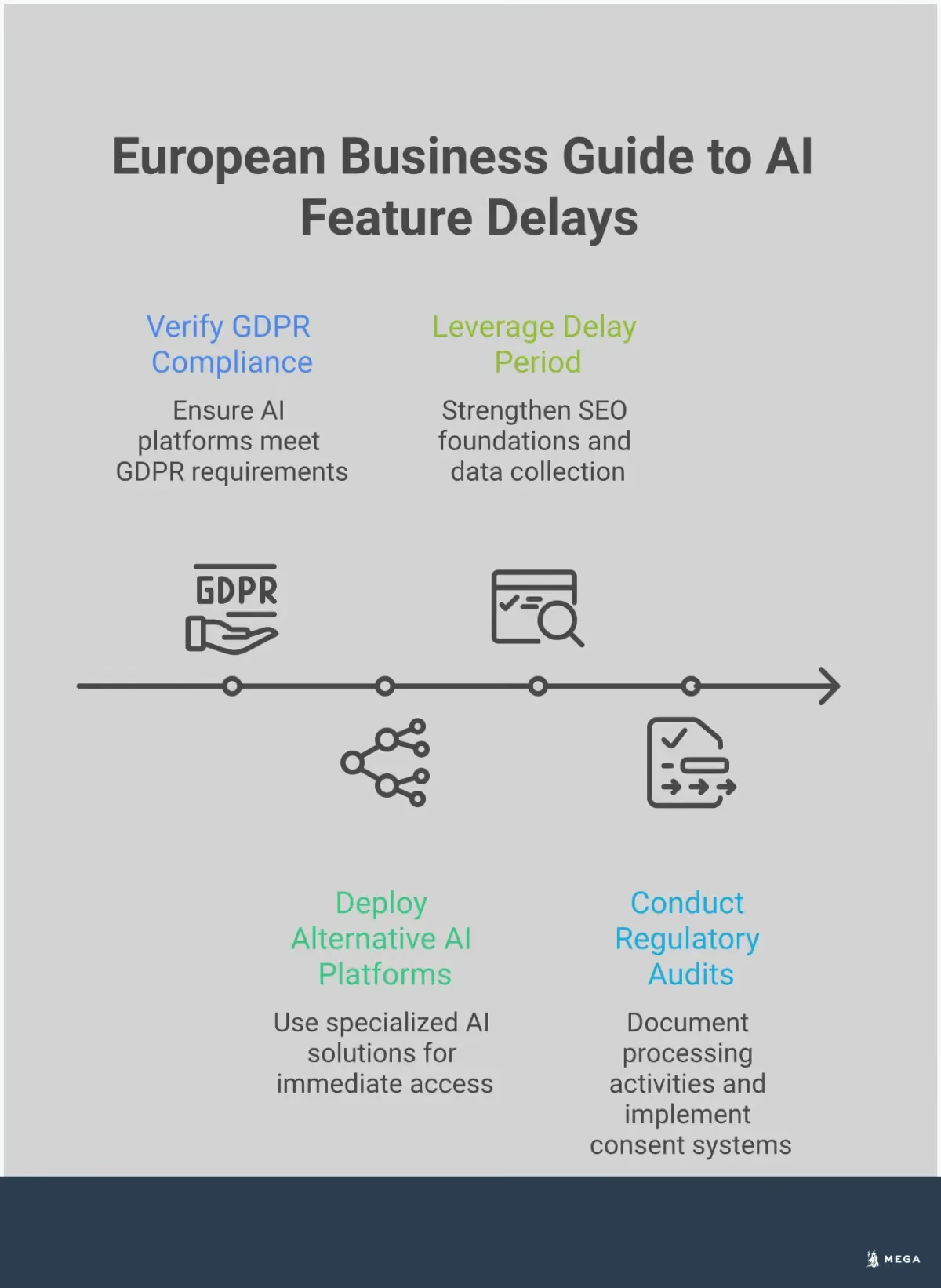
Waiting for the latest AI features to arrive can feel like a major setback, especially when you see competitors in other markets getting a head start. But these delays don't have to put you at a disadvantage. Instead, you can use this time to build a more resilient and strategic marketing foundation with tools that are available and built for your needs right now. By focusing on what you can control, you can find powerful ways to grow your business and stay competitive.
Find Alternative AI Tools
While major tech companies often make the biggest headlines, they aren't the only players in the game. A vibrant ecosystem of specialized AI tools exists, many of which are designed to be more agile and globally accessible from day one. Because large corporations often slow their deployment of new technology due to regulatory uncertainty, smaller, more focused platforms can offer a significant advantage. These alternatives often provide sophisticated capabilities for specific business needs, like marketing automation or content creation, without the long wait times associated with enterprise-level rollouts. Exploring these options can give your business access to powerful AI that your competitors might be overlooking.
Choose Compliance-Ready Solutions
In a landscape shaped by regulations like GDPR, data privacy is not just a legal requirement; it's a matter of customer trust. The same regulatory concerns that delay feature rollouts from big tech companies highlight the importance of choosing partners who build for compliance from the ground up. When evaluating AI tools, prioritize solutions that are transparent about their data handling practices and adhere to frameworks like the EU-U.S. Data Privacy Framework. This proactive approach not only protects your business and your customers but also ensures the tools you rely on won't be suddenly restricted or pulled from the market due to non-compliance.
How MEGA AI Helps You Stay Ahead
While others wait, you can act. MEGA AI gives your business an immediate competitive edge by providing powerful, autonomous agents for your marketing efforts. Our platform was designed to help small businesses execute at an enterprise level, regardless of location. Our SEO agent, Lindsay, handles everything from keyword research and content creation to technical fixes and link building. Meanwhile, our Paid Ads agent, Erle, launches, manages, and optimizes your campaigns across major platforms. Because MEGA AI is built to be compliant and integrates with over 50 tools you already use, you can automate your growth strategy today and get ahead of the curve.
What's Next for AI in Europe?
The future of AI in Europe is being shaped by a strong commitment to user privacy and ethical guidelines. This careful approach means new technologies, especially from major US companies, often arrive later than they do elsewhere. For European businesses, this can feel like being stuck in a waiting room while competitors get access to the latest tools. The complex web of regulations, including the AI Act and the Digital Services Act (DSA), creates what some tech leaders call "regulatory uncertainty," leading them to delay new product launches.
This gap, however, creates an opportunity for businesses that choose their partners wisely. Instead of waiting for large platforms to adapt, you can work with solutions designed to thrive in a regulated environment. The key is to find tools that are not only innovative but also built with compliance at their core. This ensures you can leverage the power of AI without running into regulatory hurdles down the road. For small businesses, this proactive approach is essential for maintaining a competitive edge.
This is where a platform like MEGA AI provides a clear advantage. While some companies pause their rollouts, our autonomous agents are ready to help you grow. We built our platform with global compliance in mind, adhering to frameworks like the EU-U.S. Data Privacy Framework to ensure your data is handled responsibly. Our AI agents, Lindsay for SEO and Erle for Paid Ads, offer access to sophisticated marketing automation that you can implement today. You don’t have to wait to optimize your online presence; you can start building a scalable growth channel right now. By choosing a compliance-ready partner, you can turn a regional challenge into a strategic advantage.