There's a common misconception that the path to lead generation starts with a popular website. While a high-traffic site is a great asset, it’s not a prerequisite for a full sales pipeline. If you’ve built a great product or service but are struggling to get it in front of the right people, this guide offers a different path forward. We will cover nine proven strategies for generating leads that work independently of your website's current traffic levels. These methods focus on direct engagement, targeted paid advertising, and strategic collaborations that allow you to connect with your ideal customers and build meaningful business relationships from scratch.
Key Takeaways
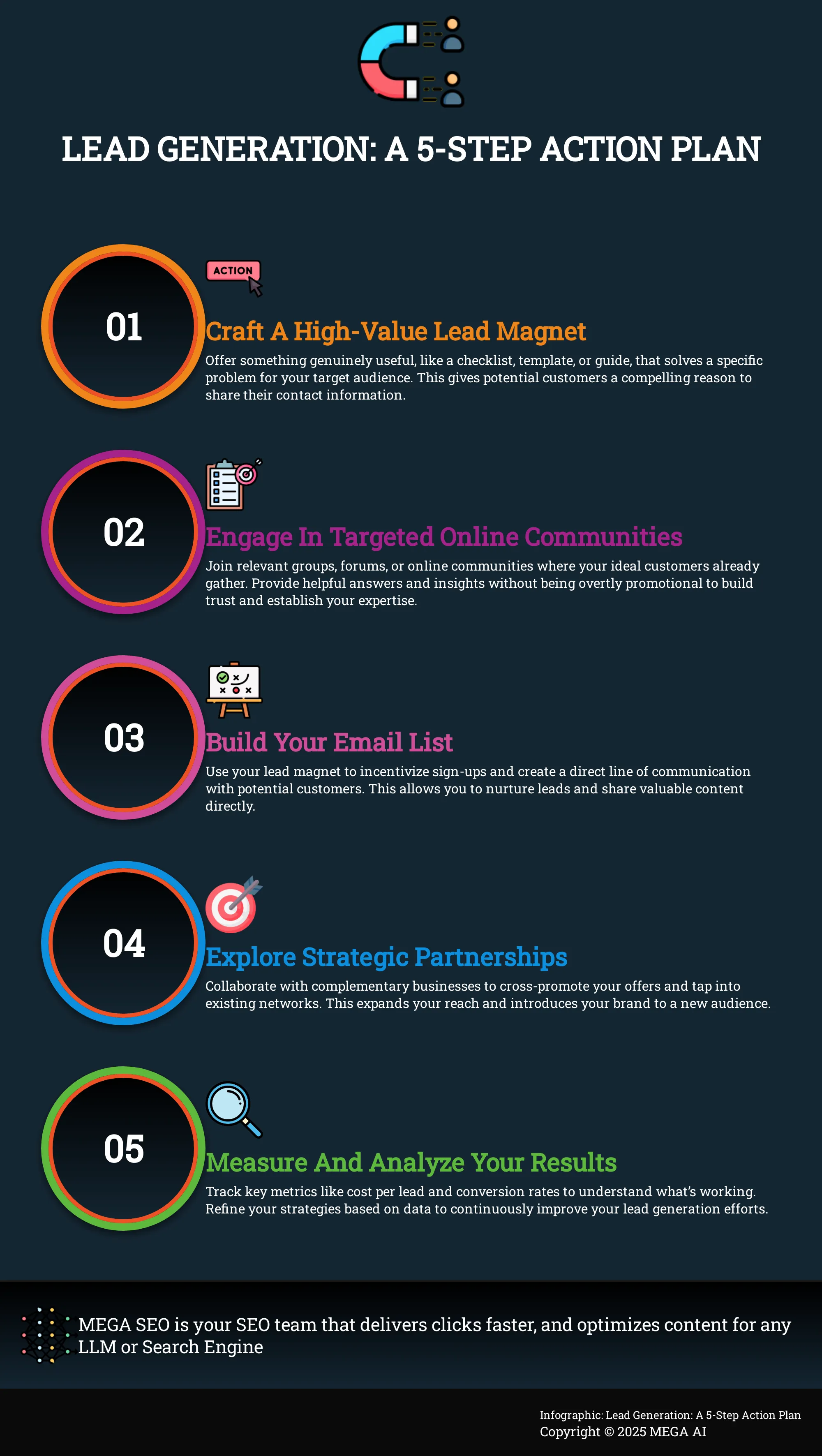
- Offer a clear value exchange: Your lead generation starts with a high-quality resource. Create a checklist, template, or webinar that solves a specific problem for your audience, giving them a compelling reason to share their contact information.
- Engage where your audience gathers: Don't wait for website traffic to find you. Actively participate in relevant online communities, social media platforms, and industry forums to build trust and guide interested prospects back to your business.
- Nurture leads and measure what matters: Capturing a lead is the first step. Use targeted email marketing to build relationships and track key metrics like conversion rates and cost per lead to continuously refine your strategy.
What is a Lead Magnet? (And How It Generates Leads)
A lead magnet is a foundational tool for any business looking to grow its audience. In simple terms, "a lead magnet is a valuable piece of content or offer that you provide to your subscribers in exchange for their contact information, such as their email address." It’s a straightforward value exchange: you offer something useful for free, and your potential customer provides their email, giving you a direct line of communication. This simple transaction is powerful because it shifts a person from being a passive browser to an active lead who has shown interest in what you do.
The process turns an anonymous visitor into a tangible contact you can nurture. Instead of hoping people remember to come back to your site, you can reach out to them directly. This is especially critical when you’re just starting and don’t have consistent website traffic. A well-crafted lead magnet acts as your digital handshake, initiating a relationship built on value. From here, you can use email marketing to build trust, share more helpful content, and eventually introduce your products or services, like the end-to-end automation offered by MEGA AI. It’s the first, most important step in creating a predictable system for generating new business.
Choose an Effective Lead Magnet Type
The most effective lead magnets are practical and solve a specific problem for your audience. As one source puts it, "The best lead magnets are those that offer real value to your audience. Examples include eBooks, checklists, webinars, templates, and free trials." The key is to provide something that delivers a quick win. For a marketing agency, this could be an SEO audit checklist. For a startup founder, it might be a pitch deck template.
Think about what your ideal customer struggles with and create a resource that makes their life easier. Other popular formats include resource guides, case studies, and exclusive video training. The format you choose should align with the solution you’re providing. A checklist is perfect for outlining a process, while an ebook is better for a deep dive into a complex topic. The goal is to create something so useful that your audience feels they’ve gotten a great deal just by sharing their email.
Create a Compelling Offer
For a lead magnet to work, the offer must be genuinely compelling. It can’t be a generic piece of content you threw together in five minutes. To "create content of value, you must have something truly helpful to communicate that's unique or fresh." Your lead magnet should feel like a premium resource that could easily be a paid product. This means focusing on specificity and quality. Instead of "A Guide to SEO," offer "A 5-Step Checklist to Find 50+ Low-Competition Keywords in Under an Hour."
To make your offer stand out, dig into your audience's biggest pain points. What is one problem you can help them solve right now? Build your lead magnet around that solution. You can use tools to generate proprietary research or unique data that forms the basis of your content. For example, an automated SEO tool can uncover keyword gaps that you can package into a custom report for your audience.
Promote Your Lead Magnet Without Traffic
You don’t need a popular blog to get your lead magnet in front of the right people. The strategy is to take your offer to the places where your target audience already gathers online. Think about relevant LinkedIn groups, Slack communities, subreddits, or industry forums. You can share your resource as a helpful solution to a question someone has asked or as a general contribution to the community. Building relationships with other businesses can also open doors for cross-promotion.
As you promote your offer, it’s important to track what works. "Your lead magnet may attract leads, but what you do after really matters." If you spend an hour engaging in a community and get 10 new leads, you can measure the return on your time. This helps you understand which channels are most effective. A low cost per lead, whether measured in time or money, indicates a high return on investment and confirms your lead magnet is resonating with your audience.
Create Content That Attracts and Retains Visitors
While you might not have a ton of website traffic yet, the content you create is your primary tool for attracting the right visitors. It’s time to shift the focus from vanity metrics like page views to the metrics that matter: qualified leads. High-quality, targeted content acts as a powerful filter, drawing in prospects who are a perfect fit for your product or service while gently guiding others away. This is how you build a pipeline of potential customers who are already warmed up to your brand before they even speak to a salesperson.
Think of your content as the foundation of your lead generation engine. It builds authority and establishes trust, which is critical for convincing someone to hand over their contact information. Every blog post, case study, or guide you publish should serve a purpose in this journey. It should address a specific pain point or answer a pressing question for your ideal customer. This approach turns your website from a simple brochure into a valuable resource that people will return to. For startups and small businesses, creating this content consistently can feel daunting, but it's a non-negotiable for sustainable growth. Leveraging tools like MEGA AI's SEO platform can help you identify high-intent keywords and generate content frameworks, making the entire process more manageable.
Define Your Target Audience
Creating content without knowing who you're talking to is a waste of time and resources. To make your efforts count, you need to go beyond basic demographics. Develop a detailed customer persona that captures your ideal client’s goals, challenges, and motivations. What keeps them up at night? What solutions are they searching for? Answering these questions helps you create content that resonates on a deeper level. When a visitor feels like you truly understand their problems, they are far more likely to trust you and see you as a credible authority. This foundational step ensures every piece of content you create is aimed directly at the people you want to attract as leads. You can use a customer persona template to get started.
Develop a Content Strategy
Once you know your audience, you need a plan to reach them. A content strategy is your roadmap, outlining the topics you’ll cover and the formats you’ll use. Start by identifying a few core content pillars—broad themes that directly relate to your audience's biggest challenges and your product's solutions. From there, you can brainstorm specific article ideas. For example, a pillar on "small business marketing" could lead to articles on "local SEO tips" or "social media for beginners." This strategic approach ensures your content is cohesive and consistently provides value. Using a tool for automated keyword research can help you find the exact phrases your audience is using, giving your strategy a data-driven foundation.
Write Valuable and Engaging Content
Your content must be more than just well-written; it needs to be genuinely helpful. The goal is to provide so much value that visitors feel compelled to learn more about your business. Offer a fresh perspective, share proprietary research, or create a detailed guide that solves a common problem. Make your content easy to consume by using clear headings, short paragraphs, and plenty of visuals like images or charts. While AI tools like MEGA AI's content generator can help you produce drafts quickly, the key is to infuse them with your unique expertise and brand voice. This combination of efficiency and authenticity is what turns a simple article into a powerful lead-generation asset.
Build and Nurture an Email List
Even if your website traffic is just a trickle, an email list is your direct line to potential customers. It’s an asset you own, independent of search engine algorithms or social media platform changes. By focusing on building a quality list and nurturing it with valuable content, you can create a reliable source of leads and sales. Email marketing allows you to connect directly with prospects, build relationships, and guide them toward becoming customers. Unlike paid ads or social media, where you're essentially renting an audience, your email list is a channel you control completely. This direct line of communication is powerful for sharing your brand's story, demonstrating your expertise, and ultimately driving conversions without a huge marketing budget. For startups and small businesses, this is a game-changer. It means you can create a predictable pipeline of leads that isn't dependent on constantly finding new traffic sources. The process is straightforward: you attract subscribers with a compelling offer, organize them for targeted communication, and then provide consistent value that builds trust and positions your business as the go-to solution.
Follow Best Practices for List Building
The foundation of a strong email list is how you build it. Forget buying lists; focus on earning subscribers who genuinely want to hear from you. The most effective way to do this is with a lead magnet. Using lead magnets and incentives is a proven tactic where you provide a valuable piece of content or an offer in exchange for an email address. Think checklists, templates, exclusive guides, or a discount on a first purchase. The key is to offer something that directly solves a problem for your target audience, making the exchange feel worthwhile and setting a positive tone for your future communications.
Segment Your Email List for Better Targeting
Once people subscribe, avoid sending everyone the same generic message. This is where segmentation comes in. Segmenting your list means grouping subscribers based on shared characteristics, such as how they signed up, what content they've engaged with, or their purchase history. This allows you to send highly relevant and personalized messages. By crafting personalized sequences and setting behavior-based triggers, you can send the right message to the right person at the right time. This targeted approach makes your emails feel more like a one-on-one conversation and less like a mass broadcast, which is crucial for building trust and keeping your audience engaged.
Nurture Leads with Email Marketing
With a segmented list, you can begin nurturing your leads. The goal is to build a relationship, not just push for a sale in every email. Share valuable content that helps your audience, offer behind-the-scenes glimpses into your business, and tell stories. One powerful strategy is using interactive emails that feel like a conversation rather than a sales pitch. For example, you could create a quiz or a diagnostic tool that helps subscribers identify a need your product solves. By consistently providing value, you establish your brand as a trusted authority, making it much easier to convert leads into loyal customers when the time is right.
Optimize Your Website for SEO and Conversions
Your website is your digital home base. Even if you aren't getting much traffic yet, it’s essential to have it structured for success. When a potential lead does land on your site, you want to make their experience seamless and guide them toward a specific action. Optimizing your site for both search engines and user conversions ensures that every visitor counts and sets a strong foundation for when your traffic begins to grow. This process involves paying attention to the technical details search engines love and the user-focused design that encourages people to stay and convert.
Cover On-Page SEO Essentials
To attract organic traffic, every page on your website needs to be optimized for search engines. This starts with understanding the search intent behind your target keywords and structuring your content to meet that need. On-page SEO is more than just placing keywords; it’s about creating genuinely valuable content that answers your audience's questions thoroughly. Make sure your titles, headers, and meta descriptions are clear and compelling. Tools that automate SEO optimization can handle the technical aspects, allowing you to focus on creating high-quality content that resonates with your ideal customer and signals relevance to search engines.
Design Effective Landing Pages
Your content should do more than just inform visitors; it needs to guide them toward taking action. An effective landing page is designed with a single, clear purpose, whether that’s collecting an email for a lead magnet or encouraging a demo request. Your landing pages should be visually clean, easy to read, and provide a frictionless user experience. Remove any distracting navigation or links that could pull a visitor away from the main goal. The design and copy should work together to clearly communicate the value of your offer and make it incredibly simple for the user to say yes.
Implement Clear Calls to Action (CTAs)
A common oversight in content creation is the absence of a clear call to action. A CTA is a prompt that tells the user what to do next. By strategically placing CTAs within your blog posts, on your landing pages, and across your website, you guide your audience toward your desired outcome. Whether it's "Download Your Free Guide" or "Book a Demo," your CTA should be direct and action-oriented. Pairing valuable content with a relevant and compelling CTA is one of the most straightforward ways to turn passive readers into active leads for your business.
Use Social Media and Networking to Generate Leads
Even if your website isn't getting much traffic yet, you can still generate high-quality leads by being active where your potential customers spend their time. Social media and online networking are powerful channels for building relationships and guiding people toward your business. The key is to be strategic. Instead of just broadcasting your message, focus on engaging in genuine conversations and providing value. This approach builds trust, which is the foundation of any good customer relationship. People buy from businesses they know and trust, and these platforms are the perfect place to start building that connection before they ever visit your website.
While organic social media is a great starting point, you can also use paid advertising to get in front of a highly targeted audience quickly. Utilizing platforms like Facebook ads and LinkedIn ads can significantly enhance your lead generation efforts. These platforms have powerful targeting capabilities, allowing you to reach users based on their interests, job titles, and online behavior. With a tool like MEGA AI, you can manage your Paid Ads campaigns across multiple platforms, creating hundreds of ad variations to see what works best without spending hours on manual setup. This combination of organic engagement and targeted advertising allows you to build a steady stream of leads while your long-term SEO efforts take root.
Choose the Right Social Media Platforms
You don’t need to be active on every social media platform. In fact, spreading yourself too thin is a common mistake. Instead, focus your energy on the one or two platforms where your target audience is most active. If you sell B2B services, your audience is likely spending their time on LinkedIn. If you have a visual, consumer-focused product, Instagram or Pinterest might be a better fit. Do some research to understand the demographics and user behavior on each platform. This focused approach ensures your efforts are more effective and your message reaches the right people, making your social media strategy much more manageable.
Create Engaging Social Media Content
Your social media content should do more than just attract followers; it should be designed to capture leads. The goal of your content should extend beyond just attracting readers; it should also focus on collecting leads and driving sales. Share snippets of your blog posts that link back to your site, create polls to understand your audience’s pain points, and ask open-ended questions to spark conversations in the comments. You can also share valuable resources, like a free checklist or template, in exchange for an email address. This turns passive scrollers into active leads you can nurture over time. Using a tool to help generate content can also streamline this process, giving you more material to share.
Leverage Online Communities and Industry Events
Go where your audience already gathers. Joining relevant Facebook Groups, LinkedIn Groups, Slack channels, or subreddits can be an incredibly effective way to connect with potential customers. The rule here is to give more than you take. Participate in discussions, answer questions, and offer your expertise freely without a sales pitch. Engaging with online communities and participating in industry events can provide valuable networking opportunities. Over time, you’ll build a reputation as a helpful expert, and people will naturally become curious about your business. This method builds authentic relationships and generates warm leads from people who already trust you.
Implement Referral and Partnership Programs
You don’t always need to find new audiences; sometimes, the best leads come from the networks you and your peers have already built. By turning your happy customers into advocates and collaborating with like-minded businesses, you can create powerful lead-generation channels that don’t depend on website traffic. This approach uses trust and existing relationships to attract highly qualified prospects.
Set Up a Referral Program
A referral program encourages your existing customers to recommend your business to their network in exchange for an incentive. Think of it as formalized word-of-mouth marketing. The key is to make it simple for customers to share and valuable enough for them to act. Your reward could be a discount, a service credit, or early access to new features. This strategy works because a recommendation from a trusted source is one of the most powerful forms of marketing. The incentive in your referral program gives people a compelling reason to take action and share your brand with others.
Build Mutually Beneficial Partnerships
Partnering with non-competing businesses that serve a similar audience can open up a new stream of qualified leads for both of you. Before reaching out, it’s critical to understand your target audience deeply, as this ensures you find partners with genuine alignment. Collaborations can include co-hosting a webinar, creating a joint research report, or offering a bundled service. The goal is to create something uniquely valuable that neither of you could offer alone. By combining your expertise and reach, you provide fresh insights and solutions that attract the right kind of attention and generate leads for everyone involved.
Use Paid Advertising for Immediate Results
While building organic traffic is a fantastic long-term strategy, it takes time. When you need to generate leads now, paid advertising is your most direct route. It allows you to place your brand directly in front of a targeted audience, bypassing the wait for search engine rankings to climb. Think of it as a way to jumpstart your lead generation engine while your other organic efforts gain momentum. The key is to approach it strategically, ensuring your budget is spent effectively to attract the right kind of attention. Managing campaigns across different platforms can become complex, but with the right approach and tools, you can achieve immediate visibility and start filling your sales pipeline.
Choose the Right Paid Advertising Channels
Your first step is to decide where to spend your ad budget. You need to be where your potential customers are. Platforms like Google Ads are powerful for capturing people actively searching for solutions like yours. Meanwhile, Meta (Facebook and Instagram) allows for highly specific targeting based on demographics and interests, making it great for reaching consumer audiences. For B2B companies, LinkedIn ads can connect you directly with professionals in specific industries or roles. Don't feel pressured to be on every platform. Instead, research your audience to understand their online habits and focus your efforts on one or two channels to start.
Create Effective Ad Campaigns
A successful ad campaign goes beyond a clever headline. It needs a compelling offer, often in the form of a lead magnet. This is a valuable resource—like a checklist, ebook, or webinar recording—that you give away in exchange for an email address. This simple trade provides immediate value to your audience and gives you a direct line of communication. Once you have their contact information, you can use email marketing to nurture the relationship. You can also create hundreds of ad variations to see what resonates best, a process that is much simpler with a tool that can automate paid ads and remix your content.
Host Webinars and Workshops to Generate Leads
Hosting a live event like a webinar or an online workshop is a fantastic way to connect directly with your audience and generate high-quality leads. Instead of waiting for people to find you, you create an appointment—a specific time and place where you can share your expertise. This format works well because it’s a clear value exchange. You offer valuable, in-depth information that solves a real problem for your audience, and in return, they provide their contact information by registering for the event. This direct interaction allows you to build rapport in a way that static content can't.
This strategy positions you as an authority in your field. When you teach people something useful, they begin to trust you and see your business as a credible resource. It’s a direct line to building relationships with potential customers who are actively interested in what you have to offer. Even if you’re starting with a small audience, a well-executed webinar can provide the foundation for a strong lead list that you can nurture over time. The key is to focus on a topic that your ideal customer truly cares about and to deliver on your promise of providing real value. By creating this dedicated space for learning, you attract individuals who are genuinely seeking solutions, making them much more qualified leads than passive website visitors.
Plan and Promote Your Event
Your first step is to choose a topic that addresses a specific pain point for your target audience. Think about the biggest challenges startups or small businesses face with SEO or paid ads. Once you have your topic, create a simple landing page for registration. This page should clearly state what attendees will learn and why it’s worth their time.
Since you aren't relying on website traffic, your promotion will be proactive. Share the event in relevant LinkedIn or Facebook groups, post about it on your social media channels, and consider reaching out to complementary businesses for a partnership. By building solid content and promoting it, you also begin to build an email list, which becomes a powerful asset for all future marketing.
Deliver Value and Capture Leads
The success of your webinar hinges on the quality of your content. Your primary goal should be to teach, not just to sell. The best lead magnets are those that offer real value to your audience, so pack your presentation with actionable tips, insightful data, or a live demonstration of a useful process. This builds trust and shows attendees that you are an expert.
While you teach, make sure your call to action is clear. You can offer attendees an exclusive discount, a free resource, or an invitation to book a demo to learn more about your services. After the event, follow up with everyone who registered by sending them a recording and a summary of the key takeaways. This reinforces the value you provided and keeps the conversation going.
Offer Free Trials or Consultations
One of the most direct ways to generate leads is to let potential customers experience your value firsthand. Offering a free trial or consultation removes the risk for the buyer and gives you a chance to prove your product or service works. This strategy is especially effective for software and service-based businesses because it shifts the conversation from telling prospects what you can do to showing them.
When someone signs up for a trial or books a consultation, they are more than just a name on a list; they are an engaged lead who has raised their hand and expressed interest. This gives you a direct line of communication to understand their specific challenges and demonstrate how you can solve them. For a platform like MEGA AI, offering a free demo is a perfect example. It allows users to see the automated SEO and paid ads features in action, making the benefits tangible and the decision to purchase much easier. This approach builds trust and provides a clear path from initial interest to conversion, all without needing a massive amount of website traffic to get started. It's a powerful way to qualify leads, as those who invest time in a trial are often more serious about finding a solution.
Structure Your Free Offer
A successful free offer provides genuine value and solves a specific problem for your audience. Think of it as a sample of your best work, designed to leave prospects wanting more. The most effective lead magnets are practical tools like checklists, templates, or a limited-time trial of your software. For example, a digital marketing agency could offer a free 15-minute strategy session, while a SaaS company might provide trial access to a core feature.
The goal is to make your offer irresistible by addressing a clear pain point. Instead of a generic "free trial," frame it around a result. For instance, "Get a Free SEO Health Check" is more compelling than "Try Our SEO Tool." This structure not only attracts higher-quality leads but also sets the stage for you to demonstrate the full power of your paid offerings.
Follow Up to Convert Trials into Customers
Getting a prospect to sign up for your free offer is just the beginning. The real work lies in the follow-up. A structured nurturing sequence is essential to guide trial users toward becoming paying customers. This is where you can use email automation to your advantage, sending targeted messages based on how users interact with your trial or content.
Your follow-up process should be helpful, not pushy. Share tips on how to get the most out of the trial, send case studies of successful customers, and highlight key features they might have missed. By crafting personalized sequences, you can improve how you nurture leads and show them you understand their needs. The objective is to stay top-of-mind and build a relationship, making the transition to a paid plan a natural next step.
Measure and Analyze Your Lead Generation Efforts
Generating leads is only half the battle. To build a sustainable growth engine for your business, you need to know what’s working and what isn’t. Measuring your efforts allows you to stop guessing and start making data-driven decisions that save you time and money. By analyzing your performance, you can double down on successful tactics, cut strategies that don’t deliver, and continuously refine your approach for better results. This process turns your lead generation activities from a series of one-off campaigns into a predictable system for attracting new customers. It’s about working smarter, not just harder, to achieve your business goals and get the most out of every dollar you spend.
Track Key Lead Generation Metrics
To measure success, you first need to define what it looks like. Tracking a few key metrics will give you a clear picture of your performance. Start with the total number of leads generated from each channel or campaign. Next, look at your conversion rate—the percentage of people who took the desired action, like downloading your lead magnet. Finally, calculate your cost per lead (CPL) to understand the financial efficiency of your efforts. These numbers help you assess the value of your offers and identify which marketing channels provide the best return on your investment.
Use Analytics Tools Effectively
Analytics tools are essential for gathering the data you need to evaluate your campaigns. For example, if you spend $200 on an ad campaign and get 40 leads, your cost per lead is $5. A low CPL indicates a strong return on investment (ROI), which is a critical metric to monitor. Platforms like Google Analytics can track website behavior, while more specialized tools can offer deeper insights. For instance, MEGA AI’s Paid Ads service automates budget allocation based on campaign performance, ensuring your ad spend is always directed toward the highest-converting channels and creatives without manual oversight.
Create a Strategy for Continuous Improvement
Data is only useful if you act on it. After launching a campaign, use the insights you’ve gathered to refine your approach. If a lead magnet has a low conversion rate, test a new headline or offer. If one social media platform drives more leads than another, allocate more resources there. This cycle of testing and adjusting is the foundation of a successful growth strategy. Tools that automate this process can be a game-changer. MEGA AI’s SEO platform embodies this principle by automatically updating existing content to improve its rank and click-through rate, creating a system of continuous optimization.
Related Articles
- Top 10 Digital Marketing Tools for Lead Generation
- SEO for Lead Generation: Strategies That Actually Convert
- SEO Pay Per Lead: Drive Qualified Leads in 2024
- 4 Proven Ways to Boost Website Traffic Without SEO Today!
- Increase Website Traffic: The Ultimate Guide (2023)
Frequently Asked Questions
Where should I start if I have zero website traffic? Start by creating one high-value lead magnet that solves a specific problem for your ideal customer. Then, instead of waiting for people to find it, take it directly to them. Share it in relevant online communities, social media groups, or forums where your audience already spends their time. This proactive approach builds your email list, which becomes your first reliable source of leads.
How do I know if my lead magnet is compelling enough? A great lead magnet feels like a resource you could have charged money for. It should be highly specific and offer a quick, tangible win for your audience. If you're unsure, ask yourself if it solves a pressing problem or makes a difficult task significantly easier. The best test is to see if people are willing to exchange their email for it; a low conversion rate might mean the offer isn't quite hitting the mark.
Should I focus on organic strategies or paid ads first? This depends on your immediate goals and budget. Organic strategies like content creation and networking build a sustainable, long-term foundation of trust and authority. Paid advertising offers immediate results and can be a great way to test offers and generate leads quickly. A balanced approach often works best, using paid ads to jumpstart lead flow while you build your organic engine in the background.
How can I promote my business without feeling 'salesy'? The key is to lead with value, not with a sales pitch. Focus on teaching and helping your audience. When you participate in online communities or create content, your goal should be to solve problems and answer questions. By establishing yourself as a helpful expert, you build trust. People will naturally become interested in your business, and the transition to a sales conversation will feel much more authentic.
What's the most important metric to track when I'm just starting? When you're beginning, focus on your cost per lead (CPL). This metric tells you exactly how much you're spending to acquire each new contact, whether you're investing time or money. Tracking your CPL helps you understand which channels and offers are most efficient. It provides a clear, data-backed way to decide where to put your limited resources for the best return.