
Building meaningful connections with your audience is key to sustainable growth, but as your business expands, manually managing every interaction becomes a significant challenge. You want to ensure every potential customer feels valued and receives timely, relevant information. Marketing automation software makes this scalable, and the accessibility of marketing automation platforms free options means even businesses on a tight budget can implement sophisticated nurturing strategies. These tools help you guide leads through your sales funnel effectively. In this piece, we'll explore several free platforms that empower you to automate your outreach, personalize communication, and ultimately, turn more prospects into loyal customers, all without initial financial commitment.
Key Takeaways
- Start Efficiently at No Cost: Use free marketing automation platforms to manage essential marketing activities like email outreach and lead organization, establishing effective workflows without initial spending.
- Choose Based on Your Core Needs: Pinpoint your most important marketing tasks first, then select a free platform that excels in providing the specific tools you require for those functions.
- Prepare for Growth and New Tech: Remember that free plans have limits; assess how a platform’s paid options and emerging AI tools can support your business as your marketing needs expand.
What Are Marketing Automation Platforms?
Marketing automation platforms are software tools that help you streamline and automate many of your repetitive marketing tasks. Think of them as your dedicated digital assistant, working tirelessly behind the scenes to manage workflows. This frees you up to focus more on strategy and the creative aspects of your marketing. These platforms enable businesses of all sizes to create personalized campaigns that genuinely connect with audiences across various channels, including email, social media, and your website. The core idea is to make your marketing efforts more efficient, deepen customer engagement, and ultimately, support sales growth by nurturing leads effectively.
So, what can these platforms actually do for you? They typically come packed with a suite of features designed to cover many aspects of your marketing. You'll often find powerful tools for email marketing. As the experts at Sendlane highlight, email marketing allows businesses to "send messages to their target audiences quickly and easily, allowing them to build relationships with customers and prospects." Beyond sending emails, these platforms usually offer robust lead management capabilities to help you track and nurture potential customers through their buying journey. You can also expect tools for building out entire multi-step campaigns, options for creating professional landing pages for specific promotions or lead capture, and comprehensive analytics to show you what’s working and what’s not. One of the biggest advantages is having all these functions—managing contacts, sales activities, and marketing initiatives—in one central hub. This makes it much simpler to track performance and make data-driven decisions to fine-tune your strategies. Many platforms offer free versions to get you started, but it's useful to know that these often come with certain limitations. For instance, as EngageBay discusses in their review of free platforms, you might find caps on the number of contacts you can store or the volume of emails you can send.
Why Use Marketing Automation Platforms?
Marketing automation platforms are designed to make your life easier and your marketing efforts more effective. One of the biggest advantages is the sheer efficiency they bring. Think about all those repetitive tasks that eat up your day – sending welcome emails, segmenting your audience, or posting on social media. Automation software can handle many of these tasks, freeing you up to focus on the bigger picture, like strategy and creative thinking. This means you can accomplish more without stretching your resources too thin, which is a huge win, especially for startups and small businesses.
Beyond just saving time, these platforms are fantastic for building and nurturing customer relationships. You can send personalized messages to your audience at the right moment, making them feel seen and valued. Whether it's a follow-up after a purchase or a tailored offer based on their interests, consistent and relevant communication helps foster loyalty. As your business grows, maintaining that personal touch manually becomes nearly impossible. Marketing automation allows you to scale these efforts, ensuring every customer interaction is meaningful, even as your contact list expands.
Moreover, these tools are instrumental in guiding potential customers through your sales funnel. You can set up automated workflows to nurture leads, providing them with valuable information and gently nudging them towards making a purchase or upgrading their service. For instance, you can create targeted email campaigns that highlight the benefits of your premium offerings to your free users. Some platforms even allow you to offer specific incentives to encourage those upgrades, which can significantly impact your conversion rates.
Discover the Top Free Marketing Automation Platforms
Finding the right tools to streamline your marketing efforts without a hefty price tag can feel like a significant hurdle, especially when you're focused on growing your business. The great news is that many marketing automation platforms offer free plans. These allow you to explore automation, understand its benefits, and see what works for your specific needs before committing to a paid subscription. Typically, these free versions provide core functionalities that can help you manage contacts, send targeted emails, and even automate some basic workflows. This is a fantastic way for startups and small businesses to begin organizing customer data and nurturing leads more effectively.
While free plans often come with limitations, such as caps on the number of contacts or restricted access to advanced features, they offer an invaluable starting point. You can learn the fundamentals of automation, test out different strategies, and identify which features are most critical for your business. As your operations scale, you'll have a much clearer picture of what to look for in a more comprehensive, paid solution. The platforms listed below represent some of the best free options currently available, each with its own set of strengths and focus areas. Consider which aspects of your marketing you want to automate first—be it email campaigns, lead management, or content optimization—and explore which of these tools might be the best fit to help you achieve your marketing goals.
1. HubSpot
HubSpot is a widely recognized name in the marketing software space, and for good reason. Their platform is comprehensive, and they offer a free tier that includes essential marketing automation features. As HubSpot themselves state, "HubSpot's basic marketing automation features are available free, with no credit card required." This means you can get started with functionalities like email marketing, contact management through their CRM, and lead capture forms without any upfront financial commitment. For businesses new to automation, this provides a solid foundation to build marketing campaigns and manage customer interactions. While their more advanced automation sequences and sophisticated tools are part of their paid Marketing Hub editions, the free version is an excellent way to experience the HubSpot ecosystem and its notably user-friendly interface.
2. Mailchimp
Many businesses begin their email marketing journey with Mailchimp, and its free plan offers a good entry point into the world of automation. According to Capterra, "Mailchimp offers a free plan that allows users to send 1,000 emails per month to up to 500 subscribers. This plan includes basic email marketing features, landing pages, and marketing CRM capabilities." This is particularly useful for small businesses or solo entrepreneurs looking to nurture their audience through consistent email communication. The ability to create simple automated welcome emails or abandoned cart reminders, even on the free plan, can make a significant difference in engaging your subscribers and recovering potential sales. Mailchimp's intuitive design generally makes it straightforward to get campaigns up and running quickly.
3. Mautic
If you're looking for a high degree of flexibility and control over your marketing automation, Mautic is an interesting option to consider. As their website highlights, "Mautic is a free, open-source marketing automation software." This open-source nature means you have the freedom to customize the platform to your specific needs, provided you have the technical know-how or access to development resources. Mautic offers a robust suite of features, including email marketing, lead management, campaign building, and landing page creation. For businesses that want to truly own their data and prefer a platform that can grow with them without vendor lock-in, Mautic presents a powerful, cost-effective solution. The community support common with open-source projects can also be a valuable resource for troubleshooting and development.
4. EngageBay
EngageBay positions itself as an all-in-one platform covering sales, marketing, and customer service, and its free marketing automation plan is quite generous for small businesses just starting out. EngageBay notes that their "free plan allows users to manage 250 contacts and send 1,000 emails per month. The platform includes features like email marketing, landing pages, and basic automation." This integrated approach means you can manage various aspects of your customer lifecycle from a single dashboard. For startups looking to streamline their processes without juggling multiple disparate tools, EngageBay’s free offering provides a good taste of what a unified platform can do, helping you automate simple sequences and manage your initial customer interactions efficiently.
5. Sendinblue (now Brevo)
Sendinblue, which has recently rebranded to Brevo, offers a compelling free plan, especially if you have a growing contact list but perhaps send emails less frequently or in smaller batches. Influencer Marketing Hub points out, "Sendinblue provides a free plan that allows users to send up to 300 emails per day with unlimited contacts." This "unlimited contacts" aspect is a significant differentiator in the free tier landscape. The free plan also includes email marketing, SMS marketing, and basic automation features. This makes it a versatile choice for businesses wanting to explore multi-channel marketing from the get-go without immediate contact list limitations. The daily sending limit is something to be mindful of, but for many small businesses, it’s a manageable constraint.
6. ActiveCampaign
ActiveCampaign is well-regarded for its powerful and sophisticated automation capabilities, and they also provide a set of free tools to help businesses get started on their automation journey. As stated on their site, "ActiveCampaign offers a suite of free marketing automation tools designed to help small businesses improve their marketing and boost their return on investment (ROI)." These free resources often include helpful assets like email marketing templates and social media marketing guides. While the full-fledged automation engine with its intricate workflows is part of their paid plans, these free tools can help you create professional-looking campaigns and understand the core principles of marketing automation. It’s a good way to familiarize yourself with a platform known for its advanced segmentation.
7. Omnisend
For e-commerce businesses, Omnisend’s free plan is particularly attractive due to its specific focus on online retail needs. G2 notes that "Omnisend's free plan allows users to send 500 emails per month to up to 250 contacts. It includes email marketing, automation workflows, and basic reporting features." The inclusion of automation workflows, even in the free tier, is a significant plus, allowing online stores to set up essential automations like welcome series, cart abandonment emails, and order confirmations with relative ease. This e-commerce specialization means the features are tailored to help online sellers engage customers effectively and drive sales. The basic reporting features also provide initial insights into how your campaigns are performing.
8. Freshmarketer (part of Freshworks)
Freshmarketer, now integrated into the Freshworks suite of business software, offers a free plan designed to help businesses begin their marketing automation journey. PCMag mentions that "Freshmarketer offers a free plan that includes basic marketing automation features, allowing users to create email campaigns and manage customer journeys." This is ideal for businesses looking to map out and automate the initial stages of customer interaction and engagement. Being able to visualize and manage customer journeys, even at a basic level, can provide valuable insights into how customers interact with your brand across various touchpoints. As part of a larger suite, there's also the potential for smoother integration with other Freshworks tools as your business needs evolve.
9. MEGA AI
MEGA AI is a dynamic platform offering robust, AI-driven marketing automation tools, particularly beneficial for businesses aiming to simplify and enhance their SEO and paid advertising strategies. While Capterra notes that "MEGA AI is a newer platform that offers free marketing automation tools focused on AI-driven insights and customer engagement strategies," our core strength lies in end-to-end automation for these critical digital marketing areas. Our platform enables you to automate keyword research, generate optimized content, and even maintain existing articles to improve rankings and click-through rates. For paid campaigns, you can manage ads across Meta, Google, and LinkedIn from a unified dashboard, with AI assisting in content remixing and budget optimization. This approach makes sophisticated digital marketing accessible, and you can book a demo to see it in action.
10. ClickUp
While primarily known as a powerful project management tool, ClickUp also offers automation features that can be incredibly useful for marketing teams looking to improve efficiency. PCMag notes that "ClickUp provides a free plan that includes task management and basic automation features, making it suitable for marketing teams looking to streamline their workflows." Marketing campaigns involve numerous tasks and moving parts, from content creation and approvals to launch schedules and performance tracking. ClickUp can help automate repetitive administrative tasks within your marketing projects, assign work clearly, and keep track of progress. While it's not a dedicated marketing automation platform in the traditional sense, its workflow automation capabilities can free up valuable time for marketers.
What Key Features Should You Look For?
When you start exploring free marketing automation platforms, you'll quickly notice that their offerings can vary quite a bit. The sheer number of options can feel a little overwhelming, but understanding the core features available will help you pinpoint the right tool for your specific business needs. Think of it like this: you wouldn't choose a new software for your business without knowing what it can actually do or if it has the specific functions you need, right? The same principle applies here. The goal is to find a platform that not only meets your current requirements but also has the potential to grow with you as your business expands.
A truly effective marketing automation platform, even a free one, should offer a suite of tools that work together to streamline your marketing efforts and help you connect with your audience more effectively. It’s not just about automating a single task; it’s about creating a more cohesive and efficient marketing ecosystem. From attracting new leads to nurturing them into loyal customers, the right features can make a significant difference. As you evaluate different platforms, consider how each feature will contribute to your overall marketing strategy and whether it aligns with the way you want to engage with your customers. Keep an eye out for tools that simplify complex processes, provide clear insights, and ultimately, save you valuable time that you can then reinvest into other critical areas of your business.
Email Marketing Tools
Effective email marketing is often a cornerstone of a solid digital strategy, and your automation platform should support this. Look for platforms that offer robust email marketing tools, allowing you to do more than just send out a weekly newsletter. Good tools will enable you to build relationships with customers and prospects by sending targeted messages. This means features like audience segmentation, so you can send the right message to the right people, and personalization options to make your emails feel more individual. Many platforms also offer pre-designed templates and drag-and-drop editors, which can be a huge time-saver, especially if you don't have a dedicated designer on your team.
Lead Management and Scoring
Once you start attracting visitors to your website, you need a way to manage those potential leads effectively. Lead management features are crucial for this. Look for tools that help you capture lead information, perhaps through forms or landing pages, and then organize that data within the platform. Some platforms offer automated email sequences that can nurture leads over time, guiding them through your sales funnel. Lead scoring is another valuable feature; it assigns points to leads based on their actions or demographics, helping you identify which prospects are most engaged and sales-ready, so your team can focus their efforts efficiently and know who to reach out to first.
Automate Campaigns
The real power of marketing automation lies in its ability to handle repetitive tasks, freeing you up to focus on strategy and creative work. When evaluating platforms, check their capabilities for automating entire campaigns. This could include setting up welcome email series for new subscribers, sending follow-up messages after a purchase, or even re-engaging inactive contacts. The ability to automate these workflows means you can maintain consistent communication with your audience without manual intervention for every single step. This not only saves time but also ensures timely interactions that can significantly impact engagement and conversions, helping you build stronger customer connections.
Create Landing Pages
Many all-in-one marketing automation platforms now include tools to create landing pages. This is a fantastic feature because it keeps everything under one roof. Instead of using a separate landing page builder and then figuring out how to integrate it with your email and lead management system, you can create, publish, and track landing pages directly within the automation platform. This often means your branding stays consistent, and lead capture forms on these pages can seamlessly feed new contacts into your automated workflows. Look for platforms that offer easy-to-use editors and templates to design effective landing pages quickly, even if you're not a coding expert.
Analytics and Reporting
You can't improve what you don't measure. That's why strong analytics and reporting features are essential in any marketing automation platform. You need to understand how your campaigns are performing, what's working, and what's not. Look for platforms that provide detailed metrics on email open rates, click-through rates, conversion rates from landing pages, and overall campaign effectiveness. The ability to measure your marketing ROI and attribute revenue to specific marketing efforts will help you make data-driven decisions and continuously optimize your strategies for better results, ensuring your marketing budget is well spent.
Easy-to-Use Interface
A platform can have all the bells and whistles, but if it's difficult to use, you and your team are unlikely to get the most out of it. An intuitive, easy-to-use interface is crucial, especially for startups and small businesses where team members often wear multiple hats. Look for platforms with clear navigation, straightforward workflow builders, and helpful documentation or tutorials. Some platforms offer dynamic request forms and real-time reports that are easy to set up and understand. A user-friendly design ensures a smoother learning curve and allows you to implement your marketing automation strategies more efficiently, without needing extensive technical expertise.
Integration Options
Your marketing automation platform doesn't exist in a vacuum. It needs to play well with the other tools you use to run your business. Strong integration options are key to creating a seamless tech stack. Check if the platform can connect with your CRM, e-commerce platform, social media management tools, or any other software critical to your operations. Many platforms offer pre-built integrations, while others provide a powerful REST API, allowing for more custom connections. This flexibility ensures that data can flow smoothly between systems, reducing manual data entry and providing a more holistic view of your customer interactions across different touchpoints.
Free vs. Paid Plans: What’s the Difference?
Free marketing automation platforms are incredibly appealing, especially when you're launching a new venture or managing marketing for a small business with a keen eye on the budget. They offer a valuable opportunity to explore automation capabilities and streamline some of your marketing tasks without an upfront investment. Think of them as a great entry point. However, it's helpful to recognize that these free versions typically serve as an introduction to a company's broader suite of paid services. This 'freemium' approach allows you to experience the core benefits, with the understanding that more advanced functionalities and fewer limitations are available in their premium offerings.
Understanding the common distinctions between free and paid plans is crucial for effective planning. It helps you select a free tool that aligns with your immediate needs while also allowing you to foresee potential growth points where an upgrade might become a strategic move rather than an unexpected hurdle. As your business expands, your marketing requirements will likely evolve. You might need to manage a larger audience, send more communications, or implement more sophisticated campaign strategies. This is typically where the advantages of paid plans—such as higher usage thresholds, access to a full spectrum of features, enhanced customization, and dedicated support—become particularly apparent. Being aware of these differences from the outset empowers you to make smarter choices and smoothly transition if and when the time comes. Let's examine some of the key areas where these differences usually surface.
Contact List Limits
A very common limitation in free marketing automation plans is the maximum number of contacts you can store and manage. For example, a platform's free tier might let you handle up to 250 or perhaps 500 contacts. When you're just getting your business off the ground, this can feel like a generous allowance. However, as your marketing efforts gain traction and you begin to consistently attract new leads, you might find your contact list approaching this limit sooner than expected. Hitting this cap means you can't add new subscribers, potentially missing out on valuable opportunities. To continue growing your audience and nurturing new leads effectively, an upgrade to a paid plan that accommodates a larger contact database often becomes the next logical step.
Email Sending Caps
Alongside contact list restrictions, you'll often find that free plans cap the number of emails you can send, typically on a monthly basis. A free tier might permit you to dispatch a few thousand emails per month. This could be perfectly adequate if your strategy involves sending a monthly newsletter to a modest-sized list. However, if your plans include more frequent communications, such as weekly updates, multiple promotional campaigns, or automated email sequences like welcome series or cart abandonment reminders, you could exhaust this allowance quickly. Maintaining consistent and timely communication is key to audience engagement, so if your sending needs exceed the free plan's limit, upgrading becomes essential to ensure your messages reach your audience without interruption.
Advanced Feature Access
Free marketing automation platforms generally provide a solid foundation, covering essential functionalities like basic email campaign creation, simple autoresponders, and standard analytics. These are great for getting started. However, the more powerful and nuanced features are typically part of paid subscriptions. This can include things like sophisticated workflow builders that allow for complex, multi-step automation based on user behavior, advanced audience segmentation for highly targeted messaging, A/B testing capabilities to optimize your campaigns, or detailed, customizable reporting dashboards. While many platforms provide a useful set of free tools, accessing the full range of features that can significantly refine your strategies and improve results often requires an investment in a paid plan.
Branding Constraints
Another common aspect of free marketing automation plans involves branding. You might find that emails sent through a free service include the platform provider's logo or a "powered by" message. Similarly, landing pages created with free tools may also display the provider's branding. Customization options for email templates and page designs can also be more limited in free versions, potentially making it challenging to achieve a look that perfectly matches your company's visual identity. While this might be a minor concern when you're just starting, maintaining a consistent and professional brand appearance across all touchpoints is important for building credibility. Many businesses discover that upgrading to a paid plan to remove third-party branding and gain full design control is a worthwhile step.
Customer Support Levels
The type and extent of customer support you receive often differ significantly between free and paid marketing automation plans. Users on free plans typically have access to self-service resources like extensive knowledge bases, community forums where they can seek help from other users, and sometimes basic email support, which might have longer response times. Paid subscriptions, conversely, usually offer more direct and comprehensive support channels. This can include options like live chat assistance, direct phone support, priority queuing for inquiries, or even a dedicated account manager for higher-tier plans. When you're implementing a new system or if you run into a technical issue that impacts your campaigns, having access to prompt and knowledgeable assistance can be incredibly valuable, making enhanced support a compelling reason for many businesses to opt for a paid plan.
What Are Users Saying? Reviews and Experiences
When you're looking for the right free marketing automation platform, hearing from people who've already used them can be incredibly helpful. User reviews offer a real-world glimpse into how these tools perform day-to-day, and it’s wise to see what others are saying before you commit your time and effort to a new system. Platforms like G2 and Capterra gather these experiences, making it easier to compare options. G2, for instance, takes pride in showing unbiased reviews on user satisfaction, which helps you see the real picture.
This collective feedback can guide you toward a platform that truly fits your business needs and helps you avoid potential frustrations down the line. Remember, what works wonders for one business might not be the perfect match for another, so consider these insights alongside your specific requirements. Taking the time to understand these shared experiences can save you a lot of headaches and help you find a tool that genuinely supports your marketing goals.
Common Praises and Critiques
When sifting through user feedback, you'll notice recurring themes. Many users appreciate platforms that offer a generous set of features even on a free plan, allowing small businesses to access powerful tools without an initial investment. The ability to find and compare various software solutions based on user review volume, as Capterra allows, is a significant advantage. Users often praise intuitive interfaces and helpful customer support, especially when they're just starting with marketing automation.
On the flip side, common critiques often revolve around limitations in free plans, such as restrictive contact caps or email sending limits. Some users also point out when a platform has a steeper learning curve than anticipated or when integrations with other essential business tools are lacking or clunky. Paying attention to these patterns of praise and criticism can help you identify which platforms are generally well-regarded and which might present challenges for your specific use case.
How They Perform: Comparisons
Comparing how different free marketing automation platforms perform is a crucial step. Some platforms are lauded for their all-in-one capabilities. For instance, PCMag notes that HubSpot Marketing Hub often integrates many essential features, like email marketing and CRM, which is a big plus for small to midsize businesses. This means you might get a more cohesive experience without needing to juggle multiple disconnected tools.
However, it's also true that not every business requires an extensive suite of advanced features right from the start. As EngageBay points out, many businesses find that the basic features offered in free plans are perfectly adequate for their initial needs. The key is to assess what your business truly needs now and what it might need as it grows. Some platforms might excel in email automation, while others shine in lead management or social media integration. Looking at direct comparisons can help you pinpoint which platform’s strengths align best with your priorities.
Feedback on Ease of Use
A platform can have all the features in the world, but if it's difficult to use, it won't do you much good. That's why feedback on ease of use is so important. Users frequently highlight platforms that make complex processes feel straightforward. For example, reviews on Capterra mention that Wrike is considered a powerful tool with features like dynamic request forms and automated workflows that users find contribute to its ease of use. This kind of user-friendly design means you and your team can get up and running faster.
Accessibility for users with varying levels of technical expertise is another common theme in positive reviews. EngageBay’s review mentions that some platforms are user-friendly and offer a variety of features that cater to different marketing needs, making them accessible for users with varying levels of expertise. When a tool feels approachable, it empowers more team members to utilize its capabilities effectively, leading to better adoption and, ultimately, better results for your marketing efforts.
Choose the Right Free Platform for Your Business
Choosing the right free marketing automation platform can feel like a significant step, especially when you're working to make every resource count. The allure of "free" is strong, and rightly so—these platforms can offer incredible value without an upfront investment. However, it's important to remember that not all free tools are created equal, and what works wonders for one business might be a poor fit for another. Rushing into a decision based solely on a platform being free can sometimes lead to more work down the line, whether it's dealing with features that don't quite match your workflow, hitting unexpected limitations too soon, or facing a complicated migration process if you outgrow the system.
The goal here is to find a platform that not only meets your immediate marketing needs but also supports your business as it evolves. A little due diligence now can save you considerable time and resources in the long run, ensuring you select a tool that truly empowers your marketing efforts rather than hindering them. Think of this selection process as laying a strong foundation for your marketing automation strategy. By carefully considering a few key aspects, you can confidently pick a free platform that will serve you well, helping you streamline tasks, engage your audience effectively, and ultimately, contribute to your business growth. The following points will guide you through what to look for to make an informed choice.
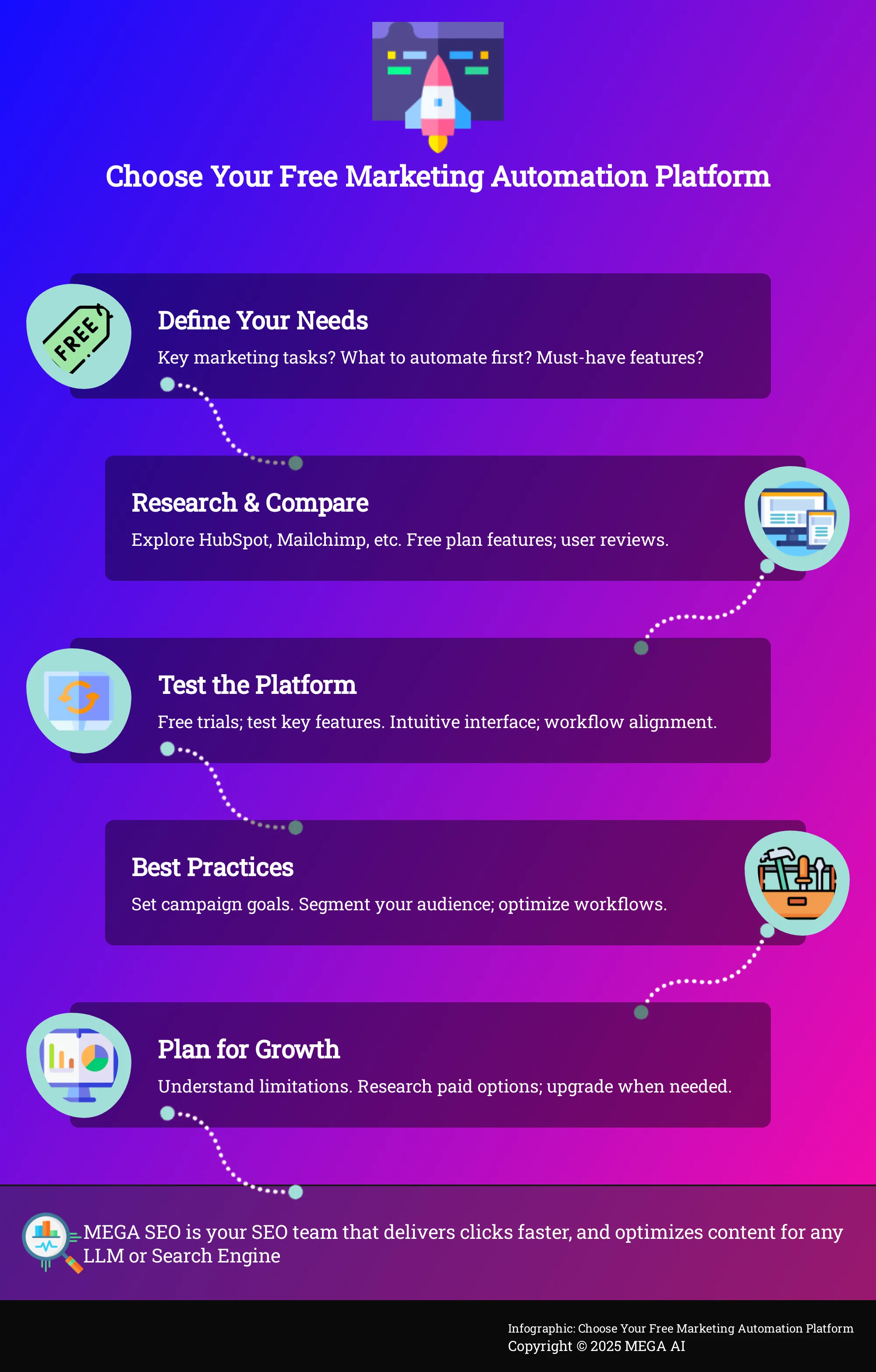
Assess Your Marketing Needs
Before you dive into comparing different platforms, take a moment to clearly define what you need your marketing automation software to do. Are you primarily focused on email campaigns, or do you need robust lead nurturing capabilities? Perhaps social media scheduling or landing page creation is a top priority. Finding the right marketing automation software begins with this clarity. Make a list of your essential tasks and desired outcomes. This will serve as your checklist when you start exploring options, helping you quickly identify platforms that meet your core requirements and avoid those that might offer features you don't currently need.
Consider Scalability
While a free plan might perfectly suit your startup or small business today, it's wise to think about tomorrow. As your business grows, your marketing automation needs will likely expand. Will the free platform be able to keep up, or will you quickly hit limitations that force a migration? When selecting a free marketing automation platform, consider its scalability. Look into what their paid plans offer and at what price points. Some platforms offer affordable entry-level paid tiers with essential features like automated customer journeys, ensuring the tool can evolve alongside your business without a massive jump in cost or complexity.
Evaluate Integration Options
Your marketing automation software doesn't operate in a vacuum. It needs to work smoothly with the other tools you already use, like your CRM, e-commerce platform, or analytics software. Effective marketing automation software should seamlessly integrate with your existing tech stack. Check if the free platforms you're considering offer native integrations or support connections through services like Zapier for the tools critical to your workflow. Strong integration capabilities lead to a more cohesive marketing strategy and significantly improve the overall efficiency of your campaigns by ensuring data flows smoothly between systems.
Check User Reviews
One of the best ways to get an unbiased perspective on a platform is to see what current users have to say. User reviews are invaluable when choosing a marketing automation platform. Websites like G2 and Capterra host thousands of reviews where users share their real-world experiences, highlighting both the strengths and weaknesses of different software. Pay attention to comments about ease of use, customer support responsiveness on free plans, and how well the platform delivers on its promises. This feedback can help you gauge user satisfaction and make a more informed decision.
Test the User Interface
A platform can have all the features in the world, but if it's clunky and difficult to use, you and your team are unlikely to make the most of it. Before committing, it's crucial to test its user interface. Most free platforms allow you to sign up and explore their dashboards without any cost. Take advantage of this. Can you easily find the tools you need? Is the process for setting up a campaign intuitive? Look for a clean, well-organized interface that allows you to navigate features smoothly. A user-friendly design means less time spent learning the software and more time executing your marketing strategies.
Get the Most from Your Free Platform
Choosing a free marketing automation platform is a great first step. To truly see results, however, you'll want to ensure you're using it to its full potential. Even without a price tag, these tools require a thoughtful approach. Let's look at how you can maximize the benefits of your chosen free platform and lay a strong foundation for your marketing efforts.
Implement Best Practices
Many businesses, especially startups and small operations, operate with lean budgets for marketing software or extensive teams. This is where free marketing automation platforms become incredibly valuable. However, simply signing up isn't enough; it's essential to implement marketing best practices to make these tools truly effective. This means clearly defining your campaign goals, understanding your audience, and segmenting them for more targeted messaging. Regularly review your automated workflows and the content you're sending. Are your emails engaging and lead capture forms clear? Consistently applying these fundamental strategies will help you get meaningful results with a free tool.
Overcome Limitations
Free marketing automation options are a fantastic starting point, yet they often come with certain limitations. You might encounter caps on the number of contacts you can store, the volume of emails you can send, or access to more advanced features. It's important for businesses to carefully weigh the free features against their specific needs. Take stock of what you absolutely need now versus what would be nice to have. As your business grows, these limitations might become more restrictive. Understanding these boundaries from the outset helps you plan effectively and recognize when it might be time to consider upgrading to a paid plan.
Use Available Features Effectively
To truly get value, even from a free tool, make it a point to explore every feature your chosen platform offers. Sometimes, useful tools are overlooked simply because users aren't aware they exist. Resources like Capterra can help you find and compare different free marketing automation software, often highlighting key functionalities. Once you've selected a platform, dive into its knowledge base or tutorials. By understanding and utilizing all available tools—from basic email scheduling to simple lead tracking—you ensure you're leveraging the platform fully and not leaving benefits on the table.
When to Consider Upgrading to a Paid Plan
Free marketing automation platforms are a great starting point, but their limits can become noticeable as your business expands. Deciding when to switch to a paid plan is key for maintaining marketing momentum, especially when the free version no longer supports your growth. Upgrading is an investment in your business's efficiency. Let's explore signs indicating it's time for paid options and how to approach this.
Signs You’ve Outgrown the Free Version
A clear sign you're ready for an upgrade is consistently hitting your free plan's limits. Many free platforms restrict contact numbers, email volumes, or feature access. If your list is expanding or your email strategy needs more sends than allowed, these caps can hinder your efforts. Another indicator is when your marketing needs grow more complex. You might need advanced segmentation or intricate automation workflows unavailable in the free version. If your goals now demand more robust tools, it suggests your needs have exceeded the free tier's offerings.
Evaluate the ROI of Paid Features
When considering an upgrade, evaluating the potential return on investment (ROI) is essential. Paid plans usually offer more capabilities, like increased limits, advanced automation, and better analytics, which can improve marketing efficiency. For instance, detailed analytics offer deeper insights for data-driven decisions. Consider how specific paid features could impact your bottom line. If a paid plan enables more targeted email campaigns, you can deliver relevant information to your audience. This approach can encourage more conversions. Assess how these tools help achieve objectives more effectively than your current setup.
Understand Upgrade Options
Before committing to a paid plan, thoroughly understand the available upgrade options. Providers often use tiered pricing, each level offering different features and limits. A basic paid tier, for example, might include more subscribers, email automations, and analytics for a set monthly fee. Compare these offerings against your specific needs and budget. Also, look for incentives like annual billing discounts or extra perks. Understanding these details helps you choose a cost-effective plan. Offering a clear value for users to upgrade can also make transitions smoother for your own customers.
The Future: Free Platforms and AI Integration
The world of marketing automation is constantly moving forward, with Artificial Intelligence playing a central role in this evolution. We're seeing platforms become much smarter, many now offering AI-powered personalization that helps businesses craft campaigns that truly resonate. This means you can connect with your audience through messages and experiences that feel more tailored to their individual needs and how they interact with your brand.
What's really exciting is how AI is making sophisticated marketing tools more widely available. Powerful features that once seemed out of reach for smaller operations are now being built into free marketing automation platforms. This democratization of technology allows smaller businesses and startups to utilize advanced AI capabilities without a significant financial commitment. You can anticipate an improved user experience, as features like AI-assisted chatbots, predictive analytics to understand future trends, and even automated help with content creation become more common.
This shift empowers you to make quicker, more informed decisions based on data, fine-tuning your marketing efforts with greater accuracy. As your business grows, these AI-enhanced free platforms are also being developed with scalability in mind, offering the tools you need to expand your marketing activities effectively. This trend is especially noticeable as AI starts to simplify complex tasks in areas like SEO, content optimization, and ad campaign management, making advanced marketing tools accessible to businesses of all sizes and helping you improve user experience significantly.
Related Articles
- Marketing Automation Platform Meaning: A 2024 Guide
- 10 Marketing Automation Software Examples (2024)
- Unlocking B2B Success: Marketing Automation Strategies
- Content for Marketing Automation: 2024's Top Tools
- Email Marketing 101: A Startup's Guide to Growth
Frequently Asked Questions
I'm just starting out. Why should I bother with a marketing automation platform, especially a free one? Think of a free marketing automation platform as your first digital helper. It can take over those repetitive marketing jobs, like sending welcome emails or sorting new contacts. This means you get more time to think about your bigger strategy, even if you're a team of one. It’s a fantastic way to learn the ropes of automation and start building consistent communication with your audience without dipping into your budget.
Free sounds great, but what are the typical catches or limitations I should expect? Most free marketing automation platforms do come with some boundaries. You'll often find limits on how many contacts you can store or how many emails you can send each month. Access to the really advanced features, like complex campaign builders or super-detailed analytics, is usually reserved for paid plans. It's good to be aware of these so you can pick a free tool that meets your current needs and understand when you might naturally outgrow it.
With so many free options, how can I pick the one that’s actually right for my business? The best approach is to first get clear on what you absolutely need the platform to do right now. Is your main goal to send out regular newsletters, or are you focused on capturing and nurturing new leads? Once you know your priorities, look for platforms that excel in those areas. Also, consider if it can connect with other tools you already use, and definitely take a few for a test drive to see which interface feels the most comfortable for you.
Can I genuinely grow my business using only a free marketing automation platform? You absolutely can make significant progress with a free platform, especially in the early stages of your business. By using its features effectively and applying smart marketing practices, you can build your audience and nurture relationships. As your business expands and your needs become more complex, you might find that upgrading to a paid plan makes sense to access more power and fewer limitations, but a free tool provides a solid foundation to build upon.
I keep hearing about AI in marketing. How does that apply to these free platforms, and is it something I can actually use? AI is becoming more common in marketing tools, even free ones. You might see it in features that help personalize your messages, suggest the best times to send emails, or even assist with creating content. For you, this means you can start using smarter, data-driven approaches to your marketing without needing a big budget or a data science degree. It’s about making advanced capabilities more accessible to everyone.