
Want more customers finding your website? You need more than just SEO. It's like having a great product but only selling it in one store. This guide shows you how to diversify sources of traffic beyond organic search. We'll cover SEO fundamentals, like keyword research and link building, and how to combine them with paid ads, content marketing, and social media for a truly effective strategy. Get ready to reach more customers and build a stronger online presence.
Key Takeaways
- SEO builds long-term value: SEO takes time, but it creates a sustainable online presence that delivers consistent organic traffic and builds trust with your audience.
- A balanced approach is best: Combine SEO with paid advertising, content marketing, and other channels to maximize reach and resilience. Don’t put all your eggs in one basket.
- Data informs strategy: Regularly monitor performance across all channels to understand what’s working and where to adjust. Use data to refine your approach and get the most from your marketing budget.
SEO: How It Works & Why It Matters
We’ve all been there. You type a question into Google and a list of websites appears. But how do some websites consistently show up at the top of those search results? That’s where SEO comes in.
SEO Defined
SEO, or Search Engine Optimization, is the practice of optimizing a website to improve its visibility on search engines like Google. Think of it as fine-tuning your website to speak Google’s language. When your site is optimized, Google can easily understand its content and rank it higher in search results for relevant keywords. This increased visibility translates to more organic (non-paid) traffic, which means more potential customers finding your business.
Why Prioritize Organic Search?
Why is organic traffic so valuable? Unlike paid advertising, where you pay for each click, organic traffic comes from users actively searching for information related to your products or services. This makes it a highly qualified audience. Organic traffic is also more sustainable and cost-effective over time. While paid ads can deliver immediate results, organic search builds credibility and trust with users, leading to long-term growth. SEO and PPC can work together to maximize your reach, as this guide explains. It’s true that SEO takes time and effort, but it’s a powerful tool for building a sustainable online presence. This video discusses building a business without focusing on SEO, but even successful entrepreneurs acknowledge its value as a traffic source. Measuring your SEO success is key, and you can learn more about relevant metrics from various resources.
The 95/5 Rule of Marketing and the Importance of Brand Awareness
The 95/5 rule suggests that 95% of your marketing should focus on building brand awareness and engaging your audience. Only 5% should be directly focused on selling. Think of it like dating—you wouldn’t propose on a first date. You’d spend time getting to know each other, building trust, and demonstrating your value. Marketing is similar. Nurture your audience and build a relationship before asking for the sale.
This approach is especially important with AI and evolving search algorithms. Relying only on Google for website traffic is risky. As search engines change, your organic traffic can decline. Diversifying your traffic protects you from these fluctuations and creates a more sustainable online presence. A multi-faceted marketing approach, encompassing SEO, paid advertising, content marketing, and social media, is more resilient. This strategy aligns with the 95/5 rule, emphasizing a balanced approach.
While SEO is powerful for long-term growth, building brand awareness through diverse channels is equally crucial. SEO takes time, but it creates a sustainable online presence. It delivers consistent organic traffic and builds trust with your audience. By focusing on valuable content, engaging social media, and targeted advertising, you can reach a wider audience. You can also nurture potential customers throughout their buying journey. Regularly monitor your marketing performance across all channels to understand what’s working. Use this data to refine your approach and get the most from your marketing budget. This data-driven approach ensures your marketing is effective and contributes to sustainable growth.
SEO: Balancing Time & Results
SEO is a long-term game. Unlike paid advertising, where you can see results almost immediately, organic search takes time to build. It’s an investment in your online presence, not a quick fix. This section explores the realistic timeline for SEO and the factors that influence your success.
How Long Until SEO Pays Off?
There’s no magic number when it comes to SEO timelines. While some sites might see movement within a few weeks, others can take several months to gain traction. Generally, you should expect to see noticeable improvements within four to six months of consistent, strategic SEO work. As Matt Diggity points out in his discussion of building a seven-figure business, SEO remains a powerful traffic source, but it requires patience. It’s also important to remember that SEO is just one piece of the traffic puzzle.
Think of SEO as cultivating a garden. You plant the seeds (create content and optimize your site), nurture them (build links and refine your strategy), and wait for them to grow (increase rankings and organic traffic). Sometimes, growth is slow and steady. Other times, you experience a sudden burst. The key is to stay consistent with your efforts and not get discouraged if you don’t see immediate results. Learn more about how MEGA SEO can automate and simplify your SEO strategy.
What Drives SEO Success?
Several factors influence how quickly and effectively your SEO efforts pay off. These include:
- Competition: Highly competitive industries require more time and effort to rank than niche markets.
- Website Quality: A well-designed, technically sound website provides a better foundation for SEO success.
- Content Quality: High-quality, engaging, and relevant content is crucial for attracting both search engines and users. Create custom content with MEGA SEO.
- Backlink Profile: Earning high-quality backlinks from reputable websites signals authority and trustworthiness to search engines.
- Technical SEO: Addressing technical issues like site speed, mobile-friendliness, and crawlability is essential for good SEO performance. MEGA SEO can help you identify and fix these issues.
- SEO Strategy: A well-defined SEO strategy, including keyword research and targeted content creation, is more effective than random efforts. Explore MEGA SEO’s resources for developing a winning SEO strategy.
Measuring your SEO success involves ongoing monitoring and optimization, as highlighted by Startup Opinions. Tracking both quantitative metrics (like website traffic and keyword rankings) and qualitative metrics (like user engagement and conversion rates) provides a comprehensive view of your SEO performance, as explained by Studio 36 Digital. Setting clear, measurable goals, as suggested by FasterCapital, is essential for staying focused and motivated throughout the SEO journey. MEGA SEO offers tools and resources to help you with every aspect of your SEO strategy, from keyword research and content generation to technical SEO improvements and performance tracking. Explore our free tools to see how we can help you achieve your SEO goals.
Paid Ads & SEO: A Powerful Duo
While SEO focuses on organic traffic, paid advertising offers a direct path to visibility on search engine results pages (SERPs) and other platforms. Understanding how these two strategies complement each other is key to maximizing your online presence. As the experts at Proof3 point out, aligning paid and organic strategies is crucial for a successful marketing approach.
Exploring Paid Advertising Options
Several platforms offer paid advertising options, each with its own strengths. Google Ads is the most popular, allowing you to place ads on Google’s SERPs, YouTube, and across Google’s network. You can target specific keywords, demographics, and interests to connect with your ideal audience. Beyond Google, platforms like Microsoft Advertising offer similar search advertising capabilities, while social media platforms like Facebook, Instagram, and Twitter provide robust advertising options based on user profiles and behaviors.
The Perks of Paid Advertising
Paid advertising offers several advantages, especially with a strategic approach. It delivers immediate visibility, which Matt Diggity describes as incredibly powerful when done effectively. Paid ads can quickly drive traffic to your website, generating leads and sales while your SEO efforts build momentum. This rapid increase in visibility can be especially helpful for new businesses or product launches, a point Convert Bomb emphasizes when comparing it to the longer-term growth of SEO. Paid ads also offer precise targeting, allowing you to reach specific demographics and interests, as explained by Media Dex. This granular control ensures your message reaches the right people, maximizing your return on investment. Finally, paid campaigns provide valuable data that can inform your SEO strategy. By analyzing keyword and ad performance, you can gain insights into user search behavior and refine your organic keyword targeting.
Crafting Your Digital Marketing Strategy
A robust digital marketing strategy rarely relies on a single traffic source. Think of it like an investment portfolio—diversification mitigates risk. Over-reliance on one channel makes your business vulnerable to algorithm updates, changing consumer behavior, and increased competition.
Why Diversify Traffic Sources?
Imagine pouring all your resources into paid advertising and then suddenly facing a budget cut. Or, building your entire strategy around social media and then seeing engagement plummet due to a platform shift. These scenarios highlight the inherent risks of depending on a single channel. As SEO expert Matt Diggity points out, while SEO remains a powerful traffic source, it’s just one piece of the puzzle. You need multiple avenues driving visitors to your site to create a sustainable online presence. Focusing solely on one channel, even a high-performing one, leaves you exposed to potential disruptions. Plus, it can limit your reach and prevent you from connecting with potential customers on other platforms.
What is a Traffic Source?
Traffic sources refer to the origins through which visitors arrive at your website. Understanding your traffic sources is like knowing the streets that lead customers to your shop. It helps you understand user behavior and optimize your marketing efforts. These sources can include organic search results, direct visits—where users type your URL directly into their browser—referrals from other websites, social media platforms, and paid advertising campaigns. Each source offers unique opportunities and challenges. For instance, organic search traffic often indicates high user intent, as visitors are actively searching for information related to your offerings. Referral traffic suggests other sites find your content valuable enough to share with their audience. Social media can be a powerful driver of brand awareness and engagement, while paid advertising offers precise targeting and immediate visibility.
The Importance of Owning Your Audience
Diversifying traffic sources is crucial, but equally important is owning your audience. Relying solely on third-party platforms like social media or search engines puts your business at their mercy. Algorithm changes, increased competition, or even platform outages can drastically impact your reach and visibility. Building an email list is like having a direct line to your customers. It’s an asset you control, allowing you to communicate directly with your audience without interference. This direct access is invaluable for nurturing leads, building customer loyalty, and driving sales. Diversifying your traffic sources protects your website from sudden drops in traffic from any single source. It creates a more resilient online presence, enabling you to adapt to the ever-changing digital landscape. Think of it as building multiple streams of customers rather than relying on a single, potentially unreliable river.
Integrating SEO & Paid Ads
One of the most effective ways to diversify is by combining organic search efforts (SEO) and paid advertising. These two channels work synergistically, amplifying each other’s strengths. Integrating SEO and paid ads creates a comprehensive approach that maximizes your online visibility. A smart starting point is to analyze which keywords are performing well in your paid campaigns and then incorporate those keywords into your organic content strategy. This approach ensures you’re targeting the same audience through different channels, reinforcing your message and increasing brand awareness. Combining paid and organic strategies also offers valuable insights into user behavior. Data from your paid campaigns can inform your SEO keyword research, helping you refine your targeting and improve organic rankings. This integrated approach is essential for maximizing efficiency and reducing customer acquisition costs.
Diversifying Your Sources of Traffic
While SEO forms a strong foundation for online visibility, smart marketers know that a multi-faceted approach is key. Diversifying your traffic sources ensures resilience, expands your reach, and maximizes your marketing ROI. Let’s explore some essential channels to incorporate alongside your SEO strategy.
Understanding Different Traffic Sources
Traffic sources represent the various origins of visitors to your website. Understanding these sources is crucial for analyzing your marketing effectiveness and pinpointing areas for improvement. Let's break down the key categories:
Direct Traffic
Direct traffic consists of visitors who land on your website by typing your URL directly into their browser or clicking on a bookmark. However, be aware that a significant portion of what gets categorized as direct traffic is often misidentified organic traffic, as Evenbound explains. This miscategorization can stem from technical glitches or users accessing your site through untracked links.
Referral Traffic
Referral traffic originates from links on other websites that point users toward your site. This traffic type is valuable because it signals that other sites deem your content relevant enough to link to, according to Matrix Marketing Group. A robust backlink profile is key for boosting referral traffic.
Organic Search Traffic
Organic traffic is generated by search engines when users look for relevant keywords. You earn this traffic through effective SEO practices, as Matrix Marketing Group highlights. A solid SEO strategy centers around creating valuable content and optimizing your website for search engine visibility. Consider using MEGA SEO's free tools to help improve your organic search traffic.
Paid Search Traffic
Paid search traffic results from users clicking on advertisements displayed on search engine results pages. This method provides immediate visibility and offers the ability to target specific keywords, as Matrix Marketing Group explains. While effective, paid search necessitates continuous investment.
Social Media Traffic
Social media traffic stems from users clicking on links shared across social media platforms. Engaging content and a strategic posting schedule can significantly increase this traffic type, according to Matrix Marketing Group. Cultivating a strong social media presence is essential for driving social traffic.
Email Marketing Traffic
Email marketing traffic is generated when users click on links within email campaigns. Building a robust email list is essential for consistently driving traffic to your website, as Matrix Marketing Group notes. Well-targeted email campaigns can effectively promote fresh content and special offers.
Other Traffic Sources
Other traffic sources encompass affiliate marketing, influencer partnerships, and offline promotions that guide users to your website, as Matrix Marketing Group mentions. These sources can be particularly effective for connecting with niche audiences.
12 Actionable Strategies to Diversify Your Website Traffic
Diversifying your website traffic is essential for sustained online success. Depending solely on one or two channels leaves you susceptible to algorithm adjustments and shifts in user behavior. Here are 12 strategies to broaden your reach:
Guest Posting and Thought Leadership
Writing insightful articles for other reputable blogs within your industry helps you connect with new audiences and acquire valuable backlinks, strengthening your site's authority, as advised by Ryan Robinson. Prioritize providing genuine value to the reader. MEGA SEO can help you create custom content for guest posts.
Podcast Appearances and HARO
Appearing as a guest on relevant podcasts lets you tap into existing audiences and share your expertise. Ryan Robinson also suggests leveraging HARO (Help a Reporter Out) to connect with journalists and potentially be featured in news articles, boosting your brand visibility.
Collaborating with Other Newsletters
Cross-promoting newsletters with other bloggers in your niche expands your reach and introduces your content to new subscribers, as Ryan Robinson recommends. Seek out partners with a similar target audience but non-competing products or services.
Speaking at Conferences and Pitching Local News
Presenting at industry conferences raises your visibility and positions you as a thought leader. Pitching relevant stories to local news outlets can also showcase your expertise to a wider audience, as Ryan Robinson suggests. Remember to tailor your message to resonate with each outlet's specific audience.
Video Production and Streaming
Creating engaging video content for platforms like YouTube can attract a broader audience and engage users in a different format, as Ryan Robinson notes. Videos can serve various purposes, from education and entertainment to promotion, depending on your objectives.
Focusing on Broader Topics
Targeting broader topics related to your niche, instead of solely focusing on specific keywords, can help you capture a larger audience and improve your SEO, according to Ryan Robinson. This approach can attract users at various stages of the buying cycle.
Strategic Partnerships
Forming partnerships with other brands can unlock various opportunities for expanding your reach, as Ryan Robinson explains. Consider these options:
Joint Ventures
Team up on projects that mutually benefit both brands, such as co-hosting webinars or crafting joint offers.
Co-created Content
Collaborate on developing content, such as blog posts or ebooks, leveraging each other's expertise and respective audiences.
Cross-Promotions
Promote each other's products or services to your respective audiences, broadening your reach and increasing brand awareness.
The Impact of AI on SEO and Traffic Diversification
AI is revolutionizing digital marketing by providing powerful tools for automation and enhanced targeting. These advancements can significantly bolster your traffic diversification strategies, as Matrix Marketing Group observes. AI-powered tools can help you uncover new traffic opportunities, personalize content, and optimize campaigns for improved performance. MEGA SEO uses AI to automate and streamline your SEO processes, from keyword research and content generation to optimization and maintenance. Book a demo to learn more.
Building a Brand "World" with Multiple Entry Points
Creating a brand "world" entails establishing multiple entry points for customers to discover you. This could include newsletters, podcasts, social media profiles, guest posts, and more, as discussed by Search Engine Land. The objective is to create a cohesive brand experience across various platforms, simplifying the process for potential customers to find and connect with you, regardless of their preferred channel. This approach cultivates brand awareness and loyalty, ultimately driving traffic from diverse sources.
Content Marketing: Attract & Engage
Content marketing and SEO go hand-in-hand. SEO helps your content get discovered in search results, while high-quality content attracts and engages your target audience, driving organic traffic. Think blog posts, articles, infographics, videos—anything that provides value and draws visitors to your website. A robust content strategy keeps your audience coming back for more and establishes you as an authority in your niche. As Matt Diggity points out, “SEO is still pound-for-pound the best traffic source but as you know it takes patience and it’s only a portion of the total traffic a business can get.” This underscores the need for diverse content formats and distribution channels. MEGA SEO’s content generation features can help you create optimized, engaging content that fuels your SEO efforts.
Social Media for Traffic Growth
Social media offers a direct line to your audience. It’s a powerful platform for building brand awareness, fostering community, and driving traffic to your website. Regularly sharing valuable content, engaging with followers, and running targeted ads can significantly impact your reach. Social media also plays a role in SEO by increasing brand mentions and generating backlinks. Integrating your social media strategy with your SEO efforts creates a synergistic effect, amplifying your overall online presence. Explore our free tools to help streamline your social media management.
TikTok Traffic Sources and Audience Territories
TikTok, with its billion-plus active users, presents a unique opportunity to diversify your traffic sources. Unlike traditional search engines, TikTok's algorithm prioritizes engagement and virality. This means understanding how users discover content is crucial for driving traffic to your website.
TikTok SEO isn't about optimizing for Google; it's about understanding what makes content go viral on TikTok. This involves leveraging trending hashtags, creating engaging hashtags that spark conversation, and participating in trending challenges or sounds. Hashtags categorize your content, making it discoverable to users interested in specific niches.
Driving traffic from TikTok to your website requires a strategic approach. Include website links in your bio, use link stickers in your videos, or direct viewers to your link in bio through calls to action within your content. The key is to make the transition seamless and enticing. Regularly analyzing engagement metrics like watch time, shares, and comments helps refine your strategy. MEGA SEO’s free tools can provide valuable insights into your TikTok performance.
Creating engaging content that aligns with current trends is paramount on TikTok. The platform thrives on creativity and originality, so staying updated with trending topics can significantly enhance your reach. TikTok's audience is diverse, spanning various demographics and interests. Understanding your target audience's preferences is vital for tailoring your content. This might involve creating niche content or adapting global trends to resonate with local audiences.
Email Marketing That Converts
Email marketing remains a highly effective way to nurture leads, build customer loyalty, and drive conversions. A well-segmented email list allows you to deliver personalized messages, promote special offers, and keep your audience informed about your latest products or services. Matt Diggity’s experience building his agency to seven figures per month using paid advertising demonstrates the power of combining paid strategies with email marketing to maximize results. Use email to complement your SEO and social media efforts, creating a cohesive customer journey. You can learn more about email marketing best practices on our resources page.
Power of Partnerships
Strategic partnerships can significantly expand your reach and introduce your brand to new audiences. Collaborating with complementary businesses, influencers, or industry experts can generate valuable backlinks, increase brand visibility, and drive referral traffic. Joint ventures, co-created content, and cross-promotions are just a few ways to leverage partnerships. This approach not only diversifies your traffic sources but also strengthens your credibility and authority within your industry. As AdLift notes, “Integrating SEO and paid search strategies also optimizes the budget and increases the ROI,” highlighting the financial benefits of strategic collaborations. Consider partnering with businesses that align with your target audience and offer synergistic value. Book a demo to see how MEGA SEO can help you manage and optimize your SEO strategy across multiple channels.
Landing Page Optimization for Conversions
Landing pages are where the magic happens. They’re where your visitors arrive after clicking a link from search results, an ad, or another source. A well-optimized landing page is crucial for turning visitors into customers. This section covers the key elements of effective landing pages and how to balance SEO and paid ads for the best results.
Building High-Converting Landing Pages
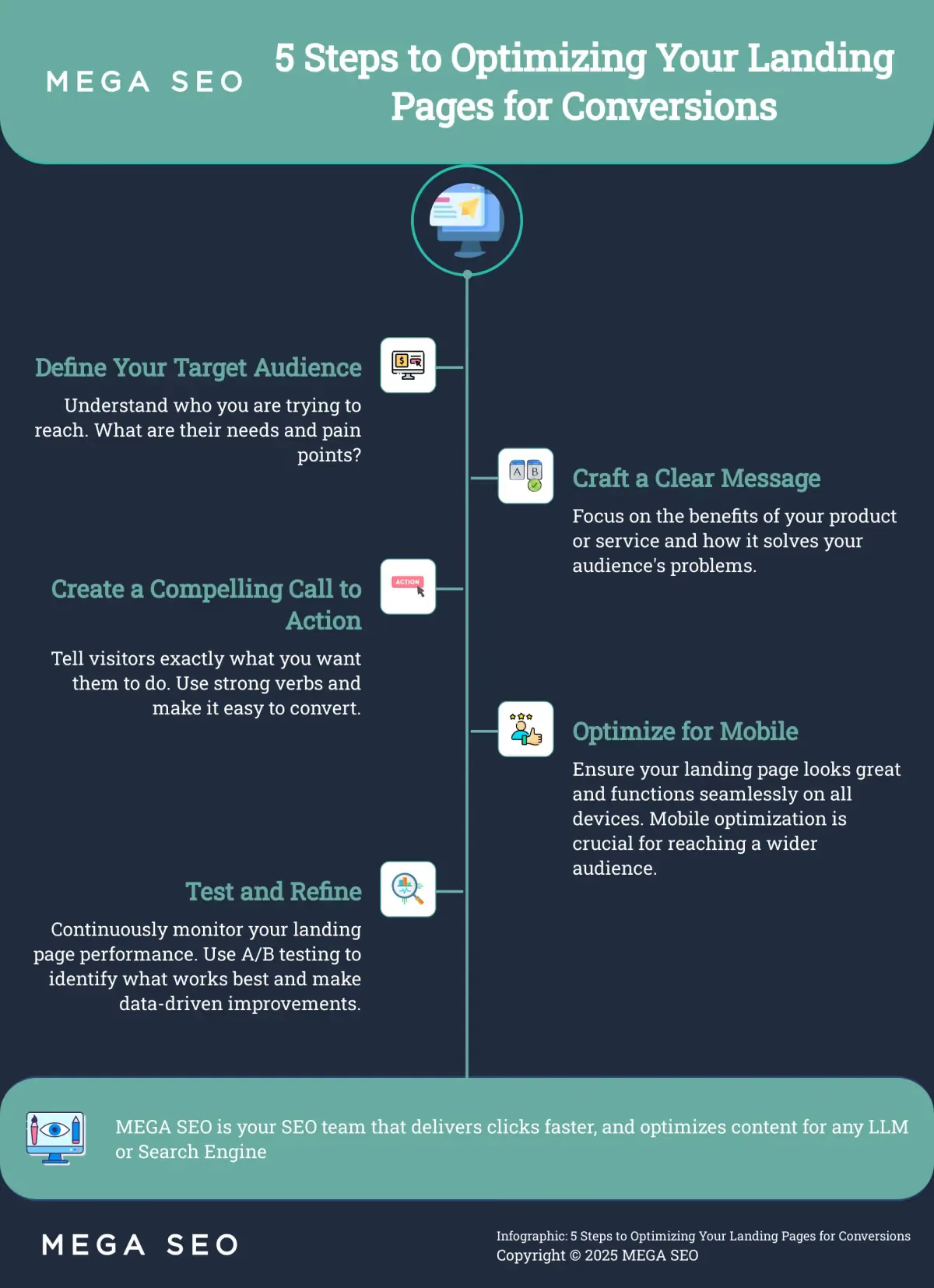
Think of your landing page as the final step in a customer’s journey. They’ve searched for something specific, and your ad or organic listing caught their attention. Your landing page needs to deliver what they expect. As Proof3 notes, “The key to any successful paid ad relies on relevant landing pages that are optimized to what users are expecting to see when they search online.” This means aligning your landing page content with the user’s search intent. If someone searches for “blue running shoes,” your landing page shouldn’t feature hiking boots.
Keep your messaging clear and concise, focusing on the benefits of your product or service and how it solves the visitor’s problem. Use strong calls to action that tell the visitor exactly what to do, whether it’s making a purchase, signing up for your newsletter, or requesting a demo. A clean, uncluttered design is also essential. Make sure your landing page is easy to use and visually appealing. Finally, don’t forget mobile optimization. Many visitors will come from mobile devices, so ensure your landing page looks great and works well on all screen sizes.
Balancing SEO & Paid Ads on Landing Pages
SEO and paid advertising aren’t mutually exclusive; they work best together. As Proof3 points out, “Integrating SEO and paid advertising strategies is a no-brainer for any successful marketing strategy.” Target the same keywords with both organic content and paid campaigns to create a synergistic effect, reinforcing your message and increasing your visibility. Marcel Digital emphasizes this, stating, “Optimizing a website with keywords and phrases that both SEO and Paid Search teams target will create a better user experience for both audiences.”
When you align your SEO and paid strategies, you cover more ground. Organic search builds long-term authority and attracts consistent traffic, while paid ads provide immediate visibility and allow you to target specific demographics. This balanced approach, as discussed by G Squared, “maximises their online presence and effectiveness.” By leveraging both channels, you can reach a wider audience and improve your overall conversion rates. Explore MEGA SEO’s free tools to start optimizing your SEO and paid ad campaigns today.
Measuring Cross-Channel Success
Once you’ve implemented your SEO and paid advertising strategies, consistent monitoring is key. Understanding the right metrics helps you evaluate performance and refine your approach over time. This section breaks down the essential KPIs for each channel and how to use them to gain a holistic view of your marketing efforts.
Essential SEO KPIs
For SEO, success isn’t just about ranking first for every keyword. It’s about driving relevant traffic that converts. Key performance indicators (KPIs) offer a quantifiable way to measure this. Start by tracking your organic traffic, or the number of visitors coming to your site from search engine results pages without paid promotion. This metric reveals the effectiveness of your keyword targeting and content optimization. Next, monitor your keyword rankings to see how your site performs for relevant search terms. While not the sole indicator of success, ranking well can significantly impact visibility and drive organic traffic. Finally, pay close attention to conversion rates. This measures how many visitors complete a desired action, such as making a purchase or signing up for a newsletter. Strong conversion rates indicate that your SEO efforts are attracting the right audience and providing valuable content. Tools like Google Analytics and Google Search Console can help you track these metrics and understand their impact on your business goals. Learn more about measuring SEO success.
Key Paid Advertising Metrics
Paid advertising offers a different set of metrics to monitor. Impressions and reach tell you how many times your ads are displayed and how many unique users see them. Clicks measure how many people actively engage with your ads, while click-through rate (CTR) shows the percentage of impressions that result in clicks. A high CTR suggests compelling ad copy and effective targeting. Further down the funnel, track your conversion rate to see how many clicks translate into desired actions. Metrics like cost per acquisition (CPA) and return on ad spend (ROAS) help you understand the efficiency and profitability of your campaigns. Finally, consider customer lifetime value (CLV) to assess the long-term impact of your paid advertising efforts. Dive deeper into paid advertising metrics. Most advertising platforms provide built-in dashboards to monitor these metrics.
Tracking Your Traffic Sources
Beyond SEO and paid ads, it’s important to track performance across all your traffic sources. This might include social media, email marketing, referral links, or direct traffic. By analyzing metrics like referral traffic, social media engagement, and email open rates, you can identify which channels are most effective at driving traffic and conversions. This broader perspective allows you to allocate resources strategically and optimize your overall digital marketing strategy. Integrating your SEO and paid advertising strategies with other channels creates a cohesive approach, leveraging data-driven insights and advanced targeting for more effective campaigns. Explore how SEO and paid advertising work together. Remember, a balanced approach is key to long-term online success.
HTTPS/HTTP and Traffic Tracking Accuracy
Did you know that the security of your website can actually impact the accuracy of your traffic tracking? Using HTTPS (Hypertext Transfer Protocol Secure) instead of HTTP (Hypertext Transfer Protocol) is more than just a security best practice; it’s crucial for reliable data. When your site uses HTTPS, it encrypts the communication between the user and the site. This encryption enhances security and ensures that tracking tools can accurately capture user interactions. With HTTPS, you’re less likely to encounter interference from third-party scripts, which might be blocked on HTTP sites, leading to more accurate data and better insights into user behavior. This improved accuracy is particularly important when analyzing direct versus organic traffic.
Campaign Tagging for Accurate Tracking
Speaking of accurate tracking, let’s talk about campaign tagging. Properly tagging your campaigns is like labeling your ingredients—you know exactly what’s contributing to the final product. Campaign tagging allows you to see which campaigns are driving the most effective traffic and conversions. This detailed view helps you correctly attribute traffic sources, leading to more informed marketing decisions and a better understanding of your ROI. For example, you can differentiate between traffic coming from a specific social media campaign versus a paid search campaign, giving you a clearer picture of what’s working and where to focus your efforts. This practice is crucial for understanding where your traffic originates and how different campaigns contribute to your overall goals, a point also emphasized by Evenbound.
Budgeting for Traffic Diversification
Getting the most from your marketing budget requires a strategic approach to resource allocation. Think of your budget as an investment portfolio—diversification is key. This section explores how to effectively distribute your resources across different channels.
Choosing the Right Traffic Mix
Don’t put all your eggs in one basket. Over-reliance on any single traffic source makes your website vulnerable to algorithm updates, changing market trends, and increased competition. A balanced approach that incorporates both organic search (SEO) and paid advertising is essential. As the experts at Proof3 emphasize, integrating SEO and paid advertising strategies is essential for success. This synergistic approach ensures consistent visibility and reach. Paid advertising provides immediate visibility, while SEO builds long-term, sustainable organic traffic. G Squared highlights the power of this combined approach, explaining that integrating paid and organic search strategies maximizes online presence and effectiveness. Finding the right balance between these two channels depends on your specific business goals, industry, and target audience. Consider factors like your budget, timeline, and competitive landscape.
Managing Campaigns Efficiently
Effective campaign management requires careful monitoring and analysis. Track key metrics to understand what’s working and what’s not. For paid campaigns, Hurrdat Marketing recommends monitoring important metrics like impressions, reach, clicks, click-through rate (CTR), conversion rate, cost per acquisition (CPA), return on ad spend (ROAS), return on investment (ROI), and customer lifetime value (CLV). This data provides valuable insights into campaign performance. J&L Marketing emphasizes the importance of measuring key metrics and adjusting your spending accordingly. Regularly review your campaign performance and make necessary adjustments. As Programming Insider notes, continuous monitoring and optimization are crucial for PPC advertising success. This iterative process allows you to refine your targeting, messaging, and bidding strategies to maximize your ROI. For SEO, track keyword rankings, organic traffic, and backlink growth to measure the effectiveness of your efforts. Tools like MEGA SEO can automate much of this tracking and analysis, freeing up your time to focus on strategy and optimization. MEGA SEO also offers features to improve your existing content’s click-through rate and optimize content for any platform.
Common Traffic Diversification Pitfalls
Diversifying your traffic sources is a smart move, but it’s not without its pitfalls. Sidestep these common mistakes to ensure your efforts translate into real results.
Aligning Your Goals & Strategy
One of the biggest mistakes is treating different traffic sources as isolated entities. Your SEO strategy, paid advertising campaigns, and social media efforts should all work together towards common business goals. For example, if you’re running paid ads for a new product, make sure your SEO strategy also supports this launch with optimized product pages and relevant blog content. Aligning your goals and strategies across channels creates a synergistic effect, maximizing your overall impact. Consider targeting the same high-performing keywords from your paid search campaigns in your organic content as well. Proof3 discusses how aligning paid and organic strategies drives results for their clients. Marcel Digital offers further insights on integrating SEO and paid search campaigns.
Testing & Optimizing for Success
Don’t fall into the “set it and forget it” trap. The digital landscape is constantly evolving, so continuous testing and optimization are essential. Regularly monitor key metrics like impressions, click-through rates, conversion rates, and return on ad spend (ROAS). Use A/B testing to experiment with different ad copy, landing page designs, and calls to action. Hurrdat Marketing provides a helpful overview of the key metrics to track in your paid advertising campaigns. Once your campaigns are live, track their performance and make the necessary adjustments. Programming Insider emphasizes the importance of optimization in paid advertising and offers tips for tracking success. The data you gather will provide valuable insights, allowing you to refine your strategies.
Consistent Brand Messaging
Maintaining a consistent brand message across all your traffic sources is crucial for building brand recognition and trust. Ensure your brand voice, values, and key messaging are consistent across your website, social media profiles, paid ads, and email communications. This cohesive approach creates a seamless experience for your audience, regardless of how they find you. Spreadbot discusses how integrating SEO and paid advertising creates a more cohesive and effective digital marketing approach. G Squared also highlights the benefits of integrating paid and organic search strategies for maximizing online presence. A consistent message reinforces your brand identity and strengthens your overall marketing efforts.
Data-Driven Continuous Improvement
This section covers how you can use data to improve your SEO and paid advertising strategies.
Cross-Channel Insights
Looking at your data across different channels can reveal valuable insights. For example, if specific keywords perform well in your paid search campaigns, consider targeting those same keywords in your organic content strategy using MEGA SEO’s keyword research tools. This leverages what’s already working for you. As the experts at Marcel Digital point out, integrating SEO and PPC efforts starts with analyzing high-converting or high-traffic keywords from paid search and incorporating them into organic content. Integrating your paid and organic search strategies creates a synergistic effect, maximizing your online presence and overall effectiveness. SEO builds long-term, sustainable growth, while paid advertising delivers immediate, targeted traffic. Think of them as two sides of the same coin, working together to achieve your marketing goals. Proof3, an agency specializing in integrated marketing, emphasizes this synergy: their paid marketing and SEO teams collaborate to ensure marketing goals align. This collaborative approach ensures consistent messaging and a unified brand experience.
Improving All Your Traffic Sources
Data isn’t just for measuring success; it’s for continuous improvement. Regularly monitor key metrics like impressions, reach, clicks, click-through rate (CTR), conversion rate, cost per acquisition (CPA), return on ad spend (ROAS), return on investment (ROI), and customer lifetime value (CLV). These metrics provide a comprehensive view of your campaign performance. Tools like Google Analytics and Google Search Console can help you track these metrics and fine-tune your SEO tactics. SEO automation tools can streamline various SEO tasks, from keyword research and performance tracking to backlink analysis and content optimization, freeing up your time to focus on strategy. MEGA SEO offers a suite of tools to automate these processes, making data analysis and continuous improvement more manageable. By analyzing data across all your traffic sources, you can identify areas for improvement, optimize your campaigns, and allocate your budget more effectively. This data-driven approach ensures that you’re constantly refining your strategies and maximizing your results.
Leveraging MEGA SEO for Automated Traffic Diversification and Optimization
Managing multiple traffic sources and optimizing each channel effectively can feel overwhelming. That's where MEGA SEO comes in. Our platform automates many of the tedious tasks associated with SEO and paid advertising, freeing up your time to focus on strategy and growth. As we've discussed, diversifying your traffic sources is crucial for building a resilient online presence, and MEGA SEO provides the tools to make this diversification manageable and effective. Learn more about how MEGA SEO can help you diversify your traffic.
MEGA SEO streamlines keyword research, allowing you to identify high-potential keywords across different channels. This integrated approach ensures that your SEO and paid advertising campaigns are targeting the same audience, reinforcing your message and maximizing your reach. Our content generation features help you create high-quality, optimized content that attracts both search engines and users, driving organic traffic and improving your search rankings. We also offer tools for technical SEO improvements, ensuring your website is technically sound and performs well in search results. From backlink analysis to performance tracking, MEGA SEO automates many of the tasks that traditionally consume valuable time, allowing you to focus on what matters most: refining your strategy and achieving your business goals. Book a demo to see how MEGA SEO can transform your digital marketing efforts.
Beyond automation, MEGA SEO provides valuable data-driven insights. Our platform tracks key metrics across all your traffic sources, giving you a holistic view of your marketing performance. By analyzing this data, you can identify areas for improvement, optimize your campaigns, and allocate your budget more effectively. Data-driven continuous improvement is essential for staying ahead of the curve and maximizing your ROI, and MEGA SEO provides the tools to make this process seamless and efficient. Our Maintenance Agent product further enhances your existing content by improving click-through rates and identifying opportunities to add new content for better optimization and higher rankings. Whether you're optimizing for Google, an LLM, or any other platform, MEGA SEO can adapt and re-optimize your content to ensure maximum effectiveness. Try our free tools to experience the power of MEGA SEO.