
Artificial intelligence in marketing isn't just a buzzword anymore; it's becoming a practical tool that businesses of all sizes can use. From automating keyword research for your SEO efforts to creating hundreds of ad variations for your paid campaigns, AI is reshaping how we work. But with new technology comes new questions: How can you actually use these tools to make a difference in your daily tasks and overall strategy? This piece aims to cut through the noise. We'll explore how AI agents are enhancing customer interactions and how you can integrate these advancements thoughtfully to improve efficiency, personalize experiences, and ultimately, achieve better results for your business.
Key Takeaways
- Strengthen Brand Presence Across Channels: Ensure your brand is consistently visible and provides immediate value, whether users click through or find answers directly on search pages, by adapting content for various platforms.
- Use AI and Explore New Engagement Methods: Implement AI for personalized customer journeys and investigate channels like podcasts or social commerce to connect directly and make buying easier.
- Make Informed Decisions and Plan for Growth: Use data analytics to guide your marketing efforts, equip your business with adaptable tools and skills for future changes, and consider strategies like multilingual content to reach wider audiences.
The Digital Marketing Revolution of 2025
As we look toward 2025, it’s clear the digital marketing landscape is undergoing a significant transformation. The way consumers interact with businesses is evolving rapidly, and staying ahead means adapting to these new realities. For example, research highlights that consumers now need an average of 11.1 touchpoints before making a purchase decision, a notable increase from just 8.5 in previous years. This shift really emphasizes the importance of building strong brand recognition and maintaining consistent engagement across many different channels.
Another major change is the rise of "no-click" searches. About 59% of Google searches now end without the user clicking through to a website, as they find the information they need directly on the results page. This means businesses must work harder to make their brand visible and memorable right from the search results. Beyond these shifts, success in 2025 will also involve optimizing content for multiple formats like images, video, and audio, and ensuring your message resonates across all platforms, not just Google. The integration of AI agents is also becoming crucial, not just for enhancing customer satisfaction but for driving revenue through smarter interactions. And let's not forget the global market; limiting your efforts to one language means potentially missing out on 96% of potential customers. The digital marketing world is indeed revolutionizing, bringing new challenges and exciting opportunities for growth.
1. Engage Consumers Across Multiple Touchpoints
When was the last time you bought something after seeing it just once? Likely, it took a few encounters. Most people experience a brand multiple times online before making a decision. This is why engaging consumers across various touchpoints is fundamental for business growth. It means being consistently present and helpful wherever your potential customers are, guiding them toward choosing your products or services.
Why Multiple Touchpoints Are Now Standard
People rarely convert on their first interaction with a brand. Research indicates the average person now needs around 11 touchpoints before making a purchase, up from previous years. This shift means your marketing strategy must account for these repeated engagements. A single ad or blog post won't suffice. Instead, aim to create a series of positive experiences that build familiarity and trust over time. Each interaction, be it a social media post, an email, or a search result, helps move someone closer to becoming a customer.
Create a Consistent Cross-Channel Experience
With numerous potential interactions, a consistent brand presence is vital. Many Google searches don't even result in a click, making your brand recognition incredibly important. When people consistently see your logo, brand colors, and messaging across platforms—from your website to social media and ads—it builds reliability. This unified experience makes your brand more memorable and trustworthy. A potential customer who recognizes your brand from multiple encounters is more likely to engage further, even without clicking every ad.
Adapt Your Content for Different Platforms
While brand consistency is key, your content must be adaptable. What engages an audience on one platform might not work on another. To effectively connect with consumers, you'll need to tailor your content for various formats like images, video, and audio, and optimize it for different platforms beyond just Google. Consider the user's mindset on each channel. Are they seeking quick entertainment, detailed information, or professional insights? Adapting your message and format to these preferences ensures your content resonates effectively wherever your audience finds it.
2. Succeed with No-Click Searches
It might sound a bit strange, but a growing number of online searches actually end without the user clicking through to any website. This change in how people use search engines means we need to adjust our thinking about search engine optimization. The aim isn't solely to achieve a high ranking; it's about being the direct answer, even if that answer appears right on the search results page. This is where focusing on providing immediate information and building a strong brand presence becomes really important.
What Are Zero-Click Search Results?
Zero-click search results occur when someone types a question or phrase into a search engine like Google, and the information they need shows up directly on the results page. They get their answer—perhaps a quick fact, a definition, or a business's phone number—without ever needing to visit a website. This is a significant trend; some studies indicate that a large portion of Google searches, around 59%, now result in no clicks.
This happens because search engines are becoming very effective at offering instant answers through features such as featured snippets, knowledge panels, and other rich results. So, rather than seeing this as a setback, the practical approach is to optimize your content so it’s more likely to appear in these prominent spots. Consider how your content can deliver clear, direct answers that a search engine might choose to feature.
Make Your Brand More Visible in Search
When users aren't clicking through to websites as often, ensuring your brand itself is highly visible on the search results page is vital. If people see your brand name associated with the answer, even in a zero-click situation, it helps build recognition and trust. One way to tackle this is by concentrating on optimizing for search queries related to your brand. You want individuals not only to find answers but also to connect those helpful answers with your specific brand.
You can monitor your brand’s recognition with tools like Google Trends, which can show if more people are searching for your brand over time. This kind of data is incredibly useful for understanding your brand's current standing in search and can guide you in adjusting your marketing strategies to improve overall awareness. The more familiar people become with your brand, the more inclined they may be to choose you when they do decide to click or make a purchase.
Design Visual Content for Fast Consumption
In an online environment where users often make split-second decisions about what to engage with, your visual content needs to make an impact quickly. People are generally looking for rapid takeaways, so creating engaging images, videos, and infographics that are easy to understand at a glance is essential. This isn't just about aesthetics; it's about communicating efficiently.
As the digital world continues to change, optimizing your content for various formats—such as images, video, and even audio—will be fundamental for maintaining visibility. This strategy ensures your message can be effectively conveyed across different platforms, not just on Google. Think about how your visuals can tell a story or provide key information swiftly, helping your brand stick in the user's mind even if they don't click through right away.
3. Use AI Agents to Enhance Customer Interactions
Artificial intelligence is stepping out of the realm of futuristic ideas and into the everyday operations of businesses, especially when it comes to how we connect with customers. AI agents, which are essentially smart software designed to perform tasks and interact, are becoming increasingly sophisticated. They offer powerful ways to enhance customer interactions, streamline processes, and provide support around the clock. This isn't just a trend for large corporations with massive budgets; innovative platforms are making advanced AI accessible for startups and small businesses too. For instance, tools that automate complex tasks in SEO or help manage paid ad campaigns are part of this wave, allowing smaller teams to achieve more.
The beauty of AI agents lies in their ability to handle a wide range of customer-facing activities. Think about instant responses to common questions, personalized product suggestions, or even proactive outreach. By integrating AI agents, businesses can create smoother, more efficient, and more engaging customer journeys. This shift allows your human team to focus on more complex, strategic, or empathetic interactions that truly require a personal touch. As we look ahead, the ability to effectively use AI agents will likely become a key differentiator for businesses aiming to provide exceptional customer experiences and stay competitive. Many marketing leaders are highlighting how these AI tools are fundamentally changing digital strategies for the better.
How AI is Changing Customer Support
One of the most significant impacts of AI agents is in the realm of customer support. These intelligent tools are transforming how businesses handle inquiries and assist customers. AI can manage live chat functions, address frequently asked questions, and even guide users through troubleshooting steps, often without any human intervention needed. This means customers can get immediate answers to their queries, any time of day or night, which greatly improves satisfaction.
By automating these routine support tasks, companies can free up their human support staff to concentrate on more complex or sensitive issues that require a human touch. This not only makes your support operations more efficient but also allows your team to provide higher-value assistance. Tools in the market are already enabling businesses to implement these AI-driven support systems, leading to quicker resolutions and a more responsive customer service experience overall.
Implement AI-Powered Personalization
AI agents excel at sifting through vast amounts of customer data to deliver truly personalized experiences. Using machine learning algorithms, these systems can understand individual customer preferences, past behaviors, and interaction histories. This deep understanding allows businesses to tailor their marketing messages, content, and product recommendations specifically to each person. Imagine a customer visiting your website and seeing offers or information that feels like it was handpicked just for them.
This level of personalization is no longer a luxury; it's increasingly what customers expect. When brands demonstrate they understand individual needs, it fosters a stronger connection and can significantly improve engagement rates. AI-powered personalization helps ensure that your communications are relevant and timely, making customers feel valued and understood. This targeted approach is far more effective than generic messaging, leading to better outcomes for your marketing efforts.
Apply AI for Upselling and Customer Retention
Beyond initial interactions and support, AI agents are also proving invaluable in driving revenue through intelligent upselling and more effective customer retention strategies. By analyzing patterns in customer behavior and purchase history, AI can identify the perfect moment to suggest a relevant add-on, upgrade, or complementary product. This isn't about pushy sales tactics; it's about offering genuine value at the right time, which customers often appreciate.
This proactive approach extends to customer retention as well. AI can help identify customers who might be at risk of leaving, allowing businesses to intervene with targeted offers or support to encourage them to stay. Building and maintaining a loyal customer base is crucial for long-term success, and AI provides the insights to nurture those relationships more effectively. By making smart, data-driven suggestions, AI agents help you maximize the lifetime value of each customer.
4. Expand Your Reach with Multilingual Marketing
If your marketing efforts are currently confined to a single language, you might be overlooking a significant portion of your potential global audience. In our increasingly interconnected world, the ability to communicate with customers in their native tongue isn't just a courtesy—it's a powerful strategy for growth. Multilingual marketing extends far beyond simple translation; it's about crafting messages that resonate culturally, building genuine trust, and demonstrating a clear understanding of diverse local needs. By thoughtfully expanding your language offerings, you can unlock new markets, foster stronger and more loyal customer relationships, and significantly expand your reach internationally.
This approach doesn't just add a new dimension to your outreach; it can fundamentally transform your business's trajectory, driving engagement and sales in ways that monolingual strategies simply cannot achieve. Embracing linguistic diversity in your marketing can be a key differentiator, setting you apart from competitors and positioning your brand as a truly global player. Consider the vast potential waiting in regions where your current language doesn't reach – these could be untapped reservoirs of customers eager for products and services like yours, provided they are presented in a way that speaks directly to them. For startups and small businesses especially, this can be a cost-effective way to find less saturated markets and achieve substantial growth by connecting with audiences that larger, less agile competitors might ignore.
Access New Markets Around the World
While the US market is substantial, focusing solely on it means you could be missing out on considerable opportunities elsewhere. International markets often present a higher return on investment due to less competition. Industry insights suggest that if you're only marketing in one language or country, you're potentially missing out on a vast majority of the global opportunity. Think about that—a large portion of the world's consumers might not be seeing your message in a language they fully understand.
Reaching potential customers in their native language can dramatically increase engagement and build a stronger sense of connection. It shows respect and an understanding of their local context, which can be a powerful differentiator. Tapping into these markets isn't just about expanding your reach; it's about diversifying your revenue streams and building a more resilient global brand.
Develop Smart Localization Strategies
Effective multilingual marketing goes far beyond direct word-for-word translation. True localization means adapting your content to fit the cultural nuances, preferences, and even a specific region's search behaviors. This includes everything from imagery and color schemes to payment methods and units of measurement. Your goal is to make your content feel native to each specific market.
Tools can certainly help with this process. For instance, AI-powered platforms can assist in translating and transcribing video and text-based content for different languages and countries. Platforms like MEGA AI can further simplify this by enabling you to remix content and automatically translate elements like voiceovers and captions, making it easier to create truly localized campaigns at scale. This ensures your message resonates authentically, no matter where your audience is located.
Apply Best Practices for Multilingual SEO
Making your content available in multiple languages is the first step; ensuring it gets found is the next. This is where multilingual Search Engine Optimization (SEO) comes into play. A crucial technical aspect is using the 'hreflang' tag correctly within your website's source code. This tag tells search engines like Google which language and regional version of a page is intended for specific users.
Properly implementing 'hreflang' helps prevent issues with duplicate content and ensures that users are directed to the version of your site that's most relevant to them. This practice is essential for ranking effectively across multiple countries and languages, ultimately increasing your website traffic, generating more leads, and driving sales. Integrating these technical SEO elements into your global marketing strategy is key to maximizing your international visibility and impact.
5. Connect with Audiences Through Podcasting
Podcasting presents a fantastic avenue to build a direct and personal connection with your audience. It’s a medium that truly allows your brand's personality to shine through. As listeners incorporate podcasts into their daily routines—be it during commutes, workouts, or downtime—you gain a unique chance to become a familiar and trusted voice in their lives. This consistent engagement can cultivate strong loyalty and keep your brand at the forefront of their minds.
Who Makes Up the Podcast Audience?
The audience for podcasts is not just expanding; it's also an attractive group for businesses. Many listeners have a higher household income and are actively seeking valuable information and engaging entertainment. This demographic is known for its loyalty to favorite shows, making them a receptive group when you understand their preferences. By tailoring your content to meet their specific interests and needs, you can build a dedicated following. These individuals are consciously choosing to spend their time with audio, which means they are more likely to absorb well-crafted messages.
Produce Valuable, Targeted Audio Content
A growing number of people now prefer listening to audio over reading articles, positioning podcasts as an increasingly popular way to consume content. With considerably fewer active podcasts compared to the vast number of blogs, there's a real opportunity to make your mark. The key is to create audio content that offers genuine value and is specifically aimed at your ideal listener. Consider what problems you can help them solve, what questions you can address, or what unique perspectives you can offer. Quality production and compelling storytelling will encourage them to tune in regularly.
Fit Podcasts into Your Overall Marketing Strategy
Consumer habits are changing, with more individuals discovering products and services through audio content rather than relying solely on traditional search methods. This trend highlights the importance of incorporating podcasting into your wider marketing plans. Your podcast can work alongside your blog, social media activities, and even support your search engine optimization efforts by repurposing existing material or exploring topics your audience is passionate about in more detail. By developing informative and engaging episodes, you can effectively connect with your audience, improve your brand’s visibility, and establish yourself as an authority in your field.
6. Capitalize on the Rise of Social Commerce
Social media isn't just for connecting with friends anymore; it's rapidly becoming a major marketplace. If you're not thinking about how to sell directly on these platforms, you might be missing out on a significant opportunity. The way people discover and buy products is changing, and social commerce is at the forefront of this shift. Integrating your sales efforts with social media can help you meet customers where they are already spending their time, making it easier for them to engage with and purchase from your brand.
Turn Social Media into Shopping Channels
Think of your social media profiles as potential storefronts. Platforms are evolving into powerful shopping channels, making it easier than ever for users to go from discovery to purchase without ever leaving their favorite app. Projections show that global social commerce sales are on a steep upward trajectory, expected to represent a significant portion of e-commerce in the coming years. This highlights a fundamental shift in consumer behavior.
By enabling direct purchasing on social platforms, you reduce friction in the buying process. This can increase conversion rates and make the shopping experience seamless for your audience. It’s about meeting your customers where they are and making it incredibly simple for them to buy what they see and like, right in the moment.
Use Live Streams and Work with Influencers
The way products are showcased online is also transforming, with live streams and influencer collaborations taking center stage. Many buyers now find live, interactive video content and authentic influencer recommendations more compelling than static product pages. These formats allow for real-time engagement, Q&A sessions, and product demonstrations, creating a more dynamic and trustworthy shopping experience.
Partnering with influencers who genuinely align with your brand can introduce your products to new, engaged audiences. Similarly, hosting your own live stream shopping events can build excitement and urgency, encouraging immediate purchases. This direct and personal approach helps build stronger connections with potential customers and can significantly humanize your brand.
Optimize for Platform-Specific Shopping Features
While your own website remains a crucial asset, the growth of social commerce means optimizing your presence on social media platforms is essential. Most major platforms, like Instagram, TikTok, and YouTube, now offer robust shoppable content features. These tools allow you to tag products in posts, create dedicated shop sections, and even enable checkout directly within the app, simplifying the customer journey.
Utilizing these platform-specific features is key to driving sales and enhancing the customer experience on social media. Make sure your product listings are attractive, your information is accurate, and the path to purchase is clear and intuitive. This focused optimization ensures you're making the most of the unique selling environments each platform offers, turning followers into loyal customers.
7. Make Data-Driven Marketing Decisions
Making smart choices in digital marketing isn't about guesswork; it's about understanding what your data is telling you. When you base your marketing decisions on solid information, you move from hoping for results to actively shaping them. This means looking closely at how your campaigns are performing, understanding customer behavior, and identifying what truly resonates with your audience. It’s a shift from broad strokes to precise actions, ensuring your efforts are focused and effective. This process involves not just collecting numbers, but also interpreting them to find actionable insights that can refine your messaging and targeting.
For startups and small businesses, where every marketing dollar needs to work hard, this data-driven approach is a game-changer. It helps you pinpoint exactly where to invest your time and budget for the best returns. Instead of spreading resources thin across too many initiatives, you can concentrate on strategies proven to deliver. This clarity allows you to optimize your marketing spend and see a real impact on your growth. Platforms designed to simplify data collection and analysis, like those offering automated SEO and Paid Ads solutions, can be incredibly helpful here. They take the complexity out of gathering insights, so you can focus on making informed decisions that drive your business forward. Consistently using data to guide your strategy helps you build a more resilient, adaptable, and ultimately more successful marketing operation, allowing you to stay ahead in a competitive environment.
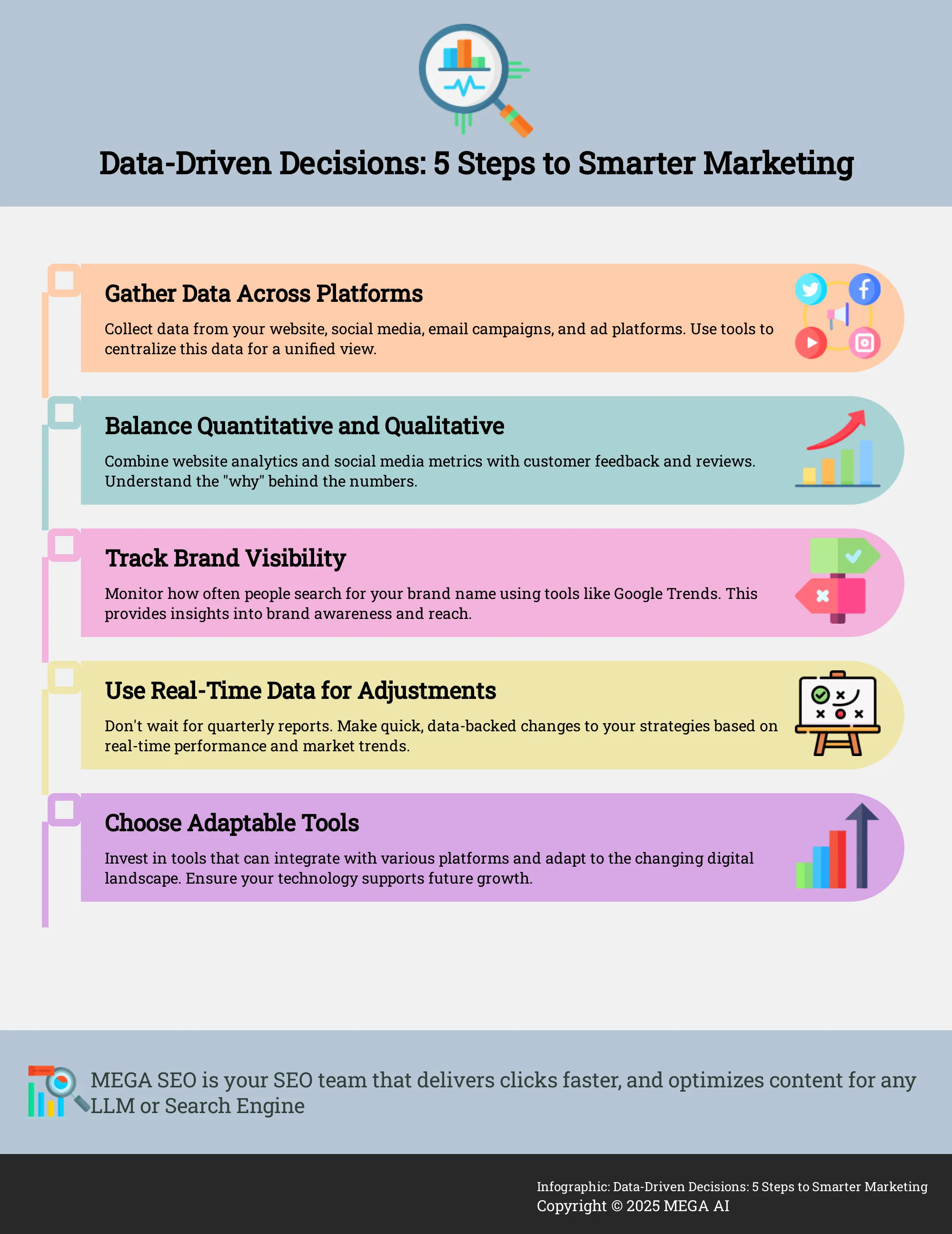
Gather Comprehensive Analytics Across Platforms
To truly understand how your marketing is doing, you need a complete view. This means gathering information from every place your brand shows up online – your website, social media pages, email newsletters, and any ad platforms you’re using. A great way to measure your brand's overall strength is by tracking how often people search for your brand name. This helps you see how visible and recognized your brand is across different channels.
Pulling all this data together might sound like a big task, but there are tools that can make it much simpler. It’s helpful to find solutions that connect with the systems you already use, like your website’s content management system or your ad accounts. This brings all your data into one spot, making it easier to see trends, compare how different channels are performing, and get a better understanding of your customer’s journey. For example, tools that offer SEO services can often help streamline this data collection for a clearer picture.
Balance Quantitative Data with Qualitative Insights
Numbers and metrics, often called quantitative data, are super important for seeing how your marketing is performing. But they don't always paint the full picture. That's where qualitative insights come in – these are the stories and reasons behind the numbers. Think customer feedback, online reviews, comments on your social posts, and even notes from direct conversations. For instance, while AI tools can give you data on how many support chats you handle, the actual conversations within those chats reveal what your customers are truly thinking and feeling.
When you put both types of data together, you get a much deeper understanding of your audience. Your quantitative data might tell you an ad isn't getting many clicks. But, qualitative feedback could show you that the ad's message is unclear. By paying attention to both the 'what' and the 'why,' you can make smarter decisions that really speak to your customers' needs. This balanced view is key for effective paid advertising campaigns and organic efforts alike.
Adjust Strategies Using Real-Time Data
Digital marketing changes fast, so your strategies need to keep up. If you wait for monthly or quarterly reports to make adjustments, you could miss chances to improve or spend money on things that aren't working. It's much better to use real-time data to make quick, smart changes. For example, keeping an eye on how often people search for your brand using tools like Google Trends can give you early signals. If you notice a drop, it’s a good cue to look into why and tweak your approach.
This kind of quick response helps you adapt to new market trends or changes in what your customers want. Many current marketing tools are built to help you make these fast adjustments. For instance, some platforms can automatically update your website content to get more clicks or optimize articles after a search engine update. Others can even move your ad budget around automatically to the campaigns that are doing best, making sure your money is always working hard for you.
8. Prepare Your Business for What's Next
The digital marketing world doesn't stand still, and neither should your business. Staying ahead means more than just keeping up with current trends; it's about actively preparing for what the future holds. By taking proactive steps now, you can build a resilient business ready to adapt and thrive. This involves empowering your team, choosing the right tools, and fostering a mindset that embraces change. Let's look at how you can position your business for continued success.
Equip Your Team with Skills for New Technologies
As technology, especially AI, becomes more woven into our daily marketing tasks, it's essential that your team is ready. Think about AI agents, for example. They're not just futuristic concepts anymore; they're becoming key players in how we interact with customers. These tools can significantly improve customer satisfaction and even help drive growth through smarter upselling and more effective customer retention strategies.
Making sure your team understands how to use and manage these new AI tools effectively will be a critical skill. This isn't just about knowing which buttons to press; it's about understanding how these technologies can be strategically implemented to achieve your business goals. Training and development in these areas will be an investment that pays off as the digital landscape continues to evolve.
Invest in Adaptable Marketing Tools
The marketing landscape is always shifting, and the tools we use need to be able to shift with it. Consider the rapid growth of social commerce; it’s projected to become a massive market. This means businesses need tools that can seamlessly blend e-commerce functionalities with social media platforms. Investing in adaptable marketing solutions, like those offered by MEGA AI, ensures you're not left behind.
Adaptable tools allow you to stay competitive and responsive. When new platforms emerge or consumer behaviors change, having flexible technology means you can pivot your strategies without a complete overhaul. This ability to adjust quickly is crucial for maintaining momentum and capitalizing on new opportunities as they arise. Look for tools that offer integration capabilities and are designed for future growth.
Cultivate a Culture of Innovation and Flexibility
To truly thrive in a fast-paced digital world, your business needs a culture that welcomes innovation and stays flexible. This means encouraging your team to think creatively and be open to trying new approaches. Sometimes, the best opportunities lie in unexpected places, such as international markets where competition might be lower, offering a higher return on investment.
A flexible approach allows your team to respond swiftly to market changes and seize emerging opportunities. This isn't just about reacting; it's about proactively seeking out new ways to connect with your audience and achieve your objectives. When your team feels empowered to experiment and adapt, your business is better positioned to explore future possibilities successfully, no matter what changes come your way.
Related Articles
- Social Media Marketing in 2025: Strategies for Success
- Master Zero-Click Searches to Enhance Your SEO Strategy
- Agentic AI: The Future of Business & Marketing
- Implementing Local SEO Techniques on Multilingual Websites for International Engagement - MEGA SEO | Blog
- Omnipresence Strategy: The Ultimate Guide (2025)
Frequently Asked Questions
With consumers needing so many touchpoints, how can my small business manage to be present effectively without a massive budget? It's more about strategic presence than being everywhere. Focus your energy on the platforms where your ideal customers spend their time. Prioritize creating high-quality, consistent experiences on those key channels. Smart tools can also help you manage your content and interactions more efficiently across different platforms, so you can make a strong impact where it counts most.
If many searches result in no clicks, what’s the real value in optimizing my content for search engines? The value lies in building brand visibility and establishing your authority directly within the search results. When your brand consistently appears as the source of helpful information, even if users don't click through, it builds recognition and trust. Over time, this makes them more likely to choose you when they are ready to make a purchase or engage further.
AI agents sound useful, but how can a startup or small business begin using them without a dedicated tech team? You can start by exploring platforms that integrate AI into user-friendly tools for specific marketing tasks, such as SEO or managing paid advertisements. Many modern solutions are designed for business owners and marketers, not AI experts, allowing you to benefit from AI capabilities to automate tasks and gain insights without needing deep technical knowledge.
Expanding into multiple languages feels like a big undertaking. How do I choose which languages to prioritize first? Begin by researching where your target audience currently is, or where there might be significant market potential with less competition. You can look at your website analytics to see if you're already attracting international visitors. Focus on one or two languages initially where you see a clear opportunity for growth and connection.
I'm not a data analyst. What's a practical first step to making more data-driven marketing decisions? Start by regularly reviewing the basic analytics available from your website and primary social media channels. Pick one or two key metrics to track, such as your website traffic sources or the engagement rates on your posts. This will help you begin to understand what content resonates and which channels are performing well, providing a solid foundation for your decisions.