
When you hire an agency, you give them a goal, not a to-do list. You expect them to own the outcome. So why manage your internal team differently? Many leaders fall into the trap of assigning small, disconnected tasks instead of truly delegating responsibilities. This approach limits your team's potential and keeps them from taking real ownership. To scale your business and empower your people, you must apply the same principle internally. It’s about giving someone the authority to own an entire function—from SEO strategy to paid campaigns—and trusting them to deliver results.
Key Takeaways
- Delegate outcomes, not activities: Shift from assigning a to-do list to transferring ownership of a specific goal. This empowers your team to think strategically and solve problems instead of simply executing commands.
- Provide a clear framework for success: Set your team up to win by defining measurable outcomes, clarifying their decision-making authority, and establishing a check-in cadence that supports autonomy without micromanaging.
- Make trust the foundation of your process: True delegation requires trusting your team to deliver results, even if their methods differ from yours. This builds an accountable culture and allows you to transition from a task manager to a strategic leader.
Tasks vs. Responsibilities: Why Does the Difference Matter?
As a founder or manager, your to-do list can feel endless. The natural impulse is to offload items by assigning tasks: "write a blog post," "design three ad creatives," or "pull a report on last month's traffic." While this clears your plate for a moment, it keeps you in the role of project manager, constantly directing the next step. This is assignment, not delegation.
A task is a specific, defined action. It’s a single step in a larger process. A responsibility, on the other hand, is ownership of an outcome. It involves giving someone the authority to make decisions and take initiative to achieve a goal. Instead of assigning the task "research 10 keywords," you delegate the responsibility to "develop and manage our SEO keyword strategy to grow organic traffic."
The first approach gets a list of keywords. The second gets a strategic partner who thinks about the entire funnel, from search intent to conversion. When you delegate responsibility, you empower your team to solve problems, not just complete chores. This shift is fundamental to scaling your business and developing your people. Understanding this distinction is the first step toward effective delegation that frees you up to focus on higher-level strategy. Whether you're handing off work to a team member or an AI agent, the goal is to transfer ownership of the result, not just the work itself.
Signs It's Time to Start Delegating
Recognizing you can't do it all is a sign of a smart leader, not a weak one. Many small business owners pride themselves on their work ethic, but there's a fine line between being dedicated and being a bottleneck. If you're constantly juggling tasks and feel like you're the only one who can do things "right," you're likely holding your business back. Spotting the warning signs before you're completely underwater is the first step toward building a more sustainable and scalable business through effective delegation.
You Feel Overwhelmed or Burnt Out
If your workday ends with you feeling exhausted but your major goals are no closer, you might be experiencing burnout. This often happens when you're buried in operational tasks, leaving no energy for the work that actually grows the business. Feeling constantly stressed is a primary indicator that your workload is unmanageable. As one source notes, delegation is a critical tool to avoid getting too stressed by trying to do everything yourself. It’s not about getting rid of work, but about strategically distributing it so you can focus your energy where it matters most.
You Lack Time for Strategic Planning
Are you spending your days answering emails and putting out fires instead of planning your next quarter? If so, you're working *in* your business, not *on* it. This is a common trap for founders. Strategic work, like exploring new markets or refining your business model, gets pushed aside for urgent but less important tasks. Effective leaders must delegate tasks to create time for this high-level thinking. For example, instead of manually tweaking ad campaigns, you could delegate that responsibility to an automated platform. This frees up your mental bandwidth to focus on the long-term vision of your company.
Your Team Has Untapped Skills
When you hold on to every task, you're not just overloading yourself; you're also limiting your team's potential. Your employees may have skills and ambitions you're not even aware of because they're never given the chance to use them. Delegating responsibility is a powerful way to foster professional development. It gives team members chances to learn new skills and take on leadership roles, which makes the whole team stronger. This not only improves their capabilities but also increases job satisfaction and engagement. By trusting them with more, you build a more resilient and empowered organization.
Why Most Managers Delegate Incorrectly
Delegation sounds straightforward, but it’s one of the hardest skills for leaders to master. For founders and small business owners, the habit of doing everything yourself is tough to break. When you finally decide to hand work off, the approach you take determines whether you free up your time or create more problems. The issue isn't the act of delegating; it's how it's done.
Most managers fall into the trap of assigning fragmented tasks instead of handing over true ownership. This creates a cycle of micromanagement, bottlenecks, and a team that feels disempowered. Understanding the common pitfalls is the first step toward delegating in a way that actually scales your business and develops your people. It requires a shift from being a director of tasks to a leader who builds accountable, autonomous teams.
The Trouble with Delegating from a To-Do List
Handing an employee a detailed checklist might feel productive, but it strips them of any real ownership. It communicates, "Do exactly this, and don't think for yourself." This approach turns capable team members into task-takers who wait for their next instruction. Instead of solving problems, they simply execute commands. This is the difference between saying, "Research these 10 keywords," and "Own our keyword strategy to capture more search traffic for our core product." The first is a task; the second is a responsibility. When you assign a responsibility, you empower your team to think strategically, adapt their methods, and take pride in the outcome.
Are You Afraid of Losing Control?
For many entrepreneurs, the fear of losing control is the biggest barrier to effective delegation. You worry that if you aren't involved in every detail, the quality will suffer or the project will fail. This is a natural concern, especially when you've built your business from the ground up. However, this mindset makes you the primary bottleneck to growth. If every decision has to run through you, the company can only move as fast as you can. Overcoming this delegation dilemma means trusting your team—or your systems—to execute without your constant oversight.
How a Lack of Trust Holds Your Team Back
Closely tied to the fear of control is a fundamental lack of trust in your team's abilities. You might doubt that anyone can do the job as well or as quickly as you can. This mindset prevents your team from ever getting the chance to develop their skills and prove you wrong. True delegation requires confidence in your people. It’s a demonstration of trust that you believe they are capable of handling the responsibility you’ve given them. Building this trust is essential, as it shows you have the time management skills and leadership qualities needed to grow beyond a one-person show.
Psychological Barriers That Prevent Delegation
Sometimes, the biggest obstacles to delegation aren't your team or your processes; they're in your own head. These internal roadblocks are often subconscious, making them difficult to identify and overcome. As a leader, you might find yourself agreeing to every request or getting caught up in minor tasks, all while your strategic goals gather dust. Recognizing these patterns is the first step toward breaking free from them. Understanding the "why" behind your reluctance to let go can help you build healthier habits that empower your team and allow your business to grow.
The Desire to Please Your Own Boss
Even when you're the one in charge, there's often someone you're trying to impress—whether it's a key client, an investor, or the high standards you've set for yourself. This desire to please can make it difficult to say no or to pass work along to someone else. As research from Harvard Business Review points out, leaders often find it hard to turn down requests because they want to meet demands, even when those demands are poorly managed. You might take on a last-minute project yourself because you believe it's the only way to guarantee it meets a client's expectations, instead of trusting your team to handle it.
The "Addiction" to Easy Productivity
There's a certain satisfaction that comes from crossing small, easy items off your to-do list. It provides a quick hit of accomplishment that can be genuinely addictive. This addiction to easy wins can keep you focused on low-impact activities, preventing you from tackling the more complex, strategic work that only you can do. Instead of planning your next quarter's marketing strategy, you might find yourself manually updating old blog posts or tweaking ad copy. While these tasks feel productive in the moment, they keep you stuck in the weeds and prevent you from delegating effectively and focusing on the bigger picture.
What Does It Mean to Delegate a Responsibility?
Delegating a responsibility means transferring ownership of an outcome, not just handing off a to-do list. It’s the difference between asking someone to "post on social media three times this week" and asking them to "grow our Instagram following by 5% this month." The first is a task; the second is a responsibility. When you delegate a task, you remain the strategic thinker. You’ve already decided what needs to be done and how. The other person is simply executing your plan.
When you delegate a responsibility, you empower someone else to become the strategic thinker for that specific area. They own the goal, develop the strategy, and execute the tasks needed to achieve the outcome. This shift is fundamental for any founder or manager who wants to scale their business and free up their own time for high-impact work. It requires a change in mindset from managing activities to managing results. Instead of checking off boxes, your team members—or even AI agents—are focused on moving the needle on key business metrics. This approach is built on two core ideas: fostering an ownership mindset and clearly defining authority and accountability.
How to Encourage an Ownership Mindset
Shifting to an ownership mindset means you stop being the bottleneck for every decision. Instead, you empower your team members to think and act like owners of their domains. To do this effectively, you need to provide them with the context and information they need to make smart choices. This includes explaining the "why" behind a goal and being transparent about the business objectives. When you empower your team, you’re not just freeing up your time; you’re creating a more engaged and effective workforce. For example, instead of dictating every ad campaign detail, you could delegate the entire responsibility of customer acquisition to a paid ads expert. That person—or an AI agent like MEGA's Erle—then owns the strategy, execution, and results, allowing you to focus elsewhere.
Authority vs. Accountability: What's the Difference?
Effective delegation hinges on the relationship between authority and accountability. When you delegate a responsibility, you must also grant the authority to perform the necessary actions. Authority is the power to make decisions, allocate resources, and take the steps needed to achieve the desired outcome. Without it, the person you’ve delegated to is set up to fail. Accountability is the other side of the coin. The person with the authority is now answerable for the results. You can’t hold someone accountable for an outcome if you haven’t given them the freedom to influence it. This requires a foundation of trust. For instance, when you hand over your company’s SEO, you give your expert the authority to change website code and publish content. In return, they become accountable for improving your search rankings and organic traffic.
The Manager's Ultimate Responsibility
Once you delegate a responsibility, your job isn’t over—it just transforms. Your ultimate responsibility is no longer to manage activities but to manage the results. This means your primary function is to create a framework for success. This includes defining the desired outcome, clarifying the scope of their authority, and establishing a check-in cadence that supports autonomy without micromanagement. You become a coach and a resource, removing obstacles and providing the context your team needs to make informed decisions. This shift requires you to transition from a task manager to a strategic leader, building a culture where your team is empowered to own their work and deliver on their goals.
How to Identify What to Delegate
Deciding what to hand off can feel more complicated than just doing the work yourself, especially when you’re used to managing every detail. But effective delegation is less about offloading your to-do list and more about making strategic choices that empower your team and free you up to focus on high-impact work. The key is to stop thinking about individual tasks and start identifying entire areas of responsibility that someone else can own.
This process begins with a clear-eyed look at your business and your team. You need to understand what your people are capable of, where their natural talents lie, and where they have room to grow. It also requires an honest assessment of which responsibilities are holding you back. Repetitive, time-consuming functions or highly specialized areas outside your expertise are prime candidates for delegation. This doesn't always mean handing work to an internal team member. For many small businesses, it means delegating to an outside expert, whether it's a freelancer, an agency, or an AI agent designed to manage a whole function like SEO or paid ads. By identifying these areas, you can move from being a manager of tasks to a leader who builds a capable, autonomous team.
Tasks to Delegate vs. Responsibilities to Keep
The first step in smart delegation is learning to distinguish between what you should hand off and what you must keep. This isn't about creating two simple piles of work. It's a strategic exercise in defining your role as a leader. Your goal is to delegate entire areas of responsibility, not just the tasks you don’t enjoy. This frees up your mental energy to focus on the high-level work that only you can do. By thoughtfully separating these functions, you create a clear path for your team to take ownership while ensuring you remain the primary driver of the company's vision and long-term success.
What to Delegate
You should delegate responsibilities that are teachable, repeatable, or require specialized expertise that you lack. This includes entire business functions like managing your company's SEO, running paid ad campaigns, or handling social media. When you delegate a responsibility, you empower someone else to become the strategic thinker for that specific area. They own the goal, develop the strategy, and execute the tasks needed to achieve the outcome. For example, instead of assigning the task "update the website," you delegate the responsibility of "maintaining and optimizing our website for conversions." This applies whether you're delegating to a team member, a freelancer, or an automated platform designed to manage a function from end to end.
What to Keep
As a leader, your primary job is to focus on the work that no one else can do. These are the responsibilities that shape the future and culture of your business. This includes setting the overall company vision and strategy, building key relationships with partners and investors, and making final decisions on major financial matters. You are also the ultimate guardian of the company culture. While you can delegate HR tasks, you cannot delegate the responsibility of creating a positive and productive work environment. These high-impact activities are where your time is most valuable and where your personal involvement directly influences the company's growth and direction.
Use the 80% Rule to Decide
One of the biggest mental hurdles to delegation is the belief that no one can do the job as well as you. To overcome this, use the 80% rule. The rule is simple: if someone else can do a task 80% as well as you can, you should delegate it. That 20% difference is often a small price to pay for the time and mental space you gain. Chasing that last 20% yourself becomes a bottleneck that prevents progress. This approach requires you to let go of perfectionism and trust your team. Over time, the person you delegate to will likely improve, potentially even exceeding your own ability as they focus on that specific area.
A Checklist for Deciding to Delegate
When you're staring at your workload, it can be hard to see what can be handed off. Use these questions as a simple filter to help you decide. If you answer "yes" to one or more of these for a specific responsibility, it's a strong candidate for delegation.
- Is this a repetitive function? Tasks that are done daily, weekly, or monthly are perfect for delegation because they can be systemized.
- Does this fall outside my core genius? Delegate responsibilities that aren't your strength to someone who has the specialized skills.
- Could someone else do this 80% as well as me? Use the 80% rule to overcome the perfectionism trap.
- Will this help an employee grow? Delegating can be a powerful tool for developing your team's skills and confidence.
- Is this keeping me from higher-impact work? If a responsibility is consuming time you should be spending on strategy or growth, it's time to hand it off.
Assess Your Team's Capabilities
Before you can delegate a responsibility, you need a realistic picture of your team’s current skills. Managers often hesitate to hand over important work because they’re not confident in their team's ability to handle it. The first step is to conduct an honest assessment. Look at past projects, review performance, and have open conversations with your team members about their capacity and expertise.
This isn’t about finding faults; it’s about identifying where your team is strong and where skill gaps exist. If a critical business function like lead generation or technical SEO falls into a gap, you know it's a prime candidate for delegation. Recognizing these gaps helps you solve common barriers to delegation and make smarter decisions about whether to train internally or outsource to an expert.
The 5Cs of Delegation: A Quick Framework
Once you have a sense of your team's skills, you can use a simple framework to decide if someone is ready to take on a new responsibility. The 5Cs of Delegation provide a quick checklist to ensure you're setting them up for success. Before you hand over a project, consider if the person has the Capability (the right skills and knowledge), Capacity (the time to do the work), Clarity (a clear understanding of the goal), Commitment (buy-in to the objective), and Confidence (the self-assurance to own it). This simple framework helps you spot potential roadblocks. For example, an employee might have all the skills but lack the confidence, requiring extra support from you. If you find consistent gaps in capability for a specialized area like SEO or paid ads, it’s a clear sign to consider delegating that responsibility to an outside expert or an automated platform.
Match Responsibilities to Team Strengths
Great delegation aligns work with natural talent. Instead of just giving a responsibility to whoever has the most bandwidth, consider who is best suited for the work. When you assign responsibilities based on strengths, you not only get better results but also foster a more engaged and motivated team. Someone who loves creative thinking might be perfect for owning your social media strategy, while a data-oriented person could take full responsibility for your analytics and reporting.
If a critical responsibility doesn't align with anyone's strengths, forcing it on them is a recipe for burnout and mediocre results. For specialized areas like managing complex paid ad campaigns, it’s often more effective to delegate to a dedicated resource whose entire focus is that specific function.
Use Delegation as a Growth Opportunity
Delegation is one of the most powerful professional development tools you have. Look for responsibilities that can serve as growth opportunities for your team members. These are often tasks that stretch their current abilities but align with their long-term career goals. Assigning a team member the responsibility of managing a small project from start to finish or owning client communications for a specific account can build their confidence and skills.
This approach creates a positive feedback loop. Your team becomes more capable, allowing you to delegate more significant responsibilities over time. It shows you trust them and are invested in their development, which builds loyalty and a stronger, more resilient team. By viewing delegation as a way to develop talent, you turn a simple management task into a strategic investment in your people.
A Simple Framework for Delegating Responsibilities
Once you’ve identified what to delegate, you need a repeatable process to hand off responsibilities effectively. This isn’t about just dropping work on someone’s desk. It’s a structured approach that sets your team—or your AI agent—up for success. A solid framework ensures that the person taking ownership understands the goal, has the freedom to act, and knows how you’ll measure the outcome. This three-step process works whether you’re delegating to a new marketing hire or enabling an AI agent like Lindsay for your SEO. It shifts the focus from managing tasks to guiding outcomes, which is the core of effective leadership.
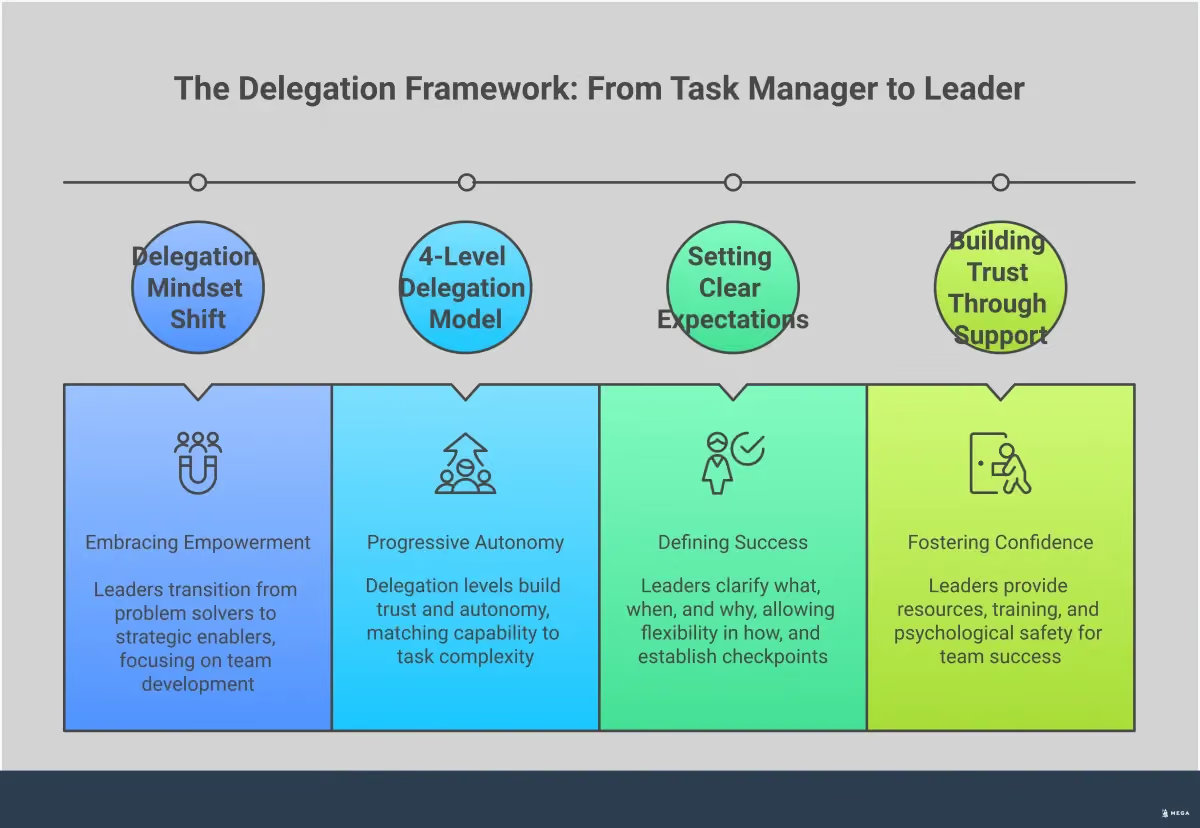
Understand the Levels of Delegation
Delegation isn't an all-or-nothing decision; it’s a spectrum of autonomy. Think of it as a dial you can turn, not a switch you flip. You can grant different levels of authority depending on the person's experience and the complexity of the responsibility. For a new team member, you might start at a lower level, such as, "Research this problem and report back with your findings." As they gain your trust and demonstrate their skills, you can move them up the ladder to, "Handle this completely and just let me know the outcome." This gradual approach helps you build confidence in your team while giving them space to grow. It ensures you provide the right amount of support without micromanaging, matching the level of accountability with the authority you've given them.
Set Clear Expectations and Outcomes
The first step is to define what success looks like. Instead of handing over a to-do list, communicate the desired result. For example, don’t just ask a team member to "post on social media three times a week." Instead, assign them the responsibility to "increase social media engagement by 10% this quarter." This clarity empowers them to think strategically about how to achieve the goal. When you delegate tasks effectively, you provide the destination but let them choose the route. This approach encourages feedback and gives your team a clear benchmark to measure their performance against, fostering a stronger sense of accountability.
Demonstrate and Coach Your Team
Once you’ve set the outcome, your role shifts from director to coach. This doesn't mean you disappear. Instead, you provide the necessary context and resources for your team to succeed. Explain the "why" behind the goal—how it connects to the larger business objectives. This empowers your team member to become a strategic thinker for their area of responsibility, not just an order-taker. Your job is to guide their thinking, ask good questions, and offer support when they hit a roadblock. By coaching them through the process, you build their confidence and capability, turning them into a more valuable asset who can take on even greater responsibilities in the future.
Define Decision-Making Authority
Delegating responsibility means trusting someone else to make decisions. You need to clearly outline the scope of their authority. What decisions can they make on their own, and when do they need to consult you? For instance, with a paid ads strategy, you might set the overall budget but give your specialist—or an AI agent like Erle—the authority to allocate funds between campaigns as they see fit. This is where you build trust in the workplace; by giving your team the autonomy to act, you show confidence in their abilities. This is the principle behind MEGA’s Autopilot Mode, where the agent has the authority to execute a strategy to hit your goals.
Establish Check-ins Without Micromanaging
Autonomy doesn’t mean zero oversight. The final step is to create a rhythm for check-ins that maintains alignment without turning into micromanagement. These meetings aren’t for telling them what to do; they’re for offering support, removing roadblocks, and reviewing progress toward the outcome. Schedule regular, brief check-ins—perhaps weekly or bi-weekly—to discuss results and strategy. This practice helps you empower your teams while staying informed. The goal is to monitor the results of their work, not the minute-by-minute activity. This gives them space to own the responsibility while ensuring the work stays on track.
Provide Autonomy and Trust
True delegation is built on a foundation of trust. Once you've defined the outcome and the scope of authority, you have to step back and let your team—or your AI agent—do the work. This can be the hardest part for many leaders. It means accepting that their process might not be your process, and that's okay. The goal is the result, not the specific path taken to get there. When you trust your team to deliver, you create a culture of accountability and ownership. This shift allows you to move from being a task manager to a strategic leader, focusing on the bigger picture while your team handles the execution. It's about empowering them to solve problems, not just follow a checklist.
Common Delegation Mistakes to Avoid
Even with the best intentions, delegation can go wrong. Many leaders fall into common traps that undermine the process, creating more work for themselves and frustrating their teams. These mistakes often stem from a misunderstanding of what true delegation is. It’s not just about getting tasks off your plate; it’s about empowering others to take ownership and grow. Avoiding these pitfalls is crucial for building an autonomous team and scaling your business effectively.
Delegating Only Undesirable Tasks
It’s tempting to use delegation as a way to offload all the work you don’t want to do. But if you only hand off tedious or undesirable tasks, you’re sending a clear message: "I'm giving you the work I don't value." This approach prevents your team from developing new skills and taking on meaningful challenges. Most managers fall into the trap of assigning fragmented tasks instead of handing over true ownership. This creates a cycle of micromanagement and leaves your team feeling disempowered. True delegation involves entrusting people with responsibilities that allow them to grow, not just clearing your own to-do list of chores.
Failing to Create Supporting Systems
Handing over a responsibility without providing the necessary tools or guidance is setting your team up to fail. For small business owners, creating systems is key to scaling. You need to develop clear processes, checklists, and guides that ensure tasks are completed consistently and correctly, no matter who is doing them. Just as a platform like MEGA AI can create automated systems for your SEO and paid ads, you should create your own internal playbooks for delegated responsibilities. These systems provide a safety net, giving your team the confidence to act autonomously while ensuring quality standards are met without your constant intervention.
Not Planning for a Learning Curve
When you delegate a responsibility, you can’t expect perfection overnight. The person taking on the new role will need time to learn, adapt, and even make mistakes. One of the biggest delegation errors is not accounting for this learning curve. When you delegate a responsibility, you empower someone else to become the strategic thinker for that specific area. They own the goal and develop the strategy to achieve it. Micromanaging or taking back control at the first sign of a problem undermines their confidence and defeats the purpose of delegating. Instead, plan for a period of adjustment and be available to offer guidance and support.
How to Build Trust for Better Delegation
Delegating responsibility feels like a leap of faith. You’re not just handing off a to-do list; you’re entrusting someone with an outcome. This requires a solid foundation of trust, which can be the hardest thing for a founder or manager to build, especially when you’re used to doing everything yourself. Without it, you’ll find yourself defaulting to micromanagement, constantly checking in on tasks instead of letting your team own the results.
Building trust isn’t about blind optimism. It’s a deliberate process of creating an environment where your team—whether it’s an in-house employee or a specialized AI agent—can operate with confidence. When you trust your team to handle the strategy and execution, you free yourself up to focus on growing the business. The goal is to get comfortable with the idea that their way of achieving a result might be different from yours, and that’s okay as long as the outcome meets the standard you’ve set.
Create a Safe Space for Making Decisions
True ownership blossoms when people feel safe enough to make decisions, even if some of those decisions lead to mistakes. If your team fears blame every time an initiative doesn’t go perfectly, they’ll stop taking risks and wait for your instructions on every minor detail. This defeats the entire purpose of delegation. Instead, you need to foster an environment of psychological safety where missteps are treated as learning opportunities. When a campaign underperforms, the conversation should be about analyzing the data and adjusting the strategy, not about who was at fault. This encourages proactive problem-solving and gives your team the confidence to take initiative.
Start Small and Scale Up
You don’t have to delegate your most critical business function on day one. Trust is built incrementally. Start by assigning a small, low-risk responsibility and set clear goals for success. For example, instead of handing over your entire SEO strategy, you could delegate the responsibility for updating existing blog posts to improve their rankings. As your team member or AI agent demonstrates competence and delivers results, you can progressively assign more significant responsibilities. This gradual process builds their confidence and provides you with the proof you need to trust their capabilities on a larger scale. It’s a practical way to scale delegation without feeling like you’re losing control.
Show Confidence in Your Team
Expressing confidence in your team goes beyond just saying the words. It’s about your actions. Once you’ve delegated a responsibility, step back and let them own it. Resist the urge to jump in and correct their course at the first sign of a challenge. Instead, be available for support and guidance, but let them lead the problem-solving process. When you publicly back your team’s decisions and give them the autonomy to execute their strategy, you empower them to take full ownership. This not only builds their skills but also reinforces your trust in their judgment, creating a positive feedback loop that makes future delegation even easier.
How to Communicate Expectations Clearly
Handing off a responsibility without clear communication is like giving someone a destination without a map. To set your team—or your AI agent—up for success, you need to be crystal clear about what you expect. This involves defining what a "win" looks like, explaining the purpose behind the work, and clarifying how much authority they have to get the job done.
Define Success Metrics and Boundaries
Saying "manage our SEO" is too vague. Instead, try "increase organic traffic by 20% in the next six months." Defining success metrics and boundaries ensures everyone is working toward the same finish line. Key Performance Indicators (KPIs) turn abstract goals into measurable outcomes. For example, when delegating paid ads, you might set a target Cost Per Acquisition (CPA) or a specific number of qualified leads per week. These boundaries give your team freedom to operate creatively within a defined space, ensuring their efforts align with business goals.
Explain the "Why" Behind the Work
People who understand the purpose behind their work are more invested and make smarter decisions. Instead of just assigning the task of "writing a blog post," explain the strategy: "We need a blog post on this topic to rank for a key search term." This context empowers them to take true ownership and accountability. When your team grasps the "why," they can adapt and problem-solve without needing you to connect every dot. This is how an expert system like MEGA's SEO agent operates; it's given a high-level goal and builds the strategy to get there.
Put Authority Levels in Writing
Effective delegation requires clarifying how much power someone has to make decisions. If you don't, you become a bottleneck for approvals. Documenting authority levels prevents this confusion. For instance, you might specify, "You have the authority to respond to all customer comments, but any budget adjustments need my approval." This is a core principle in how to delegate effectively. It’s also why tools like MEGA AI offer an "Autopilot Mode." You decide upfront whether the agent has full authority to execute its strategy or if it needs manual approval, setting clear boundaries from the start.
What Challenges Should You Expect When Delegating?
Shifting from delegating tasks to responsibilities is a significant change, so it’s natural to hit a few bumps. The goal isn’t to avoid challenges but to anticipate them. The most common hurdles often stem from your team’s uncertainty and your own instincts to maintain control. You might encounter initial hesitation, find that their approach doesn't perfectly match yours, or struggle to balance support with autonomy. This process takes time and consistent effort, but it ultimately makes the entire team stronger and frees you up for higher-level strategic work.
How to Address Resistance to Ownership
When you ask someone to take full ownership of an outcome, don't be surprised by hesitation. This resistance rarely comes from defiance but from a fear of failure or uncertainty. If an employee is used to a checklist, being handed an entire responsibility can feel daunting. They may doubt their own skills or worry about being blamed if things go wrong. To counter this, frame the delegation as a sign of trust and an opportunity for growth. Explain why you believe they are the right person for the job and assure them that you’re there for support, not to judge their every move.
What to Do About Performance Gaps
It’s unrealistic to expect a team member to execute a new responsibility flawlessly from day one. Managers often hesitate to delegate because they’re worried the work won’t meet their standards. Instead of letting that fear lead to micromanagement, create a plan to address potential performance gaps proactively. Start by assessing their current capabilities and providing any necessary training. Assign responsibilities that stretch their skills but don't set them up for failure. For example, start them with managing one marketing channel before handing over the entire lead generation process. This allows them to build confidence and demonstrate competence over time.
How to Balance Support with Autonomy
Effective delegation is about empowerment, not abandonment. Your role shifts from director to coach. The challenge is finding the right balance—too hands-off, and your team feels unsupported; too involved, and you strip them of their autonomy. Establish a clear framework for support without micromanaging. Schedule regular check-ins that focus on progress toward the outcome, not a play-by-play of their daily tasks. Make it clear you are available to help remove roadblocks. This approach builds a safety net that encourages your team to solve problems independently. It's the same principle behind MEGA AI's Autopilot Mode, which gives our agents the autonomy to execute strategy while you monitor the results.
How to Measure Delegation Success
Once you’ve delegated a responsibility, your job isn’t over. The final piece of the puzzle is measuring success in a way that supports autonomy instead of undermining it. This isn’t about checking up on your team; it’s about creating a feedback loop that confirms you’re both aligned on the goals. Effective measurement focuses on the finish line, not every step taken to get there. By shifting how you track progress, you can confirm that delegation is working and build a stronger, more capable team.
Track Outcomes, Not Activities
The most significant shift in measuring delegation is focusing on results, not the to-do list. When you hand over a responsibility, you also hand over the process. Your concern should be whether the desired outcome was achieved. For example, if you delegate lead generation, don't measure calls made. Instead, track qualified leads added to the pipeline. This approach requires you to define what success looks like from the start. Delegation is most effective when accompanied by well-defined metrics for success. This is how our AI agents work. We don't measure our SEO Agent, Lindsay, by articles written, but by measurable growth in organic traffic.
Give Feedback That Builds Ownership
Feedback is essential for growth, but its delivery determines whether it encourages ownership or feels like micromanagement. Schedule regular check-ins to discuss progress on the overall responsibility, not to review a list of completed tasks. Use this time to ask supportive questions: What challenges are you facing? What resources do you need? This dialogue reinforces that they are the owner of the outcome. Your role is to act as a coach, not a taskmaster. This approach helps employees understand their contributions to the overall goals, fostering a sense of ownership. When feedback centers on the big picture, it empowers your team to solve problems independently.
Use the 5:1 Feedback Ratio
To make your feedback sessions truly constructive, aim for a 5:1 ratio of positive to negative comments. This doesn't mean offering empty praise. It means actively looking for and acknowledging what's going well—a smart decision, a creative approach, or consistent effort. When you consistently recognize positive contributions, you build a foundation of trust. This makes it much easier for your team member to hear and act on constructive criticism when it's necessary. This approach reinforces that you see their overall competence and are invested in their success, not just pointing out flaws. It's a powerful way to deliver effective feedback that motivates your team and strengthens their sense of ownership over their responsibilities.
Recognize and Reward Growth
When an employee successfully takes on a new responsibility, it’s a win for the entire business. Acknowledging their effort and growth is crucial for reinforcing the value of ownership. Recognition doesn't have to be a formal promotion or bonus; it can be a sincere thank you or a public acknowledgment in a team meeting. This practice can foster trust and enhance job satisfaction, creating a culture where people are eager to step up. When your team sees that taking ownership leads to personal and professional growth, they become more engaged. It signals that you trust them and value their development.
Ask for Feedback on Your Delegation Process
Delegation is a two-way street. To make the process work, you need to know how it feels from the other side. Schedule regular check-ins, but treat them as strategy sessions, not status updates. Instead of asking, "Did you finish the tasks I gave you?" ask supportive questions like, "What challenges are you running into?" or "What resources would make this easier?" This shifts the dynamic from inspection to collaboration. The goal is to have a dialogue that reinforces their ownership of the outcome. When you ask for their perspective, you show that you see them as a partner in achieving the goal, not just an employee executing orders.
Reflect and Refine Your Process
Effective delegation is a skill you develop over time, not a one-time action. After each project or quarter, take a moment to reflect on what worked and what didn’t. Did the person have the clarity and authority they needed? Were the check-ins helpful or intrusive? Your goal is to continuously refine your process. Just as an AI agent like MEGA's Erle learns from campaign data to improve paid ad performance, you should learn from each delegation experience to become a better leader. This iterative approach ensures your delegation process evolves and improves, making your team more autonomous and your business more scalable.
Become a Leader, Not Just a Task Manager
Transitioning from a doer to a delegator is one of the hardest shifts for any founder or manager. The final step in that evolution is moving from managing tasks to leading people. A task manager focuses on the "what" and "how," creating checklists and monitoring progress. A leader focuses on the "why" and "who," empowering their team to own outcomes. When you assign a simple task, you get compliance. When you delegate a responsibility, you get commitment, creativity, and growth.
This shift is built on trust. Giving a team member full ownership of a project or a goal shows you have confidence in their abilities. This act of trust is the foundation for a resilient and accountable team. When people feel trusted, they step up. It encourages them to solve problems independently and take initiative, which in turn builds accountability across your entire organization. Instead of waiting for instructions, your team starts looking for opportunities to contribute to the company's success.
This leadership principle applies whether you're delegating to a person or an AI agent. You could spend your time creating a list of marketing tasks: "research 10 keywords," "write one blog post," "launch three Facebook ads." Or, you can become a leader. You can delegate the entire responsibility for SEO to an agent like Lindsay, whose goal is to grow your organic traffic. You can give an agent like Erle the responsibility for your paid ads, trusting him to manage the budget and optimize campaigns for the best ROI. This frees you to focus on the big picture—leading your business forward.