
Most technology companies market their products by talking about features and specifications. In the wellness industry, that approach falls flat. You aren't selling faster processors or more storage; you're offering peace of mind, better sleep, and a healthier life. To connect with your audience, you have to tell a human story. Creating content for WellnessTech is your opportunity to translate your product's technical capabilities into tangible, emotional benefits. It’s how you show, not just tell, your audience that you understand their challenges. This article will teach you how to use storytelling, expert insights, and authenticity to build a brand that people feel connected to on a personal level.
Key Takeaways
- Prioritize Credibility to Build Trust: In the wellness space, trust is everything. Back your claims with scientific evidence, feature expert opinions, and use authentic storytelling to create a brand your audience can rely on.
- Focus on a Niche Audience to Maximize Impact: Instead of creating generic wellness content, identify a specific audience segment. Solving their unique challenges positions your brand as a targeted, valuable resource and helps you stand out.
- Connect Content Creation with SEO and Analytics: Great content is useless if no one sees it. Implement a solid SEO plan to ensure your articles are discoverable, and use analytics to track performance. This data-driven loop allows you to refine your strategy and consistently deliver what your audience wants.
What is WellnessTech and Why Does Content Matter?
WellnessTech is the space where technology and personal well-being intersect. It covers a wide range of products and services, from wearable fitness trackers and mental health apps to telehealth platforms and smart home gyms. If a piece of technology is designed to help you improve your physical, mental, or emotional health, it falls under the WellnessTech umbrella. For companies in this industry, content isn't just a marketing tactic; it's a fundamental part of the business model.
Because you're dealing with something as personal as health, building trust is your most important job. Your audience needs to believe in your product's effectiveness and your brand's credibility before they even consider making a purchase. This is where content comes in. High-quality, well-researched content allows you to educate potential customers, answer their questions, and address their concerns transparently. It shifts the relationship from a simple transaction to one based on trust and authority. Effective wellness marketing is about creating a brand that people feel confident relying on for their well-being.
Modern marketing is about providing solutions, and this is especially true in the wellness industry. Your content should focus on solving the real-world problems your audience faces. Instead of just listing your app's features, create articles or videos that show how those features help someone manage stress, sleep better, or build a consistent fitness routine. By focusing on solutions, you demonstrate genuine empathy and provide value upfront. This approach helps you connect with your audience on a deeper level and shows them you understand their challenges.
Ultimately, content is how you find and engage your target audience. People actively search for information to improve their health every day. A strong SEO strategy ensures your valuable content appears in those search results, positioning your brand as a helpful resource. In a competitive market, it’s the companies that consistently provide useful, authentic, and educational content that will stand out and build a loyal community.
Identify Your WellnessTech Audience
Before you write a single word, the most important step is to know exactly who you’re talking to. The term "wellness" covers a vast landscape, from mental health and nutrition to fitness and sleep science. Trying to create content that appeals to everyone is a common mistake that results in connecting with no one. To build a successful brand in the WellnessTech space, you need to move beyond broad generalizations and get specific about the people you want to reach. This foundational work ensures your message is relevant, resonant, and effective.
Segment your audience
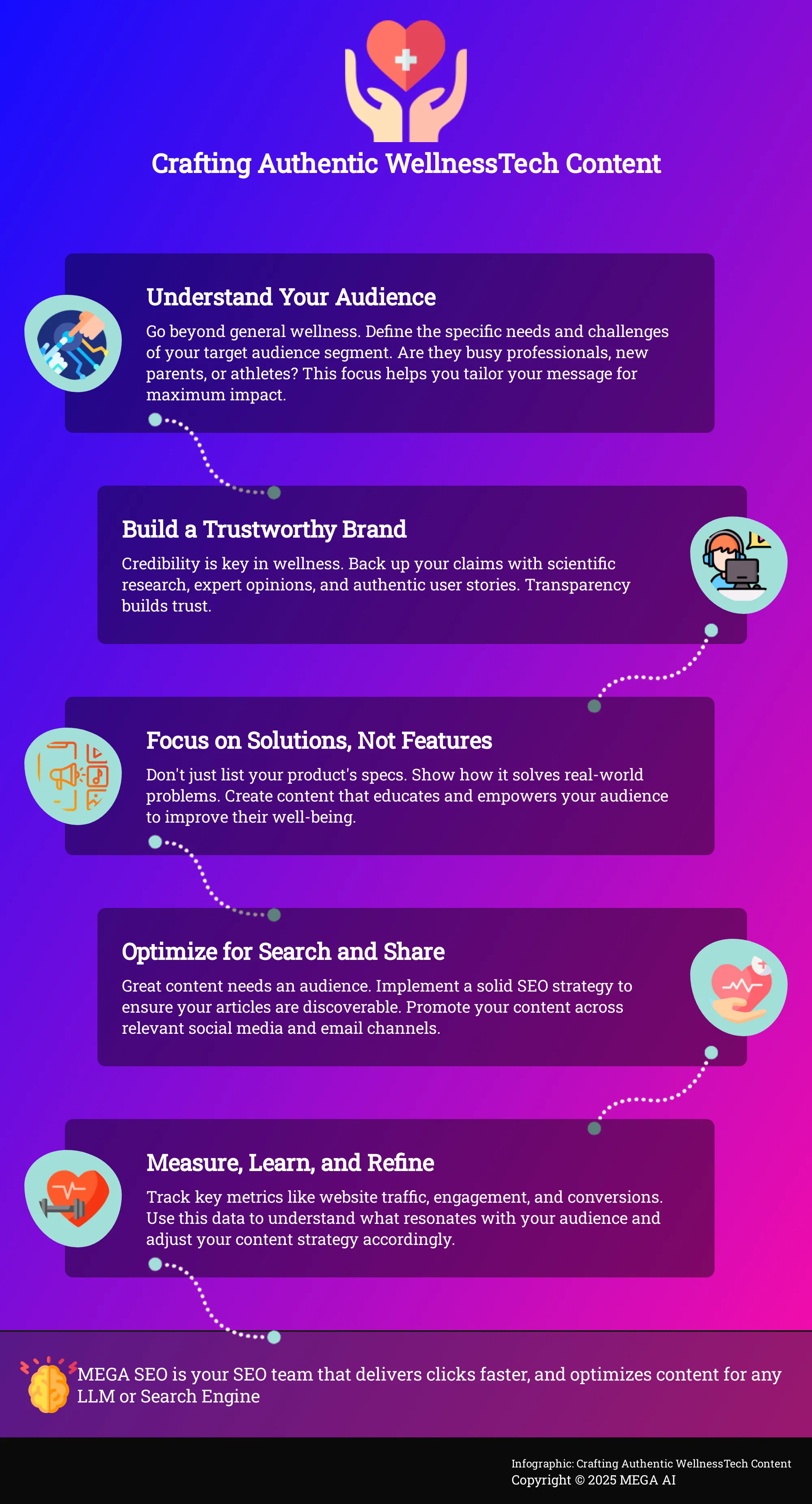
The wellness market isn’t a monolith. It’s composed of countless smaller groups, each with unique motivations, challenges, and goals. Your first task is to identify which of these groups your product serves. A great way to start is by developing a clear audience segmentation strategy. Are you targeting busy professionals seeking stress-reduction tools, new parents navigating postpartum health, or athletes looking to optimize their performance?
Each of these segments has different questions and requires a different approach. By tailoring your content to a specific group, you show that you understand their world. This allows you to provide valuable information that addresses their distinct pain points, which is the fastest way to build trust and establish your brand as a credible authority in your niche.
Address specific wellness needs and challenges
Once you've defined your audience segments, your content must provide solutions to their specific problems. Modern marketing isn’t about pushing a product; it’s about offering genuine help. In the wellness industry, this is especially true. Your content should function as a resource that empowers users to improve their lives, with your product being a natural part of that journey.
Create comprehensive guides, how-to articles, and detailed posts that explain the benefits of your technology in the context of a real-world challenge. For example, instead of just listing your app's features, write an article on "How to Use Bio-Tracking to Improve Your Sleep Quality." This approach frames your product as an essential tool for solving a problem, making your marketing efforts more about education and support than a simple sales pitch.
Create Your WellnessTech Content Strategy
With a clear picture of your audience, the next step is to build a strategy that guides your content creation. A content strategy is your roadmap; it ensures every article, video, and social media post serves a purpose and moves you closer to your business goals. It’s the difference between publishing content randomly and building a powerful resource that attracts and retains customers.
Define your brand voice and mission
Your brand voice is the personality your company shows the world. Is it clinical and authoritative, or warm and encouraging? Defining this is critical in the wellness space, where trust is everything. Your mission is your "why"—the core reason your company exists. By creating a compelling brand with a clear purpose, you can effectively reach your target audience and build credibility. Start by writing down your mission statement and three to five adjectives that describe your desired voice. This guide will keep your messaging consistent, whether you're writing a blog post or a user notification, making your brand feel reliable and familiar.
Set clear content goals
Every piece of content should have a job to do. For WellnessTech companies, a content strategy is essential because it allows you to educate your audience, provide valuable information, and address common pain points your market faces. Instead of a vague goal like "get more traffic," set specific targets. For example, aim to rank on the first page for five key terms related to digital stress management or generate 30 qualified leads per month from your content. Tools that provide automated keyword research can help you find the exact topics your audience is searching for, aligning your content directly with your growth goals.
Build a content calendar
A content calendar is where your strategy becomes an actionable plan. It’s a schedule that outlines what you’ll publish, when, and on which channels. Creating high-quality, relevant content consistently allows your company to become a trusted source of information and build engagement. Your calendar doesn't need to be complex; a simple spreadsheet tracking topics, formats, authors, and publish dates works well. Planning ahead prevents last-minute scrambling and ensures a steady stream of valuable information for your audience. This consistency signals to both users and search engines that you are a dependable authority in your niche.
Choose the Right Content Formats
Once you know your audience and goals, you can select the right formats to deliver your message. Different formats serve different purposes, and a strong strategy often uses a mix of them to keep your audience engaged. Your choice should align with where your audience spends their time and how they prefer to consume information about their health and well-being.
Blog posts and articles
Blog posts and articles are essential for WellnessTech companies because they allow for an in-depth exploration of topics. This format helps you educate your audience about your services and provide valuable information that addresses their specific challenges. Use articles to explain the science behind your product, share user success stories, or offer actionable wellness tips. This approach positions your brand as a credible authority. Creating this foundational content consistently can be a challenge, but AI-powered SEO tools can help you research topics and generate optimized drafts, making the process much more efficient.
Videos, webinars, and infographics
Visual content can significantly improve engagement, especially in the wellness market. Videos, webinars, and infographics are effective because they can visually demonstrate the benefits of your products, making complex information more digestible. Consider creating a short video that shows your app in action, a webinar with a physical therapist demonstrating exercises, or an infographic that breaks down the nutritional benefits of a product. Once you have this compelling visual content, you can use a Paid Ads platform to distribute it across social media and Google, reaching a wider, targeted audience.
Podcasts and voice content
Podcasts and other audio formats are increasingly popular in the wellness industry because they help brands connect with their audience on a more personal level. Audio is perfect for storytelling and sharing expert insights, which helps build trust and credibility with potential customers. You could host a podcast featuring interviews with health experts, guided meditations, or discussions about mental health. This format allows you to build a loyal community around your brand, creating a dedicated audience that feels personally connected to your mission and values.
How to Build Trust and Authenticity
In the wellness industry, trust isn't just a nice-to-have; it's the foundation of your relationship with your audience. People are looking for reliable information and solutions that genuinely impact their health and well-being. Your content must be more than just a sales pitch. It needs to be a credible, empathetic resource that builds a real connection.
By focusing on authenticity, you can cut through the noise and show your audience that you understand their needs. This means backing up your claims, answering their questions directly, and sharing stories that resonate on a human level. Let's look at how you can weave these elements into your content strategy.
Use expert opinions and research
Grounding your content in facts is the quickest way to build credibility. When you discuss health and wellness, your audience needs to know your information is reliable. Prioritize an educational content strategy that provides valuable, evidence-based information.
Cite scientific studies, quote certified professionals, and link to reputable health organizations. This shows you’ve done your homework and are committed to accuracy. Instead of just saying your product works, explain the science behind it. This approach not only builds trust but also empowers your audience to make informed decisions about their health, positioning your brand as a knowledgeable leader in the space.
Answer user questions and concerns
Your content should directly address the problems your audience is trying to solve. Modern marketing is less about selling a product and more about providing a solution. By focusing on your audience's challenges, you show that you're listening and that you genuinely want to help.
Use your blog posts, videos, and social media to answer common questions and clear up misconceptions about your niche. You can use SEO tools to discover what your audience is searching for and create content that meets them right where they are. When you consistently provide clear, helpful answers, you become a trusted resource people turn to again and again, building a loyal community around your brand.
Use storytelling to connect with your audience
Facts and data build credibility, but stories build connection. Storytelling gives your content depth and emotion, making your brand more relatable and memorable. In an industry as personal as wellness, sharing narratives that resonate with your audience is a powerful way to build trust.
Share authentic customer testimonials that highlight real-life transformations. Talk about your founder's journey and the mission that drives your company. Weave narratives into your content that illustrate the "why" behind your products. These stories create an emotional anchor, helping your audience see the people and purpose behind the brand. This fosters a much stronger bond than product features alone ever could.
Optimize Your Content for SEO
Creating helpful, authentic wellness content is the first major step. The next is making sure people can actually find it. This is where search engine optimization (SEO) comes in. Think of SEO as the bridge connecting your valuable information to the people actively searching for answers and solutions online. For a WellnessTech brand, showing up on the first page of Google for a relevant search isn't just about traffic; it's about establishing your brand as a trusted resource in a crowded market. A strong organic presence signals credibility, which is paramount when dealing with topics related to health and well-being.
A solid SEO strategy involves three core activities: understanding the language your audience uses, weaving that language into your content, and building your site's authority. It’s not a set-it-and-forget-it task, but an ongoing process of refinement. As search engines evolve and user needs change, your content strategy must adapt. By focusing on these key areas, you can build a strong foundation that helps your content reach and resonate with the right audience, driving organic growth and building a community around your brand. Automating parts of this process with MEGA AI's SEO tools allows you to focus on creating high-quality information while the platform handles the technical details of research and ongoing optimization.
Research wellness keywords
Keyword research is the foundation of your SEO efforts. It’s the process of identifying the specific words and phrases your potential customers type into search engines. For a WellnessTech company, this means getting inside your audience's head to understand their pain points and goals. Are they searching for "how to improve sleep quality" or "best app for guided meditation"? Understanding this language is crucial. A good strategy involves looking for long-tail keywords—longer, more specific phrases that often have lower competition and higher conversion rates. This helps you attract a more targeted audience that is further along in their wellness journey.
Optimize content for search
Once you have your target keywords, the next step is to integrate them into your content. Effective optimization helps search engines understand what your content is about, improving its visibility in search results. Start by placing your primary keyword in your page title, main heading (H1), and a few subheadings. Weave it and related terms naturally throughout your text. The key is to write for humans first and search engines second. The content must remain valuable and easy to read. Beyond initial creation, you also need to keep your articles current. Using a tool to automatically update content can help improve its click-through rate and ranking over time.
Build quality backlinks
Backlinks are links from other websites to yours, and they act as a powerful signal of trust and authority to search engines. For WellnessTech brands, earning links from reputable health, science, and wellness websites is especially valuable. It tells Google that other experts in your field vouch for your content. You can build quality backlinks by creating highly shareable content like original research or detailed guides that others in the industry will want to reference. Another effective method is guest blogging on established wellness sites, which puts your brand in front of a new, relevant audience while earning a valuable link.
Distribute Your Content Effectively
You’ve created authentic, research-backed content. Now what? The next critical step is getting it into the hands of the people who need it most. An effective distribution strategy ensures your hard work doesn’t go unnoticed. It’s about meeting your audience where they are and building a presence across multiple channels. Let’s look at three key channels to focus on.
Social media
Think of social media as a digital community center, not just a billboard. It’s your space to encourage discussions, share inspirational stories, and answer questions directly. Use visual platforms like Instagram for behind-the-scenes looks and user-generated content, while Facebook Groups can foster deeper conversations. When you find a piece of content that resonates organically, you can use a tool to amplify it. MEGA AI’s Paid Ads service, for example, can take your best-performing posts and create hundreds of ad variations to reach new, targeted audiences across platforms, simplifying the process of turning organic success into scalable growth.
Email marketing
Email marketing is your direct line to your audience. It’s a personal space to educate and build lasting relationships. For WellnessTech companies, a content strategy is crucial for providing valuable information and addressing the specific challenges your audience faces. Use your newsletter to share in-depth articles, announce new features, or offer exclusive wellness tips. By segmenting your list based on user interests or past behavior, you can deliver tailored content that feels personal and relevant. This builds trust and keeps your brand top-of-mind. A consistent flow of high-quality content from a solid SEO plan will also help you continuously grow your subscriber list with engaged readers.
Partnerships and collaborations
Marketing in the wellness space is about providing genuine solutions, not just selling products. Collaborating with others is a powerful way to show you’re part of a larger conversation. Partner with credible influencers, non-competing brands, or certified wellness professionals to co-create content. This could be a joint webinar, a guest post on a respected blog, or an Instagram Live Q&A. These collaborations help you address customer challenges from a new perspective and introduce your brand to an established, trusting audience. It’s an authentic way to build credibility and expand your reach within the community.
Measure and Improve Your Content Performance
Creating content is only half the job. To truly connect with your audience and grow your business, you need to understand what’s working and what isn’t. Measuring your content's performance isn't just about numbers; it's about listening to your audience and giving them more of what they value. This continuous loop of feedback and refinement is what separates good content from great content. By paying close attention to the data, you can make smarter decisions, build a stronger brand, and ensure your efforts are driving real results.
Track key performance indicators (KPIs)
To understand your content's impact, you need to track the right metrics. Key performance indicators (KPIs) for WellnessTech content often include website traffic, search engine rankings, engagement rates like shares and comments, and conversion rates such as newsletter sign-ups or demo requests. By creating high-quality, relevant articles and videos, you can position your company as a trusted source of information. As Wellbeing Magazine notes, this approach helps to build a loyal customer base. Tracking these KPIs tells you if you’re hitting that mark or if you need to adjust your approach.
Use analytics tools to track content
You can’t track what you don’t measure. Using analytics tools is essential for gathering the data behind your KPIs. Google Analytics is a great starting point for understanding website traffic and user behavior. Your social media and email platforms also have built-in analytics to track engagement. For a deeper look, platforms like MEGA AI can help you automatically monitor your SEO performance, including keyword rankings and click-through rates. As Marketing Disty points out, "Utilizing analytics tools can help track engagement and effectiveness of the content being produced," allowing you to see exactly how your audience interacts with your work.
Adjust your strategy with data
The data you collect should directly inform your content strategy. If you notice that articles about mental fitness are getting more traffic and shares than posts about nutrition, that’s a clear signal to create more content on that topic. If a webinar had low attendance, look at the topic, time, and promotion to see what you can change next time. The global wellness market is constantly evolving, making it critical to use data to refine your content and meet your audience's needs. This is an ongoing cycle: create, measure, learn, and repeat.
Overcome Common Content Challenges
Creating content in the WellnessTech industry presents unique hurdles. You're dealing with sensitive topics that impact people's lives, requiring an approach that goes beyond standard marketing. Success hinges on your ability to navigate the fine lines between information and influence, trends and timeless advice, and education and promotion. Getting this right means building a brand that people not only follow but also trust with their well-being. Here’s how to tackle three of the most common challenges.
Maintain scientific accuracy
In WellnessTech, your content carries significant weight. Misinformation can erode trust, so prioritizing scientific accuracy is non-negotiable. It’s how you educate your audience and address their health challenges responsibly. Establish a rigorous fact-checking process by having medical professionals or certified experts review your content. Always cite your sources, linking to peer-reviewed studies or reputable health organizations. This practice strengthens your brand’s authority and aligns with Google’s guidelines for creating helpful, reliable content, which is critical for your SEO performance.
Stay current with wellness trends
The wellness industry evolves quickly. Staying current is key to remaining relevant, but this doesn't mean chasing every fleeting fad. Focus on substantive shifts in behavior and science. You can monitor wellness trends by following industry publications, setting up alerts for key topics, and listening to conversations on social media. By understanding the market, you can create a compelling brand that promotes healthy lifestyles and resonates with what your audience is actively seeking. This proactive approach keeps your content strategy timely and impactful.
Balance education with promotion
Modern marketing is about solving problems. This is especially true in wellness, where consumers seek trustworthy guidance. Your content should primarily aim to educate and empower your audience. By creating high-quality, relevant content, you position your brand as a credible resource and build a foundation of trust. A helpful way to structure this is by using a content marketing funnel, providing broad educational content first. Once you’ve provided genuine value, you can introduce how your product offers a solution. This approach builds a loyal community that sees you as a partner in their wellness journey.
What's Next in WellnessTech Content?
The wellness landscape is constantly changing, and your content needs to keep pace. Staying ahead isn't just about adopting new formats; it's about deepening your connection with your audience. The future of WellnessTech content is less about broadcasting features and more about building relationships through value and trust. As you plan your strategy, focus on a few key shifts that will define success.
First, move beyond broad audience categories and toward hyper-personalization. The future lies in creating tailored content that speaks to an individual’s specific wellness journey. This means using data to understand user needs, preferences, and pain points. Think about delivering content that answers a question before it's even asked or offers a solution that feels uniquely designed for a specific user segment. This level of personalization shows you're listening and makes your audience feel seen and understood.
Next, prioritize educational content that provides clear solutions. Your audience is looking for answers, not just product descriptions. A robust content strategy should focus on guides, articles, and videos that solve real problems. Instead of just explaining what your wearable tracker does, show how it helps a busy professional manage stress or improve sleep quality. Continuously updating your articles to address new user challenges is key, and using automated SEO tools can help keep your content relevant and highly ranked.
Finally, build deeper trust through transparency. In an industry centered on health, credibility is your most valuable asset. You can build that trust with authentic communication. This means being open about your technology, citing scientific research, and sharing genuine user stories. Don't be afraid to discuss the limitations of your product or the science behind it. This honesty fosters a stronger, more loyal community than any slick marketing campaign ever could.
Related Articles
- Grow Your Startup with Effective Content Marketing Tips
- Creating Content for InsurTech: Expert Guide
- Fitness SEO: The Ultimate Guide (2024)
- SEO for Financial Technology: Drive Growth in 2025
- Audience Growth: The Key to Long-Term Wealth
Frequently Asked Questions
What's the most important first step for creating WellnessTech content? Before you write a single word, you need to know exactly who you're talking to. The wellness space is vast, so get specific about the audience segment your product serves. Are you helping busy professionals manage stress or new parents with postpartum health? Understanding their unique challenges allows you to create content that provides real solutions, which is the fastest way to build a meaningful connection.
How can I build trust when my product involves new or complex technology? Ground your content in facts and be transparent. Cite scientific studies, feature insights from certified experts, and explain the research behind your technology in clear, simple terms. Avoid making broad, unsupported claims. When you show your work and are honest about what your product can do, you build a level of credibility that a standard marketing campaign cannot achieve.
What's the right way to balance educating my audience with promoting my product? Your primary goal should always be to educate and solve a problem for your audience. Lead with helpful guides, tutorials, or articles that offer genuine value on their own. Once you have established that trust and demonstrated that you understand their needs, you can then introduce your product as a tool that helps them more effectively reach their wellness goals.
SEO feels complicated. What should I focus on to make sure my wellness content gets found? For wellness content, search engines prioritize trust and accuracy. Your main focus should be creating content that is genuinely helpful, thoroughly researched, and backed by credible sources. Research the specific questions your audience is asking online and write comprehensive answers. Earning links from other reputable health and wellness websites also signals to search engines that your content is trustworthy.
As a small team, how can we consistently create high-quality content without getting overwhelmed? A clear plan is your best defense against feeling overwhelmed. Start with a content calendar to schedule your topics in advance, which prevents last-minute scrambling. Focus on quality over quantity; one deeply researched article is far more valuable than five superficial posts. You can also use tools to streamline repetitive tasks like keyword research or identifying which articles need updates, freeing up your time to focus on creating great content.