
You understand the value your SaaS product brings, but effectively communicating that value to potential users can be challenging. How do you cut through the noise and connect with the right audience? Creating content for SaaS is your answer. It involves a methodical process of understanding your users' pain points, conducting thorough keyword research, and crafting messages that speak directly to their needs. This article provides actionable steps and practical insights to help you develop a content plan that not only attracts visitors but also converts them into loyal customers, ensuring your software gets the attention and adoption it deserves in a crowded marketplace.
Key Takeaways
- Connect Deeply with Your Audience: Build detailed buyer personas and align your content to their specific needs and journey stages to create truly resonant material.
- Focus on Benefits, Not Just Features: Craft content that clearly shows how your SaaS product solves customer problems and improves their situation, using straightforward language and engaging stories.
- Measure, Optimize, and Look Ahead: Regularly analyze your content's performance, use data to make improvements, and stay prepared for evolving trends like AI in search and personalized experiences.
What is SaaS Content Writing?
SaaS content writing is a specialized field focused on creating materials for software-as-a-service companies. The primary aim is to attract, engage, and convert potential customers into paying users. This involves understanding the unique challenges and needs of SaaS businesses and their target audiences. Effective SaaS content clearly communicates the value of a software product, educates users, and builds trust, ultimately driving growth and customer retention. It’s a blend of persuasive writing, technical understanding, and marketing strategy, all tailored to the digital landscape where SaaS products thrive.
A Clear Definition of SaaS Content Writing
SaaS content writing involves creating online material specifically for software-as-a-service companies. Think blog posts, articles, case studies, and website copy. Its main purpose is pretty straightforward: to attract potential customers and guide them towards becoming paying users. Unlike other forms of writing that might aim to purely inform or entertain, SaaS content has a laser focus on conversion. Every piece of content is crafted with the goal of moving someone further along the path to purchasing the software. It’s about showing how the software solves a specific problem or meets a particular need, ultimately persuading the reader that this solution is the right one for them.
How Content Shapes the SaaS Customer Journey
High-quality SaaS content plays a crucial role in guiding potential customers from their first interaction with your brand to the point of purchase and beyond. It's the engine that can drive website traffic, capture interest, and ultimately turn visitors into loyal customers. Well-crafted content can significantly increase your conversion rates, improve click-through rates on your ads and search results, and encourage more sign-ups for trials or demos. More than just attracting eyeballs, effective SaaS content educates prospects, builds trust, and demonstrates the value of your software, often yielding a much better return on investment than traditional advertising methods. It’s about being a helpful guide at every stage of their decision-making process.
Fuel Your SaaS Growth with Strategic Content
To truly power your SaaS company's growth, your content needs a strategic approach. It starts with deeply understanding your audience—knowing their specific needs, challenges, and how they search for solutions. This understanding allows you to perform effective keyword research, identifying the terms your ideal customers are actually typing into search engines. Once you know your audience and your keywords, the focus shifts to the customer. Your content should clearly explain how your product solves their problems, using simple, benefit-driven language. This kind of strategic content not only improves your search engine rankings, making you more visible, but it also builds trust and positions your company as an expert in your field, attracting and converting customers at various stages of their buying journey.
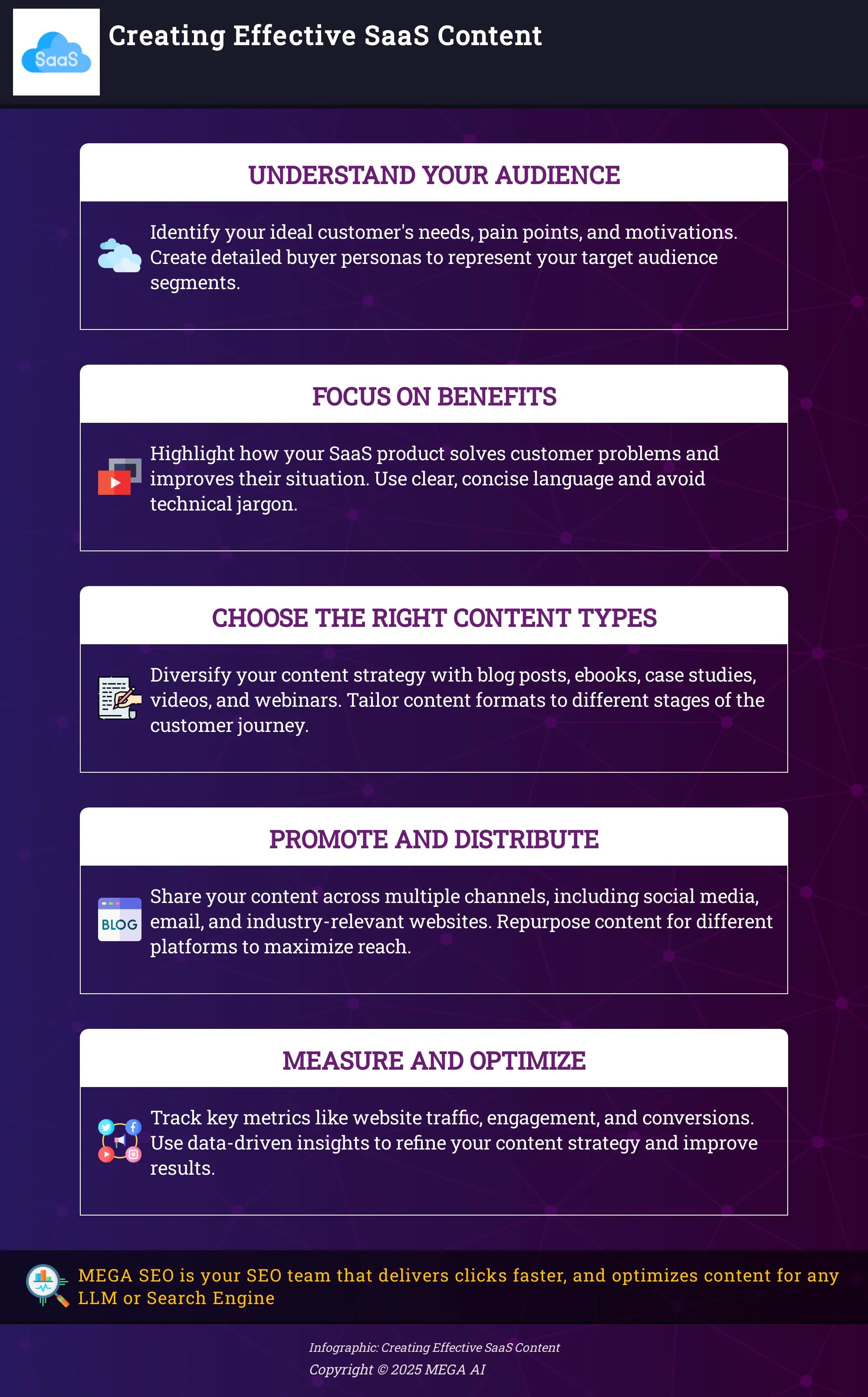
Know Your SaaS Audience
Before you write a single word of your SaaS content, let's pause and consider the most crucial element: your audience. Truly understanding who you're talking to isn't just a good idea; it's the absolute bedrock of any content strategy that aims for real results. We're not just talking about surface-level demographics here. To make an impact, you need to gain a comprehensive view of their world – their professional goals, the specific challenges that occupy their thoughts, what truly motivates their purchasing decisions, and even how they prefer to consume information. You can explore audience analysis techniques to refine this process.
When you achieve this level of clarity, your content transforms. It stops being a monologue and becomes a resonant conversation. You'll build genuine trust, position your SaaS solution as the answer they've been searching for, and ultimately, guide them towards conversion. Think of it like this: you wouldn't offer the same guidance to a seasoned executive as you would to a startup founder navigating their first year, right? The same principle applies here. This profound understanding of your SaaS audience will illuminate every content decision you make, from the topics you choose and the keywords you target, to the tone of voice you adopt and the call-to-action that encourages action. It’s the foundation for creating content that not only attracts but also converts effectively.
Create Detailed Buyer Personas
To truly connect with your audience, you need to go beyond general assumptions. This is where creating detailed buyer personas becomes invaluable. Think of a buyer persona as a semi-fictional representation of your ideal customer. Give them a name, a job title, and a backstory. What are their goals? What challenges do they face daily? What motivates their decisions? To build these profiles, Marketer Milk suggests you analyze your high-LTV customers and even dive into customer support tickets to uncover common questions and pain points. This process helps you step into your customers' shoes and create content that speaks directly to their specific needs and aspirations, making your message far more compelling.
Conduct Effective Audience Research
Once you have your personas, it's time to dig deeper with audience research. Different segments of your audience will have different needs and preferences. For instance, as one Reddit discussion on SaaS content marketing highlights, a younger, more internet-savvy group will respond differently to content than older, established professionals. Your research should uncover these nuances. Consider surveys, interviews, and analyzing social media conversations to understand their language, the platforms they frequent, and the type of content they engage with. This research ensures your content is not just informative but also delivered in a way that your specific audience finds accessible and appealing, increasing its overall impact.
Map Content to the Customer Journey
Your audience isn't static; they move through different stages as they interact with your brand. This is often called the customer journey, typically involving awareness, consideration, and decision stages. Your content needs to meet them where they are. For someone in the awareness stage, an informative blog post defining a problem they're experiencing might be perfect. For those in the consideration stage, a comparison guide or a case study showcasing your solution's benefits could be more effective. As Surfer SEO points out, SaaS content writing aims to attract and convert customers through various content formats that work together. By thoughtfully mapping your content to each stage, you guide prospects smoothly towards becoming customers.
Address Audience Pain Points and Challenges
Ultimately, your SaaS product exists to solve a problem or fulfill a need. Your content should do the same. Identifying and addressing your audience's specific pain points and challenges is crucial for creating valuable content. For example, a common challenge for smaller SaaS companies, as noted in a Reddit thread about assisting SaaS companies with content, is a lack of in-house resources for content marketing. Content that offers solutions, practical tips, or tools to overcome such challenges will resonate strongly. Think about the frustrations your ideal customer faces daily and how your content can provide genuine relief or a clear path forward. This problem-solving approach positions you as a helpful, trusted resource.
Choose Effective Content Types for SaaS
Selecting the right content formats is key to reaching and engaging your target audience effectively. Different types of content serve different purposes along the customer journey, from initial awareness to post-purchase support. For SaaS businesses, a well-rounded approach that incorporates a mix of formats often yields the best results in attracting, converting, and retaining customers. Let's explore some of the most impactful content types you should consider.
Blog Posts and Articles
Blog posts and articles are fundamental to a strong SaaS content strategy. They work hard to draw in organic traffic via search engines and educate potential customers about how your software can help them. As the team at Surfer SEO puts it, "SaaS content writing creates content specifically for software-as-a-service (SaaS) companies to attract and convert customers online." Publishing valuable blog content regularly helps you build authority in your field and keeps your audience engaged. With tools that simplify content generation, you can consistently produce relevant articles that answer your audience's questions and address their challenges, naturally guiding them toward your solution.
Whitepapers and Ebooks
Whitepapers and ebooks allow you to explore complex topics in more detail, offering significant value to your audience. These longer content pieces can effectively position your SaaS company as a knowledgeable leader in your industry. According to Omnius, "High-quality SaaS content drives website traffic, increases conversions (turning visitors into customers), improves click-through rates, boosts sign-ups, generates interest, and yields a better return on investment than traditional advertising." Offering whitepapers or ebooks in exchange for an email address is also a smart way to generate leads, helping you build a list of prospects who are actively seeking comprehensive information and solutions like yours.
Product Documentation and Tutorials
Clear, comprehensive product documentation and tutorials are essential for your users' success and for keeping them as long-term customers. While often considered post-purchase materials, well-crafted help center articles can also attract individuals searching for solutions to specific problems your software addresses. Omnius highlights that SaaS content writers create various content types, including "help center articles (easy-to-understand guides)." Investing in quality documentation not only empowers your users and lessens the burden on your support team but also contributes to a positive overall customer experience. This positive experience is vital for sustainable growth and customer loyalty.
Video Content and Webinars
Video content and webinars provide a dynamic and engaging way to connect with your audience and demonstrate your SaaS product's capabilities. Videos can simplify complex features, offer quick how-to guides, or share compelling customer success stories. A discussion on Reddit about SaaS content marketing emphasizes that "Creating videos, case studies, LinkedIn content, and other content formats is essential for effective content marketing strategies." Webinars offer an interactive space to showcase your product live, answer questions directly, and foster a community around your brand. These formats are especially effective for users who prefer learning through visual and interactive methods.
How to Create High-Quality SaaS Content
Crafting SaaS content that genuinely connects with your audience and delivers real results is about more than just writing. It’s a thoughtful process, starting with knowing what your audience is looking for and figuring out the best way to share information that’s both useful and engaging. When you create high-quality content, you show how your SaaS product can solve problems and you start building a strong relationship with potential customers. Let’s walk through some actionable steps to help your content consistently hit the mark, so you can effectively attract, engage, and convert the users you want to reach.
Conduct Thorough Keyword Research
Knowing what your audience types into their search bar is fundamental to creating SaaS content that gets noticed. Effective keyword research is your first step to uncover the exact terms and phrases your ideal customers use when they’re trying to solve a problem your software can address. Tools like Ahrefs or Semrush are great for this, as they help you find relevant keywords and see how many people are searching for them. Don’t just chase the big, popular keywords; also look for 'long-tail keywords'—those longer, more specific phrases that show someone is further along in their buying journey. This focused strategy helps your content find the right audience at the perfect moment, answering their specific questions and meeting their needs directly.
Develop a Content Calendar
With your keywords in hand, a content calendar acts as your strategic guide for creating and publishing content consistently. Think of it as your master plan: it outlines what pieces you’ll publish, when they’ll go live, and who’s bringing them to life. Whether you’re a solo operator, have a dedicated in-house team, or collaborate with freelancers, a thoughtfully organized content calendar ensures everyone is on the same page. This keeps a regular stream of valuable information flowing to your audience. You can map out monthly themes, align content with product updates or key industry dates, and ensure you’re offering a good variety of content formats. This level of organization is essential for growing your content efforts and hitting your marketing targets smoothly.
Balance Educational and Promotional Content
The most effective SaaS content focuses on teaching your audience and helping them tackle their challenges. While your end goal is naturally to introduce them to your product, content that feels too salesy can turn people away. The key is to find a healthy balance between educational pieces that provide real, actionable insights, and content that explains how your software offers a specific solution. For example, you could write a blog post about improving team productivity with general tips, and then gently weave in how your SaaS tool helps implement those tips. This strategy builds credibility and makes your audience see your product as a genuinely helpful tool, so they’re more open to learning more when you do make a direct offer.
Incorporate Data and Statistics
When it comes to SaaS, building trust is essential, and using data is a powerful way to do that. Supporting your statements with relevant statistics and facts can make your content much more convincing. SaaS content often needs to be quite specific, and including data-backed insights shows your audience that you’re well-informed and truly understand their industry or challenges. You can use information from industry studies, share results from customer case studies (with permission, of course), or even present anonymized data from your own platform if it highlights a key benefit. These factual details make your points stronger, increase the value of your content, and help establish your company as an authority in your field.
Optimize for SEO and AI-Driven Search
How people discover information online is always changing. Search engines, especially Google, are becoming more like 'answer machines,' aiming to provide direct answers to queries. This shift means your content needs to be ready for AI-powered search by being clear, concise, and structured to directly address common questions. Think about using clear headings, bullet points, and perhaps even schema markup so search engines can easily understand and highlight your content, sometimes as featured snippets. Making sure your content is easy to find in this new search environment is key for bringing in organic traffic. Services like MEGA AI’s Maintenance Agent can also play a role here, by helping to keep your existing articles updated and optimized for these evolving search behaviors and even for different platforms.
How to Write Engaging SaaS Content
Creating content for SaaS products requires a specific approach. It’s not just about describing what your software does; it’s about showing potential customers how it can make their lives easier or their businesses more successful. Engaging SaaS content connects with readers on a practical level, addresses their specific needs, and guides them toward a solution – your solution. When you get this right, your content becomes a powerful tool for attracting, educating, and converting your ideal customers. For businesses like startups and digital marketing agencies looking to enhance their online presence, this kind of targeted content is invaluable. Let's explore some key strategies to make your SaaS content truly resonate and drive results.
Focus on Benefits, Not Just Features
It's easy to get excited about all the cool features your SaaS product offers. You built them, after all. But your potential customers are less interested in a list of functionalities and more interested in what those features can do for them. Effective SaaS content writing explains how your software solves specific problems or helps users achieve their goals. This means you need to demonstrate value clearly.
Think about it from their perspective: they have a challenge, and they're looking for a solution. So, instead of saying, "Our platform includes automated keyword research," try, "Save hours on manual research and uncover high-intent keywords effortlessly with our automated keyword research tool." See the difference? The first states a feature; the second highlights a clear benefit – saving time and improving efficiency. Always tie features back to the value they deliver for your audience.
Use Clear and Concise Language
The world of SaaS can be filled with technical terms and industry-specific jargon. While this language might be common internally, it can alienate potential customers who aren't as familiar with the terminology. Your goal is to make your content accessible and easy to understand for everyone in your target audience, whether they're seasoned digital marketers or small business owners just starting with SEO.
Adopt a conversational tone in your writing. Use "you" and "I" to create a direct connection with the reader. Break down complex ideas into simple, digestible sentences and paragraphs. If you must use a technical term, explain it briefly. The clearer your language, the easier it will be for readers to grasp the value of your product and how it can help them. This clarity builds trust and makes your solution feel more approachable.
Incorporate Storytelling Elements
Stories are a powerful way to connect with people on an emotional level and make your content more memorable. Instead of just stating facts, weave narratives that show your product in real-world situations. You can do this through case studies, customer testimonials, or even hypothetical scenarios that your target audience can relate to. This helps potential users visualize the impact of your software.
For example, describe a common challenge a digital marketing agency faces, like managing multiple client ad campaigns efficiently. Then, illustrate how a SaaS tool, perhaps one that allows users to upload content in bulk to various ad platforms, helps them overcome this challenge, save time, and achieve better results for their clients. Storytelling helps potential customers visualize themselves successfully using your product, making the benefits feel more tangible.
Address Common Objections Proactively
Every potential customer will have questions and potential objections before committing to a new SaaS product. Understanding your target audience through detailed buyer personas is key to anticipating these concerns. What are their biggest hesitations? Are they worried about the learning curve, integration with existing tools, or the cost? These are valid points you should be ready to discuss.
By analyzing customer support tickets or interviewing your sales team, you can identify these common sticking points. Then, address them directly and honestly within your content. For instance, if users worry about the complexity of AI-driven tools, you can highlight your intuitive interface or comprehensive onboarding support. Proactively tackling objections shows that you understand your audience's concerns and builds credibility, making them feel more confident in choosing your solution.
Create Compelling Calls-to-Action
Engaging content is great, but it needs to lead the reader somewhere. Every piece of content should have a clear purpose and guide the user toward the next logical step. This is where a compelling call-to-action (CTA) comes in. Your CTA tells the reader exactly what you want them to do next, making it a crucial part of your SaaS content strategy.
Whether it's "Sign up for a free trial," "Book a Demo," "Download our ebook," or "Learn more about our pricing," your CTA should be clear, concise, and action-oriented. Make it visually prominent and easy to find. Without a strong CTA, even the most engaging content might fail to convert readers into leads or customers. Ensure your CTAs align with the content's topic and the reader's stage in the customer journey.
How to Distribute and Promote SaaS Content
Creating impactful SaaS content is just the start; effective distribution and promotion are crucial for it to reach your audience and achieve business goals. This phase gives your content the visibility it needs. Let's explore practical ways to amplify your content's impact and ensure it works hard for you.
Leverage Multiple Channels
Don't confine your content to a single platform. Distributing SaaS content across various channels significantly increases its reach and impact. Beyond your blog, consider social media, email newsletters, guest posts on industry-relevant sites, and active participation in online forums where your audience gathers. The aim is to connect where your ideal customers spend their time. It's wise to leverage multiple platforms and understand each one's algorithm for optimal performance. Consistent organic traffic often comes from strong SEO practices making your content discoverable by search engines.
Repurpose Content for Different Platforms
Maximize your content's value and extend its lifespan by repurposing it for different platforms. This strategy appeals to audiences preferring diverse formats and reinforces your message. A detailed blog post, for example, can become an engaging infographic, a series of concise social media updates, or key talking points for a short video. This approach saves resources while ensuring your core message is seen more widely. A SaaS content marketing guide highlights creating varied content types, like use cases or comparison pages, for each buyer journey stage.
Integrate Content with Email Marketing
Email marketing provides a direct and personal channel to promote your SaaS content to an already engaged audience. Subscribers have given you permission to be in their inboxes, creating a valuable touchpoint for sharing updates and resources. Use emails for sharing new blog posts, announcing insightful whitepapers, or inviting contacts to informative webinars. Segmenting your list based on user interests or past behavior helps deliver more targeted and relevant content, which typically improves engagement rates. To refine your strategy, track user behavior with analytics; this data offers insights for ensuring your content truly resonates.
Use Social Media for Content Distribution
Social media platforms are excellent for amplifying your SaaS content, fostering community interaction, and driving traffic. Adapt your strategy to each platform's unique strengths: LinkedIn is ideal for sharing in-depth industry insights and company news, while Twitter suits quick updates and real-time conversations. Visual platforms like Instagram can be effective if your product has strong visual appeal or you can create compelling graphics. High-quality, original content helps SaaS companies stand out in crowded feeds. In addition to organic sharing, consider using targeted paid ads on platforms like Meta and LinkedIn to reach specific demographics with your best-performing content pieces.
How to Measure and Optimize SaaS Content
Creating great SaaS content is a fantastic start, but how do you know if it's truly hitting the mark and connecting with your audience? That's where the crucial steps of measuring and optimizing come into play. It’s not enough to simply publish content and hope for the best; a proactive approach involves understanding what resonates with your readers and making smart, data-backed adjustments to improve performance. Think of it as fine-tuning an instrument – your content – to ensure it produces the best possible results.
By consistently tracking how your content performs and making these informed changes, you can significantly improve its effectiveness, drive more engagement, and achieve better outcomes for your SaaS business. This continuous loop of measuring, learning, and optimizing is the backbone of any successful content strategy, transforming content creation from a shot in the dark to a calculated method for growth. For businesses looking to simplify and enhance this process, MEGA AI's SEO capabilities offer automated solutions. These tools can help by identifying new content to add to existing articles or re-optimizing content after a Google update, ensuring your material consistently performs at its peak and continues to attract and convert your ideal customers.
Track Key Content Metrics
To understand how your SaaS content is performing, you need to keep an eye on specific numbers. These key metrics give you a clear picture of what’s working and what isn’t. Start by looking at website traffic to see how many people are finding your content. Then, examine user behavior metrics like bounce rate, time on page, and pages per session; these tell you if visitors are engaging with what they find. Conversion rates are also crucial – are people taking the desired action, such as signing up for a trial or booking a demo? Tools such as Google Analytics, Mixpanel, or Amplitude are excellent for gathering these insights, helping you pinpoint exactly where your content shines and where it might need a little polish to better meet your goals.
Use Tools for Content Performance Analysis
Once you're tracking metrics, the next step is to dive deeper into analysis using specialized tools. This isn't just about collecting numbers; it's about understanding the 'why' behind them. Effective keyword research is fundamental here; you want to ensure your content targets terms your audience is actually searching for, which directly impacts its visibility and relevance. Platforms like Ahrefs or Semrush are invaluable for this, helping you uncover high-potential keywords and identify new content opportunities you might have missed. These tools can also show you how your content stacks up against competitors and reveal technical SEO issues that might be holding you back. By regularly analyzing this data, you can refine your content strategy, ensuring it aligns with your audience's needs and search intent, ultimately making your content more discoverable and impactful.
Implement A/B Testing and Optimization Strategies
A/B testing, also known as split testing, is a straightforward yet powerful way to optimize your content. It involves creating two versions of a piece of content—say, with different headlines, images, or calls-to-action (CTAs)—and showing each version to a segment of your audience to see which performs better. This method provides concrete data on what your audience prefers, taking the guesswork out of your optimization efforts. For example, you might test a direct CTA like "Start Your Free Trial" against a softer one like "Learn More About Our Features." Based on the results, you can then implement the winning variation across your content. This iterative process of testing and refining helps you continuously improve your content based on actual user engagement, leading to higher conversion rates and a more effective content strategy overall.
Overcome Common SaaS Content Challenges
Creating great SaaS content comes with its own set of unique hurdles. From keeping up with product updates to making complex features easy to grasp, it can feel like a juggling act. But don't worry, these challenges are common, and with the right approach, you can definitely manage them. Let's look at a few key areas and how you can tackle them effectively.
Maintain Consistency Across Channels
One of the trickiest parts of SaaS content is ensuring your message stays consistent, no matter where your audience finds you. Whether it's a blog post, a social media update, or an email newsletter, your brand voice and core value proposition should shine through clearly. This means thinking strategically about your content. For instance, as Marketer Milk suggests, content should be created strategically, moving from the bottom of the funnel (like detailed guides for retention and activation) to the top (such as awareness pieces).
A good starting point is to develop clear brand guidelines that cover tone, style, and key messaging points. This document becomes your team's go-to for creating any piece of content. Regularly review content across different channels to ensure alignment. Tools that help you manage and distribute content can also simplify the process of maintaining a unified presence, ensuring that every piece of communication reinforces your brand identity and speaks directly to your audience's needs at each stage of their journey.
Keep Content Current with Product Changes
SaaS products are dynamic; they evolve with new features, updates, and improvements. This is fantastic for users, but it means your content—especially product documentation, tutorials, and feature highlights—needs to keep pace. Outdated content can confuse users and undermine trust in your product. As Surfer SEO notes, SaaS content writing is an ongoing process of adaptation and improvement. Think of your content as a living extension of your software; it requires ongoing attention.
To manage this, schedule regular content audits. Make it a habit to review your existing articles, guides, and FAQs, especially after significant product releases. This isn't just about correcting inaccuracies; it's also an opportunity to improve your content based on new audience insights. Platforms like MEGA AI offer solutions such as the Maintenance Agent product, which can help identify and update existing articles, ensuring your information stays fresh and relevant without requiring constant manual oversight.
Balance Technical Accuracy with Readability
Your SaaS product likely has some complex, technical aspects. While it's crucial to be accurate, your content also needs to be accessible and engaging for a diverse audience, which might include users who aren't tech experts. The goal is to explain how your product solves their problems in simple, clear language. As Omnius highlights, it's important to focus on the customer and explain how the product solves their problems using simple language. High-quality content that achieves this balance can significantly drive website traffic and improve conversion rates.
When writing, always put yourself in the customer's shoes. What do they really need to know? How can you explain a technical concept in a way that highlights its value to them? Using analogies, real-world examples, and straightforward language can make a big difference. It's about translating technical details into tangible benefits. This approach not only makes your content more readable but also helps potential customers quickly understand how your SaaS solution can make their lives easier or their businesses better.
What's Next in SaaS Content Marketing?
The SaaS landscape is a dynamic space, and to keep your content marketing effective, you need to look ahead. It's no longer enough to simply produce good articles; the way people find, consume, and engage with content is constantly evolving. By understanding and anticipating the next wave of trends, you can craft a forward-thinking strategy that not only captures attention but also nurtures prospects through the customer journey, ultimately driving growth for your SaaS business. We're witnessing significant shifts, especially with technology like artificial intelligence playing a more integral role in every stage of the content lifecycle, from initial ideation to ongoing optimization. Thinking about these future directions now is crucial for staying competitive and ensuring your content efforts deliver maximum impact. Let's explore three key areas poised to reshape SaaS content marketing: the expanding capabilities of AI and machine learning in content creation, the increasing demand for interactive and personalized user experiences, and the growing influence of voice search. Preparing for these changes will help you build a more resilient, relevant, and effective content strategy for the years to come.
AI and Machine Learning in Content Creation
Artificial intelligence is quickly becoming a co-pilot for content creators. Think about how search engines like Google are evolving; they're increasingly acting as 'answer machines.' This means your content strategy needs to optimize for AI snippets and directly address user queries. AI tools can help you identify the questions your audience is asking and even assist in drafting initial content that answers them effectively. Platforms like MEGA AI can automate parts of this process, from keyword research to generating content outlines, freeing you up to focus on adding unique insights and ensuring brand voice. It's about using AI to enhance your capabilities, not replace them, making your content more discoverable and valuable in an AI-driven search landscape.
Interactive and Personalized Content
Generic content just doesn't cut it anymore. Your audience expects experiences tailored to their specific needs and interests. This is where interactive and personalized content shines. Imagine quizzes that help users identify their biggest challenges, or calculators that show the potential ROI of your SaaS solution. This kind of high-quality SaaS content does more than just inform; it actively engages users, which can significantly improve conversions and sign-ups. By collecting data (ethically, of course) about user preferences and behavior, you can deliver content that feels like it was made just for them. This deeper engagement builds trust and makes your SaaS offering feel more relevant and valuable.
Voice Search Optimization
The way people search for information is changing, with voice assistants becoming a common tool. This shift means optimizing your content for voice search is increasingly important. Voice queries are often longer, more conversational, and phrased as questions – think "How do I integrate my CRM with an email marketing tool?" rather than just "CRM email integration." To capture this traffic, you need to match search intent by understanding the specific questions your audience is asking. Focus on using natural language, incorporating long-tail keywords that mirror spoken queries, and structuring content in an FAQ format where appropriate. This approach not only caters to voice search but also aligns well with how search engines are working to provide direct answers.
Related Articles
- SEO Guide for SaaS Companies to Drive Targeted Traffic
- SaaS SEO: A Practical Guide to Organic Growth
- Content Marketing for Startups: A Practical Guide
- Grow Your Startup with Effective Content Marketing Tips
- Unlock Your Facebook Audience Inside: The Ultimate Guide
Frequently Asked Questions
What's the most important first step in SaaS content writing? Before you even think about topics or keywords, get crystal clear on who you're talking to. Really understanding your ideal customer—their goals, their daily frustrations, and what makes them choose a software solution—is the foundation. When you know them well, your content will naturally speak their language and address their specific needs.
How can I make my SaaS content more engaging than just listing product features? Shift your focus from what your product does to what it helps your customer achieve. Instead of just listing features, explain the direct benefits. How does that feature save them time, reduce stress, or help them reach a specific goal? Weaving in relatable stories or customer examples can also make your content much more compelling and show the real-world impact of your software.
My SaaS product is pretty technical. How do I write about it without confusing people? The key is to use clear, straightforward language and avoid unnecessary jargon. If you must use a technical term, explain it simply. Think about your audience – not everyone will have the same technical background. Focus on explaining how the technical aspects solve a user's problem or make their work easier, rather than just describing the technology itself.
Once I've created content, what are some effective ways to get it in front of the right audience? Don't just publish your content and hope people find it. Share it across different channels where your audience spends their time, like relevant social media platforms and email newsletters. You can also repurpose a single piece of content into various formats – like turning a blog post into a short video or an infographic – to reach more people.
How do I know if my SaaS content is actually helping my business? You'll want to look at a few key indicators. Keep an eye on your website traffic to see if more people are visiting your content. Pay attention to how visitors interact with your pages – are they staying to read, or leaving quickly? Most importantly, track if your content is leading to desired actions, like demo requests, trial sign-ups, or purchases. These metrics will show you what's resonating and where you might need to make adjustments.