
In the MedTech sector, your content serves as a critical bridge between innovation and adoption. It’s more than just words and visuals; it’s a testament to your company's expertise, ethics, and commitment to improving healthcare. Creating content for MedTech successfully requires a meticulously planned strategy that acknowledges the high stakes involved. You must navigate complex regulatory landscapes while ensuring every claim is substantiated and every piece of information is accessible. This piece will delve into how to set clear objectives, align your content with business goals, and implement processes that ensure both compliance and credibility, turning your content into a powerful asset.
Key Takeaways
- Understand Your MedTech Audience and Environment: Create content that truly connects by thoroughly grasping the industry's specific complexities, regulatory demands, and the distinct needs of each group you're speaking to.
- Develop a Clear, Compliant Content Strategy: Build your content around well-defined goals, choose formats that best serve your MedTech audience, and always ensure your information is accurate and adheres to all regulations.
- Leverage Data and AI for Continuous Improvement: Use analytics to consistently refine your content's performance, and integrate AI tools to streamline creation, maintain accuracy, and personalize your outreach effectively.
What is the MedTech Content Landscape?
The MedTech world is truly exciting, brimming with innovations designed to improve and save lives. However, when it comes to communicating these breakthroughs, the content landscape presents its own unique set of characteristics. It’s quite different from marketing a new software or a lifestyle brand. In MedTech, the information is often highly complex, the implications are significant, and your audience can span from specialized medical professionals to patients and their families seeking clear, understandable information. Grasping this distinct environment is the foundational step to crafting content that genuinely connects and delivers value. It involves carefully balancing scientific accuracy with relatable, human-centered communication, all while building and maintaining trust. For businesses, especially startups and small to medium-sized enterprises in this sector, effective content is more than just good marketing; it’s about establishing credibility and clearly articulating the benefits of your innovations in a field that demands precision and care.
Unique Challenges in Creating MedTech Content
Crafting content in the MedTech sphere comes with a particular set of hurdles. One of the primary difficulties is the inherent complexity of the subject matter. The development of new medical devices is often a long and intricate journey, and this complexity naturally extends to how you explain these innovations. You're tasked with making sophisticated technology understandable to varied audiences.
Beyond the technical details, MedTech companies also face significant regulatory and reimbursement processes, which can extend for several years. This means your content strategy must be mindful of compliance from the very beginning, and timelines for product-related content might be longer than in other industries. Despite these hurdles, the US healthcare industry is substantial, making content marketing a valuable approach for MedTech companies to effectively reach their audience and gain market share.
Why You Need a Tailored Content Strategy
Given these distinct challenges, a generic, one-size-fits-all content approach simply won’t be effective in the MedTech industry. What you need is a strategy specifically designed for this unique environment. A strong content marketing strategy is essential, encompassing a detailed plan, clearly defined goals, and a thorough understanding of who you are trying to reach. It’s not just about producing content; it’s about creating the right content, for the right people, at the right stage of their journey.
This means your strategy should thoughtfully address the complexities and regulatory nuances while ensuring your content remains engaging, informative, and accessible. A critical component of this is to deeply understand your target audience. Are you communicating with seasoned healthcare providers, potential investors, or patients seeking information? Each group has distinct needs, knowledge levels, and concerns, and your content must be carefully crafted to resonate with them effectively.
How to Develop Your MedTech Content Marketing Strategy
Developing a solid content marketing strategy is fundamental, especially in a specialized field like MedTech. It’s not just about creating content; it’s about creating the right content, for the right people, at the right time, and ensuring it all serves a larger purpose. Think of your strategy as the blueprint for how you’ll use content to connect with your audience and achieve your business aims. Without this plan, your efforts can become scattered and less effective. A well-thought-out strategy provides direction, helps you allocate resources wisely, and ultimately, makes your content work harder for you. This approach is key whether you're a startup trying to make your mark or an established business looking to deepen engagement. Let's explore how to build one that truly resonates and delivers results.
Set Clear Goals and Objectives
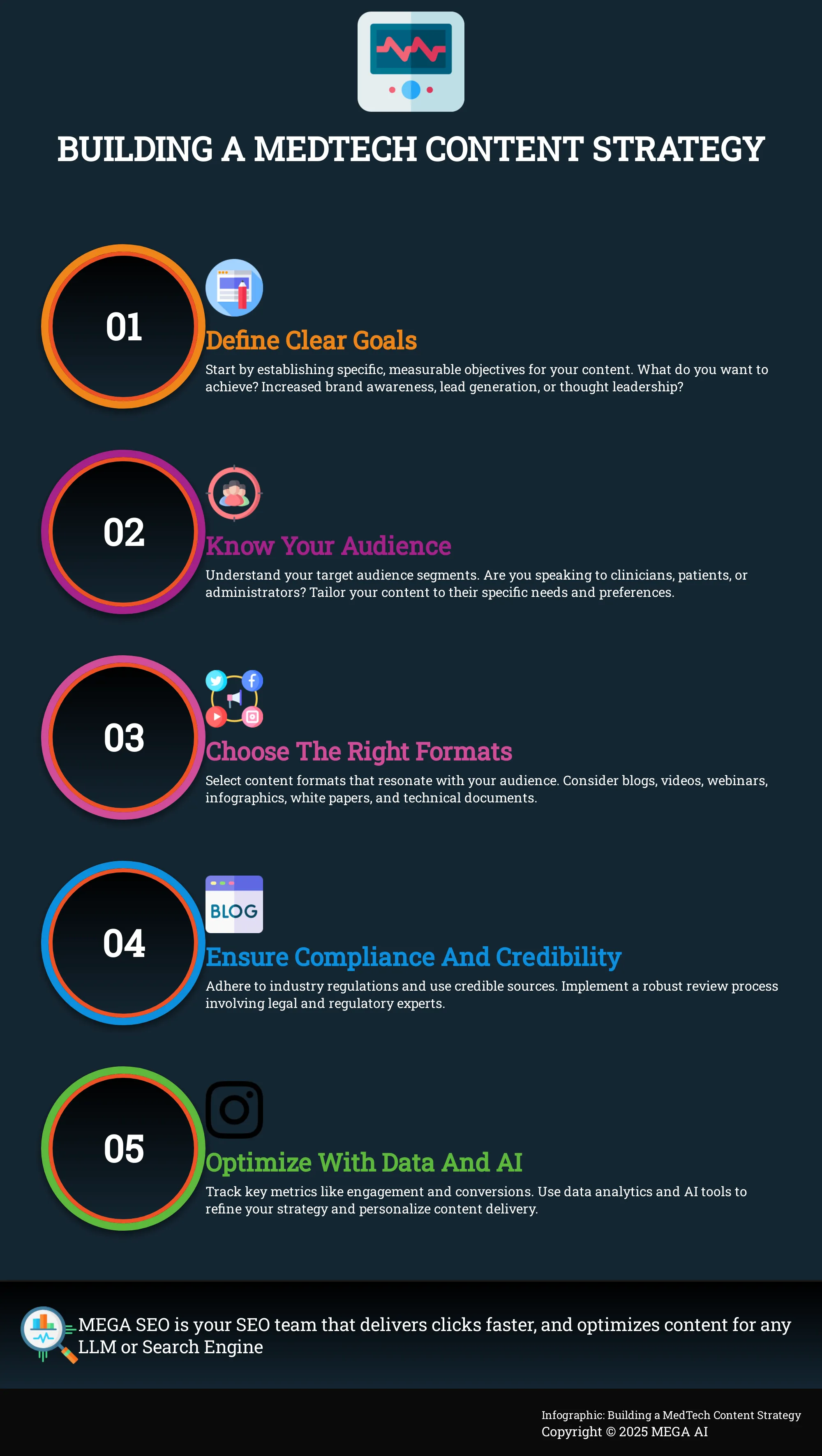
Before you write a single word, it's crucial to define what success looks like for your MedTech content. What do you want your content to achieve? Your goals should be specific and measurable. For instance, instead of aiming to "increase awareness," a clearer goal might be to "generate 20% more qualified leads through our blog in the next quarter" or "increase demo requests for our new software by 15% in six months."
To make your goals robust, analyze your competitors to understand what they’re doing well and where there might be gaps you can fill. This insight helps you carve out a unique space. Equally important is establishing a consistent brand voice. This voice should reflect your company's values and resonate with your MedTech audience, whether they are clinicians, hospital administrators, or patients.
Align Content with Business Objectives
Every piece of content you create should be a stepping stone towards your broader business objectives. A content strategy is essentially your plan for producing and sharing valuable information designed to attract, engage, and ultimately convert your target audience. It’s the framework that ensures all your content efforts are cohesive and purposefully drive your business forward. If a primary business goal is to establish your company as a thought leader in a specific MedTech niche, your content strategy should prioritize in-depth articles, white papers, and webinars featuring expert insights. If another objective is to shorten the sales cycle, your content might focus on case studies and product comparison guides that help prospects make informed decisions faster.
Create a Content Calendar and Distribution Plan
Once you have your goals and know how content aligns with them, it’s time to get organized. An editorial calendar is an indispensable tool here. Use an editorial calendar to meticulously plan and schedule your content creation and distribution. This isn't just about listing blog post titles; it should detail topics, formats, target keywords, responsible team members, deadlines, and planned publication dates. This level of organization keeps your team aligned and ensures a consistent flow of fresh content.
Beyond creation, your distribution plan outlines how you’ll get your content in front of your target audience. Will you focus on SEO for organic reach, share on specific LinkedIn groups, use email marketing, or explore paid promotion? A clear distribution strategy maximizes the impact of every piece you publish.
How to Identify and Understand Your MedTech Audience
Creating content that truly connects in the MedTech field starts with a deep understanding of who you're talking to. It’s not enough to simply know your product or service; you need to know the people who will use it, prescribe it, pay for it, or regulate it. The MedTech audience is often a complex mix of individuals with vastly different backgrounds, knowledge levels, and motivations. You might be addressing seasoned surgeons, curious patients, budget-conscious hospital administrators, or meticulous researchers, each requiring a distinct approach.
Failing to grasp these nuances means your carefully crafted content could miss the mark entirely, failing to resonate or, worse, leading to misunderstandings. In a field where information accuracy and clarity are paramount, truly knowing your audience helps you deliver the right message, through the right channels, at the right time. This understanding is foundational to building trust, demonstrating value, and ultimately, achieving your communication and business goals. Before you even think about what content to create, investing time to identify and understand your audience segments will pay dividends. The following steps will guide you through how to effectively pinpoint your audience and gather the insights you need.
Segment Your Target Audience
One of the first steps in understanding your MedTech audience is to break it down into smaller, more defined groups. This process, known as audience segmentation, allows you to move beyond a one-size-fits-all approach. Think about the different people who interact with your MedTech solution: are they clinicians focused on efficacy and ease of use, patients concerned with outcomes and quality of life, or procurement teams prioritizing cost-effectiveness and integration?
By segmenting your audience based on factors like their professional role, specific needs, challenges, and how they make decisions, you can create much more targeted and relevant content. For example, a highly technical white paper might be perfect for engineers, while a patient-friendly brochure needs simpler language and a focus on benefits. This tailored approach makes your content more impactful for each group.
Conduct Market Research and Surveys
Once you have an idea of your key audience segments, it's time to dig deeper through research. Don't rely on assumptions; actively seek out information. You can conduct market research by analyzing industry reports, competitor activities, and patient advocacy group publications. Surveys are another excellent tool to directly ask your audience about their information needs, preferences, pain points, and where they typically look for solutions.
Consider what questions will yield the most valuable insights. What challenges are they facing that your MedTech solution can address? What information do they need to feel confident in a new technology? What are their preferred content formats? Gathering this direct feedback helps you tailor your content to genuinely meet their needs, ensuring it’s both useful and well-received.
Leverage Social Media Insights
Social media isn't just for sharing updates; it's a rich source of information about your audience. By paying attention to conversations happening on platforms relevant to your MedTech niche—like LinkedIn for healthcare professionals or specialized patient forums—you can gain valuable insights. Look at what topics generate discussion, what questions people are asking, and the language they use.
Many social media platforms also offer analytics tools that can help you gauge audience engagement with different types of content. This data can reveal preferences for certain topics or formats, helping you understand what resonates most. Social listening can also alert you to emerging trends or concerns within your target audience, allowing you to create timely and relevant content that addresses their current interests.
Which Content Formats Work Best for MedTech?
Choosing the right content formats is absolutely vital if you want to effectively reach and engage your specific audience in the MedTech industry. It's not about finding a single magic bullet; rather, it's about understanding how different types of content truly connect with busy medical professionals and key decision-makers. This understanding is what helps you build a stronger, more meaningful connection. More often than not, a strategic mix of formats will serve you best, allowing you to cater to a variety of preferences and address different stages of the buyer's journey. Your primary goal should always be to provide genuinely valuable information in a way that’s not just easy for them to consume, but also simple to share with their colleagues.
Before you dive into creating content, take a moment to really think about what your audience needs at each specific point of their interaction with your brand. Are they in an initial discovery phase, just looking for a quick overview of a problem or solution? Or are they further along, seeking an in-depth explanation of a complex technology or a visual demonstration of a product in action? Answering these questions thoughtfully will naturally guide your format choices. Keep in mind that medical professionals are often pressed for time, so they deeply appreciate content that is clear, concise, and directly addresses their specific challenges and pain points. Leveraging smart platforms, like MEGA AI, can significantly streamline the creation and ongoing optimization of these diverse content types, helping ensure your carefully crafted message always hits the mark and resonates effectively.
Blogs and Articles
Blogs and articles are foundational for any MedTech content strategy. They allow you to address specific topics in detail, answer common questions, and share industry insights. When writing for a MedTech audience, focus on subjects that are genuinely interesting and relevant to their professional lives. This could include new research findings, discussions on technological advancements, or practical advice for using medical devices.
To make your blogs and articles effective, use clear, accessible language, even when discussing complex subjects. Support your claims with credible evidence and data. Well-researched articles can significantly improve your SEO performance, making it easier for your target audience to find you. Consider using formats they prefer, such as case studies integrated into blog posts, to illustrate real-world applications and benefits.
Videos and Webinars
Visual content, especially videos and webinars, can be incredibly powerful in the MedTech industry. Busy medical professionals often find it easier to absorb information through visual demonstrations rather than text alone. Videos are perfect for showcasing how your medical device works, highlighting its features, and demonstrating its benefits in a clinical setting. Product demonstrations, patient testimonials, or animated explainers can make complex information more understandable and engaging.
Webinars offer an interactive platform to connect with your audience in real time. You can host expert discussions, present new research, or conduct live Q&A sessions. This format is excellent for lead generation and building relationships. Remember, images, infographics, and videos are crucial for engaging busy medical professionals, and demonstrations of your device in use are particularly effective.
Infographics and Visual Content
In a field as data-rich as MedTech, infographics and other visual content are invaluable. They allow you to present complex statistics, processes, or comparisons in a visually appealing and easy-to-digest format. An effective infographic can quickly convey key takeaways that might be lost in a lengthy text document, making them highly shareable and extending the reach of your content.
Use visuals like charts, diagrams, and custom illustrations to break up text and make your content more engaging. For instance, you could create an infographic that explains the mechanism of action of a new drug or compares the efficacy of different treatment modalities. It's widely recognized that using visuals like images and infographics significantly enhances engagement, especially with busy professionals.
White Papers and Technical Documents
For audiences seeking in-depth information and detailed analysis, white papers and technical documents are essential. These formats allow you to explore complex topics thoroughly, present original research, and establish your organization as a thought leader. White papers are particularly useful for targeting professionals at later stages of the buyer's journey who are evaluating solutions and need comprehensive data to make informed decisions.
When creating these documents, ensure they are well-researched, meticulously referenced, and clearly written. Technical documents, such as specification sheets or clinical study reports, provide the necessary details that specialists require. By creating various content types like blogs, case studies, and white papers, you can effectively target different stages of your audience's decision-making process. Tools like MEGA AI can also help optimize this existing content to ensure it reaches the right people.
How to Ensure Compliance and Credibility in MedTech Content
In the MedTech world, the content you create isn't just about marketing; it's about trust, safety, and accuracy. The stakes are incredibly high because your audience—whether they're healthcare professionals or patients—relies on your information for critical decisions. Building and maintaining credibility isn't just good practice; it's essential. Similarly, working through the complex web of regulations is non-negotiable. If your content misses the mark on compliance, the consequences can be severe, impacting not only your reputation but also potentially patient well-being.
Think of compliance and credibility as the two pillars supporting your entire content strategy. Without them, even the most engaging content can crumble. It’s about being meticulous, transparent, and always prioritizing the end-user's safety and understanding. This means every claim needs to be substantiated, every piece of data verified, and every regulation carefully considered. Let's explore how you can make sure your MedTech content stands strong on both these fronts, ensuring it’s not only effective but also responsible. This approach will help you create content that resonates with your audience while upholding the highest standards of integrity.
Adhere to Industry Regulations
Staying on the right side of industry regulations is paramount in MedTech. These rules are in place to protect patients and ensure that information is communicated responsibly. For instance, you need to meticulously address data privacy by following regulations like GDPR (General Data Protection Regulation) in Europe and CCPA (California Consumer Privacy Act) in the United States. This ensures your content and data handling practices comply with legal standards and safeguard sensitive patient information.
Beyond data privacy, there are specific guidelines from bodies like the FDA (Food and Drug Administration) in the US regarding how medical devices and technologies can be marketed. This includes rules about making claims, presenting clinical data, and ensuring fair balance. Failing to follow these regulations can lead to hefty fines, legal action, and significant damage to your brand's trustworthiness. It’s crucial to have a clear understanding of all applicable local and international regulations and integrate them into your content creation and review processes from the very beginning.
Use Credible Sources and Data
The foundation of trustworthy MedTech content lies in the quality and reliability of the information you present. Your audience, often comprising healthcare professionals and discerning patients, will scrutinize your claims. Therefore, it's vital to prioritize credible content by using reliable sources such as peer-reviewed journals, established medical institutions, and official regulatory bodies. Always be transparent about where your information comes from; citing your sources clearly not only adds weight to your content but also allows your audience to verify the information themselves.
Furthermore, honesty is key. If there's something you don't know or if data is preliminary, acknowledge it. This transparency builds trust far more effectively than overstating claims or omitting uncertainties. Ensure any statistics, study results, or technical specifications you present are accurate, up-to-date, and contextually appropriate. Using robust data correctly helps your audience make informed decisions and positions your organization as a knowledgeable and ethical leader in the field.
Implement a Robust Review Process
Even with the best intentions and most skilled writers, errors or compliance oversights can happen. That's why a robust internal review process is indispensable for MedTech content. This process should involve multiple stakeholders, including subject matter experts, legal counsel, and regulatory affairs specialists, to ensure accuracy, compliance, and clarity before any content goes live. This multi-layered approach helps catch potential issues that a single reviewer might miss.
Consider ways to streamline this crucial step. For example, automating the medical, legal, and regulatory (MLR) review process can significantly speed up approvals and reduce compliance risks. Moving away from less efficient methods like email chains and spreadsheets to a more structured system can make a big difference. This ensures that all content is thoroughly vetted against the latest guidelines and internal standards, maintaining high quality and minimizing potential liabilities. A solid review process is your final checkpoint for credibility and compliance.
How to Optimize MedTech Content with Data Analytics
Optimizing your MedTech content isn't a one-time task; it's an ongoing process fueled by data. In a field as precise and regulated as medical technology, understanding how your audience interacts with your information is paramount. Data analytics offers a clear lens through which you can view content performance, moving beyond assumptions to make truly informed decisions. By systematically tracking key metrics and analyzing user behavior, you can uncover what truly resonates with healthcare professionals, researchers, or patients.
This insight allows you to refine your messaging, select the most impactful content formats, and ensure your resources are allocated effectively. Ultimately, a data-driven approach transforms your content strategy from a static plan into a dynamic, responsive engine for engagement, lead generation, and building trust within the MedTech community. It’s about making every piece of content count and demonstrably contributing to your business objectives. This continuous improvement cycle is vital for staying relevant and authoritative in the fast-evolving MedTech landscape. Platforms like MEGA AI can further streamline this by helping to automate aspects of SEO and content maintenance, allowing you to focus on strategic insights.
Key Metrics to Track
To effectively optimize your MedTech content, you need to monitor the right performance indicators. Start with website analytics, looking at overall traffic, page views, and where your visitors are coming from. Dive deeper into engagement metrics such as time on page and bounce rate to understand how compelling your content is. For specific pieces, track keyword rankings to see how well you’re performing in search results for relevant MedTech terms.
Don't forget about conversion rates – are users taking the desired actions, like downloading a white paper or requesting a demo? Social media engagement, including likes, shares, and comments, can also provide valuable feedback on what topics capture attention. Email marketing data, such as open rates and click-through rates, will show how effective your content is when delivered directly to your audience. Consistently monitoring these metrics provides a clear picture of your content's impact.
Use Analytics to Refine Your Content Strategy
Collecting data is just the first step; the real value comes from using those analytics to refine your content strategy. If you notice that articles about a specific medical innovation receive high engagement and long page times, consider creating more content around that topic, perhaps in different formats like webinars or in-depth guides. Conversely, if certain content pieces have high bounce rates, investigate why. Is the information unclear, or is the page not user-friendly?
Regularly reviewing content performance allows you to make data-driven adjustments. For instance, if videos consistently outperform blog posts in terms of engagement, it might be time to invest more in video production. This iterative process ensures your content strategy evolves with your audience's preferences and continues to deliver value, helping you allocate resources more effectively.
A/B Test and Optimize Content
Continuous optimization is key to maintaining a high-performing MedTech content library. Start by evaluating your existing content. Look at metrics like page views, bounce rates, and time spent on pages to identify pieces that are performing well and those that need improvement. For underperforming content, consider A/B testing different elements. You could test new headlines, calls-to-action, imagery, or even the overall structure of the piece.
For example, you might test two versions of a landing page for a new medical device—one with a short, concise description and another with more detailed technical specifications—to see which converts better. It's also important to stay informed about trends and best practices in content creation and SEO. Sometimes, a fresh perspective or professional assistance can make a significant difference in making your content as effective as possible. This ongoing testing and refinement helps ensure your content remains relevant and impactful.
How to Use AI and Automation for MedTech Content
Creating content in the MedTech field means working with complex information, strict regulations, and diverse audiences. This is where artificial intelligence (AI) and automation can really make a difference. These technologies offer smart ways to make your content processes smoother, from writing the first draft to keeping it up-to-date and getting it to the right people. When MedTech companies use AI and automation, they can produce informative, compliant, and interesting content more easily. This frees up teams to focus on bigger plans and new ideas instead of getting stuck on repetitive tasks.
Think of AI as a skilled assistant that can analyze large amounts of data and identify patterns. Automation acts like a reliable project manager, ensuring tasks are completed consistently and on time. Together, they can help you scale your content efforts, maintain accuracy, and connect more effectively with healthcare professionals, patients, and stakeholders. The main idea is to understand how these tools can be applied to the specific demands of MedTech content. This way, technology supports your goal of providing clear, credible, and useful information. This approach not only improves your workflow but also enhances the overall quality and reach of your content. For businesses exploring how to simplify complex digital marketing tasks, these technologies offer a clear path forward.
AI for Content Generation and Optimization
AI has really changed how we create content, giving MedTech marketers useful ways to produce and polish materials. It allows you to generate high-quality content efficiently, which is a big help when you need to develop informative articles, detailed product descriptions, or clear marketing copy. AI tools can help draft initial content, suggest relevant topics based on current discussions, or even simplify complex medical terms for different readers.
Beyond just writing, AI is also great for optimizing content. For example, it can review your existing materials to find areas for improvement. This ensures your content is not only accurate but also easy for search engines to find, helping your audience connect with you. Platforms like MEGA AI offer features such as automated keyword research that can guide you in creating materials that truly speak to your target audience and meet industry needs.
Automate Content Distribution and Maintenance
Once your MedTech content is ready, getting it reviewed, approved, and shared efficiently is the next step, especially with strict regulatory rules. Automation can be a huge help here. For instance, automating the medical, legal, and regulatory (MLR) review process can significantly speed up approvals and lower compliance risks, moving away from slower, manual methods. This means your content gets to your audience faster while following all necessary guidelines.
Automation is also key for keeping your content current. The MedTech field changes quickly, and your materials need to show the latest information. Automated systems can help watch over your existing content, point out outdated details, or even help update articles to keep them accurate. MEGA AI’s Maintenance Agent, for example, can help improve how often people click on your existing articles and find new information to add, keeping your content fresh and effective.
Enhance Personalization and Audience Targeting
MedTech audiences are varied, including specialized surgeons and patients looking for basic information. AI can greatly improve your ability to personalize content and reach specific groups more effectively. By looking at data from market research, social media, and customer feedback, AI helps you understand audience needs and preferences more clearly. This understanding allows you to adjust your content—whether it's technical details for engineers, clinical data for doctors, or educational material for patients—for the right group.
AI tools can help create dynamic content, where website information or emails automatically change based on a user's profile or actions. This makes the experience more relevant and engaging. Better customer segmentation, thanks to AI, also means your marketing messages are more likely to connect with people who will find them most useful. This precise targeting is helpful for both your regular content strategy and for managing paid advertising campaigns, ensuring your efforts effectively reach the right individuals.
Related Articles
- Grow Your Startup with Effective Content Marketing Tips
- Content Lead: A Comprehensive Guide to the Role
- Audience Insights: The Ultimate Guide (2024)
- AI-Driven Privacy Law Compliance: A 2024 Guide
- Create Top-Notch Content with AI Tools
Frequently Asked Questions
What's the biggest hurdle for MedTech companies when it comes to content? Many MedTech companies find it challenging to move away from a one-size-fits-all content approach. The key is to create materials that are not only scientifically accurate but also easily understood by diverse groups, such as medical professionals and patients. It's about striking a balance between technical detail and clear communication to build trust effectively.
My MedTech product is quite technical. How can I explain it without confusing my audience? The best approach is to clearly identify who you're speaking to. Segment your audience into distinct groups—for example, clinicians, hospital administrators, or patients. Then, you can tailor your language, the level of detail, and the focus of your content for each specific group. A surgeon might require in-depth technical specifications, whereas a patient will likely benefit more from understanding the practical benefits in straightforward terms.
MedTech changes so quickly. How can I prevent my content from becoming outdated? Keeping your content current is indeed a significant task in this field. Make it a regular practice to review your published articles, white papers, and guides to ensure they reflect the latest information and advancements. Using tools designed to help identify outdated sections or suggest relevant updates, such as AI-powered content maintenance features, can be very beneficial for keeping your information accurate and valuable.
How can I ensure my MedTech content meets all regulatory requirements without slowing down my marketing efforts? Adhering to regulations is absolutely essential. Your first step should be to thoroughly understand the specific rules that apply to your device and the markets you operate in. Establishing a clear and robust internal review process that involves subject matter, legal, and regulatory experts is critical. Additionally, exploring tools that can help streamline these review workflows can make the compliance process more efficient.
I'm just beginning to create content for my MedTech startup. What should be my initial focus? Start by clearly defining what you aim to achieve with your content. Are you looking to generate more leads, build brand awareness, or educate potential users? Once your goals are set, dedicate time to thoroughly understand your specific audience segments. Knowing their unique needs, challenges, and where they seek information will guide the type of content you create and how you choose to share it.