
Marketing technology offers incredible power, but that power is only realized when potential users understand its value. In a field brimming with innovative tools and platforms, your message needs to be clear, compelling, and targeted. This is precisely where the challenge and opportunity of creating content for MarTech lie. It’s not just about detailing features; it’s about translating complex capabilities into tangible benefits for startups seeking efficiency, small businesses aiming for growth, or digital agencies striving for client success. This guide will explore how to craft content that truly connects, educates your audience, and ultimately drives adoption of your MarTech solutions.
Key Takeaways
- MarTech Success Hinges on Quality Content: Understand that your marketing technology tools are most effective when paired with valuable, audience-focused content designed to engage and convert.
- Connect by Customizing Your Content: Create impactful MarTech content by thoroughly knowing your audience, crafting messages that resonate with their specific needs, and matching your delivery to their stage in the customer journey.
- Continuously Refine with Data: Treat your MarTech content strategy as an ongoing process. Use performance data and A/B testing to consistently improve your approach and stay aligned with evolving industry trends.
What is MarTech and Why Does Content Matter?
If you're in marketing, "MarTech" is likely a familiar term. It's the engine driving modern marketing, but where does content fit? Content is the fuel for your MarTech. Without compelling, relevant material, even sophisticated MarTech stacks fall flat. Let's explore what MarTech is and why quality content is essential for its success.
What is MarTech and How Does It Shape Marketing?
MarTech, or Marketing Technology, includes the software and tools marketers use to plan, execute, and measure campaigns. It's the digital toolkit helping businesses connect with customers effectively. These MarTech platforms have changed how teams operate, enabling automation and deep personalization.
MarTech empowers teams to work smarter, streamlining processes and gathering data for better results. For marketing leaders, using the right MarTech is key to creating campaigns that reach audiences and align with business goals. It’s about using technology for more efficient and impactful marketing.
Why Your MarTech Strategy Needs Great Content
A solid MarTech strategy is vital, but great content is equally important. Your MarTech tools deliver messages, but the content itself must be valuable. High-quality, original material captures attention and resonates with your audience. This means creating content that addresses specific audience needs and naturally incorporates relevant keywords.
As market competition grows, your content must stand out and make an impact. Producing a steady stream of compelling material is a challenge. While your MarTech stack helps distribute and analyze content, creating that core, valuable content is a human endeavor, often supported by smart tools like MEGA AI's content generation features.
How Content Connects You with Customers
Content acts as the bridge between your brand and your customers. It’s how you initiate conversations, build relationships, and guide potential buyers. Effective content comes from deeply understanding your audience. Audience research is fundamental, helping you create content that speaks to customer pain points and interests, thereby improving campaigns and refining your messaging.
To gather these crucial insights, you can use methods like user interviews or customer data analysis. Each technique offers unique perspectives into consumer behavior. Knowing your audience well allows you to craft content that not only attracts them but also builds trust and positions your brand as a helpful resource, making your MarTech efforts significantly more fruitful.
What Makes MarTech Content Effective?
When it comes to marketing technology, creating content that genuinely connects and delivers results is a craft. It’s not simply about detailing what your software does; it’s about showing your audience—be it a startup founder figuring out their first marketing stack, a small business owner looking to save time, or a digital agency aiming to provide better client outcomes—how your MarTech solution can make their work easier and more effective. Think of your content as the bridge between your technology's capabilities and your customer's needs. It needs to be sturdy, clear, and inviting.
In a field that can sometimes feel overwhelming with jargon and complex features, your content plays a crucial role in demystifying your offerings. It’s your opportunity to educate, build trust, and guide potential users toward making an informed decision. Great MarTech content doesn't just list functionalities; it articulates value. It tells a compelling story of how your tools can solve real-world problems, streamline processes, and ultimately contribute to growth. For businesses looking to leverage platforms like MEGA AI for their SEO and paid ad strategies, understanding these content principles is vital. It ensures that the message about powerful automation and simplification reaches the right people in the right way. Let's explore the core elements that make MarTech content truly effective, turning casual browsers into engaged users.
Know Your Audience
The foundation of any impactful MarTech content is a genuine understanding of your audience. This isn't just about knowing their job titles; it's about digging into their daily challenges, the specific problems they're trying to solve, and even the kind of language they use in their professional circles. Are they a startup founder juggling multiple roles and needing quick, efficient solutions? Or perhaps a digital marketing agency looking for tools to scale their client services? By conducting thorough audience research, you can pinpoint these nuances. This allows you to create content that speaks directly to their needs and aspirations, making them feel seen and understood. This targeted approach is far more effective than a generic message, ensuring your content truly connects.
Write Messages That Connect
With a clear picture of your audience, the next step is to write messages that resonate deeply. This means producing high-quality, original content that directly addresses their specific interests and solves their problems. Instead of simply listing software features, focus on the tangible benefits and outcomes your MarTech provides. How does it save them time, improve their results, or simplify a complex process? Use clear, straightforward language, and steer clear of excessive technical jargon unless you're certain your audience is highly specialized and prefers it. Equally important is to naturally incorporate the keywords they are using to search for solutions, making your valuable insights easy to find.
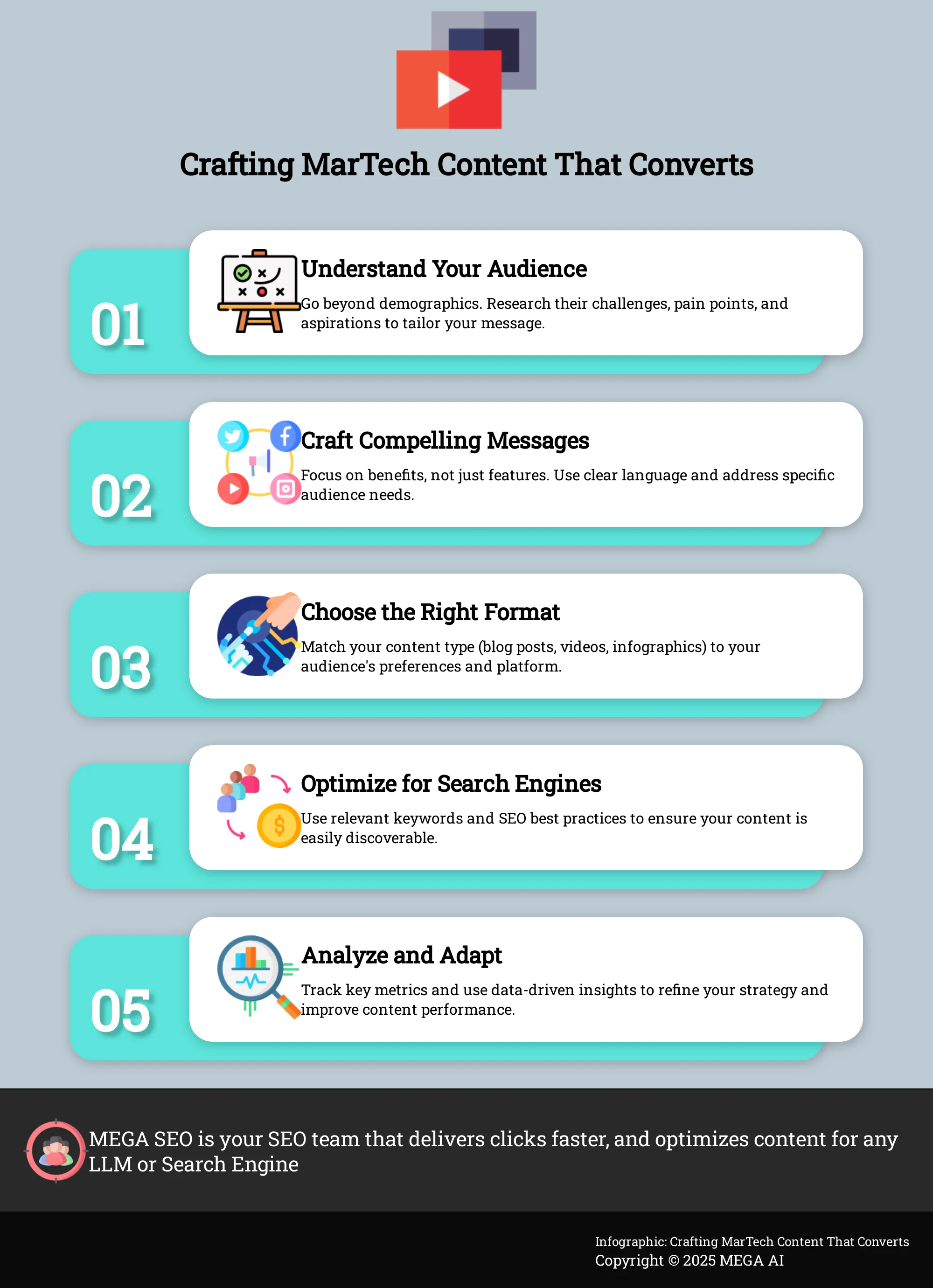
Select the Best Content Formats
How you package your message is just as crucial as the message itself. People have different preferences for consuming information, so choosing the right content formats is essential for engagement. For instance, a busy small business owner might appreciate a quick, digestible infographic or a short video tutorial. An agency professional looking to explore strategic insights might prefer a detailed white paper or an in-depth webinar. Consider blog posts for sharing industry knowledge, case studies to demonstrate real-world success, and interactive demos to showcase your platform's capabilities. Matching your content format to your audience's habits and the platforms they frequent will make your message much more accessible and impactful.
Use Data to Guide Your Content Strategy
To ensure your MarTech content consistently hits the mark, let data be your guide. Instead of relying on assumptions, set clear business objectives for your content and define key performance indicators (KPIs) to measure its effectiveness. Are you aiming for more demo requests, increased trial sign-ups, or better brand awareness? Track metrics such as page views, time on page, click-through rates from your content, and conversion rates. Analyzing this data provides valuable insights into what resonates with your audience and what needs adjustment. This iterative, data-informed process allows you to continuously refine your topics, formats, and overall strategy, making your content efforts more efficient and impactful over time.
Match Your Content to the Customer Journey
Understanding where your potential customers are in their buying process is crucial for creating content that truly connects. It’s a bit like navigating a conversation; you wouldn’t propose marriage on a first date, right? Similarly, your MarTech content needs to meet your audience where they are, addressing their specific questions and needs at each point. When you align your content with the distinct stages of the customer journey—Awareness, Consideration, Decision, and Loyalty—you create a clear path that guides potential customers from their first inkling of a need to becoming enthusiastic users of your platform.
This thoughtful approach doesn't just make your marketing efforts more efficient; it helps you build genuine, lasting relationships. Failing to match your content to the journey can lead to missed opportunities, as your message might be too advanced for someone just starting their research, or too basic for someone ready to buy. By tailoring your message, you ensure your valuable insights reach the right people at the optimal moment, and tools that assist with SEO can play a significant role in making sure your carefully crafted content is discoverable at every stage. This strategic alignment ultimately helps convert prospects more effectively and fosters greater customer satisfaction.
Awareness: Introduce Your Brand with Educational Content
At the awareness stage, your potential customers are just starting to realize they have a problem or a need, but they might not know how to define it yet, let alone what solutions exist. Your primary aim here is to educate and build trust, not to make an immediate sale. The focus should be on providing value and establishing your brand as a helpful resource.
Think about creating helpful blog posts, insightful infographics, or engaging videos that address their pain points in a general, informative way. Storytelling, such as sharing customer testimonials or case studies, can also be very effective in building initial awareness and positioning your brand as a knowledgeable guide in the MarTech space.
Consideration: Offer Comparisons and Thought Leadership
Once someone moves into the consideration stage, they have a clearer understanding of their problem and are actively researching potential solutions. Now, your content should focus on demonstrating how your MarTech product or service stands out from the competition. This is the time for detailed product comparisons, illustrative use cases, informative webinars, comprehensive ebooks, and thorough guides that clearly highlight your product's advantages over others.
You could create in-depth articles comparing different approaches to solving a common marketing challenge or host a webinar that showcases a unique feature of your platform. Thought leadership pieces offering a distinct perspective on industry trends can also position your brand as a knowledgeable leader. MEGA AI can help you generate this kind of detailed content to effectively showcase your unique selling points.
Decision: Use Demos and Content That Converts
When prospects reach the decision stage, they're very close to making a choice. They've completed most of their research and are likely comparing a shortlist of options, including yours. Your content now needs to remove any lingering doubts and make it as easy as possible for them to choose you. The objective is to address any final hesitations and encourage them to take the next step.
This is where compelling calls to action, product demonstrations, free trials, or special offers become particularly effective. Offering a personalized demo can be a powerful way to let potential customers see exactly how your MarTech solution can address their specific needs and challenges, providing that final piece of confidence they need to commit.
Loyalty: Build Community with Post-Purchase Content
The customer journey doesn't conclude once a purchase is made. The loyalty stage is all about nurturing that new relationship, encouraging continued use, and ideally, turning satisfied customers into enthusiastic advocates for your brand. Effective marketing truly is about building these lasting relationships, not just focusing on single sales.
Post-purchase content plays a vital role here. Consider developing advanced user guides, hosting exclusive webinars for customers, creating a community forum for peer-to-peer support, or sending out newsletters that feature new product updates and helpful tips. Sharing success stories from other users can also reinforce their decision and inspire them to achieve even more with your platform, fostering long-term engagement.
How to Make Your MarTech Content Stand Out
In the bustling world of marketing technology, getting your message heard can feel like shouting into a crowded room. Everyone is vying for attention, and your potential customers are constantly bombarded with information. So, how do you ensure your content doesn't just add to the noise but actually cuts through it, captures interest, and builds meaningful connections? It’s not about having the loudest voice, but the clearest and most resonant one. Making your MarTech content stand out requires a thoughtful approach that blends creativity with strategy, and insight with empathy.
The key is to move beyond generic statements and deliver real value that speaks directly to the challenges and aspirations of your audience, whether they're startups trying to gain traction, small businesses looking to scale, or marketing agencies seeking an edge for their clients. This means crafting content that is not only informative but also engaging and memorable. It involves understanding what truly matters to your audience and presenting your solutions in a way that feels both authentic and indispensable. By focusing on originality, storytelling, smart content optimization, and personalization, you can transform your content from a simple marketing asset into a powerful tool for building trust and driving growth. The following strategies will guide you in creating MarTech content that truly makes an impact.
Share Unique Insights and Data-Driven Content
One of the surest ways to capture attention is by offering something genuinely new. Instead of rehashing commonly discussed topics, aim to share unique insights. This could come from your own company's data, original surveys, or in-depth analyses of industry trends. Focusing on high-quality, original content is essential, as it should address the specific needs and interests of your target audience. You can discover these interests by incorporating relevant keywords naturally into your research. Present your findings in clear, digestible formats – think compelling charts or concise summaries that highlight the key takeaways. This data-driven approach not only establishes your authority but also provides tangible value that your audience can't easily find elsewhere, making your content a go-to resource.
Tell Stories That Create Connections
Facts and figures are important, but stories are what people remember and connect with on an emotional level. Effective MarTech content often weaves a narrative that resonates with the audience's experiences. Thorough audience research will help you create this resonant content, improve marketing campaigns, and fine-tune your messaging. By understanding your audience's needs and preferences, you can craft stories that truly connect. Think about showcasing customer successes, illustrating how your technology solved a real-world problem, or even sharing the journey behind your product's development. When you frame your message within a story, you make complex ideas more accessible and relatable, fostering a stronger bond with your readers and viewers.
Apply SEO Best Practices for Better Visibility
Creating brilliant content is only half the battle; you also need to ensure people can find it. This is where search engine optimization (SEO) plays a crucial role. Good content still relies on expertise, unique perspectives, and strong SEO. Implementing effective SEO strategies ensures that your content reaches the right audience and stands out in search results. This involves thorough keyword research to understand what your audience is searching for, optimizing your content with those keywords, ensuring your website is technically sound, and building valuable internal and external links. Tools like MEGA AI's Maintenance Agent can also help keep your existing content optimized and ranking well by identifying new opportunities and necessary updates.
Personalize Content for Different Audiences
Not all members of your audience are the same, so a one-size-fits-all approach to content rarely works. Personalization is key to making your message hit home. Start by mapping your audience: identify the key decision-makers and influencers within your target market. Then, you can craft tailored messages that speak directly to their specific challenges and goals, ensuring your content resonates on a personal level. This might mean creating different versions of a whitepaper for startups versus enterprise clients, or using dynamic content on your website that changes based on visitor behavior. The more relevant your content feels to an individual, the more likely they are to engage with it and see your brand as understanding their unique needs.
What Tools Do You Need for MarTech Content?
Creating impactful MarTech content involves more than just good ideas and strong writing. To truly make your content work for you, you'll need a set of tools designed to streamline your processes, from creation and publishing to distribution and analysis. Think of these tools as your behind-the-scenes crew, ensuring everything runs smoothly and your message reaches the right people effectively. Having the right technology stack allows you to manage your content efficiently, understand its performance, and ultimately, make smarter decisions about your marketing strategy. This is especially true for startups and small businesses where resources can be tight, and every effort needs to count.
Choosing the right tools can feel a bit overwhelming, but it's about finding what fits your specific needs and goals. The right MarTech tools can make a significant difference by helping you automate repetitive tasks, gain deeper insights into your audience, and personalize experiences. Implementing strategies for effective measurement is essential for understanding the impact of marketing efforts, ensuring that resources are allocated efficiently and driving business growth. As you build out your content strategy, consider how these tools can support each stage, from initial brainstorming to post-publication analysis and optimization, helping your content cut through the noise.
Content Management Systems (CMS) for Easy Publishing
A Content Management System, or CMS, is the foundation of your digital content operations. It’s the platform you’ll use to create, manage, and update your website content without needing to be a coding expert. Popular systems like WordPress or Shopify (especially if you're in ecommerce) offer user-friendly interfaces, templates, and extensions that simplify the entire publishing process. This allows you and your team to concentrate on crafting high-quality, engaging content rather than getting bogged down in technical details.
A good CMS makes it straightforward to get your articles, blog posts, and landing pages live quickly. This ease of publishing is a crucial first step, because once your content is accessible, you can then focus on the important work of tracking its performance and understanding how it contributes to your overall marketing objectives. Many modern CMS platforms also offer built-in SEO features or integrate well with SEO tools, further helping your content get discovered.
Analytics Platforms to Track Performance
Once your content is out there, you need to understand how it’s performing. This is where analytics platforms become invaluable. Tools like Google Analytics provide a wealth of data on user interactions, showing you everything from page views and time on page to bounce rates and conversion paths. Understanding these metrics is fundamental to refining your content strategy and proving its worth.
As Webosaurus highlights, "ROI sits at the centre of MarTech success measurement. Determine the revenue generated or costs saved thanks to your MarTech tools." To effectively measure MarTech success, it's important to "Set specific business objectives... Identify relevant key performance indicators." Analytics platforms provide the raw data you need to track these KPIs, helping you see what’s working, what’s not, and where to focus your efforts for better results.
Automation Tools for Smooth Distribution and Engagement
Marketing automation tools are designed to help you streamline, automate, and measure marketing tasks and workflows. This can cover a wide range of activities, including email marketing sequences, social media scheduling, and even managing aspects of your ad campaigns. By automating these processes, you free up valuable time and ensure consistent, timely communication with your audience across various channels. These tools also often enable sophisticated audience segmentation, allowing for more personalized and relevant content delivery.
When it comes to generating leads, automation can significantly improve your efficiency and effectiveness. For instance, you can track Cost Per Lead (CPL) for each MarTech tool and channel used in lead generation to determine the most cost-effective strategies. This data-driven approach allows you to optimize your marketing spend and concentrate on the channels that deliver the best return, ensuring your content effectively reaches and engages potential customers.
AI and Machine Learning to Optimize and Personalize Content
Artificial Intelligence (AI) and Machine Learning (ML) are rapidly becoming indispensable in the MarTech world, particularly for content creation and optimization. These advanced technologies can analyze vast datasets to uncover audience insights, automate aspects of content generation, optimize existing content for improved search engine performance, and deliver highly personalized user experiences. For example, AI can assist with tasks like automated keyword research or even help maintain and update existing articles to improve their rank.
As MarTech.org points out, "content velocity... is essentially a measure of just how influential a piece of content is in keeping a user engaged." AI can help improve this by identifying what truly resonates with your audience and suggesting data-backed improvements. Furthermore, by integrating "cutting-edge martech tools into your marketing strategy, you can significantly enhance the precision of your audience insights and engagement." Platforms like MEGA AI leverage these capabilities to help you not just create, but also continuously refine your content and paid ad campaigns for maximum impact and efficiency.
How to Measure Success and Adapt Your Content Strategy
Creating compelling MarTech content is a significant achievement, but the journey doesn't end when you hit 'publish.' In the dynamic world of marketing technology, the ability to measure the success of your efforts and adapt your content strategy accordingly is what truly separates high-performing campaigns from those that fall flat. It’s not enough to simply produce content; you need a robust framework for understanding its impact and a willingness to evolve your approach based on real-world data. This iterative process ensures your content remains relevant, resonates with your audience, and consistently contributes to your business objectives.
Think of your content strategy as a living entity, one that requires ongoing attention and refinement. By systematically tracking performance, you gain invaluable insights into what works and what doesn’t. Are your articles driving traffic and generating leads? Are your product comparisons helping prospects make informed decisions? Answering these questions requires a clear measurement plan. Furthermore, the MarTech landscape itself is in constant flux, with new tools and techniques emerging regularly. A proactive approach to measurement and adaptation allows you to not only keep pace but also to anticipate shifts and position your content for future success. This section will guide you through establishing effective measurement practices and using those insights to continuously refine your MarTech content, ensuring it delivers maximum value. We'll explore how to define success, test and optimize your creations, leverage data for strategic shifts, and stay ahead of industry trends.
Identify Key Performance Indicators (KPIs) for MarTech Content
Before you can measure success, you need to define what success looks like for your MarTech content. This starts with setting clear business objectives. For instance, a goal might be to "improve monthly recurring revenue (MRR) by 24% by the end of the year." Once you have your objectives, you can identify relevant key performance indicators (KPIs) that will show you if your content is helping you reach those goals.
For MarTech content, common KPIs include website traffic, lead generation (like demo requests or whitepaper downloads), conversion rates from leads to customers, and engagement metrics such as time on page or social shares. Choose KPIs that directly reflect the purpose of your content and your overarching business aims. This clarity will help you focus your efforts and demonstrate the value of your content strategy.
Use A/B Testing and Optimize Your Content
Once your content is live and you're tracking KPIs, the next step is to optimize its performance. A/B testing is a fantastic way to do this. You can test different headlines, calls-to-action (CTAs), images, or even content formats to see what resonates most with your audience. For example, does a direct CTA like "Book a Demo" perform better than a softer one like "Learn More"? Testing will give you the answer.
Another important idea is "content velocity," which measures how influential a piece of content is in keeping a user engaged and moving through your funnel. By continuously testing and refining, you can improve this velocity. Tools that help optimize existing content, perhaps by suggesting improvements to increase click-through rates or adding new relevant sections, can be invaluable here, making the optimization process more efficient.
Adapt Your Strategy with Data-Driven Insights
The data you collect from your KPIs and A/B tests provides powerful insights. Don't let this information sit idle. Use it to adapt your content strategy. If you notice that blog posts about AI in marketing are driving significant traffic and leads, consider creating more content on that topic. If a particular e-book isn't performing well, analyze why. Is the topic not relevant? Is the promotion ineffective?
Implementing strategies for effective measurement is crucial for understanding the impact of your marketing efforts. This understanding ensures that your resources, like your time and budget, are allocated efficiently and that your content is consistently driving business growth. Regularly review your content performance against your KPIs and be willing to pivot your strategy based on these data-driven insights.
Keep Up with MarTech Trends to Future-Proof Your Content
The MarTech landscape is always evolving, with new tools, technologies, and strategies emerging constantly. To keep your content effective and relevant, it's important to stay informed about these trends. This might involve subscribing to industry publications, attending webinars, or networking with other marketing professionals.
As you learn about new trends, think about how they could impact your content strategy. For example, how might advancements in AI change content creation or personalization? Consider how you can determine the revenue generated or costs saved by adopting new MarTech tools or approaches. By staying curious and adaptable, you can future-proof your content and continue to achieve your marketing goals.
Related Articles
- Content Marketing Pros and Cons: Is It Right for You?
- Content Marketing for Startups: A Practical Guide
- Grow Your Startup with Effective Content Marketing Tips
- The Ultimate Guide to Audience Engagement in 2024
- Grow Your Brand: Top Content Marketing Platforms Guide
Frequently Asked Questions
Okay, so what exactly is MarTech, and why should I care about content for it? Think of MarTech as all the digital tools and software marketers use to plan, run, and check their campaigns. It helps automate tasks and personalize messages. But here's the thing: those tools need something to deliver. That's where content comes in. Your content is the actual message, the information, the story that your MarTech shares. Without strong, relevant content, even the fanciest MarTech setup won't achieve much.
I want my MarTech content to really connect with people. Any tips? The most important step is to truly understand who you're talking to. Go beyond basic demographics and figure out their real challenges, what problems they're trying to solve, and what they hope to achieve. Once you have that insight, you can craft messages that speak directly to those needs. Focus on how your MarTech solution provides tangible benefits and solves their specific problems, rather than just listing features.
I'm creating content, but it feels like no one sees it. What can I do? It's a common frustration. A big piece of the puzzle is making sure your content is discoverable, which means getting familiar with SEO best practices. This involves understanding the keywords your audience uses when searching for solutions and incorporating them naturally into your material. Also, consider where your audience is in their decision-making process. Content that educates might be great for someone just starting to research, while a detailed comparison is better for someone closer to choosing a tool.
What kinds of tools are truly helpful for creating and managing MarTech content? A good Content Management System (CMS) is foundational for publishing and updating your website easily. You'll also want analytics platforms to track how your content is performing and understand user behavior. Marketing automation tools can help distribute your content consistently and engage your audience through email or social media. And increasingly, AI-powered tools can assist with optimizing content or even generating initial drafts, helping you work more efficiently.
How can I tell if my MarTech content strategy is actually effective? First, you need to define what "effective" means for your business by setting clear objectives, like increasing demo requests or improving brand awareness. Then, identify key performance indicators (KPIs) that align with those objectives – things like website traffic, lead generation, or conversion rates. Regularly tracking these KPIs will show you what's working and what isn't, allowing you to make data-informed adjustments to your strategy over time.