
Your FoodTech company might be pioneering groundbreaking sustainable packaging, developing revolutionary plant-based alternatives, or using AI to optimize food supply chains. While the technology itself is vital, its success often hinges on how well you communicate its value. Many potential customers, partners, and investors need clear, engaging information to understand the benefits and impact of these advancements. Creating content for FoodTech effectively means bridging the gap between complex innovation and everyday understanding. It’s about crafting messages that not only inform but also inspire confidence and drive adoption, ensuring your solutions reach the people who need them most.
Key Takeaways
- Know Your Audience and Craft Compelling Narratives: Get crystal clear on your specific FoodTech audience, then use storytelling to make your innovations understandable and highlight their real-world value.
- Diversify Your Content and Optimize for Discovery: Use a variety of engaging formats like articles and videos, and implement smart SEO practices so your target audience can easily find your valuable FoodTech insights.
- Tackle Key Concerns and Leverage Technology in Your Content: Build trust by openly discussing important topics like food safety and sustainability, and explore how modern tools can help you create more impactful FoodTech content efficiently.
What is FoodTech and Why Content is Key
So, what exactly is FoodTech? At its core, FoodTech, or food technology, is defined by the Institute of Food Technologists as "the application of food science to the selection, preservation, processing, packaging, distribution, and use of safe food." It’s a dynamic field focused on innovations that improve food quality, enhance safety, and promote sustainability—all vital aspects of our modern food industry. This means FoodTech encompasses everything from developing new plant-based proteins to creating smarter packaging that extends shelf life, or even using data to optimize farming practices.
Now, why is content so incredibly important in this space? Think of content as the essential ingredient that connects your FoodTech innovations with the people who will benefit from them. It’s your primary tool for education and engagement. As the FoodTech landscape evolves, clear and compelling content helps demystify the science, making complex topics accessible and interesting. You can use blogs, videos, and other formats to tell stories that not only inform but also entertain, helping consumers understand the 'how' and 'why' behind your products. This approach builds trust and fosters a stronger connection. In fact, thoughtful content creation is what can make new food technologies feel more personalized, fun, and sustainable for everyone. It’s how you translate technical advancements into real-world value for your audience, showing them how your solutions can improve their lives, their health, or the planet.
Define Your FoodTech Audience
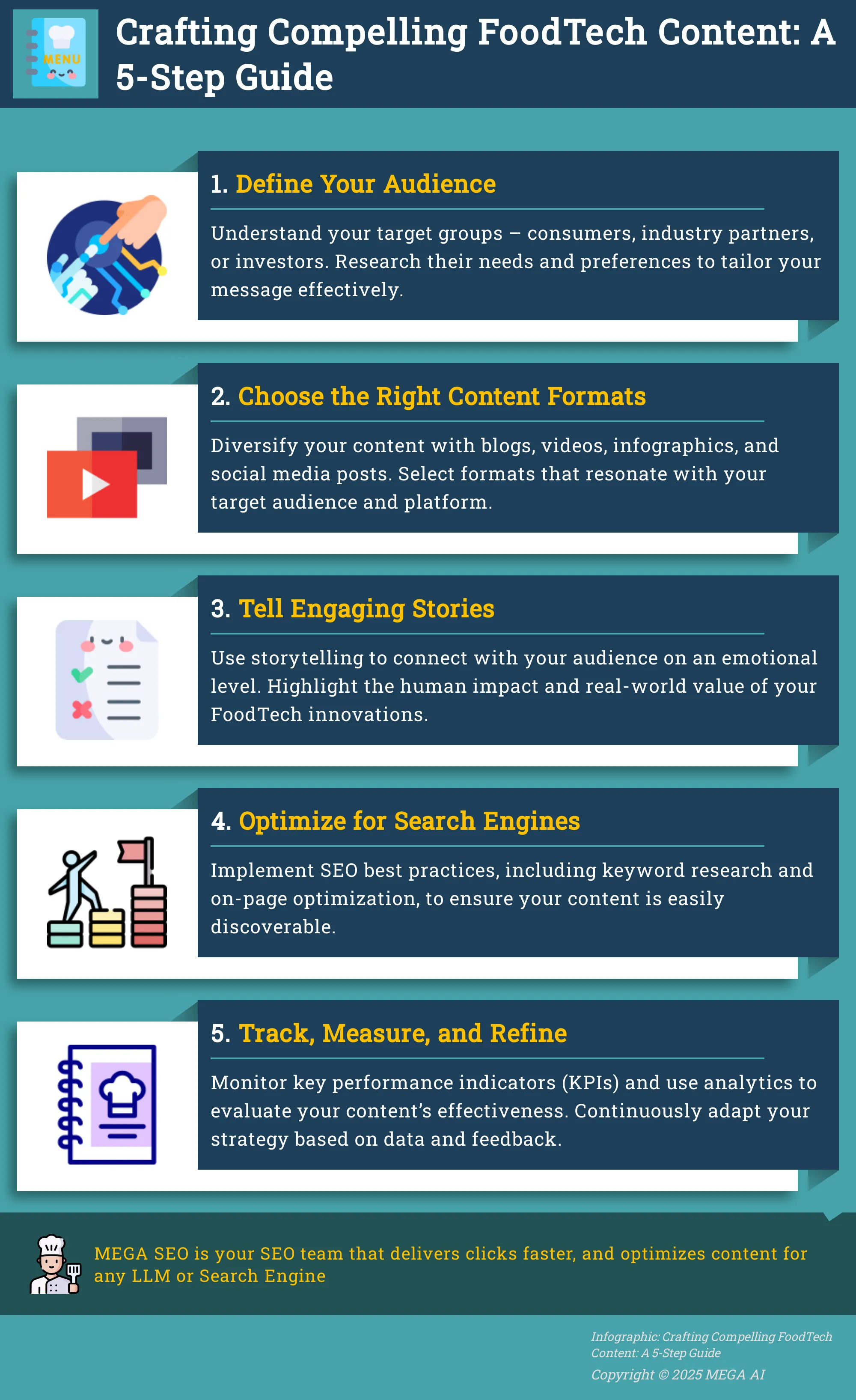
Before you write a single blog post or design an infographic for your FoodTech brand, there's a crucial first step: clearly defining who you're trying to reach. Knowing your audience isn't just a good idea; it's the bedrock of any successful content strategy. In the dynamic and often complex world of FoodTech, understanding the specific needs, interests, and pain points of your target groups allows you to craft messages that resonate deeply, rather than getting lost in the noise. This understanding shapes everything from the topics you choose and the language you use, to the visual style of your content and the platforms where you share it.
The FoodTech audience is rarely monolithic. You might be speaking to health-conscious consumers eager for sustainable food options, busy parents looking for convenient meal solutions, or even other businesses seeking innovative technological partnerships. Beyond these end-users, you also have industry stakeholders, potential investors, and partners, each with their own set of priorities and information requirements. Effectively reaching these diverse groups means tailoring your approach. What captivates a consumer might not be what convinces an investor. Therefore, taking the time to thoroughly research and segment your audience will pay dividends, enabling you to create content that not only attracts attention but also builds trust and drives meaningful action. This foundational work ensures your content efforts are targeted, efficient, and ultimately, more impactful.
Research Consumer Trends and Preferences
To connect with the everyday users of FoodTech innovations, you need to get into their mindset. Start by exploring demographics – age, location, income – but don’t stop there. It's important to understand their lifestyle, values, and what truly motivates their food choices. Current consumer interests show a significant lean towards sustainability, health-centric products, and transparency in food sourcing and production.
Your content should reflect these interests. Think about creating engaging pieces that are not only informative but also visually appealing and tell a compelling story. For instance, instead of just stating your product is sustainable, show the journey and the impact. Actively listen to and interact with your audience on social media or through surveys. This engagement is invaluable for gathering feedback, understanding evolving preferences, and building a loyal community around your brand.
Consider Industry Stakeholders and Investors
While consumers are a primary focus, FoodTech companies also need to communicate effectively with industry stakeholders, including potential investors, partners, and even regulatory bodies. This audience segment has a different set of interests. They're looking at market potential, scalability, technological innovation, and the return on investment your FoodTech solution offers. Your content for them should be data-rich and demonstrate a strong understanding of the industry landscape.
Use market research to highlight the viability and impact of your technology. When you present information, focus on clarity and credibility. White papers, detailed case studies, and insightful articles on industry trends can be particularly effective. Storytelling is still important here, but it should be framed around innovation, problem-solving, and the future vision of your company, helping to build confidence and attract strategic partnerships.
Select Effective Content Types for FoodTech Brands
Choosing the right way to share your message is crucial in the FoodTech space, an industry that’s rapidly reshaping how we think about food, from farm to table. This sector is brimming with innovation, but also faces the task of educating the public and stakeholders about novel concepts—from alternative proteins to AI-driven supply chains. Your audience is diverse: consumers want transparency and to understand health benefits; industry partners seek reliable, scalable solutions; and investors look for groundbreaking, viable ventures. Each group consumes information differently. The challenge, therefore, isn't just about having a great product or service; it's about effectively communicating its value, its science, and its story. This is where a strategic approach to content becomes essential. You need to translate complex information into engaging narratives, build trust around new technologies, and highlight your commitment to sustainability and quality. A varied content portfolio, tailored to different platforms and audience preferences, allows you to meet these communication needs head-on. By thoughtfully selecting and crafting your content, your FoodTech brand can not only inform but also inspire and lead in this exciting field. Let's explore some of the most effective content types to help you achieve this.
Crafting Blogs and Articles
In the FoodTech world, blogs and articles are your foundational tools for establishing authority and educating your audience. This is your space to create engaging and informative content, using storytelling to explain complex topics in a way that resonates. Think about detailing the science behind your sustainable packaging, tracing the journey of your ingredients, or offering insights into emerging food trends. Well-researched articles can firmly position your brand as a thought leader in the industry.
For startups and small businesses, consistently producing high-quality written content can seem daunting. This is where leveraging tools for automated content generation can be incredibly helpful. Such tools can assist in maintaining a regular publishing schedule, ensuring your audience always has fresh insights, and helping you cover a wide array of relevant subjects without overstretching your resources.
Creating Videos and Tutorials
Video content offers a dynamic and highly engaging way to connect with your audience in the FoodTech sector. You can use videos to vividly show the food preparation process, demonstrate the innovative features of your kitchen technology, or provide a compelling virtual tour of your sustainable farming operations. Tutorials are especially effective for products or services that benefit from a visual explanation, helping users understand and appreciate the full value of what you offer.
Short, visually appealing videos are also incredibly shareable across social media platforms, significantly extending your brand's reach. Consider how you can repurpose longer video content; for example, an in-depth YouTube tutorial can be segmented into shorter, attention-grabbing clips for Instagram or TikTok. This process can be simplified with content remixing tools, particularly useful when creating variations for paid ad campaigns across different channels.
Designing Infographics and Data Visualizations
FoodTech often deals with intricate data, whether it's related to nutritional values, supply chain efficiencies, or sustainability metrics. Infographics and data visualizations are powerful formats for making this complex information both digestible and engaging for your audience. Instead of presenting lengthy reports filled with dense text, you can use visually appealing graphics to highlight key statistics, trends, and benefits.
Remember, high-quality visuals are essential when trying to capture and hold attention in a crowded digital landscape. An infographic that clearly details the environmental advantages of your product, or a chart that showcases your company's growth and impact, can be far more persuasive than text alone.
These visual assets are also ideal for sharing on social media platforms and can be easily embedded into blog posts or articles. This not only breaks up large blocks of text, making your written content more inviting, but also reinforces the key messages you want your audience to remember.
Develop Social Media Strategies
Social media is an indispensable channel for FoodTech brands aiming to connect with customers and cultivate a loyal community around their innovations. Platforms like Instagram, Facebook, LinkedIn, and even TikTok offer unique avenues to showcase your brand’s personality, share timely updates, and interact directly with your audience in meaningful ways.
It's vital to actively engage with your audience by responding to comments, running interactive polls, and asking questions that spark conversation. This kind of two-way communication not only fosters loyalty but also provides invaluable feedback that can inform your product development and marketing efforts.
Tailor your content to the specific nuances of each platform. For instance, you might focus on stunning food photography and behind-the-scenes stories on Instagram, share industry insights and company milestones on LinkedIn, and create quick, entertaining, or educational videos for TikTok. Managing a consistent presence across multiple platforms can be streamlined with tools that facilitate bulk content uploading and the creation of numerous variations for paid social campaigns, ensuring your message is optimized for each channel.
Employ Storytelling Techniques in FoodTech
In the FoodTech world, data and innovation are plentiful, but compelling narratives truly capture attention and build connections. Storytelling transforms complex technological advancements into relatable experiences, helping your audience understand the real-world value you offer. By weaving narratives into your content, you can make your brand more memorable and foster deeper engagement. It’s about showing the human side of technology and how it’s shaping a better future for food, bridging the gap between intricate science and everyday understanding.
Highlight Innovation and Impact
Your innovations are changing how we produce, consume, and think about food. To make these breakthroughs resonate, frame them within a story. Explain the problem your technology solves and the positive changes it brings. For instance, instead of detailing a new food processing method, narrate how it helps a local farm reduce waste or enables a community access to fresher produce.
Matrix Marketing Group suggests that creating engaging content through storytelling effectively explains intricate subjects and demonstrates their significance. This method educates your audience and clearly illustrates the tangible benefits of your work, making complex ideas accessible.
Showcase Sustainability Efforts
Consumers are increasingly conscious of their food's environmental footprint. Storytelling is a powerful way to communicate your commitment to sustainability. Share narratives about your journey towards eco-friendly practices, like reducing water usage, implementing renewable energy, or developing plant-based alternatives that lessen agricultural impact.
Content Science Review highlights how technology can show how eco-friendly recipes are, guiding consumers toward better planetary choices. Telling these stories connects with your audience's values and builds trust, showing your brand's dedication to a healthier planet and a sustainable food system.
Personalize Your Technology Story
Behind every FoodTech innovation are people, inspirations, and a unique journey. Personalizing your technology story makes your brand more human and relatable. Share the "why" behind your company—its founding motivation, challenges overcome, or cultural influences shaping your products.
According to Desygner, you shouldn't just present food; you should tell the story behind it, including ingredients and inspiration, to make your business memorable. Consider featuring team members, sharing customer successes, or offering a behind-the-scenes look at development. These personal touches create an emotional bond and lasting connection.
Optimize FoodTech Content for Search Engines
Creating fantastic FoodTech content is a huge step, but making sure people can find it is just as important. This is where search engine optimization (SEO) comes into play. Think of SEO as making your content more visible to search engines like Google. When someone searches for terms related to your FoodTech innovations, you want your articles, blog posts, or videos to appear high in the search results. This isn't about tricking the system; it's about clearly signaling to search engines what your content is about and why it's valuable to users. Good SEO practices ensure that your hard work in content creation pays off by reaching the intended audience.
For FoodTech companies, especially startups and small businesses, a solid SEO strategy can level the playing field, allowing you to compete with larger players without a massive advertising budget. It helps you attract an audience that's actively looking for solutions or information you provide. By optimizing your content, you're essentially building a sustainable way to bring interested readers and potential customers to your digital doorstep. This involves understanding what your audience is searching for, structuring your content effectively, and ensuring it's easily accessible. Platforms like MEGA AI can simplify many of these SEO tasks, offering automated keyword research and content optimization to help your FoodTech brand get noticed.
Implement Keyword Research Effectively
Keyword research is the foundation of effective SEO. It helps you understand what your target audience is searching for and allows you to create content that meets their needs. Think of keywords as the specific words and phrases people type into search engines. For a FoodTech company, these could range from "sustainable food packaging solutions" to "plant-based meat recipes" or "benefits of vertical farming." Using tools like Google Keyword Planner or Ahrefs can help you identify relevant keywords in the FoodTech niche. The goal is to find terms that have a decent search volume but aren't so competitive that you have no chance of ranking. MEGA AI's SEO tools can also assist in uncovering these valuable search terms, streamlining the process for your team.
Apply On-Page Optimization
Once you have your keywords, the next step is on-page optimization. This involves optimizing individual web pages to rank higher and earn more relevant traffic. This includes strategically using your chosen keywords in your page titles, headers (like H1s and H2s), and naturally throughout your content. It’s not about stuffing keywords everywhere, but rather integrating them thoughtfully. Additionally, optimizing images with descriptive alt text and ensuring your site is mobile-friendly are crucial aspects. A fast-loading, easy-to-use website significantly contributes to a better user experience, which search engines favor. Remember, the aim is to make your content clear and accessible for both users and search engine crawlers.
Strategize Content Distribution
Creating and optimizing your content is only part of the equation. Once your content is created, it’s crucial to distribute it effectively. You need a plan to get your valuable FoodTech insights in front of the right eyes. Utilize social media platforms relevant to your audience, whether that's LinkedIn for B2B connections or Instagram for visually appealing food innovations. Email newsletters are a great way to share new content with your subscribers. Consider partnerships with influencers or other organizations in the FoodTech space to amplify your reach and engage with a broader audience. The more channels you use thoughtfully, the greater the chance your content will find and connect with interested readers.
Use Technology in Your FoodTech Content Creation
Technology is changing more than just how we make and move food; it’s also reshaping how we communicate about it. For FoodTech brands, using technology in your content creation can make your message clearer, more efficient, and more memorable. Think about how modern tools can help you not only streamline your work but also tell richer stories that truly connect with your audience. This involves looking beyond old content methods and seeing how new ideas can bring your brand’s story to life, making complex FoodTech concepts understandable and exciting for everyone.
Whether you're a new company trying to get noticed or an established one looking to refresh your approach, adding technology to your content plan can give you a real advantage. It helps you create personalized experiences, automate some tasks, and offer better insights into what you do. For example, tools that assist with SEO optimization can make sure your tech-focused content reaches the people who need to see it, improving your visibility and impact. By using these advancements, you can connect with customers and industry partners in new ways, showing your dedication to innovation in both your products and how you talk about them. This proactive approach to content can set you apart in a competitive market.
Incorporate AI and Machine Learning
Artificial intelligence (AI) and machine learning (ML) are becoming very helpful for creating content in the FoodTech field. Think about AI assisting you with new recipe concepts, drafting articles about cooking methods, or tailoring content for specific groups of people. As Content Science Review points out, AI is already part of apps that suggest recipes and help with cooking times, making kitchen work easier. This same intelligence can be applied to content generation, helping you produce interesting and informative blog posts or video scripts that explain complex FoodTech ideas simply.
Using AI tools can help you create more content efficiently. For instance, platforms can support automated keyword research to ensure your articles are found, or even help refresh existing content to keep it current and improve its search ranking. This frees up your team to concentrate on the creative parts of storytelling, while AI manages some of the detailed work in research and initial writing, ensuring your content both informs and engages your readers.
Use IoT and Blockchain for Storytelling
The Internet of Things (IoT) and blockchain provide effective ways to build trust and show transparency through your FoodTech content. These technologies let you tell engaging stories about your product’s entire journey, from its origin to the consumer. You can use data from IoT devices to highlight the freshness of your ingredients or the effectiveness of your supply chain. Blockchain can offer verifiable proof of where your product comes from, its ethical sourcing, or its sustainable practices, which many consumers care deeply about.
Consider creating content that explains how your company uses these technologies. For example, an article or video could detail how blockchain ensures food safety and traceability within your operations. You might also develop content around ‘smart packaging’ that uses IoT to give consumers live information about a product’s state or provide interactive features. This type of storytelling not only educates your audience but also shows your brand’s commitment to innovation and openness.
Tackle Key FoodTech Topics and Concerns
When you're creating content in the FoodTech space, it's not just about showcasing cool innovations. Your audience, whether they're consumers, industry partners, or investors, has genuine concerns and a deep interest in specific aspects of how their food is produced, processed, and delivered. Addressing these topics head-on in your content builds trust and positions your brand as a knowledgeable and responsible leader. By focusing on safety, nutrition, and sustainability, you can create content that truly resonates and provides value. This approach helps your audience understand the broader impact of your technology and how it contributes to a better food future. It’s about connecting with people on issues they care deeply about, showing them that your FoodTech solutions are not only advanced but also considerate of their health, the environment, and overall well-being. Thoughtful content can educate your audience on complex FoodTech advancements in an accessible way, making them feel more comfortable and engaged with the evolving food landscape. This proactive communication can also preemptively answer questions and alleviate potential anxieties, fostering a stronger relationship between your brand and its stakeholders. When you openly discuss these critical areas, you're not just sharing information; you're building a narrative of responsibility and care. This helps differentiate your brand in a competitive market, showing that you understand the bigger picture and are dedicated to positive change. Ultimately, tackling these key concerns demonstrates a commitment beyond just technology; it shows a commitment to people and the planet.
Focus on Food Safety and Quality
Food safety and quality are non-negotiable in the food industry, and your content should reflect that. Consumers need assurance that the FoodTech innovations you're presenting prioritize their well-being. As the International Food Technologists (IFT) explains, food technology applies scientific knowledge to get food from farm to table safely and efficiently, covering everything from selection and preservation to processing and packaging. Your content can demystify these processes. Think about creating blog posts that detail the rigorous safety protocols your technology adheres to, or videos that offer a transparent look at quality control measures. Infographics can effectively illustrate how technology maintains quality throughout the supply chain, helping to build confidence in your brand and its offerings.
Provide Nutritional Information and Health Benefits
Today's consumers are more health-conscious than ever, actively seeking information about what they eat. Your FoodTech content can be an invaluable resource by clearly communicating nutritional details and health advantages. For instance, if your technology helps create healthier food options or makes nutritional information more accessible, highlight that. Content Science Review points out a trend where technology enables users to "get instant information about the calories and nutrients in your recipes as you plan your meals." You can develop articles that break down the health benefits of ingredients enhanced or processed by your tech, or create interactive tools on your website that allow users to explore the nutritional content of food products. This transparency not only educates but also empowers consumers to make informed dietary choices.
Discuss Environmental Impact and Sustainability
Sustainability is a major concern for modern consumers, and the food industry is increasingly under scrutiny for its environmental footprint. FoodTech has a significant role to play in creating more sustainable practices, and your content should spotlight these efforts. Whether your innovation reduces food waste, lowers carbon emissions, or promotes sustainable sourcing, these are powerful stories to tell. As noted in a Content Science Review article, technology is evolving to the point where applications can "show you how eco-friendly your recipes are, helping you make choices that are better for the planet." Consider creating content that explains your company's commitment to sustainability, perhaps through articles detailing your eco-friendly packaging solutions or videos that showcase partnerships with sustainable farms. This demonstrates corporate responsibility and appeals to environmentally conscious consumers.
Meet FoodTech Content Challenges Head-On
The FoodTech industry is exciting and rapidly evolving, but communicating its intricacies can be tricky. You're often dealing with innovative science, complex supply chains, and novel products that consumers might not immediately understand. This presents unique content challenges, from breaking down sophisticated ideas into digestible bites to ensuring you're meeting strict industry regulations. It’s about finding that sweet spot where your content is informative, engaging, and trustworthy.
Successfully creating content in this space means directly addressing these hurdles. It’s not just about what you say, but how you say it, who you’re saying it to, and ensuring every claim is accurate and compliant. By anticipating these challenges, you can develop strategies to overcome them, making your content a powerful tool for educating your audience, building brand loyalty, and driving growth. Let's look at some common FoodTech content challenges and how you can tackle them effectively. Platforms that offer SEO services can also assist in making sure your carefully crafted content reaches the right audience once these challenges are met.
Simplify Complex Topics
FoodTech often involves advanced science, from cellular agriculture to AI-driven food production. Explaining these concepts without overwhelming your audience is a primary challenge. The key is to create engaging content that educates and entertains. Think about using storytelling techniques, analogies, and clear, simple language. For instance, instead of detailing every step of a complex fermentation process, you could compare it to something familiar, like making sourdough bread, to make the core idea more accessible.
Visuals like short videos or simple diagrams can also work wonders. Remember, your goal is to make the complex clear, not to dumb it down. Tools that assist with content generation can help you draft explanations in various tones and complexities, allowing you to find the right fit for your audience. Focus on the "why it matters" for the consumer, translating technical benefits into real-world advantages.
Balance Technical Details with Consumer Language
Your audience likely includes a mix of people, from industry experts to curious consumers. Striking the right balance between providing enough technical detail to be credible and using language that everyone can understand is crucial. You don't want to alienate potential customers with jargon, nor do you want to appear superficial to those with more knowledge. As Desygner notes, "Don't just show food; tell the story behind it—the ingredients, the inspiration, and the culture."
To achieve this balance, consider segmenting your content or using layered information. For example, a blog post might offer a general overview with an option to click for a more detailed technical paper. Always prioritize clarity and relatability. Explain the "how" in simple terms, but also emphasize the "what's in it for me" for the consumer, connecting the technology to tangible benefits like better taste, improved nutrition, or enhanced sustainability.
Stay Compliant with Industry Regulations
The food industry is heavily regulated, and FoodTech is no exception. Ensuring your content adheres to all relevant government regulations regarding health claims, food safety, and marketing is paramount. According to the Institute of Food Technologists, "It is crucial to adhere to government regulations that protect consumers and maintain industry standards." This means any claims you make about your product's nutritional value, health benefits, or safety must be accurate and substantiated.
Make it a priority to stay updated on regulations in your specific market. It's often wise to have a legal expert review your marketing materials, especially when making specific claims. Transparency is also key; be open about your processes and ingredients. While AI tools can help manage and update content, ensuring legal compliance requires diligent human oversight and expert consultation.
Measure and Improve Content Performance
Creating compelling content for your FoodTech brand is a fantastic start, but the journey doesn’t end once you hit publish. To truly understand what resonates with your audience and to make sure your efforts are driving results, you need to consistently measure and refine your content's performance. Think of it as perfecting a recipe; you taste and adjust until it’s just right. This ongoing process of analysis and improvement is what turns good content into a powerful engine for growth, helping you connect more effectively with everyone from consumers to industry stakeholders.
Track Key Performance Indicators (KPIs)
To get a clear picture of how your FoodTech content is doing, you'll want to keep an eye on Key Performance Indicators, or KPIs. These are specific, measurable values that show how effectively you're achieving your main business objectives through your content. For FoodTech brands, relevant KPIs might include website traffic to your articles and product pages, user engagement metrics like time spent on page or bounce rate, and conversion rates – for instance, how many visitors request a demo of your technology or sign up for your newsletter after reading a piece of content.
Monitoring these metrics, along with social media engagement and lead generation figures, allows you to make data-driven decisions. As marketing experts suggest, it's vital to "track website traffic, user behavior, and campaign performance" to adapt your strategies effectively. This information helps you understand what’s working, what’s not, and where to focus your energy for the best return.
Use Analytics for Content Evaluation
Once you're tracking your KPIs, the next step is to dive into analytics to evaluate your content's performance more deeply. Analytics tools provide the insights you need to understand your audience and how they interact with what you create. This isn't just about looking at numbers; it's about interpreting them to see the story they tell about your content's effectiveness and your audience's preferences. For example, you might discover that articles about sustainable food sourcing receive high engagement, signaling a strong interest area for your readers.
Regularly reviewing this data helps you identify your top-performing content and understand why it succeeds. Conversely, you can pinpoint content that isn't meeting expectations and explore potential reasons. This evaluation process is crucial for adapting your strategy. As industry insights recommend, you should "use analytics to understand your audience, evaluate your content's performance, and adapt your strategy." For instance, tools designed for SEO can help identify opportunities to update existing articles with fresh information or re-optimize them, ensuring your content continues to perform well over time.
Explore Emerging Trends in FoodTech Content
The FoodTech landscape is constantly evolving, and so is the content that fuels it. Staying ahead means understanding and adopting the trends that resonate most with today's consumers and industry professionals. These emerging approaches can help your brand connect more deeply and effectively.
AI-Powered Personalization and Interactivity
FoodTech content is rapidly moving towards highly individualized and dynamic experiences. Consumers increasingly seek super personalized recipes tailored to their dietary needs, taste preferences, and even available ingredients. Artificial intelligence is playing a significant role here, not just in suggesting recipes but also in creating new ones and offering AI-powered cooking help through tips and articles. Imagine your phone guiding you through intricate steps with Augmented Reality (AR) cooking assistance, showing you precisely how to chop vegetables or master a new technique right on your countertop. This makes cooking more accessible and genuinely engaging.
Conscious Consumption: Sustainability and Health
There's a clear trend towards content that supports mindful eating habits. Consumers want to understand the broader impact of their food choices, leading to a demand for information on sustainable cooking. FoodTech platforms are responding by showing how eco-friendly your recipes are, helping users make choices that are better for the planet. Simultaneously, real-time nutrition information is becoming a standard expectation. Providing instant access to details about calories and nutrients as you plan your meals, or real-time nutrition info within recipes, empowers users to make informed decisions aligned with their health goals, fostering transparency and trust.
Strategic Content: Quality, SEO, and Engagement
While technology introduces new formats, the core need for valuable content remains. Creating engaging and informative material, such as insightful blogs or compelling videos, is essential because content is king. Storytelling, in particular, can explain complex FoodTech innovations in an accessible and memorable way. However, producing great content is only half the battle; it must be discoverable. This underscores why SEO is essential to improve visibility in a crowded digital space. Finally, fostering a community by actively responding to comments and encouraging users to engage your audience is key to building lasting relationships and brand loyalty.
Related Articles
- Content Consumption Trends: 2025 and Beyond
- The Ultimate Guide to Content Marketing in 2024
- QDF Content Strategy for Startups: Be Fresh, Rank Fast
- Grow Your Startup with Effective Content Marketing Tips
- AI Restaurant Descriptions: Generate Mouthwatering Menus
Frequently Asked Questions
What's the first step I should take if I want to create better content for my FoodTech brand? Before you even think about topics or formats, really get to know who you're talking to. Understanding your specific audience—whether they're consumers curious about sustainable eating, or industry partners looking for scalable tech solutions—will guide every content decision you make. This clarity helps you create messages that truly connect.
My FoodTech innovation is pretty complex. How can I explain it without confusing people? The best approach is to use storytelling and simple, clear language. Think about using analogies that relate your complex technology to something familiar. Visuals like short videos or straightforward diagrams can also make intricate ideas much easier to grasp. Focus on the benefits your innovation offers rather than getting lost in technical jargon.
How important is SEO for FoodTech content, and what's a simple way to start? Search engine optimization is very important because it helps people find your valuable content when they're searching online. A good starting point is keyword research. This means figuring out the specific words and phrases your target audience uses when looking for information related to your FoodTech area. Then, naturally include these terms in your website content, titles, and descriptions.
With so many content types available, which ones are most effective for FoodTech? A mix of content types usually works best. Informative blog posts and articles can establish your expertise. Videos and tutorials are excellent for showing your technology in action or explaining processes visually. Infographics can make complex data, like sustainability metrics or nutritional information, easy to understand and share.
How can I make sure my content about food safety and health benefits is trustworthy? Always prioritize accuracy and transparency. Any claims you make about safety, nutrition, or health benefits must be well-supported and comply with industry regulations. Clearly explain your processes and the science behind your claims in an accessible way. When in doubt, consulting with a legal expert on regulatory compliance is a wise step.