
Today's real estate clients are more informed and discerning than ever before. They conduct extensive online research and expect brokers to offer genuine value beyond just facilitating transactions. If you're finding that old methods aren't yielding the same results, it's likely because client expectations have evolved. Creating content for Real Estate Brokers is the key to meeting these modern demands. It allows you to proactively answer questions, share crucial market insights, and demonstrate your deep understanding of the communities you serve. This article will delve into the types of content that build credibility and foster strong client relationships, positioning you as the go-to expert in your market.
Key Takeaways
- Create Client-Focused Content: Develop materials that genuinely address the questions and needs of buyers and sellers, positioning you as their trusted real estate advisor.
- Strategically Share Your Expertise: Distribute your valuable content across the right platforms, from your website to social media, to reach your ideal audience where they are most active.
- Measure and Adapt for Better Results: Regularly analyze how your content performs and use those insights to refine your topics and strategies, ensuring your efforts effectively attract and engage clients.
Why Content Creation Matters for Real Estate Brokers
In the dynamic world of real estate, simply listing properties isn't enough to capture attention and build a thriving business. To genuinely connect with potential clients and foster lasting relationships, content creation has become a vital part of a broker's toolkit. Think of your content as your initial introduction, your way of demonstrating expertise and building a connection before you even have a face-to-face meeting. High-quality, informative content helps you establish credibility and cultivate trust, which are essential in any client interaction, particularly one as significant as buying or selling a home.
Effective real estate content does more than just provide information; it actively draws clients to you. When you share valuable insights and local expertise, you're not only showcasing your knowledge but also enhancing your online presence. This is where a well-thought-out content strategy, amplified by strong search engine optimization (SEO), can truly make an impact by driving organic traffic to your website. It allows you to paint a picture, not just of a house, but of the lifestyle, community, and aspirations connected to it. This approach offers enduring value, far beyond what a temporary advertisement can achieve.
Furthermore, content marketing presents a cost-effective method to reach your target audience when compared to many traditional advertising avenues. In today's competitive market, where buyers have access to a vast amount of information online, compelling content is key to making your services stand out. Ultimately, it’s about more than just facilitating transactions; it’s about helping people achieve their dream of homeownership and positioning yourself as a knowledgeable and trustworthy guide throughout their journey.
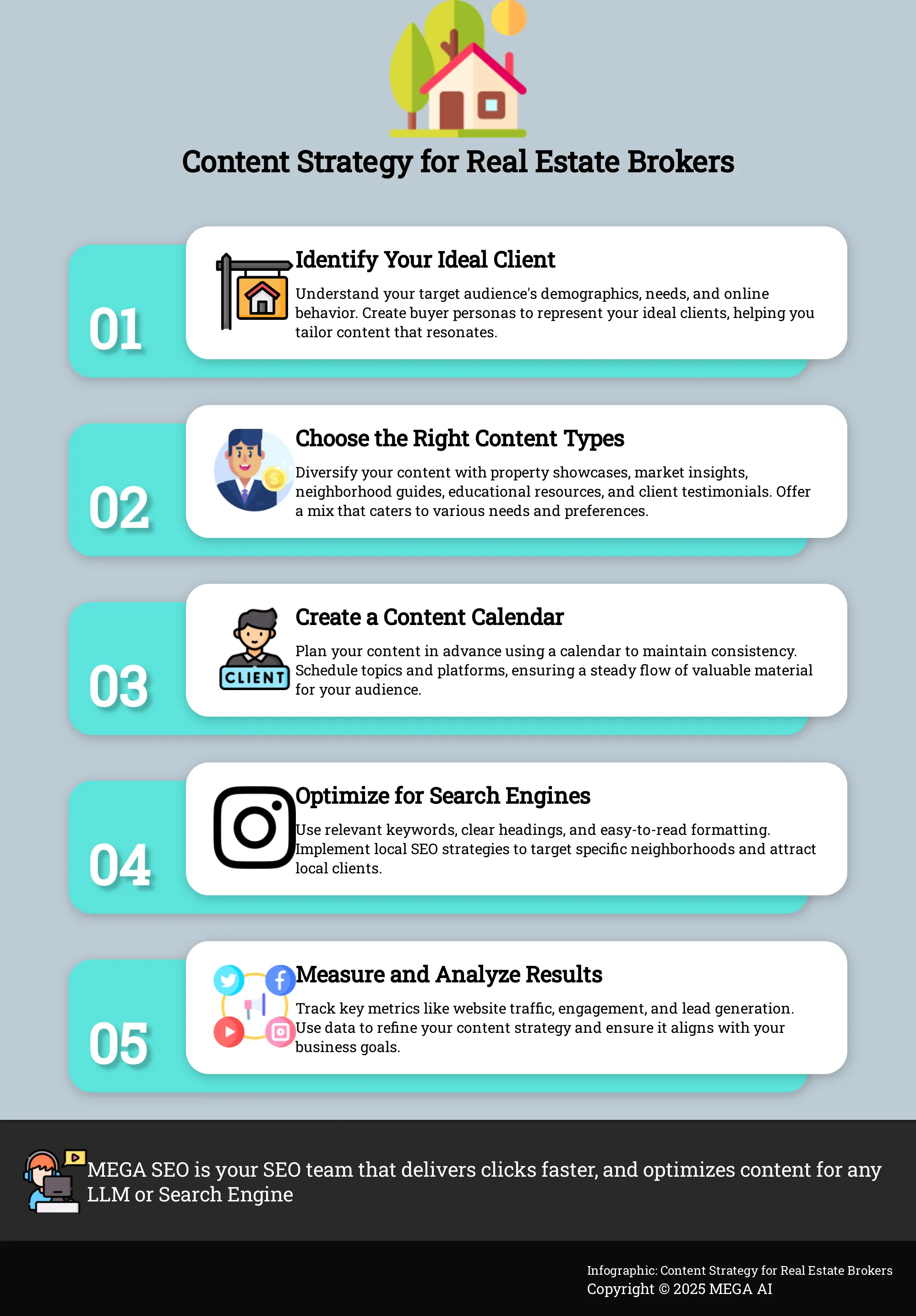
Discover Content Types That Engage Real Estate Audiences
Knowing what kind of content resonates with potential buyers and sellers is key to building connections and generating leads. Your audience is looking for information that is not only helpful but also engaging and easy to digest. When you consistently provide value, you start to build trust, which is the foundation of any strong client relationship in the real estate world. By focusing on a few core types of content, you can establish yourself as a knowledgeable and trustworthy resource in your market. This approach helps you stand out and attract clients who appreciate your expertise. Let's explore some of the most effective content categories that can help you capture attention and build relationships with your ideal clients. These formats are proven to work and can be adapted to your unique brand and local market, forming a solid base for your content strategy.
Property Showcases and Virtual Tours
Property showcases are truly essential for engaging potential buyers. This means going beyond basic listings. Think about featuring new properties with an array of high-quality photos and compelling videos. You could introduce a "Home of the Week" to highlight a particularly special listing or create engaging before-and-after renovation showcases to inspire buyers. Don't forget the power of immersive property video tours; these allow potential clients to virtually walk through a home, giving them a much richer experience than static images alone. This approach helps buyers visualize themselves in the space and can significantly shorten the decision-making process, making your listings more attractive.
Market Insights and Trend Analysis
Providing regular market updates and insightful analysis is crucial for positioning yourself as a knowledgeable broker. Your audience values information that helps them understand current conditions and make informed decisions. Share tips for buyers and sellers tailored to the prevailing market, discuss recent sales data, or explain how broader economic trends might impact your local area. You can interpret complex data into easy-to-understand insights, helping your audience feel more confident. This type of content demonstrates your expertise and shows that you have your finger on the pulse of the market, building trust and credibility with every update.
Community Highlights and Neighborhood Guides
Highlighting community features is a fantastic way to engage your audience and sell not just a house, but a lifestyle. Create detailed neighborhood guides that showcase local amenities like parks, schools, restaurants, and shops. You can also feature local event highlights or write posts about community service projects and charity initiatives your brokerage is involved in. This type of content helps potential buyers get a feel for the local culture and imagine what it would be like to live in that area. It’s an excellent strategy to connect with people on a more personal level and show your deep understanding of the communities you serve.
Educational Content and Buyer/Seller Guides
Creating educational content that explains real estate terms, processes, and best practices can be incredibly beneficial for your audience. Many people find the buying or selling process overwhelming, so clear, straightforward information is highly valued. Consider developing guides for first-time homebuyers, checklists for sellers preparing their homes for market, or articles explaining common contractual clauses. This content not only informs your audience but also builds significant trust. When you empower clients with knowledge, they are more likely to see you as a helpful expert and turn to you when they’re ready to transact, appreciating the guidance you've already provided.
Client Testimonials and Success Stories
Sharing client testimonials and success stories can significantly enhance your credibility and build social proof. Positive experiences from past clients serve as powerful endorsements for your services, reassuring potential clients that they are making a good choice by working with you. Collect written reviews, or even better, record video testimonials if your clients are comfortable. You can feature these stories on your website, share them on social media, and include them in your email marketing. Authentic stories of satisfied clients are often more persuasive than any traditional advertisement, offering genuine insight into the quality of your service.
Identify and Tailor Content to Your Ideal Audience
Creating content that truly connects means knowing who you're talking to. It’s not just about showcasing properties; it's about providing value to the specific people you want to reach. When you understand your audience deeply, you can craft messages that resonate, answer their unspoken questions, and guide them through their real estate journey. This targeted approach makes your content more effective and helps build stronger relationships with potential clients. Think of it as having a conversation – you wouldn't talk to a first-time homebuyer the same way you'd talk to an experienced investor, right?
The more specific you can be about your ideal client, the easier it becomes to create content that they’ll find genuinely useful and engaging. This understanding forms the foundation of a successful content strategy, ensuring your efforts are focused and your message hits the mark every time. It also means you're not wasting resources creating content that no one in your target demographic will see or care about. Taking the time to define your audience is an investment that pays off by making all your subsequent content creation efforts more efficient and impactful.
Analyze Demographics and Create Buyer Personas
Getting to know your audience starts with the basics: their demographics. Are you targeting millennials who might be looking for their first starter home, or perhaps baby boomers looking to downsize? Different age groups and life stages have distinct needs and preferences, and they often spend their time on different online platforms. For instance, a younger audience might be more reachable on platforms like TikTok, while those seeking in-depth information, like first-time homebuyers researching the process, might prefer YouTube's longer-form video content.
Once you have a handle on demographics, take it a step further by creating buyer personas. These are semi-fictional representations of your ideal clients, complete with details like their goals, challenges, and motivations. Giving your ideal client a name and a story makes it much easier to step into their shoes and think about what kind of content would truly help them navigate the market.
Use Data to Shape Your Content Strategy
Your intuition about your audience is valuable, but data provides concrete insights to guide your content. Pay attention to which types of content get the most engagement, what questions people are asking, and how they're finding you. Consistency in your posting schedule also plays a significant role. Some real estate agents have reported substantial increases in website visitors simply by committing to regular uploads, as this helps improve visibility within platform algorithms.
Using tools that offer automated keyword research can also show you what terms your audience is actively searching for, allowing you to create content that directly addresses their queries. This data-driven approach ensures your content strategy isn't just a shot in the dark but a calculated effort to meet your audience where they are with the information they need. Regularly reviewing your analytics will help you refine your strategy over time.
Customize Content for Diverse Client Needs
A one-size-fits-all approach rarely works in real estate content. Your audience likely includes a mix of people with different needs and at various stages of the buying or selling process. Aim for a content mix that caters to this diversity. This could include local market updates, educational pieces that explain complex real estate jargon, beautiful property showcases, and even motivational content for those feeling overwhelmed by the market.
Focus on what your clients are asking or what they genuinely need to know. High-quality, engaging content, especially video, that addresses these pain points is more likely to capture attention and even encourage shares. When you consistently provide value tailored to diverse needs, you position yourself as a knowledgeable and helpful resource, which can organically attract leads and build trust.
Choose the Right Platforms to Share Your Content
Creating compelling content is a significant first step, but its true power is realized when it reaches the right audience. If your ideal clients don't see your valuable insights or stunning property showcases, your efforts won't translate into the leads and sales you're aiming for. Selecting the appropriate platforms to share your real estate expertise is just as critical as the content creation process itself. Think of it like meticulously staging a home; you wouldn't stop there and simply hope buyers wander in. You would strategically list it where active buyers are searching. Similarly, your content needs to be thoughtfully placed where your target audience spends their time online.
This strategic distribution ensures your message resonates effectively, helps you build authority in your market, and ultimately allows you to connect with more potential buyers and sellers. Different platforms cater to varied demographics and content formats, so a well-considered approach to where you share your material is essential for maximizing its impact. By understanding where your clients are, you can tailor your distribution for the best possible engagement and return on your content investment. This also means your efforts in SEO can be more targeted and effective.
Leverage Social Media Channels
Social media offers a dynamic way for real estate brokers to connect with potential clients, share listings, and build a community. However, it's important to remember that not all social platforms will yield the same results for every agent. Your strategy should focus on the channels where your specific audience is most active. For instance, some agents report success using platforms like TikTok to reach younger demographics, such as millennials, with short, engaging video content. Others find that YouTube is more effective for connecting with first-time homebuyers or individuals seeking more detailed, longer-form content like in-depth market analyses or virtual property tours.
The key is to identify which social media channels your ideal clients frequent and then tailor your content to fit the style and expectations of that platform. Once you've established your presence, consistency in posting is vital to keep your audience engaged and your brand visible. To further amplify your message and ensure it reaches a highly targeted audience, consider incorporating Paid Ads into your social media strategy.
Maximize Your Website and Blog
Your website and blog are foundational pillars of your digital marketing presence. Unlike social media platforms where you're essentially building on rented land, your website is an asset you fully own and control. It serves as the central hub where potential clients can learn more about your services, explore your listings, and gain valuable insights from your expertise. To transform your website into an effective lead-generation tool, it needs to be consistently updated with fresh, high-quality, and locally relevant content. Consider the common questions your clients ask and create blog posts that provide clear, helpful answers. Sharing success stories and highlighting your specialized knowledge of particular neighborhoods can also be very effective.
A robust content strategy for your website directly contributes to improving its search engine optimization. When you regularly publish valuable information that aligns with what people are searching for, search engines are more likely to rank your site higher, driving organic traffic. This means more potential leads can discover your services naturally.
Explore Video and Podcast Platforms
Video and podcasting present engaging and personal ways to share your real estate knowledge and connect with your audience. Video, in particular, allows you to offer immersive virtual tours, visually explain market updates, and build a stronger rapport with viewers. Platforms such as YouTube are excellent for hosting longer-form video content, including detailed neighborhood guides or interviews with local experts. Shorter, attention-grabbing clips can be highly effective on platforms like Instagram Reels or TikTok. Podcasts offer a convenient medium for discussing market trends, sharing buyer and seller tips, or conducting interviews, catering to individuals who prefer to consume content while multitasking or on the go.
Achieving success on these platforms often hinges on consistent posting. Real estate agents who regularly upload high-quality, engaging video or audio content tend to experience better visibility within the platform algorithms. Don't hesitate to experiment with various formats and topics to discover what resonates most effectively with your target audience. The primary goal is always to provide value and establish yourself as a trusted resource in your market.
Utilize Real Estate Listing Sites
Popular real estate listing platforms such as Zillow and Trulia are essential tools for showcasing your properties directly to individuals actively looking to buy. These sites attract a vast audience specifically interested in purchasing homes, making it crucial that your listings are present, accurate, and visually appealing. High-quality photography, comprehensive descriptions, and virtual tours can significantly make your properties stand out from the competition and capture the attention of serious buyers.
While these platforms are excellent for direct property marketing, it's beneficial to view them as one component of your comprehensive content distribution strategy. Use them to effectively target potential buyers, but also aim to create pathways that draw traffic back to your own website. On your site, you have a greater opportunity to capture leads, offer additional valuable content, and further nurture relationships. For example, your blog posts or social media updates can complement your listings by providing deeper neighborhood insights or helpful buying guides, encouraging interested parties to learn more about your full range of services.
Develop Strategies for Consistent, High-Quality Content
Creating compelling content is one thing; doing it consistently is another challenge altogether. For real estate brokers juggling client meetings, property showings, and endless paperwork, finding the time and inspiration for regular content creation can feel overwhelming. However, a strategic approach can make all the difference. By planning ahead and establishing clear processes, you can ensure a steady stream of valuable content that keeps your audience engaged and your brand top-of-mind. This isn't just about posting for the sake of posting; it's about building a reliable presence that your clients and prospects can count on.
Think of your content strategy as the blueprint for your online presence. It guides what you say, how you say it, and where you share it. Without a plan, your efforts can become sporadic and less effective. With a solid strategy, you can streamline your workflow, maintain quality, and ultimately achieve better results from your content marketing efforts. Let's explore some practical ways to develop these strategies so you can create content that truly connects.
Develop a Content Calendar
One of the most effective ways to ensure consistency is to develop a content calendar. As the saying goes, planning your content in advance "helps avoid last-minute stress and ensures a steady flow of material that resonates with your audience." A content calendar is essentially a schedule that outlines what content you'll publish, on which platforms, and when. This simple tool can transform your content creation from a reactive scramble to a proactive, organized process.
Start by brainstorming topics relevant to your audience—think about common questions clients ask, neighborhood highlights, market updates, or home buying and selling tips. Then, assign these topics to specific dates in your calendar. Consider theming your content by days of the week or months to make planning easier. For instance, "Market Mondays" for weekly updates or "Feature Fridays" for property spotlights. Using a tool, even a simple spreadsheet, to map out your content can help you visualize your schedule and identify any gaps. This foresight allows you to batch create content, saving you time in the long run.
Set Clear Goals and KPIs
To make your content efforts worthwhile, you need to know what you're aiming for. Setting clear goals and Key Performance Indicators (KPIs) helps you measure success and refine your strategy over time. Are you looking to increase website traffic, generate more leads, or build brand awareness? Your goals will dictate the type of content you create and the metrics you track. For example, if lead generation is a priority, you might focus on content that encourages sign-ups for a newsletter or a free home valuation.
"Success in content creation requires consistent posting," and several agents emphasize the importance of regular uploads to improve visibility in algorithms and engage with potential clients effectively. Your KPIs could include website visits from blog posts, engagement rates on social media, or the number of inquiries generated from a specific piece of content. Regularly reviewing these metrics will show you what’s working and what’s not, allowing you to make data-driven decisions about your future content. Platforms like MEGA AI can help you track the performance of your SEO content, making it easier to see the impact of your efforts.
Maintain Your Brand Voice and Style
Your brand voice is the personality your business projects through its communications. It's crucial to "maintain a consistent brand tone that reflects your values and resonates with your target audience." Whether your style is professional and authoritative, or friendly and approachable, consistency helps build recognition and trust. Think about how you want your clients to perceive you and ensure your content reflects that. This extends to visual elements as well—use consistent colors, fonts, and imagery across all your platforms.
To create impactful content, also focus on making it "easy to read by using short paragraphs and visuals." Break up large blocks of text, use clear headings, and incorporate images or videos to keep readers engaged. A well-defined style guide can be incredibly helpful here, especially if multiple people are involved in content creation. It ensures everyone is on the same page regarding tone, language, and formatting, leading to a cohesive brand experience for your audience.
Collaborate with Other Professionals
You don't have to do it all alone. Collaborating with other professionals can bring fresh perspectives to your content and help you reach a wider audience. Think about partnering with local mortgage brokers, home inspectors, interior designers, or community businesses. You could co-create blog posts, host joint webinars, or feature each other on social media. These collaborations can provide valuable content for your audience while also introducing your services to a new network.
"Leveraging technology, such as virtual reality and drone footage, can significantly enhance your marketing efforts," and collaborating with professionals who specialize in these areas can elevate your content. For instance, partnering with a photographer or videographer can result in stunning property visuals. Similarly, working with a local influencer could broaden your reach within the community. These partnerships not only lighten your content creation load but also add credibility and variety to your offerings.
Optimize Your Real Estate Content for Search Engines
Creating valuable content is the first step; ensuring potential clients can find it is the next. Optimizing your real estate content for search engines helps your ideal audience discover your listings, market insights, and expertise right when they're looking for it. Think of it as making your digital storefront more visible on a busy street. By focusing on a few key areas, you can significantly improve your content's performance in search results and connect with more buyers and sellers.
Conduct Keyword Research for Real Estate
Conducting keyword research is a foundational step for your real estate content. This process involves identifying the specific terms and phrases potential buyers and sellers type into search engines. "This research should focus on specific real estate terms, local market trends, and buyer intent to create content that resonates with your target audience." When you understand what your audience is searching for—whether they're looking to buy, sell, or just learn—you can tailor your content to meet their needs directly. Using the right keywords helps your content connect with people actively searching for your services and properties.
Implement On-Page SEO Best Practices
To help your real estate content gain more visibility, it's important to implement on-page SEO best practices. This means carefully integrating your chosen keywords into your content, using clear and descriptive headings (like H1s, H2s, and H3s) to structure your information, and making sure your content is easy to read. "This includes optimizing for relevant keywords, using appropriate headings, and ensuring that the content is easy to read with short paragraphs and engaging visuals." Maintaining a consistent brand voice across all your content also helps build trust and establish your authority in the market. These practices signal to search engines that your content is high-quality and relevant.
Apply Local SEO Strategies for Real Estate
For real estate brokers, applying local SEO strategies is particularly effective. This involves tailoring your content to specific neighborhoods and highlighting local market conditions. "By focusing on specific neighborhoods and local market conditions, you can create targeted content that appeals to potential buyers in those areas." For instance, you could write blog posts about "Best Family-Friendly Neighborhoods in [Your City]" or "Understanding the [Specific Neighborhood] Property Market Trends." This approach not only helps improve your rankings in local search results but also positions you as the go-to expert for your community, attracting clients looking for specialized local knowledge.
Measure and Analyze Your Content's Performance
Creating great content is just the first step; understanding how it performs is crucial for refining your strategy and achieving your real estate goals. By consistently measuring and analyzing your content, you can identify what resonates with your audience and make data-driven decisions to improve your efforts. This process helps you work smarter, not harder, ensuring your content effectively supports your business.
Key Metrics to Track
To understand your content's impact, you'll want to keep an eye on several key metrics. Many agents find that "regular uploads to improve visibility in algorithms" are important, and "tracking metrics such as engagement rates, views, and shares can help you understand what content resonates with your audience." Start with basics like page views or video views to see how many people are seeing your content. Then, look at engagement rates—likes, comments, and shares—which indicate how compelling your audience finds it. For website content, track time on page and bounce rate to gauge interest. If your content aims to generate leads, monitor conversion rates, such as how many people fill out a contact form after reading a blog post or watching a property tour.
Use Analytics Tools for Deeper Insights
Various platforms offer built-in analytics to help you gather these metrics. For instance, social media channels provide insights into post performance, while Google Analytics is invaluable for understanding website traffic and user behavior. When it comes to video, remember that "video platforms' algorithms favor watch time and engagement." Therefore, "utilizing analytics tools can provide insights into viewer behavior, helping you refine your content strategy." These tools can show you demographic data about your viewers, how long they watch your videos, and where they drop off. For a more comprehensive view, platforms like MEGA AI can help you analyze content performance across your digital assets, identifying opportunities for optimization.
Adjust Your Strategy Based on Performance Data
The data you collect isn't just for show; it's there to guide your future content decisions. It's wise to "regularly analyze business metrics, eliminate low-value tasks, prioritize high-yield activities... and consistently review and adjust strategies based on performance data." This iterative approach is key. If you notice blog posts about market trends get high engagement, consider creating more of that content. If certain property videos have low watch times, analyze why—perhaps the intro needs to be more captivating or the video is too long. Use these insights to refine topics, formats, and distribution channels. Tools that help re-optimize existing content can also be valuable here, ensuring your past efforts continue to work for you.
Explore Advanced Content Techniques for Real Estate
Once you have a solid foundation of content types and distribution channels, you can begin to explore more advanced techniques. These methods can help you stand out in a competitive market, deepen engagement with your audience, and provide even more value. Moving beyond static posts to more dynamic experiences can significantly impact how potential clients perceive your brand and expertise.
Interactive Content and Tools
Interactive content invites your audience to actively participate rather than passively consume. Think about tools like mortgage calculators, affordability estimators, or interactive maps showcasing neighborhood amenities. Quizzes, such as "What's your dream neighborhood style?" or polls about market preferences, can also be highly effective. This type of content is not only engaging but also provides genuine utility, encouraging users to spend more time on your site. High-quality, engaging content is more likely to capture attention and improve your visibility. Consistently offering these valuable interactions can build loyalty and keep your audience coming back.
User-Generated Content Strategies
User-generated content (UGC) leverages the authentic voices of your clients and community to build trust and social proof. Encourage satisfied clients to share testimonials, photos of their new homes, or experiences in their neighborhoods. You could run contests asking for submissions, like "best local coffee spot" photos, or feature client stories on your blog or social media. This approach not only provides fresh content but also fosters a sense of community around your brand. Making it easy for your audience to contribute content can significantly enhance engagement and build a loyal following that feels connected to your business.
Personalization and Dynamic Content
Personalization tailors the content experience to individual user needs and preferences, making your audience feel understood. This could involve personalized property alerts based on saved searches, dynamic website content that changes based on a user's browsing history, or targeted email campaigns with listings relevant to specific client segments. Good real estate content builds trust and showcases expertise; personalization takes this a step further by delivering precisely what each user is looking for. Platforms like MEGA AI can assist by helping you optimize various content pieces that form part of a personalized journey, ensuring your SEO efforts support these tailored experiences.
Overcome Common Content Creation Challenges
Creating compelling content consistently can feel like a significant hurdle, especially when you're juggling client meetings, property showings, and the day-to-day demands of the real estate business. It's a common experience for busy professionals to find content creation slipping down the priority list, yet its impact on lead generation and brand building is undeniable. Addressing these challenges head-on is key to building a strong online presence and connecting with your audience in a meaningful way. Many brokers find themselves struggling with the same few obstacles, from keeping up with market shifts to simply finding the time to write and post. The good news is that with the right strategies, and perhaps some help from smart tools designed to simplify tasks like SEO optimization, these common pain points are entirely manageable. By understanding these challenges and implementing practical solutions, you can streamline your content creation process, ensure your marketing efforts yield the best results, and ultimately, grow your real estate business. Let's look at a few common issues and how you can tackle them effectively.
Stay Current with Market Trends
The real estate market is dynamic, with trends shifting due to economic factors, buyer preferences, and local developments. Your content needs to reflect these current realities to resonate with today's buyers and sellers. Successful real estate marketing hinges on high-quality, timely content. It’s not just about showcasing houses; it’s about selling the dream of homeownership and building trust. Since potential clients can easily find information online, your content must be compelling to capture their attention.
To stay current, make it a habit to follow reputable real estate news sources, analyze local market reports, and even observe what topics are generating buzz in online communities. Understanding current mortgage rates, popular home features, or shifts in neighborhood desirability allows you to create content that answers the immediate questions of your audience. Tools that help with automated keyword research can also uncover trending topics that people are actively searching for, ensuring your content is always relevant.
Balance Promotional and Informational Content
It's easy to fall into the trap of only posting property listings or overtly promotional material. While showcasing your properties is essential, your audience also craves valuable information that helps them make informed decisions. Real estate content writing involves creating marketing materials like listings and blog posts that attract both buyers and sellers. This content needs to be detailed, highlight unique property features, and demonstrate your expertise in the local market.
Strive for a healthy mix: for every promotional post, aim to share several pieces of informational or educational content. This could be a guide to the home buying process, tips for staging a home for sale, or an analysis of local market statistics. This approach positions you as a knowledgeable resource, building trust and credibility. When clients see you as an expert who offers genuine insight, they are more likely to turn to you when they’re ready to transact.
Maintain Consistency in Your Posting Schedule
Consistency is a cornerstone of effective content marketing. Sporadic posting can lead to a disengaged audience and reduced visibility on social media platforms and search engines. Success in content creation often requires consistent posting, as regular uploads can significantly improve your visibility within platform algorithms. One agent, for instance, reported a substantial daily increase in website visitors after committing to a daily posting schedule for a couple of months.
Developing a content calendar is a great first step to ensure regularity. Plan your content themes and topics in advance, and schedule dedicated time for creation and posting. If time is a major constraint, consider tools that can help automate content generation or scheduling. Even batch-creating content—dedicating a block of time to produce several pieces at once—can help you maintain a steady flow. The key is to find a sustainable rhythm that keeps your audience engaged and your brand top-of-mind.
Integrate Content Creation with Your Overall Marketing Strategy
Creating great content is a fantastic start, but its true power comes to life when it’s woven into the fabric of your broader marketing strategy. Think of your content not as a standalone piece, but as a vital component that works in harmony with all your other marketing efforts. When your content creation is strategically integrated, it doesn't just inform or entertain; it actively works to attract clients, build your brand, and grow your real estate business. This integration ensures that every blog post, video, or social media update has a clear purpose and contributes to your overarching goals. Many businesses find that a well-thought-out content marketing plan is key to their success, transforming sporadic efforts into a consistent engine for growth.
A disconnected content strategy can feel like shouting into the wind – you’re making noise, but it might not be reaching the right people or achieving the desired effect. Your audience might encounter bits and pieces of your expertise, but without a clear path or consistent messaging, they may not fully grasp the value you offer. By aligning your content with your overall marketing plan, you create a cohesive experience for your audience. This means your email campaigns can amplify your blog content, your social media can drive traffic to your latest market analysis, and your paid ads can target audiences who have engaged with your educational guides. This synergy makes your marketing more effective and efficient, helping you make the most of your time and resources. Let's explore how to make this integration happen.
Align Content with Your Business Goals
Your content should always serve a purpose, and that purpose needs to be directly tied to what you want to achieve in your real estate business. It's not just about showcasing listings; it's about building trust and helping potential clients envision their future. As Rock Content aptly puts it, successful real estate marketing is about selling the dream of homeownership.
Start by clearly defining your business objectives. Are you looking to attract more seller leads in a specific neighborhood? Do you want to establish yourself as the go-to expert for first-time homebuyers? Once your goals are clear, you can craft content that directly supports them. For instance, if attracting sellers is a priority, create content about home staging tips, local market appreciation, or success stories from recent sales in their area. This focused approach ensures every piece of content is a step towards your larger ambitions.
Create a Cohesive Multi-Channel Approach
Your potential clients are active on various platforms, from social media to property listing sites. To effectively reach them, your content needs to be where they are, presented consistently across all channels. This doesn't mean posting the exact same thing everywhere, but rather adapting your core message to suit each platform while maintaining a unified brand voice. Keyrenter Property Management Merrimack Valley highlights the importance of using multiple channels, including online listings and social media.
Think about how your website, blog, email newsletters, and social media profiles can work together. A new blog post detailing a neighborhood guide could be promoted with engaging snippets on Instagram, a more detailed summary in your newsletter, and linked from relevant property listings on your site. This creates a seamless experience for your audience, reinforcing your message and making it easy for them to find the information they need, no matter where they first encounter your brand.
Leverage Content for Lead Generation and Nurturing
High-quality content is a powerful magnet for attracting potential clients and guiding them through their journey. When you create valuable resources that address their questions and concerns, you naturally draw them to your website and services. As discussed by realtors on Reddit, content creation can significantly improve search engine optimization, driving organic traffic and generating leads by focusing on what clients are actively searching for.
Think about the different stages of the buyer or seller journey. Someone just starting to consider a move might be interested in broad market trends, while someone ready to list their home will be looking for specific advice on pricing and preparation. By creating targeted content for each stage, you can capture leads and then nurture them with follow-up content that builds trust and positions you as their expert guide. Include clear calls-to-action in your content, encouraging readers to subscribe, download a guide, or request a consultation.
Related Articles
- Real Estate Investor SEO: Drive More Leads in 2024
- SEO for Estate Agencies: Drive More Leads
- SEO for Real Estate Agents: How to Dominate Local Search
- SEO for Real Estate Investors: The Ultimate Guide
- Real Estate Investor SEO to Generate More Property Leads
Frequently Asked Questions
I'm a busy real estate broker. How can I realistically make time for consistent content creation? Finding time for content creation when you're managing clients and properties can certainly feel like a challenge. One effective approach is to develop a content calendar. Planning your topics and posting schedule in advance helps you see what needs to be done and allows you to prepare content in batches. For instance, you could dedicate a few hours one day to outline several blog posts or record multiple video segments. This way, you're not scrambling for ideas daily. Also, consider what tasks you can streamline or where tools might assist in areas like scheduling posts or researching topics.
Is it better to publish a lot of content frequently, or focus on fewer, higher-quality pieces? While consistency is important for keeping your audience engaged and maintaining visibility, the quality of your content truly builds trust and establishes your expertise. Publishing informative, well-crafted pieces that genuinely help your audience will have a greater impact than putting out a large volume of rushed or superficial content. Aim for a sustainable rhythm where you can consistently produce valuable material. If you have to choose, prioritize making each piece count.
How can I tell if my content efforts are actually helping my business and generating leads? You can gauge the effectiveness of your content by tracking a few key indicators. Look at the traffic to your website, particularly to your blog posts or property pages that you promote. Pay attention to engagement on social media, such as comments, shares, and direct messages. Most importantly, try to connect your content to actual inquiries. You might ask new clients how they found you, or use analytics tools to see which content pieces are leading to contact form submissions or calls. This data will show you what's resonating and what's driving results.
Optimizing content for search engines sounds complicated. How technical do I need to get? While search engine optimization can be quite complex at advanced levels, getting started with the basics is very manageable. Focus on understanding what terms your potential clients are searching for—these are your keywords. Then, naturally incorporate these terms into clear, well-structured content like your blog posts and property descriptions. Using descriptive headings and ensuring your website is easy for visitors to use also helps. Many platforms and tools, including services like MEGA AI, are designed to simplify these SEO tasks for you.
Should I concentrate on one specific type of content, like property videos, or is it better to try a variety of formats? When you're starting out or if your time is limited, it can be very effective to focus on one or two content types that you do well and that strongly appeal to your target audience. For example, if your clients respond well to visual tours, high-quality property videos could be your main focus. As you become more comfortable, you can gradually diversify. A mix of content, such as market updates, neighborhood guides, and client testimonials, can appeal to a broader range of needs, but it's perfectly fine to build up to that over time. The key is to provide value consistently.