
A paid ad runs for a week and then it’s gone. A flyer gets tossed in the recycling bin. A single piece of high-quality content, however, can work for you 24/7, attracting new clients for months or even years. Think of it as building a digital asset for your business. Each blog post, neighborhood guide, or market update you publish becomes a permanent part of your online presence, continuously demonstrating your expertise. This is the true power of Creating content for Real Estate Agents. It’s an investment that pays long-term dividends, turning your website into a reliable lead-generation machine that builds your authority and fills your pipeline while you focus on serving your clients.
Key Takeaways
- Plan before you publish: A clear content strategy is your most important tool. Define your goals, identify your ideal client, and use a content calendar to ensure your efforts are consistent and aligned with your business objectives.
- Focus on local SEO: Real estate is an inherently local business, so your digital presence should be too. Use neighborhood-specific keywords and optimize your Google Business Profile to appear in front of qualified buyers and sellers in your target market.
- Create value, not just listings: Build trust by consistently answering common client questions and showcasing your unique market expertise. Repurpose your most helpful articles and videos across different platforms to maximize their reach and establish your authority.
What is Real Estate Content Creation?
Real estate content creation is the process of producing and sharing materials like articles, videos, and social media posts to attract, engage, and retain clients. It’s a strategic marketing approach that moves beyond direct sales pitches and property listings. Instead of just telling people you can sell their house, you show them you’re a knowledgeable and trustworthy expert in your local market. This strategy is fundamental to building a strong online presence and a sustainable pipeline of leads.
Effective content helps you connect with potential clients at every stage of their journey, from their first thought of moving to the day they sign the closing papers. It’s about providing value upfront. By answering common questions, offering market insights, and sharing success stories, you build a relationship with your audience. This approach is a core component of modern real estate marketing, helping you stand out in a crowded field. Ultimately, creating consistent, high-quality content establishes your brand, builds community, and drives business growth.
Defining real estate content
Real estate content is any material you create to inform or entertain your target audience about the property market. It’s not just about selling a specific house; it’s about selling the dream of homeownership and the lifestyle that comes with it. This includes a wide range of formats, such as blog posts analyzing local market trends, video tours of neighborhoods, guides for first-time homebuyers, and client testimonials.
The primary goal of this content is to improve your visibility in search engine results through real estate SEO. By creating materials that address the specific questions and needs of buyers and sellers in your area, you attract more qualified traffic to your website and position yourself as the go-to expert.
Why content matters for real estate agents
Content matters because it’s one of the most effective ways to build trust and establish your expertise. In a transaction as significant as buying or selling a home, clients want to work with an agent they believe in. High-quality, helpful content demonstrates your knowledge and commitment, making potential clients feel more comfortable choosing you. It’s a way to prove your value long before you ask for their business.
Furthermore, a well-planned content strategy generates higher-quality leads. For example, many agents find that social media provides better leads than traditional sources like the Multiple Listing Service (MLS). When you consistently share valuable information, you attract an engaged audience that is genuinely interested in your services, leading to more meaningful conversations and, eventually, more closed deals.
How to Build Your Real Estate Content Strategy
A solid content strategy is the foundation of your marketing efforts. It’s the plan that guides what you create, who you create it for, and how you’ll know if it’s successful. Instead of randomly posting and hoping for the best, a strategic approach ensures your work is purposeful and effective. Here’s how to build one, step by step.
Set clear goals
Before you write a single word, you need to know what you're trying to accomplish. A content strategy helps you make content that people find useful and gives you an advantage over others in the field. Are you aiming to attract more seller leads in a specific neighborhood? Do you want to become the go-to agent for first-time homebuyers? Your goals will shape every piece of content you create. Define specific, measurable objectives, such as increasing website traffic by 20% in six months or generating 10 new buyer leads per month from your blog. Having clear targets makes it easier to build an effective SEO plan and determine if your efforts are paying off.
Identify your target audience
You can't create compelling content if you don't know who you're talking to. Take the time to understand your audience by considering their age, location, interests, and the challenges they face. Are you targeting young professionals looking for their first condo, growing families searching for more space, or retirees looking to downsize? Create detailed client personas to represent your ideal customers. This process helps you tailor your topics, tone, and language to resonate with the people you want to attract. When your content speaks directly to their needs and questions, you build a connection that generic marketing can't match.
Create a content calendar
Consistency is key in content marketing, and a content calendar is your best tool for staying on track. A calendar helps you plan when to publish and republish your articles, videos, and social media posts. Start by brainstorming topics relevant to your audience and local market, then map them out for the upcoming quarter. This foresight prevents last-minute scrambling and ensures a steady flow of valuable information for your audience. Planning ahead also allows you to align your content with seasonal trends or local events. Tools that automate content generation can help you fill your calendar efficiently, letting you focus on strategy and client relationships.
Measure and analyze performance
Creating content is only half the battle; you also need to know if it's working. It's essential to evaluate whether your marketing efforts are generating a return and helping you meet your goals. Track key real estate marketing metrics like website clicks, time on page, lead form submissions, and social media engagement. This data tells you what's resonating with your audience and what isn't. If a blog post about local schools is driving a lot of traffic, create more content like it. If another topic falls flat, you know where to adjust. Regularly analyzing performance allows you to refine your strategy and make data-driven decisions to improve your results over time.
Content Formats for Real Estate
Choosing the right content format is about meeting your audience where they are and delivering information in the way they prefer to consume it. A strong real estate content strategy uses a mix of formats to attract, engage, and convert clients. By diversifying your content, you can appeal to different learning styles and capture attention across various platforms, from search engines to social media feeds.
Blog posts and articles
Written content is the foundation of your digital authority. Regularly publishing high-quality blog posts and articles helps you answer common client questions and rank for relevant search terms. You can cover topics like local market analysis, guides to buying or selling, and explanations of complex real estate concepts. This type of content establishes you as a knowledgeable expert in your local area. Creating consistent, SEO-optimized articles can be time-consuming, which is why tools that offer AI content generation can be a significant asset for busy agents. By building a library of helpful resources, you create a durable asset that attracts potential clients over time.
Video content (property tours, market updates)
Real estate is a visual industry, and video is one of the most powerful ways to showcase properties and connect with your audience. High-quality property tours, neighborhood guides, and agent introduction videos can create a personal connection that photos alone cannot. You can also film short market updates to share on social media or in your newsletter. These videos don't just sell homes; they sell your expertise and personality. Once you have this compelling video content, you can use a Paid Ads platform to ensure it reaches a targeted local audience on platforms like Meta and YouTube, maximizing your visibility and impact.
Social media posts
Social media is where you can build a community and engage with your audience in real time. Your posts should be a mix of business and personality. Share new listings with stunning photos, celebrate client closings, and post before-and-after shots of renovations. You can also share content that highlights your local expertise, like featuring a favorite local coffee shop or promoting a community event. The key is to be consistent and interactive. A well-managed social media presence keeps you top-of-mind and makes you more approachable to potential clients.
Email newsletters
An email newsletter is your direct line to your most interested leads and past clients. It’s a powerful tool for nurturing relationships and staying in touch without being intrusive. Use your newsletter to provide value, not just to sell. Share a roundup of your latest blog posts, offer exclusive market insights, or provide a list of featured properties. You can also send targeted emails to different segments of your list, such as first-time homebuyers or potential sellers. This direct form of communication is excellent for re-engaging past clients and moving new leads through your sales funnel.
Infographics and visual content
Complex information, like market statistics or the steps in the homebuying process, can be overwhelming in a block of text. Infographics and other custom visuals make this data easy to understand and share. You can create simple charts showing average home prices in different neighborhoods or a visual timeline of the closing process. These assets are highly shareable on social media platforms like Pinterest and can also make your blog posts more engaging. Using tools to create visually appealing graphics helps you stand out and present information in a professional, digestible format that clients will appreciate.
How to Optimize Real Estate Content for SEO
Creating valuable content is the first step, but ensuring potential clients can find it is just as important. Search engine optimization (SEO) is the strategic process of improving your website's visibility in search results. For real estate, this means tailoring your content and website so it attracts more visitors looking for listings, advice, and agents in your area. A well-rounded SEO strategy combines keyword research, local optimization, on-page techniques, and authority-building to turn your website into a reliable lead generation engine. By focusing on SEO, you make sure your hard work creating content pays off by reaching the right audience at the moment they need your services.
Keyword research and optimization
Effective SEO begins with understanding the language of your clients. Keyword research involves identifying the specific words and phrases people type into search engines when looking for real estate services. While broad terms like “homes for sale” are competitive, long-tail keywords like “three-bedroom house with a yard in Austin” attract more qualified buyers. Your goal is to conduct thorough keyword research to find terms that balance search volume with user intent. Once you identify your target keywords, you can weave them naturally into your blog posts, property descriptions, and page titles to signal your relevance to search engines. Using an automated keyword research tool can help you uncover valuable opportunities you might otherwise miss.
Local SEO strategies
Real estate is an inherently local business, and your SEO strategy should reflect that. Local SEO helps your website rank better in geographically specific searches. The best SEO keywords for real estate agents often contain local terms, such as “[your city] luxury homes” or “best real estate agent in [your neighborhood].” You can create content that targets these terms, such as neighborhood guides, local market updates, or blog posts about community events. It’s also critical to set up and optimize your Google Business Profile. This free listing allows your business to appear in Google Maps and the local search results, making it easier for nearby clients to find and contact you.
On-page SEO techniques
On-page SEO techniques are vital for enhancing the visibility of your real estate website. These are optimizations you make directly on your web pages to help search engines understand your content. Start by optimizing your title tags and meta descriptions with targeted keywords, as these are what users see in search results and can influence whether they click. Within your content, use clear headings (H1, H2, H3) to structure your articles and make them easy to read. For property listings, use descriptive alt text for your images, such as “modern kitchen with granite countertops at 123 Main St,” to help search engines index your visuals. These small adjustments make a big difference in how your site is perceived by both users and search algorithms.
Build quality backlinks
Backlinks are links from other websites to yours, and they act as a vote of confidence in your content. Building quality backlinks is a key part of demonstrating your website’s authority and credibility to search engines. Instead of seeking out hundreds of low-quality links, focus on earning them from reputable sources. You can do this by writing guest posts for local news outlets or real estate blogs, creating shareable market reports that others will want to cite, or getting listed in local business directories. Each quality backlink signals to Google that your website is a trustworthy resource, which can significantly improve your search rankings over time.
Use Social Media to Distribute Your Content
Creating great content is only half the battle; you also need to get it in front of the right people. Social media is a powerful channel for distributing your real estate content, building your brand, and connecting directly with potential clients. A thoughtful social media plan helps you reach buyers and sellers where they already spend their time, turning your content into a consistent source of leads and engagement.
Choose the right platforms
Your first step is to identify where your target audience is most active. With millennials now the largest group of homebuyers, a strong social media presence is essential. Platforms like Instagram and Facebook are excellent for showcasing visual content like property photos and video tours. Instagram, with its focus on high-quality visuals, is ideal for listings and behind-the-scenes stories. Facebook is great for building community groups and sharing longer-form content like market updates. Don't overlook platforms like LinkedIn for connecting with other professionals or sharing in-depth market analysis. Focus your energy on one or two platforms where you can consistently show up well.
Create platform-specific content
Avoid posting the exact same message across all your channels. Each platform has its own style and audience expectations. For example, an Instagram Reel of a property walkthrough won't have the same impact as a detailed market analysis shared on your LinkedIn profile. Create a variety of posts, including new listings, "just sold" announcements, client testimonials, and local guides. You can use tools like MEGA AI's Paid Ads platform to easily remix your core content into hundreds of variations, creating unique assets perfectly suited for Meta, Google, and LinkedIn without extra manual work. This ensures your message feels native to each platform.
Develop an engagement strategy
Social media is a two-way street. Your goal is to build a community, not just broadcast listings. Actively engage with your followers by responding to comments and messages promptly. Use relevant hashtags to increase the visibility of your posts, and don't be afraid to show some personality with behind-the-scenes content. Video is particularly effective for capturing attention and building a personal connection. A solid engagement strategy involves listening to your audience, participating in conversations, and providing value beyond just selling properties. This approach helps build the trust necessary for someone to choose you as their agent.
Use paid social media ads
While organic reach is valuable, paid social media advertising allows you to target specific demographics with precision. You can create ads aimed at first-time homebuyers in a particular zip code or people who have shown interest in moving. According to the National Association of Realtors, many agents find that social media provides higher-quality leads than traditional methods. With a tool like MEGA AI, you can upload your ad content in bulk across multiple platforms and let the AI automatically move your budget to the best-performing ads. This simplifies the process and ensures your marketing dollars are spent as effectively as possible to generate qualified leads.
Tools to Simplify Your Content Creation
Creating great content consistently can feel like a full-time job. The good news is you don’t have to do it all from scratch. Using the right set of tools can streamline your workflow, from planning your posts to measuring their impact. Here are some essential tools to add to your marketing toolkit.
Content planning and management tools
A solid content strategy is your roadmap to creating content that your audience finds genuinely useful. To put that strategy into action, you need a plan. A content calendar is the best way to organize your ideas and schedule when you’ll publish everything from blog posts to social media updates. This keeps you consistent and ensures your efforts align with your goals. Tools like Trello or Asana can help you visualize your workflow, but even a simple spreadsheet works. A clear content plan is the foundation for an effective marketing machine.
Design and visual content creation tools
In real estate, visuals are everything. Professional photos and videos are essential for showcasing properties, but all your content needs to be visually appealing to capture attention. You don't need to be a graphic designer to create beautiful posts. Tools like Canva offer user-friendly templates for everything from Instagram stories to property flyers and market update infographics. Using a consistent visual style across your content helps build a recognizable brand and makes your posts more engaging and shareable. High-quality visuals signal professionalism and can make a significant difference in how potential clients perceive you.
Video editing software
Video is one of the most powerful formats for real estate agents. Short-form videos, like Instagram Reels or TikToks, are especially effective for reaching a wider audience. You can create quick property tours, neighborhood guides, or Q&A sessions to connect with viewers. You don’t need a professional film crew; your smartphone is powerful enough. Mobile-friendly editing apps like CapCut or InShot make it simple to trim clips, add music, and include text overlays. Consistently producing video content helps you stay top-of-mind and provides a dynamic way to present your listings and expertise.
SEO and analytics tools
To ensure your content reaches potential clients, it needs to be optimized for search engines. This involves thorough keyword research, on-page optimization, and building a strong local SEO presence. While you can use tools like Google Analytics to track website traffic and user behavior, the optimization process itself can be time-consuming. This is where AI-powered platforms can make a huge difference. An end-to-end SEO tool can automate keyword research, generate content, and even update your existing articles to improve their ranking and click-through rate. This frees you up to focus on what you do best: connecting with clients and closing deals.
Match Content to the Buyer's Journey
Not everyone who lands on your website is ready to sign a contract. Potential clients move through a process, often called the buyer's journey, from initial curiosity to the final decision. A successful content strategy meets them at each step of this path. By creating content tailored to their specific mindset at the awareness, consideration, and decision stages, you can build trust and gently guide them toward choosing you as their agent. This is about playing the long game, not just going for the quick sale.
Think of it as starting a conversation. You wouldn't ask for a listing agreement the first time someone reads your blog. Instead, you provide value, answer their questions, and build a relationship over time. This approach positions you as a helpful expert, not just another salesperson in a crowded market. Aligning your content with these stages makes your marketing more effective because you're giving people what they need, right when they need it. It helps you connect with clients in a more meaningful way, turning cold leads into warm prospects and, eventually, happy clients. Understanding this framework is fundamental to creating content that converts, ensuring your efforts aren't wasted on the wrong message at the wrong time.
Awareness stage content
In the awareness stage, potential clients are just beginning to realize they have a need or a question. They might be casually browsing Zillow or Googling things like, "signs it's time to buy a house." Your goal here is to attract and educate, not to sell. Create broad, helpful content that answers common questions your target audience might have.
Focus on topics like "First-Time Homebuyer Mistakes to Avoid," "How to Know if You're Ready to Sell," or blog posts highlighting the lifestyle in different local neighborhoods. This is where automated keyword research becomes incredibly useful for discovering what people are actually searching for. By providing valuable, no-strings-attached information, you put your brand on their radar as a trusted resource from the very beginning.
Consideration stage content
Once a person moves into the consideration stage, they are actively researching their options. They know they want to buy or sell, and now they're comparing different neighborhoods, home types, and even agents. Your content should become more specific to help them evaluate their choices. This is the time for detailed guides, local market updates, and comparative content.
Create neighborhood deep dives, checklists for preparing a home for sale, or videos explaining current mortgage rate trends. This type of content demonstrates your deep market knowledge and helps prospects visualize working with you. You can also share tips for buyers and sellers that address their specific concerns during this phase. Keeping this information current is key, as market conditions can change quickly.
Decision stage content
At the decision stage, your prospect is ready to choose an agent. Your content now needs to answer one final question: "Why should I choose you?" This is where you build confidence and make a direct case for your services. Social proof is incredibly powerful here. Showcase client testimonials, case studies of successful sales, and detailed property listings that highlight your marketing skills.
This content is designed to solidify your position as a trusted advisor and a capable professional. You can create a "Why Work With Us" page on your website or share videos celebrating client milestones. The objective is to maintain client relationships and prove that you deliver results, making it an easy choice for them to reach out and take the next step.
How to Overcome Common Content Challenges
Creating a steady stream of high-quality content can feel like a full-time job, especially when you’re also managing listings, clients, and closings. The good news is that many common content creation hurdles have straightforward solutions. By adopting a few strategic habits, you can build a sustainable process that saves time, keeps your content fresh, and makes the most of every piece you create. Let's look at how to handle three of the biggest challenges real estate agents face.
Manage your time and stay consistent
Consistency is key to building an audience, but it’s often the first thing to slide during a busy week. The best way to avoid this is to plan your content in advance. Using a content calendar allows you to map out topics, schedule posts, and ensure a steady flow of material without the pressure of last-minute creation. Try batching your work by dedicating a few hours each week to writing blog posts or filming several property tours at once. This approach helps you get into a creative flow and builds a backlog of content. Tools that automate SEO and content generation can also handle the heavy lifting, giving you more time to focus on your clients.
Stay current with industry trends
The real estate market is always changing, and your content needs to reflect that to stay relevant. To attract clients in today's digital world, it’s essential to stay informed about market trends, consumer preferences, and emerging technologies. You can do this by subscribing to industry newsletters, following local market reports, and paying attention to the questions your clients are asking. This doesn't have to be overwhelming. Set aside a small amount of time each week for research. AI-powered tools can also help by automatically identifying new topics to add to your existing articles, ensuring your content remains timely and continues to rank well. You can book a demo to see how this works in practice.
Repurpose content for different platforms
You don’t need to create something new for every single platform. A smart content strategy involves repurposing what you already have. Check the content you've made and see how you can reuse it in different ways. For example, a detailed blog post about the local market can be broken down into a series of social media tips, a short informational video, and an infographic for your email newsletter. This approach helps you reach different segments of your audience and maximizes the value of your initial effort. You can even use tools to automatically remix and re-optimize content for paid ads on platforms like Meta and Google, extending the life of your best-performing material.
How to Measure and Improve Your Content Strategy
Creating content without measuring its impact is like showing a house with the lights off. You can’t see what’s working. A successful content strategy relies on a continuous cycle of publishing, analyzing performance, and refining your approach based on what the data tells you. This process ensures your efforts are not just consistent but also effective at generating leads and growing your business. By tracking the right metrics, you can make informed decisions that turn your content into a reliable asset for your real estate practice.
Key performance indicators (KPIs) for content marketing
To measure success, you first need to define what it looks like. Key performance indicators (KPIs) are the specific metrics that show whether you’re meeting your content goals. For real estate agents, important KPIs include website traffic, lead generation (like contact form submissions or phone calls from your site), and social media engagement rates. Another crucial metric is the click-through rate (CTR) on your emails and articles. These numbers serve as benchmarks, helping you understand what content resonates with your audience. Tracking these marketing metrics consistently will reveal patterns in what your potential clients find most valuable, allowing you to focus your efforts where they matter most.
Use analytics to guide your strategy
The true power of your digital strategy lies in your ability to analyze its performance. Tools like Google Analytics and the built-in insights on social media platforms are essential for gathering data on your KPIs. These platforms show you which blog posts attract the most visitors, which social media updates get the most shares, and where your most qualified leads come from. This data is the foundation for every strategic decision you make. For instance, you can see which keywords are driving traffic and which pages have the highest engagement. Tools like MEGA AI's SEO platform can even automate this analysis, helping you track rankings and identify opportunities to improve your content's visibility without getting lost in spreadsheets.
Adjust your approach with data
Data is only useful when you act on it. Regularly review your analytics to see which marketing efforts are generating a return on investment and meeting your goals. If you find that articles about local school districts are attracting highly qualified leads, that’s a clear signal to create more content on that topic. If a video tour gets thousands of views but no inquiries, consider adjusting your call-to-action. The goal is to focus on the campaigns that attract the best prospective clients. This might mean doubling down on what works or A/B testing new ideas to improve underperforming content. This data-driven process of refinement ensures your strategy evolves and continues to deliver results over time.
How to Build Trust and Authority with Content
In real estate, trust is everything. Clients are making one of the most significant financial decisions of their lives, and they need to know they’re in capable hands. Your content is the most effective tool for building that trust and establishing your authority long before you ever meet a potential client in person. By consistently creating valuable, informative, and authentic content, you demonstrate your expertise and show that you are a reliable partner in their real estate journey.
Showcase your local market expertise
Anyone can pull up generic data about a city, but true authority comes from demonstrating deep, local knowledge. Creating hyperlocal content that focuses on specific neighborhoods, school districts, or even community events shows you have an on-the-ground understanding that clients value. Think beyond broad market updates and write about topics like "A Guide to Dog Parks in the West End" or "The Best Family-Friendly Restaurants in the Lakeview School District." This approach not only builds trust but also improves your local SEO, helping you attract a highly targeted audience looking for an agent who truly knows the area.
Address common client questions
Your clients have questions, and you have the answers. By proactively addressing their most common concerns through your content, you position yourself as a helpful and knowledgeable guide. Think about the questions you hear repeatedly from buyers and sellers: "What are the closing costs I should expect?" or "How do I prepare my home for an open house?" Each of these questions can become a blog post, a short video, or an infographic. This strategy shows empathy for the client's journey and builds confidence in your ability to guide them through the process. It proves you understand their needs, sometimes even before they do.
Highlight your unique value proposition
What makes you different from every other agent in your market? Your content is the perfect place to highlight your unique value proposition. If you specialize in historic homes, create content about architectural styles or preserving original features. If your focus is on helping first-time buyers, develop a series that walks them through each step of their first purchase. Focusing on your niche helps your content stand out from the competition and attracts the exact clients who are looking for your specific skills. This targeted approach ensures you’re not just another voice in the crowd but a go-to expert in your chosen field.
Related Articles
- Real Estate Investor SEO: Drive More Leads in 2024
- SEO for Estate Agencies: Drive More Leads
- SEO for Estate Agencies: Drive More Leads
- SEO for Real Estate Investors: The Ultimate Guide
- Real Estate Investor SEO to Generate More Property Leads
Frequently Asked Questions
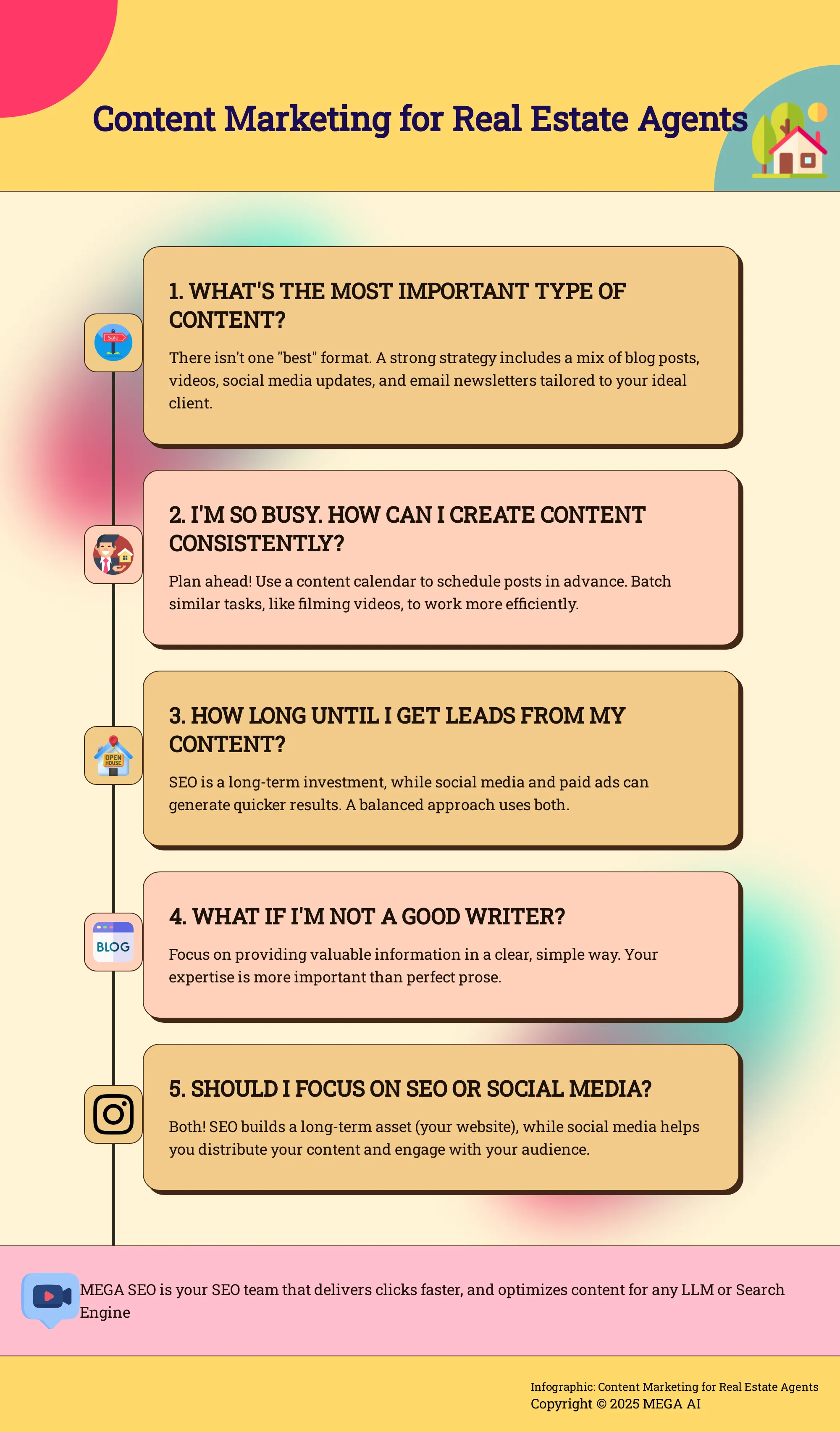
What's the single most important type of content I should create? There isn't one "best" format, as the right choice depends on your goals and your audience. A strong strategy includes a mix. Blog posts are excellent for building long-term SEO value and answering client questions in detail. Video is powerful for showcasing properties and connecting with viewers on a personal level. The best place to start is with the format you are most comfortable creating and that aligns with how your ideal clients like to receive information.
I'm already so busy. How can I find the time to create content consistently? Consistency comes from planning, not from having more free time. The key is to work efficiently. Use a content calendar to map out your topics a month or a quarter in advance. Try batching your work by dedicating a few hours one day to film several short videos or outline a few blog posts. This approach is more focused than trying to create something new every day. Using tools to help generate ideas or optimize posts can also make the process much more manageable.
How long will it take before I start getting leads from my content? This depends on your strategy. Building your presence through SEO is a long-term investment. It can take several months for your blog posts to gain authority and consistently attract traffic from search engines. On the other hand, a well-targeted social media post or a paid ad campaign can generate engagement and inquiries much more quickly. A balanced approach uses both to create immediate opportunities while building a sustainable source of leads for the future.
What if I'm not a strong writer? Can I still have an effective blog? Absolutely. Your clients are looking for your real estate expertise, not a literary masterpiece. The most effective content clearly and simply answers their questions. Focus on providing valuable information about your local market. Use short paragraphs and clear headings to make your articles easy to scan. Your authentic voice and deep knowledge are far more important to a potential client than perfect prose.
Should I focus my efforts on SEO or on social media? An effective strategy uses both because they serve different functions that support each other. Think of SEO as building a valuable, long-term asset for your business; your website and blog can attract new clients through search for years. Social media is your distribution channel. You use it to share your content, engage with your community in real-time, and build your personal brand. They work together to grow your presence.