You're passionate about nutrition and eager to share your knowledge, but figuring out how to effectively create and distribute content can be daunting. Where do you start? What topics should you cover? How do you ensure your efforts actually reach the people who need your help? Creating content for Nutritionists and Dietitians requires more than just good intentions; it needs a roadmap. This guide provides exactly that. We'll break down the essential steps to develop a robust content strategy, from defining your audience and goals to choosing the right content types and measuring your success, empowering you to build a thriving online presence.
Key Takeaways
- Lay Your Content Foundation: Pinpoint your ideal audience, establish clear objectives for your content, and ensure every piece aligns with your professional expertise and brand identity.
- Create with Purpose and Proof: Develop a mix of engaging content types, from articles to videos, and always back your nutritional advice with evidence-based research and proper citations to build credibility.
- Amplify, Measure, and Refine: Actively distribute your content through appropriate channels like social media, then use analytics and audience feedback to consistently measure performance and refine your approach for better results.
How to Create an Effective Content Strategy for Nutritionists and Dietitians
Creating content that truly connects with people and helps your nutrition practice grow doesn't happen by accident. It’s the result of a well-thought-out content strategy. Think of your content strategy as the roadmap that guides every piece of information you share, ensuring it’s purposeful, reaches the right individuals, and ultimately supports your professional goals. Without a clear strategy, you might find yourself creating content sporadically, unsure if it’s making an impact or attracting the clients you really want to help. This can lead to wasted effort and missed opportunities to connect with those who could benefit most from your guidance.
A strong content strategy helps you stand out in a crowded online space. It allows you to consistently demonstrate your expertise and build a reputation as a trusted source of nutrition information. This isn't just about posting random recipes or generic diet tips; it's about deeply understanding who you're talking to, what you want to achieve with each piece of content, and how your unique voice and specialized knowledge can genuinely meet their needs. By defining these crucial elements upfront, you can craft content that not only educates and engages but also effectively converts interested readers into loyal clients. This strategic approach transforms your content creation from a potentially overwhelming task into a powerful, focused tool for business growth and meaningful client support. It also ensures your efforts are sustainable and yield measurable results over time, helping you refine your approach and maximize your impact.
Define Your Target Audience
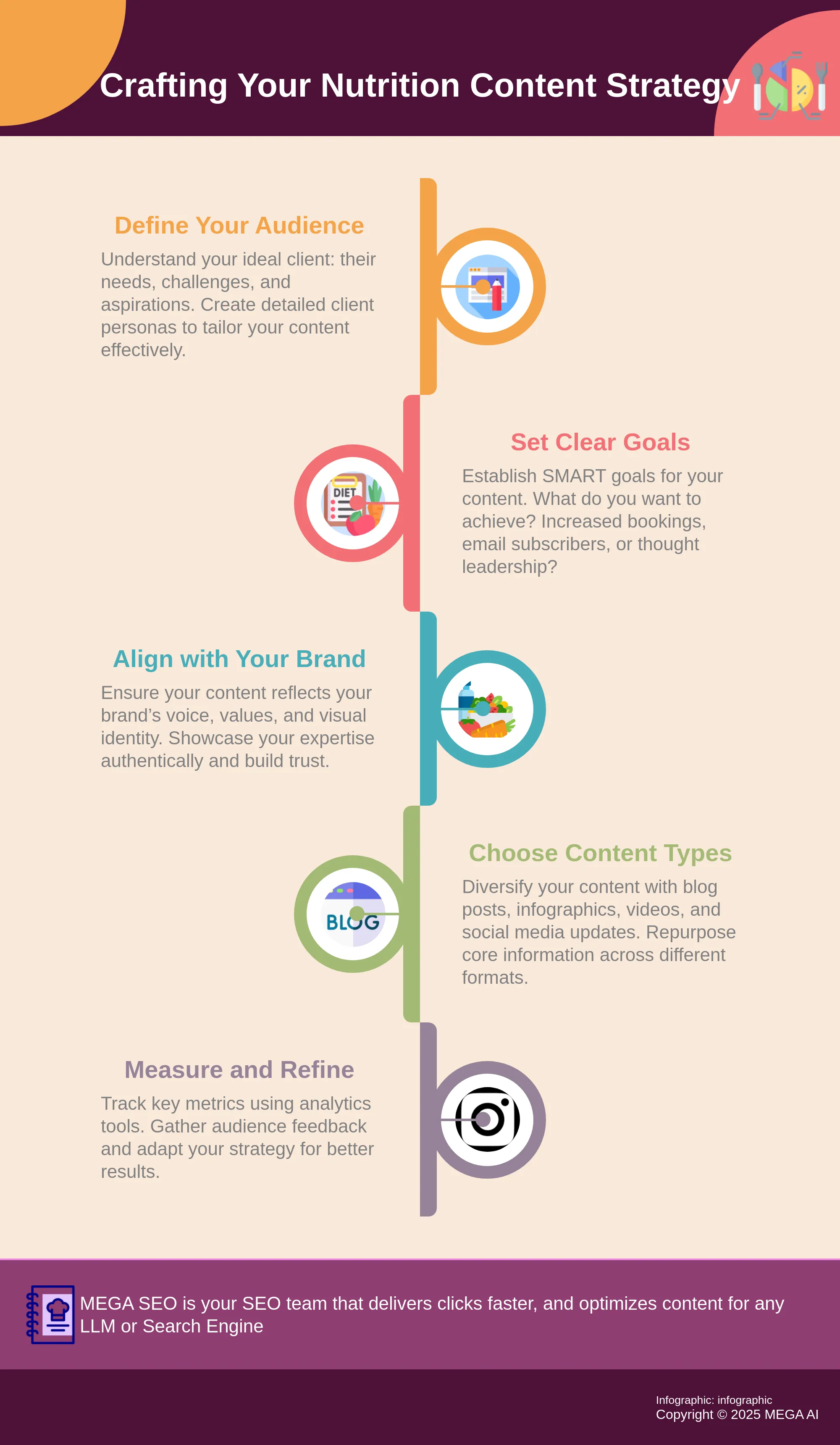
Before you write a single word, it’s essential to know exactly who you’re trying to reach. As the experts at Nutrium aptly put it, ask yourself, "Who are you trying to reach?" This isn't just a fleeting thought; it's the cornerstone of effective communication. Are you aiming to help busy parents create healthy family meals, athletes optimize their performance, or individuals manage specific health conditions through diet? Understanding their specific challenges, aspirations, and even their daily routines will allow you to tailor your content precisely to their needs. Consider creating detailed client avatars or personas to bring your ideal audience members to life. This clarity ensures your messages resonate deeply and position you as the go-to expert for their particular concerns.
Set Clear Goals and Objectives
Once you know your audience, the next step is to define what you want your content to achieve. Nutrium also emphasizes asking, "What do you want to achieve with your content?" Without clear objectives, your content efforts can feel directionless. Are you looking to increase bookings for your consultation services, grow your email subscriber list, build a community around your brand, or establish yourself as a thought leader in a specific niche like pediatric nutrition or sports dietetics? Setting SMART goals (Specific, Measurable, Achievable, Relevant, Time-bound) will provide a benchmark for success. This clarity not only guides your content creation but also helps you measure your progress and make informed adjustments to your strategy along the way, ensuring your efforts are always purposeful.
Align Content with Your Brand and Expertise
Your content is a direct reflection of your professional identity. It’s crucial to consider, as Nutrium suggests, "How will your content reflect your brand?" Every piece of information you share should be consistent with your brand's voice, values, and visual identity. More importantly, it must showcase your expertise authentically. Highlighting the rigor of your content creation process, as emphasized by the Dietitian Success Center, builds significant trust and reliability. When your audience sees that your advice is well-researched and thoughtfully presented, they are more likely to view you as a credible authority. This alignment helps you build a strong personal brand and attract clients who value your specific approach and knowledge in the field of nutrition.
Develop Engaging Content Types for Nutrition Professionals
Creating compelling content is key to connecting with your audience and establishing yourself as a trusted nutrition expert. Relying on just one type of content can limit your reach and impact. Instead, a varied approach allows you to cater to different preferences—some people love to read detailed articles, while others prefer quick visual summaries or listening to a podcast on their commute. By diversifying your content, you not only keep your audience engaged but also reinforce your message across multiple touchpoints. This multifaceted strategy helps build authority and makes your expertise more accessible.
Think about how you can repurpose core information into various formats. A deep dive into a nutritional topic could become a blog post, an infographic highlighting key takeaways, a video explaining the concepts, and a series of social media snippets. This not only saves you time but also ensures your valuable insights reach the widest possible audience. For nutrition professionals looking to grow their practice or online presence, understanding how to develop and utilize different content types effectively is a fundamental step. Platforms like MEGA AI can further assist by helping you optimize your content for search engines, ensuring that your well-crafted messages are discoverable by those who need them most. Let's explore some of the most effective content types you can incorporate into your strategy.
Blog Posts and Articles
Blog posts and articles are foundational for sharing in-depth nutrition knowledge. To make them effective, begin by researching keywords that your target audience is searching for—aim for terms with lower competition but decent search volume. This helps your content get discovered. Focus on creating comprehensive, evidence-based pieces that genuinely help your readers. When you present information, always cite reputable scientific sources to build credibility and trust. Detailed articles allow you to thoroughly explore topics, answer common questions, and position yourself as an authority in the field. Consistently publishing high-quality blog content can significantly contribute to your website's SEO and draw in a steady stream of potential clients.
Infographics and Visual Content
In a world saturated with information, infographics and other visual content offer a refreshing way to communicate complex nutrition concepts. They break down data, tips, or processes into easily digestible and visually appealing formats. Think about transforming key statistics from a blog post, a step-by-step guide to meal prepping, or a comparison of different food groups into a colorful infographic. These are highly shareable across social media platforms and can even be embedded in blog posts or emails, extending their reach. Good visual content captures attention quickly and can make intricate nutritional advice feel much more approachable and memorable for your audience. You can use user-friendly design tools to create professional-looking visuals even if you're not a graphic designer.
Videos and Podcasts
Videos and podcasts offer a dynamic way to connect with your audience on a more personal level. Hearing your voice or seeing your face helps build rapport and trust more effectively than text alone. For video content, consider recipe demonstrations, "a day in the life" vlogs, Q&A sessions addressing common nutrition questions, or short educational clips on specific topics. Podcasts can feature interviews with other experts, discussions on recent nutrition research, or motivational talks. Both formats cater to people who prefer auditory or visual learning and those who consume content while multitasking. Starting can be as simple as using your smartphone for video or basic recording equipment for a podcast, focusing on delivering valuable information in an engaging manner.
Social Media Posts
Social media is an indispensable tool for nutrition professionals to engage with a broad audience. The key is to offer a mix of content that educates, inspires, and entertains. Share quick nutrition tips, debunk common myths with evidence-based facts, post visually appealing images of healthy meals, or run polls to understand your audience's interests. Client testimonials (with permission) can be incredibly powerful for building social proof. Tailor your content to the platform you're using; for instance, Instagram is great for visuals, while Twitter might be better for short, punchy updates or links to your blog. Consistent and interactive social media activity helps you build a community and drive traffic to your other resources.
Newsletters and Email Content
Email newsletters are a fantastic way to nurture a direct relationship with your audience. Offer a valuable free resource, like a mini meal plan, a healthy recipe e-book, or a checklist for pantry staples, in exchange for email sign-ups. This helps you build an email list of genuinely interested individuals. Once they've subscribed, you can share exclusive tips, updates on your services, links to your latest blog posts or videos, and even special offers. Unlike social media, email provides a more intimate and controlled communication channel. It allows you to deliver personalized content directly to your subscribers' inboxes, fostering loyalty and keeping your services top-of-mind.
Ensure Accuracy and Credibility in Nutrition Content
When you share nutrition advice, you're doing more than just passing along facts; you're guiding people's health choices. That’s a significant role. Building trust with your audience begins when you provide content that is both accurate and credible. This involves moving past simple tips and ensuring your advice is rooted in solid science. Your readers and clients depend on you for reliable guidance, so every piece of content should demonstrate your dedication to quality and honesty.
Consider accuracy and credibility the bedrock of your content. Without this strong base, your engaging infographics, insightful articles, and helpful videos won't have the impact they could. Prioritizing these aspects helps you serve your audience effectively and establishes you as a knowledgeable professional.
Use Evidence-Based Research
The foundation of trustworthy nutrition content is evidence-based research. This means your information should stem from high-quality studies and established scientific agreement, rather than personal opinions or passing fads. To make sure your content is dependable, you should utilize resources such as clinical practice guidelines, meta-analyses, systematic reviews, and randomized controlled trials (RCTs). Well-regarded textbooks are also excellent sources.
When your advice rests on a solid scientific foundation, you give your audience the tools to make informed health decisions. It’s worth your time to thoroughly investigate the research, grasp the details, and then explain the findings in a clear, understandable way for your audience. This method builds confidence and ensures your guidance is truly helpful and safe.
Cite Reputable Sources
Clearly citing your sources is essential for creating credible nutrition content. It demonstrates to your audience that your information is thoroughly researched and not just based on assumptions. When you reference the studies, organizations, or experts supporting your statements, you increase the trustworthiness of your material. This is particularly vital in nutrition, a field often clouded by misinformation.
Make it a standard practice to link to original research or well-known health organizations. For Registered Dietitians, providing concise, engaging, and actionable content with clear citations is a hallmark of professionalism. This transparency allows your audience to delve deeper if they choose and underscores your dedication to accuracy.
Stay Up-to-Date with Current Nutrition Trends
Nutrition science is always evolving, with new research and insights appearing frequently. To keep your content relevant and accurate, staying informed about current nutrition science is key. This isn’t about chasing every new fad, but about understanding the latest evidence-based findings. Plan to update your existing content regularly—perhaps every 12 to 36 months, or sooner if major new information emerges.
Keeping your material current means your audience gets the most reliable advice. Subscribing to reputable journals, participating in webinars, and following leading experts are effective ways to stay informed. This commitment to continuous learning ensures you can share the latest knowledge with your audience.
Address Common Misconceptions
Nutrition is a field often filled with myths and misunderstandings. As a nutrition professional, you’re in a great position to clear up this confusion and offer accurate information. Directly addressing common misconceptions in your content can be extremely helpful for your audience. When you create new material, consider the prevalent myths your clients or readers might encounter and provide evidence-based explanations to correct them.
Being authentic and passionate in your delivery is important, as is ensuring the content aligns with your brand. By addressing these challenging topics, you educate your audience and establish yourself as a trustworthy source. Using effective SEO practices can also help your well-researched content find its way to more people seeking clarity on these common nutrition myths.
Leverage Social Media for Content Distribution
Creating amazing content is just the first step; getting it in front of the right eyes is equally important. Social media is a powerhouse for distributing your nutrition and dietetics expertise, helping you connect with a wider audience and build a loyal following. Think of it as your digital megaphone, amplifying your message far beyond your immediate network. By strategically using different platforms, you can share your valuable insights, engage with potential clients, and establish yourself as a go-to expert in your field. It’s not just about posting; it’s about creating a conversation and a community around your content.
Many nutrition professionals find success by using platforms like Instagram, TikTok, and Facebook to share content and engage with clients. The key is to understand where your ideal clients are spending their time and meet them there. With a smart approach, social media can significantly extend the reach of your blog posts, videos, and infographics, turning casual browsers into dedicated followers and, eventually, clients. For businesses and marketers, understanding these dynamics is crucial for advising clients or growing your own health-focused brand.
Choose the Right Platforms for Your Audience
Not all social media platforms are created equal, especially when it comes to reaching your specific audience. The first step is to identify who you're trying to reach. Are they young adults looking for quick, visual tips? Then Instagram or TikTok might be your best bet. Are they professionals seeking in-depth articles and discussions? LinkedIn could be more effective. Or perhaps they're part of community groups on Facebook.
Understanding the demographics and user behavior on each platform is crucial. For instance, Instagram is highly visual, making it perfect for sharing appealing food photos, infographics, and short video clips. Facebook allows for longer posts and is great for building communities through groups. TikTok thrives on short, engaging video content. Do a little research, or even survey your existing clients, to find out where they spend their online time. This will help you focus your efforts on the channels that will yield the best results, ensuring your valuable content doesn't get lost in the noise.
Create Platform-Specific Content
Once you've chosen your platforms, it's tempting to share the same content everywhere. However, tailoring your posts to each platform's unique style and audience expectations will make a huge difference in engagement. What works well on Instagram might not resonate on LinkedIn, and vice-versa. For example, a visually striking infographic could be perfect for Pinterest and Instagram, while a more detailed text-based post or an article link would be better suited for Facebook or LinkedIn.
Try mixing educational, inspirational, and entertaining posts to keep your followers interested. On Instagram, you might share a "day in the life" story, a quick recipe video, or a myth-busting carousel post. On Facebook, you could share a longer client success story or an informative article. Remember, the goal is to provide value in a format that feels native to the platform. This approach shows you understand the platform's culture and makes your content more likely to be seen and shared.
Engage with Followers and Build Community
Social media isn't just a broadcast channel; it's a place for conversation and connection. Actively engaging with your followers is key to building a strong community around your brand. This means responding to comments and direct messages promptly and thoughtfully. Ask questions in your posts to encourage interaction. Simple things like "What's your go-to healthy snack?" can spark a lively discussion.
Consider ways to encourage interaction through polls, quizzes, and challenges. For example, you could run a "healthy habit" challenge for a week or post a fun quiz about nutrition myths. When your audience feels heard and valued, they are more likely to trust you, share your content, and become loyal advocates for your services. Building this sense of community transforms your social media presence from a simple marketing tool into a vibrant hub for your audience.
Use Hashtags and Trends Effectively
Hashtags are a powerful tool for increasing the visibility of your content and reaching people who aren't already following you. Think of them as keywords for social media. Use a mix of broad and niche-specific hashtags relevant to nutrition, dietetics, and the specific topic of your post. For example, alongside general tags like #healthyeating or #nutrition, you might use more specific ones like #mealprepideas or #dietitianapproved.
Staying aware of trending topics or relevant awareness days can also help your content get noticed. If there's a popular health challenge or a national nutrition month, creating content around that theme can attract a wider audience. However, always ensure the trend is relevant to your brand and expertise. Authenticity is key; jumping on every trend might dilute your message, but thoughtfully incorporating relevant ones can significantly expand your reach.
Measure and Improve Content Performance
Creating valuable content for your nutrition practice is a fantastic start, but the journey doesn't end once you hit "publish." To truly make an impact and grow your reach, it's important to understand how your audience interacts with what you share. Measuring your content's performance allows you to see what's resonating, what might need a little tweaking, and where your efforts are most effective. Think of it as having a conversation with your audience through data; they're showing you what they find helpful and engaging. By regularly analyzing your content's effectiveness, you can refine your strategy, ensure your message hits the mark, and ultimately provide even more value to those seeking your expertise. This ongoing process helps you work smarter, not just harder, ensuring your content consistently supports your professional goals and helps your audience on their health journey. In this section, we'll walk through how to track key metrics, use analytics tools effectively, gather valuable audience feedback, and test your way to even better content.
Track Key Metrics
To understand how your content is truly performing, you first need to define what success looks like for your practice. As the team at Nutrium aptly puts it, "Metrics: How will you measure success? Identifying key performance indicators (KPIs) is essential for understanding how your content is performing and where improvements can be made." For nutritionists and dietitians, these KPIs could include the number of views on your blog posts, engagement rates (such as likes, comments, and shares) on your social media updates, or the click-through rates from your email newsletters. You might also track how many new client inquiries mention a specific piece of content. The key is to select a few core metrics that directly align with your overall goals and monitor them consistently. This will help you spot trends and understand what truly captures your audience's attention.
Use Analytics Tools
You don’t need to rely on guesswork to figure out if your content is hitting the mark; there are excellent tools available to give you clear insights. BrightBrain highlights that, "Utilizing analytics tools can help you track the performance of your content across various platforms and adjust your strategies accordingly." Google Analytics is a powerful free resource for understanding traffic to your website, learning which blog posts are most popular, and seeing how visitors find you. Most social media platforms also offer their own built-in analytics, providing data on reach, engagement, and audience demographics. By using these tools, you can discover which topics your audience loves most, which platforms drive the most interaction, and how people are finding your valuable nutrition advice.
Gather and Implement Audience Feedback
Your audience is one of your most valuable resources for refining your content strategy. As the Dietitian Success Center points out, "Soliciting content requests from your audience can help prioritize topics based on demand and current research, ensuring that your content remains relevant and valuable." Pay close attention to the comments on your blog posts and social media updates. You can also proactively ask for input through polls on Instagram Stories, questions in your email newsletters, or even by sending out short surveys. When you receive feedback, acknowledge it, and where it makes sense, incorporate those suggestions into your future content. This approach not only helps you create more targeted content but also fosters a stronger sense of community around your practice.
A/B Test and Optimize Content
Once you have data from your analytics and feedback from your audience, you can begin to actively refine and optimize your content. Authority Hacker advises to "consider A/B testing different content formats to see what resonates best with your audience." A/B testing, or split testing, involves creating two slightly different versions of a piece of content—perhaps with different headlines, images, or calls to action—to see which one performs better. This can provide clear insights into your audience's preferences. Beyond testing new content, it's also beneficial to regularly revisit and update your existing articles. You can refresh outdated information, improve clarity, or re-optimize for current search trends. Tools designed for content maintenance can even help automate parts of this, identifying opportunities to enhance articles for better click-through rates and overall performance.
Overcome Content Creation Challenges
Creating content consistently can sometimes feel like a major hurdle, especially when you're juggling many other tasks. But don't worry, with a few smart strategies, you can navigate common obstacles like tight schedules, creative dry spells, and the pressure to always have fresh ideas. Let's look at how you can tackle these challenges effectively.
Manage Time and Resources Effectively
When your time and budget are limited, it's essential to make every piece of content impactful. Focus on creating authentic material that genuinely reflects your brand's voice and what you care about. This sincerity often connects better with your audience. To extend your reach, you can utilize SEO strategies that help more people find your work. Think about repurposing content you already have; a detailed blog post could become several social media updates or the basis for a short video. Smart tools, such as those for automated keyword research, can also pinpoint high-value topics quickly, saving you precious research hours.
Maintain Consistency in Content Production
Regularly sharing valuable content is key to keeping your audience engaged and making your brand more visible. A well-organized content calendar is fundamental here, as it helps you plan and schedule posts in advance. Consider batching similar tasks together; for instance, set aside specific times for writing, another for creating visuals, and another for scheduling. This focused method can make you much more efficient. Using scheduling tools means you can prepare content ahead of time, ensuring a steady flow even when you're busy, which helps maintain that important connection with your followers.
Handle Writer's Block and Generate Ideas
We all face that moment of staring at a blank screen. A great way to overcome writer's block is to mix up your content formats. Try alternating between educational articles, inspiring case studies, and perhaps some lighter, entertaining pieces. This variety keeps things interesting for your audience and for you. Draw inspiration from customer questions, industry news, what competitors are discussing, and current social media trends. Don't overlook keyword research to discover what your audience is actively looking for. AI-powered tools can also be a fantastic help for brainstorming topics or even drafting initial outlines.
Create an Editorial Calendar
An editorial calendar is much more than just a schedule; it's your strategic guide to content creation. It ensures that everything you publish aligns with your broader marketing objectives. A comprehensive calendar should detail your topics, the formats you'll use, target keywords, who is responsible for each piece, deadlines, and where you plan to distribute the content. This level of planning keeps you organized and, as the Dietitian Success Center points out, can build trust with your audience by showing a thoughtful and reliable approach to the information you provide. It helps you maintain a clear view of your content strategy.
Tools and Resources to Streamline Content Creation
Creating great content consistently can feel like a big job, especially when you have so many other things to do as a nutrition professional. If you're a nutritionist writing blog posts or a dietitian handling a team's social media, you know how quickly time flies. The good part is, you don’t have to manage everything by hand. There are many tools and resources out there to help make your content creation smoother from beginning to end. When you use the right technology, you can save valuable time, feel less stressed, and put more energy into sharing your knowledge and helping your clients achieve their health goals.
Consider these tools your helpful digital partners. They can assist with planning your content schedule, designing attractive visuals that simplify complex nutrition concepts, and making sure the right people see your work. They help you organize your thoughts, work better with others if you're part of a team, and even automate some of the tasks that you do over and over. This improved efficiency makes your daily work easier and gives you more time to connect with your audience, answer their questions, or create new programs and services. Let's look at some important types of tools that can really help your content creation and allow you to focus on your expertise.
Content Planning and Management Platforms
A strong content strategy starts with a clear plan. Content planning and management platforms help you organize your ideas, schedule when your content goes live, and oversee your entire content workflow. As experts note, "Creating a content calendar to plan and schedule posts is essential for maintaining a consistent online presence," and these tools simplify that task. Instead of scattered spreadsheets, a central platform lets you plan your content weeks or months ahead.
Many offer features like drag-and-drop calendars, task assignments, and progress tracking, which are useful whether you work alone or with a team. Tools like Asana or Trello can help you visualize your schedule, ensure a steady flow of information, and align your content with key dates or seasonal nutrition topics. This organization helps you deliver timely content and maintain a professional online presence.
Design Tools for Creating Visuals
Nutrition information can sometimes be complex, so visuals are incredibly important for making your content more engaging and easier to grasp. As one source points out, "Infographics are a powerful tool for nutritionists and dietitians, as they create visually appealing content that is easy to share on social media and in emails." The great thing is, you don’t need to be a graphic design expert to make beautiful visuals. There are many easy-to-use design tools with ready-made templates and simple interfaces.
Platforms like Canva or Adobe Express let you create attractive infographics, social media posts, presentation slides, and even short videos without much fuss. These tools usually offer large collections of stock photos, icons, and fonts. This means you can create branded visuals that connect with your audience and look professional. When you make complex nutrition facts easier to understand with appealing visuals, you can really see engagement and sharing go up.
SEO Optimization Tools
Making great content is important, but people also need to find it. That’s where Search Engine Optimization (SEO) tools are helpful. These tools show what your audience is searching for and how to adjust your content to appear higher in search results. It's wise that "To enhance online visibility, nutritionists should focus on low-competition keywords with decent search volume." Tools like Ahrefs can help you find these useful keywords.
Beyond keyword research, SEO tools assist with improving web pages, analyzing competitors, and tracking search rankings. If you want to advance your SEO, platforms like MEGA AI provide complete automation. This includes automatic keyword research, content creation, and keeping existing articles updated for better performance. This type of AI-powered optimization can be a huge help for busy professionals aiming to reach more people online without getting lost in technical details.
Collaboration and Productivity Software
If you’re part of a team or work with outside help for your content, collaboration and productivity software can make a big difference. As noted, "Utilizing collaboration tools can streamline the content creation process," making sure everyone is aligned and projects progress without a hitch. These tools make it easier to talk to each other, share files, and manage projects, which means fewer misunderstandings or missed deadlines.
Platforms like Slack are great for quick chats, and Google Workspace (with Docs, Sheets, and Drive) lets you create and share documents together easily. Many project management tools also have collaboration features built in, so team members can assign tasks, give feedback, and see how things are going, all in one spot. By helping your team work together better, these tools allow you to produce high-quality content more effectively, regardless of your team's size.
Related Articles
- Fitness SEO: The Ultimate Guide (2024)
- Fitness Content Optimization: The Ultimate Guide
- Get More Clients: The Ultimate Personal Trainer SEO Guide
- Creating Content for Optometrists: A 2024 Guide
Frequently Asked Questions
I'm just starting out. What's the most important first step in creating a content strategy? Before you do anything else, get really clear on two things: who exactly you want to help with your nutrition expertise, and what specific outcomes you want your content to achieve for your practice. Understanding your ideal client and your main goals will provide a solid foundation and make all your other content decisions much easier.
I'm worried about my content being accurate. How can I make sure I'm sharing reliable nutrition advice? Your commitment to accuracy is so important. Always ground your advice in current, evidence-based research from respected scientific journals, established health organizations, and professional guidelines. Make it a practice to clearly reference where your information comes from; this builds trust and shows your audience that your guidance is well-supported.
Creating different types of content like videos and infographics seems overwhelming. Where should I begin? You definitely don't need to tackle every content format right away. Start with one or two types that you feel most comfortable creating and that you know your audience will appreciate. If you enjoy writing, perhaps begin with informative blog posts. As you build confidence, you can gradually explore other formats like simple infographics or short educational videos.
How can I make sure people actually see the content I create? Think about where your ideal clients are most active online—those are the social media platforms where you should focus your sharing efforts. Using relevant hashtags can help new people discover your valuable posts. Also, remember to interact with comments and messages; engaging with your audience helps build a supportive community around your work.
It feels like a lot of work. How do I find the time to create content regularly? An editorial calendar can be a game-changer for managing your time. Planning your topics and your posting schedule in advance makes the whole process feel less daunting. You might also find it helpful to batch similar tasks, like dedicating a specific block of time to writing several pieces of content, and another to creating the visuals for them.