Today's jewelry enthusiasts are looking for more than just beautiful adornments; they seek authenticity, transparency, and a connection with the brands they support. They want to know the story behind the sparkle, including your ethical sourcing practices and commitment to craftsmanship. Creating content for Jewelry Stores in this conscious consumer era means building trust and showcasing your values alongside your stunning designs. This article will guide you through developing content that not only highlights the aesthetic appeal of your pieces but also communicates your brand’s integrity and unique narrative, fostering deeper engagement and loyalty with a discerning audience.
Key Takeaways
- Know Your Audience and Strategize Your Content: Start by clearly defining who you're talking to, then use a content calendar to plan consistent and timely posts that speak to them.
- Create Diverse Content That Tells a Story: Use a mix of blog posts, social media, and rich product details, focusing on storytelling and visuals to build an emotional connection and highlight your jewelry's uniqueness.
- Optimize for Discovery and Continuously Improve: Implement SEO best practices so customers can find you, and regularly review your content's performance to refine your approach and keep it engaging.
Define Your Audience: The First Step to Great Jewelry Content
Before you even think about what kind of content to create for your jewelry store, there's a foundational step you absolutely can't skip: defining your audience. I know, you're eager to showcase those sparkling gems, but trust me on this one. Understanding exactly who you're talking to is the bedrock of any successful content strategy. It’s like trying to pick out the perfect gift; you need to know the recipient's tastes and preferences, right?
Identifying your target audience is crucial because it allows you to tailor every piece of content to resonate deeply with potential buyers. When you know who your customers are—their age, their style, what inspires them, even their buying behaviors—you can craft messages that speak directly to their needs and desires. This isn't just about making them feel understood; it's about creating personalized content that genuinely connects, leading to higher engagement and, ultimately, more sales. Think about it: a recent graduate looking for an affordable, trendy piece has very different motivations than someone searching for a timeless diamond engagement ring. Your content needs to reflect that understanding.
So, how do you get to know them? It's time for a little research. Look into demographics, but also dig deeper into their interests, lifestyle, and even their pain points. What problems can your jewelry solve for them? Are they looking for a confidence boost, a way to express their individuality, or a meaningful gift? This information will be your compass, guiding your content creation process and ensuring your messaging aligns perfectly with what your customers are searching for. Understanding your audience also helps you choose the right platforms to distribute your content, ensuring it actually reaches the people most likely to fall in love with your pieces. Taking this step seriously will make all your subsequent content efforts much more effective.
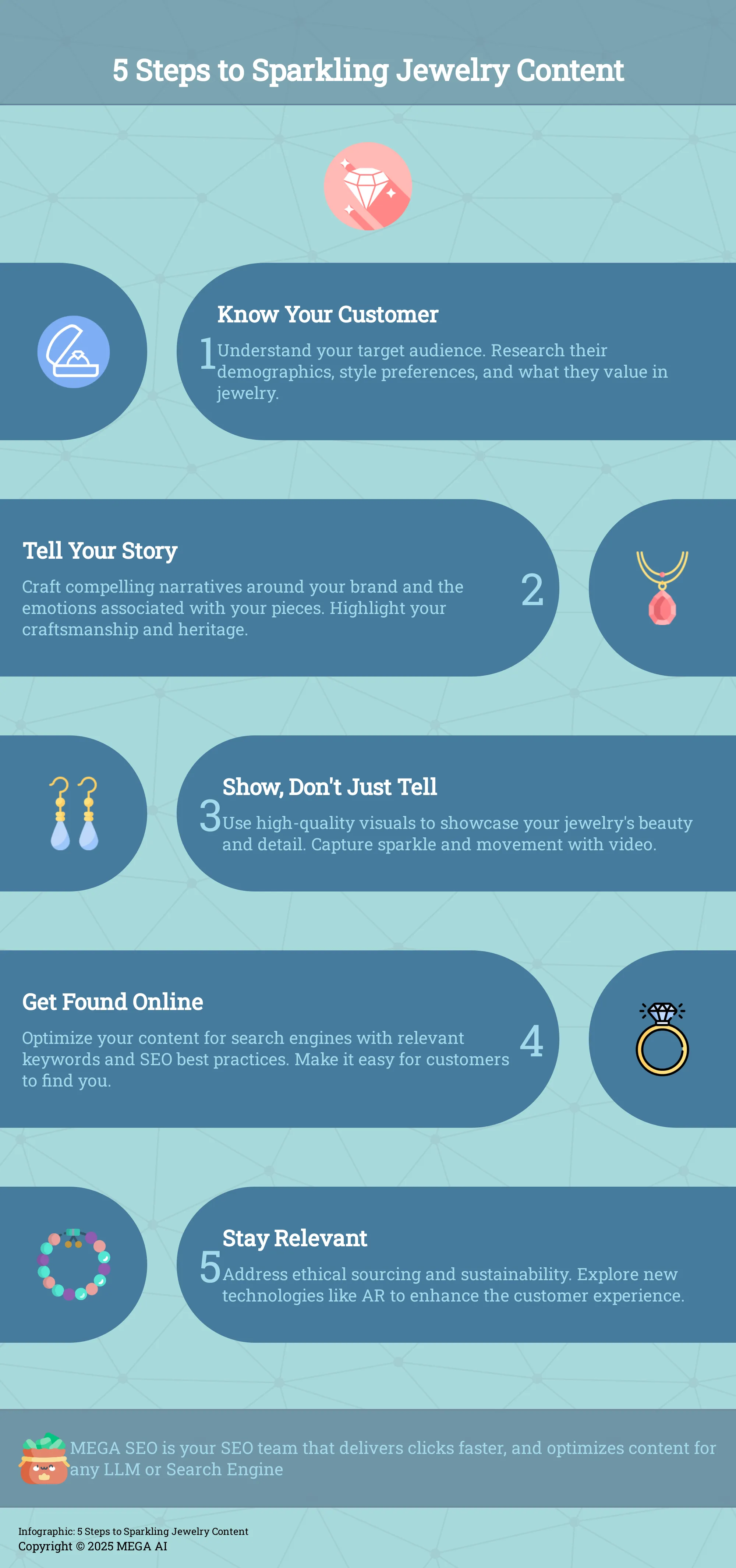
What Content Should Your Jewelry Store Create?
To truly connect with your audience and showcase the unique beauty of your pieces, a varied content approach is essential. Think of it like a well-curated jewelry collection – each type of content has its own sparkle and purpose, appealing to different customers at various stages of their buying journey. From detailed blog posts that build authority to eye-catching social media updates that inspire, the right mix will help you attract, engage, and convert.
Creating a strong content strategy is fundamental for your jewelry store's marketing. This involves more than just occasional posting; it means understanding who you're talking to, what you want to achieve with your content, and how you'll consistently deliver valuable information. By exploring different formats, you can tell your brand’s story, highlight the craftsmanship of your jewelry, and build lasting relationships with your customers. Let's look at some key types of content that can make your jewelry business shine.
Craft Engaging Blog Posts and Articles
Blog posts and articles are fantastic tools for sharing your expertise and passion for jewelry. Think beyond simple announcements. You can write about the history of certain gemstones, offer guides on choosing the perfect engagement ring, or share tips on caring for delicate pieces. This type of content helps establish your brand as a knowledgeable and trustworthy source. Well-crafted articles can also significantly improve your website's search engine visibility, drawing in customers who are actively looking for information related to your products. Consider creating a content calendar to plan topics that resonate with your audience's interests and seasonal trends, ensuring a steady flow of fresh, valuable information.
Develop Shareable Social Media Content
Social media platforms are inherently visual, making them perfect for showcasing the allure of your jewelry. Focus on creating high-quality images and short videos that capture the intricate details and sparkle of your pieces. Platforms like Instagram and Pinterest are particularly effective for jewelry brands. You can engage your followers with behind-the-scenes glimpses into your design process, feature customer photos (with permission, of course), or run interactive polls about their favorite styles. Remember that consistency and a distinct brand voice are key to building a loyal community on social media. Targeted ad campaigns can also be a powerful way to reach specific demographics interested in your jewelry.
Write Irresistible Product Descriptions
Your product descriptions are more than just a list of features; they are your online sales assistants. Each description should tell a story and evoke emotion, helping the customer visualize themselves wearing the piece. Be sure to include all the essential details, such as the type of metal, the specific gemstones used, their cut and clarity, dimensions, and any unique design elements or craftsmanship techniques. Highlighting what makes each piece special, its inspiration, or the story behind its creation can transform a simple listing into a compelling invitation to make a purchase. Clear, descriptive, and engaging language will help customers understand the true value of your offerings.
Produce Captivating Video Content
Video is an incredibly powerful medium for jewelry, as it allows you to show off your pieces in a way static images simply can't. Think about creating short videos that showcase how a necklace drapes, how earrings catch the light, or the intricate details of a ring from all angles. You could also produce styling videos demonstrating how to pair different pieces, or share the story of your brand and the artisans behind the creations. High-quality video content helps customers get a better feel for the jewelry, building their confidence and making them more likely to invest in your pieces. Even simple, well-lit videos shot on a smartphone can be highly effective.
Design Effective Email Newsletters
Email newsletters are a direct line to your interested customers and a fantastic way to nurture relationships and encourage repeat business. Use your newsletters to share new arrivals, announce special promotions, or offer exclusive content like style guides or early access to sales. Segmenting your email list allows you to send more targeted messages, ensuring that subscribers receive content that’s most relevant to their interests and past purchases. For instance, you might send a special offer on men's accessories to one segment and information about bridal jewelry to another. Tracking how your emails perform will help you refine your strategy over time.
Tell Compelling Stories with Your Jewelry Content
Jewelry often carries deep personal meaning, far beyond its sparkle or design. It can represent milestones, relationships, or cherished memories. When you create content for your jewelry store, tapping into these stories is a powerful way to connect with your audience. Think about it – people aren't just buying a piece of metal and stone; they're often investing in a symbol, an heirloom, or a personal statement. Your content should reflect this depth, moving beyond simple features to highlight the emotional core of why people choose and cherish jewelry. This means looking at each piece not just as an item for sale, but as a potential chapter in someone's life.
By weaving narratives into your product descriptions, blog posts, and social media, you transform a simple transaction into a meaningful experience. This approach helps potential customers see the value beyond the price tag and imagine how a piece might fit into their own life story. Effective storytelling can also set your brand apart, creating a unique identity that resonates with shoppers looking for something special. It’s about making your jewelry, and by extension your brand, unforgettable. Consider how you can share stories that not only engage but also build a lasting bond with your customers. This narrative-driven strategy helps people feel a part of your brand's world, fostering loyalty and encouraging them to share their own experiences with your pieces. Ultimately, compelling stories make your marketing efforts more human and relatable.
Connect Emotionally Through Your Jewelry
Sharing stories is key to forging an emotional connection. This could be the story behind a particular design, how a piece was inspired, or even anecdotes from customers who have found special meaning in your jewelry. When you share these narratives, you invite people into your brand's world, making them feel understood and valued.
This isn't just about selling; it's about building a community. When customers feel an emotional tie to your brand, they're more likely to become loyal advocates, sharing their positive experiences with others. Think about how a customer's story of a proposal with one of your rings, or a graduation gift that became a treasured keepsake, can resonate far more deeply than a simple product feature list.
Showcase Your Craftsmanship and Heritage
The story of how your jewelry is made can be just as compelling as the emotions it evokes. Highlighting the quality of your materials, the skill of your artisans, and any unique techniques you use adds significant perceived value. Explain what makes each piece special – perhaps it’s a rare gemstone, an intricate hand-finished detail, or a design passed down through generations.
If your brand has a rich history or a particular heritage, share that too. Stories about the origin of your designs, the tradition behind your craft, or the journey of your brand can make your jewelry feel more personal and authentic. This transparency and attention to detail help customers appreciate the true artistry and effort that goes into each piece, justifying their investment and fostering trust in your brand's dedication to detailing the process of creation.
Write Product Descriptions That Convert
Your product descriptions are more than just text on a page; they are your digital sales assistants, working around the clock to persuade customers. For jewelry, where emotion and detail are paramount, a well-crafted description can be the difference between a browser and a buyer. It’s your chance to let the unique qualities of each piece truly sparkle and connect with your ideal customer on a deeper level. Think of these descriptions as an extension of your brand's voice, guiding shoppers and helping them envision themselves wearing your beautiful creations.
Effective product descriptions not only inform but also inspire, turning interest into desire. They bridge the gap between simply seeing a piece of jewelry online and truly understanding its appeal and significance. When a customer can't physically touch or try on a piece, your words must do the heavy lifting, conveying texture, weight, and how it might feel to wear. By focusing on clear, compelling copy, you can significantly influence purchasing decisions and build a stronger connection with your audience. This careful attention to detail in your descriptions reflects the care and craftsmanship inherent in your jewelry itself, reinforcing the quality of your brand and fostering trust with potential buyers who rely on your accuracy and transparency.
What Makes a Jewelry Description Effective?
An effective jewelry description is packed with specific, relevant details. Customers want to know exactly what they’re considering. Clearly list the type of metal used, such as 14k gold or sterling silver, and mention the purity. If gemstones are featured, specify what they are—diamonds, sapphires, emeralds—and include details like carat weight, cut, color, and clarity where applicable. Don’t forget to highlight any unique design elements or craftsmanship techniques that make the piece special. Providing these concrete details helps customers understand the intrinsic value of your jewelry and builds confidence in their potential purchase, making them feel informed and secure.
Choose the Right Language and Tone
The language you use should make your jewelry sound as exquisite as it looks. Use vivid, descriptive words that paint a picture and appeal to the senses. Instead of just saying "gold necklace," you might describe it as a "delicate, sun-kissed gold chain." It's important to maintain a friendly, conversational tone that resonates with your target audience, making them feel like they're talking to a knowledgeable friend. Focus on highlighting the story behind the piece or the feeling it evokes. This approach makes the jewelry feel more personal and valuable, transforming a simple product listing into an enticing invitation.
Make Your Jewelry Shine with Visual Content
Jewelry is an inherently visual product. Its sparkle, intricate details, and the way it catches the light are all part of its allure. That's why using high-quality images and videos is absolutely essential to show off your pieces and capture the attention of potential buyers. Think of your visuals as your digital storefront window; they need to be enticing enough to draw people in for a closer look. Investing time and effort into creating stunning visual content isn't just a nice-to-have; it's a fundamental part of successfully marketing your jewelry online. Your images and videos do the heavy lifting in conveying the beauty, craftsmanship, and unique qualities of each item you offer. These visuals are your first, and often most impactful, opportunity to make a connection with someone and communicate the value and artistry behind every design. They help customers imagine how a piece might feel, how it might look on them, and how it could become a cherished part of their collection. Without compelling visuals, even the most exquisite jewelry can go unnoticed in a crowded digital marketplace. Therefore, dedicating resources to photography and videography, or learning the skills to produce them effectively yourself, should be a top priority for any jewelry business aiming to thrive.
Adapt Your Social Media for Different Platforms
When it comes to showcasing your jewelry, not all social media platforms are created equal. Visual-centric platforms like Instagram and Pinterest are natural fits for jewelry brands, allowing you to showcase your pieces in a highly appealing way. Instagram is particularly effective for lifestyle shots that tell a story, detailed close-ups that highlight craftsmanship, and short, dynamic videos like Reels that capture the sparkle and movement of your jewelry. Pinterest serves as a powerful tool for inspiration and discovery, where users often curate wishlists or plan future purchases, making it ideal for aspirational content. Beyond these, consider where your specific audience spends their time. Facebook can be valuable for building a community around your brand and running targeted advertising campaigns. Remember to adapt your content style for each platform; what resonates on Instagram might need a different presentation for Pinterest or Facebook to best connect with that platform's users and their expectations.
How to Take Great Jewelry Photos and Videos
You don't necessarily need a professional photography studio to capture stunning visuals of your jewelry, but quality is paramount. Start with good lighting; natural daylight is often your best friend, so try shooting near a window. Avoid harsh direct sunlight, which can create unwanted glare, and opt for soft, diffused light instead. Use a clean, uncluttered background that complements your jewelry without distracting from it—simple white, grey, or subtly textured surfaces often work well. Get close to capture the intricate details, perhaps using a macro lens or your smartphone's macro mode. Show the jewelry from various angles, and always include shots of it being worn to give customers an accurate sense of scale and style. For videos, focus on capturing the sparkle and movement. Even short, well-executed clips can be incredibly effective. Just as your written content needs care, the overall professionalism applies to your visuals too; they should always look polished and appealing.
Encourage and Use User-Generated Content
One of the most powerful forms of visual content is user-generated content (UGC). This refers to photos and videos created by your actual customers featuring your jewelry. When you feature customers wearing your pieces and share their positive experiences (always with their permission, of course), it builds immense trust and social proof. Potential buyers are often more influenced by seeing real people enjoying a product than by traditional advertising. You can encourage your customers to share their photos by creating a unique, memorable hashtag or by running engaging contests. Then, you can showcase these customer photos on your social media feeds, integrate them into your product pages, or even highlight them in your email newsletters. UGC not only provides you with a steady stream of authentic content but also helps build a strong, interactive community around your brand, making your customers feel valued and connected.
Optimize Your Jewelry Content for Search Engines
Creating beautiful jewelry and compelling content is a fantastic start, but you also need to ensure potential customers can find you online. This is where search engine optimization (SEO) comes into play. By optimizing your content, you make it easier for search engines like Google to understand what your pages are about and show them to people searching for jewelry like yours. Think of it as making sure your online storefront is visible on the busiest digital streets, helping you connect with shoppers actively looking for what you offer.
A solid SEO strategy involves several key components, from understanding what your customers are searching for to making sure your website is technically sound. It might seem like a lot, but breaking it down into manageable steps makes it much more approachable. For businesses looking to streamline this, platforms like MEGA AI offer SEO tools that can automate many of these processes, helping your jewelry content reach the right audience without you needing to become an SEO expert overnight. The main objective is to attract more organic traffic—visitors who find you through search engines—which can lead to increased sales and greater brand awareness for your jewelry line.
Find the Right Keywords for Your Jewelry Business
The foundation of good SEO is keyword research. You need to identify the specific terms and phrases your ideal customers are typing into search engines when they’re looking for jewelry. Are they searching for "dainty gold necklaces," "vintage engagement rings," or "handmade silver earrings"? Knowing these exact phrases allows you to tailor your content to meet their needs directly. An effective content marketing strategy for your jewelry store begins with this deep understanding of customer language.
Start by brainstorming terms related to your products. Consider different styles, materials, occasions like "anniversary gifts," and even problems your jewelry solves, such as "hypoallergenic earrings." Then, you can use keyword research tools to see the search volume for these terms and discover related keywords you might not have thought of. Some platforms can even help automate keyword research, taking much of the guesswork out of this crucial step and helping you focus on terms that will genuinely attract buyers to your collections.
Optimize Your Pages for Better Rankings
Once you have your target keywords, the next step is to incorporate them naturally into your website's pages. This includes your product descriptions, blog posts, category pages, and even your 'About Us' page. Focus on creating high-quality, informative content that genuinely helps the reader, rather than just stuffing keywords in. Search engines prioritize content that provides a good user experience. This means crafting compelling meta descriptions—those short snippets that appear under your page title in search results—and ensuring your content is well-structured with clear headings and subheadings, making it easy for both users and search engines to understand your page.
Beyond keywords, regularly review how your content is performing. At the beginning of each year, or even quarterly, outline which metrics will be your key performance indicators (KPIs). This could include organic traffic, keyword rankings, or conversion rates from search. Tracking these helps you understand what’s working and where you might need to adjust your strategy. For instance, MEGA AI's Maintenance Agent can help identify opportunities to update existing articles, improving their click-through rate and ranking by adding fresh, relevant information or re-optimizing them as search engine algorithms evolve.
Plan Your Jewelry Content with a Calendar
A content calendar is your best friend when it comes to organizing your jewelry store's marketing efforts. Think of it as a detailed roadmap for all the compelling content you'll create, ensuring you're sharing the right messages with the right people at precisely the right time. This isn't just about scheduling posts; it's about strategic foresight. A well-maintained calendar helps you stay on track, avoid those stressful last-minute scrambles for ideas, and thoughtfully align your content with your overarching business goals, such as upcoming promotions, new collection launches, or important brand storytelling moments.
When you have a plan, you can shift your focus from what to post to how to make each piece of content truly shine and resonate deeply with your audience. This proactive approach makes your marketing significantly more effective and considerably less stressful. It allows you to dedicate more energy to the creative aspects of your brand and less to the operational headache of daily content decisions. By mapping out your content themes, preferred formats (like blog posts, videos, or social updates), and distribution channels well in advance, you create a clear, actionable path. This path not only helps you achieve your marketing objectives but also ensures you're consistently engaging your customers and building a stronger brand presence throughout the year. It’s a foundational tool for any serious content strategy.
Plan Content Around Seasons and Events
Creating a strong content strategy is vital for your jewelry store. One of the most effective ways to do this is by planning your content around seasons and events. This allows you to align your marketing efforts with natural consumer buying patterns. Think about it: Valentine's Day, Mother's Day, graduation season, summer weddings, and the end-of-year holidays are all prime times for jewelry purchases. By mapping these out in your calendar, you can prepare themed blog posts, social media campaigns, and email promotions well in advance. This ensures you're showcasing relevant pieces when your customers are most likely to be looking, which can significantly enhance engagement and drive sales during these peak shopping periods.
Stay Consistent with Your Content Creation
To effectively engage your audience and build a memorable brand, consistency in your content creation is absolutely key. An effective content marketing strategy does more than just showcase your beautiful pieces; it builds brand awareness and strengthens your online presence. When you establish a regular posting schedule—whether it's daily on Instagram, weekly on your blog, or bi-weekly with your newsletter—your audience learns when to expect fresh content from you. This regularity keeps your brand top-of-mind and helps nurture customer loyalty. A content calendar is the tool that makes this consistency achievable, helping you plan topics, assign tasks, and meet deadlines without feeling overwhelmed.
Track and Improve Your Content's Performance
Creating compelling content is a significant step, but understanding its impact is just as important. To make sure your efforts are paying off and to find areas for growth, you'll need to consistently track how your content performs and be ready to refine your approach based on what you learn. This continuous loop of creation, analysis, and adjustment is key to a successful content strategy. Think of it as polishing a gemstone; each refinement brings out more of its brilliance. By regularly examining your content's performance, you can ensure it effectively reaches your audience and supports your business goals, helping your jewelry store truly shine online.
What KPIs Should You Track for Your Content?
To truly understand how your content resonates with your audience and contributes to your business goals, you'll want to track specific Key Performance Indicators (KPIs). It's a good practice at the start of your planning cycle, perhaps annually, to outline which metrics will be your primary indicators of success. These KPIs should reflect the various objectives of your content, such as building brand awareness, engaging your target audience, or improving your online presence.
Consider tracking metrics like website traffic to specific content pieces, such as a new collection announcement or a blog post about diamond sourcing. Conversion rates are also vital—think about how many visitors sign up for your newsletter after reading an article or make a purchase prompted by a specific piece of content. Engagement rates on social media (likes, shares, comments) and search engine rankings for your target keywords will also provide a clear picture of what’s working and what might need a second look.
Use These Tools to Analyze Content Performance
A variety of tools are available to help you gather data and analyze your content's performance. Google Analytics is a fundamental tool for understanding website traffic, user behavior, and conversion tracking, showing you how visitors interact with your jewelry store's site. For more in-depth SEO insights, such as keyword rankings, backlink analysis, and technical site health, platforms like MEGA AI's SEO solutions can provide comprehensive data and automated suggestions to help your content get discovered.
Many social media platforms also offer their own analytics dashboards to track engagement and reach for your visual content. The key is to choose tools that provide actionable data relevant to your KPIs. A strong content strategy relies on robust data analysis to guide your decisions and demonstrate the value of your marketing efforts, ensuring your beautiful jewelry gets the attention it deserves.
Adjust Your Strategy Using Data Insights
The data you collect isn't just for reports; it's a valuable resource for refining your content strategy. When you regularly review your content performance, you can identify patterns and gain insights into what your audience prefers. For instance, if you notice blog posts detailing the craftsmanship behind your pieces receive significantly more traffic and engagement, that’s a clear signal to create more content around those themes. Perhaps a video series on your artisans at work could be your next big hit.
Use these insights to make informed adjustments. This might mean tweaking your keyword strategy to target terms your audience is actively searching for, experimenting with different content formats like interactive lookbooks, or refining your calls to action to be more compelling. Effective content marketing involves using data to better attract and engage customers, continuously improving your approach to build a stronger online presence and achieve your business objectives.
Solve Common Jewelry Content Challenges
Creating compelling content for your jewelry business can feel like a complex task, especially with so much competition. Many jewelers face similar hurdles: how to make their unique voice heard, earn the trust of potential buyers, and keep their audience captivated over time. The good news is that these challenges are entirely manageable with a thoughtful approach to your content strategy. By focusing on what makes your brand special, consistently delivering value, and staying attuned to your audience's interests, you can turn these common pain points into powerful opportunities for growth. Understanding these areas will help you refine your approach and connect more effectively with your customers.
How to Stand Out in a Crowded Market
The jewelry market is vibrant and full of talented creators, which means it’s essential to carve out your unique space. To truly connect, start by deeply understanding your ideal customer. What are their desires, what inspires them, and what kind of jewelry makes them feel special? Once you have a clear picture, you can tailor your content to speak directly to them. Creating a strong content strategy is vital; focus on identifying your target audience, setting clear content goals, and crafting a well-structured content calendar. This approach helps in distinguishing your brand and ensures your content resonates. Think about what makes your jewelry different – perhaps it’s your design philosophy or the stories behind your collections. Tools that assist with automated keyword research can also uncover niche topics your specific audience is searching for, allowing you to create targeted content.
Build Trust and Authority with Your Audience
In the world of jewelry, trust is paramount. Customers are often making significant emotional and financial investments, so they need to feel confident in your expertise and credibility. Your content is a powerful tool for building this trust. An effective content marketing strategy serves multiple purposes, including building brand awareness and enhancing your online presence. By consistently providing valuable and informative content, such as details on gemstone quality or ethical sourcing, jewelry stores can establish themselves as trusted authorities. This consistent sharing of knowledge positions your brand as a knowledgeable leader. Platforms offering AI-driven content generation can help you maintain a steady stream of high-quality, informative content, reinforcing your authority and connection with your audience.
Keep Your Content Relevant and Engaging
Once you’ve captured your audience's attention, the next step is to keep them engaged. Tastes and trends can evolve, so your content needs to remain fresh and relevant. To ensure your content remains so, it is essential to outline which metrics will serve as your key performance indicators. Regularly tracking these metrics will show you what’s working and where you might need to make adjustments to meet evolving interests. Pay attention to comments, questions, and social media interactions to understand what your audience wants to see more of. Don’t be afraid to revisit and update older content. Services that offer automatic article updates can be incredibly helpful here, ensuring your existing content continues to perform well and meet the changing preferences of your customers.
What's Next? Ethics and Trends in Jewelry Content
Creating beautiful and engaging content is a fantastic start, but the jewelry landscape is always evolving. To truly connect with today's customers and build a lasting brand, it’s important to look ahead. This means paying attention to what consumers increasingly care about—like ethical practices and sustainability—and exploring new ways to showcase your pieces. By thoughtfully addressing these areas, you can build deeper trust with your audience and make your jewelry even more desirable.
Thinking about the future of your content involves more than just the next campaign. It’s about weaving in values that resonate and adopting tools that enhance the customer experience. For instance, being open about how your jewelry is made can set you apart. Similarly, showing your commitment to responsible practices can attract customers who want their purchases to align with their values. And let's not forget the exciting possibilities that new technologies offer for creating truly memorable interactions with your brand. These elements, when combined, can help your jewelry store not only keep up but also lead the way in a competitive market. If you're looking to streamline how you create content that incorporates these forward-thinking elements, exploring automated solutions can be a game-changer.
Be Transparent About Sourcing and Production
Today’s jewelry buyer is often curious about more than just the sparkle; they want to know the story behind the piece. Being transparent about your sourcing and production processes is a powerful way to build trust. When you highlight ethical and sustainable practices, you appeal directly to consumers who are environmentally and socially conscious. Think about sharing details about where your materials come from, the conditions under which your pieces are crafted, or any certifications you hold. This openness doesn’t just satisfy curiosity; it demonstrates integrity and can become a core part of your brand's appeal, fostering a stronger connection with customers who value authenticity.
Address Environmental and Social Responsibility
Beyond specific sourcing details, your broader commitment to environmental and social responsibility matters. Consumers are increasingly aware of the impact their purchases have, and they appreciate brands that take this seriously. You can integrate discussions about responsibility into your content by talking about your use of recycled metals, efforts to reduce your carbon footprint, or support for community initiatives. This doesn't have to be separate from your product showcases; you can weave these messages into descriptions of new collections or even when discussing popular jewelry trends. Showing that your brand cares about more than just profits can resonate deeply and build lasting loyalty.
Explore New Technologies for Content Innovation
New technologies offer exciting avenues for making your jewelry content more interactive and engaging. One of the most promising is augmented reality (AR). Imagine allowing customers to virtually "try on" earrings or necklaces using their smartphone camera. This kind of AR technology can significantly enhance the online shopping experience, making it easier for customers to visualize how a piece will look and potentially increasing their confidence to purchase. Beyond AR, consider high-definition 360-degree videos of your pieces or interactive lookbooks. Embracing these innovations can make your brand feel modern and provide a richer, more immersive experience for your audience.
Related Articles
- Jewellery Website SEO: The 2025 Guide
- Jewellery Store SEO: The Ultimate 2024 Guide
- Jewelry Website SEO: Drive Traffic & Boost Sales
- Jewelry Store SEO: How to Drive More Sales
- Jewelry SEO Tips to Shine Online and Beat Competitors
Frequently Asked Questions
1. I'm feeling a bit overwhelmed by all the content ideas. If I'm just starting to get serious about content for my jewelry store, where’s the best place to begin? It's completely understandable to feel that way. The best first step is to really get to know who you're trying to reach – your ideal customer. Once you have a clear picture of them, I'd suggest focusing on perfecting your product descriptions, as those are crucial for online sales. Then, choose one social media platform where your audience spends their time and concentrate on creating engaging visuals and posts there. You can always expand as you get more comfortable.
2. Creating high-quality photos and videos for every piece sounds like a big investment. Are there more budget-friendly ways to get good visuals? Absolutely. You don't always need a professional studio. Good natural light, a simple, clean background, and a steady hand with your smartphone can go a long way in capturing beautiful shots. Focus on showing the details and how the jewelry looks when worn. Also, encouraging your customers to share photos of themselves wearing your pieces can provide you with authentic and engaging visuals at no extra cost.
3. You mentioned tracking performance. For a busy store owner, what are one or two key things I should look at to know if my content is actually helping my business? That's a great question. To keep it simple, I'd recommend keeping an eye on how much traffic your website content, like blog posts or detailed product pages, is bringing in, especially from search engines. Also, watch the engagement on your social media posts – things like comments and shares can indicate genuine interest that might lead to inquiries or sales. These can give you a good sense of what's resonating.
4. My jewelry is beautiful, but I struggle with the 'storytelling' aspect. How can I find compelling narratives if my brand is new or my pieces are more about design than history? Storytelling doesn't always have to mean a grand historical tale. You can share the inspiration behind a particular design, talk about the unique qualities of the materials you use, or describe the meticulous craftsmanship involved. Even sharing how you hope someone will feel when they wear your piece can create a connection. The story of why you started your brand can also be very compelling for new businesses.
5. SEO seems really technical. Is it something I absolutely have to master, or are there simpler ways to help people find my jewelry online? SEO can definitely seem daunting, but you don't need to become an expert overnight to see benefits. Start by thinking about the words and phrases your customers would use to search for your jewelry and incorporate those naturally into your product titles and descriptions. Creating helpful blog content around those topics also helps. There are also tools available, like some of the features MEGA AI offers, that can simplify tasks like keyword research and content optimization for you.