
Standing out in the crowded insurance market can feel like a significant challenge. With so many voices vying for attention, how do you ensure potential clients see your agency as the one that truly understands their needs? The answer lies in becoming a source of genuine value. Creating content for Insurance Agents is a powerful strategy to cut through the noise, establishing your expertise and making your agency the go-to resource for reliable information. Instead of just promoting policies, you can offer solutions and clarity. This guide will walk you through practical ways to develop content that not only attracts attention but also builds lasting credibility and drives meaningful engagement.
Key Takeaways
- Define Your Target Audience Clearly: Understand the specific needs, questions, and online behaviors of your ideal clients to create content that genuinely connects and offers solutions.
- Create Valuable, Accessible Content: Develop diverse materials—from blog posts to videos—that simplify complex insurance topics, share relatable stories, and provide actionable advice to build trust.
- Amplify Visibility and Continuously Improve: Make your content easy to find using SEO, share it where your audience spends time, and regularly analyze performance data to refine your strategy for better results.
Why Content is a Game-Changer for Insurance Agents
In the insurance world, building solid relationships is fundamental. And one of the most effective ways to initiate and cultivate these relationships online is through valuable content. Think of your content as your agency's digital introduction, a way to show potential clients that you understand their concerns and can provide genuine solutions. It's how you can connect with current and potential clients in the digital space, establishing crucial trust and making your brand more familiar. When compared to traditional advertising methods, sharing helpful information is a significantly more cost-effective approach to reach a broad audience.
The insurance market is certainly active, and clients are increasingly comfortable using technology to find what they need. So, how do you ensure your agency is the one they turn to? This is precisely where a thoughtful content strategy makes a difference. It’s about more than just having a website; it’s about populating that site with information that truly assists people. When you consistently offer high-quality, relevant content, such as informative blog posts or detailed guides, you’re not just working to attract leads; you’re also building a reputation as a knowledgeable and dependable resource. This method helps your agency stand out and can effectively drive both website traffic and client conversions. Ultimately, a well-executed content plan can simplify your marketing efforts, support lead generation, and contribute to the sustainable growth of your insurance business.
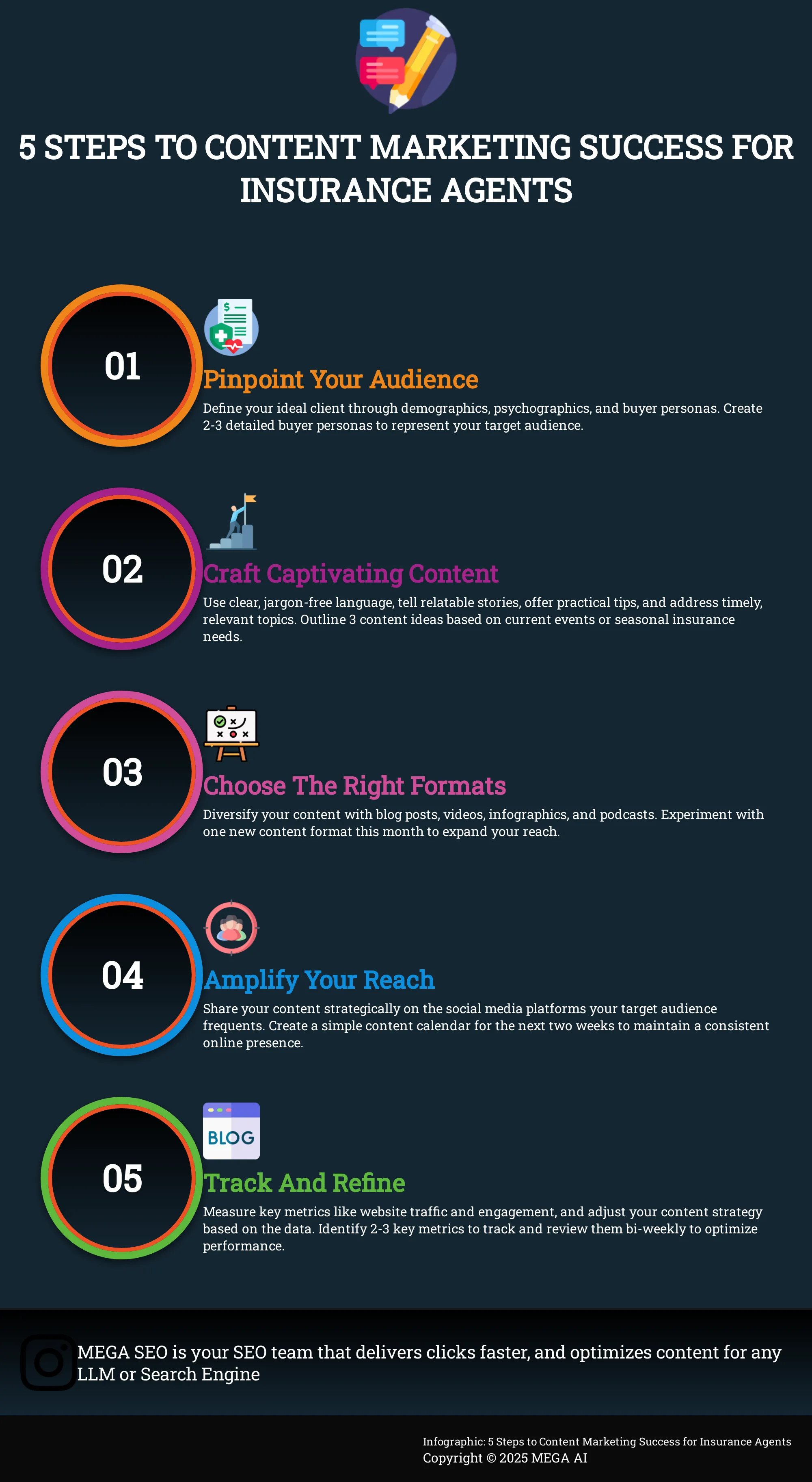
Pinpoint Your Audience, Perfect Your Content
Before you write a single word or plan a video, knowing exactly who you're talking to is fundamental. It’s the difference between shouting into the void and having a meaningful conversation that leads to new clients. When your content truly speaks to the right people, it resonates, builds trust, and ultimately, helps your insurance business grow. Think of it as laying the groundwork for all your marketing efforts. Without this understanding, even the most polished content can miss the mark. Taking the time to clearly define your audience allows you to craft messages that address their specific needs and concerns, making your marketing more effective and your resources better spent. This clarity will guide your content topics, your tone of voice, and even where you choose to share your expertise. For instance, MEGA AI's automated keyword research can help you discover what your specific audience is searching for, ensuring your content aligns with their interests from the start. This initial step is not just about efficiency; it's about making a genuine connection that can turn a casual reader into a loyal client.
Research Demographics & Psychographics
Getting to know your audience starts with the basics: demographics and psychographics. Demographics cover the "who" – things like age, gender, income level, and geographic location. This data gives you a foundational sketch of your potential clients. But to truly connect, you also need to understand the "why" behind their decisions, which is where psychographics come in. These include their interests, values, lifestyle, and behaviors. For example, are they young families concerned about future security, or retirees looking to protect their assets? "Understanding your target audience is crucial for creating effective marketing strategies," and this involves researching both these aspects. By gathering this information, insurance agents can tailor their content to resonate with their audience and meet their specific needs. This deeper understanding helps you create content that genuinely clicks.
Create Detailed Buyer Personas
Once you have a good grasp of your audience's demographics and psychographics, the next step is to bring them to life by creating buyer personas. These are semi-fictional representations of your ideal clients. Give them names, backstories, goals, and challenges. What keeps them up at night? What are they trying to achieve? "Creating detailed buyer personas helps insurance agents tailor their content to meet the specific needs and preferences of their audience." According to Nick Berry's insights on digital impact, "These personas should include information about the clients' goals, challenges, and how your services can address their needs." This targeted approach not only makes your content more engaging but also improves your chances of converting prospects into clients because you're speaking directly to their situation.
Address Common Client Questions & Concerns
One of the most effective ways to connect with your audience is to directly address the questions and concerns they already have. Think about the common queries you receive during consultations or the typical worries people have about insurance. "Focusing on common client questions and concerns is essential for content creation." As highlighted by Join Stratosphere, "By addressing these issues in your content, you not only provide value but also position yourself as a trusted advisor who understands the challenges clients face." This strategy builds significant trust and shows potential clients that you're knowledgeable and empathetic. When they see you proactively offering solutions and clear explanations, they're more likely to turn to you for their insurance needs. This approach also lends itself well to content generation that is truly helpful and ranks well.
What Content Formats Connect Best with Clients?
Choosing the right content formats is essential if you want to truly connect with your clients and prospects. Not everyone likes to get their information the same way, so using a mix of formats usually works best. Think about what makes tricky insurance topics easier to grasp and more interesting for the people you're trying to reach. Your main aim is to consistently provide value, no matter how you package the information. This means understanding your audience and then creating content that speaks their language, both literally and figuratively. Let's explore some of the most effective content types that can help insurance agents build stronger relationships and communicate more clearly.
Informative Blog Posts & Articles
Blog posts and articles are the bedrock of a solid content strategy. They give you a platform to share your expertise on all sorts of insurance topics, answer common client questions in depth, and build trust over time. When you consistently publish well-written articles, you can explain policy details, offer tips for choosing the right coverage, or discuss new trends in the industry. This kind of content is also a powerhouse for search engine optimization (SEO). It helps potential clients find you when they're online searching for answers to their insurance questions, positioning you as a go-to, knowledgeable resource.
Engaging Videos & Webinars
Videos offer a more dynamic and personal way to connect with your audience. You can use them to break down complicated insurance concepts in a way that’s easier to watch and understand. Consider creating short, helpful videos that answer frequently asked questions, or share client testimonial videos to build credibility. Animated explainer videos can also be great for illustrating how different policies work. Webinars allow for live interaction, where you can present on a specific topic and then answer questions directly from your audience. As BBSI points out, videos can effectively improve brand recognition and interest in what you offer.
Shareable Infographics & Visuals
Insurance often involves complex details and numbers that can be overwhelming. Infographics are a brilliant way to condense this information into a format that’s both easy to understand and visually appealing. Imagine an infographic that clearly lays out the different factors influencing car insurance rates, or one that walks someone through the claims process step-by-step. These kinds of visuals are very shareable on social media, which can significantly increase your reach and make your key messages stick. Good design is crucial here; the idea is to simplify, not to add more confusion.
Accessible Podcasts & Audio Content
For clients who are always on the move, podcasts offer a super convenient way to consume your content. They can listen while they're commuting, working out, or just going about their day. You could host your own podcast to discuss various insurance topics, interview other industry experts, or share client success stories. Audio allows for deeper dives into subjects than a quick video or blog post might permit. BBSI notes that podcasts are a growing medium for reaching audiences and building brand awareness, helping you establish your voice and build a connection with listeners.
Interactive Tools & Quizzes
Interactive content gets your audience actively involved, making their experience more engaging and tailored to them. Think about tools like an insurance needs calculator, a quiz to help someone figure out what type of life insurance might suit them, or an interactive guide to understanding different coverage options. These tools provide immediate, personalized value, helping users assess their own situation and understand their needs better. Stratosphere highlights that interactive content encourages participation and can lead to higher conversion rates, making it a smart addition to your content mix.
Crafting Insurance Content That Captivates: Key Practices
Creating content that truly connects with your audience means going beyond simply listing policy details or explaining industry terms. It’s about building a bridge of understanding with potential and current clients, making complex information feel straightforward, and establishing a solid foundation of trust. When your content genuinely captivates, it does more than just inform; it engages, reassures, and guides people through what can often feel like a complicated decision-making process. Think of your content as an extension of a helpful, clear conversation where your expertise shines through, not by using complex vocabulary, but by making the subject matter clear and directly relevant to their lives and concerns.
The practices we're about to discuss are designed to help you achieve exactly that. By focusing on clear communication, compelling storytelling, providing actionable advice, and addressing timely topics, you can transform your content. It can move from being a passive source of information into an active, dynamic tool for client engagement and for building lasting relationships. These aren't just abstract ideas; they are practical, actionable approaches you can begin to implement today. Doing so will make your insurance content more effective and, ultimately, more successful in attracting the clients you want and keeping the ones you have. Let's explore how you can put these important principles into action.
Use Clear, Jargon-Free Language
One of the surest ways to lose a potential client's attention is to overwhelm them with industry-specific jargon. Try to see it from their viewpoint: they are usually looking for solutions, security, and peace of mind, not a lesson in insurance terminology. As research on content marketing for insurance agents highlights, "Insurance agents should focus on creating content that is easy to understand, avoiding industry jargon that may confuse potential clients." Effective, clear communication isn't about oversimplifying complex topics; it's about making them accessible. When clients can readily understand the information you're presenting, it naturally builds trust and makes them feel more confident, both in their decisions and in you as their agent. A simple way to test this is to ask someone outside the insurance field to read your content. If they understand it without difficulty, you’re on the right path.
Weave in Compelling Stories
People are naturally drawn to stories. Narratives make information more memorable, relatable, and much easier to digest. Instead of just listing the facts and figures about a particular policy, consider sharing a scenario or an anonymized client experience where that policy made a significant positive difference in someone's life. As noted in a discussion on the power of content marketing, "Storytelling is a powerful tool...By sharing client success stories or personal anecdotes, insurance agents can create a relatable narrative that resonates with their audience." These stories don’t need to be overly dramatic; their power lies in their authenticity and relevance. Think about common situations or concerns your clients face and how specific insurance products offer solutions. Sharing these kinds of stories can make abstract concepts feel tangible and help potential clients clearly see how you can assist them.
Offer Actionable Insights & Practical Tips
Your content should aim to empower your audience, giving them tools and knowledge they can use. When you provide actionable insights and genuinely practical tips, you’re doing more than just explaining insurance; you’re offering real, tangible value. This approach helps to position you as a trusted advisor, someone who is clearly invested in their clients' well-being and financial security. According to advice on content marketing planning, "Content that helps clients solve problems or make informed decisions not only adds value but also positions the agent as a trusted advisor." Consider creating useful resources like checklists for choosing the right type of coverage, easy-to-follow guides on how to file a claim smoothly, or seasonal home maintenance tips designed to prevent common issues. This type of helpful content keeps you top-of-mind and works to build lasting client loyalty.
Cover Seasonal & Timely Insurance Topics
Relevance is absolutely key when it comes to capturing and holding your audience's attention. By addressing seasonal concerns or timely events in your content, you demonstrate that you are attuned to what is currently impacting your clients' lives and what’s on their minds. For instance, discussing hurricane preparedness tips as storm season approaches, or offering advice on safe winter driving practices when the weather starts to cool, can be incredibly effective. As noted in a guide on effective insurance marketing strategies, "Addressing seasonal and timely topics in your content can significantly increase engagement." This proactive approach not only provides pertinent information precisely when your audience needs it most but also clearly demonstrates your commitment to their ongoing protection and well-being.
Tackle Content Creation Hurdles Like a Pro
Consistently creating quality content can seem daunting while managing client needs and agency operations. Fortunately, smart approaches make content creation manageable and effective. Let's explore how to overcome common hurdles and transform content into a valuable business asset.
Manage Your Time & Resources Wisely
Let's be real: finding the time and resources for content creation is often the biggest hurdle. Many agents feel they're "trying to market your brand on your own. Usually, it takes a team of expert marketers to build a strong online brand presence." While that's true for large-scale operations, solo agents and small agencies can still make a significant impact by working smarter. Consider batching your content—dedicate a specific block of time each week or month to create multiple pieces at once. Using templates for blog posts or social media updates can also save precious minutes.
Tools that automate parts of the process, like MEGA AI's content generation capabilities, can be a real help, allowing you to produce optimized content without spending hours on research and writing. Remember, "those insurance agents who avoid marketing mistakes like this are the same ones who get ahead." Efficiently managing your content efforts is key.
Stay Updated on Insurance Industry Trends
The insurance landscape is always evolving, with new regulations, products, and client concerns emerging regularly. Your content needs to reflect these changes to stay relevant and valuable. "Insurance agents need to compete and deliver value to current and future customers," and up-to-date content is a cornerstone of that value. Make it a habit to follow industry news sites, subscribe to relevant newsletters, and observe what topics your competitors are discussing.
This doesn't mean you have to create entirely new pieces every time. You can update existing articles with new information or statistics, ensuring your content library remains fresh. "By implementing these best practices, insurance agents and financial advisors can streamline their content marketing efforts, drive lead generation and achieve sustainable growth." Staying informed allows you to create timely content that truly connects.
Build Lasting Trust & Credibility
Ultimately, your content is a vehicle for building trust with potential and current clients. "Understanding your audience is crucial for creating an effective marketing strategy as an insurance agent." When you consistently provide clear, helpful, and accurate information, you position yourself as a knowledgeable and reliable resource. This isn't just about selling policies; it's about educating your audience and helping them make informed decisions.
Focus on addressing their specific questions and concerns. "If you look at prospective clients' pain points, you can tailor your entire marketing strategy," and your content strategy is a significant part of that. Content that empathizes with client challenges and offers practical solutions will always be more effective than a simple sales pitch. Platforms like MEGA AI can help you research keywords that reveal these pain points, enabling you to create highly targeted and trustworthy content.
Amplify Your Reach: Social Media & Distribution Tactics
Creating valuable content is a fantastic start, but its power truly multiplies when it reaches the right audience. Think of social media and other distribution channels as your megaphones, broadcasting your expertise and solutions to potential clients. A smart distribution strategy ensures your well-crafted blog posts, videos, and guides don't just sit on your website but actively work to attract and engage prospects. This is where you can connect with more people and turn your content efforts into tangible leads and stronger client relationships. Let's explore how to make that happen effectively.
Select the Right Social Platforms
Not every social media platform will be the perfect fit for your insurance agency, and that’s okay. The key is to identify where your ideal clients spend their time online. Are you targeting businesses with commercial policies? LinkedIn might be your go-to. Focusing on local families? Facebook could be more effective. Take some time to research platform demographics and align them with your buyer personas. Remember, "social media helps insurance agents connect with more people and build relationships, leading to more customers." It’s about making strategic choices to invest your time where it yields the best return, rather than trying to be everywhere at once.
Develop a Consistent Content Calendar
Once you’ve chosen your platforms, consistency is your best friend. A content calendar is an indispensable tool for planning what you'll share and when. This proactive approach helps you maintain a regular presence, cover diverse topics, and align your posts with seasonal insurance needs or industry news. "Creating high-quality, keyword-rich content...is essential," and your calendar ensures this valuable content gets distributed effectively. Whether you use a simple spreadsheet or a dedicated social media scheduling tool, planning ahead prevents last-minute scrambles and keeps your audience engaged with a steady stream of useful information.
Engage Authentically with Your Online Community
Social media isn't just a broadcast channel; it's a space for conversation and connection. Strive to "humanize your brand with regular posts, photos, and videos," showing the real people behind your agency. When followers comment or ask questions, respond thoughtfully and promptly. This interaction builds trust and rapport. It's also vital to "monitor and respond to reviews promptly." Addressing feedback, both positive and negative, demonstrates that you value client opinions and are committed to service. Authentic engagement transforms your social media presence from a simple marketing outpost into a thriving community hub, which can significantly strengthen your online reputation.
Make Your Insurance Content Search-Engine Friendly (SEO Tips)
Creating fantastic content is a huge step, but you also want to make sure potential clients can actually find it. That's where search engine optimization, or SEO, comes into play. Think of SEO as making your content speak the language of search engines like Google. In the competitive insurance world, standing out is key, and effective SEO helps you do just that. It’s not about tricking algorithms; it's about genuinely connecting with individuals and businesses actively searching for the solutions you offer. When your insurance content is optimized, it’s more likely to appear when people search for information you provide. This means more eyes on your expertise, increased credibility, and more opportunities to connect with those needing your services. Ultimately, good SEO translates into more qualified leads for your agency. While it might sound complex, many aspects of SEO can be straightforward, and tools like MEGA AI's SEO features can simplify tasks like keyword research and content optimization, making it accessible even if you're not an SEO expert. Let's look at some practical ways to make your insurance content more discoverable.
Conduct Thorough Keyword Research
Before you even write a word, it’s smart to understand what terms your ideal clients are typing into search engines. This is the core of keyword research. "Understanding your target audience and their search behavior is crucial. Conducting thorough keyword research allows you to identify the terms and phrases potential clients are using to find insurance services." Think about the specific problems they're trying to solve or the questions they have. You can use keyword research tools or simply put yourself in their shoes. Consider long-tail keywords (longer, more specific phrases) too, as these often indicate a user is closer to making a decision. This insight helps you tailor your blog posts, articles, and even video descriptions to match what people are actively looking for, making it much easier for them to find you.
Implement Smart On-Page SEO
Once you have your keywords, the next step is to weave them naturally into your content. This is part of on-page SEO. "On-page SEO is essential for ensuring that your content is not only engaging but also optimized for search engines." This involves more than just sprinkling keywords; it includes optimizing your page titles, headings, and meta descriptions – those little snippets of text that show up in search results. Also, ensure your website is easy to use and loads quickly. The goal is to make your content appealing to both search engines and human readers. Remember, quality and relevance are key; avoid stuffing keywords unnaturally, as this can actually hurt your chances of ranking well.
Build High-Quality Backlinks
Think of backlinks as votes of confidence from other websites. When a reputable site links to your content, it signals to search engines that your information is valuable and trustworthy. "Building high-quality backlinks is a vital part of your SEO strategy." One effective way to do this is by creating guest posts for well-regarded websites in the insurance or financial sectors. This not only helps build your site's authority but can also drive referral traffic directly to your website. Focus on creating genuinely useful content that others will want to share and reference. Quality over quantity is definitely the mantra when it comes to backlinks.
Track Your Success: Measure & Refine Your Content Strategy
Creating great content is a fantastic start, but understanding its impact truly drives growth. Once your content is live, it's time to see how it’s performing and find ways to make it even better. This isn't a one-time check; it's about a continuous loop of measuring, learning, and refining. Let's explore how to effectively measure your success and fine-tune your strategy.
Identify Key Performance Indicators (KPIs)
To really understand how your content is doing, you first need to decide what success looks like for your business. This is where Key Performance Indicators, or KPIs, come in. These are specific, measurable values that show you how effectively you're achieving your main business objectives through your content.
Think about what you want your content to achieve. Are you aiming for more website visitors, generating new leads, or perhaps increasing sales? Common KPIs include website traffic, conversion rates, and engagement metrics like time on page or social shares. Choosing KPIs that directly align with your overall business goals is essential for focusing your efforts and measuring what truly matters.
Use Analytics to Understand Performance
Once you've set your KPIs, you'll need tools to track them. Website analytics platforms are invaluable, offering a deep dive into how people interact with your content. You can see which blog posts attract the most readers, how long people stay on pages, and where your audience comes from. Metrics like page views, bounce rates, and click-through rates (CTR) paint a clear picture of user engagement.
Regularly checking these analytics helps you understand what resonates with your audience. For instance, high bounce rates might indicate content isn't matching visitor expectations. Understanding these numbers is the first step to making smart improvements. Tools that help optimize existing content can then address issues like low CTR by refining titles and meta descriptions based on these insights.
Interpret Data to Make Informed Adjustments
Collecting data is one thing; using it to make smart decisions is another. The real power comes from interpreting your analytics to refine your content strategy. Look for patterns and trends. Are certain topics consistently driving more traffic and engagement? Do videos perform better than blog posts for your audience? This information is key.
Use these insights to guide your future content creation. Focus on creating more of what works and re-evaluate or update underperforming pieces. Perhaps an older article needs a refresh, or maybe it could be re-optimized for current search trends to improve its ranking. This iterative process of analyzing and adjusting ensures your content strategy remains dynamic and effective.
Keep it Compliant: Legal Essentials for Insurance Content
Creating compelling content is just one piece of the puzzle; ensuring it meets all legal and ethical standards is equally vital, especially in a regulated field like insurance. Getting this right protects your business, builds client trust, and upholds the integrity of your services. Think of compliance not as a barrier, but as a framework that helps you communicate responsibly and effectively. When your audience knows they can rely on your information, you establish a much stronger foundation for lasting relationships. This careful approach to content also means your digital marketing efforts are built on solid ground, ready for sustainable growth.
Understand Important Industry Regulations
The insurance world operates under a specific set of rules when it comes to advertising and marketing. It's essential to become familiar with these to keep your content on the right side of the law. Key guidelines often come from the National Association of Insurance Commissioners (NAIC), and each state will also have its own specific regulations that you'll need to follow. Taking the time to understand these requirements helps you avoid potential penalties and ensures your marketing efforts are sound. Consider consulting with legal counsel specializing in insurance or regularly reviewing updates from regulatory bodies to stay informed about any changes that could affect how you present your services.
Ensure Accuracy & Transparency in All Content
Every piece of content you publish, from a blog post to a social media update, must be accurate and transparent. Providing clear, truthful information isn't just good practice; it's a legal requirement. Misleading statements or false claims can lead to serious legal issues and damage your reputation. Always double-check your facts, policy details, and any statistics you cite. Be upfront about the terms, conditions, and limitations of the insurance products you discuss. Clearly communicating the nature of your services and any affiliations helps build client trust and meets regulatory expectations for transparency. This honesty forms the bedrock of a trustworthy client relationship.
Smart Tools & Resources to Streamline Content Creation
Creating fresh, relevant content consistently can feel like a full-time job on its own, especially when you're focused on serving your insurance clients. The good news is that you don’t have to do it all manually. There are some fantastic tools and resources available that can significantly lighten the load and help you produce high-quality content more efficiently.
Platforms like MEGA AI are designed to simplify many aspects of content creation. For instance, you can use AI-powered keyword discovery to automatically find those valuable, low-competition keywords that can help your insurance agency stand out in your specific niche. Once you know what topics to target, the platform can assist in generating expert-level content. This content is crafted by AI to resonate with your audience and is optimized for search engines, ensuring potential clients can find your insights. Beyond initial creation, tools can also automate the crucial task of maintaining and updating your existing articles, helping to improve clickthrough rates and keeping your information current by adding new research or fixing broken links. This means your content continues to work hard for you long after it's published.
While comprehensive platforms offer end-to-end solutions, you might also find specific tools helpful for other areas. For example, various social media management tools can help you schedule your posts across different platforms and analyze their performance. The goal is to build a toolkit that supports your content marketing plan, allowing you to focus on what you do best: providing excellent insurance advice and service.
Related Articles
Frequently Asked Questions
I'm new to content marketing for my insurance agency. Where's the best place to start? Begin by truly understanding who you want to reach. Think about their common questions and concerns regarding insurance. This understanding will guide the topics you choose and how you present them, making your initial efforts much more focused and effective.
How can I make complex insurance topics easy for my clients to understand? Focus on using clear, straightforward language and avoid industry jargon as much as possible. Try telling relatable stories or using real-life examples to illustrate how a policy works or why certain coverage is important. This makes the information more digestible and helps clients see the real-world value.
What's an effective way to ensure my content actually reaches potential clients? A good approach involves making your content discoverable through search engines by understanding what terms people use when looking for insurance information. Also, share your content on the social media platforms where your ideal clients are most active. Consistent sharing and engagement are key.
I'm concerned about the time commitment. How can I create content consistently without it taking over my schedule? Planning is essential. Try setting aside specific blocks of time for content creation rather than fitting it in sporadically. You can also use tools that help streamline the process, from finding relevant topics to generating initial drafts or even updating existing articles.
How do I know if my content marketing efforts are actually working for my agency? Define what success means for you first, such as more website visitors or more inquiries. Then, use website analytics to track these specific metrics. Regularly reviewing this data will show you what's resonating with your audience and where you might need to adjust your approach.