
Today's travelers are sophisticated researchers. They sift through countless options online, armed with high expectations for information and authenticity. They're not just looking for a place to sleep; they're seeking experiences and value. Generic sales pitches often get ignored. To capture their attention and earn their trust, your hotel needs to provide content that genuinely helps and informs. Creating content for Hotels in this environment means understanding these evolving expectations and delivering material that is relevant, engaging, and useful. This article will outline how to craft content that meets the modern traveler's needs, positioning your hotel as a credible and appealing choice.
Key Takeaways
- Provide Real Value with Varied Content: Think like a top hotel: offer your audience a compelling mix of information and stories that truly resonate and help them, building connections that go deeper than just a transaction.
- Get Found and Be Remembered with Smart Strategy: Learn from how hotels attract guests by using effective SEO so your ideal audience can find you, and develop a unique brand story with engaging visuals to leave a strong impression.
- Share Your Content Smartly and Learn as You Go: Make sure your great content reaches the right people by distributing it across the platforms they use, and keep an eye on your analytics to see what’s working, so you can continuously improve your strategy.
What is Hotel Content Marketing and Why Does It Matter?
Understanding hotel content marketing is the first step to transforming how you connect with potential guests. It’s about more than just pretty pictures; it’s a strategic approach to drawing in and retaining customers by providing them with valuable and engaging information. When you get this right, you’ll see a real difference in your online visibility and booking numbers.
Defining Hotel Content Marketing and Its Advantages
Hotel content marketing is essentially how you tell your hotel's story online to attract and keep guests. Think of it as using engaging materials like blog posts, captivating videos, and interesting social media updates to draw people to your website and, ultimately, secure more bookings. It's a really powerful strategy for promoting your hotel. The main goal here is to build a connection with potential guests, establish your hotel as a trustworthy choice, and make it easier for them to find you when they're searching online. When done right, this approach doesn't just grab attention; it effectively turns curious lookers into confirmed guests.
How Content Marketing Affects Guest Engagement and Bookings
So, how does all this great content actually help your hotel? Well, creating high-quality, relevant information directly helps with your search engine optimization, which means more people will find your website organically. Considering that most hotel bookings start with someone typing a query into a search engine, having a solid content strategy is a game-changer for your marketing effectiveness. It’s a fantastic way to drive revenue because you're actively engaging potential guests and making their journey, from discovery to booking, a smoother and more appealing experience. This kind of engagement builds a relationship even before they step through your doors.
What Types of Content Engage Potential Hotel Guests?
To truly connect with potential guests and encourage them to book, hotels have a diverse toolkit of content types at their disposal. It’s not just about showcasing rooms; it’s about painting a picture of the experience that awaits them. From informative articles to captivating visuals, the right mix of content can significantly influence a traveler's decision-making process. Think about what would make you choose one hotel over another – often, it's the story they tell and the connection they build before you even step through the door.
Different travelers seek different information and respond to various forms of engagement. Some might be looking for practical travel tips, while others are drawn to beautiful imagery or authentic guest experiences. By understanding these preferences, you can tailor your content strategy to attract, engage, and convert your ideal guests. Let's explore some of the most effective content types that can help your hotel stand out and make a lasting impression.
Crafting Blog Posts and Articles
Blog posts and articles are fantastic tools for hotels to share valuable information and tell compelling stories. Think beyond just announcing hotel news. You can create content around seasonal events happening in your city or highlight unique local experiences that guests can enjoy. For instance, if there's a major festival or a "citywide" event, an article detailing what to expect, how to navigate it, and why your hotel is the perfect home base can be incredibly useful and attractive to potential visitors.
These pieces allow you to delve deeper into topics that matter to your audience, establishing your hotel as a knowledgeable and helpful resource. Consider writing about hidden gems in your neighborhood, offering travel itineraries, or sharing tips for first-time visitors. This approach not only provides value but also subtly positions your hotel as an integral part of the destination experience, making it more appealing to travelers planning their trip.
Developing Social Media Content
The social media landscape demands a steady stream of fresh, engaging content. It's true that the volume needed to make an impact, especially with the popularity of short-form video, has grown significantly. Many hospitality brands find it challenging to keep up, but a smart strategy can make it manageable. Focus on creating content that feels authentic and gives a real sense of your hotel's atmosphere and the experiences it offers.
Platforms like Instagram, TikTok, and Facebook are ideal for sharing visually appealing snippets of hotel life. Think about daily stories, quick video tours of different room types or amenities, and posts that highlight special offers or events. The key is consistency and interaction. Engage with your followers, respond to comments, and create a community around your brand. This consistent presence keeps your hotel top-of-mind for potential guests.
Producing Video and Visual Content
Visuals are incredibly powerful in the hotel industry, and video content, in particular, can bring your hotel to life. Potential guests love to see dynamic content like Instagram Stories, Reels, or even Live Videos showcasing what it’s like to be at your property. Imagine offering a virtual walk-through of a newly renovated suite or a live Q&A session with your concierge sharing local tips. This type of visual storytelling helps guests visualize their stay and builds excitement.
High-quality photographs are also essential. Invest in professional shots of your rooms, common areas, dining options, and any unique features your hotel offers. These visuals can be used across your website, social media, and online travel agency (OTA) listings. Remember, in an industry where aesthetics play a huge role, compelling video and photography can make a significant difference in capturing attention and driving bookings.
Creating Email Newsletters
Email marketing remains a highly effective channel for hotels, offering an impressive return on investment. It’s a direct line to guests and interested prospects, allowing you to share updates, exclusive promotions, and valuable content that keeps them engaged. Think of your email newsletter as a way to nurture relationships and encourage repeat bookings. You can share news about upcoming local events, offer special packages for subscribers, or provide travel tips relevant to your destination.
To make your email marketing successful, focus on providing genuine value rather than just constant sales pitches. Segment your audience to send more targeted and relevant messages. For example, you could send different offers to past leisure guests versus business travelers. A well-crafted email strategy helps maintain a connection with your audience, ensuring your hotel is considered when they plan their next trip.
Leveraging User-Generated Content
User-generated content (UGC) is a goldmine for hotels. When guests share their photos, videos, and reviews, they provide authentic social proof that can be far more persuasive than traditional marketing. By leveraging these genuine experiences, you can build trust, foster a sense of community, and significantly extend your marketing reach. Imagine potential guests seeing real photos from happy visitors enjoying your pool or raving about your breakfast – it’s incredibly compelling.
Encourage your guests to share their experiences by creating a unique hashtag, running photo contests, or simply by providing share-worthy spots and moments within your hotel. Always ask for permission before re-sharing guest content on your own channels. Showcasing UGC not only provides fresh content for your marketing efforts but also makes your guests feel valued and appreciated, turning them into enthusiastic brand advocates.
How Can Hotels Use SEO for Their Content?
Once you have fantastic content ideas, the next step is making sure potential guests can actually find them. This is where Search Engine Optimization (SEO) comes into play. By optimizing your content, you tell search engines like Google what your pages are about, making it easier for travelers to discover your hotel when they're planning their next trip. Good SEO helps your hotel appear higher in search results, leading to more website traffic and, ultimately, more bookings. Let's look at a few key SEO practices for your hotel's content.
Researching and Optimizing Keywords
Think about what words or phrases a potential guest might type into Google when looking for a place to stay in your area. These are your keywords. Understanding these search terms is the foundation of a strong content strategy because it helps you connect with guests actively seeking accommodations. You'll want to find keywords that people are searching for but that aren't overly competitive. Tools that offer automated keyword research can simplify this process significantly, helping you identify terms like "boutique hotel downtown [Your City]" or "family-friendly resort near [Local Attraction]". Once you have your keywords, weave them naturally into your website copy, blog posts, and descriptions.
Applying On-Page and Local SEO
On-page SEO involves optimizing individual web pages to rank higher and earn more relevant traffic. For hotels, this means ensuring your website is responsive and easy to navigate on any device. Clear menus should guide visitors to your booking engine, special offers, and contact details. Local SEO is also vital. Make sure your hotel's name, address, and phone number (NAP) are consistent everywhere online. Creating and optimizing your Google Business Profile with photos, services, and accurate location information will help you appear in local search results and on Google Maps, making it easier for nearby travelers to find you.
Building Links to Your Hotel Website
Think of links from other websites to yours as votes of confidence. The more quality links you have, the more authoritative your website appears to search engines, which can improve your ranking. For hotels, this could mean partnering with local tourism boards, travel bloggers, or complementary businesses for mentions and links. Creating genuinely useful content, like a guide to local attractions that others will want to share, can also naturally attract links. Some platforms can even assist with internal and external linking strategies by analyzing data to find the best opportunities, helping to strengthen your site's credibility.
How to Create Engaging Hotel Content: Best Practices
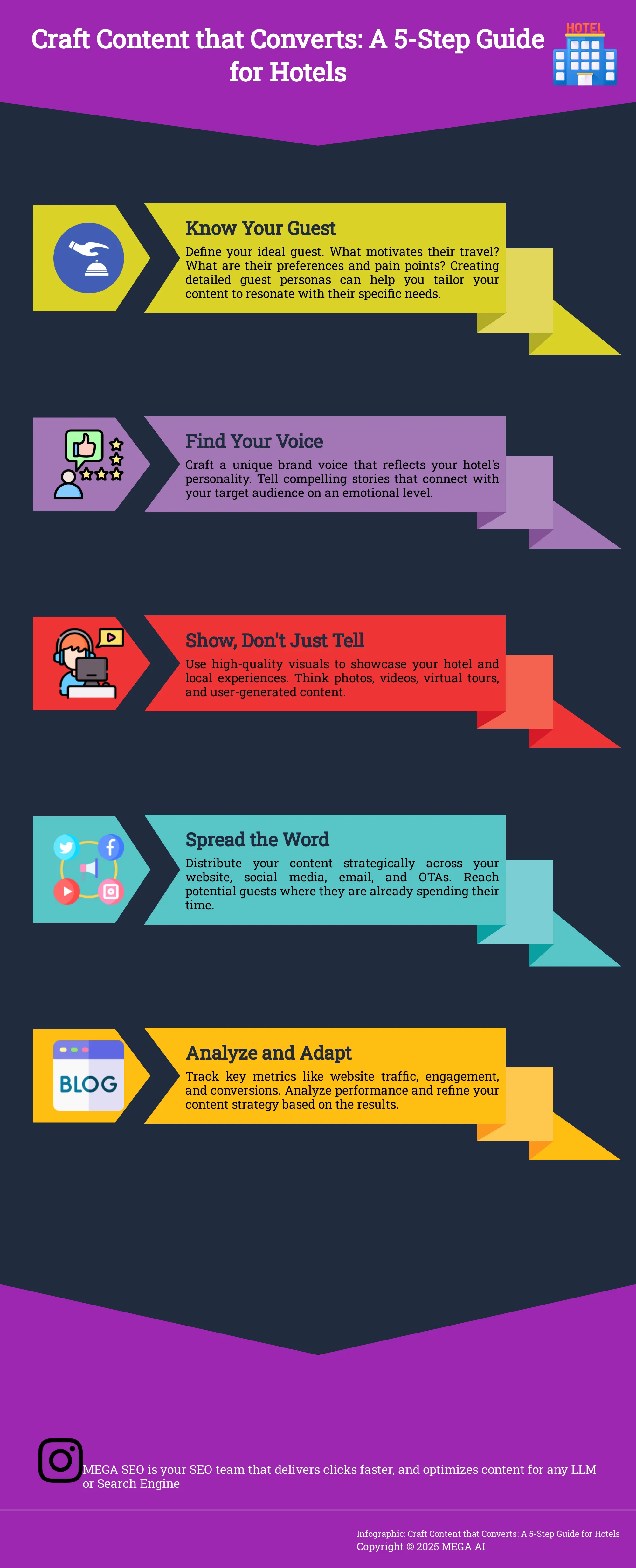
Creating content that truly connects with potential guests goes far beyond simply posting attractive photos of your rooms. It's about crafting a narrative, understanding your ideal visitor, and consistently delivering value. Think of your content as the first handshake, the initial welcoming smile your hotel offers. To make that introduction count, you need a thoughtful approach. Effective hotel content marketing isn't just a series of random posts; it's a strategic endeavor designed to build relationships and drive bookings. When you develop a strong brand identity, your content becomes a powerful tool to communicate your unique value proposition.
The goal is to make potential guests feel like they already know and trust you before they even step through your doors. This means creating content that is not only visually appealing but also informative, inspiring, and authentic. It’s about showing them what an experience at your hotel truly feels like, from the comfort of your amenities to the unique local experiences you can facilitate. By focusing on best practices, you can ensure your content efforts are not just busywork, but are actively contributing to your hotel's growth. This involves a commitment to understanding who you're talking to, telling your story in a compelling way, using visuals that captivate, and maintaining a high standard across all your communications. These elements work together to build a cohesive and attractive online presence that can significantly influence a traveler's decision-making process.
Know Your Target Audience
Before you write a single word or select an image, it's essential to understand who you're trying to reach. "Creating a strong brand identity is vital for hotels to attract and retain guests. Effective marketing strategies are necessary to reach the target audience." This means going beyond basic demographics. Think about what motivates their travel: Are they seeking adventure, relaxation, family fun, or a romantic getaway? What are their pain points when booking travel? What kind of information are they looking for?
Creating detailed guest personas can be incredibly helpful here. Give these personas names, backgrounds, and travel preferences. When you have a clear picture of your ideal guest, you can tailor your content to resonate with their specific needs and desires, making your marketing efforts much more effective. This understanding will inform every piece of content you create, from blog topics to social media captions.
Using Storytelling and Defining Your Brand Voice
In a crowded market, your hotel's story is what makes you memorable. As Radiant Copywriting notes, "What sets you apart online is your brand story — your web copy, photos and videos, blog posts, and other carefully curated content shared on your digital channels." Storytelling allows you to create an emotional connection with potential guests, transforming your hotel from just a place to stay into a destination with personality and character. Think about what makes your hotel unique: Is it the history of the building, a special connection to the local community, or the exceptional service your team provides?
Equally important is defining your brand voice. Are you luxurious and sophisticated, warm and family-friendly, or quirky and adventurous? This voice should be consistent across all your content, from your website to your social media updates. A clear and consistent brand voice helps build recognition and trust, making your hotel more relatable and appealing to your target audience.
Creating Compelling Visuals
Visuals are often the first impression a potential guest has of your hotel, and they can be incredibly persuasive. High-quality photos and videos are no longer a luxury but a necessity in hotel marketing. "Just think here about Instagram Stories, Reels, or Live Videos - hotel guests love to see this type of content," as HotelMinder points out. People want to visualize their stay, so showcase your rooms, amenities, dining options, and common areas in the best possible light.
Don’t limit yourself to static photos. Incorporate video content like virtual tours, guest testimonials, or behind-the-scenes glimpses of your hotel. User-generated content, such as photos shared by previous guests (with their permission, of course), can also add an authentic and trustworthy element to your visual strategy. Ensure your visuals are optimized for different platforms, maintaining high quality whether they're viewed on a desktop or a mobile device.
Maintaining Consistency and Quality
Creating engaging content is an ongoing process, not a one-time task. "The volume of content required to succeed on social media today is much higher than it was even a year ago," according to Stay The Night. This means you need a plan to consistently produce fresh, high-quality content that keeps your audience engaged and your hotel top-of-mind. A content calendar is an invaluable tool for planning your posts, blogs, and email newsletters in advance.
Maintaining quality is just as important as quantity. Every piece of content you publish reflects on your brand. Establish clear guidelines for your content's tone, style, and visual aesthetic to ensure consistency. While the demand for content is high, tools and streamlined processes can help you manage your content creation workflow efficiently without sacrificing the quality that guests expect from a reputable hotel.
How to Distribute Hotel Content Across Platforms
Creating fantastic content is just the first step; getting it in front of the right eyes is where the real impact happens for your hotel. Distributing your content effectively means using a mix of channels where potential guests are already spending their time. Think of it as setting up inviting signposts across the internet, all leading back to your unique hotel experience. A smart distribution strategy ensures your stories, offers, and brand personality reach a wide yet targeted audience, ultimately encouraging those all-important bookings. Let's explore some key platforms and how to make the most of them.
Optimizing Your Hotel Website
Your hotel's website is your digital storefront, and it needs to be more than just a pretty online brochure. It should be a primary driver for direct bookings. Ensure your website is responsive, meaning it looks great and functions perfectly on any device, from desktops to smartphones. Clear navigation is crucial, guiding visitors effortlessly to special offers, guest reviews, contact details, links to your social media, and, most importantly, your booking engine. Regularly updating your site with fresh blog content, optimized with relevant keywords, will also help search engines find you. Consider tools that can help automate SEO improvements to keep your site performing at its best and attracting organic traffic.
Using Social Media Platforms Effectively
Social media is where you can truly let your hotel's personality shine and engage with guests on a more personal level. Platforms like Instagram and TikTok are perfect for showcasing stunning visuals of your property and the unique experiences you offer. Remember, the volume of content needed to make an impact is significant, so consistency is key. Beyond organic posts, use remarketing campaigns to target visitors who browsed your website but didn’t complete a booking. This gives them a gentle reminder and a second chance to consider your hotel. AI-powered platforms can even help you remix content into numerous variations, making it easier to keep your social feeds fresh across different channels.
Working with Third-Party Travel Sites and OTAs
Online Travel Agencies (OTAs) and other third-party travel sites are invaluable for increasing your hotel's visibility. Many travelers begin their accommodation search on these platforms, so establishing a strong presence is essential. Ensure your hotel’s profile is complete, accurate, and features high-quality images and compelling descriptions. Actively manage your listings and respond to guest reviews promptly. Running digital advertisements through these channels can also be highly effective, as it helps your hotel's marketing reach the most relevant audience actively looking for accommodation in your area. This significantly broadens your reach.
Running Email Marketing Campaigns
Don't underestimate the power of email. It’s a direct line to past guests and interested prospects, and email marketing boasts an impressive ROI. Use email to share updates about your hotel, announce seasonal promotions, and offer exclusive deals to your subscribers. Segmenting your email list allows you to send more personalized and relevant messages, which can significantly improve engagement rates. For instance, you could send a special offer to guests who have stayed with you before or target those interested in specific local events. This personal touch helps keep your hotel top-of-mind and encourages repeat bookings.
What Content Ideas and Topics Work for Hotels?
Coming up with fresh content ideas can feel like a constant challenge, but for hotels, your unique location and the experiences you offer guests are rich sources of inspiration. The key is to focus on topics that genuinely help or interest potential visitors. This approach not only draws them in but also builds a meaningful connection that can lead to more bookings. Think about what questions your ideal guest might be typing into a search engine before their trip. What information would make their planning smoother or their stay more memorable? By providing valuable answers and insights, you position your hotel not just as a place to sleep, but as an integral part of their travel experience. This strategy helps you attract attention and convert that interest into reservations. Effective content can also be a powerful tool for showcasing your hotel's personality and what makes it special, setting you apart from the competition.
Highlighting Local Attractions and Experiences
One of the most effective ways to engage potential guests is by showcasing the best of your local area. Think about creating content that acts as a mini-guide for visitors. You could write blog posts detailing "Top 5 Must-See Spots in [Your City]" or "A Foodie's Guide to [Your Neighborhood]." Share tips on the best times to visit popular attractions or uncover hidden gems that only locals know about. This type of content positions your hotel as a knowledgeable local resource, making it easier for guests to plan their trip and see the value in staying with you. Using tools for automated keyword research can also help you discover what potential visitors are searching for regarding your location, ensuring your content meets their needs.
Featuring Seasonal Events and Promotions
Aligning your content with the calendar is a smart move. Seasonal events, local festivals, or even significant city-wide happenings offer fantastic opportunities to create timely and relevant content. For example, you could develop a guide to an annual summer music festival, or a feature on the best spots to see holiday lights near your hotel. Alongside these, you can seamlessly weave in your own seasonal promotions or packages, making your hotel an attractive option for those attending these events. This strategy helps capture interest from people already planning to visit for specific occasions, driving targeted bookings and making your hotel a central part of their event experience.
Sharing Behind-the-Scenes Hotel Stories
People connect with people, and giving your audience a peek behind the curtain can make your hotel feel more approachable and authentic. Consider sharing stories about your dedicated team members, the unique history of your building, or the creative process behind a signature dish at your restaurant. Short videos or photo essays on platforms like Instagram can be particularly effective for this. Hotel guests often enjoy seeing the human side of a business, and this type of content can build a stronger, more personal connection than purely promotional material. It’s about creating a narrative that guests can relate to and remember long after their stay.
Offering Guest Tips and Travel Advice
Providing practical advice is another excellent way to add value for potential guests. Think about the common questions travelers have when visiting a new place. You could create content around "Packing Essentials for a Trip to [Your City]," "Navigating Public Transport Like a Pro," or "Family-Friendly Activities on a Budget." This kind of information helps guests prepare for their stay and demonstrates your commitment to their overall experience. By offering useful tips, you establish your hotel as a helpful and considerate choice, which can be a significant factor when they are ready to book their accommodation and are looking for a stay that offers more than just a room.
How to Use User-Generated Content in Your Hotel Marketing
User-generated content, or UGC, is a fantastic asset for your hotel's marketing efforts. Essentially, it’s authentic content—photos, videos, reviews, social media posts—created by your guests, not by your marketing team. Think of it as digital word-of-mouth. When potential guests see real people sharing genuine, positive experiences about your hotel, it builds a powerful sense of trust and relatability that traditional advertising often can't match. Incorporating UGC is more than just finding content for your social media; it’s about nurturing a community around your brand and empowering your satisfied guests to become your most persuasive advocates. By strategically encouraging and showcasing this content, you can significantly enhance your hotel's appeal and, ultimately, drive more bookings. This approach allows future visitors to envision themselves enjoying what your hotel offers, based on the unbiased experiences of others.
Encourage Guests to Share Their Experiences
One of the most straightforward ways to gather user-generated content is to actively invite your guests to share their stays. You can begin by creating visually appealing, "Instagrammable" spots within your hotel—perhaps a unique art piece, a beautifully designed lounge, or a breathtaking view. Make it simple for guests to tag your hotel by clearly displaying your social media handles and a distinct, easy-to-remember hashtag.
"By leveraging the authentic experiences of guests, hotels can create trust, build community, and amplify their reach," as noted by Golden Hour Co Digital. They also suggest that "one of the most engaging ways to incorporate UGC into your marketing strategy is through UGC challenges—interactive campaigns that encourage guests to share content on social." Consider a friendly photo contest or prompt guests to share their favorite memory from their visit. A gentle reminder at check-out or in a follow-up email can also encourage guests to post their photos and reviews.
Making the Most of Reviews and Testimonials
Reviews and testimonials are a rich source of user-generated content. Today's travelers heavily depend on peer opinions when deciding where to book. As WiWT.travel aptly puts it, "Effectively using UGC in your hotel's marketing strategy can elevate your brand's authenticity and engagement. With travellers trusting peer recommendations more than traditional marketing, incorporating guest-generated content is key." Don't let those glowing reviews remain hidden on third-party sites.
Showcase positive feedback directly on your website—perhaps on your homepage, a dedicated testimonials page, or even alongside room descriptions. You can also share snippets of great reviews on your social media channels, possibly paired with a photo of the happy guest (with their permission, naturally) or a relevant image of your hotel. This not only provides social proof but also demonstrates that you value your guests' input. Responding to reviews, both positive and constructive, further shows your commitment to guest satisfaction.
Launching Social Media Contests and Campaigns
To proactively generate a fresh stream of UGC, think about launching social media contests and campaigns. These initiatives can create excitement and give guests an incentive to share their experiences in a fun and interactive way. HotelGrowers.com highlights that "Creating Hashtag Campaigns and leveraging contests and rewards are effective strategies for encouraging user-generated content. These initiatives can significantly enhance brand authenticity and increase customer engagement."
For instance, you could run a contest asking guests to share their best photo taken at your hotel using a specific campaign hashtag. The prize could be something appealing like a complimentary night's stay or a dining voucher. Clearly outline the rules and how winners will be selected, and ensure the prize is genuinely enticing. These campaigns not only generate valuable content but also increase your visibility and engagement on social platforms as participants share their entries with their own networks.
How to Measure Your Hotel Content Marketing Success
Creating fantastic content is a great start, but how do you know if it's actually working for your hotel? Measuring your content marketing success is key to understanding what resonates with your audience and what drives bookings. It’s not just about putting content out there; it’s about seeing the impact and making smart decisions based on real results. This means looking at the right numbers and understanding what they tell you about your efforts.
Think of it like checking the pulse of your marketing strategy. By regularly monitoring performance, you can ensure your content is doing its job: attracting potential guests, engaging them, and ultimately encouraging them to choose your hotel. This data-driven approach helps you refine your efforts over time, making your content marketing more effective and efficient. Let's explore how you can track your success and make your content work even harder for you.
Identifying Key Performance Indicators (KPIs) for Content
To really understand how your hotel content marketing is performing, you first need to decide what success looks like for you. This is where Key Performance Indicators, or KPIs, come in. These are specific, measurable values that show you how effectively you're achieving your main business objectives. For hotels, common KPIs include website traffic, which tells you how many people are finding your content, and engagement rates on social media, showing how much your audience interacts with your posts.
It's also crucial to track conversion rates, such as how many content views lead to bookings or inquiries. Don't forget customer feedback; comments and reviews can offer invaluable insights into what guests think. The most important step is to align these KPIs with your overall business goals. If your goal is to increase direct bookings, then your KPIs should reflect that, focusing on metrics like booking engine visits from blog posts or email click-through rates to booking pages.
Using Analytics Tools and Understanding Data
Once you've set your KPIs, you'll need tools to track them. Data analytics tools are your best friends here, offering deep insights into guest behavior and preferences. These tools can help your hotel make data-driven decisions to enhance your services and marketing. By integrating and analyzing data from various sources, like your website, social media, and email campaigns, you can uncover patterns that drive personalized marketing and improve the overall guest experience.
Platforms like Google Analytics can show you where your website traffic is coming from, which pages are most popular, and how long visitors stay. For more advanced insights, AI-powered tools can analyze vast amounts of data to understand customer preferences and behavior patterns, allowing for highly targeted marketing campaigns. Platforms like MEGA AI can assist with your SEO efforts by identifying content gaps and optimizing existing articles, ensuring your content reaches the right audience effectively.
Refining Your Strategy Based on Performance
Measuring your content's performance isn't a one-time task; it's an ongoing process. Regularly reviewing your content against your chosen KPIs is essential for refining your strategy. If you notice that certain types of content, like blog posts about local attractions, are driving a lot of traffic but not converting, you might need to adjust your approach. This could mean changing the content format, tweaking your calls-to-action, or trying different distribution channels.
Understanding your audience's preferences through data analysis is fundamental to guiding your content strategy. When you identify what truly resonates with your audience—perhaps they love video tours of your suites or guest testimonials—you can create more targeted and effective content. This iterative process of measuring, analyzing, and refining helps you continuously improve, ensuring your content marketing efforts lead to better engagement and more bookings.
How to Overcome Common Hotel Content Creation Challenges
Creating fresh, engaging content for your hotel can sometimes feel like a significant task, especially when you're managing so many other responsibilities. Many hoteliers face similar hurdles, from keeping up with the demand for quality content to striking the right note with their audience. The good news is that these challenges are quite manageable with the right approach and a bit of planning. Let's look at some common obstacles and how you can address them effectively.
Keeping Content Consistent and High-Quality
One of the most frequent concerns I hear is about producing a steady stream of top-notch content. It's true that the volume of content needed to make an impact, particularly on social media, seems to grow constantly. The key here isn't just to create more, but to create smarter.
A well-considered digital marketing strategy forms the backbone of consistent, high-quality content. Start by planning your content with a calendar, outlining themes and topics in advance. Consider creating content pillars – core topics relevant to your hotel and audience – that you can break down into smaller pieces. Batching your content creation can also significantly improve efficiency. Tools like MEGA AI can further streamline this by helping you generate content ideas and draft initial versions, ensuring you always have a pipeline of material.
Finding the Right Balance: Promotional vs. Informational Content
It's easy to fall into the pattern of constantly promoting deals and packages, but audiences can quickly tune out if they feel they're only seeing advertisements. As Gourmet Marketing notes, you want to avoid overwhelming your audience with "too much fluff," which can lead to disinterest. The ideal approach involves mixing promotional content with genuinely helpful and engaging informational pieces.
Think about what your potential guests are looking for. They might be researching local attractions or seeking travel tips. Aim for a balance where the majority of your content provides value – perhaps an 80/20 split between informational and promotional material. While developing engaging ad content is important for specific campaigns, your day-to-day content should focus on building a relationship with your audience by being a helpful resource. This approach keeps your audience engaged and positions your hotel as a knowledgeable choice.
Adapting to Evolving Travel Trends
The travel industry is dynamic, with guest preferences and digital marketing practices always changing. What worked last year might not be as effective today. Staying current and flexible is crucial for your content strategy to remain relevant. This means keeping an eye on emerging travel trends and understanding how they might influence what potential guests are searching for.
To stay informed, make it a habit to read industry publications and monitor social media conversations. A strong brand identity provides a consistent foundation, but your content themes should adapt. For instance, if sustainable travel becomes a major talking point, create content showcasing your hotel’s eco-friendly initiatives. Tools that help you update existing content quickly, like MEGA AI's Maintenance Agent, can be very useful for keeping your articles fresh and aligned with current search patterns and guest interests.
What Tools and Resources Help Create Effective Hotel Content?
Creating consistently engaging content for your hotel requires more than just good ideas; you also need the right tools in your arsenal. From managing your website to designing stunning visuals and coordinating your team's efforts, the right software can streamline your workflow and help your content shine. Let's look at some key categories of tools that can make a significant difference in your hotel content marketing.
Choosing a Content Management System
Think of your Content Management System (CMS) as the digital front desk for your hotel's website. It’s where you’ll manage your blog posts, update room information, and showcase your amenities. A good CMS should allow you to easily create a responsive website that looks great on any device, ensuring potential guests have a smooth experience whether they're browsing on a desktop or booking on their phone. Clear navigation is crucial, guiding visitors effortlessly to special offers, reviews, and, most importantly, your booking engine.
Your CMS should also make it simple to update content, which is vital for SEO and keeping your information current. Some systems offer integrations with other essential hotel software, contributing to a better overall guest experience by ensuring information is consistent across platforms. Ultimately, choose a CMS that’s user-friendly for your team and provides a seamless experience for your future guests.
Selecting Design and Editing Software
In the hotel industry, visuals are incredibly persuasive. Potential guests want to see the ambiance of your rooms, the allure of your amenities, and the beauty of your location before they even think about booking. This is where design and editing software comes into play. You'll need tools to polish your photos, create engaging video clips, and design attractive graphics for your website and social media channels.
Consider software that helps you produce content like eye-catching Instagram Stories or professional-looking virtual tours. Even simple travel tips or promotional announcements become more effective when presented with well-designed visuals. There are many options available, from free tools for basic editing to more advanced software for professional-grade results, so you can find something that fits your budget and skill level.
Using Collaboration and Project Management Tools
Even if you have a small team (or you're a team of one), managing your hotel's content creation can quickly become complex. Collaboration and project management tools help keep everything organized and on track. These platforms allow you to plan your content calendar, assign tasks, set deadlines, and track progress, ensuring your digital marketing strategy is executed smoothly.
These tools are invaluable for coordinating efforts, whether it's for drafting blog posts, scheduling social media updates, or developing ad content. They provide a central place for communication and file sharing, reducing the chances of miscommunication or missed deadlines. By streamlining your workflow, you can focus more on creating high-quality content that resonates with your target audience and drives bookings.
Related Articles
- AI Revolutionizing Hospitality Marketing: Key Insights Unveiled
- SEO Hotellerie: Boost Your Hotel's Direct Bookings
- SEO for Hotel Booking Websites: Drive Direct Bookings
- Harnessing User-Generated Content for Enhanced SEO Performance - MEGA SEO | Blog
Frequently Asked Questions
How often should my hotel be publishing new content? There isn't a magic number, but consistency is more important than sheer volume. Aim for a regular schedule that you can realistically maintain, whether that's a new blog post weekly, a few social media updates per week, or a monthly newsletter. The key is to keep your audience engaged with fresh, valuable information without overwhelming your team.
Is it better to master one type of content, like blogging, or try a bit of everything? It's generally more effective to start by doing one or two types of content really well, especially if you have limited resources. For instance, you could focus on creating excellent blog posts and engaging Instagram content. Once you've established a strong presence and understand what resonates with your audience, you can gradually expand to other formats like video or email newsletters.
How long will it take to see real results, like more bookings, from my content marketing efforts? Content marketing is more of a marathon than a sprint. While you might see some early engagement, significant results like a noticeable increase in direct bookings typically take several months, sometimes six or more, to materialize. Building an audience, earning trust, and improving your search engine ranking all require consistent effort over time.
My hotel has a very small marketing budget. Can I still do content marketing effectively? Absolutely. Many impactful content marketing strategies are budget-friendly. Focus on creating high-quality, helpful blog content that targets specific keywords, encourage and leverage user-generated content (which is free.), and be active on one or two key social media platforms. Smart, targeted efforts can achieve a lot without a huge spend.
What's one common pitfall hotels should avoid when starting with content marketing? A frequent misstep is making all content overly promotional. While it's natural to want to highlight your hotel's features and offers, your audience is looking for value beyond sales pitches. Strive for a balance by providing useful information, local insights, and engaging stories that help potential guests, rather than just constantly trying to sell to them.