
Your next client isn't waiting for a referral. They are online right now, likely feeling stressed and overwhelmed, searching for answers to an urgent legal problem. The critical question is, will they find your firm's website, or will they find your competitor's? Content marketing is the bridge that connects their search to your services. It allows you to meet them where they are with helpful, reassuring information. Effective creating content for lawyers is about answering their questions before they even ask, building trust by showing you understand their situation. This guide will show you how to identify those critical questions and create content that turns anxious searchers into confident potential clients.
Many law firms rely on word-of-mouth referrals to grow, but this approach can be unpredictable. To build a sustainable practice, you need a system that consistently brings in new, qualified leads. Content marketing provides that system. By creating articles, videos, and guides that answer your ideal clients' questions, you move beyond your existing network and reach people actively seeking legal help. A strategic approach to creating content for lawyers allows you to take control of your firm's growth. This guide explains how to build a content engine that turns your website into a reliable source for new cases.
Key Takeaways
- Address Client Pain Points Directly: Write content that answers the real-world questions your potential clients are asking. Using simple, clear language builds trust and shows you understand their situation before they even contact you.
- Write for Both People and Search Engines: Ensure potential clients can find your valuable content by incorporating high-intent keywords into your articles. This helps you appear in search results when people are actively looking for the legal services you offer.
- Maintain a Consistent Publishing Schedule: Establish your firm as a reliable authority by publishing content regularly. A consistent schedule signals to both clients and search engines that you are an active, current resource, which helps build your online presence over time.
Why Does Your Law Firm Need a Content Strategy?
As a lawyer, your time is your most valuable asset. The idea of adding "content creator" to your job description might seem overwhelming, but it's one of the most effective ways to grow your practice. Creating content isn't just about writing blog posts; it's a strategic approach to client acquisition. It allows you to connect with potential clients, demonstrate your knowledge, and build a foundation of trust before you ever meet them.
Think of it this way: your ideal clients are online right now, searching for answers to their most pressing legal questions. A strong content strategy ensures they find you instead of your competitors. By consistently publishing helpful articles, videos, or guides, you establish your firm as a credible authority in your practice area. This not only attracts more visitors to your website but also helps turn those visitors into qualified leads who are ready to take the next step. It’s a powerful way to build a sustainable pipeline of new clients for your firm, moving beyond word-of-mouth referrals and into a predictable growth model.
Understand the Difference Between Strategy and Plan
To create content that consistently attracts clients, you first need to separate your strategy from your plan. While the terms are often used interchangeably, they have distinct roles. Your content strategy defines your main goal—the 'what' and 'why' of your efforts. For instance, your strategy could be to become the go-to firm for local startups by creating content that addresses their legal pain points. Your plan is the 'how'—the specific actions you'll take to execute that strategy. This would include tasks like publishing a monthly article on business formation or creating a downloadable checklist for new entrepreneurs. The strategy provides the direction, while the plan provides the roadmap to get there.
Showcase Your Expertise and Build Trust
When people search for a lawyer, they’re often facing a stressful and unfamiliar situation. They need an expert they can trust. Content is your opportunity to build that trust at scale. By providing high-quality materials that address common client questions, you make your expertise approachable and show that you understand their concerns. This helps potential clients feel more confident about engaging your services. An informative article or a clear, concise video can be the first step in building a strong client relationship, making them feel understood and secure in their choice to contact you.
Get Found on Google with Better SEO
A great website is only effective if potential clients can find it. This is where content and search engine optimization (SEO) work together. Every time you publish a piece of content that answers a question your ideal client is asking, you create a new opportunity for your firm to appear in search results. By integrating SEO best practices—like using relevant keywords and creating high-quality articles—your firm can improve its visibility when clients look for legal help. This helps you start ranking on high-intent keywords that actually drive new cases.
Turn Readers into Potential Clients
Attracting visitors to your website is just the first step; the ultimate goal is to convert them into clients. High-quality content plays a crucial role in this process. It allows you to demonstrate your authority and showcase your firm's experience and unique perspective on complex legal issues. When a potential client reads a detailed article that directly addresses their problem, it builds their confidence in your ability to handle their case. By pairing this valuable information with clear calls-to-action, you can guide visitors from simply reading your content to scheduling a consultation.
What Kind of Content Works for Law Firms?
A successful content strategy uses different formats to reach potential clients wherever they are. Some people prefer reading detailed articles, while others might connect better with a short video. By diversifying your content, you create more opportunities for people to find your firm and understand how you can help them. The key is to choose formats that align with your practice areas and play to your strengths. Think about what feels most natural for you and what will provide the most value to your ideal client.
Informative Blog Posts and Articles
Written content is the foundation of a strong online presence for any law firm. It’s your chance to answer specific legal questions, explain complex topics, and show potential clients that you are a knowledgeable and trustworthy authority in your field. By creating high-quality materials that address common client questions, you can build trust and make your expertise approachable, which helps people feel more confident about hiring you. These articles are also essential for SEO, helping your firm appear in search results when people look for answers to their legal problems. Consistently publishing articles on high-intent keywords is a proven way to attract qualified leads.
Engaging Videos and Educational Webinars
Video is a powerful tool for making a personal connection before a potential client ever steps into your office. You don’t need a professional film crew to get started. As legal marketing experts at LawLytics note, lawyers can create great video content easily just by talking to a camera about topics they already discuss with clients every day. Think about creating short videos that answer frequently asked questions or hosting webinars that go deeper into a specific practice area. This format allows people to see and hear you, which helps build a sense of familiarity and trust that text alone can’t always achieve.
Timely Social Media Content
Social media platforms are excellent for sharing timely updates and connecting with your community in a more informal setting. You can share links to your latest blog posts, post short video clips, or offer quick insights into legal news. According to the American Bar Association, platforms like Twitter can be an efficient way to post content because the short format is easy for people to read and digest quickly. The goal isn’t to provide in-depth legal advice but to stay visible, share your firm’s personality, and direct traffic back to your website where potential clients can learn more.
Value-Packed Email Newsletters
An email newsletter is one of the most effective ways to nurture relationships with potential and former clients. It allows you to communicate directly with an audience that has already shown interest in your firm. To be effective, your newsletter should blend educational and humanizing content to build a stronger connection. Share recent blog posts, announce firm news, or provide insights on seasonal legal topics. This regular communication keeps your firm top-of-mind, so when someone in your network needs legal services, you’re the first person they think to call.
Choosing Content Topics That Attract the Right Clients
The most effective content strategy starts with choosing the right topics. Your goal isn't just to get website traffic; it's to attract potential clients who are actively looking for the legal services you provide. This means stepping into their shoes and thinking about the real-world problems that lead them to search for a lawyer. What questions are they asking? What fears or uncertainties are they facing? When you create content that directly addresses these needs, you stop being just another law firm and become a valuable resource that builds trust from the very first interaction.
Focusing on client-centric topics is the foundation of a successful online presence. It shows that you understand their situation and have the expertise to help. By providing high-quality materials that address their questions, you make your expertise approachable and help clients feel more confident about engaging your services. This approach shifts your content from a simple advertisement to a genuine service, answering questions and solving problems before you ever ask for a consultation. The following strategies will help you identify topics that resonate with your ideal clients and position your firm as the clear choice for their legal needs, turning your website into a consistent source of qualified leads.
Create Detailed Audience Personas
Before you write a single word, you need a clear picture of who you’re writing for. An audience persona is a detailed profile of your ideal client, and it goes beyond basic demographics like age and job title. Think about the specific situation that led them to search for a lawyer. What are their immediate fears and most urgent questions? For example, instead of targeting "people injured in accidents," create a persona for "35-year-old Mark, a construction worker who hurt his back on the job and is worried about supporting his family while he recovers." This level of detail helps you create content that speaks directly to their concerns, building a foundation of trust before they even contact you. The goal is to attract potential clients who feel understood, making your firm the clear choice to help them.
Focus on Your Ideal Client's Problems
Before a person searches for a lawyer, they have a problem. Your content should speak directly to that problem. Instead of writing about your services, write about your clients' situations. For example, a person facing foreclosure isn't searching for "foreclosure defense attorneys." They're more likely searching for "how to stop a foreclosure auction" or "what happens if I miss a mortgage payment." Creating content that addresses these specific pain points shows empathy and understanding. It meets clients where they are in their journey and provides immediate value, building the trust necessary for them to take the next step and contact you.
Use Keyword Research to Guide Your Topics
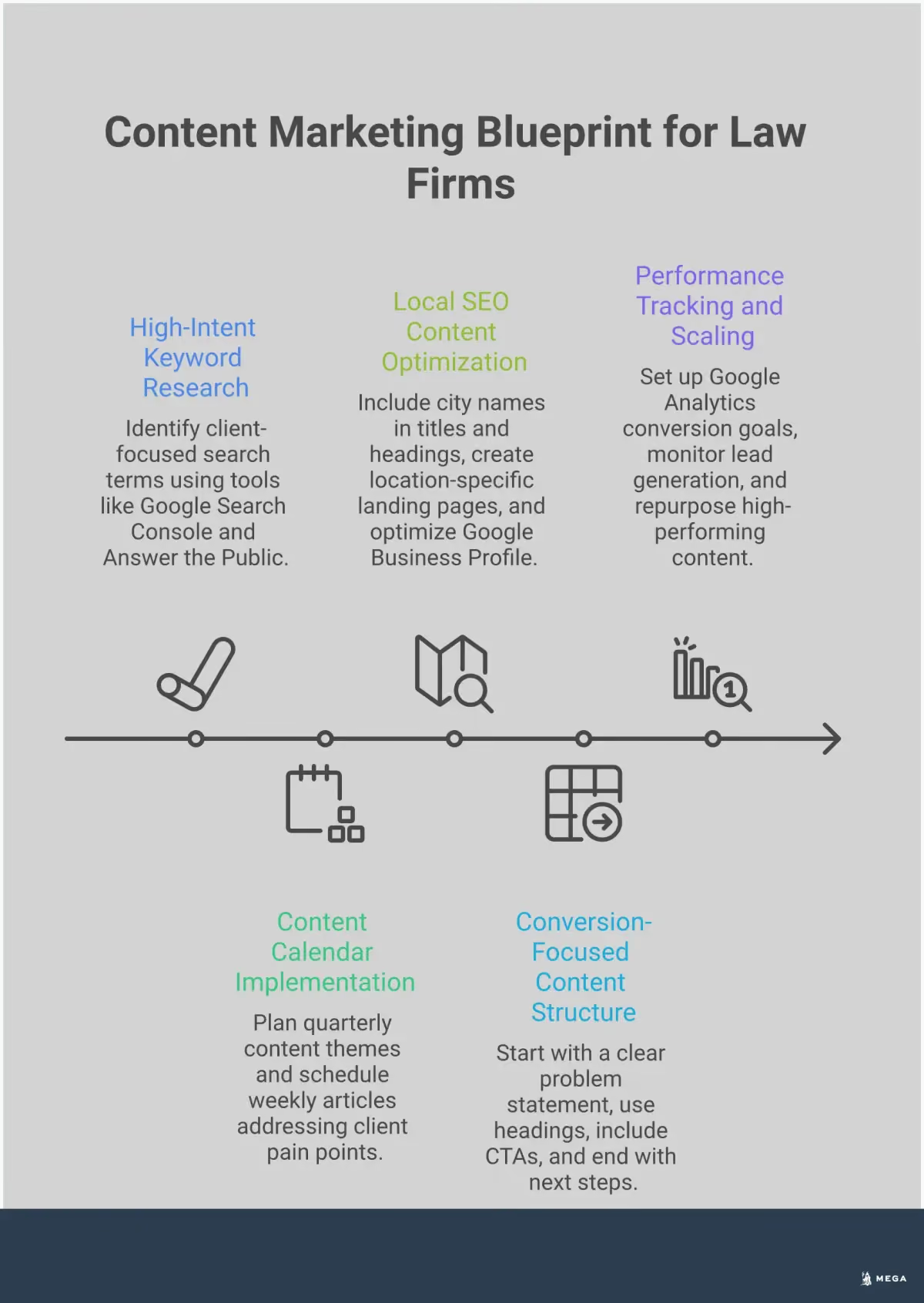
Keywords are the bridge between a potential client's problem and your firm's solution. These are the words and phrases people type into search engines when they need legal help. Integrating the right keywords into your content is essential for improving your chances of appearing in search results. Focus on "high-intent" keywords that signal a person is ready to hire a lawyer, such as "personal injury lawyer near me" or "emergency child custody lawyer." An effective SEO strategy involves researching these terms to ensure your content aligns with what actual clients are searching for, driving qualified leads directly to your website.
Balance Niche vs. Broad Topics
When you're brainstorming content, it's tempting to go after broad subjects like "personal injury law" or "DUI defense." While these topics seem important, they are incredibly competitive. Ranking for such general terms requires a massive amount of effort and a very comprehensive article to even have a chance. A more strategic approach is to focus on niche topics that address a very specific part of a client's problem. For example, instead of a general article on DUIs, you could write about "what to expect at your first DUI arraignment in California." This type of specific content faces less competition and attracts a more targeted audience—people who are likely further along in their legal journey and closer to hiring an attorney. By focusing on these client-centric topics, you can more effectively attract the right clients and establish your firm as an authority in a specific area.
Address the Questions Your Clients Are Asking
One of the most effective ways to attract clients is to become the go-to source for answers in your practice area. Think about the questions you hear most often during initial consultations and turn them into blog posts, articles, or videos. Topics like "What are the steps in a divorce process?" or "Do I need a will?" are things your potential clients are already asking. By creating clear, educational content that answers these questions, you demonstrate your expertise and build credibility. This approach helps demystify the legal process and establishes your firm as a helpful, authoritative resource they can rely on.
Stay Relevant with Legal Industry News
New legislation, recent court rulings, and current events can all create powerful opportunities for timely content. Writing about these developments shows that your firm is knowledgeable and actively engaged in your field. For example, if a new business regulation is passed, an article explaining its impact on local companies can attract business owners looking for guidance. This type of content demonstrates your authority by showcasing your firm's unique perspective on evolving legal landscapes. It positions you not just as a service provider, but as a forward-thinking expert who stays ahead of the curve.
Creating Content for Lawyers: Writing Best Practices
Once you’ve identified your topics, the next step is to create content that resonates with potential clients. Writing for a legal audience requires a specific approach that balances professional expertise with accessibility. Your goal is to make complex legal information understandable and actionable for someone who is likely facing a stressful situation.
Effective legal content doesn't just inform; it builds a connection. By following a few key practices, you can create articles, blog posts, and service pages that not only attract visitors but also establish your firm as a trustworthy authority. These strategies ensure your content is easy to read, discoverable on search engines, and consistently demonstrates your value.
Start with the Conclusion First
When you write for the web, you need to flip the traditional writing structure on its head. Instead of building up to a conclusion, you should start with it. Online readers are busy and often scanning for quick answers. By presenting the most important information—the key takeaway or the direct answer to their question—right at the beginning, you immediately show them they’ve come to the right place. This approach respects your reader's time and encourages them to keep reading for more details. It’s a shift from typical legal writing, but as experts at Lawyerist suggest, it's essential for making your website's content work for you and your potential clients.
Write Clear, Direct Titles
Your title is your content's first impression, and it needs to be crystal clear. A potential client should know exactly what your article is about just by reading the headline. Avoid using complex legal jargon or overly formal language. Instead, use the same words your clients would use. For example, a title like "What Happens After a DUI Arrest in Texas?" is much more effective than "Procedural Steps Following a DWI Charge." Clear titles not only attract the right readers but also perform better in search results because they match what people are actually typing into Google. As one guide for lawyers points out, your title should plainly state what the article covers and who it's for.
Avoid Legal Jargon and Write Clearly
While legal terminology is precise and necessary in the courtroom, it can intimidate potential clients online. Avoid dense jargon and write in clear, straightforward language. Think of your reader as an intelligent person who simply isn't familiar with legal vocabulary. If you must use a technical term, take a moment to explain what it means in simple terms. Using plain language makes your expertise more approachable and shows that you prioritize client understanding. This simple shift helps build trust before a potential client even picks up the phone.
Aim for an 8th-Grade Reading Level
Writing for an 8th-grade reading level isn't about simplifying the law; it's about ensuring your message is received clearly. When potential clients are searching for legal help, they are often under significant stress and may not have the capacity to process complicated sentence structures or advanced vocabulary. Your goal is to remove any barriers to understanding. Use shorter sentences, active voice, and common words whenever possible. This approach makes your content more scannable and easier to digest, which is crucial for readers on mobile devices or those quickly looking for answers. Tools like the Hemingway Editor can help you check the readability of your writing, ensuring your expertise is accessible to everyone who needs it.
Format Your Content for Easy Skimming
People rarely read web pages from top to bottom; they scan for answers. Make your content easy to navigate by breaking it up into digestible sections. Use clear, descriptive headings and subheadings to guide the reader through the text. Incorporate short paragraphs, bulleted lists, and bolded text to highlight key information. A well-structured article respects your reader's time and helps them find the information they need quickly. This improves their experience on your site and encourages them to stay longer, giving them more time to recognize your firm as the right choice for their needs.
Use Storytelling to Connect Emotionally
Facts and statistics can demonstrate your qualifications, but stories are what create a human connection. Legal matters are rarely just about the law; they are about people's lives, families, and futures. By weaving storytelling into your content, you can connect with potential clients on an emotional level. Share anonymized client stories or testimonials that illustrate how your firm has helped others navigate similar challenges. This approach shows empathy and understanding, making your firm feel more relatable and trustworthy. It moves beyond simply stating you care and instead proves it through real-world examples, helping clients feel seen and understood.
Provide Actionable Tools and Resources
Go beyond answering questions by providing your audience with practical tools they can use. Creating downloadable resources like checklists, worksheets, or simple guides offers immediate value and positions your firm as a helpful partner. For example, a family law firm could offer a "Checklist for Preparing for a Child Custody Mediation," while a business lawyer might provide a "Guide to Choosing Your Business Structure." These materials not only help potential clients get organized but also serve as a tangible demonstration of your expertise. Offering these resources can help you build trust and make your legal knowledge feel accessible.
Incorporate Basic On-Page SEO
Your content can only attract clients if they can find it. This is where search engine optimization (SEO) comes in.
Create and Stick to a Publishing Schedule
Consistency is crucial for building an audience and establishing authority. A regular publishing schedule signals to both search engines and potential clients that your firm is active and a reliable source of current information. You don't need to publish new content every day, but creating a realistic calendar—whether it's one blog post a week or two a month—and sticking to it makes a significant difference. Focusing your efforts on your specific niche or practice area will also help you become the go-to resource for that legal specialty, attracting highly qualified clients.
What Tools Can Keep Your Content Topics Fresh?
Creating content that resonates with potential clients means staying on top of legal news, new legislation, and common questions related to your practice areas. This doesn't have to be a time-consuming research project. With the right tools, you can build a system that delivers fresh, relevant topic ideas directly to you, making it easier to consistently produce content that builds trust and demonstrates your expertise.
Monitor Key Legal News Sites
Regularly reading legal news publications is a straightforward way to find timely content topics. When a new law is passed or a significant ruling occurs that affects your clients, you can be the first to explain what it means for them. This positions your firm as a knowledgeable and current resource. By providing high-quality materials that address client questions, you make your expertise approachable and help potential clients feel more confident about engaging your services. Subscribing to publications like the ABA Journal or industry-specific news sites ensures you always have a pulse on what’s happening.
Set Up Google Alerts for Keywords
Google Alerts is a simple yet powerful tool for passive research. You can set up alerts for keywords related to your practice areas, such as "personal injury law updates" or "new business regulations [your state]." Google will then email you a digest of new articles, press releases, and blog posts that match your terms. This saves you from having to manually search for news and trends. It’s an efficient way to monitor conversations happening online, giving you a steady stream of ideas for content that addresses the immediate concerns of your target audience and helps build your online presence.
Follow Industry Leaders on Social Media
Platforms like LinkedIn and X (formerly Twitter) are excellent for real-time industry news and discussions. By following legal associations, industry thought leaders, and other attorneys, you can see what topics are generating conversation. This can spark ideas for your own content, whether it's a detailed blog post, a short video, or a social media update. Using social media for marketing can be an efficient way to share your insights, as the formats often encourage short, easy-to-read posts. It’s a great way to engage with your community and share your expertise where your potential clients are already active.
Leverage Professional Development Resources
Your continuing legal education (CLE) and other professional development courses are more than just a requirement; they are a valuable source of content ideas. As you learn about new legal interpretations or advanced strategies, you can translate that knowledge into articles and videos for your clients. This approach allows you to create high-quality, reliable content that showcases your firm's experience and unique perspective. It reinforces your authority on a subject and provides genuine value to your audience, turning complex legal education into practical advice that helps attract and retain clients.
Maintaining and Maximizing Your Content's Value
Creating high-quality content is a significant investment of your time and expertise. But the work doesn't stop once you hit "publish." To get the most out of your efforts, you need a plan for keeping your content relevant and extending its reach. Laws change, search engine algorithms evolve, and what worked last year might not be as effective today. A "set it and forget it" approach can lead to outdated information on your site, which can damage your credibility. By actively maintaining and repurposing your content, you ensure it continues to serve as a valuable asset for your firm, attracting and converting clients long after it was first created.
Update and Maintain Your Content Regularly
Legal information has a shelf life. New legislation, updated regulations, and landmark court cases can make even the most well-written article obsolete. To maintain your firm's authority and provide accurate information, it's important to review your content at least every six to twelve months. Check for outdated statistics, broken links, and any legal information that no longer applies. Updating your content not only ensures its accuracy but also signals to search engines that your website is a current and reliable resource. This can help you maintain or even improve your search rankings for key topics, ensuring potential clients continue to find your valuable insights.
Automate Content Maintenance with AI
For a busy law firm, manually tracking and updating every piece of content can feel like an impossible task. This is where technology can provide a significant advantage. AI-powered tools can streamline the maintenance process by automatically monitoring your content's performance and identifying opportunities for improvement. For example, a platform like MEGA AI can analyze your existing articles and pinpoint which ones have declining traffic or click-through rates. It can then suggest specific updates, like adding new sections to cover recent legal developments or re-optimizing the content to align with the latest search engine updates. This transforms content maintenance from a reactive chore into a proactive strategy, helping you continuously refine your SEO and maximize the value of your content library without adding hours to your workload.
Repurpose Content for Different Platforms
You don't need to create something new every time you want to publish content. Repurposing allows you to adapt one piece of content for multiple formats and platforms, extending its reach and reinforcing your message. A comprehensive blog post can be transformed into a script for a short educational video, a checklist for an email newsletter, or a series of graphics for social media. This approach respects the time you invested in the original piece while allowing you to connect with different segments of your audience who may prefer video over text or quick social media updates over long-form articles. It’s an efficient way to keep your content calendar full and ensure your expertise is visible across all the channels where potential clients are looking for information.
Ethical Considerations for Legal Content Marketing
While content marketing is a powerful tool for growing your practice, it comes with a unique set of professional responsibilities. As a lawyer, your marketing efforts are subject to rules that don't apply to other industries. Navigating these ethical guidelines is not just about avoiding disciplinary action; it's about building a foundation of trust with the public and your potential clients. An ethical approach to content marketing demonstrates integrity and reinforces your credibility as a legal professional. By adhering to these standards, you ensure your content serves its intended purpose: to educate and help people, not to mislead them. This commitment to ethical communication is essential for building a sustainable and reputable practice.
Follow State Bar Rules for Advertising
Every state has its own set of rules governing lawyer advertising, and your content marketing efforts fall under these regulations. Before you launch a blog or post a video, you must familiarize yourself with your state bar's specific guidelines. While the rules vary, they generally prohibit making false or misleading statements, guaranteeing specific case outcomes, or creating unjustified expectations. For example, you cannot claim to be a "specialist" unless you have met your state's specific certification requirements. Always present your qualifications and experience accurately. Adhering to these rules is a non-negotiable part of ethical marketing that protects both your firm and the clients you aim to serve.
Include Necessary Disclaimers on Your Site
Your website content is meant to provide general information, not specific legal advice tailored to an individual's situation. To avoid any confusion, it's critical to include clear disclaimers throughout your site. These disclaimers should explicitly state that the information provided is for educational purposes only and does not constitute legal advice. It's also important to clarify that reading your content or contacting your firm through a website form does not automatically create an attorney-client relationship. Placing these statements in the footer of your website and on your contact page helps manage visitor expectations and protects your firm from potential misunderstandings or liability down the road.
How to Promote Your Law Firm's Content
Creating valuable content is the first step, but it won't attract clients if no one sees it. Promotion is how you get your articles, videos, and guides in front of the people who need your services. A strong promotional strategy ensures your efforts translate into website traffic, leads, and new cases. It amplifies your message, extends your reach beyond your current network, and reinforces your firm's authority in your practice area. Many lawyers spend significant time crafting the perfect blog post, only to see it get minimal traffic because they skipped the promotion phase.
Think of promotion as building pathways to your content. Each channel you use—from social media to local search—is another route a potential client can take to find you. By strategically distributing your content, you increase the chances of connecting with someone at the exact moment they are searching for legal help. This isn't about shouting into the void; it's about placing your helpful advice where your ideal clients are already looking for answers. The following methods are effective ways to ensure your content gets the visibility it deserves and starts working for your firm.
Share Your Articles Across Social Platforms
Social media is a direct way to connect with your community and share your expertise. For lawyers, platforms like LinkedIn are ideal for establishing professional authority, while others can be effective for reaching local clients. The key is to share content that is genuinely helpful, not just promotional. Post links to your latest blog articles, share short video clips answering common questions, or create simple graphics that explain complex legal concepts.
According to the American Bar Association, social media marketing can be an efficient way to distribute content, especially on platforms that favor concise posts. This allows you to share valuable insights quickly and consistently. Engaging with comments and questions on your posts also helps build relationships and shows that you are an accessible and trusted resource.
Use Your Newsletter to Distribute Content
An email newsletter is a powerful tool for nurturing relationships with potential clients and staying in touch with past ones. Unlike social media, you own your email list, giving you a direct line of communication. Use your newsletter to share your most valuable content, such as recent blog posts, upcoming webinar announcements, or helpful legal guides. This keeps your firm top-of-mind without a hard sell.
By providing high-quality materials that address client questions, you can build trust and make your expertise more approachable. When someone on your list eventually needs legal services, your firm will be the first one they think of. Keep your newsletters simple and focused, highlighting one or two key pieces of content to encourage click-throughs to your website.
Focus on Local SEO to Attract Nearby Clients
For most law firms, clients come from the local community. This makes local search engine optimization (SEO) essential. When someone in your city searches for "personal injury lawyer near me," you want your firm to appear at the top of the results. Creating content that targets local keywords, such as "how to file for divorce in [Your City]," can significantly improve your visibility.
Integrating SEO best practices—like using relevant keywords, creating high-quality content, and building backlinks—improves your chances of appearing in local search results. Make sure your Google Business Profile is complete and up-to-date with your firm's name, address, phone number, and client reviews. This not only helps your ranking but also provides potential clients with the information they need to contact you.
Write Guest Posts for Other Legal Publications
Writing for other reputable websites is an excellent way to build your firm's authority and reach a wider audience. Look for opportunities to contribute guest posts to legal blogs, local business journals, or online publications that your ideal clients read. This places your expertise in front of an established audience and builds valuable backlinks to your website, which is a key factor for SEO.
When you create high-quality, reliable content for other platforms, you demonstrate your authority and showcase your firm's unique perspective. In your author bio, always include a link back to your website. This not only drives referral traffic but also signals to search engines that your site is a credible resource, helping to improve your own rankings over time.
Are You Making These Legal Content Mistakes?
Creating content is a significant step toward growing your law firm, but simply publishing articles isn't enough to guarantee new clients. Certain common mistakes can prevent your content from reaching the right audience or resonating with them when it does. Understanding these pitfalls is the key to creating a strategy that doesn't just fill your blog with posts, but actively generates leads and builds your reputation as a trusted authority.
Many firms invest time and resources into writing, only to see minimal return. They might write about topics that interest other lawyers but fly over the heads of potential clients, or they might publish brilliant articles that no one ever finds. The goal is to work smarter, not just harder. It's about making sure every piece of content serves a clear purpose: to attract, inform, and convert a potential client. By avoiding these frequent missteps, you can ensure your efforts translate into tangible results, like more consultation requests and a stronger online presence. Let's walk through the most common mistakes so you can build a content plan that works.
Mistake 1: Writing for Lawyers, Not Clients
One of the most common hurdles for legal content is the use of complex terminology. While terms like "tort," "injunction," or "estoppel" are second nature to you, they can be intimidating and confusing for a potential client who is already feeling stressed. People searching for legal help want clear answers to their problems, not a law school lecture. Your goal should be to translate your expertise into plain, accessible language. Focus on explaining how the law works and what steps a person needs to take, rather than detailing the nuances of legal theory. Writing with empathy for your reader's situation is key to building trust.
Mistake 2: Ignoring Search Engine Optimization
You can write the most insightful, helpful article on a legal topic, but it won't bring in new clients if no one can find it. This is why neglecting search engine optimization (SEO) is a critical mistake. SEO is the practice of structuring your content so that search engines like Google can understand it and show it to people searching for relevant topics. It starts with understanding the specific phrases and questions your potential clients are typing into the search bar. If you want your content to attract traffic, it has to match what people are actually looking for. Choosing the right keywords is the foundation of a successful content strategy.
Mistake 3: Lacking a Consistent Schedule
Building an online presence is a marathon, not a sprint. Publishing a few articles and then stopping for months sends a negative signal to both search engines and potential clients. Search engines favor websites that are updated regularly with fresh, relevant information. More importantly, a consistent publishing schedule builds an audience and establishes your firm as a reliable resource. We know that finding the time to write is a major challenge for busy lawyers. This is where automation can be a powerful tool, helping you maintain a steady flow of content without sacrificing billable hours, ensuring your marketing efforts continue to build momentum over time.
Mistake 4: Not Solving a Real Problem
It's easy to write about what you, as a legal expert, think your audience should know. However, effective content focuses on what your audience wants to know right now. A person facing a legal issue isn't searching for abstract legal principles; they are searching for answers to their immediate and specific problems. Your content should directly address their pain points, fears, and questions. Before you write, ask yourself: What problem is my ideal client trying to solve with their search? By creating content that provides direct, practical value, you position your firm as a helpful guide and the logical choice for when they're ready to hire an attorney.
Mistake 5: Focusing on Legal News Instead of Evergreen Problems
It’s tempting to write about the latest court ruling or a newly passed regulation. This kind of content shows you’re on top of your field. However, the vast majority of your potential clients aren't tracking legal news. They are looking for answers to a personal, ongoing problem. While an article on a recent judgment might get a short-term spike in traffic, its relevance fades quickly. A better long-term strategy is to focus on "evergreen" topics that address the timeless questions your clients have. An article titled "How to Prepare for a Child Custody Hearing" will serve clients for years, unlike one about a specific ruling that becomes old news in a few months. You can always update existing articles to reflect legal changes, ensuring your foundational content remains accurate and continues to attract qualified leads over time.
Mistake 6: Using Time-Based Language That Becomes Outdated
Closely related to focusing on news is the mistake of using language that dates your content. Phrases like "recently," "this year," or "the new law passed in 2023" can make your articles feel obsolete just a short time after publishing. A potential client reading an article in 2025 that references "last year" might question if the information is still valid, which can undermine their trust in your firm. Instead, write in a timeless voice. Instead of saying, "A new law was recently passed," simply state, "The current law requires..." This small shift in phrasing keeps your content relevant for longer and makes it much easier to maintain. You only need to update the specific legal details when they change, not rewrite sentences that have become confusing or inaccurate due to the passage of time.
How to Know if Your Content Is Working
Creating content is just the first step. To turn your efforts into a reliable source of new clients, you need a system to measure what’s working and a plan to scale your success. Tracking performance helps you understand the return on your investment and make data-driven decisions about where to focus your time and resources. Scaling allows you to grow your online presence without overwhelming your schedule. By focusing on key metrics and sustainable workflows, you can build a content engine that consistently attracts and converts your ideal clients.
Keep an Eye on Traffic and Keyword Rankings
The first sign that your content is working is an increase in website visitors. By integrating SEO best practices, your firm can improve its chances of appearing in search results when potential clients are looking for legal help. Use free tools like Google Search Console to monitor which keywords your site ranks for and how much traffic they bring in. Pay close attention to high-intent keywords that signal a user is ready to hire a lawyer, such as "family law attorney near me." Tracking your rankings for these terms shows whether your content is reaching the right audience at the right time.
Measure What Matters: Leads and New Clients
While traffic is a good indicator, the ultimate goal is to generate leads. A conversion is any action a visitor takes that moves them closer to becoming a client, like filling out a contact form, calling your office, or scheduling a consultation. You can set up conversion goals in Google Analytics to track these actions. By providing high-quality content that answers client questions, you build trust and make your expertise approachable. This confidence encourages visitors to take the next step. Monitoring conversions tells you which articles and topics are most effective at turning readers into potential clients for your firm.
Build a Content Calendar You Can Stick With
Consistency is key to a successful content strategy, but it’s often the hardest part for busy lawyers. A content calendar is a simple tool that helps you plan and organize your topics in advance. Instead of trying to come up with an idea each week, you can map out a month or even a quarter’s worth of content at once. This ensures you cover a strategic mix of topics that address different client needs and practice areas. A well-planned content calendar prevents publishing gaps and turns content creation from a reactive chore into a proactive growth strategy.
Use AI Tools to Streamline Your Process
For law firms with limited time and resources, scaling content can feel impossible. This is where AI can be a powerful ally. AI-powered platforms can handle the entire content lifecycle, from identifying high-intent keywords to generating on-brand articles and optimizing them for search engines. At MEGA AI, our SEO Agent acts as your dedicated content strategist, autonomously planning and executing tasks to hit your growth goals. It can even update existing content to improve its performance over time, ensuring your investment continues to pay off. This allows you to scale your online presence efficiently while you focus on serving your clients.
Automate Keyword Research and Content Generation
Keyword research is the foundation of any successful content strategy, but it can be a tedious and time-consuming process. This is where automation becomes a game-changer for busy law firms. Instead of manually guessing what potential clients are searching for, you can use AI-powered platforms to do the heavy lifting. These tools analyze vast amounts of search data to identify the high-intent keywords and phrases that signal a person is actively looking for legal help. This ensures that the content you create is built on a solid foundation of what your ideal clients are actually looking for, connecting their problems directly to your firm's solutions.
Modern AI tools go beyond just identifying keywords. Platforms like MEGA AI can automate the entire content lifecycle, from discovering high-value topics to generating on-brand articles optimized for search engines. This allows you to scale your content production without sacrificing quality or your billable hours. The system can draft an article based on a target keyword, and you or your team can then review and refine it, adding your unique expertise and voice. This streamlined process ensures your firm can maintain a consistent publishing schedule, establishing your authority and attracting a steady stream of qualified leads while you focus on practicing law.
Simplify Content Optimization and Updates
Your content library is a valuable asset, but its value can diminish over time if it isn't maintained. Laws change, new precedents are set, and search engine algorithms evolve. Keeping every article up-to-date is a significant challenge for any law firm. This is where AI-driven content optimization provides a sustainable solution. Instead of manually reviewing old posts, you can use tools that automatically monitor performance and identify opportunities for improvement. This ensures your content remains accurate, relevant, and continues to rank well in search results, protecting your long-term investment.
Imagine having a system that not only creates content but also works to improve it over time. Specialized AI agents can track metrics like click-through rates and identify articles that are underperforming. They can then suggest or even automatically implement changes, such as updating titles, adding new sections to cover recent legal developments, or re-optimizing the text for better search visibility. Tools like MEGA AI's Maintenance Agent can simplify content optimization by turning your existing articles into evergreen assets that consistently attract new clients, allowing you to maximize the return on your content without adding to your workload.