
How do you prove your expertise in a field filled with qualified professionals? You demonstrate it. Consistently and publicly. Your content is the most powerful tool for establishing yourself as a trusted authority on financial matters. It works 24/7 to answer questions, build credibility, and show potential clients why you are the right choice. But let's be honest—creating content for financial planners is a huge commitment. It requires a smart strategy to be sustainable. This guide offers a practical framework to scale your content creation, helping you produce high-value content efficiently while maintaining your professional reputation.
Key Takeaways
- Establish Trust with Educational Content: Position yourself as a credible expert by creating content that answers your ideal clients' specific financial questions. Focus on using clear, jargon-free language to make complex topics accessible and build confidence.
- Create a Structured and Repeatable Process: Define your target audience with client personas before you start writing. Use a realistic editorial calendar to ensure your content is consistent, relevant, and compliant with industry regulations.
- Work Smarter to Scale Your Efforts: Make content creation sustainable by repurposing a single piece of content for multiple platforms. Use templates to maintain quality and leverage automation tools to handle time-consuming tasks like research and distribution.
How Can Content Marketing Grow Your Financial Practice?
As a financial planner, your entire business is built on trust. Clients come to you for guidance on some of the most important decisions of their lives. Before they ever pick up the phone, they’re looking for signals that you are a credible, knowledgeable expert. This is where content creation becomes a critical part of your business strategy. It’s how you build that foundational trust with potential clients before you’ve even met them.
Consistently publishing high-quality content helps you establish yourself as a trusted authority in a crowded field. When you write an article that clarifies a complex topic like retirement planning or estate taxes, you’re not just sharing information; you’re demonstrating your expertise. This content works for you around the clock, answering questions and showing potential clients that you have the knowledge to handle their financial challenges. It’s a powerful way to build confidence and show you’re an expert.
Beyond building authority, content is essential for your online visibility. When people need financial advice, their first stop is often a search engine. Creating content that answers their specific questions helps your website show up higher in search results, making it easier for qualified leads to find you. A strong content strategy is the engine behind effective search engine optimization (SEO), ensuring you connect with clients who are actively looking for your services. For local discovery tactics, see the local SEO guide for financial advisors.
Finally, content allows you to educate and nurture both prospective and current clients. Many investors want their financial advisors to teach them about money, and providing educational guides, articles, or videos meets this need directly. It strengthens your existing client relationships and provides a clear reason for potential clients to stay engaged with your brand. By offering valuable, personalized information, you can stand out from competitors and build a loyal following that sees you as more than just an advisor, but as a true financial partner.
Meet Modern Investor Expectations
The relationship between a financial planner and their client has evolved. Today’s investors are looking for more than just a portfolio manager; they want a partner who can provide guidance, education, and personalized support. Your content strategy is the most direct way to show you understand and can meet these new expectations. By focusing on what modern investors truly value, you can build stronger relationships and attract clients who are a perfect fit for your practice. This shift requires you to think like a publisher, consistently delivering value that goes beyond the balance sheet.
Provide Valuable Financial Education
More than half of investors—53% to be exact—want their advisors to provide financial education. This means your role extends beyond management to that of a teacher. Your content should aim to demystify complex financial topics, answering the real-world questions your clients have about saving for retirement, understanding market trends, or planning their estate. By creating clear, jargon-free articles, guides, and videos, you empower them to make informed decisions. This educational approach builds deep, lasting trust and positions you as an indispensable resource in their financial lives, turning passive clients into engaged partners.
Deliver Personalized Content
A one-size-fits-all approach to content no longer connects with clients. In fact, 42% of investors are looking for more personalized content that speaks directly to their unique circumstances. Generic advice gets lost in the noise; content tailored to specific client personas—like small business owners, pre-retirees, or young families—shows that you understand their specific challenges and goals. You can achieve this by segmenting your email list to deliver relevant articles or creating dedicated content series for different life stages. This demonstrates a higher level of care and proves you’re invested in their individual success, not just their portfolio.
Build a Strong Digital and Social Media Presence
Your digital presence is your new storefront, especially since 79% of younger investors use social media to find financial advice. But simply having a profile isn’t enough. Advisors who successfully attract clients from social media are active on their platforms about 35 times each month. This level of consistency shows you are engaged, accessible, and a current authority in your field. Maintaining this activity is a significant challenge for any small business. This is where having a smart system becomes essential. Using templates and automation for content creation and distribution can help you stay active and relevant online without sacrificing valuable time with your clients.
What Are the Best Content Formats for Financial Planners?
Choosing the right content format is about meeting your clients where they are. Some people prefer to read detailed articles, while others would rather watch a short video or scan a visual guide. A strong content strategy uses a mix of formats to build trust and demonstrate expertise across different platforms and for different learning styles. Think of it as building a toolkit; each format has a specific job. Blog posts are excellent for attracting new clients through search engines, while a monthly newsletter helps you maintain relationships with the clients you already have.
The most effective approach is to create a primary piece of content, like an in-depth article or a webinar, and then repurpose it into other formats. A single webinar can become several short video clips for social media, a detailed blog post, a downloadable checklist, and a series of key takeaways for your newsletter. This method allows you to reach a wider audience without starting from scratch each time. By diversifying your formats, you create more opportunities for potential clients to discover your practice and for current clients to feel connected and informed. The goal is to provide value in the way your audience wants to receive it.
Build Authority with Educational Blog Posts
Written content is the foundation of a strong digital presence for any financial planner. Detailed blog posts and articles give you the space to break down complex financial topics, from retirement savings strategies to estate planning essentials. This type of content is highly effective for search engine optimization, helping potential clients find you when they search for answers to their financial questions. According to the Financial Services Institute, creating good content is essential because it "helps you show you're an expert and makes your brand stronger." By consistently publishing insightful articles, you build credibility and establish your practice as a trusted resource in the financial industry.
Engage Clients with Videos and Webinars
Video content adds a personal touch that text alone cannot replicate. It allows prospective clients to see and hear you, which helps build familiarity and trust before they ever step into your office. As BlackRock notes, "videos are especially good for teaching," making them perfect for explaining market trends with charts or walking through a financial planning scenario. You can create short, informative videos for social media, host Q&A sessions, or produce in-depth webinars on topics like "Navigating Your 401(k) Options." Webinars are particularly useful for generating leads, as they allow you to engage directly with an interested audience and showcase your expertise in a live, interactive setting.
Simplify Complex Topics with Infographics
Financial topics often involve numbers and data that can be difficult to grasp. Infographics and other visuals turn complex information into simple, shareable graphics. Imagine illustrating the power of compound interest with a clear chart or creating a visual timeline for saving for a child's education. These formats are easy to digest and are highly shareable on platforms like LinkedIn and Twitter, extending the reach of your content. The Financial Services Institute suggests using a variety of formats, including "pictures with info (infographics)," to engage your audience. You can embed these visuals in your blog posts or share them as standalone pieces to capture attention and explain key concepts quickly.
Nurture Leads with Newsletters and Guides
While blogs and videos are great for attracting a new audience, email is one of the best tools for nurturing relationships. A regular email newsletter keeps you connected with both current and prospective clients. As Broadridge Advisor Solutions points out, you should "regularly create new content about what's happening in the markets and economy" to give people a reason to stay engaged. Your newsletter can share market commentary, links to your latest articles, and firm updates. In addition, offering in-depth client guides—like a downloadable checklist for new parents or a guide to understanding Social Security—is an effective way to capture contact information from potential clients and provide immediate value.
Reach Listeners with Podcasts
Podcasts offer a unique way to connect with clients by fitting into the parts of their day where visual content can't go—like their morning commute or a workout. This format allows you to build a personal connection through your voice, creating a sense of familiarity and trust before a potential client even meets you. You can repurpose topics from your blog posts or answer common client questions in a conversational format. Creating your own audio content is an effective way to share your expertise and let your target market know you understand their concerns, especially with younger investors who often prefer accessible, on-the-go content for financial education.
How to Identify Your Target Audience
Before you write a single word, you need to know who you’re writing for. Generic financial advice rarely connects with potential clients because it fails to address their specific circumstances. The goal is to create content that makes your ideal client feel seen and understood. By clearly defining your audience, you can craft messages that resonate deeply, build trust, and position you as the go-to expert for their unique financial journey. This process breaks down into three simple steps: segmenting your clients, understanding their problems, and creating detailed personas.
Group Your Audience by Life Stage and Financial Goals
Financial needs evolve dramatically over a person’s lifetime. A 25-year-old saving for a down payment has different goals and questions than a 55-year-old planning for retirement. Instead of trying to speak to everyone, segment your audience into distinct groups based on life stage, career path, or financial objectives. You might focus on young families navigating childcare costs and college savings, tech professionals managing stock options, or small business owners looking to create a succession plan. When you tailor your content to a specific segment, your advice becomes more relevant, actionable, and valuable, helping you attract the clients you most want to serve.
Pinpoint Your Clients' Biggest Financial Concerns
Your content will only be effective if it solves a real problem for your audience. Think about the most common questions and anxieties your clients bring to you. Many people are looking for more than just investment management; they want education and guidance to feel more confident about their financial decisions. Your content should directly address these customer pain points. Are they worried about paying off student debt? Confused by market volatility? Overwhelmed by tax planning? By creating content that answers these pressing questions and eases their anxieties, you demonstrate empathy and establish yourself as a trusted resource long before they ever book a consultation.
Develop Client Personas for Targeted Content
A client persona is a detailed profile of a fictional person who represents your ideal client. This exercise turns a vague audience segment into a concrete individual you can write for directly. Give your persona a name, age, job title, family status, and specific financial goals and challenges. For example, you might create "Creative Carla," a 38-year-old freelance graphic designer who needs help understanding self-employment taxes and saving for retirement without a 401(k). When you create a client persona, you can ensure every blog post, newsletter, and social media update speaks directly to their needs, making your marketing feel more personal and effective.
How to Generate Content Ideas for Your Practice
The challenge isn't just creating content, but creating the right content. The best ideas aren't pulled from thin air; they come from listening to the real-world concerns of your audience. By tapping into the questions your clients are already asking and the conversations happening online, you can build a content strategy that directly addresses their needs. This approach ensures your articles and videos are not only relevant but also highly effective at attracting your ideal clients. The following methods will help you uncover a steady stream of topics that matter.
Listen to Your Current Clients
Your clients are your best source of inspiration. Every question they ask during a meeting or in an email is a potential blog post. If one person is wondering about the tax implications of a Roth conversion, it's a safe bet that many others are searching for the same answer online. Keep a simple document where you log every question you receive. This practice turns your daily interactions into a powerful content engine, allowing you to create resources that speak directly to the challenges of the people you want to serve. As financial advisor Allan Ward notes, paying attention to client questions is the most effective way to find content ideas that resonate.
Analyze Industry News and Publications
Staying informed about market trends and financial news is part of your job, and it can also fuel your content strategy. Read major financial publications, industry journals, and popular personal finance books. But don't just summarize what you read. Your value lies in your unique perspective. When a new piece of legislation passes or the market makes a sudden move, your clients and prospects want to know what it means for them. Write an article sharing your professional opinion, whether you agree or disagree with the common narrative. This demonstrates your expertise and helps your audience make sense of a complex financial world.
Monitor Online Communities and Forums
To understand what people are truly worried about, go where they ask their questions anonymously. Online forums like Reddit's r/personalfinance or industry-specific Facebook groups are filled with candid discussions about financial challenges. Spend some time browsing these communities to identify recurring questions or common misconceptions that align with your expertise. If you notice many people asking about how to balance student loan payments with retirement savings, that's a clear signal for a valuable blog post. This method allows you to tap into the public conversation and create content that answers the questions people are actively seeking help for.
What Are the Biggest Content Challenges for Financial Planners?
Creating content as a financial planner involves more than just coming up with good ideas. You're operating in a highly regulated industry where trust is everything, and your time is dedicated to serving clients, not just marketing. Many advisors feel stuck, knowing they need to create content to grow their practice but unsure how to manage the specific hurdles involved.
The main challenges usually fall into three categories: navigating the complex web of compliance rules, finding the time and resources to be consistent, and producing high-quality content that actually builds authority and attracts the right clients. Addressing these challenges head-on is the first step toward building a content strategy that works for you, not against you.
How to Handle Compliance and Legal Reviews
For financial advisors, every piece of public content must meet strict legal standards. Many advisors hesitate to create content because they worry about accidentally breaking FINRA or SEC rules. This concern is valid, as non-compliant content can lead to serious penalties. The approval process can feel slow and restrictive, making it difficult to be timely or creative. Establishing a clear, repeatable review process is essential. Whether you work with a compliance officer or a third-party service, having a system in place ensures your content is both effective and compliant, giving you the confidence to publish consistently without putting your practice at risk.
Working with Limited Time and Resources
Your primary job is advising clients, not being a full-time writer or video producer. Finding the hours to brainstorm, create, and distribute content can feel impossible. In fact, one study found that 39% of advisors don’t create content simply because they lack the time. This is a significant barrier, especially for solo practitioners or small firms without a dedicated marketing team. Creating fresh, useful, and compliant content requires a real commitment. To succeed, you have to be strategic about managing your time, whether that means blocking out specific "marketing hours" each week, batching content creation, or exploring tools that can streamline the process.
Understanding Marketing Costs and Investment
Marketing is a direct investment in your practice's growth, and it's helpful to have a benchmark for what that looks like. According to the Financial Services Institute, advisors who are focused on growing their business spend four times more on marketing than their peers, with an average annual spend of $15,908. This commitment of resources is what fuels a strong content strategy, which in turn drives effective search engine optimization (SEO). By consistently creating valuable content, you ensure your practice appears in front of potential clients who are actively searching for the solutions you provide. Viewing this as a strategic investment rather than a simple cost is key to building a sustainable system for attracting qualified leads.
Keeping Your Content Fresh and Relevant
In the financial world, content is a direct reflection of your expertise. Its purpose is to build trust and establish you as a credible authority. This means you can’t settle for generic or superficial articles. The pressure to consistently produce high-quality, relevant, and insightful content is immense. Your audience is looking for clear answers to complex financial questions, and your content must deliver that value. It needs to be more than just accurate; it has to be engaging, easy to understand, and tailored to the specific needs and goals of your ideal clients. This requires deep knowledge not only of finance but also of your audience’s biggest concerns.
Overcoming the Hurdle of Getting Started
The hardest part of content creation is often just starting. The combination of limited time, compliance worries, and the pressure to produce expert-level material can be paralyzing. But you don't need a perfect, year-long content plan to begin. The best way to find content ideas is to pay attention to the questions your current clients ask you. If one client is asking about Roth IRA conversions, others are likely searching for the same information online. This approach ensures your content will solve a real problem for your audience, making it instantly valuable. Your daily conversations are a goldmine of relevant topics that address real-world concerns, shifting your focus from brainstorming in a vacuum to simply documenting the answers you already provide every day.
How to Balance Client Work and Content Creation
As a financial planner, your primary focus is on your clients, not on becoming a full-time publisher. The key to a successful content strategy is finding a sustainable rhythm that fits within your existing schedule. Juggling client meetings, portfolio management, and market analysis leaves little room for writing, editing, and promotion.
However, creating content doesn't have to be another full-time job. By implementing a few structured processes, you can build a content engine that works for you without causing burnout. The goal is to work smarter, not harder, by being strategic with your time and leveraging the right tools to handle the repetitive tasks. This approach allows you to maintain a consistent presence and connect with potential clients while keeping your current clients as the top priority.
Create a Content Schedule You Can Stick To
Consistency is more important than frequency. A common mistake is setting an ambitious goal, like publishing a new blog post every week, only to fall behind after the first month. Instead, start with a schedule you know you can stick to, even if it’s just one high-quality article or video per month. Once you establish a routine, you can gradually increase the frequency.
Use a simple calendar to plan your content topics a few months in advance. This prevents the last-minute scramble for ideas and allows you to align your content with seasonal financial topics, such as tax season or open enrollment. A clear schedule removes the daily decision-making and turns content creation into a predictable part of your workflow.
Work Smarter by Batching Your Content
Instead of trying to squeeze in writing between client calls, set aside a dedicated block of time for content creation. This technique, known as batching, helps you focus without interruptions and get into a creative flow. For example, you could dedicate the first Friday afternoon of every month entirely to content.
During your batching session, you can focus on a single type of task. One session might be for brainstorming and outlining four blog posts. The next session could be dedicated to writing the first drafts for all four. This approach is far more efficient than starting from scratch every time you need to publish something new. It streamlines the process and reduces the mental effort required to switch between different types of work.
Should You Outsource or Create Content In-House?
You don’t have to do everything yourself. For many financial planners, time is the most limited resource. Research shows that a lack of time is a major barrier for advisors who want to create content. You have to weigh the cost of your own time against the financial cost of hiring help. If writing a single blog post takes you four hours, that’s four hours you could have spent meeting with prospective clients.
Outsourcing can mean hiring a freelance writer, a marketing agency, or using a service that handles the entire process. An AI-powered growth agent, for instance, can autonomously plan, write, and optimize content for you. This frees you up to focus on what you do best: providing expert financial advice to your clients. Schedule a demo to discuss the workflow.
Streamline Your Workflow with Automation Tools
Automation can handle many of the repetitive tasks associated with content creation and distribution. You can use tools to schedule social media posts in advance, automatically share your new blog posts to your email list, and find relevant topics to write about. This reduces your administrative burden and ensures your content reaches your audience consistently.
Modern platforms take this a step further by using AI to manage the entire content lifecycle. These systems can research keywords, generate drafts, and even update existing articles to keep them relevant. By letting technology handle the operational side of content marketing, you can scale your efforts efficiently and ensure your strategy is always working to attract new clients.
What Makes Financial Content Engaging?
Engaging content does more than just share information; it builds trust and shows your expertise in a way that connects with clients. It’s not just about what you say, but how you say it. By focusing on clarity, human connection, and practical advice, you can create content that attracts new clients and strengthens relationships with your current ones. The goal is to move beyond being an information source and become a valuable resource that solves real problems for your audience, guiding them toward their financial goals.
Swap Financial Jargon for Simple Language
Your primary goal is to empower clients, not to showcase your financial vocabulary. Financial topics are often complex, and industry jargon can make readers feel confused or left out. Instead, focus on breaking down concepts into simple, clear terms. Think of yourself as a translator who makes the world of finance accessible to everyone. When you write in plain language, you demonstrate true expertise by making difficult subjects easy to understand. This approach builds confidence and trust, encouraging potential clients to see you as a helpful guide rather than an unapproachable expert.
Connect with Clients Through Storytelling
Facts and figures can explain financial strategies, but stories make them memorable. People connect with narratives on a much deeper level than they do with data points. You can use anonymous client scenarios or hypothetical examples to illustrate the real-world impact of financial planning. For instance, instead of just listing the benefits of a 529 plan, tell a short story about a fictional family saving for their child’s education. This storytelling approach makes abstract advice feel personal and relevant, helping readers see themselves in the situations you describe and making your guidance more powerful.
Back Up Your Advice with Visuals and Data
Not everyone absorbs information best by reading long blocks of text. Incorporating visuals like charts, infographics, and short videos can make your content more dynamic and easier to digest. A simple chart can illustrate market trends more effectively than a dense paragraph, while an infographic can serve as a quick, shareable guide to a financial concept. Using a mix of formats caters to different learning preferences and helps your content stand out. Visuals also make your articles more likely to be shared on social media, which extends the reach of your expertise to a wider audience.
Give Your Readers Actionable Next Steps
Every piece of content you create should leave the reader with a clear understanding of what to do next. After explaining a concept, provide a simple checklist, a few questions for self-reflection, or a concrete next step they can take. This transforms your content from a passive piece of information into an active tool for improvement. Providing actionable takeaways makes your advice feel practical and valuable, showing clients that you are focused on helping them make real progress toward their financial goals. It’s the difference between saying "you should save more" and offering three specific strategies to find an extra $100 to save each month.
How to Scale Content Creation Without Losing Quality
As your financial planning practice grows, finding the time to create consistent, high-quality content can feel like a major challenge. The key isn’t just to produce more, but to do so efficiently without sacrificing the trust and authority you’ve worked hard to build. Scaling your content efforts requires a smart system that allows you to work strategically. By planning ahead, maximizing the value of each piece you create, and using the right tools, you can expand your reach and attract more clients without burning out. These strategies will help you build a sustainable content engine for your business.
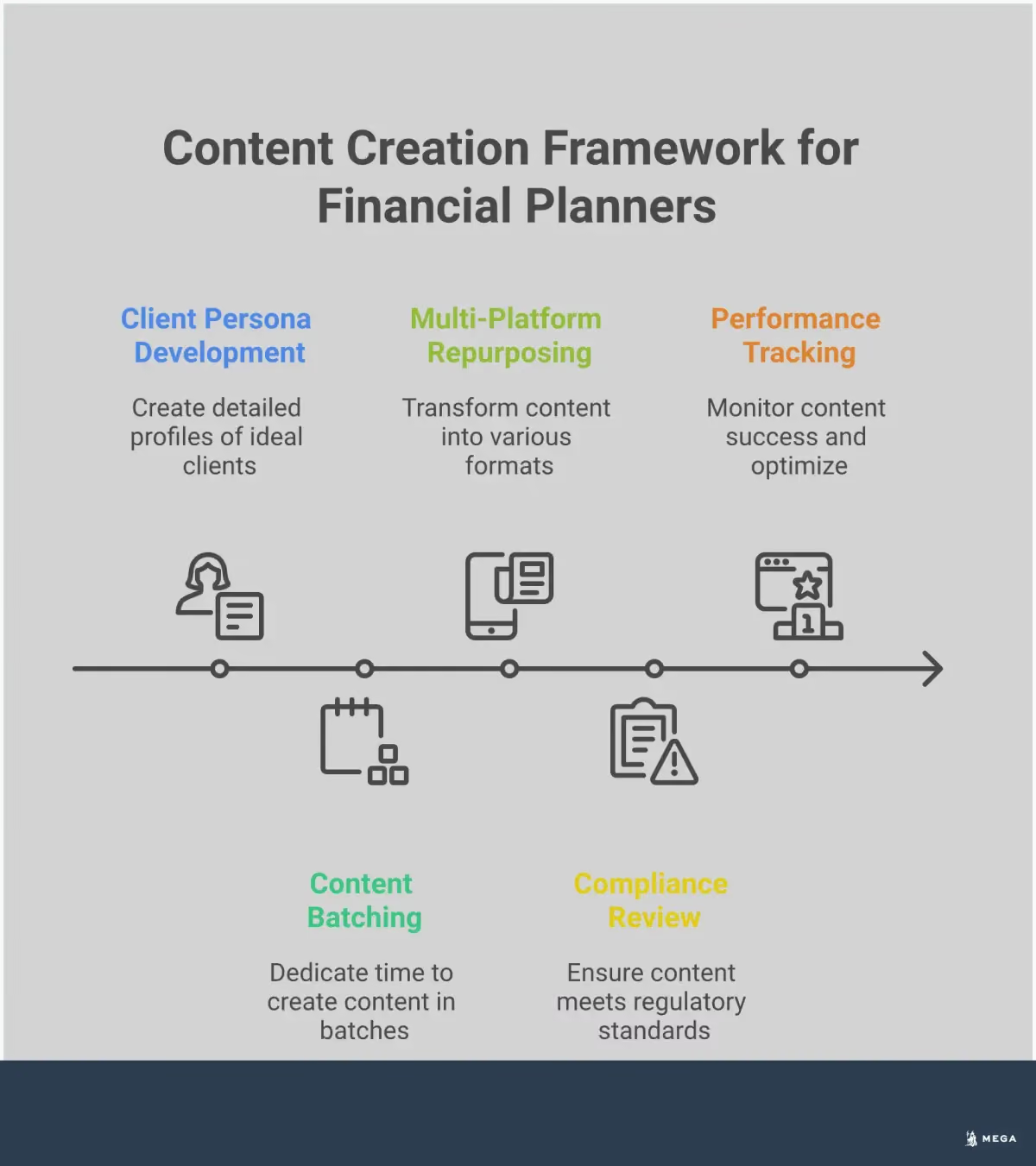
Stay Organized with an Editorial Calendar
An editorial calendar is your roadmap for content creation. It’s a simple tool, often a spreadsheet or calendar app, where you plan what topics you’ll cover and when you’ll publish them. This approach helps you move from reactive, last-minute posts to a proactive strategy. You can align your content with key financial seasons, like tax deadlines or open enrollment periods, ensuring your advice is always timely. A well-organized calendar also helps you maintain a consistent publishing schedule, which is important for keeping your audience engaged. Planning ahead gives you the space to develop your topics thoughtfully, ensuring every article, video, or post serves your business goals.
Get More Mileage by Repurposing Your Content
You don’t need to create something entirely new for every platform. Repurposing content is an efficient way to get more mileage out of your best ideas. A single, in-depth blog post can be the foundation for a wealth of other materials. For example, you can break down the key takeaways into a series of social media posts, create a visual infographic to share on LinkedIn, or expand on the topic in a client webinar. This method not only saves you significant time but also helps reinforce your message across different channels, reaching clients and prospects wherever they prefer to get their information. It’s about working smarter to maximize the impact of your efforts.
How AI Tools Can Help with Content Creation
Modern AI tools can act as a powerful assistant in your content creation process. They can help you brainstorm topic ideas, conduct research, and even generate initial drafts, which you can then refine with your unique expertise and insights. For financial planners, this means you can spend less time on the foundational work of writing and more time ensuring the information is accurate, compliant, and tailored to your clients' needs. An AI-powered SEO agent can also help optimize your articles to rank higher in search results, connecting you with people actively looking for financial guidance. Think of AI as a partner that handles the heavy lifting, freeing you up to focus on strategy.
Using AI for Keyword Research and Content Generation
Keyword research can feel like searching for a needle in a haystack, but AI tools change the game. Instead of you manually sorting through spreadsheets, an AI agent can analyze search trends to pinpoint the exact questions your ideal clients are asking online. This allows you to create content that directly addresses their concerns, whether it's about "retirement planning for small business owners" or "how to manage stock options." Once you have these topics, AI can generate a detailed outline or a complete first draft, providing a structured starting point for your article. This frees you from the blank page, allowing you to focus on adding your unique expertise and client stories. Platforms like MEGA AI can automate this entire SEO workflow, from identifying valuable keywords to generating optimized content, so you can scale your efforts without sacrificing quality.
Use Templates to Maintain Brand Consistency
Templates are essential for scaling content creation while maintaining a consistent and professional brand image. By developing a standard format for your blog posts, email newsletters, or social media updates, you can streamline the entire process. A template provides a clear structure, so you don't have to start from scratch every time. This not only speeds up writing but also ensures that every piece of content reflects your brand’s tone and style. For recurring content, like a monthly market summary or a quarterly planning checklist, templates are especially effective. They help you produce useful and compliant content efficiently, establishing a reliable and recognizable voice for your practice.
What Tools and Platforms Should Financial Planners Use?
Using the right technology can make a significant difference in your content strategy. The goal isn't to add more to your plate but to find tools that streamline your process, from idea generation to performance analysis. A well-chosen tech stack helps you create high-quality content consistently while saving you valuable time. These platforms handle the heavy lifting, so you can focus on sharing your expertise and connecting with clients.
Platforms for Managing and Scheduling Content
A good Content Management System (CMS) is the foundation of your digital presence. Platforms like WordPress give you a home for your blog and full control over your website's content. Once you've created your content, scheduling tools are essential for maintaining a consistent presence without being tied to your desk. Industry-specific platforms like AdvisorStream offer libraries of pre-approved content you can schedule, while general tools like Buffer or Hootsuite let you plan your social media posts across different networks weeks in advance. This allows you to dedicate a single block of time to content distribution for the entire month.
Tools for AI-Assisted Writing and Research
Researching and writing are often the most time-intensive parts of content creation. AI-powered tools can dramatically shorten this process. These platforms can help you perform automated keyword research to find topics your potential clients are searching for. Platforms like MEGA AI go a step further by generating expert-level, research-driven articles tailored to your audience. This ensures your content is not only well-written and informative but also optimized to rank on search engines. By leveraging AI, you can produce authoritative content at scale, establishing your expertise while freeing up time to serve your clients.
Software for Creating Professional Visuals
Financial topics can be complex, and visuals make them much easier to understand. You don’t need to be a graphic designer to create compelling images, charts, and infographics. User-friendly tools like Canva and Visme offer templates that you can customize to fit your brand. These platforms simplify the process of turning dense data into clean, shareable visuals for your blog or social media. For high-quality photography, sites like Unsplash provide free images that can help you tell personal stories and show the human side of your practice, making your brand more relatable.
Systems for Tracking Your Content's Performance
Creating content is just the first step; you also need to know if it's working. Analytics tools show you what resonates with your audience so you can refine your strategy over time. Google Analytics is a must-have for tracking website traffic, understanding visitor behavior, and seeing which articles lead to new client inquiries. Most social media and email marketing platforms also have built-in analytics that provide valuable insights into engagement rates and audience demographics. By regularly reviewing this data, you can make informed decisions about what kind of content to create next, ensuring your efforts are always aligned with your business goals.
How to Distribute Your Content for Maximum Reach
Creating valuable content is the first step. The next is making sure it reaches the right people. A solid distribution strategy ensures your articles, videos, and guides don't just sit on your website but actively work to attract new clients and build your reputation. Spreading your content across different channels helps you meet potential clients where they are, whether they're searching on Google, scrolling through social media, or reading their email. Each channel offers a unique way to connect with your audience and guide them back to your practice.
Start with Your Own Website and Blog
Your website is the central hub for all your content. It’s the one online space you completely own and control. When potential clients search for financial advice, a well-maintained blog can position you as a trusted authority. Each article you publish is an opportunity to answer a specific question, demonstrate your expertise, and build credibility. Make sure your site is easy to use and that your best content is simple to find. A strong content marketing strategy for your blog not only attracts visitors but also helps convert them into qualified leads for your firm. This is your digital storefront, so keep it stocked with helpful, high-quality information.
Use Social Media to Amplify Your Message
Social media is an effective way to connect with new audiences, especially younger generations. Many Gen Z and Millennial clients look for financial advice on platforms like Instagram, TikTok, and LinkedIn. The key is consistency. For example, advisors who successfully get clients from social media are active on their platforms about 35 times per month. You don’t need to be everywhere. Instead, choose one or two networks where your ideal clients spend their time. Share snippets from your blog posts, create short videos explaining complex topics, and engage with your followers to build a community around your brand.
Choose the Right Platforms for Your Audience
You don’t need to be active on every social media platform. Instead, focus your energy where your ideal clients spend their time. If you serve business owners or corporate executives, LinkedIn is likely your best bet. If your clients are nearing retirement, a presence on Facebook might be more effective. For financial advisors targeting younger investors, being active on social media is an expectation. Most Gen Z and Millennial investors look for financial advice on these platforms. The key is to choose one or two channels you can manage consistently. A focused, high-quality presence on the right platform will always be more effective than a scattered approach across many.
Develop a Content Mix that Connects and Educates
Once you’ve chosen your platforms, tailor your content to fit each one. A strong content strategy uses a mix of formats to appeal to different learning styles and build trust. For example, you can share a detailed article on LinkedIn, pull out a key statistic for a visual graphic on Instagram, and record a short video explaining the main concept for Facebook. This repurposing strategy allows you to get the most value from a single piece of content. Think of each format as a different tool in your kit; a quick video can capture attention, while a comprehensive blog post provides the depth needed to establish your expertise and credibility.
Engage with Your Community to Build Trust
Social media is a conversation, not a monologue. Distributing your content is just the start; the real connection happens when you engage with your audience. Ask questions in your posts, create polls, and make time to respond to comments and direct messages. This interaction shows that you’re listening and helps humanize your practice. Building trust, especially with younger clients, means being transparent, honest, and discussing topics that are important to them. When you actively participate in the community you’re building, you transform passive followers into engaged prospects who see you as a reliable and approachable expert.
Connect Directly with Clients via Email Marketing
Email marketing provides a direct line of communication to your most engaged audience: people who have already shown interest in your work. It’s an ideal channel for nurturing relationships with prospective clients and staying top-of-mind with current ones. A regular newsletter can share your latest blog posts, offer timely market commentary, or provide exclusive financial tips. This gives people a reason to keep coming back to you for guidance. By consistently delivering value to their inbox, you build loyalty and trust over time. You can also segment your email list to send more targeted content based on a client’s specific financial goals or life stage.
Build Authority with Guest Posts and Publications
Contributing to other publications is a powerful way to expand your reach and solidify your expert status. When you write for a well-known financial blog or industry journal, you borrow its credibility and get in front of its established audience. This can drive significant referral traffic back to your own website and introduce your practice to a new pool of potential clients. Start by identifying websites and publications that your ideal clients read. Pitch a few unique article ideas that showcase your specific expertise. Most publications will allow you to include a short bio with a link back to your site, giving interested readers a clear path to learn more about you.
How to Measure Your Content's Success
Creating content is a great first step, but it’s only half the work. To make sure your efforts are paying off, you need to measure what’s working and what isn’t. Tracking your content’s performance helps you understand your audience better, refine your strategy, and ultimately, turn your content into a reliable source of new business. It replaces guesswork with clear data, showing you exactly where to invest your time and resources for the best results.
Measuring success isn’t just about one number. It involves looking at a few key areas that, together, paint a full picture of your content's impact. You’ll want to look at whether people are finding your content, if they’re taking action after reading it, how it contributes to acquiring new clients, and its role in building your reputation as a trusted expert. Some of these metrics provide instant feedback, while others reflect the long-term value you’re building for your practice.
Look at Website Traffic and User Engagement
The first thing to measure is whether people are finding and consuming your content. Website traffic metrics tell you how many people visit your site, while engagement metrics show what they do once they arrive. Key numbers to watch include page views, unique visitors, and the average time spent on a page. A high number of visitors suggests your topics are relevant, and a long average time on page indicates your content is holding their attention. You can use free tools like Google Analytics to get a clear view of these metrics and understand which articles or videos perform best.
Measure New Leads and Client Conversions
Traffic is good, but new clients are better. The next step is to track how effectively your content turns readers into potential clients. This is where lead generation and conversions come in. A "conversion" is any meaningful action a visitor takes, like signing up for your newsletter, downloading a guide, or filling out a form to request a consultation. By including a clear call-to-action in every piece of content, you can guide readers toward this next step. Monitoring these actions shows you which content is most effective at generating real business opportunities and driving growth for your firm.
Review Client Acquisition and Retention Rates
Beyond generating leads, it’s important to track how many of those leads become paying clients. This helps you calculate your client acquisition cost and understand the true return on your marketing investment. Research shows that financial advisors focused on growth tend to invest more in marketing, and tracking this metric shows why that investment is worthwhile. Content also plays a role in client retention by keeping your existing clients informed and reinforcing their trust in your expertise. Regularly sharing valuable insights helps solidify your relationships and encourages long-term loyalty.
Assess Your Growth in Brand Authority and Trust
Some of the most valuable results of content marketing are harder to quantify but just as important. Consistently publishing helpful, accurate content establishes you as an authority and builds trust with your audience. You can gauge this by looking at metrics like social media shares, comments, and whether other reputable websites link back to your articles. While these numbers don't translate directly to revenue, they are strong indicators of a growing reputation. Building trust through content is a long-term play that lays the foundation for sustainable growth and attracts higher-quality clients over time.