
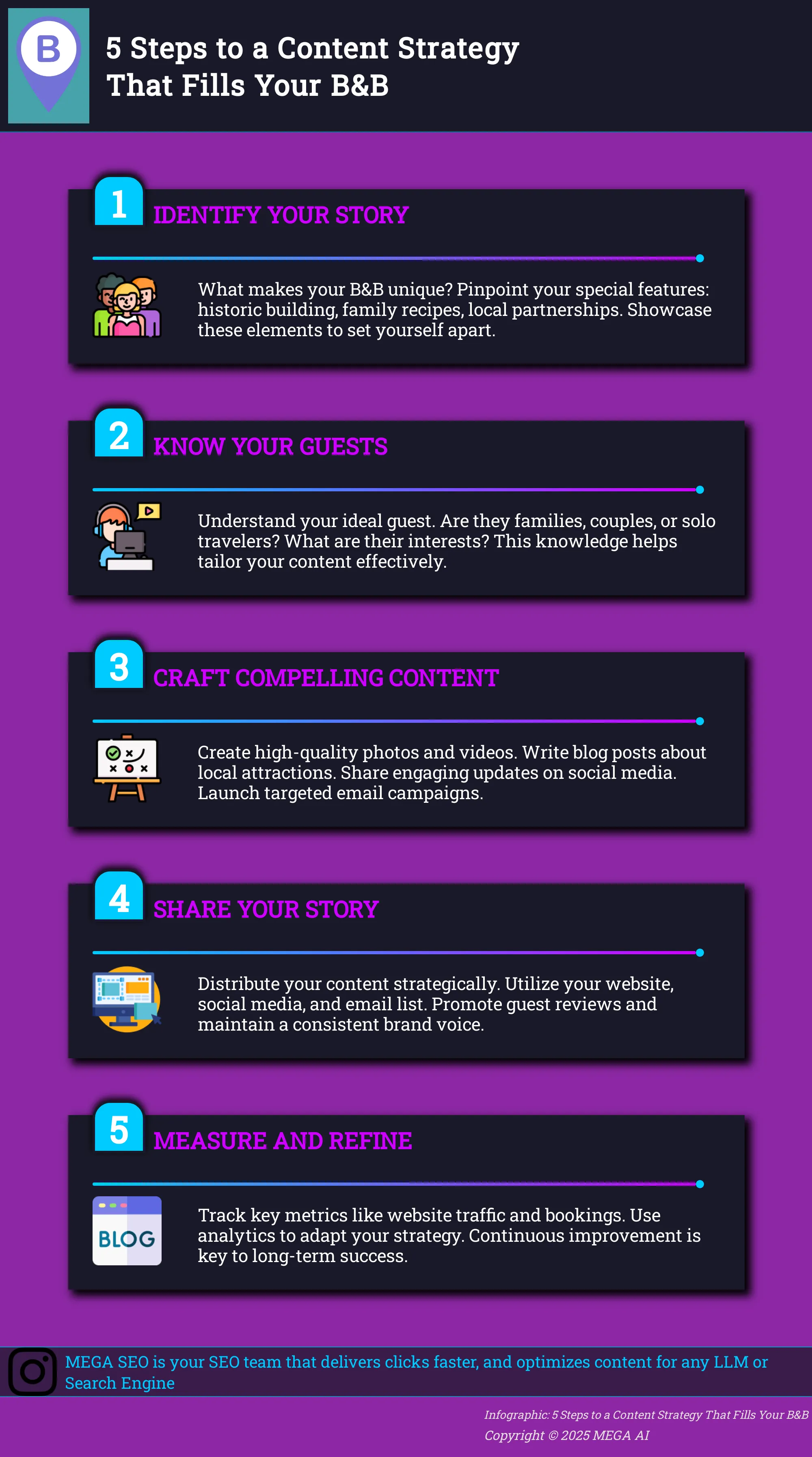
Every B&B has a story that sets it apart. It might be the history of the building, the origin of a family recipe served at breakfast, or the unique artisans you partner with in your community. This personality is what separates you from a standard hotel room. Storytelling is the tool you use to share that character and build an emotional connection with potential guests. It makes your property memorable and gives people a reason to choose you. This is the heart of creating content for Bed & Breakfasts: turning your unique identity into a compelling narrative that invites people in. We’ll walk through how to find these stories and weave them into your website, social media, and email marketing to create a brand that resonates.
Key Takeaways
- Position Yourself as a Local Expert: Go beyond room descriptions by creating content that tells your B&B's story and highlights local attractions. This strategy attracts guests looking for a curated experience, not just a place to sleep.
- Use Your Guests' Stories: Actively encourage and feature guest reviews, photos, and social media posts. This user-generated content serves as powerful social proof, building trust with potential visitors in a way that polished marketing can't.
- Create a Sustainable Content System: Use a content calendar to post consistently and avoid last-minute stress. Measure what works using analytics, then repurpose your best-performing content across different channels to maximize its value and save time.
What Content Attracts B&B Guests?
To fill your rooms, you need content that connects with potential guests on an emotional level. It’s about painting a picture of the experience they’ll have, from the cozy rooms to the local charm. A strong content strategy uses a mix of visuals, helpful articles, social media engagement, and direct communication to build trust and excitement. This approach turns lookers into bookers by showing them exactly what makes your B&B the perfect getaway. Let's look at the types of content that consistently bring in guests.
Use Visual Storytelling
Your B&B has a unique personality, and the best way to show it off is through compelling visuals. Think of your content as a story that invites people into your world. Use high-quality photos and videos to highlight the details that make your property special—the sunlit breakfast nook, the handcrafted quilts, or the view from the porch. You can create enchanting content by mixing professional shots with authentic photos taken by previous guests. This blend shows your B&B in its best light while also providing social proof that others have loved their stay. Visuals make your B&B tangible and help potential guests imagine themselves relaxing in your space.
Create Written Content
While photos capture the eye, written content builds authority and helps you get found on search engines. Instead of focusing only on selling your rooms, shift your focus to educating and informing potential guests. Write blog posts about topics your ideal guest would search for, like "Best Hiking Trails Near [Your Town]" or "A Weekend Guide to [Your Region's] Antique Shops." This strategy positions you as a helpful local expert. With MEGA AI's SEO tools, you can automate keyword research and even generate drafts for these articles, saving you time while attracting organic traffic from travelers already interested in your area.
Engage on Social Media
An active social media presence is essential for staying visible to potential guests. You don’t need to be on every platform; instead, choose one or two channels where your target audience is most active and focus your energy there. Share behind-the-scenes glimpses of daily life at the B&B, post about upcoming local events, and feature photos from happy guests with their permission. Engagement is a two-way street, so be sure to respond to comments and messages promptly. This interaction builds a community around your brand and keeps your B&B top-of-mind for future travel plans.
Launch Email Campaigns
Your email list is one of your most valuable marketing assets because you own it completely. It's a direct line to people who have already shown interest in your B&B. Collect email addresses from past guests and website visitors, then nurture those leads with targeted campaigns. You can send out seasonal newsletters, announce last-minute availability, or offer exclusive discounts to your subscribers. Providing valuable information about local events or sharing a favorite recipe can also keep your audience engaged. Email marketing is a powerful way to encourage repeat business and build lasting guest loyalty.
How to Use Storytelling in Your Content
People connect with stories, not just listings. Storytelling transforms your B&B from a simple accommodation option into a destination with character and heart. It’s how you build an emotional connection with potential guests before they even book. By weaving narratives into your content, you make your B&B memorable and stand out from generic hotels and other rentals. The key is to find the stories that only you can tell.
Showcase Your B&B's Unique History
Every B&B has a story. What’s yours? Perhaps your building has a rich history, or it’s been in your family for generations. Share these details. You can create a dedicated page on your website, write blog posts about interesting anecdotes, or post old photos on social media. As one expert notes, you should "tell the story of your B&B. Share its history, interesting anecdotes, and even the stories behind your recipes." This personal touch makes guests feel like they are part of something special. It’s not just a room; it’s an experience rooted in a unique past. This is a core part of building a strong brand identity.
Highlight Guest Experiences and Testimonials
Your happiest guests are your best storytellers. Their authentic experiences provide powerful social proof that builds trust with future visitors. Encourage guests to share photos and stories from their stay, and ask for permission to feature them on your website and social media channels. This type of user-generated content is highly effective because it offers a genuine glimpse into the guest experience. You can create a dedicated testimonials page, feature a "Guest of the Week" on Instagram, or compile guest photos into a gallery. Seeing real people enjoying your B&B makes it easier for others to picture themselves there, making your marketing feel more like a friendly recommendation.
Feature Local Attractions and Hidden Gems
Position your B&B as the go-to source for local knowledge. By creating content about nearby attractions, events, and hidden gems, you attract guests who are actively planning a trip to your area. This strategy is excellent for local SEO because it helps you rank for location-specific searches. Write blog posts like "A Foodie's Guide to [Your Town]" or "5 Can't-Miss Hikes Near Our B&B." You’re not just selling a room; you’re selling a curated local experience. This shows potential guests that you care about their entire trip, helping them discover the best your region has to offer and making your B&B an essential part of their travel plans.
Why Local SEO is Crucial for B&Bs
When travelers look for a place to stay, they aren’t just searching for “bed and breakfast.” They’re searching for “bed and breakfast in Napa Valley” or “inn near Acadia National Park.” Your business is tied to its location, which means your marketing needs to be, too. Local search engine optimization (SEO) is the process of making your B&B more visible in the search results for these location-based queries. It’s how you show up when potential guests are actively looking for accommodations in your area.
Getting local SEO right helps you compete directly with large hotel chains and online travel agencies that often dominate search results. By optimizing for your specific location, you connect with a highly motivated audience that is ready to book. This targeted approach means you spend less time and money reaching people who aren't a good fit and more time attracting guests who are genuinely interested in your unique offering. While the principles are straightforward, the execution can be time-consuming. Using an automated platform for your SEO can manage the technical details, like keyword research and content updates, freeing you up to focus on creating a memorable guest experience. A strong local SEO strategy ensures that when someone searches for a stay in your town, your B&B is one of the first they see.
Incorporate Location-Specific Keywords
To attract guests searching for a stay in your area, you need to use the same words they do. Think beyond generic terms like “cozy room” and focus on phrases that include your city, region, and nearby points of interest. For example, instead of “charming B&B,” try “charming B&B in Savannah’s historic district.” Make a list of these phrases, including local landmarks, annual festivals, and unique activities. Weave these relevant keywords naturally into your website’s pages, from your homepage and room descriptions to your blog posts. This tells search engines exactly where you are and what you offer, making it easier for the right guests to find you.
Create Location-Based Guides
Position your B&B as the go-to expert on your local area by creating helpful content for travelers. Write blog posts or create guides on topics like “The Best Antique Shops in Lancaster County” or “A Weekend Itinerary for Exploring the Berkshires.” This type of content does more than just use your location-specific keywords; it provides real value to potential guests in their planning stages. By becoming a trusted resource for information, you build a relationship with travelers before they even book. This strategy attracts people interested in what your area has to offer and establishes your B&B as the ideal home base for their trip.
Optimize Your Google Business Profile
Your Google Business Profile (GBP) is one of the most powerful local SEO tools available, and it’s completely free. This is the profile that appears in Google Maps and in the “local pack” box at the top of search results. Claim and verify your listing, then fill out every section with as much detail as possible. Include your address, phone number, website, and high-quality photos of your property and rooms. Encourage guests to leave reviews, and be sure to respond to them. Since many travelers search on the go, ensuring your information is accurate and your website is easy to use on phones is essential for converting those searches into bookings.
How to Leverage User-Generated Content
User-generated content (UGC) is any content—reviews, photos, or social media posts—created by your guests. It’s a powerful marketing asset because it acts as authentic social proof. When potential guests see real people enjoying your B&B, it builds a level of trust that polished marketing materials can't. Integrating UGC into your strategy shows you value your guests' experiences and lets their positive feedback do the selling for you. Here are a few simple ways to get started.
Encourage and Showcase Guest Reviews
Positive reviews are critical for attracting new guests, as many travelers rely on them to make booking decisions. Don't be shy about asking for feedback. You can send a friendly follow-up email after checkout with a direct link to your preferred review platform, like Google or TripAdvisor. Once you collect positive reviews, put them to work. Showcase your best testimonials on your website’s homepage or a dedicated reviews page. This feedback is a key part of your online reputation and provides credible proof of the quality experience you offer.
Feature Guest Photos and Social Posts
While professional photos are important, guest photos offer a genuine glimpse into the experience at your B&B. Encourage your visitors to share their favorite moments on social media, then ask for permission to feature their photos on your own channels or in a website gallery. Always remember to give them credit by tagging their account. This approach provides you with a steady stream of authentic content and makes your guests feel like a valued part of your community. It’s a simple way to let your happy customers become your most effective storytellers.
Create a Unique B&B Hashtag
A unique hashtag is a simple tool for collecting all the content your guests share in one place. Create a hashtag that is short, memorable, and specific to your B&B, like #MorningsAtMaplewood. Promote it in your social media bios, on your website, and on small signs in your rooms. When guests use it, you can easily find their posts to engage with or re-share. This helps you build a community online and creates a digital scrapbook of guest experiences that future visitors can explore.
Create a Consistent Content Schedule
Consistency is your best friend in content marketing. Sporadic posts can make your B&B seem unreliable, while a steady stream of content keeps your audience engaged and your business top of mind. Creating a schedule helps you manage your time effectively, avoid the stress of last-minute content creation, and build a cohesive brand story that attracts guests. A well-planned schedule ensures you’re consistently present without feeling overwhelmed.
Develop a Realistic Content Calendar
A content calendar is your roadmap for what to post and when. Think of it less as a rigid set of rules and more as a flexible plan to tell your B&B's story. Instead of posting on a whim, you can map out themes around seasons, local festivals, or special promotions at your inn. This ensures your content feels timely and relevant.
Start simple with a spreadsheet or a digital calendar. Plan your posts a month in advance, outlining the topic, the platform, and the type of media you'll use. Remember to be realistic. If you can only commit to posting three times a week, schedule that. A manageable plan you can stick to is far more effective than an ambitious one you abandon after two weeks. A good content calendar keeps you organized and focused on your narrative.
Set Achievable Content Goals
Your content should have a purpose beyond just filling your feed. Set clear, achievable goals for what you want your content to accomplish. Instead of focusing solely on direct bookings, aim to educate and inform potential guests about your unique area. This approach builds trust and positions you as a knowledgeable local guide.
Your goals could include increasing website traffic from a specific platform, growing your email subscriber list, or boosting engagement on your posts. For example, a goal might be to create a video tour of a local hiking trail that gets 100 shares. By setting specific marketing goals, you can create content with intention and measure what resonates with your audience, allowing you to refine your strategy over time.
Use Tools for Efficient Content Creation
As a B&B owner, your time is precious. Thankfully, you don’t have to do everything from scratch. A variety of tools can make content creation more efficient and professional. For visuals, platforms like Canva or Adobe Express offer easy-to-use templates for creating beautiful social media posts, flyers, and email headers. For scheduling, tools like Buffer or Later let you plan and automate your posts in advance.
To streamline your writing process, you can also use AI-powered platforms. Tools for content generation can help you brainstorm blog topics, draft social media captions, or even outline guides to local attractions. Using the right tools saves you time and energy, freeing you up to focus on what you do best: providing an unforgettable experience for your guests.
Measure and Improve Your Content Strategy
Creating content is just the first step. To make sure your efforts translate into more bookings, you need to measure what’s working and what isn’t. Think of your content strategy not as a fixed plan, but as a living document that you refine over time based on real-world data. This continuous cycle of creating, measuring, and improving is what separates a good content strategy from a great one.
An effective online presence is essential for attracting guests, and inactivity can make your B&B invisible to potential customers. By regularly checking your performance, you can understand what your audience responds to and double down on those topics and formats. This data-driven approach helps you invest your time and resources more effectively. Tools can simplify this process by automating SEO analysis and highlighting opportunities for improvement, letting you focus on creating the best experience for your guests.
Track Key Performance Metrics
To understand the impact of your content, you need to track the right numbers. These key performance indicators (KPIs) tell you if your content is reaching people and encouraging them to book a stay. Start by monitoring a few core metrics to get a clear picture of your performance without feeling overwhelmed.
Focus on metrics like website traffic, which shows how many people are visiting your site, and social media engagement, which includes likes, comments, and shares. For email campaigns, track open rates and click-through rates to see who is reading your messages and acting on them. Most importantly, try to connect your content to direct bookings. You can also monitor your search engine rankings for important keywords to see if your SEO efforts are paying off.
Use Analytics to Inform Your Decisions
Analytics tools are your best friend for gathering performance data. You can use free tools from Google to check your website for problems and uncover valuable insights about your audience. Google Analytics, for example, shows you which pages on your site are most popular, how visitors found you, and how long they stay.
Google Search Console is another powerful tool that reveals the search terms people use to land on your website. This information is gold for planning future content. If you find that many visitors are searching for "pet-friendly B&B near [Your Town]," you know that creating more content around that topic is a smart move. Platforms like MEGA AI can also help by identifying technical issues and providing automated SEO improvements to ensure your site performs at its best.
Adjust Your Strategy Based on Performance Data
Once you have the data, it’s time to act on it. Use your findings to make informed adjustments to your content strategy. For instance, you can analyze your booking data to identify slow periods and then create special offers and promotions to attract guests during these times. This turns a potential weakness into a marketing opportunity.
If you notice a blog post about local wineries is getting a lot of traffic, consider creating a "Wine Lover's Weekend" package and promoting it with new content. If your video tours on Instagram receive high engagement, make producing them a regular part of your schedule. This feedback loop is critical for growth. MEGA AI’s Maintenance Agent can even help by identifying which articles need updates, adding new information to improve their rank and keep them relevant for your audience.
Integrate Your Content Across Platforms
Creating great content is the first step, but distributing it effectively is what drives bookings. Integrating your content across different platforms ensures you get the most value out of every blog post, photo, and video you produce. This means creating a cohesive brand experience that meets potential guests wherever they are, whether they’re scrolling through Instagram, searching on Google, or reading their email. The key isn’t to post the exact same message everywhere, but to adapt your story for each channel while maintaining a consistent identity. This approach builds recognition and trust, making your B&B the obvious choice when it’s time to book.
Repurpose Content for Different Channels
You don’t need to create brand-new content for every platform. Instead, focus on repurposing a single, strong idea into multiple formats. For example, a detailed blog post about local wineries can become a visually engaging Instagram Reel, a Pinterest guide with a map, and a feature in your email newsletter. This strategy saves you time and reinforces your message across channels. The goal is to educate and inform potential guests about your area, not just sell a room. By adapting your core content, you can create a rich, multi-platform story that showcases what makes a stay at your B&B special. Tools that help with paid ads can even remix your videos and images into hundreds of variations for different audiences and platforms automatically.
Maintain Brand Consistency
As you share content across different channels, it’s vital to maintain a consistent brand identity. Your brand is the personality of your B&B—it’s the feeling guests get when they think of you. Define your brand voice: are you cozy and rustic, or modern and luxurious? This voice should carry through in your website copy, social media captions, and email communications. Use the same color palette, fonts, and logo across all platforms to create a recognizable and professional look. Brand consistency builds trust and helps potential guests remember you. A cohesive presence makes your B&B feel reliable and thoughtfully managed, which is exactly the impression you want to make.
Cross-Promote to Maximize Reach
To get your content in front of more people, promote it across your channels and through local partnerships. Mention your Instagram account in your email newsletter and add a link to your blog in your social media bios. Beyond your own platforms, collaborate with nearby businesses like restaurants, boutiques, or tour operators. You could co-create a "Perfect Weekend Guide" and share it with each other's audiences. This introduces your B&B to a new, relevant group of potential guests. These partnerships create mutually beneficial relationships that ground your B&B in the local community and expand your marketing reach far beyond what you could achieve alone.
How to Identify Your Target Audience
Before you write a single blog post or plan a social media update, you need to know who you’re talking to. Identifying your target audience is the most critical step in creating content that connects with potential guests and encourages bookings. When you understand their needs and travel habits, you can tailor your messaging to resonate, making your B&B their top choice. This clarity informs every part of your marketing, from the photos you share to the special offers you create.
Conduct Market Research and Surveys
To understand your potential guests, you need to ask them what they want. You can conduct market research through simple online surveys or social media polls. Ask about their travel preferences, what they look for in accommodation, and what kind of content they find helpful when planning a trip. A strong online presence is essential; inactivity can make your B&B invisible to potential customers. Engaging with your audience directly through these channels not only provides valuable data but also shows that you care about their experience. Look at what your local competitors are doing to see who they attract and identify any gaps you can fill.
Analyze Guest Data and Booking Trends
Your past guests have already told you a lot about your ideal customer—you just need to look at the data. Analyzing your booking information is key to spotting patterns and understanding guest preferences. Look through your records to find out where your guests come from, the average length of their stay, and whether they are typically couples, families, or solo travelers. This analysis helps you identify slow periods and create targeted promotions to attract more bookings. This data-driven approach allows you to move beyond guesswork and make informed decisions that keep your B&B competitive and appealing year-round.
Create Guest Personas
Once you've gathered your research and analyzed your data, it's time to bring your ideal guest to life by creating guest personas. A persona is a semi-fictional profile of your perfect customer, which helps you focus your marketing on what makes your B&B unique. For example, you might create "Weekend Explorer Wendy," a professional looking for a quiet escape with access to hiking trails. Or "Anniversary Adam," who wants to plan a special romantic getaway. Having these detailed personas makes it much easier to create content that speaks directly to their specific desires and needs, ensuring your message connects with the right people.
Related Articles
- SEO Hotellerie: Boost Your Hotel's Direct Bookings
- Creating Content for Travel Agencies: A Full Guide
- AI Revolutionizing Hospitality Marketing: Key Insights Unveiled
- SEO for Hotel Booking Websites: Drive Direct Bookings
- SEO for Estate Agencies: Drive More Leads
Frequently Asked Questions
I'm a small B&B owner with limited time. Where should I focus my content efforts first? Start with the highest-impact activities that work for you even when you're busy. First, claim and completely fill out your Google Business Profile. This is the most critical step for appearing in local search results and on Google Maps. After that, focus on encouraging guest reviews, as this provides powerful social proof. Once those are in place, choose one social media platform where your ideal guests spend their time and commit to sharing high-quality photos consistently.
How can I encourage guests to leave reviews and share photos without being pushy? The key is to make it simple and show your appreciation. A friendly follow-up email a day or two after checkout is a great way to thank guests for their stay and provide a direct link to your preferred review site. For photos, create a unique and memorable hashtag for your B&B and display it subtly in common areas or in your welcome information. When you see a guest has tagged you in a great post, always ask for permission before you feature it on your own channels.
What's the difference between using my blog and social media for marketing? Think of your blog as your content library and your social media as the conversation starter. Your blog is where you build authority and improve your search engine ranking with in-depth, helpful articles like local guides or stories about your B&B's history. Social media is for building community and sharing more immediate, visual content like behind-the-scenes moments or news about a local festival. The two should work together; use social media to promote your blog posts and drive traffic back to your website.
How do I figure out what to write about on my blog? Your best blog topics come from your expertise as a local. Think about the questions guests ask you all the time, from the best place to get coffee to recommendations for a rainy day. You can write guides to nearby attractions, create sample itineraries for a weekend stay, or feature other local businesses you love. Sharing the unique history of your property or a favorite breakfast recipe also adds a personal touch that helps guests connect with your brand.
How do I know if my content is actually working? You can track a few simple metrics to see the impact of your efforts. Use a tool like Google Analytics to monitor your website traffic and see which blog posts are the most popular. On social media, pay attention to engagement rates, which include likes, comments, and shares on your posts. Ultimately, the most important metric is an increase in direct bookings. If you notice a spike in bookings after promoting a special offer or a new blog post, you know your strategy is on the right track.