
How do you move from being just another accounting firm to being the go-to authority in your market? The answer lies in consistently sharing your unique insights and expertise. When potential clients see you as a thought leader, they seek you out for your knowledge, not just your price. This is the power of a well-executed content strategy. Creating content for accountants is the most effective path to building this reputation, allowing you to showcase your deep understanding of your clients' industries and challenges. This guide provides a blueprint for establishing your firm as a thought leader, covering everything from sharing your unique perspective to engaging in industry conversations.
Key Takeaways
- Start with a Clear Strategy: Before creating anything, identify your ideal client and set specific goals. A content plan ensures every piece you publish is purposeful and designed to attract the clients you want to work with.
- Make Your Expertise Accessible: Focus on creating content that answers your clients' real questions. Simplify complex topics, use an approachable tone, and incorporate visuals to make your advice easy to understand and act on, building trust in the process.
- Amplify and Refine Your Efforts: Use SEO and social media to make sure your ideal clients find your work. Consistently track your performance to understand what resonates, allowing you to improve your strategy over time.
Define Your Audience: The First Step to Great Content
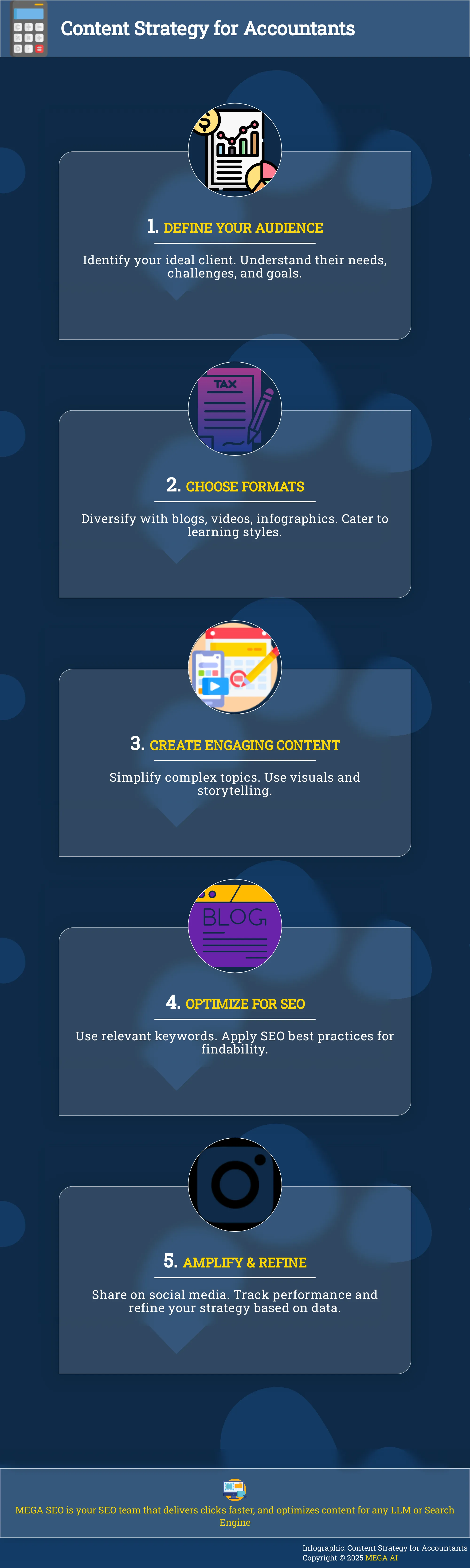
Before you write a single word, you need to know who you’re writing for. Creating content without a clear audience in mind is like trying to navigate without a map. You might create something, but it’s unlikely to reach the right destination. Defining your audience is the foundational step that informs every other part of your content strategy, from the topics you choose to the tone you adopt. This clarity ensures your efforts are focused and your message resonates with the people who need your services most. When you understand your audience deeply, you can create content that not only attracts them but also builds the trust necessary to turn them into clients.
This process is about more than just demographics; it's about understanding the specific challenges and goals that keep your ideal clients up at night. By focusing on their needs, you shift from simply selling services to providing real value, which is the core of effective content marketing. It allows you to answer the questions they are already asking and address concerns they might not even know how to articulate. This targeted approach makes your marketing more efficient, saving you time and resources by concentrating your efforts where they will have the most impact. Ultimately, a well-defined audience is the difference between content that gets ignored and content that gets read, shared, and acted upon.
Pinpoint Your Ideal Client
To create content that connects, you need to be specific. Instead of a broad category like "small businesses," narrow your focus. Are you targeting tech startups with complex equity structures, local restaurants needing payroll help, or freelance creatives managing self-employment taxes? Creating a detailed client persona is an excellent exercise to bring this ideal client to life. This semi-fictional profile helps you step into their shoes and understand their perspective. When you know exactly who you're talking to, you can craft content that speaks directly to their situation, making them feel seen and understood. This targeted approach is far more effective at building relationships than casting a wide, generic net.
Analyze Client Demographics and Needs
Once you’ve pinpointed your ideal client, the next step is to understand their world. This involves looking at demographics like their industry, business size, and location, but it also goes deeper. What are their specific financial goals and challenges? A startup founder's primary concern might be securing funding and managing burn rate, while a restaurant owner may focus on inventory costs and seasonal cash flow. Understanding these unique financial concerns allows you to create content that provides genuine solutions. You can use market research and SEO tools to discover what your target clients are actively searching for, giving you direct insight into their most pressing needs.
Identify Client Pain Points
The most effective content solves problems. To do that, you first need to identify your audience's specific pain points. What financial questions cause them stress or confusion? Are they worried about compliance, struggling to interpret financial reports, or unsure how to plan for tax season? You can uncover these issues by talking to your current clients, reviewing common questions your team receives, or observing discussions in online forums where business owners seek advice. When you create content that directly addresses these frustrations with clear, actionable advice, you build trust and establish your firm as an indispensable resource. This positions you not just as an accountant, but as a valuable partner in their success.
Choose the Right Content Formats for Your Clients
Once you understand who your clients are, you can choose the best ways to reach them. Not everyone learns or consumes information in the same way. Some clients prefer to read detailed articles, while others might absorb information better from a short video or a clear infographic. Using a mix of content formats allows you to meet your clients where they are, making your expertise more accessible and engaging. This approach helps you connect with a wider audience and build stronger relationships by providing value in the format they find most helpful.
A varied content strategy also improves your online presence. Different formats perform well on different platforms, from search engines that favor in-depth articles to social media channels where visuals and short videos thrive. By diversifying your content, you're not just catering to different learning styles; you're also creating more opportunities for potential clients to discover your firm. Think of it as building multiple doorways to your business. Someone might find you through a helpful blog post on Google, while another discovers your firm from a shared infographic on LinkedIn. This multi-channel presence reinforces your brand and establishes you as a versatile and modern accounting professional.
Share Expertise with Blogs and Articles
Written content is a powerful way to establish your authority and answer your clients' specific questions. Blog posts that cover topics like tax-saving strategies, bookkeeping advice, and financial planning provide valuable, searchable resources for businesses and individuals. Think of your blog as a library of your expertise that clients can access anytime. By consistently publishing helpful articles, you build trust and demonstrate your knowledge. AI-powered tools can help you research topics and generate content, making it easier to maintain a regular publishing schedule and keep your firm top of mind.
Teach Visually with Videos and Webinars
Video is an excellent medium for breaking down complex accounting topics into easy-to-understand lessons. You can create a range of video marketing content, from short educational tutorials on how to read a financial statement to client testimonials that build social proof. Hosting a webinar on a timely subject, like new tax legislation, can position your firm as a go-to resource. This format allows you to connect with your audience on a more personal level and show the faces behind your firm, building a stronger sense of trust and rapport with potential clients.
Simplify Data with Infographics
Accounting is full of numbers and data that can be overwhelming for clients. Infographics are the perfect tool to simplify this complexity. Using charts and graphs as visual aids can significantly improve financial education by making dense data easier to grasp. You can create an infographic to illustrate the benefits of a certain business structure, show a timeline for tax deadlines, or present a client's financial performance at a glance. These visuals are highly shareable on social media and can make your firm's advice more memorable and impactful. Good design is key to creating effective financial visualizations.
Stay Connected with Podcasts and Newsletters
To build lasting client relationships, you need consistent touchpoints that offer value beyond one-off services. Email marketing is an effective way to promote your accounting content directly to your target audience. A monthly newsletter can share firm updates, timely financial tips, and links to your latest blog posts. A podcast offers a more personal way to discuss industry trends or interview local business owners. You can easily repurpose content from your blog posts for these formats, ensuring you have a steady stream of material to share without starting from scratch each time.
Create Engaging Accounting Content
Your expertise is your greatest asset, but presenting it in a way that captures and holds a client’s attention is what turns knowledge into growth. Accounting topics can feel dense and intimidating to outsiders. Your content's job is to bridge that gap by being not just informative, but genuinely engaging. This means building trust and demonstrating your value without putting your audience to sleep.
The key is to shift your perspective from simply sharing information to creating a valuable resource that clients and prospects will actively seek out. You can achieve this by focusing on four core principles. First, adopt a tone that is both professional and approachable. Second, make it your mission to simplify complex financial concepts. Third, use visuals to make data clear and digestible. Finally, use storytelling to connect with your readers on a human level. Mastering these areas will help you create content that not only educates but also converts.
Find a Professional, Yet Approachable Tone
Finding the right tone is a delicate balance. You need to project the authority and trustworthiness that clients expect from their accountant, but you also want to be seen as a supportive and accessible partner. Think of your content’s voice as an extension of your best client meetings—knowledgeable, clear, and reassuring. Avoid overly academic language or stiff, corporate jargon. Instead, write as if you are explaining a concept to a respected client across the table.
Effective content marketing for accountants requires a strategic approach that aligns with your firm's goals and speaks directly to your target audience. An approachable tone helps humanize your firm, making potential clients feel more comfortable reaching out. It shows that you understand their concerns and are there to help, not to judge or confuse them with technicalities.
Simplify Complex Financial Topics
Your clients hire you because they aren't financial experts. Your content should reflect that understanding by making complex topics easy to grasp. The goal of your content should be to make financial concepts accessible to a non-expert audience. Break down intricate subjects like tax code updates, depreciation, or cash flow analysis into simple, digestible pieces of information. Use analogies and real-world examples that your target clients can relate to.
Instead of writing a dense treatise on Section 179 deductions, create a blog post titled "How Your Small Business Can Save on Taxes by Purchasing New Equipment." This reframes the topic around a direct client benefit. By consistently providing clear, empowering information, you position your firm as an indispensable resource and a trusted educator. This approach also helps your content rank for common questions potential clients are searching for, improving your SEO.
Use Visuals to Clarify Information
Numbers on a page can quickly become a blur. Visuals are a powerful tool for breaking up text and making complex data much easier to understand. A well-designed chart or graph can communicate a financial trend far more effectively than a dense paragraph. Incorporating visual aids can significantly enhance financial education by simplifying data and helping clients see the bigger picture of their financial performance.
Consider using simple infographics to illustrate a process, like the steps for quarterly tax payments. Use bar charts to compare revenue over time or pie charts to show expense breakdowns. These visuals not only improve comprehension but also make your content more scannable and shareable on social media. They provide a focal point that draws the reader in and makes your key takeaways more memorable.
Tell Stories to Connect with Readers
At its core, accounting is about the stories behind the numbers—the business that grew from a garage startup, the family securing its financial future, or the entrepreneur navigating a tough economic climate. Storytelling is a powerful way to humanize financial data and create a genuine connection with your audience. It transforms abstract concepts into relatable, tangible experiences that resonate with readers on an emotional level.
You can weave storytelling into your content through anonymized case studies. For example, describe how you helped a client in a specific industry overcome a common challenge, detailing the problem, the strategy you employed, and the positive outcome. This narrative approach helps potential clients see themselves in the story and understand the practical, real-world value of your services. It shows you don’t just crunch numbers; you solve problems for people.
Use SEO to Help Clients Find You
Creating valuable content is the first half of the equation. The second half is making sure potential clients can find it. This is where search engine optimization (SEO) comes in. SEO helps your firm’s website appear in search results when people look for the services you offer. By focusing on a few key areas, you can make your content work harder for you, attracting qualified leads directly to your digital doorstep. It’s about connecting your expertise with the people who need it most, right when they're searching for answers.
Research Relevant Accounting Keywords
The foundation of good SEO is understanding the words and phrases your potential clients are typing into search engines. Think about the specific challenges your ideal client faces. Are they a startup founder wondering about "S corp tax deadlines" or a small business owner looking for "payroll services for restaurants"? These search terms are your keywords. Identifying the right ones is crucial for attracting a relevant audience. While you can brainstorm these based on client conversations, using a dedicated tool for automated keyword research can uncover opportunities you might have missed, giving you a clear roadmap for what content to create next.
Apply On-Page SEO Best Practices
Once you have your keywords, you need to incorporate them into your content thoughtfully. This is known as on-page SEO. It involves placing your primary keyword in your page title, headings, and naturally throughout your text. But it’s not just about keywords. Effective on-page SEO also means creating a great user experience with well-structured articles, clear meta descriptions that encourage clicks, and descriptive image tags. The goal is to signal to search engines what your content is about while ensuring it remains readable and helpful for your audience. This alignment is key to ranking well and building trust with readers.
Answer Common Questions in Your Content
One of the most effective ways to connect with potential clients is to answer their questions directly. Think about the common queries you hear during consultations or see in online forums. Creating content around topics like "how to choose an accountant" or "common deductions for freelancers" addresses real-world pain points. This strategy naturally incorporates long-tail keywords and positions your firm as a go-to resource. You can gather these questions from your own client interactions or use tools that analyze search trends. By consistently providing clear, helpful answers, you build authority and attract clients who are actively seeking your expertise. This is a core part of a strong content marketing strategy.
Develop Your Firm's Content Strategy
Having a clear plan is what separates successful content marketing from simply posting online. A content strategy acts as your roadmap, ensuring every article, video, or social media post you create serves a specific purpose. It connects your firm’s business objectives with the needs of your target audience, turning your content into a reliable engine for growth. This strategic approach helps you work smarter, not harder, by focusing your efforts on what truly matters to potential clients and your bottom line.
Set Clear, Achievable Goals
Before you write a single word, you need to define what success looks like. Your goals give your content direction and a way to measure its impact. Instead of aiming for a vague target like "get more clients," set specific, measurable objectives, like increasing qualified leads from your website by 20% this quarter. Understanding who you're trying to reach is fundamental; your goals should align with creating content that resonates with your ideal clients and encourages them to take the next step.
Create a Consistent Content Calendar
Consistency is key to building trust and staying top-of-mind with your audience. A content calendar is a simple yet powerful tool for planning your topics, formats, and publishing dates in advance. This ensures a steady stream of valuable information for your clients and prevents last-minute scrambling for ideas. Planning ahead also allows you to create timely content around important dates like tax deadlines. Engaging with your audience helps you gather valuable insights into their needs, which you can then use to fill your calendar with topics they genuinely care about.
Balance Content Quality and Quantity
Many firms struggle to find the right balance between producing enough content and ensuring it's high-quality. The truth is, both are important. Quality builds your authority and establishes trust, while quantity keeps your firm visible and your audience engaged. An effective strategy finds a sustainable rhythm that prioritizes depth and accuracy. It’s better to publish one well-researched article that solves a real client problem than five generic posts. Tools that assist with content generation can help you create detailed first drafts, allowing you to maintain quality while increasing your output.
Integrate Content with Your Overall Marketing Plan
Your content should not exist in a vacuum. To maximize its value, integrate it into your broader marketing efforts. A single blog post can be repurposed into a dozen different assets: pull key stats for an infographic, create short video clips for social media, or expand on the topic in your email newsletter. This approach ensures a cohesive message across all your channels. When done right, content marketing transforms firms into thought leaders and helps you build lasting client relationships.
Amplify Your Content on Social Media
Creating valuable content is the first major step, but getting it in front of the right people is just as important. Social media is a powerful channel for distributing your articles, videos, and insights, helping you connect with potential clients and build your firm's authority. A thoughtful social media approach ensures your hard work pays off by reaching a wider, more relevant audience. The key is to be strategic about where you post, what you post, and how you interact.
Choose the Right Platforms for Your Audience
Your clients and prospects are already using social media, but they aren’t on every platform. Instead of trying to be everywhere at once, focus your energy where it counts. As a starting point, LinkedIn is almost always a smart choice for accountants, as it’s the go-to network for professionals and business owners. If your firm serves local small businesses, maintaining an active Facebook page can also be effective. The goal is to select the right platforms to ensure your content reaches your intended audience. Don't just follow trends; go where your ideal clients are actively looking for information and professional connections.
Tailor Your Content for Each Channel
A single piece of content can be adapted in many ways to fit different social media platforms. Each channel has its own style, and tailoring your content can significantly improve engagement. For example, you can take a comprehensive blog post and turn it into a professional article on LinkedIn, a visually appealing infographic for Pinterest, or a short, informative video for Instagram Reels. This approach allows you to get more mileage out of each content idea. For firms looking to scale their efforts, tools that help you remix content and create hundreds of variations can automate this process, saving you time while expanding your reach across multiple ad platforms.
Engage Directly with Your Followers
Social media is a two-way street. It’s not just a place to broadcast your message but also a forum to listen and interact. Engaging with your audience by responding to comments, asking questions, and running polls provides valuable insight into their needs and challenges. This direct interaction does more than just refine your content strategy; it also helps you build trust and loyalty among your followers. When people feel heard, they are more likely to see you as a trusted advisor and turn to your firm when they need accounting services. This community-building effort transforms followers into genuine prospects.
Measure and Improve Your Content's Performance
Creating valuable content is just the first step. To ensure your efforts are actually growing your firm, you need to measure what’s working and what isn’t. A strong content strategy is not a "set it and forget it" plan; it’s a living process that evolves based on data. By consistently tracking your performance, you can refine your approach, focus your resources on the most effective tactics, and generate a better return on your investment. This cycle of creating, measuring, and improving is what turns a simple blog or newsletter into a powerful client acquisition tool.
Track Key Performance Indicators (KPIs)
To understand your content's impact, you need to track the right metrics. Key Performance Indicators (KPIs) are the specific data points that show whether you’re moving closer to your business goals. For an accounting firm, this could include website traffic, search engine rankings for your target keywords, and the number of new client inquiries from your content.
Data insights also help you refine your strategy by showing which content formats and channels create the most engagement. For example, if your video tutorials on tax preparation get more views than written articles, you know where to invest more of your time and budget. Tracking these numbers helps you make informed decisions instead of guessing what your audience wants to see.
Use Tools to Monitor Your Progress
You don’t have to track your progress manually. A variety of tools can help you monitor your KPIs efficiently. Google Analytics is essential for understanding your website traffic, user behavior, and conversion rates. Likewise, most social media platforms have built-in analytics that show you how your posts are performing.
For more advanced insights, specialized SEO platforms can track your keyword rankings, analyze your competitors, and identify technical issues on your site. These tools gather the data you need in one place, making it easier to spot trends and opportunities. Automating this process allows you to focus on strategy rather than getting lost in spreadsheets, giving you a clear view of your progress over time.
Let Data Guide Your Strategy
The data you collect is only useful if you use it to make decisions. An effective content marketing plan for accountants requires a strategic approach that aligns with your firm's goals. Let the performance data guide your content calendar. If a blog post on navigating capital gains tax drives a significant number of leads, consider creating a follow-up webinar or a downloadable guide on the same topic.
This is where continuous optimization comes in. Tools like MEGA AI’s Maintenance Agent can automatically identify which articles need updates to improve their click-through rate or what new information could help them rank higher. By letting data guide your strategy, you create a feedback loop that consistently improves your results. You can book a demo to see how AI can help you implement a data-driven content plan.
Overcome Common Content Creation Challenges
Creating content in the accounting field presents a unique set of hurdles. You need to be precise and authoritative while also being accessible and engaging. Many firms struggle to find the time and resources to produce content consistently. The key is to anticipate these challenges and build a workflow that addresses them from the start. By focusing on staying current, publishing regularly, and communicating clearly, you can create a content engine that works for your firm, not against it.
Keep Up with Regulatory Changes
The financial world is always changing, with new standards and regulations appearing regularly. As one industry analysis notes, "The complexity of financial reporting has only increased in recent years." While this complexity can be a challenge, it's also a major opportunity. When you create content that explains new tax laws or reporting requirements, you provide immense value to your clients and demonstrate your expertise. To stay ahead, consider setting up alerts for updates from bodies like the FASB and IRS. This allows you to be one of the first to publish content on timely topics. For existing articles, you can use tools that help with automating content updates to ensure your information remains accurate and compliant over time.
Maintain a Consistent Publishing Schedule
Consistency is crucial for building an audience and improving your search engine ranking. However, a successful campaign "requires a lot of forethought." For busy accounting professionals, finding the time to plan, write, and publish content regularly is a significant challenge. A content calendar is an essential tool for mapping out topics and deadlines, but execution is where many firms fall short. This is where automation can be a powerful ally. Using AI to help with content generation can fill gaps in your calendar and reduce the time it takes to get a blog post from an idea to a published piece, helping you maintain momentum without sacrificing billable hours.
Balance Technical Detail with Readability
Accountants are experts in a complex field, and it’s natural to want to share that deep knowledge. The challenge lies in making technical topics understandable for an audience of non-experts. You have to strike a careful "balance of distilling a complex financial topic into simple concepts." The goal is to be accurate without being overwhelming. Use analogies, real-world examples, and visuals to break down difficult ideas. Always write with your ideal client in mind, focusing on what the information means for them rather than getting lost in technical jargon. Adopting plain language principles can help you communicate with greater clarity and connect more effectively with your readers.
Establish Yourself as a Thought Leader
Creating content is the first step, but becoming a thought leader is what truly sets your firm apart. Thought leadership means you are recognized as a go-to expert in your field—the person potential clients seek out for reliable advice and forward-thinking perspectives. This status isn't just about demonstrating what you know; it's about building a foundation of trust that attracts higher-quality clients who value your expertise. When clients see you as an authority, they are more likely to believe you can solve their most complex financial challenges.
Achieving this requires a strategic approach to your content. It involves sharing what makes your perspective unique, actively participating in conversations within your industry, and presenting your knowledge in formats that resonate with your audience. A strong SEO strategy is fundamental to this process, ensuring that when clients search for answers, your insightful content is what they find. By consistently providing value, you move from being just another accountant to being the accountant clients want to work with. This section will show you how to build that reputation.
Share Your Unique Insights
To establish yourself as an expert, you need to offer more than generic financial advice. Your content should demonstrate your specific expertise and build trust with potential clients. Instead of just listing tax deadlines, share your analysis of how a new tax law will affect a specific industry you serve. Draw from your professional experience to provide real-world examples and case studies that illustrate how you solve client problems. This is your opportunity to showcase the unique value your firm provides. Your distinct point of view on financial trends, regulatory changes, and client challenges is what will make your content memorable and differentiate you from the competition.
Join Industry Conversations
Thought leadership is a dialogue, not a monologue. It’s essential to listen to your audience and participate in the conversations happening in your industry. Engaging with your audience through social media comments, industry forums, and direct interactions gives you valuable insights into their needs and pain points. This engagement not only helps you refine your content strategy to be more relevant but also builds a community around your brand. Actively participating in these discussions positions you as an accessible and engaged expert who is genuinely invested in helping others succeed. It shows you’re not just broadcasting information but are a true member of the professional community.
Showcase Your Expertise Across Different Formats
People consume information in different ways, so relying on a single content format limits your reach. To effectively showcase your expertise, present your knowledge across a variety of mediums. A detailed blog post can be repurposed into a script for a short video, a checklist for a social media post, or the foundation for a more in-depth webinar. Using different types of content like case studies, whitepapers, and infographics allows you to connect with different segments of your audience. For instance, video content is an excellent tool for promoting your services and increasing your firm's visibility. Diversifying your formats reinforces your message and demonstrates your authority in a dynamic way.
Related Articles
- The Ultimate Guide to Content Marketing in 2024
- Content Quality: What It Really Is & How to Achieve It
- Top Tips to Improve Content Quality & SEO Performance
- Grow Your Startup with Effective Content Marketing Tips
- Clear Content: The Key to Better SEO
Frequently Asked Questions
How can I find the time to create content consistently when I have a busy practice to run? This is the most common challenge, and the solution is to start with a realistic plan. You don't need to publish content every day. Begin with one well-researched article or video per month and use a content calendar to plan topics in advance. This removes the pressure of coming up with ideas on the spot. You can also use tools to help generate first drafts, which significantly reduces the time it takes to get from an idea to a finished piece.
How do I know if my content is actually bringing in new clients? Measuring your return involves looking beyond simple page views. Track key metrics like the number of inquiries you receive through your website's contact form or how many people download a guide you've created. You can also add a question to your new client intake form asking how they found your firm. When you see a direct line between the content you publish and the clients you sign, you know your strategy is working.
SEO seems technical. What's the most important first step for a beginner? The best place to start is by understanding the questions your ideal clients are asking online. This is the core of keyword research. Think about the conversations you have with clients every day—the problems they face and the terms they use. Creating content that directly answers those questions is the most effective first step in SEO because it aligns your expertise with what people are actively searching for.
Is it better to write blog posts or create videos? The best format depends on your audience and your strengths. Written articles are excellent for providing detailed, searchable answers that establish your authority over time. Videos are great for breaking down complex topics and building a more personal connection with viewers. A good approach is to start with one format you're comfortable with, like a blog, and then repurpose that content into other formats, such as turning a popular article into a short video script.
How can I make technical accounting topics interesting to people who aren't accountants? The key is to shift your focus from explaining a concept to solving a problem. Instead of writing about a specific tax code, frame the article around a benefit, like "How Your Business Can Save Money on Equipment Purchases." Use real-world analogies and anonymized client stories to make the information relatable. This transforms dry data into a compelling narrative that shows the practical value of your expertise.