Search engines act like diligent librarians for the vast expanse of the internet, constantly working to discover, understand, and organize web content. For your website to be properly cataloged and recommended to users, these "librarians"—or crawlers—need to navigate your pages smoothly and efficiently. This ease of navigation is what we call crawl efficiency. If crawlers struggle to access your content due to a confusing site structure, slow loading times, or broken pathways, your valuable information might remain unseen. Understanding the benefits of crawl efficiency enhancement for increased organic traffic? is the first step towards ensuring your carefully crafted content gets the visibility it deserves, leading to more visitors and better search rankings. This guide will explore how to make your site a welcoming place for search engine crawlers.
Key Takeaways
- Improve Content Discovery: Ensure search engines can easily find and process your website's pages for quicker indexing and better visibility in search results.
- Optimize Key Site Elements: Address your site's architecture, internal links, loading speed, and the management of sitemaps, robots.txt, and duplicate content to facilitate smoother crawling.
- Track and Adjust Continuously: Use tools like Google Search Console to monitor crawl statistics and server performance, allowing you to identify and resolve issues that impact how search engines interact with your site.
What is Crawl Efficiency and Why It Matters for Your SEO
When we talk about getting your website noticed by search engines like Google, a term that often comes up is "crawl efficiency." It might sound a bit technical, but understanding it is really helpful for your SEO efforts. Think of it as making sure search engines can easily find and understand what your website is all about. If they can do this efficiently, you're more likely to see your site climb in search rankings and attract more visitors. This is a foundational piece of any solid SEO strategy.
So, what exactly does this mean for your website? It means search engines have a limited amount of resources, often called a "crawl budget," for any given site. This budget determines how many pages they can look at and how often. If your site is easy for search engines to crawl, they can make the most of this budget, focusing on your most important content. This ultimately helps your new blog posts, product pages, or service updates get seen and indexed faster, which is what we all want. Good crawl efficiency ensures that the hard work you put into creating great content actually gets discovered.
Understanding Crawl Efficiency: The Basics
Let's break down "crawl efficiency" a bit more. At its core, crawl efficiency refers to how easily search engine bots, like Googlebot, can explore your website, discover its pages, and understand the content on those pages. When your site has good crawl efficiency, these bots don't waste time or resources trying to figure things out. They can smoothly move from one page to another, gathering the information they need.
A key concept related to this is the "crawl budget." Search engines allocate a certain amount of resources to crawl each website; this isn't an unlimited pass. The crawl budget is essentially the number of pages a search engine will crawl on your site within a specific timeframe. It's influenced by factors like how quickly your server responds (this is known as the crawl rate) and how much demand there is for your content (crawl demand – often linked to how popular or important your site is perceived to be). Managing this budget effectively is a big part of improving crawl efficiency.
How Crawl Efficiency Influences Search Engine Indexing
Now, how does making your site easy to crawl actually help with getting your pages into search results? Well, when search engines can efficiently crawl your site, they can quickly find and process your most valuable content. This means your important pages are more likely to be added to their index – the massive database of web pages they use to generate search results. Improving crawl efficiency ensures that search engines focus on your most important pages, leading to faster indexing and improved visibility in search results.
A well-managed crawl budget ensures that search engine bots spend their time on the pages you want them to see, like your new blog posts or updated product pages. If your site is difficult to crawl, or if the bots get stuck on unimportant or broken pages, your crawl budget can be wasted. This might prevent search engines from discovering or indexing your key content. Search engines also tend to prioritize pages that have strong backlinks and are updated regularly, so optimizing your site's structure and keeping content fresh can significantly improve how efficiently they can access and index your site.
How Better Crawl Efficiency Leads to More Organic Traffic
Think of crawl efficiency as how easily search engine bots, like Googlebot, can explore and understand your website. When these bots can move through your site smoothly, they can discover your content, process it, and add it to their index. This indexing is absolutely key because if your pages aren't in a search engine's index, they simply won't appear in search results. Better crawl efficiency means search engines can find and process more of your valuable content with the resources they allocate to your site, often referred to as your crawl budget.
When search engines can efficiently crawl your website, they get a clearer picture of what your site is about and which pages are most important. This understanding directly influences how your pages are ranked. If bots encounter roadblocks like broken links, slow-loading pages, or a confusing site structure, they might not explore your site fully before they’ve seen all your great content. This means some of your pages might not get indexed, or important updates could be missed. Improving how search engines access your website is a fundamental step toward increasing your organic traffic because it ensures your content has the best possible chance to be seen and ranked effectively.
Get Your New Content Discovered and Indexed Quicker
One of the most immediate benefits of good crawl efficiency is that your new content gets discovered and indexed faster. When you publish a new blog post, launch a new product page, or update existing information, you want search engines to see it quickly. Proper optimization means new content can get indexed quickly, making it visible in search results sooner rather than later.
This speed is vital because fresh, relevant content can attract timely traffic and show search engines that your site is actively maintained. If search engine bots can efficiently move through your site, they're more likely to find these new additions promptly. A well-managed crawl budget also helps search engines focus their attention on your most important pages, ensuring that your cornerstone content and latest updates receive the attention they need to start ranking and drawing in visitors.
Increase Your Visibility in Search Results
Beyond just speed, better crawl efficiency contributes to sustained and broader visibility in search results. When search engines can easily find and index all your important pages, not just the newest ones, your overall site authority and relevance can improve. You might have fantastic, high-quality content, but it’s significantly less effective if search engines struggle to find it.
Efficient crawling ensures that the depth and breadth of your website are accessible to search engines. This means more of your pages have the opportunity to rank for a wider range of relevant queries. Regularly auditing your website for issues like broken links or duplicate content, which can hinder crawlers, is part of maintaining this efficiency. By making your site easy for search engines to understand, you directly support their ability to rank your pages appropriately, leading to more consistent organic traffic over time.
What Affects Your Site's Crawl Efficiency?
Think of search engine crawlers as diligent librarians for the internet. For them to effectively catalog your website's content, they need to be able to access and understand it easily. Several factors can influence how efficiently these crawlers can do their job on your site. When these elements are optimized, crawlers can explore more of your important pages, leading to better indexing and, ultimately, more organic traffic. Let's look at some key areas that impact your site's crawl efficiency.
Your Site Structure and Internal Links
A well-organized website is much easier for search engines to crawl. Imagine your site structure as the blueprint of a house; clear pathways make it simple to find every room. Your internal linking plays a huge role here, acting as hallways connecting different pages. When these links are logical and functional, they guide crawlers smoothly through your content.
It's also crucial that these links work correctly and that your site is accessible on mobile devices. Broken links are like dead ends, stopping crawlers in their tracks and wasting valuable crawl resources. A mobile-friendly design ensures that crawlers can access and understand your content regardless of the device they simulate, which is increasingly important as search engines prioritize mobile-first indexing.
Server Speed and Page Load Times
Nobody likes a slow website, and search engine crawlers are no exception. Your server's speed and the resulting page load times are critical for crawl efficiency. A sluggish server can significantly limit how many pages a crawler can access in a given time. If pages take too long to load, crawlers might give up before fully indexing your content.
Aim for server response times under 300 milliseconds to keep things snappy. You should also monitor server errors, often identified by 5xx error codes. Keeping these below 1% indicates a healthy server. Tools like Google Search Console can help you monitor your site's speed and identify issues that might be slowing crawlers down, ensuring they can efficiently process your site’s information.
XML Sitemaps and Your Robots.txt File
An XML sitemap acts like a detailed map for search engines, listing all the important pages on your site you want them to find and crawl. This helps crawlers discover new or updated content more quickly, especially if your internal linking isn't perfect or your site is very large. Keeping your XML sitemap updated is key; it should always reflect the current state of your site.
Your robots.txt file, on the other hand, tells search engine crawlers which parts of your site they shouldn't access. It’s important that your sitemap and robots.txt file are consistent. For instance, you wouldn't want to block a page in robots.txt that you've included in your sitemap, as this sends mixed signals to crawlers and can waste their resources.
How You Handle Duplicate Content and Redirects
Duplicate content can confuse search engines and dilute your site's authority, as crawlers might not know which version of a page to index or rank. It’s best to consolidate duplicate content by removing or merging similar pages. Using "canonical tags" is a smart way to specify to search engines which page is the preferred version when multiple similar pages exist, ensuring crawlers focus on the one that matters.
Redirects are useful for sending users and crawlers from an old URL to a new one, but they need to be managed carefully. Long chains of redirects—where one URL redirects to another, which redirects to another, and so on—can eat up your crawl budget. Crawlers might abandon the chase if they encounter too many hops. Keep your redirects as direct as possible, ideally a single step from the old URL to the final destination.
Smart Ways to Improve Crawl Efficiency (and Organic Traffic)
Improving how search engines crawl your website doesn't have to feel like a monumental task. By focusing on a few important areas, you can make it much simpler for crawlers to find, understand, and index your content. This, in turn, can lead to better visibility and more organic traffic. Think of it as clearing a path so search engines can efficiently explore everything your site has to offer. When crawlers can do their job effectively, your new and updated content gets noticed faster, and your overall SEO performance can see a real improvement. Many of these adjustments also enhance the user experience, which is always a positive outcome. For businesses looking to make these processes smoother, platforms like MEGA AI offer SEO tools that can help manage and optimize many of these technical aspects, making it easier to maintain a crawl-efficient website.
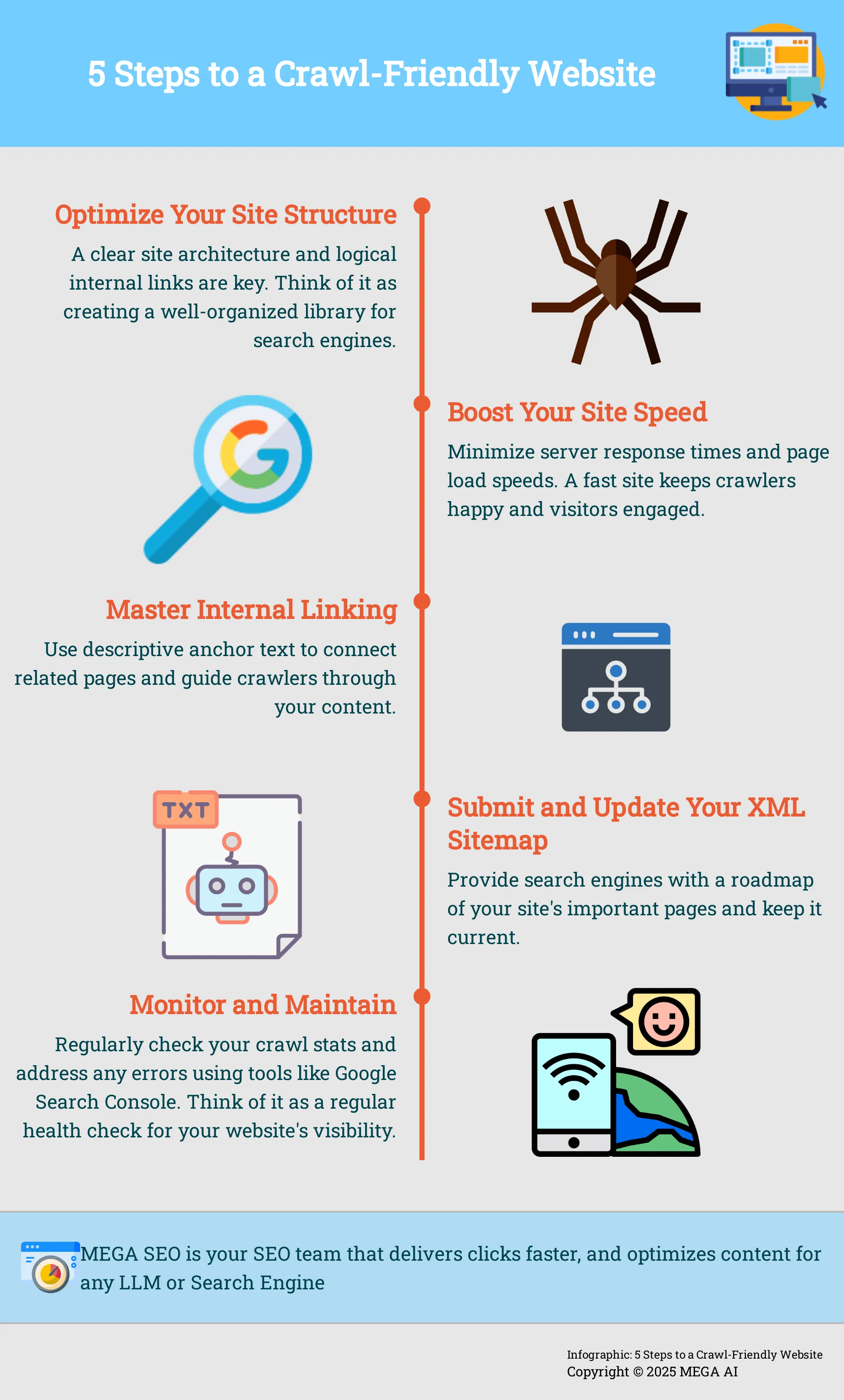
Optimize Your Site's Architecture and Navigation
Think of your website's architecture as its blueprint. A clear and logical structure not only helps users find what they're looking for but also makes it easier for search engine crawlers to move through your site. "A well-structured internal linking system (links within your website) helps search engines navigate your site." Ensure your navigation is intuitive, with clear labels for your sections and pages. It's also vital that all links work correctly and that your entire site is accessible and functional on mobile devices, as search engines consider mobile-friendliness a key factor. A streamlined architecture means crawlers can discover your content more efficiently, which is fundamental for good indexing.
Speed Up Server Response and Page Load Times
No one enjoys a slow website, and search engines feel the same way. Your server's speed and how quickly your pages load are critical factors for crawl efficiency. "A fast, healthy server is essential. Aim for server response times under 300 milliseconds and keep 5xx error codes (server errors) below 1%." Faster load times mean crawlers can access and process more of your pages within their allocated crawl budget. You can improve page speed by optimizing images, making use of browser caching, and selecting a dependable hosting provider. These steps contribute to a better experience for both your visitors and search engine bots.
Use Internal Links Effectively
Internal links are the pathways that connect the pages within your own website. When used strategically, they significantly improve crawl efficiency by helping search engines understand the relationship between your content and discover new or updated pages. "Improve internal linking: Create a clear site structure with links connecting related pages. Use descriptive link text (anchor text)." This descriptive text gives context about the linked page. While internal linking is beneficial, try to avoid placing too many links on a single page, as this can dilute their value and potentially overwhelm crawlers. A well-planned internal linking strategy ensures that important pages receive sufficient attention and are easily found.
Create and Keep Your XML Sitemaps Up-to-Date
An XML sitemap acts like a roadmap for search engines, listing all the important pages on your website that you want them to crawl and index. This is particularly helpful for larger sites or sites with a lot of frequently added content. "XML sitemaps are like roadmaps for search engines, helping them find important pages quickly." It's crucial to keep your XML sitemap updated, especially when you add new content or make significant changes to your site structure. Also, ensure your sitemap is consistent with your robots.txt file, which tells crawlers which parts of your site they can or cannot access. Regularly submitting your sitemap to search consoles helps ensure they have the most current map of your site.
How to Measure and Monitor Your Crawl Efficiency
Keeping tabs on how search engines interact with your website is a fundamental part of any solid SEO strategy. When you measure and monitor your crawl efficiency, you gain valuable insights into how easily search engine bots can find and understand your content. This isn't a one-time task; it's an ongoing process that helps you spot potential issues early, make data-driven decisions, and ensure your optimization efforts are paying off. Think of it like a regular health check-up for your site's visibility. By understanding the right numbers and using the appropriate tools, you can proactively manage how search engines perceive and rank your pages.
This continuous attention allows you to refine your approach, ensuring that your important content gets the attention it deserves from search engines. When search engine crawlers can efficiently access and process your site's pages, they are more likely to index your content accurately and quickly. This means new blog posts, product pages, or service updates get seen by your audience sooner. Furthermore, good crawl efficiency can positively influence how search engines view the overall quality and authority of your site. If bots encounter frequent errors, slow loading times, or confusing navigation, they might reduce the crawl frequency, leading to missed content and slower indexing. Regularly checking these aspects helps you maintain a healthy relationship with search engines, which is crucial for helping more people find your business online and for making sure your SEO efforts yield the best possible results.
Key Metrics to Keep an Eye On
To really get a handle on your site's crawl efficiency, there are a few key numbers you’ll want to watch. First up is your crawl budget. This is essentially the number of pages a search engine like Google will crawl on your site within a certain timeframe, combining how often they can crawl (crawl rate) and how much they want to crawl (crawl demand). A well-managed crawl budget ensures your most important pages are regularly visited.
Next, consider your server performance. Search engines prefer sites that are quick and reliable; if your server is slow or frequently returns errors, bots may crawl your site less often. Also, look at your indexation rate. This tells you what percentage of your site’s pages are actually making it into the search engine’s index. If important pages aren't being indexed, it could be a sign that your crawl budget isn't being used effectively. Finally, pay attention to crawl depth, which refers to how many clicks it takes to reach a page from your homepage. Pages buried deep within your site structure are harder for search engines to find.
Helpful Tools for Assessment and Improvement
Fortunately, you don't have to guess when it comes to these metrics. Several tools can give you a clear picture of your crawl efficiency and help you identify areas for improvement. A great starting point is Google Search Console. This free tool from Google provides a wealth of information, including crawl stats, indexing status, and any crawl errors that Googlebot encounters on your site. It’s an indispensable resource for understanding how Google sees your website.
For a more in-depth analysis, tools like Screaming Frog SEO Spider allow you to crawl your website much like a search engine would. This can help you identify issues such as broken links, redirect chains, and problems with page titles or meta descriptions that might affect crawling. Another powerful option is Ahrefs. While known for its backlink analysis, Ahrefs also offers a comprehensive site audit tool that can pinpoint technical SEO issues impacting crawlability and provide recommendations for fixing them. Using these tools regularly will help you stay on top of your site’s crawl health.
Tackle Common Crawl Efficiency Hurdles
Even the best-laid SEO plans can hit a snag if search engine crawlers can't efficiently access and understand your site. Let's look at some common issues that can trip up crawlers and how you can smooth things out for them.
Find and Fix Wasted Crawl Budget
Think of your crawl budget as an allowance search engines give your site for crawling. A well-managed crawl budget ensures they spend their time on your most important pages, not the ones that don't matter as much. Lots of things can eat up this budget – not just your main HTML pages, but also images, CSS and JavaScript files, and even different versions of the same page, like HTTP versus HTTPS.
To keep things efficient, it's a good idea to regularly audit your website. You can use tools like Screaming Frog to see your site like Googlebot does, and check Google Search Console to see what Google has actually crawled and indexed. Look out for errors, super slow pages, or any unnecessary pages that might be draining your budget.
Handle Crawl Traps and Never-Ending Page Loops
Crawl traps are like digital quicksand for search engine bots; they get stuck in loops or on pages that don't offer new value, which really eats into your crawl budget. One common culprit is long redirect chains – when one page redirects to another, which redirects to another, and so on. It's best to keep redirect chains short and to the point.
Another thing to watch for is an excessive number of URL parameters, often seen with product filtering on e-commerce sites. While helpful for users, these can create tons of near-duplicate pages for bots. You can manage these by using canonical tags to point to the main version of a page or by using your robots.txt file to tell bots which parameters to ignore.
Address Duplicate Content Problems
Duplicate content can be a real headache. It happens when the same, or very similar, content appears on multiple URLs. This confuses search engines because they don't know which version to rank, and it definitely wastes your crawl budget as they crawl the same stuff over and over.
The best way to tackle this is to consolidate your duplicate content. This might mean removing or merging pages that have the same information. For pages you need to keep, use 'canonical tags.' These tags are a simple piece of code that tells search engines which version of a page is the main one you want them to index and show in search results. This helps clear up any confusion and makes sure your crawl budget is used wisely.
The Broader Impact: How Good Crawl Efficiency Helps All Your SEO
Improving your site's crawl efficiency isn't just a technical task you check off a list. It has a much wider reach, positively influencing your overall SEO performance and how users actually experience your website. When search engines can move through your site smoothly, it really sets the stage for better visibility and makes all your other SEO work more impactful.
How It Affects Search Rankings and User Experience
When search engines can easily crawl your site, they can efficiently find and understand your most valuable content. This means your new blog posts or product pages get indexed more quickly, showing up in search results sooner. It’s not just about speed; it’s about focus. Good crawl efficiency guides search engines to prioritize the pages you want users to see. Plus, a site that’s easy to crawl often means a better user experience. Fast server response times and minimal errors, which are part of good crawl health, mean visitors aren't left waiting or hitting frustrating dead ends. This positive experience can certainly contribute to higher rankings.
Making Your Other SEO Efforts Work Better
Think of crawl efficiency as the foundation for your entire SEO strategy. All the effort you put into creating great content or optimizing your on-page elements works much harder when search engines can easily access and process that information. Improving how search engines crawl your website isn't an isolated technical fix; it actually enhances your content strategy by ensuring your carefully crafted pieces are seen by the right audience. When your site is technically sound and easy for search engines to explore, every other SEO action, from building backlinks to refining meta descriptions, has a greater chance of contributing to better rankings and more organic traffic.
Weave Crawl Efficiency into Your SEO Plan
Improving how search engines crawl your site isn't just a technical chore; it's a strategic move that directly supports your broader SEO objectives. By making crawl efficiency a core part of your plan, you ensure that your content efforts translate into better visibility and organic traffic. Let's look at how to connect these improvements to your goals and decide where to start.
Connect Crawl Improvements with Your Main SEO Goals
Think of an optimized crawl budget as the essential link between your website's valuable content and its visibility in search results. This makes enhancing crawl efficiency a fundamental part of your SEO success. It’s not a one-time fix but an ongoing process that requires regular attention and adjustments to keep your site performing well.
When search engines can easily find and understand your content, your main SEO goals, like ranking for target keywords or increasing organic traffic, become more attainable. Integrating crawl efficiency into your strategy means you’re actively working to ensure search engines can efficiently process your site, which is crucial for getting your pages indexed and seen by your audience. This continuous effort helps maintain and improve your site's presence over time.
Decide What to Fix First and Get It Done
To start, regularly audit your website for issues like broken links, duplicate content, and slow-loading pages, as these can hinder crawl efficiency. Once you've identified potential problems, prioritize fixing the most impactful ones first. It can be helpful to explain the impact of these fixes in business terms, for instance, "correcting these redirect chains should improve how quickly our new product pages get indexed."
A well-managed crawl budget ensures your important pages are discovered and indexed promptly. Focus on tasks like fixing broken links and long redirect chains, because these directly waste crawl budget. You can use tools like Screaming Frog to simulate how Googlebot crawls your site, and Google Search Console to see what Google has already processed and indexed, helping you pinpoint areas for improvement.
Crawl Efficiency for Different Kinds of Websites
Optimizing crawl efficiency isn't a one-size-fits-all task. The type of website you run significantly influences the specific challenges you'll face and the strategies that will yield the best results. Whether you're managing a sprawling e-commerce store, a bustling content hub, or a global international site, understanding these nuances is key to helping search engines find and index your most important pages effectively. Let's look at some common website types and how you can tailor your crawl efficiency efforts.
E-commerce Sites: Tips for Large Product Lists
If you run an e-commerce store with a large catalog, URLs can multiply from product variations and filters. This makes managing your crawl budget vital so search engines promptly index key product pages. Common issues include slow servers, errors, and low-value pages like old products or numerous filter combinations, which can create duplicate content.
Being strategic about what search engines crawl is key. For instance, one e-commerce site improved its organic click-through rate by removing 72% of its index size. Use canonical tags to specify the main version of a product page when variations exist, and configure faceted navigation carefully to avoid generating excessive near-duplicate pages that offer little unique value to search engines.
Content-Rich Sites: Juggling New and Existing Content
For websites thriving on fresh content like blogs or news portals, the goal is ensuring new posts are discovered quickly while older content remains accessible. Improving crawl efficiency here means making it easy for search engines to access and understand your material. This includes strategies like consolidating duplicate content and focusing optimization on your highest-value pages.
Regularly updating your XML sitemap is crucial, as it tells search engines about new and changed pages—vital for sites that frequently add new articles. Good internal linking also guides users and crawlers to important content. Periodically auditing your content to refresh or redirect outdated pieces helps maintain a healthy, crawlable site.
International Sites: Managing Different Languages and Regions
Websites serving an international audience face hurdles with multiple language or regional content versions. Without proper setup, search engines might see these as duplicate content. Effectively managing URL parameters and using canonical tags are vital to prevent this, helping specify your preferred page version when similar content exists across different URLs.
The hreflang attribute is your primary tool, signaling to search engines the intended language and geographic targeting of a page. While hreflang guides search engines to the correct version, your robots.txt file can also control which pages are blocked from crawling, though use this carefully. For international SEO, clear hreflang implementation is generally the preferred method.
Related Articles
- Boost SEO with Better Crawl Efficiency: Indexing Benefits
- Boost Your SEO Strategy: Mastering Crawlability Tips
- Boost SEO Crawlability: The Ultimate Guide
- How to Optimize Your Crawl Budget for Better Indexing
- Top 5 Website Indexing Tools for SEO Pros
Frequently Asked Questions
If I'm just starting to think about crawl efficiency, what's one simple thing I can do today? A great first step is to check if you have an accurate XML sitemap submitted to search engines like Google. This acts as a direct guide for them, showing them all the important pages you want them to find. Making sure this map is up-to-date is a quick win.
How often should I be checking on my website's crawl efficiency? You don't need to obsess over it daily, but it's wise to make it part of your regular website maintenance. A monthly check-in using tools like Google Search Console to review crawl stats and errors is a good rhythm. If you've made significant changes to your site, like a redesign or adding a lot of new content, you might want to check more frequently.
My website is quite small. Does crawl efficiency matter as much for me? Yes, it absolutely still matters. Even on smaller sites, issues like broken links or slow loading times can prevent search engines from efficiently understanding your content. Ensuring good crawl efficiency helps search engines make the most of their visit, no matter your site's size, and ensures your content gets seen.
Can improving crawl efficiency alone significantly increase my organic traffic? Improving crawl efficiency is a crucial foundational step that helps search engines find and index your content effectively, which is necessary for organic traffic. However, it works best as part of a broader SEO strategy that also includes quality content, good keyword targeting, and a positive user experience. Think of it as clearing the path so your other SEO efforts can shine.
What's the difference between crawl efficiency and just getting my pages indexed? Crawl efficiency refers to how easily and effectively search engine bots can explore your website and discover its pages. Indexing is the process where search engines add those discovered pages to their database so they can appear in search results. Good crawl efficiency makes the indexing process smoother and more comprehensive, ensuring more of your valuable content gets into that database.