
Most businesses see content as a marketing expense. It's a necessary cost to attract customers. But what if you viewed it as a profit center instead? Adopting a media network mindset means you stop treating your blog and social channels like a marketing department and start running them like a media company. Every article and video becomes a piece of sellable inventory in your programming lineup. This simple shift in perspective changes everything about how you create, manage, and monetize your work. In this article, we’ll break down how to build your own media network and turn your content into a predictable and scalable source of income.
Key Takeaways
- Adopt a media network mindset: View your entire content library as a collection of sellable assets, not just individual posts. This approach turns your marketing efforts into a long-term, revenue-generating system.
- Create monetizable content inventory: Plan for brand integrations and swappable ad slots during the content creation process. This makes your entire back catalog a valuable and flexible asset for current and future advertisers.
- Prioritize partnerships and scalable systems: Move beyond one-time sponsorships by building long-term advertiser relationships. Use analytics to demonstrate your value and leverage automation to manage and grow your content inventory without burning out.
What Does It Mean to Think Like a Media Network?
Thinking like a media network means treating your entire collection of content—every blog post, video, and social media update—as a single, valuable asset. Instead of viewing each piece as a one-time project, you see it as a show in your programming lineup. Each "show" has the potential to attract an audience and generate revenue, not just on the day it's published, but for months or years to come.
This approach requires a shift from creating content reactively to building a library with intention. Successful brands use strategic content creation to align every article and video with audience interests and potential revenue opportunities. It also means planning for monetization from the beginning. Just as TV shows are written with natural advertising breaks, your content can be structured to seamlessly integrate sponsorships or affiliate links without disrupting the user experience.
Imagine your back catalog of 100 blog posts. With a media network mindset, those aren't just old articles; they are 100 pieces of advertising inventory. Technologies like dynamic ad insertion are making this possible for video, and the same logic applies to written content that can be updated with new offers. For a small business, this doesn't require a massive production budget. It simply means you value every piece of content you create and have a long-term plan for how it will contribute to your bottom line. Your website and social channels become your own broadcast network, fully owned and controlled by you.
Why Traditional Content Monetization Falls Short
For many small businesses, content monetization is an afterthought. You might secure a sponsored post, add a few affiliate links, or sell a digital product, but these efforts are often disconnected. This approach is reactive, treating each piece of content as a one-off project rather than part of a larger, strategic asset. When you don't view your entire content library as a valuable inventory, you leave significant revenue on the table. Your blog posts, videos, and social media updates could be working together to create a consistent and scalable income source.
The problem with traditional methods is that they fail to capture the long-term value of your work. A blog post that ranks on Google for years might only be monetized by a single, outdated affiliate link. This inconsistent strategy makes it difficult to forecast revenue and invest back into creating high-quality content. To build a sustainable growth engine, you need a system that continuously optimizes your entire content portfolio. This is where an AI-powered SEO agent can manage your content library, ensuring every piece is always working to meet your business goals.
The One-Time Sponsorship Trap
The one-time sponsorship is one of the most common monetization tactics, but it’s also one of the most limiting. You create a great piece of content, a brand pays you once to feature their product, and the deal is done. The content, however, continues to attract views, clicks, and engagement for months or even years. You’ve essentially sold a small piece of valuable real estate for a single payment, while its value continues to grow over time.
Imagine having a library of 100 articles, but only five have active sponsorships. The other 95 are still generating traffic but aren't producing direct revenue. This model fails to capitalize on the evergreen nature of good content, leaving the vast majority of your inventory unmonetized and underutilized.
Limited Revenue Streams
Relying on just one or two monetization methods puts your business at risk. If you depend entirely on an affiliate program that suddenly changes its commission structure, your income could plummet overnight. Similarly, if your main source of revenue is sponsored posts and a key partner pulls their budget, you're left scrambling. This lack of diversity makes your revenue stream fragile and unpredictable.
A more resilient approach involves building multiple, independent revenue streams that work together. Instead of just relying on sponsors, you could also offer premium content, sell digital products, or use dynamic ad insertion. This diversification creates a more stable financial foundation, allowing you to weather market changes and continue investing in quality content creation without being dependent on a single source of income.
How to Transform Your Content Into Advertising Inventory
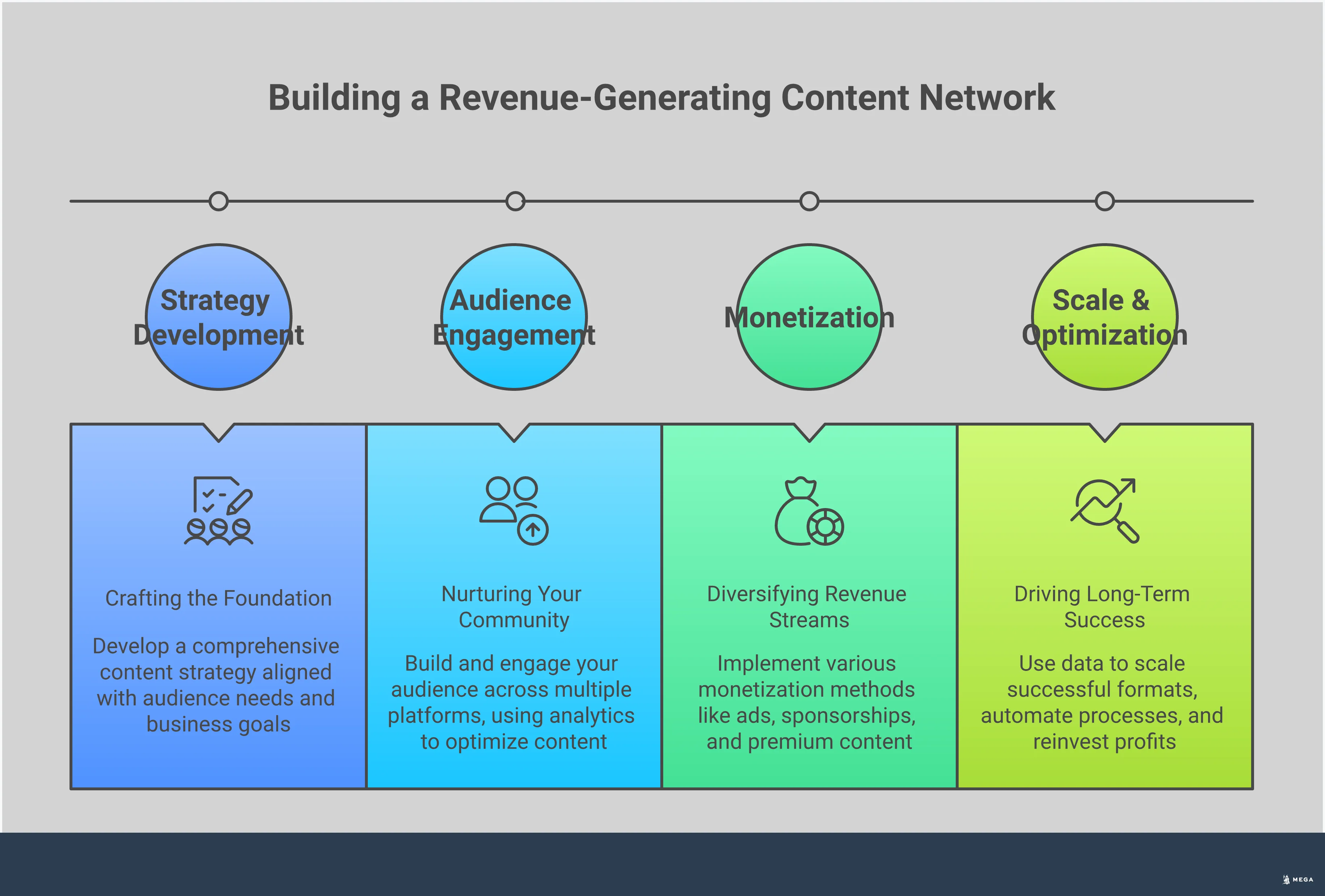
Shifting your perspective from simply creating content to building a media network means you stop thinking in terms of one-off posts and start seeing the bigger picture. Your collection of blog articles, videos, and social media updates is more than just a marketing tool; it's a library of valuable digital real estate. Each piece of content is an asset, an opportunity to generate revenue long after it’s published. This approach turns your marketing efforts into a sustainable business model where you own the platform and the inventory.
Instead of chasing fleeting sponsorships, you can build a system where advertisers come to you for access to your audience. This involves strategically designing your content to have sellable space, planning for monetization from the very beginning, and packaging your assets in a way that’s attractive to brands. By treating your content library as advertising inventory, you create a more predictable and scalable way to monetize your work. It’s about building a foundation that supports long-term growth, turning your audience's attention into a tangible and sellable asset.
Create Natural Brand Integration Points
Just as television shows have built-in commercial breaks, your content should have natural moments for brand messaging. The key is to make these integrations feel seamless and additive, not disruptive. Forcing a sponsor’s message into a piece of content where it doesn’t belong is a quick way to lose your audience's trust. Instead, plan for these placements from the start.
If you’re writing a tutorial, you could include a section on the tools you recommend, with one of them being a sponsored product. In a podcast, you might have a dedicated segment for a partner that aligns with the episode's topic. By designing these integration points thoughtfully, you provide value to both your audience and your sponsors, making the partnership feel authentic and earned.
Plan Content with Monetization in Mind
Thinking like a media network means that monetization is part of the content creation process, not an afterthought. Every piece of content you produce should be designed with its long-term revenue potential in mind. This is where the concept of creating swappable ad slots becomes powerful. Instead of permanently embedding a single sponsor into a video or blog post, you can create designated spaces where you can dynamically insert different promotions over time.
For example, a blog post could have a "featured tool of the month" section that you can sell to different sponsors. This approach keeps your older content fresh and continuously generating revenue. By planning for these monetizable slots, you ensure that every article and video remains a working asset, capable of adapting to new partnerships and campaigns without requiring a complete overhaul.
Build Sellable Content Assets
When you consistently create content with natural integration points and a monetization plan, you are actively building sellable inventory. Your library of 200 blog posts isn't just a collection of articles; it's 200 pieces of advertising inventory. Your YouTube channel becomes a media network with quantifiable, sellable assets. This is the fundamental shift that turns your content creation from a cost center into a profit center.
To make this inventory valuable, you need to scale your output and optimize its performance. Using an AI-powered SEO agent can help you produce high-quality, optimized content consistently, growing your inventory much faster than you could alone. Once you have this library, you can package it for advertisers by highlighting key metrics like traffic, audience demographics, and engagement rates, proving that your inventory is a worthwhile investment.
What Makes Content Inventory Valuable to Advertisers?
When you shift to a media network mindset, your content becomes your product, or "inventory." But what makes that inventory valuable? It’s not just about the number of articles you have or the videos you’ve produced. Advertisers are buying access to your audience, and the value of that access depends entirely on the relationship you’ve built with them. They want to know that your audience is not just present, but engaged, and that they trust what you have to say. This trust is your most valuable asset.
Think of it this way: a Super Bowl ad is expensive because millions of highly engaged people are watching. Your content operates on the same principle, just at a different scale. The more engaged and specific your audience is, the more valuable your content inventory becomes. An advertiser would rather reach 1,000 potential customers who are genuinely interested in their product than 100,000 people who will just scroll past. Your job is to prove that you have that dedicated audience and that your content is the perfect place for a brand to connect with them authentically. This is where you move from being just a creator to a strategic media partner.
Key Audience Engagement Metrics
Advertisers look beyond simple follower counts or page views. They want to see proof of an active, interested community. Key audience engagement metrics include likes, comments, shares, and saves, as these actions show that people are paying attention. A high engagement rate—the total number of engagements divided by your follower count—signals a healthy, responsive audience. Another important factor is "audience closeness," which measures how well your audience's interests align with a potential sponsor's target market. The better the match, the more valuable your inventory is to that specific brand.
Demonstrate ROI to Potential Sponsors
To secure partnerships, you need to show advertisers a clear return on investment (ROI). This means moving past vanity metrics and focusing on results that impact their bottom line, like leads, website clicks, or sales. You can create a simple media kit that showcases past performance. Include screenshots of high-performing posts, testimonials from previous partners, and data on click-through rates or conversion rates. Drawing from successful marketing examples, you can show how authentic brand integrations feel native to your content and drive real business objectives for your partners.
How to Balance Authenticity with Brand Integration
Treating your content like a media network doesn’t mean turning your blog or social feed into a billboard. The most successful creators and brands know that trust is their most valuable asset. Monetization and authenticity aren't mutually exclusive; they work together. When you integrate brand partnerships in a way that feels genuine, your audience sees it as a valuable recommendation, not a disruptive ad.
The key is to approach sponsorships with the same care you apply to your own content. Your audience follows you for your unique perspective and voice. Any brand you feature should fit seamlessly into that world. This balance protects your relationship with your audience and makes your content inventory more valuable to the right advertisers, creating a sustainable model for growth.
Maintain Your Voice While Promoting Brands
Your audience trusts you because of your distinct voice and perspective. When you promote a brand, it should sound like it’s coming from you, not a corporate script. Before you even agree to a partnership, think about where a brand could fit naturally into your existing content format. Can you structure a tutorial or a story where their product is a genuine part of the solution?
Successful creators build their entire brand through strategic content creation, and that includes sponsorships. Instead of just reading talking points, share your real experience with the product. Weave it into a narrative that provides value on its own. This approach respects your audience's intelligence and maintains the integrity of your content.
Choose Partnerships That Align with Your Values
Not every partnership opportunity is the right one. A mismatched collaboration can erode audience trust faster than anything else. Before saying yes, vet potential sponsors to ensure their products, mission, and values align with your own. If you run a blog focused on sustainable living, partnering with a fast-fashion brand will create a disconnect that your audience will notice immediately.
Create a set of criteria for the brands you want to work with. Does the product solve a real problem for your audience? Do you genuinely respect the company? Choosing partnerships that resonate with your audience leads to more effective campaigns and strengthens your own brand identity. Being selective shows your audience that you prioritize their interests over a quick paycheck.
What Tools Support Media Network Operations?
Adopting a media network mindset doesn’t mean you have to do everything manually. The right technology can streamline your operations, helping you manage, monetize, and measure your content's performance efficiently. For small businesses, these tools are what make it possible to compete with larger players without needing a massive team. They handle the heavy lifting of ad placement, performance tracking, and content management, so you can focus on creating valuable content for your audience and building relationships with advertisers. Think of these tools as your behind-the-scenes production crew, making sure your media network runs smoothly.
Dynamic Ad Insertion Platforms
If you create video or audio content, Dynamic Ad Insertion (DAI) platforms are a game-changer. This technology lets you place ads directly into your content stream in real time. Instead of permanently embedding an ad that becomes dated, Dynamic Ad Insertion allows you to swap promotions in and out. This means a podcast episode you published a year ago can feature a current, relevant ad for a new listener today. This keeps your ad inventory fresh and valuable. More importantly, it creates a more seamless experience for your audience, as ads can be tailored to their location or interests, feeling less disruptive and more integrated.
Analytics and Performance Tracking Tools
To prove your content’s value to advertisers, you need solid data. Analytics and performance tracking tools go beyond simple view counts. They help you understand how your audience interacts with your content by tracking key engagement metrics like likes, comments, shares, and time spent on a page. By calculating your engagement rate, you can show potential sponsors that you have an active and loyal audience, not just passive viewers. This data is crucial for setting your ad rates and demonstrating a clear return on investment for your partners, turning abstract numbers into a compelling business case.
Content Management and Automation Systems
As your content library grows, you need a system to manage it all. A content management system (CMS) is your central hub for organizing, publishing, and updating your articles, videos, and posts. When you add automation to the mix, you can truly scale your operations. These systems can help you repurpose existing content into social media updates, an email newsletter, and even a video script. AI-powered tools like MEGA AI’s SEO agent take this a step further, autonomously creating new content, updating existing articles to keep them relevant, and optimizing everything to perform well in search, turning your content library into a strategic asset that works for you around the clock.
How to Build Long-Term Advertiser Relationships
Sustainable content monetization is built on relationships, not just transactions. When you treat advertisers as long-term partners, you create a stable foundation for your business. This means shifting your focus from securing one-off sponsored posts to building collaborative campaigns that deliver ongoing value for both you and your partners. The goal is to find brands whose products and mission genuinely resonate with your audience, turning a simple advertisement into a valuable recommendation.
This approach requires a different kind of conversation. Instead of just pitching your audience numbers, you can discuss shared goals, co-created content series, and multi-platform promotions. By positioning yourself as a strategic partner, you can secure longer contracts and more predictable revenue streams. This stability is essential for small businesses, allowing you to forecast income and invest in growth with confidence. An AI-powered agent like MEGA AI’s Lindsay can help manage and optimize your content library, ensuring every piece is ready for monetization and partnership opportunities. This transforms your content from a collection of individual assets into a cohesive platform that advertisers want to be a part of for the long haul.
Move Beyond One-Time Deals
Thinking like a media network means you stop selling single videos or blog posts and start offering access to your entire content ecosystem. Every article, video, and social media post you've ever created is a piece of advertising inventory. When you frame it this way, a conversation with a potential sponsor changes from "How much for one video?" to "How can we integrate your brand across my content library for the next six months?" This mindset turns a transactional relationship into a strategic partnership. You're no longer just a creator; you're a media network with a valuable, sellable inventory that provides continuous exposure for your partners.
Create Recurring Revenue Models
Long-term partnerships thrive on recurring revenue models that benefit both you and the advertiser. Instead of negotiating new deals every month, you can establish retainer agreements or subscription-based ad placements. For example, you could offer a brand a featured spot in your monthly newsletter or a pre-roll ad slot across all new videos for a quarterly fee. Technologies like dynamic ad insertion make this even easier, allowing you to swap ad placements in and out of your existing video library. This creates predictable income for you and gives advertisers the flexibility to update their messaging, ensuring their campaigns remain fresh and relevant over time.
Diversify Your Revenue Streams
Relying on a single advertiser, no matter how great the relationship, is risky. A truly resilient media network diversifies its income sources. While long-term brand partnerships should be a core component of your strategy, they shouldn't be the only one. You can supplement this income with affiliate marketing, selling your own digital or physical products, or offering premium content subscriptions. Collaborating with other social media content creators can also open up new partnership opportunities. This multi-faceted approach protects your business from market fluctuations and ensures that your revenue streams are as robust and varied as your content.
Common Challenges of the Media Network Mindset
Adopting a media network mindset is a powerful way to approach content monetization, but it’s not without its difficulties. Shifting from creating content as a simple marketing function to building it as a revenue-generating asset requires a different set of skills and a significant amount of dedication. For small business owners and lean teams, these challenges can feel particularly steep when you’re already juggling multiple responsibilities.
The primary hurdles involve the sheer volume and quality of content required, the mental toll of constant creation, and the unpredictable nature of digital platforms. You’re not just competing with direct business competitors anymore; you’re competing for audience attention against every other creator and media company. Understanding these challenges upfront allows you to build a more resilient and sustainable strategy. Instead of being caught off guard, you can plan for these obstacles and find the right tools and processes to overcome them.
Content Saturation and Standing Out
One of the biggest problems any content creator faces is breaking through the noise. The internet is flooded with articles, videos, and social media posts, making it incredibly difficult to produce unique content that captures and holds an audience's attention. For a business operating as a media network, the pressure is even higher. You need a consistent stream of high-quality, relevant material to build an audience and create valuable advertising inventory. This persistent demand can make it tough to maintain creativity and avoid publishing generic content just to keep up with a schedule. The key is to find a sustainable content creation process that balances quality with quantity.
Managing Mental Health and Burnout
The constant pressure to ideate, produce, publish, and promote content can be mentally exhausting. When your content is directly tied to revenue, every view, like, and share carries weight, which can lead to significant stress. Many creators experience burnout from the always-on demands of managing a media brand. For a small business owner, this is layered on top of running day-to-day operations. It’s essential to set realistic expectations, establish boundaries, and create systems that allow you to step away without everything coming to a halt. Protecting your mental health is crucial for long-term success and creativity.
Overcoming Algorithm and Platform Changes
Just when you think you’ve figured out a platform’s formula for success, it changes. Social media and search engine algorithm updates can drastically impact your reach and engagement overnight, making it feel like you’re building on unstable ground. A strategy that worked wonders last month might suddenly become ineffective, forcing you to constantly adapt. This unpredictability makes it challenging to forecast revenue and build a stable monetization model. Staying informed and remaining agile is critical, but it also requires a significant investment of time and energy to keep up with the latest trends and platform requirements.
How to Scale Your Media Network Approach
Once you’ve started thinking like a media network, the next step is to scale your operations without scaling your workload. Growing your content inventory doesn’t have to mean working around the clock. By expanding your reach across platforms, automating repetitive tasks, and using AI to manage the details, you can build a robust content engine that works for you. This approach allows you to increase your monetization opportunities efficiently, turning your small business into a content powerhouse.
Expand Content Inventory Across Platforms
Scaling your media network starts with making your existing content work harder. Instead of creating something new for every platform, think about how one core piece of content can be repurposed. A single in-depth blog post can become a script for a YouTube video, a series of social media updates, a podcast episode, and a lead magnet. This strategy expands your advertising inventory and builds your brand across different channels. By adopting a strategic approach to content creation, you maximize the value of every idea and reach a wider audience without starting from scratch each time.
Automate Content Creation and Optimization
To truly scale, you need to automate the manual parts of content management. Automation can handle everything from scheduling social media posts to updating older articles with new information to keep them relevant. A data-driven content marketing approach helps you identify which pieces are performing well and where to focus your efforts. Using tools to manage these tasks frees you up to focus on strategy and creating high-value content. This transforms your content from a time-consuming cost center into a strategic asset that consistently generates returns.
Leverage AI for Content and Ad Management
AI is the key to managing a media network at scale, especially for a small business. AI-powered agents can handle complex tasks that once required a full team. For example, an AI agent can manage your paid advertising, automatically shifting your budget to the best-performing campaigns and testing hundreds of ad variations. On the content side, AI can optimize articles for search engines, identify new topics to cover, and even help generate drafts. This level of management ensures your content and ads are always optimized for performance, maximizing your revenue potential.
How to Measure and Optimize Your Performance
Once you start treating your content as valuable inventory, you need a solid way to measure its performance. This goes beyond simply tracking likes and follows. It’s about gathering the right data to prove your content's value to potential sponsors and making informed decisions that actually increase your revenue. Adopting a data-driven approach helps you understand what truly resonates with your audience, allowing you to refine your strategy over time. This is how you transform your content from a marketing expense into a strategic, revenue-generating asset. By focusing on the right metrics, you can clearly demonstrate the return on investment for any brand that partners with you, making your content inventory far more attractive. This process doesn't have to be complicated. With the right tools and a clear focus on what matters, you can create a feedback loop where your analytics guide your content creation, which in turn improves your monetization opportunities. It's about working smarter, not just harder, to build a sustainable content business that attracts long-term partners instead of one-off sponsorships. This shift in focus from pure creation to performance-driven creation is the core of thinking like a media network.
Key Metrics to Show Value to Sponsors
Sponsors want to see more than just a large follower count. They want proof that your audience is engaged and a good fit for their brand. Focus on tracking engagement metrics like comments, shares, and saves, as these show a deeper level of interaction than simple likes. Calculate your engagement rate by dividing your total engagements by your follower count to show how actively your audience connects with your content. Beyond numbers, demonstrate the alignment between your content and the sponsor’s brand. Showcasing that your audience demographics and interests match their target customer is a powerful way to prove your value.
Using Analytics for Revenue and Content Effectiveness
Your analytics are a roadmap for improving your content and increasing your revenue. Regularly review which topics, formats, and platforms drive the most engagement and conversions. This data tells you what your audience wants, so you can create more of it. A data-driven content marketing approach also helps you identify your top-performing pieces. You can then repurpose this existing content into new formats—like turning a popular blog post into a video or a series of social media graphics—to extend its reach and maximize its value without starting from scratch. This continuous optimization cycle ensures your content inventory becomes more valuable over time.
Related Articles
- How to Build a Media Network: The Ultimate Guide
- Creating Content for AdTech: A Complete Guide
- YouTube Dynamic Ad Insertion: A Complete Guide
Frequently Asked Questions
What's the first practical step I can take to start thinking like a media network? Start by taking stock of what you already have. Create a simple list of all your content, including blog posts, videos, and podcast episodes. This is your starting inventory. Next to each piece, note its topic and any natural places where a brand could be mentioned. This simple audit helps you shift from seeing individual posts to viewing your entire library as a collection of valuable assets.
Do I need a massive audience for this media network approach to be effective? Not at all. The value of your content inventory is based on the quality and engagement of your audience, not just its size. A smaller, highly engaged niche audience can be much more valuable to the right advertiser than a large, disinterested one. Focus on building a strong connection with your community, and the value will follow.
How is this different from just getting a one-time sponsored post? A one-time sponsorship is a single transaction. The media network approach is about building a long-term, scalable revenue system. Instead of selling a single mention in one piece of content, you're offering advertisers ongoing access to your audience across your entire library. This leads to longer-term partnerships and more predictable income, rather than relying on sporadic, one-off deals.
How can I find advertisers who want to buy my 'content inventory'? Begin by looking at the brands and tools your audience already loves and uses. These are your most natural potential partners. You can create a simple media kit that highlights your audience demographics, engagement metrics, and the types of content you create. Proactively reach out to brands that align with your values and show them how a partnership would benefit their business.
Is it possible to manage all this without a dedicated team? Yes, especially with the right systems in place. The key is to use automation and AI tools to handle the repetitive work. An AI agent, for example, can manage content optimization, update older posts, and even run your ad campaigns. This allows you to scale your content operations and manage your inventory effectively without needing to hire a full marketing team.