
Your website’s success hinges on users finding value quickly and easily. A strong content hierarchy is essential for this, acting as a roadmap for both your visitors and search engine crawlers. By organizing your content with clear headings, logical flow, and visual emphasis, you make your information more digestible and accessible. This isn't just good practice; it's a direct path to better performance. We will discuss the tangible benefits of content hierarchy establishment for increased page views?, reduced bounce rates, and enhanced SEO. Get ready to learn how to structure your content to keep users engaged and improve your site’s overall impact.
Key Takeaways
- Prioritize Clear Organization: Arrange your information logically so your readers can easily find what they’re looking for and search engines can better understand your content’s value, helping it reach the right audience.
- Create a Consistent Flow: Use headings, subheadings, and visual elements consistently across all your pages to make your site intuitive to read and give it a polished, professional feel.
- Continuously Improve with Insights: Pay attention to how people interact with your content and use that data to fine-tune your structure, which encourages visitors to stay longer and explore more of your site.
What is Content Hierarchy?
Content hierarchy is a fundamental concept in creating effective online content. It’s about organizing your information in a way that’s logical for both your audience and search engines. When done well, it can significantly improve how users interact with your site and how easily search engines can understand and rank your pages. Let's look at what this means in practice.
Defining Content Hierarchy and Its Core Elements
At its heart, content hierarchy is the strategic arrangement of information on your web page. Think of it as putting your most important messages front and center, so they get more emphasis than less critical details. A well-structured content hierarchy organizes your blog articles and web pages, making them much easier for your visitors to read and understand. It’s not just for humans, though; search engines also rely on this structure to figure out what your content is about and how different pieces of information relate to each other. The core elements revolve around clarity, logical flow, and visual cues that guide the reader seamlessly through your information.
How Content Hierarchy Shapes Web Design and User Experience
A clear content hierarchy significantly shapes web design and improves the user experience. By front-loading crucial details, you allow readers to quickly grasp the main points and decide if they want to learn more. Just as a well-organized book or a meticulously designed building has a clear structure, so too should digital content, helping users understand its flow and importance. Considering how to meet your user's needs and goals through a focused content hierarchy is an essential step in your website strategy. It’s about making your site intuitive and helpful, guiding visitors effortlessly to the information they seek.
Why Does Content Hierarchy Matter for SEO and Page Views?
A clear content hierarchy does more than just make your website look organized. It plays a significant role in how search engines understand your content and how users interact with your pages. When both search engines and users can easily find what they need, you're likely to see improvements in your SEO performance and an increase in page views. Let's explore how this works.
How Search Engines Read Structured Content
Think of search engines as very methodical readers. They rely on structure to understand what your content is about and how different pieces of information relate to each other. A well-organized content hierarchy, using elements like headings (H1, H2, H3, etc.) and logical page flow, provides a clear roadmap. This clarity helps search engines efficiently crawl and index your website. When search engines can easily determine the main topics and subtopics of your pages, they can more accurately match your content to relevant user queries. This means your carefully crafted information has a better chance of being seen by the right audience because the search engine understands its context and importance.
How Content Hierarchy Impacts Search Rankings and Visibility
The way your content is structured directly influences how users experience your site, and search engines pay close attention to user experience signals. When your content hierarchy guides users effectively, perhaps by presenting the most important information first, visitors are more likely to stay longer and explore more pages. This positive engagement, such as lower bounce rates and increased time on site, signals to search engines that your content is valuable and relevant. Consequently, search engines may reward your pages with higher rankings, leading to increased visibility in search results. Aligning your content structure with user needs isn't just good for usability; it's a fundamental part of a strong SEO strategy that can significantly improve your content's reach.
What Are the Key Benefits of a Strong Content Hierarchy?
A well-thought-out content hierarchy isn't just a nice-to-have; it's a fundamental part of a successful website. When you structure your content logically, you're essentially creating a roadmap for your visitors and for search engines. This clarity translates directly into a better user experience and improved performance metrics, which are key for anyone looking to grow their online presence. Think of it as organizing a library – if books aren't categorized and shelved properly, finding what you need becomes a frustrating treasure hunt. Similarly, your website content needs a clear system to prevent user frustration and ensure your valuable information gets seen.
The advantages of implementing a strong content hierarchy are numerous and far-reaching. It impacts everything from how easily users can digest your information to how effectively search engines can crawl and index your pages. A strong hierarchy helps users find what they need quickly, encourages them to explore more of your site, and clearly signals to search engines the importance and relationship between your content pieces. This structured approach is crucial for improving site navigation and ensuring that your audience can effortlessly access the information they seek. Ultimately, this leads to more page views, better engagement, and stronger overall site performance. Let's explore some of the most significant benefits in more detail.
Make Information More Accessible and Readable
One of the primary advantages of a solid content hierarchy is that it makes your information significantly more accessible and easier for your audience to read. When you present the most crucial details upfront, readers can quickly grasp the main points and decide if they want to delve deeper into specific sections. This approach respects their time and attention.
A clear structure, using elements like headings, subheadings, bullet points, and concise paragraphs, helps break down complex information into digestible chunks. This means users can find what they’re looking for without sifting through dense blocks of text, allowing them to engage with the content most relevant to their needs efficiently.
Improve Content Discoverability
A strong content hierarchy plays a vital role in how easily users and search engines can discover your content. When your information is logically organized, it creates clear pathways for users to follow, guiding them through your site. This intuitive experience helps them find related articles or sections that match their interests, encouraging them to explore more of what you offer.
From an SEO perspective, a clear hierarchy helps search engine crawlers understand the relationships between different pieces of content on your site. By prioritizing information and using a consistent structure, you signal to search engines which pages are most important. This improved understanding can lead to better indexing and, consequently, higher visibility in search results.
Increase Time on Site and Keep Users Engaged
When users can easily find what they need and understand the flow of information, they are more likely to stay on your site longer. A well-defined content hierarchy guides users smoothly from one piece of relevant information to another, fostering a sense of intuitive exploration. This can significantly increase user engagement as they discover more valuable content.
By strategically placing calls-to-action or links to related articles within a logical structure, you can encourage users to delve deeper into your offerings. For instance, after reading an introductory blog post, a clear link to an advanced guide or a related product page can keep them on your site, building a stronger connection with your audience.
Reduce Bounce Rates and Increase Click-Through Rates
A clear content hierarchy can directly impact your bounce rates and click-through rates (CTR). When a visitor lands on a page, they often make a quick judgment about its relevance and readability. If the content is well-organized with clear headings and important information is easy to spot, especially "above the fold," they are more likely to stay and read further. This immediate clarity helps reduce bounce rates.
Furthermore, a logical structure can improve your CTR from search engine results pages. When search engines understand your content better, they can display more relevant snippets. Users are more likely to click on a result that seems well-organized and directly answers their query. Tools like MEGA AI's Maintenance Agent can also help by identifying opportunities to optimize existing content to improve its CTR and overall ranking.
How to Create an Effective Content Hierarchy
Creating an effective content hierarchy is all about making your information clear, accessible, and easy for your audience to follow. It’s not simply about organizing your content; it’s about strategically guiding your readers through a logical flow so they can find what they need quickly and efficiently. Think of it as drawing a clear map for your website visitors. When you get this right, a strong hierarchy significantly improves the user experience. This, in turn, can lead to people spending more time on your site, engaging more deeply with your content, and ultimately, taking the actions you want them to, like booking a demo or exploring your services. Plus, search engines love well-structured content, which can give your SEO a healthy lift.
The great part is, you don't need to tear everything down and start over to build this structure. If you approach it step-by-step and focus on a few core ideas, you can make a real difference in how people interact with your content. This involves truly understanding what information your audience values most, using clear structural elements like headings to break up text, employing visual cues to draw attention to key areas, and maintaining a consistent approach across your entire site. These aren't just design tweaks; they're foundational elements for effective online communication. Let's explore how you can put these practical ideas into action to build a content hierarchy that works hard for your business.
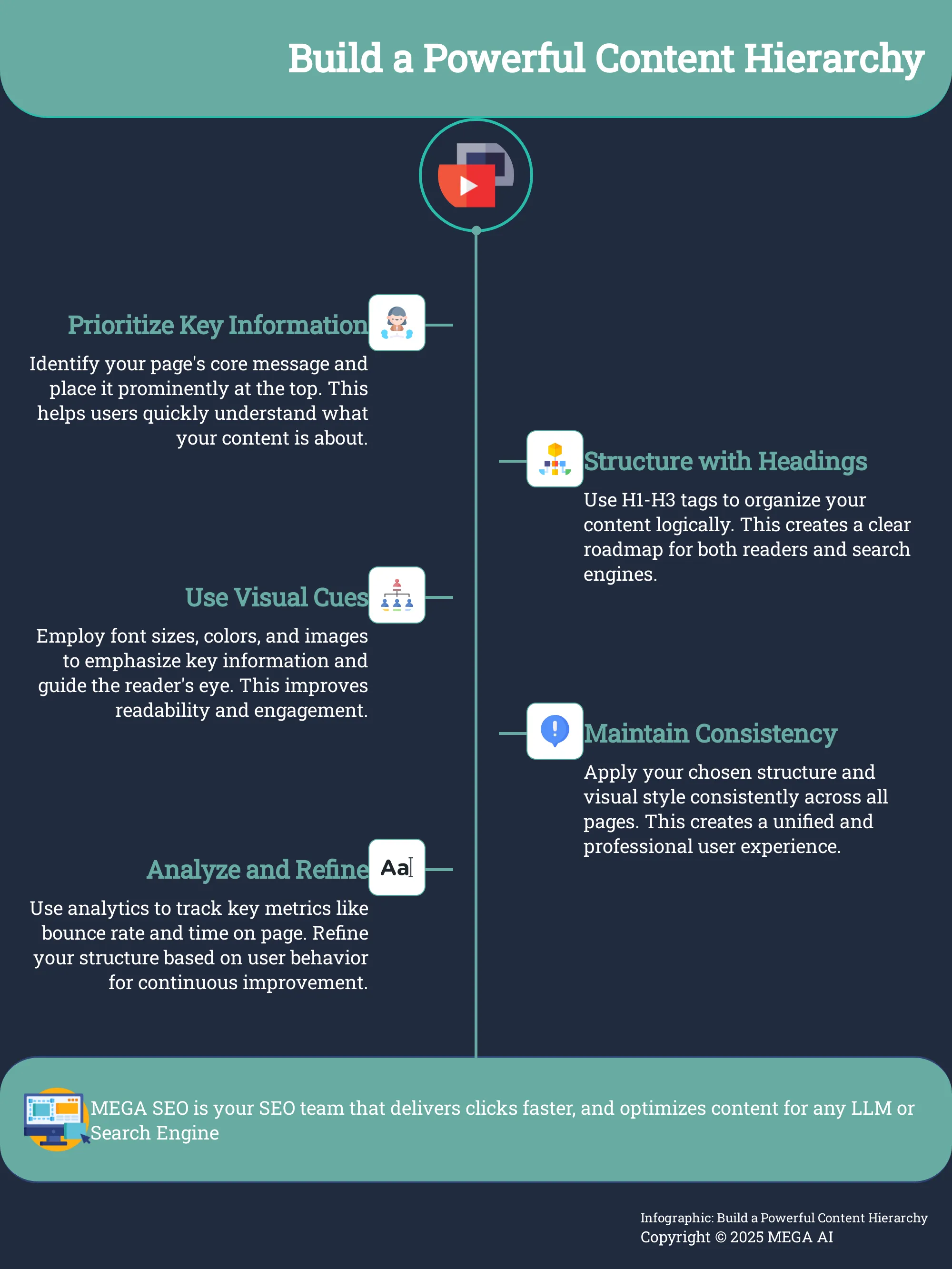
Prioritize Your Most Important Information
When you're organizing your content, always start with the most important information. This shows you value your reader's time by giving them the main points right away. If they want to learn more, they can keep reading. This way, people can easily find the section that matters most to them without needing to dig through a lot of text.
Consider what your audience absolutely must know. Put that information where it’s easy to see, usually at the top of the page or section. This idea of 'front-loading' information is especially helpful because most people scan when they read online. When you give them the key facts first, you’re working with how they naturally read, making your content much more effective.
Use Headings and Subheadings Effectively
Headings and subheadings—like H1s, H2s, and H3s—are the framework for a well-organized page. Your H1 tag is your main page title; it should clearly tell everyone what the page is about. Then, use H2s, H3s, and so on to divide your content into sensible, easy-to-follow parts. This structure isn't just about neatness; it creates clear markers that guide your readers.
A clear system of headings lets people quickly scan your page and pinpoint the information they're after. It also gives search engines a better understanding of your page's main themes and supporting points, which can really help your SEO. As you plan your content, consider how automated keyword research from platforms like MEGA AI can help you find strong keywords to include in these headings, making your content easier to find.
Implement Visual Hierarchy Techniques
It's not just about the words; how your content looks is also really important for guiding your reader's eye. This means using design choices like different font sizes, colors, spacing, and images to make some parts of your content stand out more than others. For example, a bigger font for a heading instantly tells you it's important, and using color smartly can pull attention to things like buttons or key facts.
Creating a distinct visual order makes sure the most critical pieces of information on your page catch the eye first. Good use of white space also keeps your page from feeling too crowded, which helps people take in the information more easily. These visual hints team up with your heading structure to make reading feel natural and straightforward.
Ensure Consistency Across Your Pages
Keeping your content structure consistent across every page of your website is crucial for a positive user experience. When people see a familiar layout and design style on different pages, they can find what they need more easily and will feel more at ease looking around your site. This means using the same styles for your headings, the same color palettes, and the same general page layouts everywhere.
This consistency strengthens the hierarchy you've set up and makes getting around your site feel natural. When people know what to expect, they can concentrate on your actual content instead of trying to learn a new layout on every page. A consistent approach shows you're professional and care about the details, which helps build trust with your audience.
How to Optimize Content Hierarchy for Mobile Users
Many people access websites primarily through their mobile devices these days. This significant shift means that how your content is structured and displayed on smaller screens is incredibly important. If mobile users struggle to find what they're looking for, they're likely to leave your site pretty quickly, often heading to a competitor. Optimizing your content hierarchy for mobile isn't just a nice-to-have; it's truly essential for keeping users engaged and improving your site's overall performance. Thinking about the mobile experience from the very beginning of your design process helps ensure everyone, regardless of the device they're using, has a positive and productive interaction with your content. This dedicated focus on mobile usability directly contributes to better search engine optimization (SEO) outcomes, as search engines increasingly prioritize sites that offer a fantastic mobile experience. When your mobile site is intuitive and easy to use, visitors are naturally more inclined to stay longer, explore more of your pages, and ultimately, take the actions you want them to, like making a purchase or signing up for a newsletter. This is precisely why taking the time to carefully plan and implement your mobile content hierarchy can make a significant, positive difference to your online success and help you reach a wider audience.
Consider Responsive Design Essentials
When we talk about making your site work well on mobile, responsive design is a fundamental piece of the puzzle. Essentially, your website should automatically adjust its layout and content to fit the screen it's being viewed on, whether that's a large desktop monitor, a mid-sized tablet, or a compact smartphone. This adaptability is crucial for your content hierarchy. You want to ensure that your carefully structured headings, subheadings, and all your important information remain clear, legible, and easy to follow on these smaller screens. The main goal here is to provide a seamless user experience that doesn’t sacrifice the logical flow or accessibility of your content, no matter the device. This means text should always be readable without needing to zoom in, and any buttons or links should be easy to tap with a finger.
Adopt Mobile-First Hierarchy Approaches
A mobile-first approach to web design means you start by designing the mobile experience before you design the desktop one. When it comes to your content hierarchy, this involves carefully identifying the most critical pieces of information your mobile users will need and then presenting that information prominently and clearly. Think about what someone on the go, possibly with limited time or attention, would be looking for on your site. Developing a clear visual hierarchy with prioritized content helps users quickly find answers to their questions and complete any tasks they set out to do. Understanding your mobile users' specific needs and structuring your content to meet those goals directly can significantly improve usability and encourage them to explore more of your site, rather than giving up in frustration. This focused strategy ensures your content is effective right where many users will first encounter it.
How Does Content Hierarchy Influence User Behavior?
A well-thought-out content hierarchy does more than just please search engines; it directly shapes how visitors interact with your website. When users land on your page, they make quick judgments. A clear structure helps them understand what your content is about and whether it’s relevant to them. This initial impression is crucial for keeping them on your site and guiding them toward your goals, whether that's reading another article or perhaps booking a demo to see how automation can help.
Understand Its Impact on How Users Navigate
Think about the last time you landed on a confusing website. You probably didn't stick around for long, right? A well-structured content hierarchy organizes your articles and web pages, making them easy for people to read and understand. Since attention spans are quite short, many users will decide if a page is worth their time based on what they see almost immediately. This makes the organization of your content critical for improving the user journey.
Content hierarchy improves how users experience your site by presenting the most important details first. This allows them to quickly grasp the main points and decide if they want to learn more. When content is clearly organized, users can find the specific information they need without feeling overwhelmed or wasting time. This clarity in how users move through your site is key to their satisfaction and helps them find what they need efficiently.
Encourage Users to Explore Your Site More Deeply
When you structure all your written content, informational pages, and other media with a clear hierarchy, you make it easier to draw attention to your most important messages. Hooking a reader's attention from the start can significantly affect their engagement. A logical flow not only helps them find what they initially came for but also makes it natural for them to discover related content on your site, perhaps learning more about your SEO optimization services.
This deeper exploration is exactly what you want. It leads users toward desired actions, like signing up for a newsletter or exploring product features. When users find your site intuitive and valuable, they're more likely to spend more time there, viewing more pages and building a stronger connection with your brand. This kind of engagement turns casual visitors into regular readers or even customers, all because your content was easy to follow.
How to Measure Your Content Hierarchy's Success
Creating a solid content hierarchy is a great first step, but how do you know if it’s actually working for your audience and your SEO goals? Measuring its success is key to understanding what’s effective and where you can make improvements. By looking at the right data, you can see how users interact with your structured content and whether it’s helping them find what they need quickly. This isn't just about numbers; it's about gaining insights into user behavior that can guide your content strategy.
Think of it like this: you’ve organized your house, and now you want to see if your family can find things more easily. Are they spending less time searching for the remote? Are they actually using the new shelving system? Similarly, with your website, you want to see if your organized content leads to a better experience for your visitors and better performance for your business. Regularly checking in on these metrics will help you refine your approach and ensure your content hierarchy continues to serve its purpose effectively.
Identify Key Metrics to Track
To understand if your content hierarchy is effective, you’ll want to look at a few specific metrics. A clear hierarchy aims to improve the user experience by presenting important information upfront, allowing readers to easily decide if they want to learn more. Key indicators of a successful hierarchy include metrics like Time on Page and Average Session Duration. If users are spending more time on your pages, it suggests they are engaged and finding the structured content useful.
Another important metric is Bounce Rate. A lower bounce rate can indicate that users are finding what they expect quickly and are encouraged to explore further rather than leaving immediately. Also, monitor Pages per Session; if users are visiting more pages, your hierarchy might be successfully guiding them to related content. Scroll depth can also be insightful, showing how far down a page users are reading, which helps determine if they are reaching key information placed within your hierarchy. Tracking these metrics will give you a good sense of how well your content structure is performing.
Use Analytics to Refine Your Structure
Once you're tracking these key metrics, the next step is to use analytics to refine your content hierarchy. Your website analytics provide a wealth of information about how users interact with your site. Considering how user needs and goals can be met with a focused content hierarchy is a vital part of your overall website strategy. Tools like Google Analytics can show you user flow, revealing the paths visitors take through your site and where they might be dropping off.
Heatmaps are another excellent tool, visually showing where users click, move their mouse, and how far they scroll. This can highlight if certain headings are being overlooked or if users are struggling to find specific information. A well-structured content hierarchy makes your articles and web pages easy to read for both people and search engines. By analyzing this data, you can identify areas for improvement, such as rephrasing headings for clarity, reordering sections for better flow, or adding visual cues to guide the eye. This iterative process of analyzing and refining will help you continuously improve your content's effectiveness.
What Common Pitfalls Should You Avoid in Content Hierarchy?
Creating a solid content hierarchy is a game-changer for your website, but it's easy to stumble along the way. Knowing what to watch out for can save you a lot of headaches and help you get the best results. Let's look at a few common pitfalls to sidestep so your content structure truly works for you and your audience.
Don't Overcomplicate Your Structure
It's tempting to create intricate structures, especially for complex topics, but simplicity often wins. A well-organized content hierarchy should make your articles and web pages straightforward for both people and search engines to understand. When you overcomplicate things, you risk confusing your readers, which can lead them to leave your page sooner than you'd like—increasing those bounce rates. Think of your hierarchy as a clear roadmap. Each heading and subheading should logically guide users to the information they need without unnecessary detours. Keeping your structure intuitive helps everyone find what they're looking for more easily.
Remember Accessibility Considerations
Your content hierarchy plays a big role in making your website welcoming to everyone. A clear visual and structural organization isn't just good for general user experience; it's essential for making your content accessible to all users, including those who use assistive technologies like screen readers. This means using heading tags (H1, H2, H3, and so on) correctly to define the structure, not just for styling. Proper use of these elements helps screen readers interpret the page, allowing users with visual impairments to understand the flow and importance of different sections. Prioritizing accessibility in your hierarchy design ensures a better experience for a wider audience.
Apply Hierarchy Principles Consistently
Content hierarchy is about guiding your reader. If the rules change from page to page, or even within the same article, it can be jarring. Inconsistency in how you apply hierarchy principles—like using H2s for main points on one page but H3s on another for similar-level information—can lead to confusion and make your content harder to follow. This can cause readers to disengage. Strive for a uniform approach across your entire website. This means using the same logic for headings, subheadings, and visual cues throughout. A consistent structure makes your site feel more professional and easier for users to get familiar with. Tools that help with SEO optimization can also support maintaining this consistency by structuring generated or updated content according to predefined rules.
What Tools and Resources Can Improve Content Hierarchy?
Creating an effective content hierarchy is a significant step, but maintaining and refining it over time is what truly makes a difference for your page views and user engagement. Fortunately, you don't have to do it all manually. There are various tools and established best practices that can guide your efforts, helping you ensure your content remains well-organized, accessible, and optimized for both your audience and search engines. By leveraging these resources, you can systematically improve how users interact with your site and how search engines perceive its value. Let's look at some specific approaches.
Explore Content Hierarchy Analysis Tools
Getting a clear view of your current content structure is the first step to improving it. Content hierarchy analysis tools can be incredibly helpful here. Think of them as a way to audit how your information is organized, ensuring your most important messages are easy to find. These tools can help you visualize your heading structures (your H1s, H2s, and so on) and identify areas where the flow might be confusing for readers. By using such tools, you can ensure your content not only connects with your audience but also delivers the strategic clarity you aimed for from the start. Platforms that support automated SEO, like MEGA AI, also play a role by helping you build well-structured content from the ground up, simplifying this initial setup.
Follow Best Practices for Ongoing Optimization
Once you've established a solid content hierarchy, the work doesn't stop. Ongoing optimization is key to maintaining its effectiveness. Regularly review your content to ensure it still aligns with best practices. This means checking that your most crucial details are front-loaded and that users can easily engage with the information most relevant to them. Developing a clear visual hierarchy is also a continuous effort, making sure important content stands out. As your website evolves, consistently apply these principles. For instance, MEGA AI’s Maintenance Agent can assist with automatic article updates, helping to ensure your content hierarchy remains effective and continues to support both user experience and your SEO goals.
Related Articles
- Site Navigation Benefits: Lower Your Bounce Rate
- Guide to Header Tags for Better On-Page SEO Structure
- Using Internal Links to Improve Site Structure and Boost SEO: Content Optimization Strategies
- Learn How to Structure Your Website to Improve Search Engine Crawlability and Indexing: Advanced Technical SEO Techniques
- Master Technical SEO: A Comprehensive Guide for Success
Frequently Asked Questions
If I'm just starting out, what's the most important first step for creating a good content hierarchy? The best place to begin is by clearly identifying the single most important piece of information you want your audience to take away from each page. Once you know that, make sure it's presented prominently, usually near the top. This simple act of prioritizing helps both your readers and search engines understand your main message right away.
How can I tell if the changes I make to my content hierarchy are actually working? You'll want to keep an eye on a few key indicators in your website analytics. Look for improvements in how long visitors stay on your pages (Time on Page) and whether they're visiting more pages during their session (Pages per Session). A decrease in your bounce rate is also a good sign, suggesting that people are finding your structured content relevant and engaging.
My website is pretty small. Will focusing on content hierarchy still benefit me? Absolutely. Even for smaller sites, a clear content hierarchy makes a big difference. It helps your visitors find what they need more easily, which improves their experience and encourages them to explore more of what you offer. Plus, search engines appreciate well-organized content, regardless of site size, which can help your pages get found more easily.
I'm not a web designer. What are some simple ways I can use visual elements to support my content structure? You don't need to be a design pro to make an impact. Think about using bold text for key phrases, ensuring there's enough white space around your paragraphs so they don't look crowded, and using slightly larger font sizes for your main headings compared to subheadings. These small visual cues help guide the reader's eye and make your content easier to scan and digest.
Is it a huge project to fix the content hierarchy on an existing website? It doesn't have to be. You can start by tackling your most important pages first. Focus on clarifying your headings (H1, H2, H3), ensuring your main points are easy to find, and breaking up long blocks of text. Even incremental improvements can make a noticeable difference to your user experience and SEO.