
Your audience is smart. They can spot a sales pitch from a mile away, and frankly, they’re often tired of them. In a digital world saturated with promotional messages, businesses that offer genuine value are the ones that truly connect and earn loyalty. If you're looking to move beyond superficial interactions and cultivate a dedicated community around your brand, a content-first social media strategy is essential. This approach centers on understanding your audience's needs and interests, then consistently providing content that speaks directly to them. It’s about becoming a trusted resource, not just another advertiser. We’ll explore how to develop this mindset, find unique topics, and craft compelling narratives that resonate deeply, turning passive followers into active supporters.
Key Takeaways
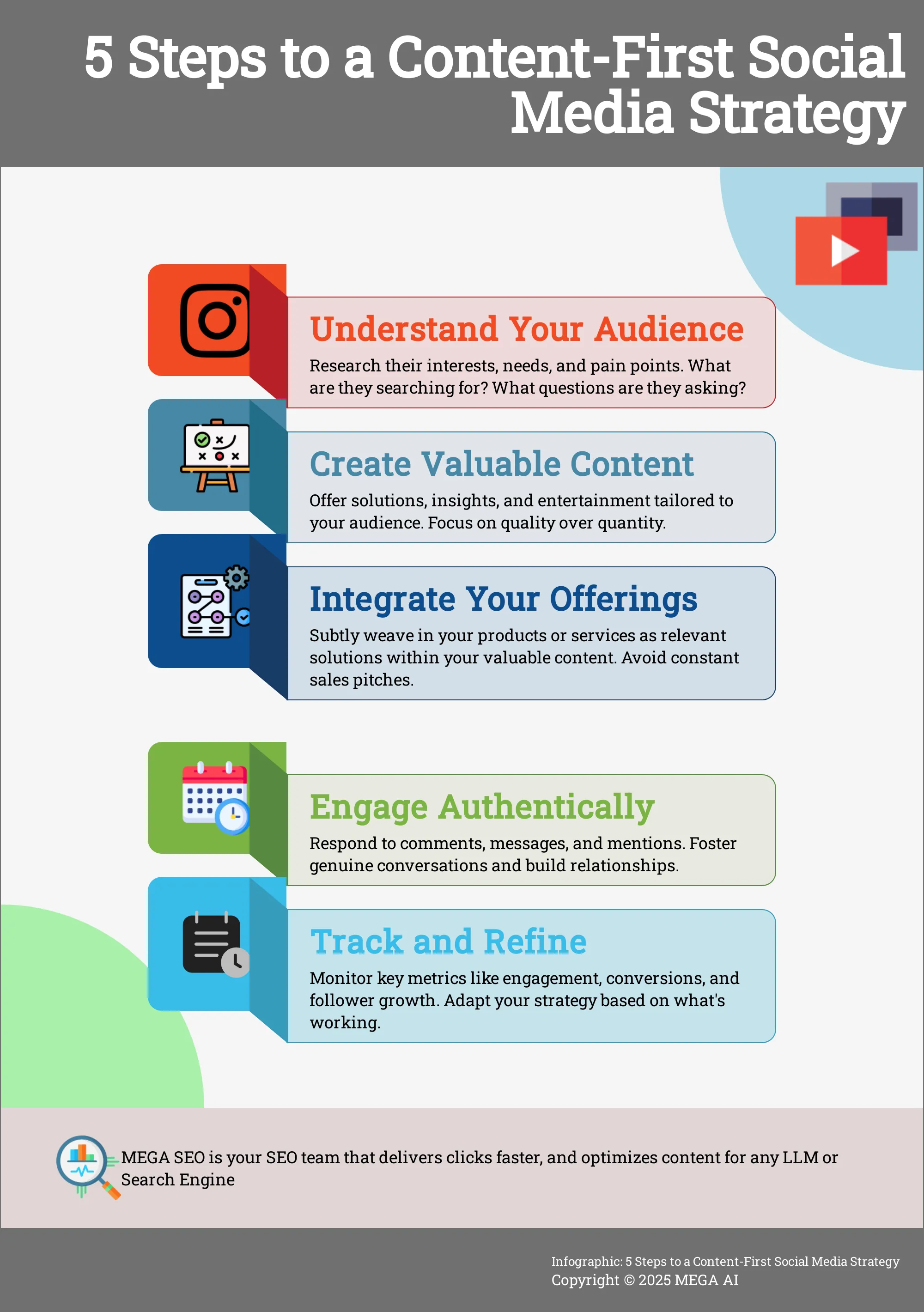
- Prioritize Your Audience's Needs: Craft content that offers genuine solutions, insights, or entertainment to build trust and a dedicated following, rather than focusing solely on sales.
- Plan Thoughtfully and Create Uniquely: Establish a content schedule, discover fresh topics, adapt your message for each platform, and use storytelling to make your brand stand out.
- Maintain Consistency, Foster Interaction, and Track Progress: Establish a clear brand voice and posting rhythm, actively engage with your community, and monitor key metrics to refine your strategy and achieve better results.
What is a Content-First Strategy for Social Media?
A content-first strategy for social media means you prioritize creating genuinely valuable and interesting content for your audience, rather than just pushing your products or services. Think of it as building a relationship. Instead of constantly asking for a sale, you're offering something useful, entertaining, or informative that truly speaks to their interests and needs. This approach centers on storytelling and genuine interaction to cultivate a loyal community around your brand. When you consistently provide content that resonates, people are more likely to trust you, engage with your posts, and eventually, become customers. It’s about earning their attention, not just demanding it.
The core idea is to understand what your audience cares about and then deliver content that meets those needs or sparks their curiosity. This might involve sharing helpful tips, offering insights into your industry, telling compelling brand stories, or starting meaningful conversations. It’s a shift from a purely promotional mindset to one that focuses on providing utility and building connections. While it can take time to develop an effective social media content strategy and create a consistent content calendar, the long-term goal is to make your social media channels a go-to resource for your audience. This way, your business objectives are supported by content that people actually want to see and interact with, leading to more authentic engagement and stronger brand loyalty.
Why Quality Content Matters More Than Quantity
It's a common trap to think that flooding social media with posts is the way to get noticed. However, with billions of content pieces created daily, simply adding to the noise isn't effective. As marketing expert Neil Patel highlights, a primary mistake businesses make is posting too much. The real aim should be to create genuinely good pieces of content that offer new, fresh information. Instead of a scattergun approach, focusing on quality ensures your message actually lands.
So, what does quality content look like? It’s information that truly speaks to your audience – it's valuable, engaging, and, most importantly, relevant to their interests and needs. When your content resonates, you'll see higher engagement, which is a clear indicator that your audience finds your posts meaningful. This translates to more likes, shares, comments, and ultimately, a stronger connection with potential customers. It’s about sparking conversations and building a community, not just broadcasting messages.
Many businesses also stumble by posting too much promotional content. While growing your business is the objective, an endless stream of sales pitches can unfortunately turn your audience away. A successful organic social media strategy, as experts like Darrell Evans suggest, requires a consistent effort to produce engaging, high-quality content tailored to your target audience. This approach builds trust and positions your brand as a valuable resource, making people more receptive when you do share something promotional. The goal is to provide value first, which naturally leads to better business outcomes.
Find Untapped Topics in Your Niche
To truly connect with your audience and grow your business through social media, you need to offer something fresh and valuable. This means moving beyond generic posts and finding those specific topics within your niche that people are eager to learn about but aren't yet widely discussed. When you can pinpoint these less-covered areas, you have a fantastic opportunity to establish your brand as a knowledgeable resource and attract a genuinely interested following. It’s all about actively listening to what your potential customers and the broader market are indicating. By tuning into these signals, you can create content that directly speaks to emerging interests and current questions. This approach not only helps you stand out but also builds a stronger, more meaningful relationship with your audience, encouraging them to see you as a go-to source in your field.
Use Tools to Find Content Gaps
One effective way to uncover fresh topics is by using specialized tools. Platforms like AnswerThePublic can be incredibly insightful for this. When you type in keywords related to your industry, the tool shows you what questions people are actually asking on social platforms and search engines. This gives you a direct line into current curiosities and emerging trends—the "up and coming" information that hasn't been extensively covered yet. When you create content around these newer, less saturated topics, you have a much better chance of capturing attention and being seen. This strategy helps you become a source for timely and relevant information, setting you apart from competitors who might be covering more common ground.
Analyze Competitor Content
Keeping an eye on your competitors and the broader industry conversation is also quite useful. By actively tracking mentions of your brand, your competitors, and relevant industry trends, you can gain a clear understanding of what people are discussing and how they feel. This practice of social listening helps you identify gaps in the existing content landscape—topics your competitors might be overlooking or unique angles they haven't explored. Understanding customer sentiment allows you to tailor your content strategy more effectively. Once you've identified these opportunities and started creating valuable content that addresses these gaps, you can then begin to naturally integrate information about the products and services you offer.
Create High-Value, Unique Content
When you adopt a content-first approach for your social media, the quality and originality of what you share become your top priorities. Think of high-value content as anything your audience genuinely finds useful, informative, entertaining, or inspiring. It’s the kind of material that directly addresses their problems, answers their pressing questions, or simply makes their day a little better. Originality isn't just about being different for difference's sake; it’s about presenting fresh viewpoints or, as marketing expert Neil Patel puts it, crafting "really good pieces of content on new fresh information that hasn't been talked about yet." This means stepping away from generic updates and focusing on delivering something truly distinct that makes your brand memorable.
Consistently producing this caliber of content is how you establish authority within your niche and cultivate a dedicated community. When your followers learn they can count on you for insightful and original posts, their engagement naturally increases—they’re more inclined to interact, share, and, importantly, trust your brand. This trust is the bedrock for turning followers into loyal customers. To get there, you’ll need a solid understanding of your audience: What challenges do they face? What subjects are they keen to explore? What information gaps can you fill? Addressing these points will direct your content creation, helping you produce material that genuinely connects and offers real worth, instead of just contributing to online clutter. This also involves actively listening to conversations in your industry and identifying underserved topics where your unique perspective can shine.
Develop Your Content Calendar
A content calendar is your roadmap for social media success. It’s a detailed plan of what you’ll post, when, and on which platforms. Creating your content calendar might seem like a significant upfront investment of time, especially if you're active on multiple social channels, but a well-structured calendar is invaluable. It helps streamline your content creation process and ensures you maintain a consistent presence. This consistency is key to keeping your audience engaged and your brand top-of-mind. Your calendar should include a mix of content types, themes, and campaign-specific posts, all aligned with your overall marketing goals. Planning ahead also allows you to be more strategic and less reactive, giving you space to craft higher-quality posts.
Tailor Content for Each Social Platform
Not all social media platforms are created equal, and your content shouldn't be either. Effective social media marketing involves understanding the nuances of each channel and adapting your message accordingly. What works wonders on Instagram, with its visual focus, might fall flat on LinkedIn, which favors professional insights and industry news. Take the time to learn the best practices for each platform you use. Consider the audience demographics, the types of content that perform well, and the unwritten rules of engagement for each space. Tailoring your content ensures it feels native to the platform, increasing its chances of being seen and appreciated by the right audience. This targeted approach makes your efforts more effective.
Prioritize Fresh Information
In the dynamic world of social media, fresh information acts like a magnet for attention. Prioritizing new, relevant, and timely content can significantly impact your reach and engagement. When you consistently share novel insights or the latest developments in your field, you position your brand as a go-to resource. This focus on freshness directly influences key social media metrics, such as engagement rates, follower growth, and even conversion rates. Strive to be among the first to discuss emerging trends or offer a unique take on current events relevant to your audience. This proactive approach keeps your content strategy dynamic and your audience looking forward to your updates.
Use Visuals Effectively
Visuals are a powerful component of social media communication. Whether it's striking images, engaging videos, informative infographics, or even well-chosen GIFs, visual elements can stop the scroll and make your message more memorable. Effective social media storytelling often involves a thoughtful blend of text and visuals to create a cohesive and captivating narrative. Think about how you can use visuals to complement your textual content, illustrate complex ideas simply, or evoke emotion. High-quality, on-brand visuals can significantly improve user experience and make your content more shareable, extending its reach far beyond your immediate followers.
Integrate Products and Services into Your Content
Once you've identified those untapped topics and are ready to create high-value content, the next step is to thoughtfully weave in your products or services. The idea isn't to hit your audience over the head with a sales pitch in every post. Instead, it's about making a natural connection between the valuable information you're providing and how your offerings can help them achieve their goals or solve their problems. Think about what people are searching for and what information is scarce. When you create content on these subjects, you're more likely to attract views. Then, you can begin to integrate the products and services you sell, which can help drive more revenue.
For instance, if you're discussing the challenges of scaling content creation for a growing business, you could naturally mention how a tool like MEGA AI helps automate content generation, saving time and resources. The key is relevance and subtlety. Your product should appear as a helpful solution within the context of the valuable information you're already sharing, not as an abrupt interruption. This approach builds trust and positions your offerings as genuinely useful. By focusing on solving your audience's problems first, the introduction of your product feels like a natural extension of the help you're providing, rather than a forced advertisement. This method respects your audience's intelligence and fosters a more authentic connection.
Balance Promotional Content with Value
One of the quickest ways to lose your audience on social media is by posting too much promotional content. It’s a common misstep, but an easy one to correct. Your audience follows you for the value you provide—be it educational, entertaining, or inspiring. If every post is a direct sales pitch, they'll likely tune out. Instead, aim for a healthy mix. While there's no magic ratio, many find success by ensuring the vast majority of their content is purely valuable, with promotional content sprinkled in more sparingly.
Focus on producing engaging, high-quality content tailored to your target audience consistently. This builds a loyal following that is more receptive when you do share something about your products or services. Think of it as making deposits of goodwill. When you consistently offer helpful advice or interesting insights, your audience will be more open to hearing about how your business can help them further. This approach respects their attention and fosters a stronger, more positive relationship.
Craft Compelling Calls-to-Action
Even the most valuable content needs a little nudge to guide your audience toward the next step. This is where a clear and compelling call-to-action (CTA) comes in. Your CTA tells your audience what you want them to do next, whether it's to learn more, visit your website, sign up for a newsletter, or book a demo. Without a CTA, you're leaving potential engagement or conversions on the table. Make sure your CTAs are direct, easy to understand, and align with the content of your post.
Setting smart social media KPIs will help your team focus on the metrics that really matter, and CTAs play a big role in achieving those goals. For example, if a business goal is to increase leads, a relevant CTA would be "Download our free guide" or "Request a consultation." You can also track the response rate to different CTAs to understand what resonates most with your audience. This data helps you refine your approach and make your social media efforts more effective in driving tangible business results.
Measure Your Social Media Success: Key Metrics
Creating great content is a fantastic start, but how do you know if your social media efforts are truly paying off? The answer lies in tracking the right numbers. By regularly measuring key metrics, you can understand what’s working, what’s not, and make informed decisions to refine your strategy for better results. This isn't just about vanity numbers; it's about understanding your audience and driving real business growth. Let's look at some of the most important metrics you should be monitoring.
Track Engagement Rates and Understand Their Impact
Engagement is a vital sign of your social media health. It shows how actively your audience interacts with your content and includes actions like likes, shares, comments, and saves. A high engagement rate generally means your content is hitting the mark and resonating with your followers. As SocialSellinator explains, this is essential for building a loyal community and fostering business growth. Pay attention to which posts get the most interaction; this can give you valuable clues about the topics and formats your audience prefers, helping you create more of what they love. Most social media platforms offer built-in analytics to track these interactions.
Track Conversions and Revenue
While engagement is important for community building, conversions are where your social media efforts translate directly into business outcomes. A conversion happens when a social media user takes a desired action, such as making a purchase, signing up for a newsletter, or downloading a resource. According to Forbes Advisor, understanding your conversion rate helps you assess how effective your social media strategy is at driving revenue. To track this, you can use tools like UTM parameters in your links, platform-specific pixels (like the Meta Pixel), and your website analytics. This data will clearly show the return on investment from your social media activities.
Monitor Follower Growth and Expand Your Audience
Keeping an eye on your follower growth helps you understand how your audience is expanding over time. While a large follower count can look impressive, it's often more insightful to track the rate of growth. A steady increase suggests your content strategy is effective in attracting new people to your brand. As highlighted by Softailed, using social media management tools can help you track this growth rate and identify trends in audience interest. This isn't just about numbers; it's about reaching more potential customers and understanding what draws them to your brand, allowing you to continuously refine your approach.
Build a Consistent Brand Voice on All Channels
Think of your brand voice as your business's personality. Is it witty and playful, or perhaps more formal and informative? Whatever you decide, the key is to keep that voice consistent across every social media platform you use. This doesn't mean saying the exact same thing everywhere, but rather ensuring the way you communicate feels familiar and authentic to your audience, no matter where they find you. Effective storytelling is a powerful tool here; it's about weaving a narrative that resonates with your audience and reflects your core values. When your message is clear and consistent, it helps people connect with what your business stands for.
When your voice is consistent, you build recognition and trust. People start to understand who you are and what you represent. This consistency helps you tell stories that captivate and engage your audience, making your brand more memorable. Whether you're sharing updates on Instagram, professional insights on LinkedIn, or quick tips on TikTok, that core personality should shine through. This creates a cohesive experience for your followers and strengthens your overall brand identity. It’s about making sure that every interaction, big or small, reinforces what your brand is all about, helping you stand out in a crowded digital space.
Maintain a Regular Posting Schedule
Once you've established your brand voice, showing up regularly is crucial. Imagine your favorite local coffee shop suddenly having erratic hours – you’d likely find another spot pretty quickly. The same principle applies to social media. You need a consistent effort to produce engaging, high-quality content tailored to your audience. This doesn't mean you have to post multiple times a day on every platform, but find a rhythm that works for you and, more importantly, for your audience.
A common misstep is posting too much promotional content without offering other types of value. Strive for a balance. Mix in valuable, informative, or entertaining posts with your promotional messages. Planning your content with a calendar can be a lifesaver here, helping you maintain that steady flow without scrambling for ideas at the last minute. Consistency keeps your audience engaged and shows them you’re committed to providing value, which builds loyalty over time.
Engage Actively with Your Audience
Social media isn't a monologue; it's a conversation. Actively engaging with your audience means more than just posting content – it's about listening and responding. When people comment on your posts, send you messages, or mention your brand, take the time to reply thoughtfully. This is your chance to build real relationships and show the human side of your business, making your brand more approachable.
By tracking mentions of your brand and industry trends, you gain valuable insights into what people are saying and how they feel. This feedback is gold for refining your strategy and understanding your customers better. Using relevant hashtags effectively can also draw more people to your profiles and foster meaningful connections. Active engagement turns followers into a community and, ideally, into advocates for your brand.
Use Storytelling to Connect on Social Media
When we talk about using social media for your business, it's easy to get caught up in posting updates or promotions. But if you want to truly connect with your audience, storytelling is where the magic happens. Think of it as inviting people into your brand’s world, sharing not just what you do, but why you do it, the journey you’re on, and the real people behind your business. When you share compelling narratives, you move beyond simple transactions and start to build a genuine community. This approach helps your audience understand the heart of your brand, making it more memorable and relatable. It’s a fundamental shift from just broadcasting messages to creating shared experiences and fostering a sense of belonging.
This doesn't mean you need to craft epic tales. Often, the most powerful stories are the authentic ones found in your day-to-day operations. These could be customer success stories that highlight the impact of your product, behind-the-scenes glimpses that show your company culture, the challenges your team has overcome, or the core mission that fuels your work. These narratives provide depth and context, allowing your audience to form a deeper connection with your brand. By sharing these genuine moments, you can build trust and loyalty, which are incredibly valuable in today's busy digital world. Remember, people connect with people, and storytelling is a fantastic way to humanize your brand and make it stand out.
Create Emotional Connections
Storytelling isn't a new marketing gimmick; it's a fundamental part of how humans have communicated for millennia. As the team at VisioneerIT aptly puts it, "Storytelling is an age-old art form; one of the earliest methods of communication known to humanity. As a result, we as humans have developed a 'soft spot' of sorts when it comes to storytelling, which is why it's such an effective tool." This inherent appreciation for narrative is precisely what makes it so potent in your social media strategy. When you share a story, you're tapping into a deeply ingrained way we process information and relate to one another.
The aim here is to go beyond surface-level engagement like likes and shares. The Influence Room describes this well: "Social media storytelling is the art of using narrative techniques to engage and connect with your audience on platforms like Instagram, TikTok, YouTube, and more. It's about going beyond mere promotion and creating content that resonates with people on a personal level." This means crafting content that genuinely evokes feelings—whether it's joy, inspiration, empathy, or even a shared laugh. These emotional connections are the foundation of strong brand affinity and can transform casual followers into enthusiastic advocates for your business.
Adapt Your Stories to Platform Trends
While the heart of your brand's story might stay consistent, the way you present it needs to be versatile. Social media platforms are dynamic environments. As Social Peak Media points out, "Social media platforms are constantly changing, introducing new features and trends. Staying adaptable is essential for effective storytelling." What captivates an audience on a platform like TikTok, with its short, punchy video format, might not have the same impact on a more professional, text-oriented platform like LinkedIn. Understanding these platform-specific nuances is crucial for your story to land effectively.
This adaptability also involves making the most of the unique features each platform offers. Lead Origin highlights that effective social media storytelling "leverages the visual and interactive nature of these platforms, blending text, images, videos, and user-generated content to create a cohesive narrative." This could mean using Instagram Stories' interactive polls and Q&A stickers to engage your audience, creating those trending short videos for TikTok or Instagram Reels, or crafting more detailed, thoughtful posts for Facebook. Keeping an eye on emerging social media trends and features allows you to tell your stories in the most compelling and appropriate way for each specific audience you're trying to reach.
Use AI Tools for Content Creation and Optimization
Creating consistently high-quality content for social media can feel like a significant undertaking, especially when you're juggling multiple platforms and business priorities. This is where AI tools come into play, offering a smart way to enhance your content creation process without sacrificing quality. Think of AI as a capable assistant that can help you generate content ideas, draft initial posts, and even refine your messaging for specific audiences. By handling some of the more repetitive tasks, such as initial drafts or suggesting variations, these tools free you and your team to concentrate on the bigger picture: strategic planning, creative direction, and genuine audience engagement.
Many businesses find that AI significantly streamlines their workflow. Instead of spending hours staring at a blank page trying to come up with fresh angles or the perfect wording, you can use AI to get a head start. This efficiency doesn't just mean faster content production; it means you have more bandwidth for brainstorming innovative campaigns, analyzing performance, and fine-tuning your overall social media strategy. Furthermore, AI can assist in organizing your content calendar and ensuring your posts align with your business objectives, helping you maintain a consistent and impactful presence across platforms. The goal isn't to replace human creativity but to augment it, allowing you to produce more resonant content more effectively and build stronger connections with your audience.
Streamline Your Social Media with MEGA AI
If you're looking to integrate AI into your social media efforts, platforms like MEGA AI offer features that can simplify and improve your content workflow. While MEGA AI provides robust SEO services, many of its capabilities directly apply to crafting a strong social media presence. For instance, its automated keyword research can uncover trending topics for your social posts, ensuring your content resonates. The content generation features can help draft engaging captions or repurpose long-form content into social updates.
MEGA AI’s strength lies in its end-to-end automation, which is particularly helpful for busy teams. You can quickly remix content or adapt elements for diverse audiences without a complex manual process. Its Maintenance Agent, identifying new content opportunities, can also inspire fresh social media series. By simplifying content creation, MEGA AI makes sophisticated social media management more accessible. You can explore these features to see how they fit your needs.
Avoid These Common Social Media Pitfalls
Social media can be a fantastic way to connect with your audience and grow your business. However, it's easy to make missteps that can actually work against you, undermining your hard work. Understanding these common pitfalls is the first step to sidestepping them and making your social media efforts truly effective. Think of it like this: you wouldn't want to spend time and resources crafting great content only to have it fall flat because of a preventable error in your approach. From overwhelming your followers with too many posts, to not truly understanding what they want to see, or even just failing to present your brand consistently, these mistakes can lead to disengagement and missed opportunities.
The good news is that with a little awareness and strategic adjustment, you can steer clear of these issues. We'll look at a few key areas where businesses often stumble, so you can build a social media presence that genuinely resonates and delivers results. By being mindful of these potential traps, you can ensure your content-first strategy has the best chance of success, helping you build stronger relationships and increase engagement. This isn't about scaring you off, but rather empowering you with the knowledge to make smarter choices for your brand's online presence.
Avoid Overposting and Content Saturation
It's tempting to think that the more you post, the more visible you'll be. However, there's a fine line between staying top-of-mind and overwhelming your audience. "Posting too much promotional content on your social media profiles is a common mistake that many businesses make," as marketing expert Angie Gensler points out. This can lead to what's known as audience fatigue, where your followers start to tune out or even unfollow because they feel bombarded by constant sales pitches instead of genuinely useful or entertaining content. The key is to find a posting rhythm that provides consistent value without flooding feeds. Focus on quality over sheer quantity, ensuring each post serves a purpose for your audience and contributes positively to their online experience.
Listen to Your Audience's Needs and Preferences
Your social media strategy shouldn't exist in a vacuum. To create content that truly connects, you need to actively listen to what your audience is saying and what they care about. As The Digital Swim highlights, "By actively tracking mentions of your brand and industry trends, you can identify what people are saying, understand customer sentiment, and adjust your strategy accordingly." This means paying attention to comments, messages, and overall conversations happening around your niche. Use social listening tools or simply dedicate time to monitor discussions to gather these insights. This understanding allows you to tailor your content to meet their specific needs and preferences, making your brand more relevant and engaging.
Experiment with Different Content Formats
Sticking to the same type of post day in and day out can make your social media presence feel stale. A robust social media approach involves more than just occasional text updates. Darrell Evans emphasizes that success "demands a consistent effort to produce engaging, high-quality content tailored to the business's target audience. Experimenting with various formats—such as videos, infographics, and live streams—can significantly enhance engagement." Don't be afraid to try new things and see what resonates. Videos can showcase your products in action, infographics can simplify complex information, and live streams offer real-time interaction. Mixing up your content formats keeps your feed interesting and appeals to different audience preferences, ultimately making your social media more dynamic.
Related Articles
- Social Media Marketing in 2025: Strategies for Success
- Startup Content Marketing Guide to Grow Your Brand
- How to Create Educational Social Media Posts That Work
- Unlock Your Facebook Audience Inside: The Ultimate Guide
- Content Consumption Trends: 2025 and Beyond
Frequently Asked Questions
I'm worried about sounding too salesy. How do I talk about my products with a content-first approach? That's a common concern. The idea is to weave your products or services in naturally, as solutions to the problems or interests you're already discussing. If your content genuinely helps or informs your audience, mentioning how your offering fits in will feel like a helpful suggestion rather than an aggressive pitch. Focus on providing value first, and then gently guide them when it makes sense.
Finding new content ideas feels overwhelming. Any quick tips for discovering what to post about? It definitely can feel like a lot. A great starting point is to think about the questions your customers ask you most often. You can also use tools that show you what people are searching for online related to your industry. Another tip is to look at what your competitors are discussing and see if there are any gaps or fresh angles you can explore.
Is it better to post a lot, or focus on fewer, really good posts? It's definitely about quality over quantity. Your audience's time is valuable, and they're more likely to engage with content that truly offers them something useful, interesting, or new. Instead of trying to post constantly, aim to create fewer pieces that are well-crafted and genuinely resonate with the people you're trying to reach.
How do I keep my brand sounding the same if I'm on multiple social media platforms? Think of your brand voice as its personality. While the type of content might change slightly from Instagram to LinkedIn, for example, that core personality should remain consistent. Decide on the key traits of your brand's voice—is it helpful, witty, inspiring?—and make sure that shines through in all your communications, regardless of the platform.
What's the best way to know if my content-first strategy is actually working? You'll want to look at a few key things. Are people interacting with your posts through likes, comments, and shares? That's a good sign your content is resonating. Also, track if your social media efforts are leading to tangible actions, like visits to your website or sign-ups. And, of course, keep an eye on your follower growth to see if you're attracting more of your ideal audience.