
Guest blogging is a cornerstone of a strong SEO strategy, but its success hinges on finding the right platforms and topics. Simply writing great content isn't enough; you need data-driven insights to guide your efforts. Content Explorer offers precisely that, helping you uncover not just potential guest post sites but also low-competition keywords and trending content themes. This article will guide you through using this tool to work smarter, not just harder. We'll cover how to identify opportunities that genuinely build your site's authority and visibility, ensuring your guest blogging integrates seamlessly with your broader content and SEO goals for maximum impact.
Key Takeaways
- Pinpoint Prime Guest Post Targets: Employ content exploration tools with targeted keywords and smart filters to uncover high-potential guest blogging sites and discover valuable low-competition keywords.
- Secure More Guest Posts with Smart Outreach: Increase your acceptance rate by personalizing your pitches, clearly showing the value your content provides to their audience, and building genuine connections with site editors.
- Maximize Your Guest Blogging Impact: Integrate guest posting with your broader content strategy, track essential metrics to measure performance, and use these insights to consistently refine your approach for better outcomes.
What is Content Explorer and Why Use It for Guest Posts?
Imagine having a specialized search engine designed specifically to help you discover valuable content across the web. That's essentially what Content Explorer is. It's a powerful tool, often found within comprehensive SEO platforms like Ahrefs, that allows you to search for articles using specific keywords. This makes it an incredibly useful resource when you're on the hunt for guest posting opportunities. With an extensive and continuously updated content index—we're talking about a database holding details on approximately 870 million pages and growing by about 5 million new pages each day—you get access to a vast and current array of potential sites.
So, why should you integrate Content Explorer into your guest posting strategy, especially if you're a startup or small business looking to make an impact? One of its standout advantages is its sophisticated filtering capability. For example, you can apply a filter to see only unique domains that match your search. This is a huge time-saver because it helps you identify distinct websites for potential guest contributions without sifting through duplicate results from the same site. This functionality not only makes the process of finding guest posts more efficient but also helps you pinpoint relevant and authoritative sites to enhance the quality of your outreach. For busy marketers and agency teams, this means you can quickly build a high-quality prospect list, ensuring your guest blogging efforts are targeted and effective from the get-go. It’s about working smarter to find those prime guest blogging spots that can truly move the needle for your online presence.
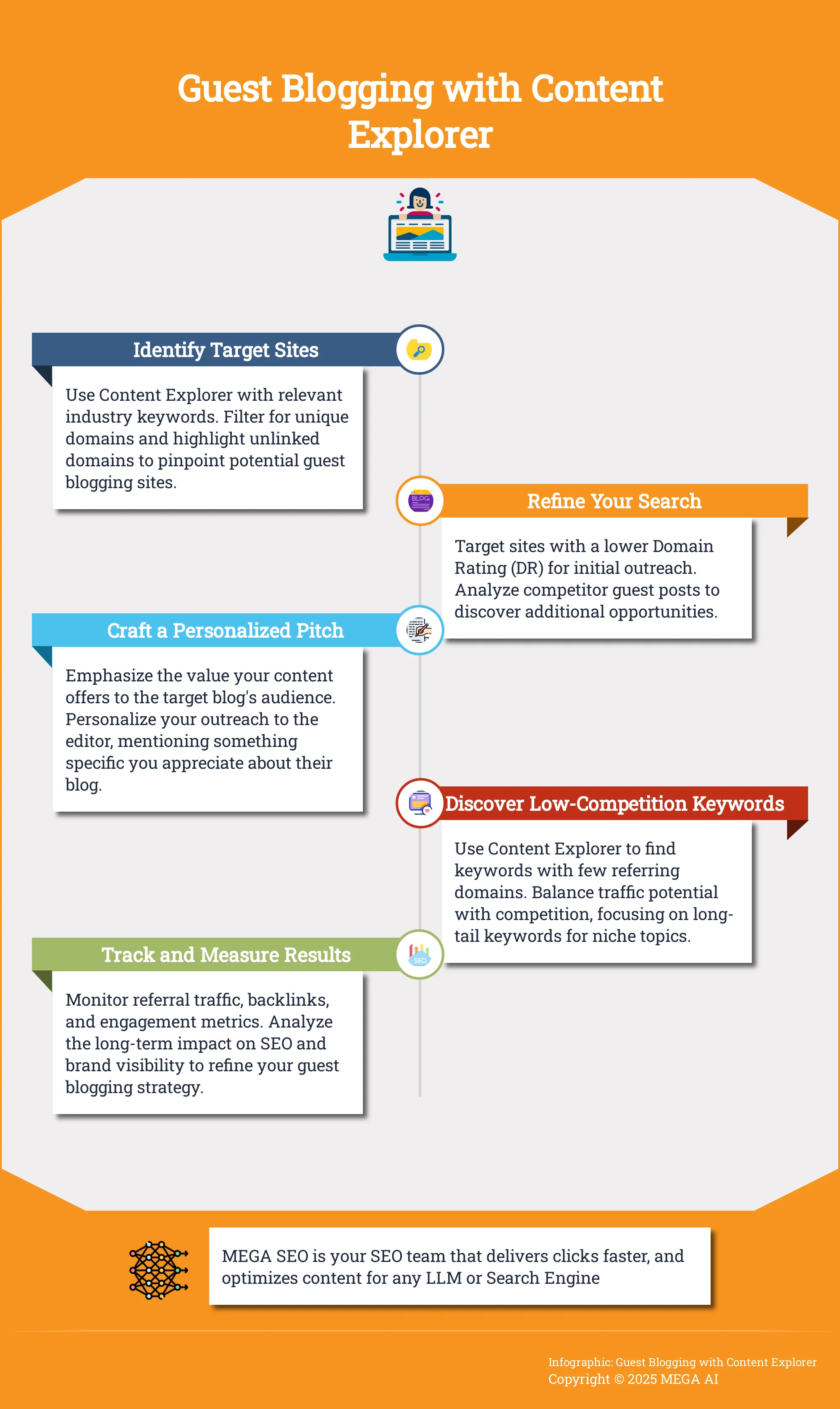
Find Guest Blogging Opportunities with Content Explorer
Finding the right places to guest blog can sometimes feel like a treasure hunt without a map. You know there are great opportunities out there, but pinpointing them efficiently is the real challenge. This is where a tool like Ahrefs' Content Explorer comes into play, transforming a potentially time-consuming task into a structured and effective process. Instead of sifting through endless search results, Content Explorer allows you to systematically uncover websites that are not only relevant to your niche but are also actively publishing content like yours. This targeted approach means you can focus your energy on crafting compelling pitches for sites that are a genuine fit.
The beauty of using a dedicated tool is the ability to layer different search parameters and filters. This helps you move from a broad list of potential sites to a highly curated selection of prime guest blogging candidates. Think of it as starting with a wide net and gradually refining your catch until you have exactly what you're looking for. This process is invaluable because it helps you identify sites that are actively seeking guest contributions and are more likely to respond to your outreach. Furthermore, by understanding the content landscape through such tools, you can better align your guest post ideas with what's currently resonating, making your pitches even stronger. For instance, insights from MEGA AI's SEO platform can help you identify core keywords and topics your brand wants to be known for, which you can then use as a starting point in Content Explorer.
Use Relevant Industry Keywords
Your journey to finding guest blogging gold begins with the right keywords. In Content Explorer, you'll want to start by entering a keyword phrase that's central to your industry or the topic you want to write about. For example, if your expertise lies in "video marketing," you would type that directly into the search bar. This initial search is designed to cast a wide net, potentially bringing back thousands of articles and blog posts related to your term. As the Ahrefs tutorial on this topic points out, a query like this can yield around 77,000 results. Don't be overwhelmed by the volume; this comprehensive list is your raw material, providing a rich database from which you'll refine your search for the perfect guest blogging spots.
Apply Filters for Unique Domains
Once you have that initial, extensive list of content pieces, the next step is to ensure you're looking at unique websites. It's common for popular sites to publish multiple articles on the same topic, and you want to avoid seeing the same domain pop up repeatedly. To streamline your list, apply a filter for "one article per domain." This crucial step narrows down your results significantly, focusing your attention on distinct websites. Using the "video marketing" example again, applying this filter can reduce the list from tens of thousands to a more manageable number, perhaps around 19,000 unique domains. This refinement is key to efficiently identifying a diverse range of potential guest posting targets without getting bogged down by duplicate entries.
Use the Highlight Unlinked Domains Feature
To really sharpen your guest blogging strategy, take advantage of the "highlight unlinked domains" feature within Content Explorer. This nifty tool helps you quickly spot websites that have published content relevant to your keywords but have never linked back to your own site. Why is this important? Earning a backlink from a domain that hasn't linked to you before is often considered more valuable from an SEO perspective than getting another link from a site that already links to you. It signals to search engines that a new, authoritative voice is vouching for your content. Focusing on these unlinked domains means you're prioritizing opportunities that can offer the most significant SEO benefit and help diversify your backlink profile effectively.
Craft Effective Guest Blogging Outreach
So, you've used tools like Content Explorer to pinpoint some promising guest blogging opportunities. That’s a fantastic start. But identifying the right blogs is only half the journey. The next, and arguably more critical, phase is your outreach. How you approach blog owners and editors can be the deciding factor between your pitch landing successfully or getting lost in the digital noise of a crowded inbox. Crafting an effective outreach message isn't just about asking for a platform to share your content; it’s a nuanced skill that involves demonstrating genuine interest, thorough preparation, and a clear understanding of the value you bring.
Many marketers and small business owners find this stage challenging. It's easy to fall into the trap of sending generic, impersonal emails, hoping that a sheer numbers game will eventually yield results. However, a more strategic and personalized approach is far more effective and respects the time and effort of the content managers you're contacting. Think of it as building a bridge: your pitch is the initial blueprint, and the quality of that blueprint determines if the bridge gets built. In the following sections, we'll explore practical, actionable strategies to help you craft compelling outreach messages that not only get opened but also get a resounding 'yes.' We'll cover targeting the right sites for your current goals, the power of personalization, how to clearly articulate the value you offer, and the long-term benefits of building genuine relationships within your niche. Mastering these elements will significantly improve your guest blogging success rate and help you build valuable backlinks for your own site.
Target Lower Domain Rating Sites
When you're starting with guest blogging or aiming for quicker wins, consider focusing some of your efforts on sites with a lower Domain Rating (DR). While high-DR sites are attractive, they often have more stringent requirements and receive a higher volume of pitches, making it tougher to break through. Targeting sites with a DR of around 30 or below, as Ahrefs' guide on finding guest blogging sites suggests, can be a smart and practical approach. These sites are often more accessible and genuinely open to contributions from newer writers or those looking to establish their authority. This strategy allows you to build your portfolio, gain valuable backlinks more readily, and refine your pitching skills. As you accumulate successful guest posts, you can then gradually set your sights on higher DR publications.
Personalize Your Pitch
A generic, copy-pasted email is one of the quickest ways to get your guest post pitch ignored. Taking the time to personalize your outreach shows genuine respect for the blog owner and their work, making your message stand out. Mention something specific you liked about their blog—perhaps a recent article, a particular viewpoint they shared, or their overall mission. According to TechBullion, effectively introducing oneself and offering multiple, well-thought-out topic ideas tailored to their specific audience can significantly improve your acceptance rate. This personal touch demonstrates that you understand their content, value their readership, and are genuinely interested in contributing something relevant, rather than just seeking a backlink for your own benefit.
Provide Value in Your Proposal
Your guest post pitch needs to clearly and concisely communicate the value you're offering to the blog and its readers. Many small business owners and marketers struggle to make their pitches stand out precisely because they don't adequately highlight this crucial aspect. Instead of simply stating your desire to write for them, explain why your proposed topic is a compelling fit. How will it benefit their specific audience? Does it fill an existing content gap, offer a fresh perspective on a trending subject, or provide actionable advice their readers can implement? As The Wizard Marketing points out, researching target blogs thoroughly is key to understanding what unique value you can provide. Suggest well-researched article ideas that resonate with their existing content and audience interests.
Build Relationships with Blog Owners and Editors
Guest blogging isn't just a one-off transactional process; it's a valuable opportunity to build meaningful, long-term professional relationships. Think beyond securing a single guest post. Engage with the blog owner or editor before you even send your pitch. You can do this by thoughtfully commenting on their posts, sharing their content on your social media channels, or participating in relevant discussions they're part of. BlogEarns emphasizes the importance of engaging in discussions to add value and showing appreciation for feedback as foundational steps in building these connections. These interactions can help you get on their radar in a positive way, making your eventual pitch more warmly received. Nurturing these connections can lead to more guest blogging opportunities, potential collaborations, and a stronger, more supportive network within your niche.
Master Advanced Guest Post Research
Once you've got the basics of guest blogging down, it's time to explore some advanced research techniques. These methods can help you uncover even more opportunities and refine your strategy for maximum impact. Think of this as moving beyond the low-hanging fruit to find truly valuable placements that can significantly benefit your SEO efforts. It’s about working smarter, not just harder, to identify sites where your content will truly resonate and drive results. This deeper dive ensures your guest posts aren't just published, but that they actively contribute to your site's authority and visibility in search rankings.
Analyze Competitor Guest Posts
A smart way to find promising guest blogging sites is to see where your competitors are already publishing. If a site has accepted a guest post from a similar business, they're likely open to contributions from others in your industry. You can use tools like Ahrefs' Content Explorer by inputting a keyword phrase relevant to your niche. This approach helps you discover a wealth of potential guest posting opportunities that your competitors might be leveraging. By examining their backlinks and mentions, you can build a solid list of target websites that are already vetted for relevance and authority within your field. This saves you time and directs your outreach to platforms already receptive to your type of content, making your efforts more efficient.
Use Author Search Operators
Another effective tactic is to identify prolific guest bloggers in your industry and see where they contribute. Some writers frequently publish on various high-quality sites, establishing a pattern of accepted contributions. You can often find their work by using specific search operators in tools like Content Explorer. For instance, using an operator like "author:[Blogger's Name]" can reveal a list of their guest articles across different platforms. This method not only helps you find more potential guest post sites but also gives you an idea of the topics and quality standards these sites expect. It’s like following a trail of breadcrumbs left by successful guest bloggers, leading you directly to receptive editors and engaged audiences.
Identify Influencers in Your Niche
Influencers can significantly amplify the reach of your guest posts, extending your message to a broader, engaged audience. Finding the right influencers who might be interested in sharing or collaborating on your content is a powerful strategy for increasing visibility. Tools like Content Explorer can assist here too; you can sort search results by metrics such as social media follower counts or engagement rates to pinpoint key individuals in your niche. Building relationships with these influencers can lead to more shares, increased visibility, and even future collaboration opportunities. When an influencer shares your guest post, it lends credibility and introduces your work to a much wider audience, which is invaluable for growing your brand's reach and authority.
Discover Low-Competition Keywords with Content Explorer
Finding the right keywords is a cornerstone of any successful SEO strategy, but it can feel like searching for a needle in a haystack, especially when you're up against established players. The good news is that tools designed for content exploration can help you uncover hidden gems: low-competition keywords that still attract valuable traffic. Think of it as your treasure map to ranking success. By focusing on these less contested terms, you can make significant headway, even if you're just starting out or operate in a crowded market. Let's look at how you can use this approach to find keywords that give you a real chance to shine.
Set Filters for Referring Domains
One of the first steps to pinpointing low-competition keywords is to look at how many other websites are linking to the pages that currently rank for those terms. These linking websites are known as "referring domains." If a keyword has top-ranking pages with very few or even zero referring domains, it’s a strong indicator that the keyword isn't overly competitive. To do this in a content exploration tool, you'd typically apply a filter to show you pages with a maximum number of referring domains. For instance, as demonstrated in Ahrefs' guide on using Content Explorer, you can set the filter for "referring domains" to a maximum of zero. This means the tool will only show you content that ranks without any external websites linking to it. This is a fantastic way to find topics where you won't need a mountain of backlinks to compete.
Balance Traffic Potential and Competition
Once you've filtered for pages with few or no referring domains, the next crucial step is to ensure these low-competition keywords actually have the potential to bring visitors to your site. It’s a balancing act: you want keywords that are easy to rank for but also have a decent search volume. You might be surprised at what you find. Often, there are numerous pages ranking for terms with zero referring domains that still attract thousands of monthly search visitors. Your goal is to identify topics relevant to your audience with sufficient search interest. This process helps you find a strategic advantage, allowing your content creation efforts to gain traction more effectively.
Leverage Long-Tail Keywords for Niche Topics
Another effective strategy, especially for niche topics or if your website is relatively new, is to focus on long-tail keywords. These are longer, more specific search phrases that users type into search engines. While they individually might have lower search volumes than broader terms, they often indicate a higher intent from the searcher and face less competition. As highlighted by Productive Blogging, "ranking well for lots of low competition keywords can drive consistent, targeted traffic to your blog, especially if you’re just starting out." By targeting several relevant long-tail keywords, you can accumulate a significant amount of targeted traffic over time. These keywords allow you to address very specific needs or questions your audience might have, positioning you as an authority in that particular micro-niche.
Maximize Content Explorer for SEO Success
Content Explorer is more than just a search tool; it's a powerful ally in your SEO efforts. When you use it strategically, it can uncover valuable opportunities for guest blogging, keyword discovery, and content planning, helping you build a stronger online presence. Think of it as your secret weapon for understanding the content landscape in your niche. By tapping into its features, you can make smarter decisions that lead to better search rankings and more engaged audiences. Let's look at how you can make the most of it.
Integrate Guest Blogging with Keyword Research
One of the smartest ways to use Content Explorer is to connect your guest blogging activities directly with your keyword goals. Instead of treating these as separate tasks, think of them as two sides of the same coin. Content Explorer can help you find guest blogging sites that are not only open to contributions but are also relevant to the keywords you're targeting. This means your guest posts are more likely to attract the right audience and contribute meaningfully to your SEO.
Imagine you’ve identified a set of low-competition keywords you want to rank for. You can use Content Explorer to search for articles already performing well for those terms or related topics. This search can reveal websites that are authoritative in that niche and accept guest contributions, allowing you to align your outreach with a clear keyword strategy. This integrated approach ensures your efforts are focused and yield better results, making every guest post a strategic move.
Enhance Your Overall SEO Strategy
Content Explorer’s utility extends far beyond just finding guest post placements. It acts like a specialized search engine for content, giving you insights into what’s resonating in your industry. You can discover top-performing articles, understand content trends, and identify influential voices. This information is invaluable for shaping your broader SEO strategy.
By analyzing the content that ranks well, you can get ideas for your own on-site content, learn about effective headline strategies, and see what types of formats (like listicles, guides, or case studies) are popular. Furthermore, identifying authoritative sites through Content Explorer can also inform your link-building efforts beyond guest blogging, helping you understand who the key players are in your niche. This holistic view helps you make more informed decisions across all your SEO activities, ensuring your content efforts are well-rounded and effective.
Use Data-Driven Insights for Content Planning
Making decisions based on data is key to effective content marketing, and Content Explorer provides plenty of it. When you’re planning your content, whether for your own site or for guest posts, the insights you gather can guide your choices. For instance, you can see which topics generate the most social shares, backlinks, or organic traffic. This helps you prioritize content ideas that have a higher potential for success.
When it comes to guest blogging, it's important to measure its success by tracking metrics like referral traffic, new backlinks, and engagement. These data points not only show the impact of your current efforts but also provide valuable feedback for future content planning. Understanding what resonates with your target audience is crucial, and by creating high-quality, targeted content, you're more likely to succeed, especially when identifying niche opportunities with less competition.
Overcome Common Guest Blogging Challenges
Guest blogging is a great strategy for building authority and reaching new audiences, but it certainly has its challenges. Knowing how to approach these common hurdles can make a significant difference, whether you're new to guest posting or refining your existing methods. Here’s how you can manage these obstacles effectively.
Handle High-Competition Niches
It can feel a bit overwhelming when your niche is buzzing with competition, but don't let that deter you. The key is to find your unique angle. Instead of trying to compete directly on broad topics, really identify your target audience with precision. What are their specific pain points or unanswered questions within that larger niche? By narrowing your focus, you can carve out a space where your expertise truly shines. Creating exceptionally high-quality, targeted content that speaks directly to this sub-audience will help you cut through the noise and make your guest posts more valuable.
Avoid Common Pitfalls in Outreach and Content Creation
One of the quickest ways to get your guest post pitch overlooked is by missing the basics. Many well-intentioned bloggers make common mistakes that can unfortunately reduce their chances of acceptance. A frequent issue is ignoring submission guidelines provided by the blog. Always take the time to thoroughly read and follow these. Another pitfall is pitching topics that are irrelevant to the blog's audience or have been extensively covered. Do your homework: browse their existing content to understand their style, common themes, and any content gaps you could thoughtfully fill.
Manage Time and Resource Constraints
Let's be honest, finding the right guest blogging opportunities and then crafting engaging, high-quality content takes considerable time and effort. These resources are often precious, especially for small businesses or solo entrepreneurs. As Muffin Marketing notes, this is "perhaps the biggest challenge you're likely to face." To make this more manageable, try batching your tasks. Dedicate specific blocks of time for research, outreach, and writing. Using templates for initial outreach can save time, but always personalize them. Consider using tools that can streamline parts of the process, like automated keyword research to find relevant topics.
Measure and Improve Your Guest Blogging Efforts
Securing a guest post is a great step, but your work doesn't end once it's published. To truly understand the value of your efforts and make your future guest blogging even more effective, you need to dive into the data. Measuring your results helps you see what’s working, what’s not, and how guest blogging contributes to your broader marketing goals. Think of it as getting a report card for your efforts, showing you where you excel and where you can make improvements. By consistently tracking and analyzing your performance, you can refine your strategy, ensuring that every guest post delivers the best possible return for your time and resources. This data-driven approach will help you justify your guest blogging activities and demonstrate their impact on your business growth.
Track Key Metrics and KPIs
To gauge the success of your guest blogging, it’s important to monitor specific key performance indicators (KPIs). Start by looking at referral traffic in your website analytics; this shows how many visitors are coming to your site from your guest posts. Backlinks are another crucial metric – tools like Ahrefs or SEMrush can help you track new backlinks generated from your guest articles. Don’t forget engagement metrics on the host blog, such as comments and social shares on your post, as these indicate audience reception. Ultimately, you'll want to see how these efforts contribute to audience growth, lead generation, and even conversion rates if your guest posts include clear calls-to-action or link to specific landing pages.
Analyze Long-Term Impact on SEO and Brand Visibility
While some results, like initial referral traffic, are immediate, the full impact of guest blogging often unfolds over time. Consistently publishing high-quality guest posts on authoritative sites contributes significantly to your website's search engine optimization (SEO). Each quality backlink acts as a vote of confidence, gradually improving your domain authority and search rankings for relevant keywords. Beyond SEO, guest blogging steadily increases your brand's visibility and establishes your reputation as an expert in your field. Measuring success isn't just about quick wins; it's about understanding how these activities build a stronger online presence and credibility for your brand in the long run, justifying your investment to any stakeholders.
Refine Your Approach with Performance Data
Collecting data is only half the battle; the real value comes from using that information to refine your guest blogging strategy. Look at which guest posts drive the most traffic, generate the most valuable backlinks, or lead to the highest engagement. Are there particular topics, host blog audiences, or writing styles that perform better for you? Use these insights to optimize your content creation process and choose future guest blogging opportunities more strategically. For instance, if posts on data-driven topics on industry-specific blogs yield the best results, focus more energy there. This continuous loop of measuring, analyzing, and adjusting ensures you’re always maximizing your return on investment from your guest blogging efforts.
Key Tools and Resources for Your Guest Blogging Strategy
A successful guest blogging strategy relies on more than just good writing; it's about having a smart approach supported by the right resources. Think of these tools and knowledge bases as your dedicated pit crew, ensuring your guest blogging vehicle runs smoothly and efficiently. When you equip yourself with effective tools, you can make your efforts more targeted, streamline your workflow, and ultimately achieve greater impact for your brand's growth and overall SEO performance. It’s about building a solid foundation that allows your great content to reach the right audiences and achieve your marketing goals, without burning yourself out in the process.
This section will guide you through some essential tools and approaches that can significantly refine your guest blogging process. We'll explore how to find those golden opportunities, craft outreach that gets noticed, and create content that resonates. We'll also touch on the importance of staying current in this dynamic field. From identifying the perfect blogs to pitch, to leveraging automation for efficiency, and keeping up with the ever-changing digital landscape, having the right resources at your fingertips is key to transforming guest blogging from a potentially overwhelming task into a powerful and sustainable part of your content strategy. Let's explore how you can work smarter.
Complementary Tools for Outreach and Keyword Research
Finding the right blogs to pitch and the best keywords to target is foundational. While Content Explorer is a powerful ally, other tools can complement your efforts. For instance, Ahrefs' Content Explorer acts like a specialized search engine, which is "extremely helpful for SEOs and marketers" when you need to uncover guest blogging sites. You can refine your search by filtering for "one article per domain" to quickly identify unique websites that discuss your chosen topics. Another useful technique is the "author" search operator; using this is "a really good trick" because it shows you prolific guest bloggers and proven avenues for placement. Once you've identified potential sites, tools that assist with automated keyword research can help pinpoint the exact phrases your content should target for maximum impact.
Time-Saving Automation Techniques
Guest blogging can be time-intensive, from research to outreach to content creation. This is where automation can be a real game-changer. Features like Ahrefs' "highlight unlinked domains" filter are invaluable, as it "is gonna save you a ton of time from pitching websites that you already have links from." Beyond specific filters in research tools, consider how automation can streamline other parts of your workflow. For example, once you've identified your target blogs and keywords, platforms offering AI-powered content generation can help you draft initial outlines or even complete articles. This significantly speeds up the content creation phase, allowing you to focus more on personalizing your pitches and building relationships, rather than getting bogged down in manual writing.
Stay Updated with Industry Trends and Best Practices
The digital marketing landscape, including guest blogging, is always evolving. What worked yesterday might not be as effective today. It's crucial to treat guest posting as an "ongoing opportunit[y], not one-time effort" and to continuously learn about effective guest blogging. This means staying informed about current best practices and avoiding common pitfalls. Regularly tracking guest blogging metrics helps you understand the ROI of your efforts and justify your investment to stakeholders. Furthermore, using tools that can automatically update and re-optimize your existing content, including guest posts, ensures they remain relevant and continue to perform well even as search engine algorithms change. This proactive approach keeps your content fresh and effective.
Integrate Guest Blogging into Your Overall Content Strategy
Guest blogging is more than just exposure; it's a key part of your content strategy. Approached thoughtfully, guest posts significantly aid brand growth, authority, and online presence. Let's see how to weave guest blogging into your existing strategy for maximum impact.
Align Guest Posts with Your Brand Goals
Think of guest blogging as a powerful tool for growing brand awareness and reaching new audiences. To make every guest post count, start by clearly defining what you want to achieve. Are you aiming to drive traffic, establish thought leadership, or generate leads? Once your objectives are clear, select topics and platforms that directly support these goals. For instance, if improving search engine ranking is a priority, your guest blogging efforts should focus on acquiring quality backlinks from authoritative sites. This process can be streamlined with effective SEO tools. This ensures your content resonates with the right audience and enhances your brand's visibility.
Balance Guest Blogging with Other Content Initiatives
Guest posts shouldn't operate in a vacuum. They are most effective when treated as ongoing opportunities complementing your other marketing activities. True integration means balancing guest blogging with your efforts on social media, your own blog, email marketing, and even paid campaigns. For example, a guest post could introduce a topic you then expand upon in a webinar or social media updates. Similarly, insights from your paid ads campaigns can inform topics you pitch for guest posts, ensuring relevance. This cohesive approach creates a stronger brand message and maximizes reach.
Leverage Guest Posts for Backlinks and Authority
One primary benefit of guest blogging is earning valuable backlinks, crucial for improving site authority and search rankings. Contributing high-quality content to reputable websites exposes your brand and signals to search engines your site's credibility. To effectively leverage guest posts for backlinks, create exceptional content site owners are proud to publish. Remember to measure guest blogging success by tracking website traffic, backlinks, and engagement. This data demonstrates tangible SEO benefits and ensures guest posts effectively contribute to your overall content strategy.
Related Articles
- Guest Posting for SEO: A Startup's Guide
- Smart Guest Posting Strategies to Build Quality Backlinks
- Smart Guest Posting: 4x Your Link Building Results
Frequently Asked Questions
What's the biggest benefit of using a tool like Content Explorer to find guest posting spots? Think of Content Explorer as your specialized search assistant. Its main advantage is helping you efficiently find relevant websites for your guest posts by letting you search with specific keywords and then filter those results. For example, you can quickly see only unique domains, which saves you a ton of time by not having to sort through multiple articles from the same site. This means you can build a quality list of potential blogs much faster.
I'm just starting out with guest blogging. Is it better to target really popular, high-authority websites? When you're newer to guest blogging, it can be more practical to start by targeting sites with a somewhat lower Domain Rating, say around DR 30 or less. These sites are often more receptive to newer contributors and have less competition for guest spots. This approach allows you to build up your portfolio and gain valuable backlinks more easily. As you get more experience and published posts, you can then aim for those higher-authority sites.
My guest post pitches often get ignored. What can I do to improve my chances of getting a 'yes'? Making your pitch stand out is key. Always personalize your email; mention something specific you appreciate about their blog to show you've done your homework. Clearly explain the value your proposed article offers their readers – how does it help them or what unique insight does it provide? Offering a couple of well-thought-out topic ideas tailored to their audience also shows you're serious about contributing quality content.
Beyond just finding websites, how else can Content Explorer help with my overall SEO? Content Explorer is great for more than just locating guest post opportunities. You can use it to discover low-competition keywords by filtering for pages that rank with few or no referring domains. It also helps you understand what content is performing well in your niche, giving you ideas for your own blog posts and helping you see what topics resonate with audiences. This makes it a valuable tool for broader content planning and strategy.
Once I've published a guest post, how can I tell if it's actually helping my website? You'll want to track a few key things. Check your website analytics for referral traffic to see if people are clicking through from your guest post to your site. Keep an eye on new backlinks you gain from these posts, as these are important for SEO. Also, notice the engagement on the guest post itself, like comments or social shares, as this shows how well it was received by that audience. Over time, these efforts should contribute to better search rankings and increased brand visibility.