
You spend hours crafting the perfect blog post. You hit publish, share it once, and then move on to the next thing on your endless to-do list. For most businesses, that’s where the story ends. This one-and-done approach is a huge waste of effort. Instead of letting great content disappear, you can build a content ecosystem around it—an interconnected system where one high-value post fuels your social media, videos, and email for weeks. This strategy transforms your content from a recurring expense into a compounding asset that drives long-term growth.
Key Takeaways
- Build from a single pillar piece: Instead of creating content from scratch every time, start with one comprehensive asset. This core piece becomes the source for all your social posts, videos, and emails, making your marketing more efficient and cohesive.
- Tailor content for each platform: Avoid the copy-paste approach by adapting your core message to fit the specific format and audience expectations of each channel. This makes your content feel native and significantly improves engagement.
- Automate your workflow to grow efficiently: A content ecosystem needs a solid operational backbone. Use structured workflows and AI automation to handle content creation, updates, and distribution, allowing you to scale your efforts without sacrificing quality.
What is a Content Ecosystem?
A content ecosystem is a strategic approach where all your marketing assets work together as an interconnected system. Instead of thinking of your blog posts, social media updates, and videos as separate items, picture them as a spiderweb. At the center is a significant piece of content—a pillar—and every other asset connects back to it and to each other. This structure allows you to create and distribute content effectively across various platforms, ensuring you reach the right audience with a message that feels native to the channel they’re using.
The goal is to build a network of assets that guides your audience through their journey with your brand. A single in-depth blog post can become the source material for a dozen social media updates, a video script, and an email newsletter. Each piece reinforces the others, building brand authority and creating a cohesive experience for your customers. This integrated strategy ensures that your marketing efforts aren't just one-off tactics but a compounding system that drives sustainable growth. A well-planned content ecosystem makes your marketing more efficient and far more effective, which is critical for small businesses where every minute and dollar counts. It turns one great idea into a month's worth of marketing.
The Core Components of a Content Ecosystem
A strong content ecosystem doesn't happen by accident. It’s built on a framework of distinct, yet interconnected, components that work together to turn your ideas into a powerful marketing engine. Think of it like building a house. You need a blueprint (strategy), building codes (governance), materials and labor (creation), a way to let people know it's for sale (distribution), and a final inspection to see if it's sound (analytics). Each part is essential for creating a structure that stands the test of time. Understanding these core components helps you move from creating random pieces of content to building a cohesive system that consistently delivers results for your business.
Content Strategy: Your Overall Plan
Your content strategy is the master plan that guides every decision you make. It answers the fundamental questions: Who are you trying to reach, what do you want them to do, and what information do they need from you to do it? This is where you define your target audience, set clear business goals, and identify the core topics that will resonate with your customers. A solid strategy ensures that every blog post, video, or social media update has a clear purpose and contributes to your larger objectives. It’s the difference between throwing content at a wall to see what sticks and methodically building a library of assets that attract and convert your ideal customers.
Content Governance: Setting Rules and Standards
Content governance establishes the rules of the road for your content. It’s a set of standards that ensures everything you publish is consistent, high-quality, and aligned with your brand identity. This includes defining your brand’s voice and tone, creating a style guide for writing and visuals, and setting up a clear workflow for approvals. For a small business, this doesn't need to be a hundred-page document. It can be as simple as a checklist that confirms every piece of content meets your quality standards before it goes live. Governance is what makes your brand look and feel professional and trustworthy across every channel, building confidence with your audience.
Content Creation: The Production Process
This is where your strategy becomes reality. Content creation is the process of actually writing the articles, recording the videos, and designing the graphics that will populate your ecosystem. The key here is to work smart, not just hard. Instead of starting from a blank page every time, you can use your pillar content as a wellspring of ideas. A single comprehensive guide can be broken down into multiple blog posts, social media snippets, and even a video script. Tools that help generate content can also be a massive help for small teams, streamlining the process and allowing you to produce high-quality assets more efficiently.
Content Distribution: Sharing Your Work
Creating great content is pointless if no one sees it. Content distribution is the active process of sharing your work across the channels where your audience spends their time. This goes beyond just hitting "publish" on your blog. It involves promoting your content through email newsletters, sharing it on relevant social media platforms, and potentially using paid ads to extend its reach. The best distribution strategies remix content to feel native to each platform, rather than just cross-posting the same link everywhere. This ensures your message lands with maximum impact, no matter where your audience discovers it.
Content Analytics: Measuring Performance
Analytics tells you what’s working and what isn’t. By tracking key performance indicators (KPIs) like page views, time on page, click-through rates, and conversions, you can get a clear picture of how your content is performing. This data is invaluable for refining your strategy. It helps you identify your most successful topics, understand what formats resonate with your audience, and find opportunities to improve underperforming assets. Regularly reviewing your analytics allows you to make data-driven decisions, ensuring your content ecosystem continuously evolves and improves over time. This is how you turn good content into great results.
Categorizing Content by Business Goal
Not all content serves the same purpose. A healthy ecosystem contains a mix of assets designed to meet customers at different stages of their journey. A central hub, like your blog, can house all your content, but each piece should be created with a specific business goal in mind. Some content is designed to attract new visitors, while other pieces are meant to convert prospects into customers or establish your brand as an industry leader. By categorizing your content this way, you can build a more balanced and effective marketing funnel that guides people from initial awareness to a final purchase.
Awareness Content
Awareness content is your first handshake with a potential customer. Its primary goal is to attract new audiences by answering their questions and addressing their pain points at a high level. This type of content often targets broader, informational keywords and includes formats like "how-to" blog posts, beginner's guides, checklists, and infographics. The focus isn't on making a hard sell but on providing genuine value and introducing your brand as a helpful resource. By solving a problem for them, you build initial trust and bring new, relevant traffic into your ecosystem.
Sales-Centric Content
Once you have a visitor's attention, sales-centric content helps guide them toward a purchase decision. This content is designed for people who are actively evaluating solutions and are closer to buying. It includes things like product comparisons, case studies, detailed feature breakdowns, and customer testimonials. The goal here is to showcase why your product or service is the best choice to solve their problem. It’s more direct and product-focused than awareness content, providing the specific information a potential customer needs to feel confident in their decision to buy from you.
Thought Leadership Content
Thought leadership content establishes your authority and sets you apart from the competition. This isn't about directly selling your product but about sharing your unique expertise, insights, and perspective on your industry. This can take the form of original research reports, opinion pieces on industry trends, or in-depth analyses of complex topics. By producing content that offers a fresh viewpoint, you build credibility and trust with your audience. People want to buy from experts, and thought leadership content proves that you are one, making it a powerful, long-term asset for your brand.
Why Simply Copying and Pasting Content Fails
Many businesses make the common mistake of creating one piece of content and then blasting the exact same message across every social media channel. This copy-paste approach rarely works because it ignores a fundamental rule of digital marketing: context is everything. Each platform has its own audience, algorithm, and unwritten rules of engagement. A formal, data-heavy post that performs well on LinkedIn will likely fall flat on Instagram, where visuals and personality are key.
As marketing expert Neil Patel explains, this is a lazy mistake that leads to poor engagement. To connect with your audience, you need to create content that feels native to the platform they are on. This doesn't mean you need to create entirely new ideas for every channel. It simply means you need to adapt your core message to fit the specific format and expectations of each one.
How One Piece of Content Can Fuel Your Strategy
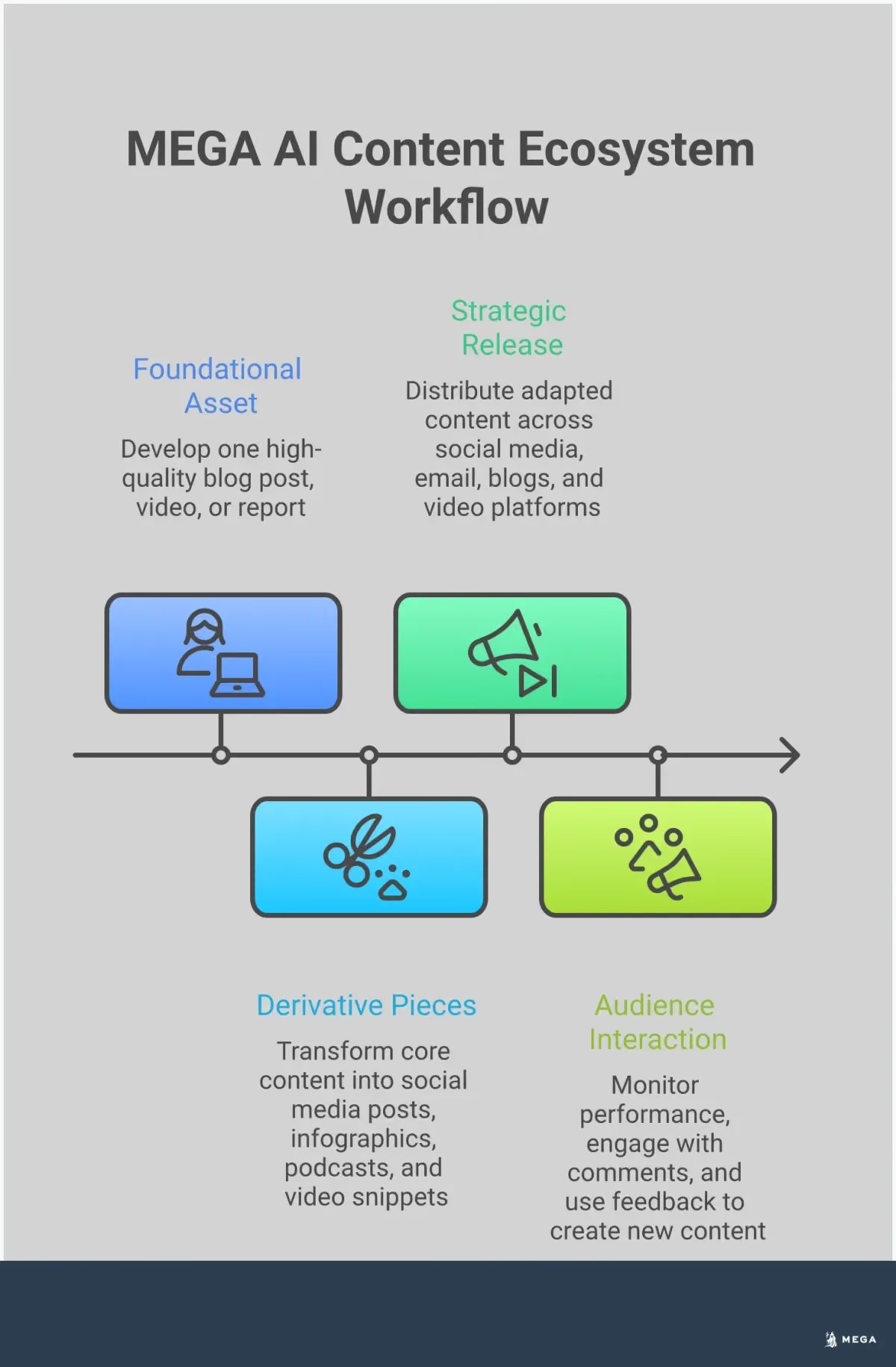
The most efficient way to build a content ecosystem is to start with a single, high-value core asset. This is often called a "pillar" piece of content. It could be an in-depth blog post, a comprehensive guide, a webinar, or a long-form video. This pillar becomes the anchor for your entire strategy, serving as the primary source from which you can pull ideas and create dozens of smaller content pieces.
For example, a 3,000-word blog post can be broken down into key takeaways for a Twitter thread, quotes for image graphics on Instagram, and talking points for a short-form video. This pillar-cluster strategy ensures your messaging is consistent across all channels while saving you from the constant pressure of brainstorming new ideas from scratch. It’s an evolving system that grows stronger with every new piece you create.
Why a Content Ecosystem is Your Key to Growth
A content ecosystem does more than just fill your content calendar. It’s a strategic network where every asset works together to achieve a larger goal. Instead of publishing one-off articles that live and die in a day, you build an interconnected web of content that guides your audience, builds trust, and delivers measurable results. This approach moves you from a content treadmill to a sustainable growth engine. A single in-depth blog post can become the source for social media updates, a video script, and an email newsletter. Each new piece links back to the original, amplifying your message and creating a system that drives long-term growth without requiring you to constantly reinvent the wheel.
Expand Your Reach with Platform-Native Content
A content ecosystem allows you to meet your audience where they already spend their time. Instead of just sharing a link to your blog post on every social channel, you adapt your core message into native content that feels right for each platform. This means creating a short, engaging video for Instagram Reels, a professional carousel for LinkedIn, or a helpful thread for X. By tailoring your content, you show your audience that you understand their context and preferences. This approach significantly improves engagement and extends the reach of your original idea far beyond a single blog post.
Establish Authority with Interconnected Content
One of the biggest advantages of an ecosystem is its ability to build topical authority. By using a pillar-cluster content strategy, you create a central, comprehensive resource—the pillar—supported by several related articles that dive deeper into specific subtopics. This structure of interconnected content signals to search engines that you are an expert in your field, helping you rank higher for competitive keywords. It also provides a better user experience by guiding visitors through your site and keeping them engaged with your brand for longer, establishing you as a go-to resource in your niche.
Achieve Compounding Growth as Your Content Works Together
When every piece of content supports your business goals, you create a compounding effect that drives sustainable growth. A well-structured content ecosystem turns a single asset into a long-term lead generation tool. In fact, businesses using these structured strategies can generate more leads because each piece of content works together. Your blog post supports your SEO goals, your social clips drive traffic, and your videos build brand affinity. Over time, this synergy creates a powerful flywheel that consistently attracts and converts customers, delivering a return on your initial content investment for months or even years.
What Makes a Great Content Pillar?
A content pillar is the foundation of your entire ecosystem. Think of it as the sun, and all your other content pieces—social media posts, emails, and short videos—are the planets that orbit around it. This isn't just a long blog post or a random video. A true pillar is a substantial, comprehensive piece of content that covers a core topic for your business in-depth. It’s the definitive resource you want to be known for.
The strength of your pillar determines the strength of your entire content strategy. A weak foundation can't support a thriving ecosystem, which is why it’s critical to get this part right. A great pillar isn’t created by accident; it’s strategically planned from the beginning. It needs to be built on the right format for your audience, packed with genuine value, and designed from day one to be broken down and repurposed. When you invest in creating high-quality pillar content, you’re not just making one asset. You’re creating the raw material for dozens of future pieces that will attract, engage, and build trust with your audience across every channel.
How to Select Your Core Content Format
Your first step is to decide what form your pillar will take. This choice should be based on your team's strengths and, more importantly, your audience's preferences. As marketing expert Neil Patel advises, you should "start with the big pillar, a long form YouTube video, a podcast, or an in-depth blog that becomes your anchor." An
What Should Your Pillar Content Include?
A pillar post must be more than just long; it has to be valuable. This means creating content that is genuinely helpful, relevant, and engaging for your specific audience. Your goal is to create the best possible resource on the internet for your chosen topic. To do this, you need to thoroughly understand your target audience and the problems they’re trying to solve. Your pillar should answer their questions completely, offer unique insights, and be well-researched. Investing in quality upfront is non-negotiable. This initial effort is what earns you credibility and provides the substance needed to fuel the rest of your content ecosystem for weeks or even months.
How to Plan for Repurposing from Day One
A successful content pillar is designed to be deconstructed. Before you even start writing or recording, you should be thinking about how you’ll break it down later. Outline your pillar with clear sections and subheadings that can stand on their own. Think of key statistics that could become graphics, compelling quotes that could become tweets, and actionable steps that could become a checklist. This isn't a one-time project; it's an evolving strategy that grows with each new piece of content. By planning for repurposing from the start, you ensure that you can efficiently remix content into native versions that feel right for every platform, saving you an incredible amount of time and effort down the line.
How to Turn One Piece of Content into Many
The most effective marketing strategies don’t require you to constantly reinvent the wheel. Instead of creating endless one-off pieces of content, you can build an entire ecosystem from a single, high-value asset. This approach saves time, reinforces your core message, and ensures every piece of content works together to drive growth. It’s about turning one great idea into a dozen different touchpoints for your audience.
How to Break Down Long-Form Content
Think of your main content pillar—like a detailed guide or an in-depth webinar—as a block of raw material. Your job is to slice and reformat it into smaller, native versions for different platforms. A single 2,000-word blog post can be deconstructed into five key takeaways for a Twitter thread, a checklist for a lead magnet, a script for a short explainer video, and a summary for your weekly newsletter. This content repurposing strategy allows you to reach different audience segments where they are, with a format they prefer, without starting from scratch each time.
Why You Should Consider a Video-First Strategy
To make repurposing even more efficient, consider starting with video. When you record a video, you capture visuals, audio, and text (once transcribed) all at once. A single interview or product demo can become the source for everything else. You can pull the audio for a podcast, create short clips for Instagram Reels and TikTok, and use the transcription as the foundation for a detailed blog post. With video becoming a central part of online discovery, this approach ensures your core message is ready for the platforms that audiences and search algorithms are prioritizing.
How to Create Content That Supports Your Pillar
Your smaller content pieces shouldn't be dead ends. Each one should act as a signpost, guiding your audience back to your main pillar asset. This is the foundation of the pillar-cluster model, which helps search engines and users understand how your content is related. For example, if your pillar is a guide to home gardening, you can create smaller blog posts on "best soil for tomatoes" or "how to water succulents." Each of these cluster posts should link back to the main guide, building a web of internal links that establishes your authority on the topic.
Tailoring Your Content for Each Platform's Audience
Simply copy-pasting the same message everywhere won’t work. A successful content ecosystem delivers content to the right people at the right time, in the right format. The professional tone and in-depth analysis that works on LinkedIn will fall flat on a visual-first platform like Pinterest. Take the time to adapt your core message to fit the unwritten rules and audience expectations of each channel. This means adjusting your tone, changing your visuals, and writing captions that feel native to the platform. It’s the final step that makes your repurposed content feel original and engaging.
Which Platforms Should You Prioritize?
Spreading your content across every platform might seem like a good way to maximize reach, but it's a quick path to burnout, especially for small businesses. The key isn't to be everywhere; it's to be everywhere that matters to your audience. A successful content ecosystem is built on strategic choices, not just sheer volume. By prioritizing the right platforms, you can focus your energy on creating high-quality, native content that resonates with the people you want to reach.
This approach allows you to build a strong presence on a few key channels rather than a weak presence on many. Think of it as building deep roots in fertile ground instead of scattering seeds on concrete. The goal is to find the platforms where your target audience is most active and engaged, then tailor your repurposed content to fit the unique culture of each one. This ensures your message not only reaches the right people but also lands in the way they prefer to receive it, making your marketing efforts far more effective.
Learn What Works on Each Social Platform
Every platform has its own unwritten rules and user expectations. What works on LinkedIn—like a detailed case study or professional insight—won't get much traction on TikTok, which favors short, entertaining videos. A successful content strategy requires understanding these nuances. Before you start posting, take time to observe what kind of content performs well on each channel you're considering. Notice the tone, format, and topics that get the most engagement. This initial research helps you adapt your core message to feel natural and welcome on each platform, ensuring it connects with users instead of interrupting them.
How to Match Content Formats to Your Audience
Once you understand the platforms, the next step is to understand your audience. Where do they spend their time online? If you're a B2B consultant, your ideal clients are likely scrolling through LinkedIn for industry news. If you sell handmade jewelry, they're probably browsing Instagram and Pinterest for visual inspiration. Don't waste time trying to capture an audience on a platform they don't use. Instead, focus your efforts where your customers already are. By aligning your content with your target audience's online habits, you ensure your message finds a receptive home and has a much greater chance of converting.
How to Create a Platform Priority List
To make a clear decision, create a simple priority matrix. On one axis, list how well a platform aligns with your target audience. On the other, estimate the effort required to create content for it. Your top priorities are the platforms with high audience alignment and manageable effort. For example, if your pillar content is a blog post, creating text-based updates for LinkedIn and Facebook is relatively low effort. Creating a polished YouTube video from it requires more work. This framework helps you start with a few core platforms and expand as you grow. Tools that offer SEO and content automation can significantly reduce the effort required, allowing you to manage more channels effectively.
How to Create Platform-Native Content That Works
Creating content that feels at home on each platform is the difference between being ignored and driving real engagement. Simply copy-pasting the same message everywhere is a common mistake that signals to users you don’t understand the culture of the platform they’re on. Native content, on the other hand, is tailored to fit the format, tone, and audience expectations of each specific channel.
This doesn’t mean you need to create entirely new ideas for every platform. Instead, you can intelligently adapt your core content pillar to work seamlessly across your ecosystem. By focusing on a few key areas—video, written content, visuals, and platform algorithms—you can make your content work harder and connect more deeply with your audience, wherever they are. This approach ensures your message reaches the right people when it's most impactful, building a stronger, more cohesive brand presence.
How to Adapt Your Videos for Each Platform
Video should be a central part of your content strategy. A single long-form video, like a webinar or an in-depth tutorial, is a goldmine for repurposing. You can edit it down into dozens of platform-specific clips. For example, create short, attention-grabbing vertical videos for TikTok and Instagram Reels, a slightly longer and more informative clip for your LinkedIn feed, and a polished highlight reel for your YouTube channel. According to research, AI tools are citing videos more frequently in their responses, making it a critical format for visibility. The key is to reformat each clip to fit the platform’s native experience, ensuring it feels intentional, not just recycled.
Creating Written Content for Different Channels
Just as with video, your pillar blog post can be sliced and reformatted into native written content for different channels. Instead of just sharing a link, pull out key insights and adapt them. A single article can become a thought-provoking LinkedIn post, a practical Twitter thread, or a helpful email newsletter. The goal is to slice and adapt long-form content into native versions for each platform. This means adjusting the tone, length, and formatting to match what users expect to see in their feeds, making your content feel more personal and valuable.
How to Design Visuals That People Engage With
Visuals are essential for capturing attention and communicating your message quickly. Your content ecosystem should include a suite of visual assets derived from your pillar content, such as infographics, quote cards, and carousels. To keep things efficient, create a set of brand templates tailored to the ideal dimensions of each platform, from Instagram squares to Pinterest pins. Using a consistent visual style helps build brand recognition and makes your content instantly identifiable. This approach also simplifies your workflow, making it easier to produce high-quality, on-brand visuals without starting from scratch every time.
How to Optimize for Each Platform's Algorithm
Each social media platform and search engine has its own algorithm that determines what content gets seen. To maximize your reach, you need to optimize your content for each one. This involves using relevant hashtags on Instagram, writing keyword-focused headlines for your blog and YouTube videos, and encouraging engagement on Facebook. A well-integrated content ecosystem ensures your content reaches the right audience at the right moment. By understanding and catering to each platform’s preferences, you give your content the best possible chance to perform well and drive meaningful results for your business.
Visualizing Your Strategy: How to Create a Content Ecosystem Map
Once you understand the theory behind a content ecosystem, the next step is to make it tangible. A content ecosystem map is a visual blueprint of your entire content world. It shows you what assets you have, where they live, and how they connect to one another. Creating this map helps you move from a scattered collection of posts and videos to a cohesive system where every piece has a purpose. It allows you to spot gaps in your strategy, identify opportunities for new content, and ensure your assets are working together to guide your audience effectively.
What a Content Ecosystem Map Is (and Isn't)
A content ecosystem map is a visual representation of your content reality. It’s a diagram that includes your products, brands, content types, and the technology you use to manage it all. Think of it less as a static inventory and more as a dynamic tool that evolves with your strategy. This map helps you visualize how different pieces of content interconnect and support each other, making sure you can leverage your assets effectively. It’s not just a list of blog posts; it’s a web that shows the relationships between your pillar guide, your social media clips, and your email newsletters, helping you see the bigger picture.
Tools for Mapping Your Content Ecosystem
You don’t need complex software to create your first content map. The most important feature of any tool is the ability to move things around easily as your strategy develops. You can start with a physical whiteboard and sticky notes to get a hands-on feel for how your content connects. For a digital approach, tools like Miro, Lucidchart, or even design software like Sketch can work well. The goal is to create a clear visual that helps you understand your current situation before you try to change anything. This map will help you find repeated content or new chances to build clusters that improve your SEO and user experience.
What Systems Do You Need to Manage Your Content Ecosystem?
A content ecosystem doesn’t run on its own. Without the right systems in place, even the best pillar content can lead to a chaotic mix of disconnected assets. Managing this process effectively requires a structured approach to how you create, approve, publish, and measure everything. Think of it as building the operational backbone for your content strategy. For small businesses and founders who are already overloaded, this can feel like another full-time job, which is why establishing clear, repeatable systems is so important.
The goal is to create a machine that runs smoothly, whether you’re a team of one or ten. This involves defining your production workflow, locking in your brand voice, setting clear quality standards, and automating distribution wherever possible. By building these marketing operations from the start, you can ensure your ecosystem not only grows but also delivers consistent results without burning you out. It’s about working smarter, not just harder, to turn your content into a reliable growth engine. A successful system makes collaboration easy, automates what can be automated, and ensures every piece of content is consistent and high-quality.
How to Set Up a Content Production Workflow
Your content production workflow is the step-by-step map that guides an idea from concept to published piece. A solid workflow prevents bottlenecks and ensures everyone involved knows their role. Start by outlining each stage: planning, research, drafting, editing, design, approval, and publishing. Using a project management tool can help you track each asset as it moves through these stages. A good system makes collaboration easier and keeps your content calendar on track. This structure is what allows you to consistently produce the different pieces of your ecosystem without dropping the ball.
The 7-Step Content Development Process
To build a content ecosystem that works, you need a repeatable plan. A structured content development process ensures every piece you create is strategic and high-quality. It starts with understanding your audience and ends with reviewing your results to get better over time. The process involves gathering information about your customers and competitors, analyzing topics to see what people are searching for, and creating a publishing schedule. From there, you write and optimize the content for search engines, promote it across your channels, and regularly review its performance. This cycle ensures your efforts are always aligned with your business goals and audience needs.
Fostering Collaboration in Content Creation
A successful content ecosystem doesn’t rely on one person. To maintain quality and consistency, you need a clear system for collaboration. This is especially important as your team grows. Establishing a structured workflow ensures everyone knows their role, from drafting and editing to approving and publishing. Start by creating a simple content style guide to keep your brand voice consistent. Use a shared content calendar to track deadlines and a project management tool to assign tasks. These systems prevent miscommunication and ensure your content production runs efficiently, allowing you to scale your efforts without sacrificing quality.
Tools for Topic Analysis and SEO Research
The foundation of any great content pillar is solid research. You need to know what your audience is searching for and what your competitors are ranking for. Tools like Google Analytics and Search Console give you insight into your own website's performance, while platforms like Ahrefs and SEMrush help with keyword research and competitive analysis. While these tools are powerful, managing multiple subscriptions can be complex for small businesses. An end-to-end platform like MEGA AI simplifies this by integrating these functions. Our SEO tools automate keyword research and content generation, helping you identify high-impact topics and create optimized content from a single dashboard.
How to Maintain a Consistent Brand Voice
As you create more content across different platforms, maintaining a consistent brand voice becomes critical. Your voice is the personality of your brand, and it should be recognizable whether someone is reading a blog post, watching a TikTok, or seeing an ad. The best way to achieve this is by creating a simple brand style guide that outlines your tone, grammar rules, and core messaging. This document becomes your source of truth, ensuring that every piece of content, no matter who creates it, feels like it came from the same place. This consistency builds trust and makes your brand more memorable.
The "5 Cs" of High-Quality Content
To ensure every piece of content meets your standards, you can use a simple framework known as the 5 Cs of content marketing. This framework helps you maintain quality and a consistent voice. First, your content must have Clarity; it should be straightforward and easy for your audience to understand. Second is Consistency, which means your tone and style remain the same across all platforms, reinforcing your brand identity. Creativity is what makes your content memorable and helps it stand out. You also need Credibility, which you build by providing accurate, well-researched information that establishes your expertise. Finally, all your content should be Customer-Centric, focusing on your audience's needs and interests above all else. Using AI tools can help you apply these principles at scale, ensuring every asset, from a blog post to a social media update, is clear, consistent, and aligned with your brand.
Setting Your Standards for Quality and SEO
To know if your ecosystem is working, you need to define what success looks like. Setting standards for quality and optimization means establishing clear benchmarks for every piece of content you create. This includes on-page SEO best practices, readability scores, and performance metrics. Use analytics to track key performance indicators (KPIs) like engagement, click-through rates, and conversions. Regularly auditing your content against these standards helps you understand what’s resonating with your audience and what isn’t. This data-driven approach allows you to refine your strategy and ensure every asset is working hard to achieve your business goals.
How to Build Backlinks the Right Way
Backlinks are a critical signal to search engines that your content is credible and valuable. But chasing them through endless outreach can be exhausting. A better approach is to build a content ecosystem that attracts links naturally. When you create a comprehensive pillar post, you’re not just writing an article; you’re building a linkable asset. This is the kind of definitive resource that other creators in your niche will want to reference and cite. Your supporting cluster content reinforces this by demonstrating the depth of your expertise on a topic. This interconnected structure helps you establish authority, making your site a go-to source that earns backlinks organically over time because you’ve created the best resource available.
How to Automate Your Content Distribution
Creating great content is only half the battle; getting it in front of the right people at the right time is just as important. Automating your content distribution and updates saves time and ensures your content reaches its full potential. Use scheduling tools to plan social media posts and email newsletters in advance. More importantly, your ecosystem needs ongoing maintenance. An AI-powered SEO agent can automatically update existing articles to improve rankings or add new, relevant information to keep your content fresh. This turns your ecosystem into a living, breathing asset that continuously adapts and performs over time.
Creating a Central Hub for Your Content
At the heart of every strong content ecosystem is a central hub—a single, comprehensive piece of content that acts as the foundation for everything else you create. Think of it as the sun in your content solar system or the center of a spiderweb. This "pillar" piece isn't just another blog post; it's your definitive guide on a core topic, designed to be the best resource on that subject for your audience. This asset serves as the primary source from which you can pull ideas, quotes, and data to fuel dozens of smaller content pieces for weeks or even months, ensuring your message remains consistent and authoritative across all channels.
This model is incredibly efficient for small businesses because it stops the content treadmill. Instead of constantly searching for new topics, you strategically build a network of assets from one well-researched source. This ensures your messaging is consistent across all platforms, from social media to email newsletters. More importantly, it creates a compounding effect. Each smaller piece of content links back to and reinforces your central hub, signaling to both your audience and search engines that you are an authority on the subject. This turns one great asset into a long-term tool for generating leads and building trust.
How to Measure the Success of Your Content Ecosystem
Creating a content ecosystem is a powerful way to grow your business, but your work isn’t done once you hit publish. To make sure your efforts are paying off, you need a clear way to measure what’s working and what isn’t. This isn’t about vanity metrics; it’s about connecting your content directly to business results. A successful measurement strategy helps you understand which pieces of content are driving traffic, generating leads, and building your brand’s authority.
Without measurement, you’re just guessing. You might spend hours creating videos for a platform where your audience isn’t active, or you could miss an opportunity to double down on a blog post that’s quietly becoming your top lead generator. By tracking performance, you can make informed decisions, optimize your strategy, and prove the return on your investment. The goal is to build a system where each piece of content supports the others, creating a compounding effect that drives sustainable growth. A unified dashboard that pulls in data from all your channels can make this process much simpler, giving you a single view of your entire ecosystem’s performance.
How to Define Your KPIs for Each Platform
Not all metrics are created equal, and what signals success on one platform might be irrelevant on another. The key is to define key performance indicators (KPIs) that align with the specific goal of each channel. As one marketing group puts it, you need a scorecard that links ecosystem activity to "pipeline lift, win rates, deal velocity, expansion, and retention." For your pillar blog post, your primary KPIs might be organic traffic, keyword rankings, and the conversion rate for a lead magnet.
For a short-form video on Instagram or TikTok, you might focus on watch time, shares, and comments to measure audience engagement. On LinkedIn, you could track profile clicks and post shares to gauge professional reach and authority. By setting distinct goals for each platform, you get a much clearer picture of how each part of your ecosystem is contributing to your overall marketing objectives.
How to Track Engagement Across Platforms
A content ecosystem thrives on synergy, so it’s important to measure how your assets work together. This means tracking how users move between your platforms. For example, did a popular video on social media drive a spike in traffic to your pillar blog post? Did a newsletter mention lead to more podcast downloads? You can use analytics platforms to monitor these cross-channel journeys.
Set up tracking in tools like Google Analytics to see where your website traffic is coming from. Pay close attention to referral sources to understand which platforms are sending you the most engaged visitors. This data gives you powerful insights into your customer’s path and helps you see how a single piece of content can ripple across your entire ecosystem. It shows you which channels are best for discovery and which are better at driving conversions.
How to Find Your Most Valuable Content Assets
Over time, you’ll notice that certain pieces of content outperform others. These are your most valuable assets. Identifying them is critical for optimizing your strategy. Look for the blog posts that bring in the most organic traffic, the videos with the highest engagement, or the social media updates that generate the most leads. These engagement metrics are strong indicators of content quality and relevance to your audience.
Once you’ve identified these top performers, you can make them work even harder. Update and expand your most popular blog posts to keep them fresh and improve their rankings. Create more content in the formats that resonate most with your audience. This is where an AI-powered solution like MEGA AI’s Maintenance Agent can be a game-changer, by automatically identifying high-potential articles and updating them to improve their click-through rate and search performance.
Creating User Feedback Loops for Continuous Improvement
Your analytics can tell you which content gets the most clicks, but they can't tell you why. This is where creating a user feedback loop becomes essential. A feedback loop is a system for actively listening to your audience and using their insights to make your content better. It turns your one-way content broadcast into a two-way conversation. You can gather this feedback through social media comments, email replies, customer surveys, or even direct conversations with your clients. This qualitative data is incredibly valuable because it reveals the specific questions, challenges, and interests of your audience, allowing you to refine your content and build a stronger community around your brand.
Common Mistakes That Can Ruin Your Content Ecosystem
Building a content ecosystem is a powerful way to grow your business, but it’s easy to get tripped up by a few common mistakes. When you’re a busy founder or a small business owner, every minute you spend on marketing needs to count. The last thing you want is to put in the effort of creating content only to see it fall flat. The good news is that these pitfalls are avoidable.
The biggest challenge isn't just creating content; it's making sure every piece works together as part of a cohesive strategy. Many businesses treat each platform as a separate silo, which defeats the purpose of an ecosystem. The goal is to create a web of interconnected assets that guide your audience, build authority, and drive results. Avoiding these common errors will help you build a system that generates compounding growth instead of disconnected noise.
Mistake #1: Repurposing Content Without Adapting It
One of the most common missteps is what marketing expert Neil Patel calls a "lazy mistake": blasting the same exact content everywhere. Simply copy-pasting your blog post excerpt to LinkedIn or sharing a raw YouTube video link on Twitter is not a strategy. Each platform has its own culture, format, and audience expectations. A direct copy-paste often feels out of place and gets ignored.
True content repurposing is about translation, not duplication. It means thoughtfully adapting your core message to fit the new environment. Think about how you can reframe your pillar article’s key points into a Twitter thread, a visual carousel for Instagram, or a professional discussion starter on LinkedIn. This approach respects the platform and the audience, making your content feel native and valuable.
Mistake #2: Ignoring How Each Platform Works
Adapting your content goes hand-in-hand with following each platform's best practices. What works on TikTok (short, engaging, trend-focused video) is completely different from what works on a blog (in-depth, SEO-optimized text). To get results, you need to create native versions of your content for each channel. This means formatting your video vertically for Reels, using relevant hashtags on Instagram, and writing a clear, professional headline for a LinkedIn article.
Ignoring these unwritten rules is like showing up to a formal event in beachwear—you’ll stand out for the wrong reasons. Take the time to understand the nuances of each platform you prioritize. This ensures your content not only looks right but is also favored by the platform’s algorithm, giving you the best chance to reach your target audience.
Mistake #3: Not Linking Your Content Together
A content ecosystem is only an "ecosystem" if the pieces are connected. Forgetting to link your assets together is like building a series of beautiful islands with no bridges between them. Your audience has no clear path to follow. Every piece of content you create should strategically guide users to another relevant asset, with the ultimate goal of leading them back to your pillar content or website.
Your social media posts should link to your blog, your YouTube video description should link to a related article, and your blog posts should use internal linking to connect to each other. This creates a seamless user journey, keeps people engaged with your brand longer, and sends strong positive signals to search engines. It’s this interconnectedness that transforms a simple collection of content into a powerful growth engine.
How AI Tools Can Help Manage Your Content Ecosystem
Managing a content ecosystem sounds like a full-time job because, traditionally, it has been. Juggling content creation, repurposing, distribution, and optimization across multiple platforms is a heavy lift, especially for small businesses and startups where everyone wears multiple hats. This is where AI tools change the game. Instead of just giving you another interface to manage, AI agents can take over the execution, turning your content strategy into an automated, self-sustaining growth engine.
An AI-powered system can handle the repetitive, time-consuming tasks that cause marketing to get deprioritized. Think of it as compressing the capabilities of a full-stack growth agency into an intelligent agent that works for you. These tools can autonomously plan, create, and optimize content, ensuring every piece of your ecosystem is working to achieve your goals. This allows you to focus on the bigger picture—running your business—while the AI handles the day-to-day execution. With the right system, you can build and manage a sophisticated content ecosystem without needing a large marketing team.
Use AI to Automate Content Creation
The first hurdle in building a content ecosystem is creating the pillar content and all its derivatives. AI agents can automate this entire workflow. They can perform extensive research to find relevant topics, then generate high-quality, on-brand articles, scripts, and social media posts. This frees your team to focus on strategy rather than getting stuck on administrative tasks.
But creation is only half the battle. AI also excels at ongoing optimization. For example, MEGA AI’s Maintenance Agent can automatically update existing articles to improve their click-through rate (CTR) and search rankings. It identifies new information to add and tweaks content to keep it fresh and relevant. This continuous optimization ensures your content assets deliver value long after they’re published, making your entire SEO strategy more effective.
How to Scale Your Content Production with AI
Once you have a successful piece of pillar content, the challenge is to scale that success. Manually creating dozens of variations for different platforms is slow and difficult to manage. AI tools remove this bottleneck. They can instantly remix a single video into hundreds of ad variations or repurpose a blog post into a series of emails, social media updates, and even programmatic SEO pages for different locations.
This ability to scale allows you to test what works and allocate resources effectively. By tracking performance metrics across your ecosystem, AI can identify your best-performing content and automatically create more of it. This data-driven approach ensures you’re not just creating more content, but more of the right content. It’s how you can efficiently manage paid ad campaigns and organic content, ensuring they work together to drive growth.
Using AI to Keep Your Brand Consistent
As you scale your content production, maintaining a consistent brand voice and quality becomes a major challenge. An inconsistent message can confuse your audience and weaken your brand. AI helps solve this by learning your specific brand voice and applying it to every piece of content it generates. By analyzing your existing materials, it can match your tone, style, and terminology with precision.
This ensures that whether a customer is reading a blog post, watching a video, or seeing an ad, their experience feels cohesive and authentically you. This level of consistency builds trust and strengthens your brand identity across your entire content ecosystem. An AI-powered platform acts as a centralized brain for your content, ensuring every asset aligns with your overall strategy and brand guidelines.
Using Structured Content for Maximum Flexibility
The real power of a content ecosystem comes from its structure. When your content is organized and modular, it becomes incredibly flexible. Instead of seeing a blog post as a single, static document, think of it as a collection of building blocks: headlines, key statistics, quotes, images, and core arguments. This structure allows you to quickly and easily reassemble these blocks into new formats. A key statistic can become a social media graphic, a section can become a video script, and a customer quote can become a standalone testimonial. This approach is the key to making your marketing both efficient and effective, turning one asset into a dozen without starting from scratch.
Advanced Tactics: Monetizing Your Content Ecosystem
Once your content ecosystem is running smoothly, you can start thinking beyond lead generation. A mature, well-structured content library is more than just a marketing tool; it’s a valuable business asset. Instead of only using your content to sell your primary product or service, you can turn the content itself into a revenue stream. This shifts your perspective from seeing content as a cost center to seeing it as a product with its own potential for profit. It’s the ultimate way to get a return on your investment, ensuring every piece of work continues to deliver value.
This doesn’t mean you have to put all your blog posts behind a paywall. Advanced monetization strategies are more creative. They involve packaging your expertise in new ways that provide direct value to other businesses or dedicated followers. By treating your content library as a structured database of information, you can build new products from it. This could take the form of premium newsletters, paid workshops, or even licensing your content to other companies through an API. It transforms your content from a marketing expense into a compounding asset that generates revenue on its own.
Monetizing Content Through an API
One of the most innovative ways to monetize your content is by making it available through an API (Application Programming Interface). In simple terms, an API allows other applications to access and use your content in a structured way. For example, if you run a popular recipe blog, a smart refrigerator company could pay to use your API to display your recipes on their appliance screens. This creates an entirely new, recurring revenue stream and establishes valuable partnerships. This strategy positions you as a central source of authority in your niche, with other businesses building their products on top of your expertise.