Your digital presence is a key asset, but its true value is only realized when users can effectively interact with it. If finding information on your site feels like a treasure hunt without a map, you're likely missing out on valuable engagement. For digital marketers and agencies, guiding clients towards creating intuitive online spaces is essential for achieving their goals. This article focuses on the core principles of making content easy to locate and why it matters so much. We will discuss the significant benefits of content discoverability for enhanced user experience?, showing how it can lead to increased time on site, better conversion rates, and stronger brand loyalty for the businesses you support.
Key Takeaways
- Prioritize How Easily Users Find Your Content: When information is simple to locate, visitors have a better experience, engage more deeply, and are more likely to become loyal users.
- Build a Clear Path with Smart Organization: Use intuitive site navigation, effective search functionality, and logical content structuring to guide users directly to what they need.
- Refine Discoverability with Ongoing Analysis and Tools: Regularly review user behavior and feedback, and leverage SEO and AI technologies to continuously improve how easily your content is found.
What is Content Discoverability and Why Is It Key for User Experience?
When users visit your website or use your app, you want them to find what they need quickly and without any fuss. This ease of finding information is what we call content discoverability. It’s a critical piece of the puzzle for creating a positive user experience. If people can’t find your brilliant content or essential features, they’re likely to leave frustrated, and that’s an opportunity lost. For startups, small businesses, and digital marketing agencies aiming to make an impact, understanding and improving content discoverability can be a game-changer. It’s about making your digital front door welcoming and easy to get around.
Define Content Discoverability
Think about the last time you effortlessly found exactly what you were looking for on a website or app. That’s good discoverability in action. More formally, discoverability refers to how easily people can find the information, features, or specific content they need within your digital space, whether that's your website, blog, or app. When content is hard to find, users get frustrated, and that’s the last thing we want. Essentially, strong discoverability means your audience can locate what they need without feeling confused or like they're on a wild goose chase. It's a fundamental part of creating a positive user experience (UX) and a user-friendly interface (UI), ensuring users feel competent and in control.
Understand Its Impact on User Satisfaction
When users can easily find what they’re looking for, they’re naturally happier with their experience. Good discoverability isn't just a nice-to-have; it's a cornerstone of a successful digital product or website. Happier users tend to stay on your site longer, engage more deeply with your content, and are more likely to come back. They might even recommend your site to others. On the flip side, if finding information is a struggle, satisfaction plummets. This directly impacts how much users enjoy interacting with your brand and, ultimately, can affect your business's performance. Investing in discoverability means investing in user satisfaction, which often translates to increased engagement and even lower support costs because users can find answers themselves.
How Does Better Content Discoverability Improve User Experience?
When users can find what they're looking for on your website without a struggle, their entire experience shifts for the better. Think about it – a smooth journey to the right information or product isn't just a nice-to-have; it's fundamental to how users perceive your brand and how effectively your site achieves its goals. Better content discoverability directly translates into a more positive user experience, which in turn can lead to some pretty significant wins for your business. It’s about making your digital space welcoming and intuitive, ensuring every visitor feels understood and efficiently guided.
This isn't just about aesthetics; it's about functionality that serves the user first, making their interaction seamless and productive. When content is easy to find, users are more likely to achieve their objectives, whether that's making a purchase, learning something new, or solving a problem. This positive interaction builds a foundation for a lasting relationship between the user and your brand, making them more likely to return and engage further.
For businesses, especially startups and small businesses using platforms like Shopify or managing their own sites, ensuring content is discoverable can be the difference between a bounce and a conversion. It means your carefully crafted product descriptions, informative blog posts, and helpful FAQs actually get seen by the people who need them. Ultimately, investing in content discoverability is an investment in user satisfaction and business growth, helping you make the most of your online presence.
Reduce User Frustration and Cognitive Load
Imagine walking into a library where none of the books are organized. Frustrating, right? The same applies to your website. When users can't easily find what they need, frustration mounts quickly. Good discoverability is a cornerstone of effective user experience (UX) design because it means users aren't confused or frustrated. As the Interaction Design Foundation notes, "When users can easily find what they are looking for, it reduces their cognitive load and enhances their overall experience." Essentially, you're making it easier for them to think and process information, leading to a smoother, more pleasant interaction with your site. This clarity helps users achieve their goals faster, leaving them feeling capable and satisfied rather than overwhelmed.
Increase Engagement and Time On Site
When users find your website easy to use and can quickly locate relevant information, they're naturally inclined to stick around longer. It's a simple equation: less frustration equals more exploration. According to UXPin, "Good discoverability leads to happier users, more engagement, and better business results. When users can easily navigate and find relevant content, they are more likely to spend additional time on the site, exploring more features and content." This increased engagement isn't just about vanity metrics; it means users are delving deeper into what you offer, potentially discovering new products, services, or information that provides them with even more value. This deeper interaction is a strong indicator of genuine interest.
Foster Brand Loyalty and Retention
A positive experience built on easy content discovery can be a powerful driver of brand loyalty. When users consistently find what they need without hassle, they start to associate your brand with reliability and ease. Procreator highlights that "Easy-to-find features keep users engaged and happy. When users can quickly locate the content they need, it fosters a sense of satisfaction and loyalty to the brand, ultimately leading to higher retention rates." This satisfaction translates into trust. Users who trust your platform and feel good about their interactions are far more likely to return, choose you over competitors, and even recommend your services to others. Building this loyalty is key for long-term business success.
Key Strategies: How to Improve Content Discoverability
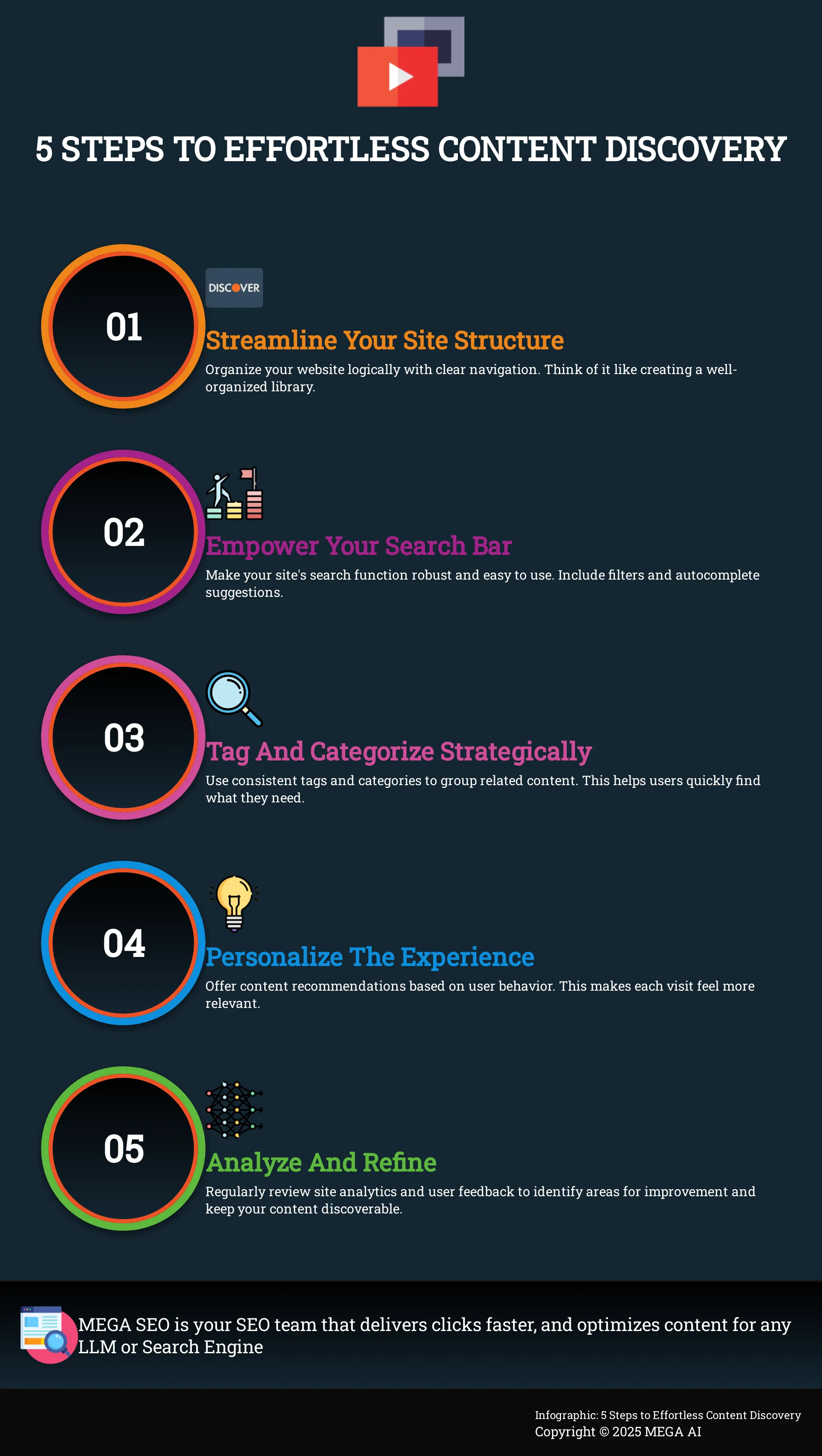
Making sure users can easily find your content is essential. When information is accessible, it improves their overall experience and encourages them to engage more deeply with your site. Here are some key strategies you can implement to enhance content discoverability.
Optimize Site Structure and Navigation
When users visit your site, they should find it easy to get around. A clear site structure and straightforward navigation are fundamental because, as the Interaction Design Foundation notes, good discoverability means users aren't confused. Think of it as providing a clear map for your visitors, a crucial part of user experience.
Focus on simple, intuitive menus with consistent terms. Features like breadcrumbs also help users understand their location within your site, making their journey smoother. This clarity directly contributes to a positive user experience, making it easier for them to find what they need.
Implement Effective Search Functionality
Many users head straight for the search bar, especially on sites with extensive content. An effective search function is vital. Ensure your site's search bar is prominent and provides quick, accurate results, including filters and suggestions to refine queries.
Effective search functionality includes a prominent search bar with predictive search and relevant results. When your search capabilities are strong, users can quickly find what they need, improving their experience and satisfaction. This is particularly important for businesses aiming to provide efficient access to their information.
Enhance Content Organization and Tagging
How you organize and label content greatly impacts its findability. Good information architecture means logical and predictable content organization. Create a clear hierarchy for topics and use consistent terminology for categories and tags, making it easy for users to navigate your offerings.
When you organize content well, users can easily browse and locate information. This makes your site’s knowledge accessible. Tools like MEGA AI can assist with automated keyword research and content structuring, simplifying the process of applying relevant tags to ensure your content is logically arranged and easily discoverable.
Personalize Content Recommendations
Tailoring the user experience helps users discover content that truly interests them. By understanding user behavior, you can suggest relevant articles or products, moving beyond a generic approach to a more individual one. This makes users feel understood.
Implementing systems that recommend content based on past interactions encourages deeper engagement. As UXPin suggests, promoting relevant content based on user interests is key. AI-driven platforms can analyze user data to power these personalized suggestions, making your content more relevant and improving the chances of conversion.
How User Research Guides Content Discoverability
To make your content truly discoverable, you need to step into your users' shoes. It’s not just about having great content; it’s about ensuring the right people can find it when they need it. User research is your compass here, pointing you toward what your audience is looking for and how they search for it. By understanding their journey, you can clear the path directly to your valuable information. This isn't about guesswork; it's about gathering real insights to make informed decisions that improve how easily users can access and interact with your content.
Think of user research as the foundation for a user-friendly website. When you know your audience inside and out, you can design a content experience that feels intuitive and helpful. This proactive approach means you’re not just hoping users stumble upon your content; you’re actively guiding them to it. Companies like MEGA AI leverage insights to ensure their tools for SEO and paid ads are not only powerful but also easy for businesses to find and use, ultimately helping them connect with their own customers more effectively. By focusing on the user from the very beginning, you build a system where content discovery feels natural, not like a chore. This thoughtful approach leads to a better overall experience, encouraging users to engage more deeply with what you offer.
Understand User Needs and Behaviors
Getting to know your users is the first crucial step. What problems are they trying to solve? What questions do they have? Understanding their needs and how they typically look for information online helps you create content that directly speaks to them. It’s also about grasping their 'mental models' – essentially, how they already organize information in their minds. When your content structure aligns with their existing expectations, it becomes much easier for them to discover what they need. This might involve creating user personas, conducting surveys, or analyzing search query data to see the exact terms they use, all aimed at building a clear picture of who you're trying to reach.
Conduct Usability Testing and Gather Feedback
Once you have an idea of user needs, it's time to see how well your current setup works. This is where usability testing comes in. You can observe real users interacting with your website or app to see where they get stuck or confused. Methods like heatmaps show where users click most, analytics track their journey through your site, A/B testing compares different versions of a page, and user surveys can provide direct feedback on their experience. These techniques offer invaluable insights into how discoverable your content truly is and highlight areas for improvement, ensuring your design choices are user-validated.
Iterate Based on User Insights
Gathering feedback is only half the battle; the real magic happens when you use those insights to make changes. User research isn't a one-time task but an ongoing cycle of learning and refining. Based on what you discover from testing, you can iterate on your content organization, navigation, and search functionality. This continuous improvement ensures your content remains relevant, accessible, and easy for your audience to find, even as their needs and behaviors evolve over time. This iterative process is key to keeping your user experience top-notch and your content consistently discoverable in a changing digital landscape.
What Tools and Tech Can Improve Content Discoverability?
Making your content easy for people to find isn't just about hoping for the best; it's about strategically using the right tools and technologies. When you put these resources to work, you can make a real difference in how users locate and interact with your information. This means they spend less time searching, and your valuable content gets more visibility. Think of these tools as your helpful partners, guiding users directly to the great stuff you've created. From fine-tuning your content for search engines and understanding how people behave on your site, to harnessing the power of artificial intelligence, there's a tech solution ready to assist at every stage. These technologies don't operate in silos; often, the best results come from a combined approach. For example, insights from analytics can inform your SEO strategy, while AI can help automate and refine both processes. Let's take a closer look at some of the most effective options available to help you improve how easily your audience can discover what you offer. By understanding these tools, you can build a more intuitive and satisfying experience for your users, ultimately leading them to the solutions they need.
Use SEO and Content Optimization Tools
Search Engine Optimization (SEO) tools are a cornerstone for making your content discoverable. These tools help you understand what your audience is searching for and how to structure your content so search engines can easily find and rank it. For instance, platforms like MEGA AI can automate the process of finding low-competition, high-impact keywords. This means you're creating content that people are actually looking for, and you have a better chance of standing out from the crowd. Beyond initial keyword research, robust content optimization tools ensure your material is primed for various search platforms. This includes adapting your content if Google releases an update or even optimizing it for different search engines or emerging AI language models. The goal is to make your content universally accessible and highly visible, no matter where your audience is looking, ensuring they can always find your valuable insights.
Employ Analytics for User Behavior Tracking
Understanding how users interact with your site is crucial for improving content discoverability. Analytics tools provide invaluable insights into user behavior, showing you what's working and what's not. You can track metrics like click-through rates from search results, see which search terms users are typing into your site’s search bar, and identify pages where users might be getting stuck or dropping off. This data helps you pinpoint areas where discoverability can be improved. Other methods, such as user testing where you observe real users attempting to complete tasks, or gathering direct user feedback through surveys, can offer deeper qualitative insights. These approaches help you understand the 'why' behind the numbers, revealing pain points in navigation or content organization that might be hindering how easily users find what they need.
Apply AI and Machine Learning
Artificial intelligence (AI) and machine learning are becoming increasingly powerful allies in enhancing content discoverability. AI can drive personalized content recommendations, tailoring suggestions to individual user preferences and past behavior. This makes it more likely that users will find content relevant to their specific interests without having to actively search for it. AI also contributes to better internal search algorithms, making your site's own search function more effective and intuitive. Platforms like MEGA AI leverage AI to continuously update existing content. This might involve adding new research, fixing broken links, or incorporating frequently asked questions. By keeping content fresh, relevant, and accurate, AI ensures it remains highly discoverable and valuable to users over time, significantly improving their overall experience on your site.
How to Measure Content Discoverability Success
Once you’ve implemented strategies to improve how easily users find your content, the next crucial step is measuring your success. Understanding what’s working and what’s not allows you to refine your approach and continuously enhance the user experience. It’s about making data-driven decisions to ensure your audience can connect with the valuable information you provide. This process helps you see the real impact of your efforts and guides future optimizations.
Track Key Performance Metrics
To effectively gauge how discoverable your content is, you need to keep a close eye on specific numbers. Key performance metrics offer a clear window into user behavior. For instance, tracking click-through rates (CTR) from search results can tell you how compelling your titles and descriptions are. Analyzing search data on your own site reveals what terms users are employing and whether they’re finding relevant results.
Also, consider task completion rates – can users successfully find the information they need to complete an action? Don’t forget the power of direct user feedback through surveys or comments; it provides qualitative insights that numbers alone can't. Website analytics are indispensable here, offering a broad overview of user interaction patterns and helping you understand how users navigate your site.
Use Tools for Analyzing Performance
Gathering the right metrics is much easier with the right toolkit. Several tools and techniques can help you analyze your content's performance and pinpoint areas for improvement. Employing methods like usability testing, where you observe real users interacting with your site, can uncover pain points you might have missed. Heatmaps visually show where users click and scroll, highlighting popular areas and those that get overlooked.
Standard website analytics platforms provide a wealth of data on page views, bounce rates, and user flow. A/B testing different layouts or content presentations can show which versions are more discoverable. User surveys, as mentioned, are also a valuable tool for direct feedback on how easy it is to find information. These tools provide the data you need to make informed decisions.
Interpret Data to Drive Improvements
Collecting data is just the first step; the real value comes when you interpret that data and use it to make meaningful changes. Regularly reviewing your analytics and user feedback is vital for continuous improvement. For example, if you notice a high bounce rate on a particular page, it might indicate that users aren't finding what they expected, signaling a need to reassess its content or how it's linked. Good discoverability isn't a one-time fix; it's an ongoing process of learning and adapting.
As noted by Procreator Design, this regular interpretation is essential not just for a better user experience but for achieving your overall business goals. Platforms like MEGA AI can even help automate content updates based on these insights, ensuring your content stays optimized and continues to meet user needs effectively.
Common Challenges in Content Discoverability (And How to Address Them)
Making your content easy to find is a fantastic goal, but it’s not always a straight path. Several common hurdles can get in the way of users connecting with your valuable information. The good news is that with a bit of awareness and strategy, you can address these effectively. Let's look at a few key challenges and how you can approach them.
Manage Information Overload
We’ve all been there: landing on a page and feeling instantly swamped by too much text, too many options, or just a general sense of chaos. "Too much information can be overwhelming for users," and when that happens, they're likely to leave. To prevent this, focus on simplifying choices. Think about how you can structure your content more clearly. Could you break down long articles with subheadings or use bullet points for easier scanning?
Another helpful technique is progressive disclosure, which means revealing information gradually. This could be as simple as using an accordion menu for FAQs or a "read more" link for longer sections. This approach ensures users get what they need without feeling buried by information they aren't ready for.
Balance Aesthetics with Functionality
A visually stunning website is great, but if users can't find what they're looking for, the beautiful design isn't doing its job. "Good discoverability is essential for ensuring that users are not confused or frustrated." It’s a core part of a positive user experience (UX) and user interface (UI) design, where the aesthetic appeal must support, not hinder, functionality.
Ensure your navigation is intuitive, calls to action are clear, and search bars are easy to locate. The most beautiful design won't matter if the underlying information architecture makes it hard for users to discover content. Always prioritize clarity and ease of use alongside your visual design to create a seamless experience.
Adapt to Evolving User Expectations
What users expect from online experiences is constantly changing. Think about platforms like Netflix; they "must continually adapt to changing user expectations" by offering a vast library while still making it easy for you to find something new to watch. Your audience's needs and search behaviors will also shift over time.
Regularly reviewing your analytics can offer insights into how users interact with your content. Are they using specific search terms? Are they dropping off on certain pages? Staying attuned to these patterns and being willing to update your content strategy or site layout accordingly is key to keeping your content discoverable and relevant in the long run.
The Future of Content Discoverability: What's Next?
The way people find information online is always evolving. What helps your content get noticed today might not be as effective down the road. To keep your audience engaged, it’s important to understand where content discovery is heading. This means ensuring people can find your business easily, no matter how they search. It’s not just about visibility; it’s about creating a smooth and intuitive path to your content, which is a cornerstone of a positive user experience. As we look ahead, several key areas are shaping how content is found and consumed. For businesses, especially startups and small enterprises, adapting to these shifts is vital for growth and staying competitive. Platforms like MEGA AI are designed to help you keep pace, offering automated SEO and content solutions to simplify these complexities.
Identify Emerging Search and Discovery Trends
The landscape of search is expanding far beyond traditional search engines. Think about how often people use voice search on their smart speakers, conduct visual searches with their phone cameras, or discover new things directly within social media feeds and specialized apps. Users expect to find what they need quickly and without any confusion. As the Interaction Design Foundation points out, "Good discoverability means users aren't confused or frustrated. It's a crucial part of user experience (UX) and user interface (UI) design." Keeping an eye on these emerging trends allows you to adjust your content strategy proactively. This might involve optimizing for different types of search queries or making sure your content is readily available on the platforms where your audience spends their time. The aim is to make your content findable wherever your potential customers are looking.
Examine AI's Role in Personalizing Experiences
Artificial intelligence is becoming increasingly important in making content discovery more personal and relevant to each user. AI algorithms can analyze individual user behavior, preferences, and past interactions to surface content that a person is most likely to find useful or interesting. "AI can significantly improve discoverability through personalized recommendations, better search algorithms, and more intuitive interfaces," according to the Interaction Design Foundation. This level of personalization means users receive a more tailored experience, which can lead to higher engagement and satisfaction. For businesses, using AI, perhaps through tools like MEGA AI that provide AI-driven content optimization, can help deliver these personalized experiences efficiently. This ensures your valuable content reaches the right audience with the most fitting message.
Develop Cross-Platform Discovery Strategies
People interact with content across a wide array of devices and platforms—smartphones, desktops, tablets, various social media channels, and numerous apps. A cohesive cross-platform discovery strategy ensures that your content is consistently easy to find and provides a seamless experience, regardless of how a user chooses to access it. "Good discoverability leads to happier users, increased engagement, and lower support costs," as highlighted by Procreator. This means your website should be mobile-friendly, your social media profiles should effectively guide users to your key content, and your entire digital presence should feel interconnected and intuitive. Considering how users move between different platforms and ensuring your content is optimized for each of these touchpoints is fundamental to a successful modern discovery strategy.
Related Articles
- Maximize Your Visibility with Google Discover Strategies
- Unlocking Google Discover: Top SEO Strategies for Success
- Backlink-Free SEO: A Startup's Guide to Organic Growth
- Content Decay: What It Is & 5 Ways to Fix It
- Top Content Optimization Tools for Better SEO Results
Frequently Asked Questions
I'm a small business owner with limited time. What's one simple thing I can focus on to start improving content discoverability? If you're looking for a straightforward starting point, I'd suggest focusing on your website's navigation. Think about how your main menu is organized. Is it clear and easy for a first-time visitor to understand where to find key information? Making sure your navigation uses simple, common terms and logically groups your content can make a significant difference without requiring a massive overhaul.
Is content discoverability just another term for SEO, or is there more to it? That's a great question. While Search Engine Optimization (SEO) is a very important part of making your content discoverable by search engines, content discoverability is a broader concept. It also includes how easily users can find information once they are already on your website or app. This involves things like clear site structure, effective internal search, and logical content organization, all contributing to a better user experience.
My website has a lot of older content. Is it worth trying to improve its discoverability, or should I just focus on new stuff? It's definitely worthwhile to look at your older content. Often, existing articles or pages still hold valuable information that your audience is looking for. You can improve their discoverability by ensuring they are well-organized, properly linked from relevant new content, and perhaps even updated with fresh insights or keywords. This helps you get more value from the work you've already done.
How do I know if my efforts to improve content discoverability are actually working? You can look at a few key indicators. Check your website analytics to see if users are spending more time on your site or visiting more pages per session, which can suggest they're finding more relevant content. Pay attention to your site's internal search data – are people finding what they search for? You can also look at metrics like bounce rate on important pages; a decrease might mean users are finding what they expect more easily.
With user expectations always changing, how can I make sure my content stays discoverable in the long run? The key is to treat content discoverability as an ongoing process rather than a one-time task. Regularly review how users are interacting with your site through analytics and consider gathering user feedback. Stay aware of how people search for information in your industry. By periodically revisiting your site structure, content organization, and search functionality, you can adapt to those evolving expectations and keep your content accessible.