
Building a strong online presence hinges on establishing your website as a credible and authoritative source in your field. While high-quality content is the foundation, its impact is severely limited if it's not easily found. Content discoverability acts as the essential bridge, connecting your expertly crafted information with the audience actively searching for it. When users and search engines can readily access your content, it signals relevance and value. This piece will guide you through understanding this vital connection. We'll clearly outline the benefits of content discoverability for improved site authority? and show how strategic visibility efforts can significantly enhance your search rankings, user engagement, and overall brand reputation.
Key Takeaways
- Build with SEO in Mind: Make it simple for people and search engines to find your work by consistently using effective SEO practices; this is crucial for building your site's authority.
- Create and Promote Strategically: Increase your content's visibility through careful keyword selection, developing high-quality, shareable pieces, smart internal linking, and active promotion on various platforms.
- Refine User Experience and Technical SEO: Ensure your site is easy to use with clear navigation and quick load times, and maintain robust technical SEO—AI tools can help streamline these efforts.
What is Content Discoverability and Why Does It Matter for Your Site's Authority?
Content discoverability is essentially how easy it is for both people and search engines to find your content online. Think of it like this: you could create the most amazing, insightful blog post, but if no one can find it, it’s like a masterpiece hidden in a locked vault. Discoverability involves using various strategies to make sure your content shows up prominently in search results and on social media platforms. It’s about making your valuable information accessible to the audience actively looking for it.
So, why is this so crucial for your site's authority? Site authority is a measure of how trustworthy and reputable your website is in the eyes of search engines like Google. Several factors contribute to this, including the amount of organic traffic you receive, your keyword rankings, and the quality of your backlinks. When your content is easily discoverable, it naturally attracts more visitors. This increased traffic signals to search engines that your site offers valuable and relevant information, which in turn helps build your authority. High-quality, discoverable content is also more likely to earn backlinks from other reputable sites, further solidifying your site's standing.
Neglecting the practices that enhance discoverability, especially Search Engine Optimization (SEO), can seriously hinder your website's ability to be found. If search engines can't easily crawl and understand your content, it won't rank well, and potential customers won't see it. This directly impacts your organic traffic and, consequently, your site's authority. In essence, making your content discoverable is a foundational step in establishing your website as a credible and authoritative voice in your niche.
How Content Discoverability and SEO Work Hand-in-Hand
Think of content discoverability and Search Engine Optimization (SEO) as two sides of the same coin. You simply can't have one without the other if you want your website to succeed. SEO is the engine that powers discoverability, making sure your valuable content actually reaches the people searching for it. Imagine crafting the most insightful, engaging blog post or designing a stunning product page – if search engines can't find and understand it, it's like shouting into the void.
Effective SEO strategies are what make your content accessible and visible. This involves more than just sprinkling a few keywords here and there. It's about deeply understanding what your audience is looking for and then structuring your content and website in a way that search engines like Google can easily crawl, index, and rank. When you use the right keywords thoughtfully within your content, meta descriptions, and titles, you're essentially telling search engines, "Hey, this page is about this specific topic," which helps them match your content to relevant user queries.
Beyond keywords, technical aspects play a huge role. Clean, optimized code, for instance, can significantly improve how efficiently search engine bots crawl your site. Even small errors, like missing closing tags, can hinder this process. A well-optimized website, from its code to its content, not only looks great but performs exceptionally, attracting more organic traffic and ultimately helping your business achieve its goals. Without a solid SEO foundation, even the most brilliant content can remain hidden, limiting its reach and impact.
Why Improving Content Discoverability Pays Off: Key Benefits
When your audience can easily find your content, it sets off a chain reaction of positive outcomes for your business. Think of it as making sure your shop is on a busy street instead of hidden down a back alley. Investing in content discoverability isn't just a nice-to-have; it's a fundamental part of growing your online presence and authority. Let's look at some of the key advantages that come from making your content easy to find.
Attract More Organic Traffic and Gain Visibility
If potential customers can't find your content through search engines, you're missing out on a significant source of traffic. Making your content discoverable means implementing sound SEO strategies so that when people search for topics related to your business, your website appears in the results. As experts point out, neglecting practices like keyword optimization and quality content creation directly hinders your site's ability to attract this organic traffic. When your content is optimized and easy for search engines to find and understand, you naturally draw in more visitors who are actively looking for what you offer, increasing your overall visibility without constantly paying for ads. This increased visibility is the first step to growing your audience and customer base.
Keep Users Engaged Longer on Your Site
Getting users to your site is only half the battle; keeping them there is just as important. When your content is not only discoverable but also high-quality and relevant to their search, visitors are more likely to stay and explore. Poor content that doesn't meet user expectations can lead to high bounce rates, signaling to search engines that your site isn't valuable. Conversely, engaging articles, helpful guides, and clear information encourage users to spend more time on your pages. This extended engagement can improve your search rankings further, as it indicates your content successfully satisfies user intent. Longer site visits also provide more opportunities to guide users towards your products or services.
Build Greater Brand Credibility and Trust
Consistently providing valuable, easily discoverable content helps establish your brand as an authority in your field. When users find your content helpful and informative, they begin to see your business as a credible source. Engaging content that aligns with user search intent is crucial for visibility, and when your website regularly appears in search results delivering quality information, it builds trust with your audience. This trust is vital because people are more likely to do business with brands they perceive as knowledgeable and reliable. Over time, this consistent delivery of value helps you build this essential credibility and a loyal following.
Create More Opportunities for Link Building
High-quality, discoverable content is naturally more shareable and linkable. When other reputable websites link to your content, these backlinks act as "votes of confidence" in the eyes of search engines, significantly boosting your site's authority. It's much easier to attract these valuable backlinks from authoritative websites when your content is insightful, well-researched, and easy for others to find. Think of it this way: other site owners and content creators are always looking for excellent resources to share with their own audiences. By making your content discoverable and valuable, you increase the chances they’ll choose to link to you, further enhancing your SEO performance and online reputation.
Practical Strategies to Make Your Content More Discoverable
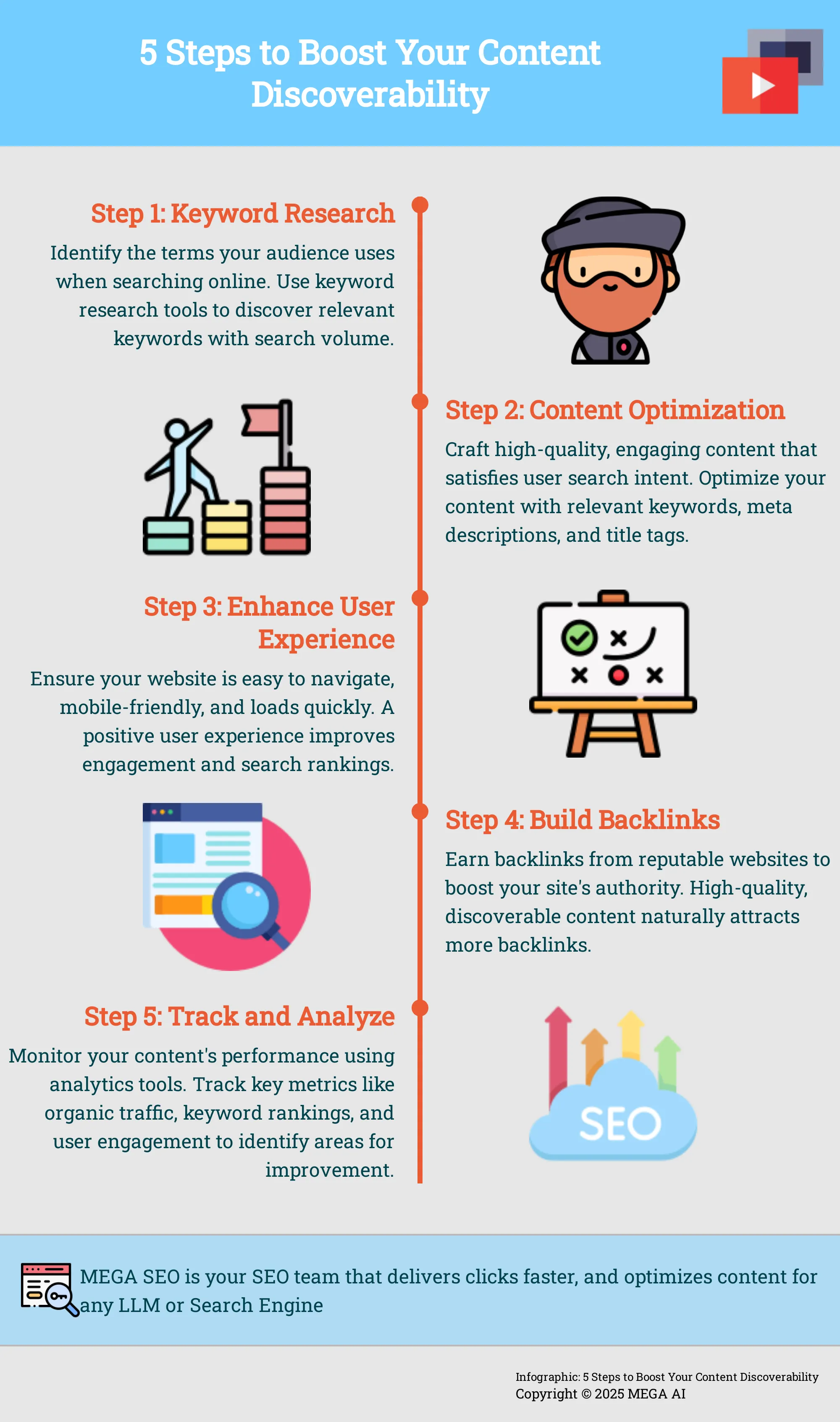
Making your content easy to find is essential for growing your online presence. It’s not just about creating great material; it’s about ensuring that material reaches the right audience. When search engines and users can readily discover your content, you’re well on your way to building site authority. This involves a mix of understanding your audience, optimizing your content effectively, and making smart use of available tools and platforms. Let's explore some actionable strategies you can implement to help your content get noticed.
Optimize for the Right Keywords and User Search Intent
One of the first steps to making your content discoverable is ensuring it aligns with what people are actually searching for. This means diving into keyword research to find the terms and phrases your target audience uses. Beyond the keywords themselves, understanding user search intent is equally important. Are they looking for information, trying to buy something, or seeking a specific website? Tailoring your content to match this intent helps search engines see its relevance. Neglecting these SEO best practices, such as thorough keyword optimization, can certainly hinder your website's organic traffic growth. Platforms like MEGA AI can simplify this process by offering automated keyword research to uncover valuable opportunities.
Create High-Quality Content People Want to Share
Keywords can bring people to your page, but quality content is what keeps them there and encourages them to share. Search engines tend to favor content that is valuable, engaging, and directly relevant to users. When you focus on creating material that genuinely helps or interests your audience, you're not just improving your search rankings; you're also building a loyal readership. Think about what makes a piece of content shareable: Is it insightful, entertaining, or does it solve a common problem? Failing to create high-quality content that aligns with user search intent can make your site less visible. You might consider using tools that can help you generate content or refine your existing pieces to meet these high standards.
Use Internal Links and Site Structure Smartly
How your content is organized and linked within your own website plays a significant role in its discoverability. A clear site structure helps search engines crawl and index your pages more efficiently. Internal linking, which involves linking from one page on your site to another relevant page, distributes link equity and helps search engines understand the relationship between your different content pieces. Proper SEO strategies, including smart internal linking, make your content more accessible to users searching for related topics. For instance, if you have a comprehensive guide, linking to it from related blog posts can improve its visibility. Some platforms can even help identify optimal internal linking opportunities automatically.
Promote Your Content on Social Media and Other Platforms
Don't rely solely on search engines for discovery. Promoting your content across various channels, especially social media, can significantly widen its reach. Sharing your articles, blog posts, or videos on platforms where your audience spends their time can drive traffic and signal relevance to search engines. Regularly updating your content to keep it fresh and making it easy for users to share with social sharing icons are also effective tactics. Think about how you can remix content for different platforms to maximize its impact. Consistent promotion helps keep your content visible and engaging for both users and search algorithms.
How User Experience Impacts Content Discoverability
When you're working to get your content seen, it's common to focus heavily on keywords and backlinks. While those are vital, user experience (UX) is an equally critical component that directly affects how easily both people and search engines can find what you've published. The way visitors interact with your site—how intuitive it feels, how quickly it responds, and how easy it is to find information—sends strong signals. A positive user experience suggests to search engines like Google that your site offers valuable and relevant information, which can significantly improve your content's visibility in search results.
Think of it from a search engine's perspective: their goal is to provide users with the best possible answers to their queries. A site that's difficult to use, slow, or confusing is unlikely to provide a good experience, even if the content itself is stellar. This is why search engines increasingly consider user experience factors in their ranking algorithms. When users land on your site and have a smooth, engaging experience, they're more likely to stay longer, explore more pages, and interact with your content. These positive engagement metrics tell search engines that your site is a quality resource. Consequently, a website that is a pleasure to use—simple to get around, fast to load, and accessible on any device—is not just beneficial for your visitors; it also helps search engine crawlers more effectively understand and index your content. Ultimately, a strong user experience builds a solid foundation for better discoverability, helping your authoritative content reach the audience it's intended for and supporting all your other SEO strategies.
Design Clear Site Navigation and Information Architecture
Imagine trying to find a specific book in a library with no clear sections or signage—it would be incredibly frustrating. A website with poor structure presents a similar challenge for both users and search engines. Clear site navigation and a well-planned information architecture serve as the essential map for your website. When visitors can easily locate the information they need, they tend to stay longer and interact more deeply with your content, signaling its quality to search engines.
Failing to incorporate SEO techniques in website design can hinder discoverability on search engines. As Smashcreate notes, "Proper SEO strategies make your content more accessible and visible to users searching for related topics." This includes using relevant keywords not just in your main content but also within your navigation labels. This practice helps search engines understand the theme of each page, making it easier for them to index your site accurately. A logical structure with intuitive menus ensures everyone, human or bot, can efficiently find your valuable content.
Ensure Your Site is Mobile-Friendly with Responsive Design
With so many people relying on smartphones for online access, a mobile-friendly website is no longer optional—it's a fundamental requirement. Google employs mobile-first indexing, meaning it primarily evaluates the mobile version of your site to determine its ranking. If your site delivers a cumbersome or flawed experience on mobile devices, you risk frustrating a significant segment of your audience and signaling to Google that your site may not be the optimal resource.
As Boraq points out, "A beautifully designed website is futile if it remains invisible to search engines and potential visitors." Neglecting SEO best practices, such as responsive design, can certainly impede your website's discoverability. Responsive design allows your website to automatically adapt to any screen size, offering a consistent experience across desktops, tablets, and phones. This adaptability is crucial for maintaining user engagement and enabling search engines to effectively crawl and rank your mobile content.
Prioritize Page Load Speed and Overall Performance
Everyone has experienced the frustration of clicking a link only to wait for a slow page to load, often leading to a quick exit. Page load speed is a vital aspect of user experience and a recognized ranking factor for search engines. A slow website can result in higher bounce rates, reduced engagement, and consequently, lower visibility in search results. Users demand speed, and search engines strive to provide results that meet this expectation.
According to MoldStud, "websites with optimized code can experience up to a 50% improvement in organic traffic. Regularly auditing your web content for syntactical issues is paramount; even minor oversights... can hinder crawling efficiency." Simple errors in your site's code can slow down how search engines process your pages. Taking steps like optimizing images, using browser caching, and minifying code can significantly improve your site's speed. Faster loading times lead to more satisfied users and give your content a better opportunity to be found and valued.
Technical Steps to Improve Content Discoverability
Creating fantastic content is a huge step, but if search engines can't easily find and understand it, your efforts might not reach their full potential. This is where the technical side of your website plays a critical role. Think of it like building clear, well-lit pathways to your content, making it effortless for search engines to navigate and index. By addressing a few key technical elements, you can significantly improve how easily your content gets discovered. This discoverability is a cornerstone of building site authority and ensuring your message reaches your intended audience.
These technical adjustments aren't just about pleasing search engine algorithms; they often go hand-in-hand with a better user experience. When search engines can efficiently crawl and interpret your site, they can more accurately match your content with the right users. This means more qualified organic traffic coming your way, which is a primary goal for most online businesses. While some technical aspects might sound complex, many are quite manageable, especially with the right tools and guidance. For instance, platforms like MEGA AI can even automate certain technical SEO improvements, taking some of the heavy lifting off your shoulders and allowing you to focus on other areas of your strategy. Let's explore some specific technical steps you can take to ensure your valuable content gets the attention it deserves and contributes effectively to your site's overall performance.
Implement Structured Data and Schema Markup
One powerful way to help search engines understand your content better is by using structured data, often implemented with schema markup. Essentially, schema markup is a vocabulary of tags you can add to your HTML to provide explicit context about your content. For instance, you can tell search engines that a piece of content is an article, a recipe, a product, or an event. As MoldStud highlights, "Implementing schema markup helps search engines understand the context of your content, which can enhance visibility in search results. This structured data provides additional information about your content, making it easier for search engines to index and display it effectively." This clarity can lead to rich snippets in search results—those more detailed listings with ratings, images, or other specific information—making your content stand out and potentially increasing click-through rates.
Optimize Your XML Sitemaps and Robots.txt File
Think of an XML sitemap as a roadmap of your website for search engines. It lists all the important pages on your site, helping crawlers discover new content and understand your site's structure more efficiently. Complementing this is your robots.txt file, which acts as a guide for search engine bots, telling them which parts of your site they should or shouldn't crawl. According to Boraq, "Properly configured XML sitemaps and robots.txt files are essential for guiding search engines through your website. An XML sitemap helps search engines discover your pages, while a well-structured robots.txt file can prevent them from crawling unnecessary sections of your site." Regularly updating your sitemap and ensuring your robots.txt file is correctly configured are fundamental steps for good technical SEO. You can usually submit your sitemap directly through Google Search Console to aid this process.
Focus on AMP and Core Web Vitals for Better Performance
User experience is a major factor in how search engines rank your content, and site performance is a cornerstone of good user experience. This is where Accelerated Mobile Pages (AMP) and Core Web Vitals come into play. AMP is a framework for creating fast-loading mobile pages, which is crucial as more users access content on their phones. Core Web Vitals are a set of specific metrics Google uses to measure user experience, focusing on loading speed (Largest Contentful Paint), interactivity (Interaction to Next Paint), and visual stability (Cumulative Layout Shift). As noted by SmashCreate, "Websites that prioritize AMP (Accelerated Mobile Pages) and Core Web Vitals can significantly enhance user experience and loading times. These factors are crucial for improving search engine rankings and ensuring that content is easily discoverable by users." Prioritizing these aspects can lead to better engagement, lower bounce rates, and improved search rankings.
How to Measure and Analyze Your Content's Discoverability
Understanding if your content is actually reaching your audience is crucial. It’s not enough to just publish; you need to know if people can find what you’re putting out there. Measuring and analyzing your content's discoverability helps you pinpoint what's working and where you can make improvements to ensure your valuable information gets seen. This involves looking at specific numbers and using the right tools to gather insights.
Think of it like this: you’ve baked an amazing cake (your content), but if it’s hidden in the back of a giant, disorganized pantry (the internet), no one will get to enjoy it. By regularly checking certain metrics and using helpful tools, you can make sure your cake is front and center, easy for everyone to find. This process allows you to refine your SEO strategy and make data-driven decisions to improve your site's authority. It’s about making sure your efforts translate into real visibility, connecting you with the startups, small businesses, or agency clients who need what you offer.
Key Metrics You Should Be Tracking
To get a clear picture of how discoverable your content is, you'll want to keep an eye on a few key metrics. Organic traffic is a big one – this tells you how many people are finding your site through search engines like Google. You should also monitor your keyword rankings. Knowing where your content appears for relevant search terms is vital; after all, "neglecting SEO best practices, such as keyword optimization, meta tags, and quality content creation, can hinder your website's discoverability."
Beyond traffic and rankings, consider user engagement signals like bounce rate and time on page. While not direct measures of discoverability, they can indicate if the content, once found, meets user expectations. "Poor content can hinder a website's success by failing to engage users," which can indirectly affect how search engines perceive its value and thus its discoverability. Also, ensure your website's underlying code is clean, as "even minor oversights, such as missing closing tags or improperly nested elements, can hinder crawling efficiency," making it harder for search engines to find and index your pages.
Helpful Tools for Assessing Content Visibility
Luckily, you don’t have to guess when it comes to these metrics. Several tools can help you assess your content's visibility. Google Analytics is a fantastic starting point for understanding your organic traffic, user behavior, and which content pieces are performing well. For more in-depth SEO insights, platforms like Ahrefs or SEMrush offer features for tracking keyword rankings, analyzing backlinks, and conducting site audits. These tools help you see if "using the right keywords in your content ensures that search engines understand what each page is about."
Content auditing is another important practice, and tools can simplify this process by identifying technical SEO issues or content gaps. Google Search Console is indispensable here, providing insights into how Google crawls and indexes your site, highlighting any errors that might impede discoverability. By regularly using these tools, you can gather the data needed to "create a website that not only looks great but also performs well, engages visitors, and drives results" for your business. Platforms like MEGA AI can further streamline this by automating parts of your SEO analysis and optimization.
Common Content Discoverability Mistakes (And How to Avoid Them)
Creating compelling content is a significant achievement, but its journey doesn't end once you hit "publish." For your content to truly make an impact and build your site's authority, your audience needs to be able to find it. Unfortunately, many businesses find their valuable articles, blog posts, and resources buried deep within search results, unseen by those who would benefit most. This often isn't due to a lack of quality, but rather a few common, and thankfully avoidable, missteps in how content discoverability is approached.
These mistakes can range from how you select your topics to the technical health of your website. The good news is that recognizing these pitfalls is the most crucial step toward correcting them. You don't necessarily need a massive overhaul of your entire strategy. Often, small, targeted adjustments can yield significant improvements in how easily search engines and users can find your content. By understanding these frequent oversights, you can proactively refine your approach, ensuring your efforts in content creation translate into tangible results like increased traffic, better engagement, and a stronger online presence. Let's explore some of these common mistakes and discuss practical ways to sidestep them.
Mistake: Poor Keyword Choices
One of the most fundamental errors that can impede content discoverability is making poor keyword choices. If you're targeting terms that don't accurately reflect what your audience is searching for, or if your chosen keywords are excessively broad and competitive, your content may struggle to gain visibility. As the team at Boraq highlights, "Neglecting SEO (Search Engine Optimization) best practices, such as keyword optimization, meta tags, and quality content creation, can hinder your website's discoverability and organic traffic growth." Effective keyword research goes beyond guesswork; it involves understanding user intent and identifying the specific phrases and questions your potential customers are typing into search engines. Investing time in this process helps you connect with a more relevant audience.
Mistake: Forgetting to Update Content
In the fast-paced digital world, content can become outdated surprisingly quickly. Publishing an article and then never revisiting it is a missed opportunity. Information changes, new data emerges, and audience needs evolve. AIContentfy correctly points out that "Neglecting to create high-quality, valuable, and relevant content for your website can hinder its visibility in search engine results," and this relevance includes timeliness. Regularly auditing your existing content for accuracy and freshness is key. Look for opportunities to update statistics, add new insights, or expand on topics to maintain its value. This signals to search engines that your site is a current and authoritative source, which can positively influence its discoverability.
Mistake: Not Prioritizing Mobile-Friendliness
A significant portion of today's web traffic originates from mobile devices. If your website isn't optimized for these users, you're creating a major barrier to discoverability. A site that's difficult to navigate or read on a smartphone will likely lead to high bounce rates, signaling a poor user experience to search engines. AldoMedia notes, "Overly complex designs can confuse users and hinder navigation," which is particularly true when a desktop-first design is awkwardly displayed on a smaller screen. Remember, Google primarily uses mobile-first indexing, meaning the mobile version of your site is paramount for ranking. Ensuring a responsive design that adapts smoothly to all screen sizes is no longer optional.
Mistake: Overlooking Key Technical SEO Details
Technical SEO forms the very foundation upon which your content's discoverability is built. Ignoring these crucial details can undermine even the most well-crafted content strategy. As Smashcreate aptly puts it, "Failing to incorporate SEO techniques in website design can hinder discoverability on search engines. Proper SEO strategies make your content more accessible and visible to users searching for related topics." This encompasses a range of elements, including optimizing your site's loading speed, ensuring your XML sitemap is correctly structured and submitted, managing your robots.txt file to guide search engine crawlers, and fixing broken links. Implementing structured data markup can also help search engines better understand your content. Consistent attention to technical SEO is vital for a healthy, discoverable website.
Using AI to Get Your Content Seen More Often
Artificial intelligence is changing how we approach content discoverability, offering powerful tools to streamline our efforts. Instead of spending hours on manual tasks, you can use AI to work smarter, ensuring your valuable content reaches the right audience more effectively. Let's explore a few ways AI can help.
Let AI Handle Keyword Research and Optimization
Finding the right keywords is fundamental to getting your content discovered. AI-powered tools can significantly simplify this. They analyze search trends, competitor strategies, and user behavior to identify high-impact keywords relevant to your audience. As Smashcreate notes, "Using the right keywords in your content ensures that search engines understand what each page is about." AI doesn't just find these keywords; it helps you strategically incorporate them. Platforms like MEGA AI offer automated keyword research, removing the guesswork from this crucial step and making your content more accessible. This ensures your SEO efforts are targeted from the start.
Use AI for Content Creation and Fine-Tuning
Creating high-quality, optimized content consistently can be a challenge. AI can assist by generating initial drafts, suggesting improvements, and ensuring your content aligns with SEO best practices. This includes optimizing meta tags and ensuring the overall quality that search engines favor. Boraq points out that "Neglecting SEO (Search Engine Optimization) best practices, such as keyword optimization, meta tags, and quality content creation, can hinder your website's discoverability and organic traffic growth." AI tools can help you fine-tune your content, making sure it’s not only engaging for readers but also structured in a way that search engines can easily understand and rank. This support helps you consistently publish material that improves your site's visibility.
Predict Content Success with AI Analytics
Understanding how your content is likely to perform and identifying areas for technical improvement are key to discoverability. AI analytics can process vast amounts of data to offer predictive insights and highlight technical SEO issues. For instance, "websites with optimized code can experience up to a 50% improvement in organic traffic," according to a study by SEMrush. AI can help you audit your web content for issues like missing closing tags or improperly nested elements that hinder crawling. Services like MEGA AI's Maintenance Agent can even re-optimize existing content after search engine updates or for different platforms, ensuring it consistently performs at its best.
Related Articles
- Enhancing the Authoritativeness of Your Site Through Effective SEO Practices - MEGA SEO | Blog
- Essential Tips for Writing SEO-Optimized Content
- Content Decay: What It Is & 5 Ways to Fix It
- Maximize Your Visibility with Google Discover Strategies
- Content Optimization - MEGA SEO | Blog
Frequently Asked Questions
What's the first thing I should do if I feel my content isn't being found? A great starting point is to look at your keyword strategy. Are the terms you're targeting truly what your ideal audience is searching for? Sometimes, we think we know what people are looking for, but a little research can reveal more effective phrases. Also, take an honest look at your content's quality – is it genuinely helpful and engaging for the people you want to reach?
How long does it usually take to see improvements in content discoverability after making changes? This can vary quite a bit, as it depends on several factors like the competitiveness of your industry, the current authority of your website, and the extent of the changes you implement. Generally, you might start seeing some shifts in a few weeks, but significant, lasting improvements often take a few months of consistent effort. Think of it as planting a garden; it needs time and ongoing care to flourish.
Can I improve discoverability for old content, or should I just focus on new posts? You can absolutely improve the discoverability of your older content. Often, existing posts have untapped potential. You can update them with fresh information, re-optimize them for new or more relevant keywords, improve internal linking to them, and ensure they are technically sound. Sometimes, a few strategic tweaks to an older piece can give it a new lease on life.
Is it better to focus on getting lots of traffic or attracting the right kind of traffic for discoverability? While high traffic numbers can seem appealing, attracting the right kind of traffic is far more valuable for building site authority and achieving your business goals. Discoverability efforts should focus on connecting your content with the specific audience that will find it most relevant and useful. This targeted approach leads to better engagement and a higher likelihood of conversions.
If I'm a small business with limited resources, what's one key area of discoverability I should prioritize? If you have to pick one area, focus on creating high-quality content that directly answers the questions and addresses the pain points of your ideal customer, optimized with relevant keywords. When your content genuinely helps people, they are more likely to engage with it, share it, and search engines are more likely to recognize its value. This forms a strong foundation for all other discoverability efforts.