
Your website doesn't exist in a bubble. To succeed, you need to understand how you stack up against the competition. An SEO audit is your strategic tool for doing just that. It not only reveals technical errors and content gaps on your own site but also provides critical insights into your competitors' strategies. By analyzing their backlink profiles and top-performing content, you can identify opportunities they may have missed. This process gives you a clear, actionable plan to improve your own performance and build a durable competitive advantage. It’s about making informed decisions to strengthen your authority and capture more market share.
Key Takeaways
- Audit your entire SEO ecosystem: A truly effective audit looks beyond technical errors. It evaluates your on-page elements, off-page authority, and overall content strategy to build a complete picture of your site's performance.
- Turn findings into a prioritized plan: An audit is only useful if you act on it. Sort issues by impact versus effort to tackle high-value tasks first and create a realistic, step-by-step action plan for your team.
- Track your progress to prove ROI: Establish baseline metrics before you start making changes. Continuously monitor key performance indicators to measure the impact of your work and demonstrate how SEO improvements contribute to business goals.
What Is an SEO Audit?
Think of an SEO audit as a complete health check for your website's performance on search engines. It’s a thorough process of examining your site to find issues that could be holding back your organic traffic. By looking at your website through the lens of search engine ranking factors, you can identify strengths, weaknesses, and opportunities for improvement. This isn't just about finding what's broken; it's about creating a strategic roadmap to get more visibility and attract the right audience. A regular audit helps you stay competitive and ensures your site is aligned with the latest search engine guidelines and user expectations.
What an SEO Audit Covers and Why It Matters
A proper SEO audit gives you a holistic view of your website's performance by looking at several key areas. It typically covers technical SEO, which includes site speed and crawlability; on-page SEO, like content quality and keyword usage; and off-page SEO, such as your backlink profile. This comprehensive approach is critical because search engines consider hundreds of factors when ranking a page. Ignoring one area can undermine your efforts in another. A detailed technical SEO check, for example, ensures that search engines can find and understand your content, which is the foundation for everything else. This complete picture allows you to see exactly where to focus your energy for the greatest impact.
The Main Goals of an SEO Audit
The primary goal of an SEO audit is to uncover actionable insights that will improve your website's search engine visibility and performance. It’s about moving from guesswork to a data-driven strategy. By completing an audit, you can pinpoint specific problems, such as broken links, slow page speeds, or thin content, and create a clear plan to fix them. The objective is to produce actionable reports and deliver results that matter, like increased organic traffic, better keyword rankings, and higher conversion rates. Ultimately, an audit provides the blueprint you need to refine your SEO strategy, ensuring your efforts lead to measurable growth for your business.
How to Prepare for Your SEO Audit
Before you start digging into the technical details of your website, a little preparation goes a long way. Think of it as creating a roadmap for your audit. By setting the stage correctly, you ensure your audit is focused, efficient, and tied directly to your business objectives. Proper planning helps you move from simply identifying problems to creating a strategic action plan that delivers real results. This preparation phase involves three key steps: gathering your tools, defining your goals, and setting a realistic schedule.
Gather Your Tools and Resources
To conduct a thorough SEO audit, you need the right set of tools. Start with the basics: Google Analytics and Google Search Console. These free tools from Google provide essential data on your site’s traffic, performance, and indexation status. You’ll also want a backlink analysis tool to examine your link profile and a site crawler to identify technical issues like broken links and redirect chains.
While you can piece together data from various sources, using an integrated platform can streamline the process. For example, MEGA AI’s SEO tools automate much of the data collection and analysis, from keyword research to technical checks. Having a centralized dashboard saves time and helps you spot connections between different data points more easily.
Set Clear Goals and KPIs
An SEO audit without clear goals is like a ship without a rudder. You might find a lot of interesting things, but you won’t know which ones matter. Before you begin, define what you want to achieve. Are you trying to recover from a traffic drop, increase leads from organic search, or improve your domain authority? Your goals will determine where you focus your efforts.
Once you have your goals, establish the key performance indicators (KPIs) you’ll use to measure success. These are the specific metrics that show whether you’re on track. For instance, if your goal is to increase organic traffic, your KPIs might include monthly organic sessions, keyword rankings for target terms, and click-through rate (CTR) from search results. Aligning your audit with these business objectives turns it from a technical checklist into a strategic growth driver.
Establish a Realistic Timeline
A comprehensive SEO audit takes time, so it’s important to set a realistic schedule. Rushing through the process will likely cause you to miss critical issues. The timeline will depend on the size and complexity of your website. A small business website might only take a few days to audit, while a large ecommerce site with thousands of pages could take several weeks.
Break the audit down into manageable phases: technical SEO, on-page SEO, off-page SEO, and content analysis. Allocate specific days or weeks to each phase. This structured approach helps you stay organized and ensures every aspect of your site gets the attention it deserves. Using a project management tool can help you map out your tasks and track your progress, keeping the entire audit on schedule.
How to Audit Your Technical SEO
Technical SEO is the foundation of your website's performance. It’s about making sure search engines can find, crawl, and index your site without any issues. Think of it as building a solid house before you start decorating. A technical audit looks at your site's backend structure, speed, mobile usability, and security. Here’s how to get started.
Check Crawlability, Indexation, and Site Structure
First, confirm that search engines can access your content. Check your robots.txt file to ensure you aren't accidentally blocking important pages. Next, review your XML sitemap and submit it to Google Search Console. The Coverage report in Search Console will show you which pages are indexed and if there are any errors. A logical site structure with clear navigation helps both users and crawlers understand your content. Using the right SEO audit tools provides actionable insights to spot and fix these problems quickly.
Analyze Site Speed and Core Web Vitals
How quickly your website loads is a major factor in user experience and search rankings. Google uses metrics called Core Web Vitals to measure a page's loading performance, interactivity, and visual stability. You can use Google's PageSpeed Insights tool to analyze your site and get specific recommendations, like optimizing images. A comprehensive SEO audit always includes a deep look at site performance because a fast, responsive website is essential for keeping users engaged and satisfying search engine requirements for a quality user experience.
Test for Mobile-Friendliness
With most searches happening on mobile devices, your website must provide a seamless experience on smaller screens. Google uses mobile-first indexing, meaning it primarily uses the mobile version of your content for ranking. To see how your site measures up, use Google’s Mobile-Friendly Test. A mobile-friendly site features responsive design, readable text without zooming, and easily tappable links. Performing detailed audits on mobile usability is a necessary skill. If your site is difficult to use on a phone, you're likely losing traffic and customers.
Verify SSL and HTTPS Security
Site security is non-negotiable. An SSL certificate encrypts data between your server and a user's browser, which is what turns "http" into "https." This is crucial for protecting user information. You can check if your site is secure by looking for the padlock icon in your browser's address bar. HTTPS is a confirmed ranking signal, and browsers may flag non-secure sites. Ensuring your site uses HTTPS builds trust with users and search engines, making it a fundamental check in any professional SEO audit designed to fix issues affecting website performance.
How to Audit Your On-Page SEO
On-page SEO is all about the elements you control directly on your website. Think of it as setting your stage perfectly before the audience arrives. This part of your audit examines everything from the words on the page to the underlying HTML that structures it. A strong on-page strategy ensures that search engines can understand your content's context and that users find it valuable and easy to read. When you get this right, you create a better experience for visitors and send clear signals to Google about what your pages are about, which can directly influence your rankings.
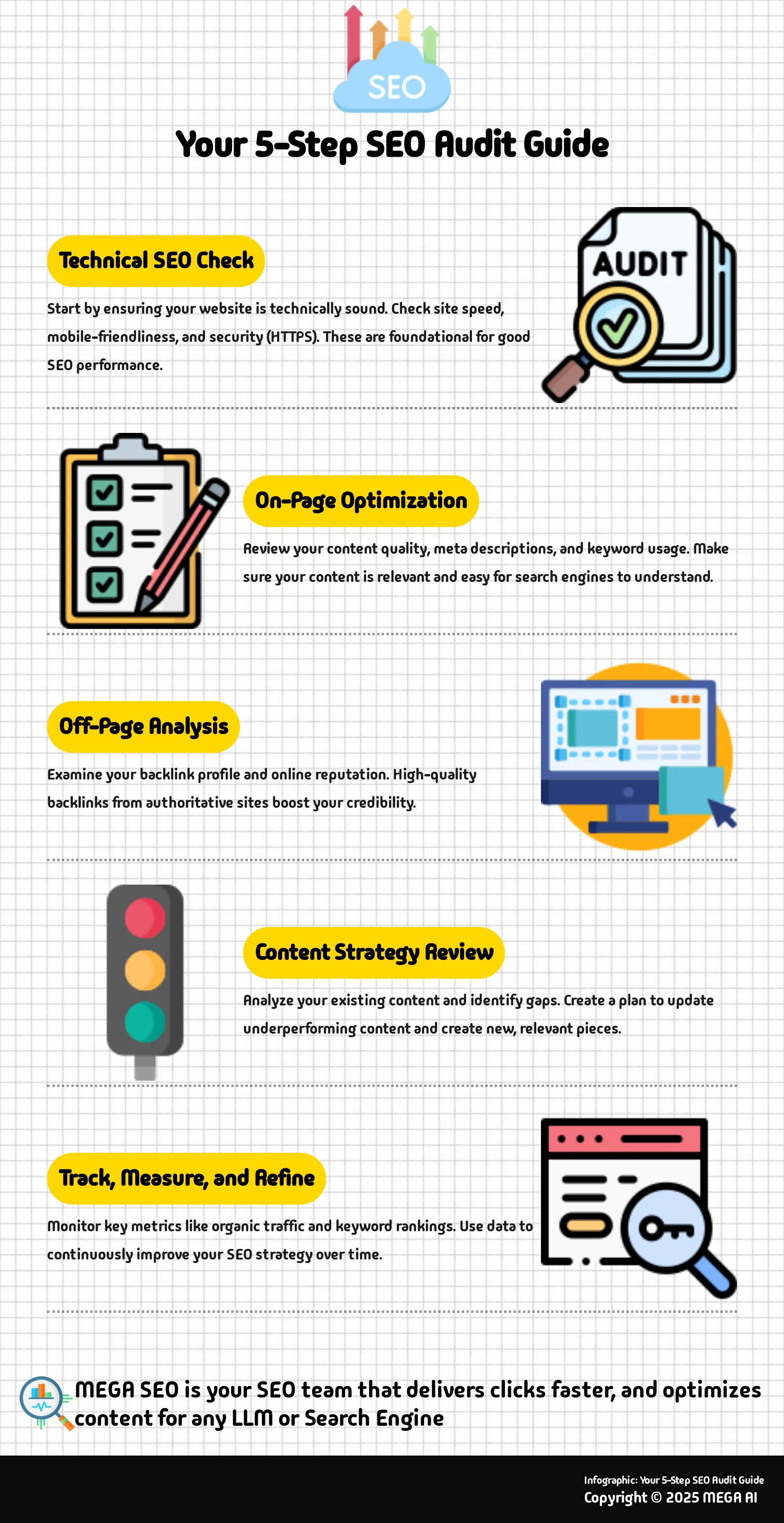
This process involves a deep look at your content quality, keyword usage, meta tags, and more technical elements like structured data. Conducting a thorough assessment of these on-page factors is a critical step for effective SEO. It helps you pinpoint specific areas for improvement that can have a direct impact on your rankings and traffic. Unlike off-page SEO, which involves external signals like backlinks, on-page changes can often produce results more quickly because they are entirely within your control. By systematically reviewing each element, you can ensure every page is working as hard as it can to attract and engage your target audience. Let's walk through the key components to review to make sure your pages are perfectly optimized.
Assess Content Quality and Relevance
Your content is the foundation of your on-page SEO. Start by evaluating whether it truly serves your audience. Is it well-written, accurate, and comprehensive enough to answer a user's question completely? High-quality content should be original and provide unique value, not just rehash what others have said. Also, consider its relevance. Does the content align with the search intent behind your target keywords? For example, if someone is searching for "how to bake a cake," they expect a step-by-step guide, not a history of baking. Regularly updating your articles with fresh information is also key to maintaining relevance. Tools like MEGA AI's Maintenance Agent can even identify new content to add to existing articles, helping you keep them optimized and competitive.
Review Meta Tags, URLs, and Internal Links
These elements act as signposts for both users and search engines. Your title tag and meta description are often the first things a user sees in search results, so make them compelling. Each page should have a unique title tag that includes the primary keyword and a meta description that accurately summarizes the content. Next, look at your URLs. They should be simple, descriptive, and easy to read. A clean URL like yourstore.com/blog/on-page-seo-guide is much better than yourstore.com/p?id=123. Finally, check your internal linking strategy. Linking relevant pages together helps search engines discover your content and understand the relationships between different topics on your site.
Inspect Schema Markup and Structured Data
Schema markup is a type of code you add to your website to help search engines better understand your content. Think of it as providing extra context. For example, you can use it to specify that a string of numbers is a product rating, a date is an event time, or a block of text is an FAQ answer. This can help your pages appear as "rich results" in search, like those with star ratings or dropdown questions, which can significantly improve your click-through rate. You can use Google's Rich Results Test to check your implementation. While it sounds technical, getting hands-on experience with SEO audit tools can help you find actionable insights and ensure your structured data is working correctly.
How to Audit Your Off-Page SEO
Off-page SEO refers to all the actions you take outside of your website to improve its position in search rankings. Think of it as building your site’s reputation across the internet. While on-page SEO focuses on what your site says about itself, off-page SEO is about what the rest of the web says about you. It’s a critical part of any audit because it helps search engines understand your site's authority, relevance, and trustworthiness. The two main pillars of off-page SEO are your backlink profile and your broader online presence, including social media and brand mentions. Let's look at how to assess both.
Analyze Your Backlink Profile
Understanding your backlink profile is crucial for assessing your website's authority and trustworthiness. This profile is the complete list of all websites linking back to yours. A comprehensive analysis involves identifying the quality and relevance of these linking sites, as well as the anchor text they use. A few high-quality links from authoritative sites in your niche are far more valuable than hundreds of links from irrelevant or spammy ones. You'll also want to look for any toxic links that could harm your performance and may need to be disavowed. Tools like Ahrefs or Moz can help you visualize your backlink landscape, but AI-powered SEO platforms can automate this process, saving you significant time.
Evaluate Social Signals and Your Online Reputation
Social signals play a significant role in your overall SEO strategy. While not a direct ranking factor, a strong social media presence drives traffic, builds brand awareness, and encourages natural links. Evaluating your presence on these platforms provides insights into how your brand is perceived online. Look at engagement metrics like shares and comments to see how your content resonates with your audience. Beyond social media, you need to monitor your online reputation. This includes customer reviews on Google, industry forums, and other third-party sites. A positive reputation builds trust, which is a key factor for both users and search engines. A solid online reputation management strategy is essential for long-term success.
How to Audit Your Content Strategy
Beyond the technical nuts and bolts, a successful SEO audit examines the heart of your website: your content. This part of the audit checks if your content strategy is actually working. Are you creating articles, guides, and landing pages that resonate with your audience and align with your business goals? It’s about ensuring every piece of content serves a purpose, whether that’s attracting new visitors, educating potential customers, or driving conversions. A strong content strategy is the foundation of any modern SEO effort.
A content audit helps you take a step back and look at the bigger picture. You’ll evaluate what you’ve already published to see what’s performing well, what’s falling flat, and where you have gaps. This process is critical for making informed decisions about where to invest your time and resources. Instead of guessing what to write next, you’ll have a data-backed plan. By understanding what connects with your audience and what doesn’t, you can refine your approach and create a more effective, cohesive content ecosystem. This strategic review is what separates websites that simply exist from those that grow and thrive, turning your content from a simple collection of pages into a powerful business asset.
Conduct a Content Audit and Gap Analysis
First, you’ll need to take stock of what you have. A content audit involves systematically reviewing your existing content—blog posts, service pages, case studies—to evaluate its performance and relevance. You’re looking for high-performers that you can learn from, underperformers that need an update, and outdated pieces that might need to be removed.
Once you have a clear picture of your current assets, you can perform a gap analysis. This is where you compare your content library against the topics and keywords your target audience is searching for. The goal is to find holes in your strategy—valuable subjects you haven’t covered that your competitors might be ranking for. This analysis helps you identify missed opportunities to address user needs and build topical authority.
Find Opportunities to Create and Update Content
Your audit and gap analysis will give you a clear roadmap for what to do next. The findings will point to two main opportunities: updating existing content and creating new pieces. Updating content is often a quick win. You can refresh outdated articles with new information, add internal links, or re-optimize them to improve their performance and relevance. This breathes new life into assets you’ve already invested in.
Creating new content allows you to fill the gaps you identified. You can build out topic clusters around your core services and target keywords you’re not currently ranking for. Using tools to analyze keyword performance can guide your efforts, ensuring you focus on topics that resonate with your audience. You can even automate much of this process, from identifying content gaps to generating and optimizing articles for better performance.
How to Audit for Local and International SEO
Your website's reach isn't one-size-fits-all. Whether you're a local shop drawing in neighborhood customers or an ecommerce brand expanding globally, your SEO strategy needs to reflect your geographic goals. Auditing for local and international SEO involves looking at specific signals that tell search engines where your business belongs and who it serves. This part of the audit ensures your content connects with the right audience, in the right place, and in the right language. It’s about making your online presence feel local, no matter where your customers are.
Check for Geographic Relevance
If your business serves a specific city or region, this step is for you. A local SEO audit verifies that you’re visible to customers searching nearby. Start by checking your business information—name, address, and phone number (NAP)—for consistency across the web. Discrepancies can confuse search engines and customers. Next, review your website content and meta descriptions for local keywords, like "artisan coffee in Portland." Your Google Business Profile is your digital storefront, so audit it to ensure it’s complete, with up-to-date hours, photos, and positive reviews. Finally, look at your local citations and backlinks from other local businesses or directories to strengthen your community ties.
Review Multilingual and Multi-Regional Strategies
For businesses reaching customers across borders, an international SEO audit is essential. This process checks if your site is structured to serve different languages and regions effectively. A key technical point is to verify the correct use of hreflang tags, which tell Google which page version to show to users in specific locations. Beyond technicals, review your content. Is it just translated, or is it culturally localized with relevant currencies, date formats, and idioms? Analyze the performance of your international pages in your analytics platform to see what’s resonating and where you can improve your strategy for different markets.
How to Use Your SEO Audit Findings
Completing an SEO audit is a huge accomplishment, but the real work begins now. An audit is only valuable if you use its findings to make meaningful improvements. This is where you translate data into a concrete strategy. The goal is to turn your list of issues into a prioritized roadmap that guides your SEO efforts, ensuring every change you make contributes to better performance, higher rankings, and a stronger online presence.
This process involves two key phases: creating a smart action plan and then diligently tracking your results. By tackling issues systematically and measuring the impact, you create a cycle of continuous improvement. This approach not only fixes existing problems but also builds a more resilient and optimized website for the future. Let’s walk through how to turn your audit report into tangible results.
Prioritize Issues and Create an Action Plan
After an audit, you’ll likely have a long list of items to address. The key is not to get overwhelmed. One of the biggest hurdles for any team is prioritizing the audit findings and then implementing the changes effectively. Start by categorizing each issue based on its potential impact and the effort required to fix it. A simple framework is to group tasks into four buckets: high-impact, low-effort (do these first); high-impact, high-effort; low-impact, low-effort; and low-impact, high-effort (do these last, if at all).
Once you have your priorities straight, create a detailed action plan. This document should outline each task, assign it to a team member, and set a clear deadline. Recognizing common challenges like limited resources or technical constraints early on will help you set realistic timelines. For ongoing tasks like content updates or technical maintenance, consider using an AI-powered platform like MEGA AI to automate the implementation and free up your team for more strategic work.
Measure and Report on Your Progress
Implementing fixes is just one part of the equation. To understand if your efforts are paying off, you need to measure your progress. Before you start making changes, take a snapshot of your current performance metrics. This baseline will be your point of comparison. Key metrics to track include organic traffic, keyword rankings for your target terms, click-through rates (CTR), bounce rate, and conversion rates from organic search.
Use tools like Google Analytics and Google Search Console to monitor these KPIs. The goal is to gather actionable insights that show a direct correlation between your actions and your results. Create a simple dashboard to report on progress weekly or monthly. A comprehensive SEO audit checklist can also be a useful resource to track which items have been completed and which are still pending. This continuous loop of implementing, measuring, and reporting ensures your SEO strategy remains agile and effective over time.
Advanced SEO Audit Techniques
Once you’ve mastered the fundamentals, you can add another layer of sophistication to your audits. Advanced techniques help you move beyond a simple checklist, allowing you to uncover deeper insights and connect your SEO efforts directly to business growth. These methods focus on leveraging technology and strategic thinking to create a more impactful and forward-looking plan. It’s the difference between a reactive approach—fixing what’s broken—and a proactive one that builds a durable competitive advantage. An advanced audit doesn't just ask "Is our site mobile-friendly?" It asks, "How can we create the best possible mobile experience to increase conversions?" This shift in perspective is crucial for long-term success. By incorporating AI and aligning your audit with your company's core objectives, you can transform your findings from a list of technical fixes into a powerful roadmap for success. This approach ensures your SEO work is not only technically sound but also strategically aligned to deliver measurable results that matter to stakeholders and contribute to the bottom line.
Use AI for Deeper Insights
Traditional audits can be time-consuming and may miss subtle patterns that impact performance. AI tools enhance your audit by analyzing vast datasets to identify trends, patterns, and opportunities that are nearly impossible to spot manually. For example, an AI-powered platform can sift through thousands of competitor articles to find content gaps or predict which headline change will most effectively improve your click-through rate. Our SEO features use AI to automate this complex analysis, helping you find high-impact opportunities without spending weeks buried in spreadsheets. This allows you to focus your energy on executing strategy rather than on manual data collection and interpretation.
Integrate Your Audit with Your Digital Strategy
An SEO audit shouldn't exist in a vacuum. Its findings are most powerful when they directly inform your larger business objectives. The goal is to create a roadmap that connects specific SEO tasks to measurable business outcomes. For instance, if your company wants to increase leads for a particular service, your audit should prioritize technical fixes and content opportunities related to that service's pages. The final report should be an actionable plan that clearly shows how each recommendation supports your overall digital strategy. This approach turns the audit from a simple health check into a strategic document that guides your marketing efforts and demonstrates real ROI.
Put Your SEO Audit into Action
An SEO audit is a powerful diagnostic tool, but its true value lies in the action you take afterward. Gathering data is just the starting point; turning those insights into a concrete strategy is how you achieve real growth. Once you have your list of issues, the next step is to prioritize them. Not all SEO tasks are created equal, so use an impact-versus-effort matrix to sort your tasks. Place high-impact, low-effort items at the top of your list to make meaningful progress quickly. This step-by-step training approach transforms a long list of findings into a manageable project with clear ownership and deadlines.
Implementation is an ongoing cycle, not a one-time fix. As you complete tasks, it's essential to track your progress and measure the results. Use tools like Google Analytics and Google Search Console to monitor key metrics such as organic traffic, keyword rankings, and conversion rates. This helps you correlate your actions with performance changes and create actionable reports that demonstrate the value of your SEO efforts. Remember that SEO results take time, so focus on tracking both leading indicators, like a decrease in crawl errors, and lagging indicators, like organic traffic growth.
Manually working through a long list of audit findings can be slow. This is where AI can make a significant difference by automating many of the repetitive tasks. For example, instead of manually rewriting hundreds of meta descriptions, an AI tool can generate optimized options in seconds. Platforms like MEGA AI take this a step further with a Maintenance Agent that not only improves CTR but also identifies new content to add to existing articles. By automating these fixes, your team can focus on higher-level strategy, making your entire SEO process more efficient.
Related Articles
- Top SEO Site Audit Tools for 2024: Free & Paid
- What's in an SEO Audit? A Comprehensive Guide
- SEO Tech Audit: A Comprehensive Guide for 2024
- How to Do an SEO Audit: A Startup's Step-by-Step Guide
- Master SEO Audits: Key Steps for Optimizing Your Website
Frequently Asked Questions
How often should I conduct an SEO audit? A full, comprehensive audit is a good idea at least once a year. However, you shouldn't just set it and forget it. It's wise to perform smaller, more focused check-ups quarterly. These regular reviews can help you monitor your site's technical health, track content performance, and stay ahead of any new issues before they become major problems.
I'm a small business with limited resources. What's the most important part of the audit to focus on first? If you have to start somewhere, begin with your technical SEO. Think of it as the foundation of your house. If the foundation has cracks—meaning search engines can't properly crawl, understand, or index your site—then all the effort you put into beautiful content or a strong backlink profile won't matter as much. Ensuring your site is technically sound is the first step to getting seen.
Can I really do an SEO audit myself? Absolutely. Following a structured guide like this one can walk you through the process. It does require a commitment of time and a willingness to learn. Using the right tools is key to making it manageable. An integrated platform can automate much of the data gathering and analysis, which simplifies the process and helps you focus on creating a strategy from the findings.
How long will it take to see results after I implement the audit's findings? The timeline for seeing results varies. Some technical fixes, like improving site speed or fixing crawl errors, can show an impact relatively quickly in your performance metrics. However, changes related to content strategy and building your site's authority with backlinks are a longer game. You should expect to see gradual improvements over several months, which is why consistent tracking is so important.
My audit found a lot of issues. What's the best way to tackle them without getting overwhelmed? The key is to prioritize. Instead of looking at a giant to-do list, group the issues based on their potential impact and the effort required to fix them. Start with the high-impact, low-effort tasks to get some quick wins and build momentum. This turns your list of findings into a strategic action plan that you can work through systematically over time.