
There's a crucial difference between earning an income and building an asset. An income pays your bills today, but an asset can generate wealth for years. This is the core mindset shift most millionaires make. They stop trading time for a paycheck and start investing their efforts into creating something with lasting value. For entrepreneurs, that "something" is the business itself. The goal is to create a true wealth-building business that works for you, not because of you. This guide explains how to make that critical shift toward financial independence.
Key Takeaways
- Build an Asset, Not Just an Income: Shift your focus from earning a salary to creating a business that grows in value. This approach gives you direct control over your wealth-building potential and creates a path to long-term financial independence.
- Prepare for a Marathon, Not a Sprint: Building a valuable business is a long-term commitment that requires patience. Get ahead of common challenges by creating clear systems for your operations, finances, and team management from the beginning.
- Use Automation to Work on Your Business, Not Just in It: Implement technology and AI to handle repetitive marketing and operational tasks. This frees up your time to focus on high-level strategy, customer relationships, and the decisions that drive real growth.
How Do Millionaires Really Build Their Wealth?
When you think about how millionaires make their money, it’s easy to picture high-powered executive salaries or big stock market wins. While those factors can play a role, they often aren’t the main story. For most self-made millionaires, the path to wealth is built on something they have direct control over: owning a business.
This is the most significant income stream that millionaires rely on. It’s less about the salary they draw and more about building an asset that appreciates over time. As marketing expert Neil Patel shared, his digital ad agency became his primary wealth building vehicle. When you own a business, you’re not just generating profit; you are creating equity. Every successful project and every new customer increases the market value of your company, which in turn grows your personal net worth.
This approach gives you far greater control over your income potential compared to a traditional job with a fixed salary. The business itself becomes your most valuable asset, and your efforts are focused on strategies that increase its long-term worth. Growing your customer base through effective SEO, for instance, isn’t just about driving sales today. It’s a fundamental investment that makes your business more valuable and resilient for the future.
What is Wealth Building, Really?
Building wealth is a different game than just earning a good salary. It’s about a fundamental shift in how you view money and work. Instead of trading your time for a paycheck, wealth building focuses on creating and acquiring assets that generate income for you, often without your direct, day-to-day involvement. For an entrepreneur, this means your business isn't just your job; it's your primary wealth-generating asset. Understanding this distinction is the first step toward creating lasting financial independence. It changes your priorities from simply increasing this month's profits to building long-term, sustainable value that can support you for years to come.
Getting Rich vs. Building Wealth
It’s easy to confuse being rich with being wealthy, but they aren’t the same thing. Getting rich often refers to having a high income, which can certainly support a comfortable lifestyle. However, if that income stops, the lifestyle stops with it. Wealth, on the other hand, is about ownership. As Old National Bank puts it, wealth means owning things that make money for you, even when you're not actively working. This includes the value of your business, investments, and other assets. Building wealth is about creating a system where your assets work to earn money, giving you financial security that isn’t solely dependent on your next paycheck.
The Three Pillars of Wealth: Real Estate, Investments, and Entrepreneurship
Financial experts often point to three main pillars for building wealth: real estate, investments, and entrepreneurship. Real estate can generate rental income and appreciate in value. Investments, like stocks and bonds, allow you to own a piece of other successful companies. But for many, the most powerful and direct path is entrepreneurship. Building your own business gives you the ultimate control over your primary financial asset. You're not just hoping a stock goes up; you are actively making decisions every day to increase your company's value, making it the most hands-on approach to creating a financial future on your own terms.
The Wealth Building Pyramid
A helpful way to visualize the process is through the wealth-building pyramid, a concept outlined by Hands on Banking. This model breaks the journey into distinct, manageable layers, ensuring you build on a solid structure. The base layer is your financial foundation, providing stability. The second layer involves investing in assets that grow your net worth. The third layer focuses on your estate and legacy, planning for the future. Finally, the top of the pyramid is about your goals for giving back. By approaching wealth in these stages, you can create a balanced and sustainable financial life without trying to do everything at once.
Level 1: Financial Foundation
Before you can build a skyscraper, you need a solid foundation. The same is true for wealth. This first level of the pyramid is all about financial stability. It means having enough consistent income to cover your monthly expenses without stress and, crucially, building an emergency fund. Most experts recommend saving at least three to six months' worth of living expenses. This cash reserve acts as your safety net, protecting you from unexpected life events or business downturns. With a strong foundation in place, you have the security and confidence to take the calculated risks necessary to grow your business and move to the next level of wealth building.
Level 2: Investing in Assets
Once your financial foundation is secure, you can focus on the second layer: investing in assets. For an entrepreneur, your business is your number one asset. This is where you should direct your focus and reinvest your profits. Every dollar you put back into improving your operations, marketing, or product development is an investment in growing your company's value. While you can eventually diversify into other assets like real estate or stocks, your initial goal should be to grow the asset you have the most control over. A thriving, profitable business will generate the cash flow needed to fund all your other wealth-building activities down the line.
Level 3: Estate Planning and Philanthropy
The top of the pyramid is about looking beyond yourself and planning for the long term. This layer involves your estate—the total value of everything you own—and deciding how you want that wealth to be managed and passed on. This could mean creating a succession plan for your business, setting up trusts for your family, or dedicating a portion of your wealth to charitable causes you believe in. This stage is about legacy. It solidifies the purpose behind all your hard work, ensuring the wealth you’ve created continues to have a positive impact for generations to come.
The Power of Hyper-Focus
In the world of entrepreneurship, it's easy to get distracted by "shiny object syndrome"—the constant temptation to chase new ideas or business ventures. However, one of the most effective strategies for building wealth is to do the opposite. Instead of spreading yourself thin, hyper-focus on one core business and dedicate your energy to scaling it. As many successful entrepreneurs on platforms like Reddit advise, it's better to master one income stream before trying to create several. By concentrating your efforts, you can refine your processes, deepen your market penetration, and build a truly valuable asset before considering diversification.
Owner vs. Operator: The E-Myth Lesson
There’s a critical distinction between being self-employed and being a business owner, a concept famously detailed in "The E-Myth Revisited." An operator works *in* the business, handling the day-to-day tasks. An owner works *on* the business, creating systems that allow it to run without their constant intervention. To build true wealth, you must transition from operator to owner. This means building repeatable systems for everything from sales to marketing. Leveraging technology is key here. For example, you can use an AI-powered platform to automate your SEO strategy, from keyword research to content creation, freeing you to focus on high-level growth and strategy. This is how you build a business that is a valuable, sellable asset, not just a job you created for yourself.
Why a Business Is Your Best Path to Wealth
While a steady paycheck offers security, owning a business provides a direct path to building significant wealth. It shifts your role from an employee earning a fixed income to an owner building an asset. Instead of trading time for money, you invest your efforts into creating something with lasting value. This asset—your business—can grow, generate profits, and eventually be sold, creating wealth on a scale that’s difficult to achieve through a traditional career. It’s about taking control of your financial destiny.
Take Back Your Financial Control
Owning a business puts you in the driver's seat of your financial future. Every decision, from marketing to operations, directly impacts your bottom line and the value of your company. This level of control is something a traditional job rarely offers. As an owner, you're not just earning an income; you are actively building equity in an asset. This process allows you to create a pathway to financial independence and accumulate wealth over time. Your success is tied to the value you create, not just the hours you work.
Earn More Than a Salary Ever Could
A salary has a ceiling, but a business has the potential for unlimited growth. As an owner, your goal is to increase the market value of your company, which enhances your personal net worth in ways a salary cannot. While an employee might get an annual raise, an entrepreneur can see their company’s valuation grow significantly through smart decisions. You are creating a system that generates value independent of your direct involvement. This scalability allows you to build wealth far beyond what a traditional career could offer, turning hard work into an appreciating asset.
Build Multiple Income Streams
A successful business can become a foundation for several income streams, adding financial stability that a single paycheck can't match. Your primary business might be your main revenue source, but it can open doors to related ventures. For example, a local service business could add an e-commerce store, or a consultant could sell digital courses. This diversification helps protect you from market shifts. By building a business, you can cultivate multiple income streams that provide resilience and create more opportunities for wealth accumulation.
Business Ownership vs. a 9-to-5: How Do They Compare?
Choosing to start a business is a significant departure from the path of traditional employment. While a steady job offers security, it often comes with inherent limitations on your financial growth and autonomy. Business ownership, on the other hand, puts you in direct control of your earning potential and allows you to build an asset that can generate wealth for years to come. It’s a shift from earning a living to building a legacy.
The Ceiling on a Salaried Income
In a traditional job, your income is typically defined by a salary or an hourly rate. Even with strong performance, raises and bonuses are often capped, and your financial growth is ultimately determined by someone else. As a business owner, every bit of hard work and every smart decision you make directly contributes to your company's success and your own financial rewards. You remove the ceiling on your earning potential. Instead of working to increase a company’s value for its shareholders, you are the primary beneficiary of your own effort, creating a direct link between your performance and your personal income.
The Opportunity to Build Lasting Wealth
A salary pays your bills, but equity builds wealth. As a business owner, you aren't just earning an income; you are creating a valuable asset. Over time, the market value of your company can grow, increasing your personal net worth in a way that a traditional salary cannot. This equity growth is a fundamental advantage of entrepreneurship. While an employee trades time for money, an owner invests time to build an asset that can appreciate, be sold, or provide passive income in the future. This is how lasting financial independence is often achieved.
Leverage Your Tax Advantages
One of the most practical advantages of owning a business is the access to tax benefits that are unavailable to W-2 employees. Business owners can deduct a wide range of legitimate business expenses, from marketing costs and office supplies to software subscriptions. These deductions can significantly lower your taxable income. Furthermore, you can often deduct expenses like healthcare premiums, which helps you retain more of your earnings. Understanding and utilizing these tax advantages is a key part of a smart financial strategy, allowing you to reinvest more money back into growing your business and accelerating your path to wealth.
What Kind of Wealth-Building Business Should You Start?
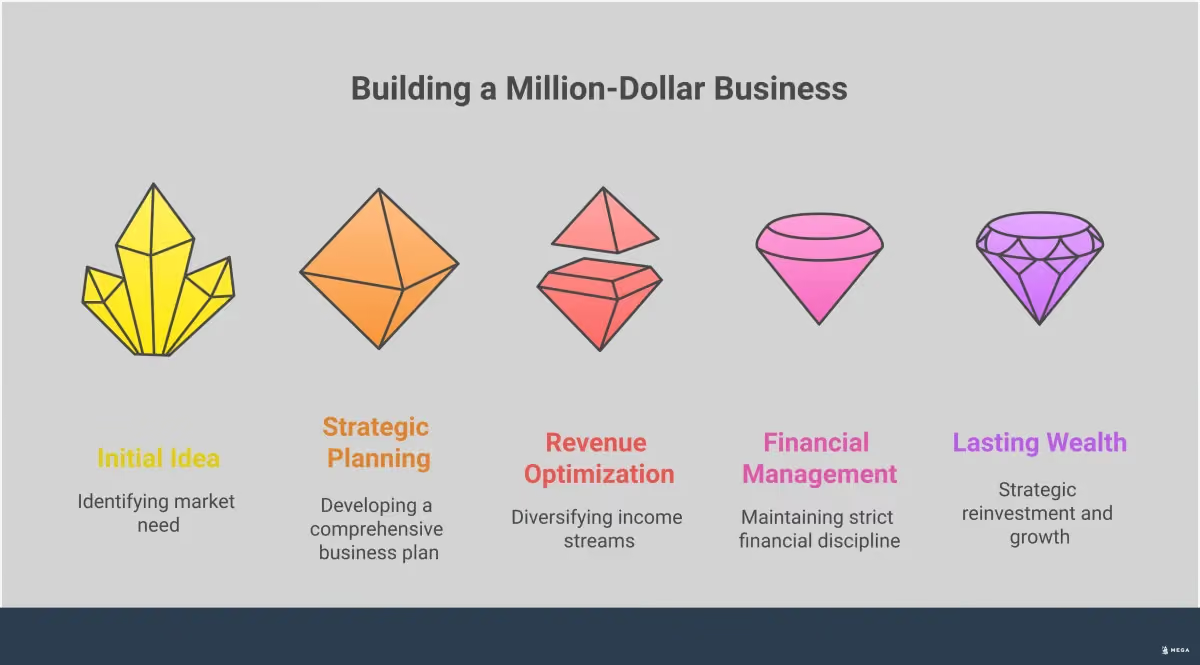
While countless paths can lead to financial success, certain business models have a proven track record of creating wealth. These industries often combine high demand with scalability, allowing entrepreneurs to build significant value over time. If you're aiming to build a million-dollar enterprise, exploring these sectors is a great place to start.
Service-Based Businesses
Service-based businesses are a popular entry point for entrepreneurs. Whether you offer consulting, design, or skilled trades, your expertise is the primary asset. This model has low startup costs and a direct link between effort and earnings. As one source notes, "Every ounce of hard work, innovation, and smart decision-making directly contributes to the growth of your business and, in turn, your financial rewards." The key to scaling is building systems and a team to deliver results without your direct involvement in every task, turning your skills into a scalable operation.
Digital Marketing Agencies
With every business needing an online presence, digital marketing agencies are in high demand. These firms help clients with SEO, paid advertising, and content creation. Marketing expert Neil Patel says his ad agency has become one of his "primary wealth building vehicles." This model thrives on recurring revenue, as clients pay monthly retainers for ongoing services. By delivering measurable results, you can build a stable of long-term clients and grow a highly profitable agency with predictable income.
Technology Companies
Technology companies, especially in the software-as-a-service (SaaS) space, offer incredible potential for wealth creation. You build a product once and can sell it to countless customers with minimal marginal cost. The focus is on building wealth through business ownership by creating valuable intellectual property. While initial development can be costly, a successful tech product can generate massive, scalable revenue and attract significant investment or acquisition offers, providing a clear path to millionaire status for its founders.
E-commerce Operations
An e-commerce business lets you sell products to a global audience without the overhead of a physical store. This model offers flexibility and control, allowing you to manage operations from anywhere. Whether you sell unique products, dropship, or use print-on-demand, the potential for scale is immense. As one expert notes, business ownership provides "far greater control over their day-to-day schedule." Success depends on strong marketing, efficient logistics, and great customer service, but the rewards can be substantial.
Alternative Paths to Business Ownership
Starting a business from the ground up is a rewarding journey, but it’s not the only way to become an owner. Alternative paths can offer a faster route to cash flow and asset building by leveraging existing structures. Exploring options like buying a business or investing in real estate can open up different, and sometimes more direct, avenues for creating wealth. These strategies allow you to apply your entrepreneurial skills to assets that already have a foundation, reducing some of the initial uncertainty of a brand-new venture.
Buying an Existing Business
Instead of starting from scratch, consider the advantages of buying a business that is already up and running. This approach allows you to step into an operation with existing customers, proven cash flow, and established processes. The initial risk is often lower because the market demand has already been validated. Your role becomes one of optimization and growth. For example, applying a modern SEO strategy to a local business with a weak online presence can create a significant increase in revenue. As one entrepreneur noted, improving a $1 million business by 20% adds $200,000 in value, a much larger impact than the same improvement on a startup. You can acquire an asset and immediately focus on scaling its value.
Investing in Real Estate as a Business
Many entrepreneurs overlook real estate, viewing it as a simple investment rather than a business. However, when managed actively, real estate can be a powerful wealth-building engine. It requires the same skills as any other enterprise: financial management, marketing to find tenants, and operational oversight to maintain the properties. The goal is to build a portfolio of assets that generate consistent cash flow and appreciate over time. This approach shifts the perspective from just comparing rent to mortgage payments to understanding how to build equity and create a scalable operation. It’s another form of business ownership where the properties are your products and the tenants are your customers.
House Hacking with an FHA Loan
One of the most accessible entry points into real estate investing is a strategy called house hacking. The concept is simple: you purchase a multi-unit property, such as a duplex or triplex, live in one of the units, and rent out the others. The rental income from your tenants can help cover, or even completely pay for, your mortgage. This strategy is made even more attainable through programs like the FHA loan, which allows you to purchase a property with a down payment as low as 3.5%. By house hacking, you effectively reduce or eliminate your own housing costs while building equity in an appreciating asset, turning your primary residence into your first investment property.
Common Challenges Every Entrepreneur Faces
Starting a business is an exciting venture, but it comes with a unique set of hurdles. Every founder, regardless of their industry, will face obstacles that test their resilience and strategic thinking. Understanding these common challenges ahead of time allows you to prepare for them, creating a stronger foundation for your business and setting yourself up for long-term success.
Managing Funding and Cash Flow
Securing capital to get your business off the ground is a major first step, but the financial challenges don't end there. As noted by business experts, "Effective cash flow management is crucial for sustaining operations and ensuring growth." You need a constant, healthy flow of money coming in and out of the business to pay for inventory, cover payroll, and invest in new opportunities. This means you'll need to get comfortable with financial forecasting, budgeting, and managing your accounts receivable and payable. Without a firm grip on your cash flow, even a profitable business can find itself in trouble.
Finding and Keeping Customers
Your business can't survive without customers, but acquiring them is often one of the toughest parts of the journey. Developing a strong customer base is essential for long-term success, and it requires a consistent and strategic marketing effort. You need to identify who your ideal customers are, figure out where to find them, and create a message that resonates. Once you've won them over, the work continues with providing excellent service and building loyalty to ensure they keep coming back. This is where a solid marketing plan becomes your most valuable tool.
Building the Right Team
You can't build a successful business alone. As your company grows, you'll need to bring on people to support your vision. Building an efficient team is a critical part of navigating the challenges of entrepreneurship. The goal is to assemble a group of people with diverse skills and strengths who can help you tackle obstacles and drive the business forward. Hiring is about more than just finding someone with the right qualifications; it's about finding individuals who share your values, believe in the mission, and can contribute to a positive company culture.
Delegating Without Losing Control
Many entrepreneurs are used to doing everything themselves, which makes it difficult to hand over responsibilities. However, juggling every task, from high-level strategy to daily operations, can quickly lead to burnout and inefficiency. To avoid this, you have to learn to prioritize your own tasks and delegate responsibilities to trusted team members. Effective delegation isn't about losing control; it's about empowering your team and freeing up your own time to focus on the most important work—growing the business. It requires clear communication and trust in the people you've hired.
How to Overcome Common Business Hurdles
Every entrepreneur faces hurdles on the path to success. From securing funding to finding customers, the challenges can feel relentless. The key isn't to avoid obstacles entirely—it's to have a clear strategy for overcoming them when they appear. By focusing on a few core areas, you can build a resilient business that’s prepared for the road ahead.
Start with a Solid Business Plan
A well-structured business plan is your roadmap. It’s more than a document for securing loans; it’s a guide that helps you define your goals, outline your strategies, and anticipate potential challenges. A strong plan forces you to think critically about your market, your finances, and your operations. It helps you make informed decisions and stay on track as you grow. When you have a clear plan, you can measure your progress and adjust your course with confidence, turning potential setbacks into learning opportunities.
Build a Strategic Professional Network
You don’t have to build your business alone. Creating a strategic network of mentors, peers, and advisors is one of the most valuable investments you can make. These connections provide a source of support, offering insights and advice based on their own experiences. A strong professional network can also lead to new collaborations, partnerships, and customer referrals. By actively participating in industry groups and seeking out mentorship opportunities, you build a community that can help you solve problems and identify new avenues for growth.
Act on Customer Feedback
Your customers hold the key to your success. Understanding their needs and preferences is essential for creating products and services that truly resonate. Actively seeking and incorporating customer feedback helps you refine your offerings, improve customer satisfaction, and build a loyal following. Use surveys, read online reviews, and have direct conversations to learn what you’re doing well and where you can improve. This direct line to your market allows you to adapt quickly and differentiate your business from the competition.
Embrace Technology and Automation
In a competitive market, technology is a powerful equalizer. Automation allows small businesses to operate with the efficiency of much larger companies. Tools that handle repetitive tasks free up your time to focus on strategy and growth. For example, AI-powered platforms can manage your SEO strategy by generating content and optimizing your site, while others can automate your paid ad campaigns to ensure your budget is spent effectively. Embracing these technologies helps you adapt to market changes, meet customer expectations, and build a competitive edge.
How to Stay in Control as Your Business Grows
As your business expands, it can feel like you’re losing your grip. More customers, more employees, and more tasks can quickly lead to chaos if you’re not prepared. Maintaining control isn’t about micromanaging every detail; it’s about building a structure that allows your business to scale smoothly while you remain firmly in the driver’s seat. The key is to shift from doing everything yourself to directing a well-oiled machine.
This involves creating repeatable systems, hiring people you trust, using the right technology, and establishing a strong communication rhythm. By focusing on these four areas, you can confidently guide your company’s growth without becoming a bottleneck. You’ll empower your team to handle daily operations, freeing you up to focus on the big-picture strategy that will continue to move your business forward.
Set Up Clear Systems and Expectations
The first step to scaling without chaos is to document your processes. Establishing clear systems and expectations ensures that tasks are completed consistently and efficiently, no matter who is doing them. Think of it as creating a playbook for your business. When everyone knows their role, understands the workflow, and is clear on what success looks like, they can operate with more autonomy. This reduces your need to be involved in every decision. Start by creating simple standard operating procedures (SOPs) for common tasks, from onboarding a new client to processing an order. This clarity allows your business model to adapt and helps your team manage their work effectively.
Implement Value-Based Pricing
When you're building a business, one of the most significant shifts you can make is in how you price your services. Instead of charging for your time, focus on the value you deliver. If your work helps a client generate $10,000 in new revenue, a price of $50 or $100 an hour doesn't capture the impact you've made. This is the core of value-based pricing. By aligning your fees with the results you provide, you can dramatically increase your earnings. This strategy moves you away from simply earning an hourly wage and toward building a truly profitable business asset. It reframes the conversation from cost to investment, which is fundamental for long-term wealth creation.
Pay Yourself a Founder's Salary
It might feel counterintuitive to draw a salary when you're trying to reinvest every penny, but paying yourself is a critical discipline for any serious business owner. You need to ensure that you regularly pay yourself from your business. This practice does more than just cover your personal bills; it builds your personal wealth and reinforces the value of your role as the founder. It forces your business to be financially healthy enough to support its key employee—you. By creating this separation between your personal and business finances, you treat your company like the legitimate, wealth-generating asset it is, rather than a project that consumes all your resources without providing a direct return.
Track Your Key Performance Indicators (KPIs)
To stay in control of your business's growth, you need to understand its financial health. This is where tracking Key Performance Indicators (KPIs) becomes essential. Monitoring key business metrics like revenue, expenses, and profit margins allows you to make informed decisions based on data, not just gut feelings. For example, by tracking marketing KPIs such as customer acquisition cost and conversion rates, you can see exactly what's working and where to allocate your budget. This is where automation can be a game-changer. Platforms like MEGA AI can help you monitor your SEO and paid ads performance, giving you clear insights without the manual work. This data-driven approach is what enables you to refine your strategy and enhance your business's long-term success.
Using Financial Tools like the Rule of 72
One simple but powerful tool for understanding your financial growth is the Rule of 72. This financial shortcut helps you estimate how long it will take for an investment to double at a fixed annual rate of return. To use it, you simply divide 72 by the interest rate. For example, if you expect an 8% annual return on your investments, it will take approximately nine years (72 / 8 = 9) for your money to double. This rule is a great way to visualize the impact of compound interest on your wealth-building journey, whether you're reinvesting profits into your business or growing your personal savings from your founder's salary.
Hire the Right People
You can’t grow a business alone, and the people you hire are your greatest asset. Building an efficient team is essential for navigating the challenges of expansion. When you select the right team members, you’re not just hiring for a skillset; you’re bringing in people who share your vision and can contribute to the company culture. A strong, cohesive team can leverage its collective strengths to solve problems and innovate. This allows you to delegate with confidence, knowing that your business is in capable hands. Focus on hiring employees you can trust to make smart decisions, which helps you maintain control over the company’s direction without getting bogged down in daily tasks.
Use Project Management Tools to Stay on Track
As your team grows, keeping track of who is doing what becomes more complex. Juggling multiple responsibilities can lead to dropped balls and inefficiency. This is where technology becomes your best friend. Implementing project management tools like Asana, Trello, or ClickUp can streamline your operations and give you a clear view of all moving parts. These platforms centralize tasks, deadlines, and communication, making it easy to see project progress at a glance. This visibility is crucial for maintaining control, as it allows you to spot potential issues early and keep everyone accountable without constant check-ins. It helps your team prioritize their work and enhances overall productivity.
Hold Regular Team Check-ins
Consistent communication is the glue that holds a growing team together. Holding regular check-ins and reviews ensures everyone stays aligned with the business goals and feels connected to the mission. These meetings aren’t just for status updates; they are opportunities to solve problems, celebrate wins, and reinforce your company culture. A simple daily huddle, a weekly team meeting, or monthly one-on-ones can make a huge difference. By fostering a strong and cohesive team through consistent communication, you can ensure your business stays on track as it scales. This rhythm of connection helps you maintain a pulse on the team and the business.
Protecting and Managing the Wealth You Build
Building a successful business is an incredible accomplishment, but the journey doesn’t end once you start generating profit. The next critical phase is learning how to protect and grow the wealth you’ve worked so hard to create. This requires a shift in mindset from pure offense—growing the business at all costs—to a balanced strategy that includes strong defense. Protecting your assets ensures that a single unexpected event doesn’t derail your financial future. It’s about building a fortress around your wealth so you can continue to grow it with confidence for years to come.
The Importance of Insurance
Once you start building wealth, you need to protect it. Insurance is the foundation of any solid wealth protection strategy. It acts as a financial safety net, shielding your personal and business assets from unforeseen events like accidents, lawsuits, or health crises. For an entrepreneur, this isn't just about having car or health insurance. It means considering business liability insurance, errors and omissions coverage, and even key person insurance if the business heavily relies on you or a partner. Think of it as a non-negotiable cost of doing business. The right policies ensure that one piece of bad luck doesn’t undo years of hard work and dedication.
Tips for Choosing the Right Policy
Navigating the world of insurance can feel overwhelming, but you can simplify the process by following a few key steps. First, take the time to assess the specific risks associated with your business and personal life. Second, consider working with an independent insurance broker who can shop around for policies from multiple carriers to find the best fit for you. Third, look beyond the monthly premium; understand the coverage limits, deductibles, and exclusions so you know exactly what you're paying for. Finally, make it a habit to review your policies annually. As your business grows and your life changes, your insurance needs will evolve too.
Building Your Personal Wealth Advisory Team
You're an expert at running your business, but you don't have to be an expert in law, tax, and finance. Smart entrepreneurs build a personal wealth advisory team—a group of trusted professionals who can provide specialized guidance. This team often includes a lawyer to handle contracts and estate planning, an accountant for tax strategy, and a wealth manager or financial advisor to guide your investment decisions. As your portfolio grows, you might also add a real estate agent or a dedicated banker. Assembling this team allows you to leverage expert knowledge, freeing you to focus on what you do best: leading your company.
Leveraging Home Equity as a Financial Tool
For many entrepreneurs, their home is one of their most significant assets outside of their business. As you pay down your mortgage, you build home equity—the portion of your home that you own outright. This equity isn't just a number on paper; it can be a powerful financial tool. Through a home equity line of credit (HELOC) or a home equity loan, you can borrow against this value. This can provide a flexible source of capital for reinvesting in your business, covering a major expense, or seizing a new investment opportunity. It’s a way to make your assets work for you, but it’s important to use this tool wisely, as your home serves as collateral.
A Simple Investment Path for Entrepreneurs
Once your business is generating consistent cash flow, the next question is what to do with the profits. While you should continue reinvesting in your company’s growth, it’s also wise to diversify. For busy entrepreneurs, a simple, phased investment strategy can be effective. The goal is to move from building wealth within your business to building wealth across a portfolio of assets. A common path involves starting with broad market index funds, then adding funds focused on income generation, and finally diversifying into tangible assets like real estate. This approach allows you to build wealth systematically without needing to become a full-time investor.
Phase 1: S&P 500 Funds
For many, the first step in investing outside of their business is to put money into a low-cost S&P 500 index fund. This type of fund gives you instant diversification by spreading your investment across 500 of the largest and most established companies in the United States. It’s a passive investment strategy, meaning you’re not trying to beat the market but rather match its performance over the long term. For a founder who is already spending countless hours on their business, the appeal of an S&P 500 fund is its simplicity. It allows you to participate in the growth of the broader economy with minimal effort and low fees.
Phase 2: Dividend Growth Funds
After you’ve built a solid foundation with broad market funds, the next phase often involves shifting some focus toward generating passive income. This is where dividend growth funds come in. These funds invest in companies that have a long history of not only paying dividends to their shareholders but also consistently increasing those payments over time. This strategy provides two benefits: you still get potential stock price appreciation, but you also receive a steady and growing stream of cash. This income can be reinvested to compound your returns or used as another source of cash flow, adding a new layer of financial stability.
Phase 3: Rental Properties
Once you have a solid base in the stock market, you might consider diversifying into tangible assets like real estate. Investing in rental properties can provide a steady income stream through monthly rent payments, along with the potential for long-term appreciation of the property's value. Real estate also offers unique tax advantages, such as deductions for mortgage interest, property taxes, and depreciation. While it is a more hands-on investment that requires management—either by you or a property manager—owning rental properties can be a powerful way to build generational wealth and further diversify your investment portfolio away from the stock market.
How Long Does It Take to Build a Wealth-Building Business?
Building significant wealth through a business is a marathon, not a sprint. While stories of rapid growth capture headlines, the reality for most entrepreneurs is a journey of sustained effort over several years. There is no magic number, but common patterns show that creating a truly valuable and self-sustaining company requires patience and a long-term perspective. The timeline depends on your industry, business model, market conditions, and how effectively you execute your strategy.
The process involves distinct phases. Initially, you'll invest heavily—not just money, but countless hours of work—to build a solid foundation. During this time, your focus is on survival and establishing a foothold in the market by finding your first customers and refining your product. As the business matures, your role shifts from doing everything yourself to building systems and a team that can operate without your constant intervention. This is when you begin to see real equity growth and the potential for lasting wealth. Understanding these stages helps you set realistic expectations and stay motivated through the inevitable challenges of the entrepreneurial path. It's the critical transition from creating a job for yourself to building an asset that works for you.
The Seven-Year Journey to Success
Many successful entrepreneurs point to a multi-year timeline for building a substantial business. Marketing expert Neil Patel, for example, describes a seven-year journey to turn his agency into a primary wealth-building vehicle. This timeframe isn't arbitrary. It reflects the reality of building a strong brand, developing efficient systems, and capturing a meaningful share of the market. The first few years are often about finding product-market fit and surviving. The following years are about optimizing, scaling, and solidifying your position. This long-term commitment is what separates a small operation from a valuable, lasting asset.
Surviving the Early Investment Phase
In the beginning, every dollar of profit is precious, and most of it should go right back into the business. This early investment phase is critical for fueling growth. Instead of paying yourself a large salary, you are reinvesting in marketing, technology, and talent to increase the company's market value. Your personal net worth grows not from the cash you take out, but from the rising value of the business you own. This period demands financial discipline and a clear focus on building a strong foundation that can support future expansion and profitability.
When to Focus on Growth and Scaling
After years of reinvestment and hard work, you reach a point where the business can generate significant and consistent cash flow. This is where true wealth creation accelerates. As the owner, you begin to build equity in a valuable asset that appreciates over time. Unlike a traditional job, your income potential isn't capped. You have control over your financial outcomes and can create a business that provides for you long-term. At this stage, the company becomes a powerful engine for wealth, capable of operating with less of your direct involvement and generating multiple streams of income.
How AI Can Help Your Business Grow Faster
As an entrepreneur, your time is your most valuable asset. Artificial intelligence is a powerful tool that helps you reclaim that time and invest it back into your business strategy. AI handles the complex, repetitive tasks that slow you down, allowing you to focus on the big picture. It’s not about replacing your role; it’s about enhancing your ability to make smart, data-driven decisions that fuel sustainable growth. For small businesses, this means having the power to execute a professional marketing strategy without the enterprise-level budget, turning ambitious goals into achievable outcomes.
Automate Your Marketing Efforts
Effective marketing is essential for growth, but it can also be incredibly time-consuming. This is where marketing automation comes in. By using AI agents to manage tasks like keyword research, content creation, and ad campaign optimization, you can streamline your entire marketing workflow. Instead of spending hours on manual updates and analysis, you can implement a strategy and let the technology execute it for you. This consistent, automated approach not only saves time but also leads to better customer engagement and higher conversion rates, forming the foundation of a scalable marketing engine that works for you around the clock.
Optimize Content and SEO Automatically
Search engine optimization is a long-term investment that builds the value of your business, but it requires constant attention. To rank well, you need to consistently research keywords, create high-quality content, and update older articles to keep them relevant. For a busy owner, this can feel like a full-time job. AI tools can take over this entire process. They can identify what your customers are searching for and automatically generate content that meets their needs. More advanced platforms can even optimize your site by updating existing articles to improve their click-through rates and rankings, ensuring your digital storefront remains a valuable asset.
Manage Paid Ad Campaigns Efficiently
Paid advertising can deliver quick results, but managing campaigns across platforms like Google and Meta is a complex balancing act. To get the best return, you need to constantly test different ad copy, images, and audiences, then shift your budget accordingly. This is another area where AI can give you a significant advantage. Modern tools can automatically create hundreds of ad variations and test them for you. They can then analyze the performance data in real-time and manage your paid ad campaigns by moving your budget to the ads that are driving the most conversions, ensuring every dollar is working as hard as possible.
Streamline Your Operations
Beyond marketing, AI can drive significant gains in operational efficiency across your business. It can analyze sales data to forecast demand, optimize workflows, and identify cost-saving opportunities you might otherwise miss. By automating routine administrative and analytical tasks, you reduce the chance of human error and free up your team to focus on higher-value activities like customer service and product development. This allows you to allocate your resources more effectively, improving overall productivity and strengthening your bottom line as you scale your operations.
Gain a Competitive Edge
AI levels the playing field, giving small businesses a competitive edge against larger corporations. Tools that were once exclusive to enterprises with huge budgets are now accessible and affordable. With AI, you can personalize customer experiences, predict market trends, and run sophisticated paid ad campaigns that target the right audience with the right message. This ability to operate with the precision and insight of a larger company allows you to carve out your niche and build a loyal customer base, even in a crowded market.
Ready to Build Your Million-Dollar Business?
The path to significant wealth often leads through business ownership. It’s not just about earning a higher income; it’s about building an asset. As the owner of a business, you build equity over time, creating a valuable investment that can grow far beyond what a traditional salary can offer. This financial control is what allows entrepreneurs to increase their net worth and create lasting financial independence. However, the journey from a great idea to a valuable business is filled with challenges, chief among them being how to attract and retain a steady stream of customers.
Marketing is the engine of business growth, but it’s also where many founders get stuck. Juggling keyword research, content creation, ad campaigns, and technical SEO can feel like a full-time job in itself. This is where leveraging the right technology becomes critical. Instead of wrestling with complex tools or paying high agency fees, you can use AI-powered marketing automation to handle the heavy lifting. MEGA AI provides autonomous SEO and paid advertising services through intelligent agents, giving you the power of a full marketing team at a fraction of the cost.
Our agents, Lindsay for SEO and Erle for Paid Ads, are designed to operate with minimal oversight. They develop a strategy and execute the tasks needed to hit your growth goals. Lindsay manages everything from content generation and technical fixes to acquiring backlinks, with most users seeing organic traffic growth within a few months. Erle launches and optimizes your ad campaigns, ensuring your budget is spent effectively to bring in new customers. With 85% of our customers using autopilot mode, you can free up your time to focus on strategy, operations, and the vision for your business. If you’re ready to accelerate your growth, you can book a demo to see how our AI agents can help build your million-dollar business.