
Most businesses know departmental silos are a problem. But the usual fixes—more meetings, another chat tool—rarely work. They don't solve the real issue: broken workflows and manual handoffs between teams. True teamwork isn't about talking more; it's about connecting the work itself. This is where intelligent automation comes in. It can manage entire cross-functional processes, ensuring data and tasks flow smoothly from one department to the next. This article explains how this new approach to collaboration can finally break down the walls that hold your business back.
Key Takeaways
- Align teams with shared goals and metrics: Shift the focus from individual department targets to company-wide objectives that require cross-functional teamwork to succeed. This starts with leadership defining a unified vision for everyone to work toward.
- Automate cross-functional workflows: Use tools like AI agents to execute tasks from start to finish, connecting different systems and sharing data in real time. This eliminates the manual handoffs and information gaps that reinforce departmental divides.
- Treat collaboration as an ongoing process: Breaking down silos requires more than a single initiative. Sustain a collaborative culture by building transparent workflows, tracking progress with clear KPIs, and adapting your processes as the business grows.
What is Teamwork?
At its core, teamwork is a group of people working together to achieve a common goal. It’s the collaborative effort that turns individual contributions into a unified result. This goes beyond simply sharing an office space or being on the same email chain. True teamwork happens when individuals depend on each other, communicate openly, and hold themselves accountable for the group's success. When every member understands how their role contributes to the bigger picture, the lines between departments begin to fade, and the focus shifts from "my work" to "our objective." This collective mindset is the foundation for breaking down the silos that can slow a business down.
Effective teamwork doesn't happen by accident. It requires a clear structure, shared principles, and a commitment from everyone involved. For small businesses, this is especially important because resources are often limited, and every person's contribution has a significant impact. When a team works in sync, they can solve problems faster, adapt to changes more easily, and produce higher-quality work. The goal is to create an environment where collaboration is the default, not the exception, allowing the entire organization to move forward together with a shared sense of purpose and direction.
Core Characteristics of Effective Teams
So, what separates a high-performing team from a group of individuals just working on parallel tracks? It comes down to a few key characteristics. First is strong group cohesion, where team members feel a sense of belonging and trust one another. This is supported by good communication, which means being clear, honest, and respectful in all interactions. Every effective team is also united by a common goal, ensuring everyone is pulling in the same direction. This shared objective fosters commitment from each member to do their part. Finally, accountability is crucial. Team members must be able to rely on each other to follow through on their responsibilities, creating a culture of dependability and mutual respect.
A Brief History of Teamwork in the Workplace
The concept of teamwork in a business setting isn't a modern invention. While it feels like a constant topic of discussion today, the formal idea of team-based work structures gained significant traction during the First and Second World Wars. During that time, the need for efficient production and problem-solving on a massive scale highlighted the power of coordinated effort. Later, a series of famous studies in the 1920s and 1930s, known as the Hawthorne studies, provided concrete evidence that social factors and team dynamics had a major impact on productivity. These findings encouraged more organizations to move away from rigid, top-down structures and adopt more collaborative, team-based models that are common today.
Understanding Team Dynamics
Teams are living, breathing entities that change over time. Understanding their natural lifecycle and internal processes can help you guide them more effectively. Team dynamics are shaped by how members interact, how they handle tasks, and how they evolve as a group. It’s not a static state but a continuous flow of communication, collaboration, and occasional conflict. By recognizing the different processes at play and the stages of development a team goes through, you can anticipate challenges, provide the right support at the right time, and create a more resilient and effective group. This awareness helps turn a collection of individuals into a truly cohesive unit capable of tackling complex challenges together.
The Three Core Processes of Teamwork
To understand how teams function, it helps to look at the three core processes that are always at play: transition, action, and interpersonal. These processes aren't sequential steps but are overlapping activities that happen throughout a project's lifecycle. Think of them as different modes a team operates in. Sometimes the focus is on planning and strategy, other times it's on execution, and throughout it all, managing relationships is key. A healthy team moves between these processes fluidly, adapting its approach based on the task at hand and the needs of its members. Recognizing these processes helps you identify where a team might be struggling and what they need to get back on track.
Transition Processes
Transition processes are what teams do between periods of active work. This is the time for planning, reflection, and strategy. During this phase, team members might review their performance on a previous task, clarify the goals for the next one, and develop a game plan. It’s about looking back to learn and looking forward to prepare. For example, after a marketing campaign ends, the team gets together to analyze the results, discuss what worked and what didn't, and use those insights to map out their next project.
Action Processes
Action processes occur when the team is actively working to accomplish its goals. This is the "doing" phase. It involves members coordinating their tasks, monitoring progress toward their objectives, and providing backup and support to one another. Communication is constant as team members share updates, help each other overcome obstacles, and ensure everyone's work is aligned. Continuing the marketing example, this is when the team is creating ad copy, designing visuals, and launching the campaign, all while staying in sync to meet deadlines.
Interpersonal Processes
Interpersonal processes happen continuously and are the foundation of a team's health. This is all about managing the human element of working together. It includes managing conflict, building morale, and providing emotional support. These processes build the trust and psychological safety needed for members to feel comfortable sharing ideas, admitting mistakes, and collaborating openly. A team that excels at interpersonal processes can handle disagreements constructively and maintains a positive and motivating atmosphere, even when facing challenges.
The Stages of Team Development
Most teams go through a predictable series of stages as they develop and mature. This progression, often called Tuckman's stages of group development, includes Forming, Storming, Norming, and Performing. Understanding these stages can help you anticipate what your team is going through and provide the right kind of leadership to help them move forward. It’s a reminder that conflict and uncertainty are often normal parts of the process, not necessarily signs that something is wrong. By recognizing where your team is in this journey, you can better support their growth into a high-performing unit.
Forming
The forming stage is the initial phase where the team first comes together. Members are often polite, cautious, and focused on understanding the group's purpose and their individual roles. There's a sense of excitement mixed with uncertainty as everyone gets to know each other. During this stage, a clear direction from a leader is important to help define goals and establish a foundation for how the team will work together.
Storming
The storming stage is where things can get a bit messy. As team members become more comfortable, they may start to challenge ideas, push back against authority, and compete for influence. Different working styles and personalities can clash, leading to conflict and frustration. While it can be uncomfortable, this stage is critical for building trust. It’s where the team learns to navigate disagreements and starts to establish how they will handle conflict productively.
Norming
In the norming stage, the team begins to resolve its conflicts and find a rhythm. Members start to appreciate each other's strengths, respect different opinions, and agree on common rules and processes for working together. A sense of cohesion and unity emerges as the team establishes its "norms." Collaboration becomes easier, and the group's focus shifts from internal conflicts to the shared goal.
Performing
The performing stage is the ultimate goal. At this point, the team is operating like a well-oiled machine. Members are confident, autonomous, and highly motivated. They trust each other completely, handle disagreements smoothly, and are focused on achieving their objectives with high efficiency and quality. The leader's role often shifts to delegating tasks and supporting the team's continued success, as the group is largely self-managing.
The Business Impact of Great Teamwork
When teamwork is done right, its impact extends far beyond just a friendly office environment. It directly influences your bottom line and the overall health of your business. Great teamwork leads to better problem-solving, as diverse perspectives come together to find more effective solutions. It also builds stronger relationships among employees, which reduces conflict and increases job satisfaction. For a small business, this is a powerful advantage. A cohesive team can innovate faster, respond to customer needs more effectively, and create a resilient culture that can weather any challenge. Investing in teamwork is investing in a more efficient, creative, and sustainable business.
Improved Employee Engagement and Retention
People rarely leave a job where they feel valued, supported, and connected to their colleagues. Strong teamwork fosters a sense of belonging that is a powerful driver of employee engagement. When individuals feel like they are part of a team that has their back, they are more motivated to contribute their best work and are more committed to the company's mission. This positive environment directly impacts retention. High turnover is expensive and disruptive, especially for small businesses. By cultivating a culture of collaboration, you create a workplace where people want to stay and grow, saving you time and money on recruitment and training.
Opportunities for Personal and Professional Growth
A collaborative environment is a natural learning environment. When people work together, they are constantly exposed to new ideas, skills, and ways of thinking. Junior team members can learn from the experience of their senior colleagues, while senior members can gain fresh perspectives from newer hires. This cross-pollination of knowledge helps everyone grow. Team projects provide a safe space for individuals to step outside their comfort zones, take on new responsibilities, and develop skills they might not in a siloed role. This continuous development not only benefits the individual but also makes your entire team more capable and adaptable.
Increased Creativity and Innovation
Innovation rarely happens in a vacuum. It sparks from the collision of different ideas and perspectives. When a team with diverse backgrounds and expertise comes together, they bring a wider range of creative solutions to the table. This collaborative approach to problem-solving is far more effective than one person trying to figure everything out on their own. By encouraging open discussion and brainstorming, you create a space where new ideas can be shared, challenged, and refined. Automating routine tasks with tools like an AI-powered platform can free up your team's time, allowing them to focus more on the strategic and creative work that drives your business forward.
Supporting Data on Teamwork's Effectiveness
The benefits of teamwork aren't just anecdotal; they're backed by data. Research shows that employees who collaborate on tasks can maintain their focus for 64% longer than those who work alone. This sustained concentration leads to higher-quality work and greater efficiency. Furthermore, decisions made by diverse teams have been found to produce 60% better results. These numbers highlight a clear business case: fostering a collaborative environment is one of the most effective ways to improve performance and achieve better outcomes across your organization.
What Are Organizational Silos and How Do They Start?
Organizational silos happen when different teams or departments within a company operate in isolation from one another. Instead of a free flow of information and collaboration, communication gets trapped within departmental walls. This is a common challenge that emerges as a business grows and teams become more specialized.
While creating distinct departments is a natural way to structure a company, problems arise when these groups stop communicating effectively. They might start prioritizing their own team’s goals over the broader objectives of the business. This creates friction, slows down projects, and can prevent your company from operating as a single, unified team. The result is often inefficiency and a workforce that feels disconnected from the company's mission.
How to Spot Departmental Silos
When your business is operating in silos, the signs are often clear. As one source puts it, "Projects stall, communication fizzles, and employees feel isolated—like they're working on parallel tracks instead of as one cohesive force." You might see your marketing team launch a new campaign without giving the sales team the details they need to handle incoming leads. Or perhaps your product team develops a new feature, but the customer support team only learns about it from a customer. This lack of a unified vision leads to confusion, duplicated work, and missed opportunities to create a seamless experience for your customers.
What Causes Silos to Form?
Silos don't form because of bad intentions. They are typically a byproduct of growth and structure. As companies expand, they create specialized teams of experts, which is a logical step. The issue begins when these teams "pursue department goals instead of company goals." Each department develops its own priorities, key performance indicators (KPIs), and even its own language for talking about the business. Without intentional efforts to foster collaboration, teams can drift apart. This separation prevents important information from being shared, creating inefficiencies and a culture where teams protect their own turf instead of working toward a common objective.
How Do Silos Affect Your Business?
When teams operate independently, the business as a whole suffers. These internal divisions create friction that slows down progress, wastes money, and ultimately affects your customers. The consequences aren't just minor inefficiencies; they can create significant roadblocks to growth, especially for small businesses where every resource counts. Understanding these specific impacts is the first step toward dismantling the walls between your departments.
When Communication Fails and Opportunities Are Missed
Working in silos is the opposite of effective team collaboration. When your marketing, sales, and support teams don't share information, critical context gets lost. For example, your marketing team might launch a campaign based on assumptions that the sales team knows are incorrect, leading to poor-quality leads. Or, your customer support team might gather valuable feedback about product flaws that never reaches the development team. This lack of a unified vision prevents your business from adapting quickly and seizing opportunities that arise from shared knowledge. Each department ends up solving for its own goals instead of the company's.
How Silos Create Redundant Work
For a small business, a lean operation is essential. Silos directly undermine this by causing duplicated efforts and wasting valuable resources. Imagine your content team spending a week writing a detailed guide, only to find out the SEO team already created a similar resource that just needed updating. Or perhaps both the marketing and sales departments purchase separate software subscriptions for tools that have overlapping features. These redundant tasks and expenses drain your budget and your team's time, pulling focus away from strategic initiatives that could actually drive business growth.
Creating a Disjointed Customer Experience
Ultimately, internal silos create external problems. Customers don't see your company as separate departments; they see one brand. When their experience is inconsistent, it erodes trust. A customer might receive a promotional email from marketing for a discount that the sales team knows nothing about, or they might get conflicting answers to the same question from your sales and support staff. This disjointed customer journey can be frustrating and confusing, making people feel like your business is disorganized. It demotivates employees and can push potential buyers toward competitors who offer a more seamless experience.
Common Challenges in Teamwork (Besides Silos)
Breaking down departmental silos is a major step toward better collaboration, but it doesn't solve every teamwork issue. Once information starts flowing more freely, other human dynamics can surface that still prevent your teams from performing at their best. These challenges are less about structure and more about the psychology of group work. Recognizing them is key to building a truly effective and collaborative environment where every team member can contribute their best work.
Social Loafing: When Individuals Underperform in Groups
One of the most common frustrations in group projects is social loafing. This happens when some individuals put in less effort when working in a group than they would if they were working alone. Because responsibility is shared, it can be easy for someone to assume others will pick up the slack. This not only drags down the team's overall productivity but also creates resentment among the more motivated members who feel they are carrying an unfair share of the workload. In a small business, where every contribution matters, even one person underperforming can have a significant impact on project outcomes and team morale.
Groupthink: The Risk of Conforming
Another challenge is groupthink, a phenomenon where the desire for consensus overrides critical thinking. In these situations, team members may avoid voicing dissenting opinions to maintain harmony or avoid conflict. While agreement feels good, it can lead to flawed decision-making because alternatives aren't fully explored and potential risks are ignored. For example, a team might unanimously agree on a marketing strategy that one or two members privately have doubts about. This pressure to conform can stifle innovation and prevent your business from making the best possible choices, as valuable perspectives are left unspoken.
Assigning Teamwork to Unsuitable Tasks
Collaboration is powerful, but it’s not always the right approach. Some tasks are simply better suited for individuals. Forcing a team to work on unsuitable tasks can create unnecessary complexity and slow down progress. For instance, having multiple people co-write a single short email is far less efficient than assigning it to one person. When teamwork is applied where it isn't needed, it can lead to confusion over ownership, conflicting ideas, and wasted time. Recognizing which tasks require collective brainpower and which need individual focus is crucial for keeping your team productive and engaged.
Why Breaking Down Silos Starts at the Top
Breaking down silos isn't a grassroots movement; it has to start at the top. Leadership is the single most important factor in creating a collaborative work environment. Your company’s leaders set the tone, establish the structure, and define the culture that either encourages teamwork or reinforces division. Without clear direction and commitment from the executive team, any initiative to improve cross-departmental cooperation will struggle to gain traction. It’s up to leaders to not only approve the change but to actively champion it through their actions and strategic decisions.
Is Your Management Structure Part of the Problem?
Traditional hierarchies can be a major source of departmental friction. When a company is organized into rigid verticals, communication tends to flow up and down within a department but rarely moves sideways. Management teams can even form their own leadership silo, which prevents important information from reaching everyone else. This structure often leads to a lack of transparency and a narrow focus, where teams prioritize their own departmental goals over the company's overall mission. When teams are measured on competing metrics, they have little incentive to collaborate, creating an environment of internal competition instead of shared purpose.
Leading by Example with Better Teamwork
If you want your teams to collaborate, your leaders need to show them how it’s done. It’s not enough to just talk about teamwork; executives and managers must actively practice it. By promoting open communication and participating in cross-functional projects, leaders can dismantle the barriers that keep teams working in isolation. When employees see their managers seeking input from other departments, sharing credit for successes, and openly discussing challenges, it sends a powerful message. This behavior builds psychological safety and makes team collaboration the expected standard, not a rare exception. It transforms teamwork from a corporate buzzword into a tangible part of the daily workflow.
Create a Unified Vision and Shared Goals
A clear, unified vision is essential for getting everyone to pull in the same direction. When every employee understands the company's overarching mission and how their specific role contributes to it, departmental allegiances become less important. Strong leadership provides this clarity and ensures that every team is aligned with the same strategic goals. This alignment is reinforced by creating a system of shared accountability. Instead of rewarding teams solely for hitting their individual targets, you can introduce metrics that measure collective success. This encourages a culture of transparency and makes collaboration a critical component of achieving both personal and company-wide objectives.
Why Traditional Solutions Fall Short
Many businesses try to solve departmental isolation with familiar methods, like team-building exercises or new software. While these efforts come from a good place, they often treat the symptoms of silos instead of the root cause, leading to temporary improvements that don’t last.
Why Quick Fixes Don't Solve the Real Problem
When leaders are focused on their own department’s goals, they may not notice how isolation impacts the wider organization. This lack of awareness often leads to short-term fixes that fail to address the underlying issues. For example, implementing a new chat tool won't solve a problem if the core issue is a lack of shared goals or misaligned workflows. These solutions are surface-level and don't fix the systemic problems that allow isolation in organizations to take hold in the first place. True change requires digging deeper into how teams work together every day.
Why Quarterly Meetings Aren't Enough
Quarterly all-hands or cross-functional meetings can be a great platform for sharing updates, but they rarely create lasting change on their own. The collaborative spirit often fades once everyone returns to their desks and individual priorities. Without consistent, integrated systems to support teamwork, silos can quickly re-emerge. For collaboration to stick, it needs to be part of the daily operational fabric, not just a topic for a meeting. Regularly assessing initiatives and adjusting your approach is essential, as old habits can easily return if they aren't actively managed.
How Company Culture Can Stand in the Way
One of the biggest hurdles in breaking down silos is human nature. Employees get comfortable in their routines and may resist changes that threaten their established processes. This cultural barrier can stop even the most well-designed strategy in its tracks. If teams feel their autonomy is at risk or don’t see the value in a new collaborative approach, they are likely to avoid adopting it. Overcoming this requires more than a mandate; it demands clear communication about the benefits and a supportive environment that helps ease the transition to new strategies.
How AI Agents Can Bridge Departmental Gaps
Organizational silos create friction by separating teams, data, and goals. When your marketing team doesn't talk to your sales team, or your content strategy is disconnected from your paid advertising efforts, you end up with duplicated work and missed opportunities. While team-building exercises and weekly meetings can help, they often don't solve the underlying structural problem. This is where AI agents can fundamentally change how work gets done.
AI agents act as a centralized, intelligent layer that operates across your entire business. Instead of relying on manual handoffs between people or departments, an agent can manage a complete workflow from start to finish. It can pull data from your sales CRM, use it to inform a paid advertising campaign, and then update your website content based on the results—all without a single inter-departmental meeting. By automating the execution and coordination of tasks, these agents create a unified system where every action is aligned with the same overarching goals, effectively dissolving the walls that keep your teams apart.
Let AI Handle Cross-Functional Tasks
One of the biggest challenges with silos is the series of handoffs required to complete a project. A content idea might start with the marketing strategist, move to a writer, then to an editor, then to an SEO specialist, and finally to a web developer for publishing. Each handoff is a potential point of failure, delay, or miscommunication.
An AI agent eliminates these dependencies by handling the entire process autonomously. For example, an AI-powered SEO agent can identify a valuable keyword, write an optimized article, implement the necessary technical fixes on your site, and even work on acquiring backlinks. It collapses the roles of multiple specialists into a single, efficient workflow. This allows your team to focus on high-level strategy, trusting the agent to manage the cross-functional execution needed to achieve your goals.
Improve Coordination with Real-Time Data Sharing
Silos don't just separate people; they separate information. When your paid ads team discovers a high-converting headline, how long does it take for that insight to reach your SEO and content teams? Often, it's buried in a report that gets reviewed weeks later, if at all. This delay means you're slow to react to valuable market feedback.
AI agents solve this by creating a shared data environment where insights are applied instantly across functions. An agent running your ad campaigns can identify which messaging resonates most with customers and immediately feed that data to the agent managing your organic content. This ensures your SEO strategy is always informed by real-time, validated customer data from your ad performance. This creates a powerful feedback loop that continuously optimizes all of your marketing efforts in unison.
Build an Integrated Ecosystem for Your Tools
Different departments often rely on different software, and this collection of disconnected tools reinforces silos. Your sales team lives in a CRM, your marketing team uses a specific CMS, and your analytics are tracked in another platform entirely. Getting these systems to talk to each other usually requires complex integrations or tedious manual data entry.
A capable AI agent is built to serve as the connective tissue for your entire tech stack. By integrating with dozens of platforms—from WordPress and Shopify to Google Ads and Meta—the agent can pull and push data wherever it's needed. It can access sales data to refine ad targeting or update your website content automatically based on inventory levels. This creates a single, cohesive operational layer that ensures your tools, and therefore your teams, are finally working together.
Actionable Strategies for Better Teamwork
Breaking down silos requires a deliberate shift in how your teams work, communicate, and measure success. It’s less about one-off team-building activities and more about rewiring your organization’s core processes to make collaboration the default. By implementing a few key strategies, you can replace departmental walls with bridges, allowing information and ideas to flow freely across your business. The following approaches focus on aligning teams around common objectives, clarifying how work gets done across departments, and building the cultural foundation needed for lasting change.
Align Your Teams with Shared Goals and Metrics
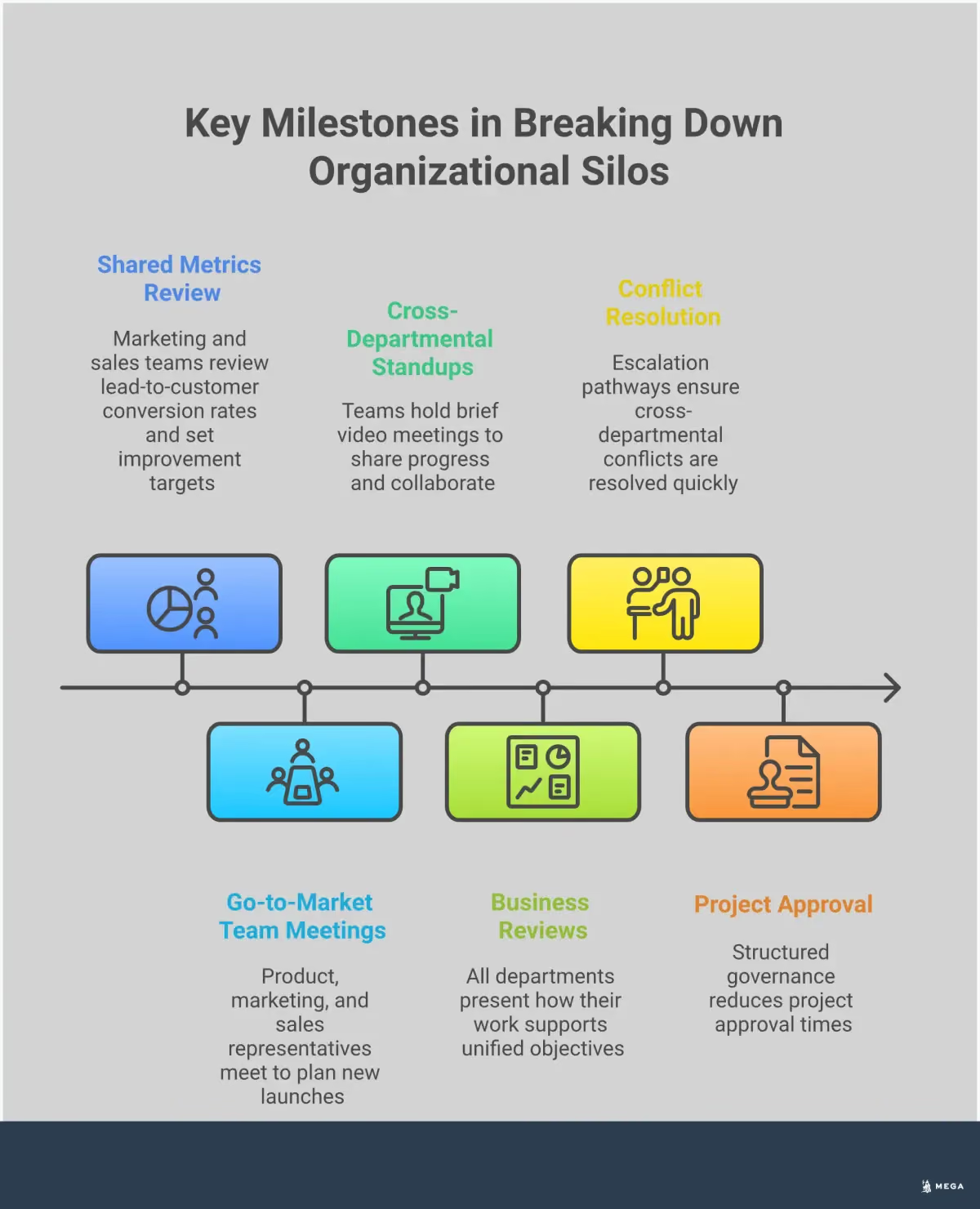
When the marketing team is measured only on lead generation and the sales team only on closed deals, they can easily end up working against each other. To fix this, you need to align everyone around a common purpose. Start by defining company-wide objectives that every department contributes to, then create metrics that reflect this shared responsibility. For example, instead of just tracking leads, track the lead-to-customer conversion rate—a metric that both marketing and sales directly impact. As Phoenix Strategy Group notes, "Shared financial metrics help departments understand how their work supports company-wide goals, making collaboration a natural byproduct rather than a forced initiative." This approach encourages teams to think about the entire customer journey, not just their small piece of it.
Design Workflows That Cross Departments
Silos often form at the handoff points between departments. A project moves from marketing to sales to customer support, with each team operating in a vacuum. Creating cross-functional workflows redesigns these processes so that teams work together from the start. This could mean forming a dedicated "go-to-market" team with members from product, marketing, and sales for a new launch. The goal is to move from a linear assembly line to a collaborative workshop. By designing workflows that require input from multiple departments, you make collaboration a structural requirement. This helps create an environment "rooted in trust, shared goals, and collective success," where teams are aligned and transparent from the beginning.
How to Build Trust with Greater Transparency
Departments can become guarded when they don’t know what other teams are working on or why. This lack of visibility breeds suspicion and reinforces silos. Building a culture of transparency is the antidote. This means making information widely accessible, from project roadmaps and performance dashboards to meeting notes. When everyone can see what others are doing and how it contributes to the company’s goals, it’s easier to build trust. As experts at Celonis point out, "Encouraging a culture of transparency is essential for breaking down silos and promoting collaboration across teams." This openness helps people understand the challenges and priorities of other departments, fostering empathy and a willingness to help each other succeed.
Foster a Culture of Active Listening and Appreciation
True collaboration is built on more than just shared documents and project plans; it’s built on mutual respect and understanding. Fostering a culture of active listening is a critical step. This means encouraging your team members to not just hear what others are saying, but to truly understand their perspectives, challenges, and priorities. When your sales team understands the effort the marketing team puts into generating a lead, and marketing understands the sales cycle, empathy grows. As one source notes, open and clear communication is essential for teams to work well together. Creating spaces for this kind of dialogue, whether in formal meetings or informal chats, helps break down the "us vs. them" mentality that fuels silos.
Invest in Team Training and Development
Sometimes, teams don't collaborate effectively because they simply haven't been taught how. Investing in training can equip your employees with the skills they need to work together more smoothly. This doesn't have to be a massive expense. Workshops on topics like communication, conflict resolution, and project coordination can make a significant difference. Providing these opportunities shows your team that you are committed to their professional growth and to building a more cohesive work environment. Training can give employees a shared language and framework for cooperation, making it easier to manage conflicts and coordinate tasks across departmental lines, turning a group of individuals into a truly unified team.
Set Up a Clear Governance Framework
To make collaboration stick, you need a clear framework that defines how teams should work together. This isn’t about adding bureaucracy; it’s about creating clear rules of engagement. A governance framework outlines roles, responsibilities, and decision-making processes for cross-functional projects. It also includes systems for knowledge management to ensure that insights are shared and accessible to everyone, not locked away in one team’s software. Having a defined structure for performance management and leadership helps formalize collaboration as a core competency. This framework provides the stability and clarity needed for new, more open ways of working to take hold across the organization.
The Right Tools to Improve Teamwork
Adopting a collaborative mindset is the first step, but the right technology is what makes it stick. Without tools that support cross-functional work, teams will naturally fall back into their old, siloed habits. The goal is to create a shared digital environment where information flows freely and workflows are connected. This means centralizing communication, automating the tedious handoffs between departments, and ensuring everyone is working from the same set of data. When you equip your teams with the right tools, you remove the friction that keeps them apart and make collaboration the path of least resistance.
Use Collaboration Platforms to Centralize Communication
When your marketing team uses one project management tool, sales lives in another, and leadership communicates through email, you create digital walls. Centralizing communication is key to breaking them down. A shared platform, whether it's a company-wide messaging app or a project management system, creates a single source of truth. This transparency ensures everyone has access to the same information at the same time. By breaking down communication silos, leaders can unlock the power of cross-functional collaboration and foster stronger relationships between teams. It stops the endless search for the right document and puts the focus back on the work itself.
Integrate Project Management and Document Sharing Tools
Beyond just communication, your teams need a shared space to manage work and access important files. When project plans live in one tool and key documents are stored in another, you create the exact kind of digital friction that reinforces silos. Integrating these systems is essential for creating a single source of truth. A unified platform allows everyone to see project timelines, track progress, and find the latest version of a document without hunting through different apps. This creates a connected digital environment where workflows are transparent and information can flow freely. For small businesses, this can be simplified by using an AI agent as the connective tissue for the entire tech stack, ensuring all your tools work together seamlessly.
Automate Tasks to Reduce Manual Handoffs
Manual handoffs are a major source of friction between teams. Every time a task moves from one department to another—like when content is passed to the web team for publishing or leads are sent from marketing to sales—there’s a risk of delays, miscommunication, and dropped balls. Automation tools create seamless bridges between these steps. For example, an AI-powered SEO agent can handle everything from keyword research and content creation to publishing and optimization, eliminating the need for multiple handoffs. Implementing automation helps ensure resources and strategies are aligned across teams, freeing up your people to focus on strategic work instead of managing processes.
Create a Single Source of Truth for Your Data
Silos don't just separate people; they separate data. When the paid ads team has its own performance metrics and the SEO team has another, it’s impossible to get a clear, holistic view of your marketing efforts. A unified data strategy ensures everyone is looking at the same numbers and speaking the same language. When teams have shared metrics, they can better understand how their work contributes to company-wide goals, making collaboration a natural result. This could mean using a dashboard that pulls data from all your tools or adopting a platform that manages multiple channels, like Paid Ads and SEO, from one place.
Getting Past Common Implementation Hurdles
Introducing new workflows or technologies is more than just a technical switch; it’s a shift in how your team operates. Even with the best strategy, you’re likely to encounter some friction along the way. The most common hurdles aren’t about the tools themselves but about people and processes. Addressing resistance, aligning different team goals, and maintaining trust are critical for a smooth transition. By anticipating these challenges, you can create a clear path forward and ensure your efforts to build a more collaborative environment succeed.
How to Handle Resistance to Change
Resistance is a natural response when team members feel uncertain about new strategies or lack clear support from leadership. To get everyone on board, start by communicating the "why" behind the change. Explain how new processes or tools will make their specific roles easier and more effective, rather than just focusing on high-level company benefits.
Involving your team in the implementation process can also build a sense of ownership. For example, when introducing an AI agent to manage marketing, let your marketing and sales teams collaborate on defining its goals. This approach transforms the transition from a top-down directive into a shared project, making employees active participants in the company’s evolution.
What to Do About Competing Priorities
It’s common for marketing to focus on lead volume while sales prioritizes conversion rates, creating a natural point of friction. Breaking down silos requires moving from department-specific targets to shared, company-wide goals. A strong, unified vision from leadership is essential for getting everyone aligned.
Instead of tracking separate KPIs, establish unified metrics that reflect cross-functional success. For example, a shared goal could be to increase marketing-qualified leads that result in a sales opportunity by 20%. This forces teams to collaborate. Using a centralized platform helps departments see how their work directly supports these overarching goals, making teamwork a natural part of the workflow instead of a forced initiative.
How to Keep Your Team's Trust During a Transition
Change can be unsettling, and maintaining trust requires open, consistent communication. Leaders should be transparent about the transition process, including acknowledging potential challenges and setting realistic expectations. Creating channels for bi-directional feedback allows employees to voice concerns and feel heard, which is critical for building confidence.
When implementing new technology, transparency is key. For instance, MEGA AI provides complete task visibility, so your team can see exactly what our agents are working on in real time. This prevents the technology from feeling like a mysterious black box and helps build trust in the new system. When people understand how a tool works and see its positive impact, they are more likely to embrace it.
How Do You Know if It's Working?
Breaking down organizational silos is a significant undertaking, and it’s important to know if your efforts are paying off. Measuring success isn't just about seeing a final result; it's about tracking progress, making adjustments, and demonstrating the value of a more collaborative environment to your team. When people see tangible improvements, they are more likely to stay committed to the new way of working.
Establishing clear metrics helps you move from a vague goal of "better collaboration" to a concrete, data-backed strategy. It allows you to identify what’s working and where you might need to refine your approach. By focusing on specific outcomes, you can ensure that your initiatives are leading to real gains in efficiency, productivity, and team cohesion. This data-driven approach is essential for sustaining momentum and building a truly integrated organization.
Set Clear KPIs for Better Collaboration
To measure success, you first need to define what it looks like. Key Performance Indicators (KPIs) are specific, measurable metrics that help you track progress toward a goal. Instead of just hoping for better teamwork, you can set clear targets. For example, you might track the percentage of projects that involve members from multiple departments or measure employee satisfaction scores related to cross-functional communication.
Other useful KPIs could include the time it takes to get a project approved or the number of shared resources used by different teams. The key is to choose metrics that directly reflect the collaborative behaviors you want to encourage. By defining these KPIs for your business, you create a clear benchmark to measure against, making it easy to see how your initiatives are impacting the way your teams work together.
Measure Efficiency Gains Across Your Teams
One of the most significant benefits of breaking down silos is increased efficiency. When teams work in isolation, they often duplicate efforts and slow down processes. A clear sign that you’re making progress is when work starts flowing more smoothly between departments. You can measure this by tracking project completion times from start to finish. For instance, how long does it take for a new marketing lead to be contacted by the sales team?
Look for reductions in wasted resources or redundant tasks. Are your content and advertising teams sharing assets effectively, or are they creating similar materials independently? Tracking these operational efficiency metrics provides concrete evidence that collaboration is improving your bottom line. These improvements not only save time and money but also free up your team to focus on more strategic work.
How to Set a Realistic Timeline for Change
Changing how your organization operates doesn't happen overnight. Breaking down long-standing silos is a cultural shift that requires patience and persistence. It’s important to set a realistic timeline and manage expectations from the start. Rather than aiming for a complete transformation in one quarter, focus on incremental progress. You might set goals for the first 30, 60, and 90 days to build momentum.
Because business needs are always evolving, silos can reappear if you don’t actively manage them. Schedule regular check-ins to assess your progress against your timeline and KPIs. These meetings are an opportunity to celebrate wins, address challenges, and adjust your strategy as needed. Approaching this as an ongoing process of organizational change management ensures that your collaborative culture is built to last.
Making Great Teamwork Last
Breaking down silos is a significant achievement, but the work doesn’t stop there. Maintaining a collaborative environment requires ongoing effort and a commitment to continuous improvement. The goal is to make cross-functional teamwork a natural part of your company culture, not just a temporary project. Here’s how to ensure your progress sticks for the long run.
Keep the Momentum Going Post-Launch
Once you’ve made initial progress, it's crucial to show your team that the new way of working is paying off. Measuring success is essential for sustaining long-term buy-in. When people can see tangible results—like faster project completion or higher customer satisfaction—they are more likely to stay engaged. Regularly celebrate cross-functional wins and share data that highlights the value of your collaborative efforts. Without clear metrics, teams may struggle to see the point of changing their habits, and old routines can easily resurface. Make progress visible to everyone to keep the momentum going.
Evolve Your Processes as Your Company Scales
The collaborative systems that work for your business today might not be effective next year. As your company evolves, hires new people, or enters new markets, your processes must adapt. Organizations are in a near-constant state of change, and silos can re-emerge if workflows are not continuously evaluated. Schedule regular check-ins to assess your initiatives and gather feedback from your team. Be prepared to adjust communication channels, update software, or redesign workflows to meet new challenges. This flexibility ensures that collaboration remains a core strength rather than a past achievement.
Create Your Long-Term Transformation Plan
To make collaboration permanent, it needs to be embedded in your company’s vision and daily operations. This starts with leadership. A clear, unified vision is essential for encouraging teams to work together toward common objectives. Promoting open communication and adaptable decision-making helps break down the barriers that keep teams working in isolation. Weave collaboration into your onboarding process so new hires understand its importance from day one. Your long-term goal is to create a culture where sharing information and supporting other departments is the standard way of doing business.